Uplistsikhe’s Age & Its Historical Significance
How does a town carved into rock over two millennia ago still captivate us? Uplistsikhe, meaning ‘Lord of the Fortress’, holds secrets as old as the stones it was built on. This site in eastern Georgia dates back to the Iron Age, with over 3,000 years of *Uplistsikhe history*. It’s a mix of pagan and Christian elements, showing the rich *Uplistsikhe ancient civilization* that once lived there.
Exploring Uplistsikhe, we’ll learn about its age and importance. We’ll see why it’s a key part of Georgia’s culture. Let’s journey through time to understand this amazing place.
Introduction to Uplistsikhe
Uplistsikhe is an ancient town carved into a cliff. It’s located about 10 kilometers east of Gori in Georgia. The name means “the lord’s fortress” in Georgian.
This site overlooks the Mtkvari River. It shows a mix of architecture and history. It gives us a glimpse into life long ago.
The town covers about 40,000 square meters. It has three main areas: lower, middle, and upper. At its peak, around 20,000 people lived here, making it a key cultural spot.
The buildings here show influences from Cappadocia and Northern Iran. This makes Uplistsikhe’s urban landscape unique and interesting.
There’s a Christian basilica from the 9th-10th century. You’ll also see living quarters, a large hall, and pagan sites. These show Uplistsikhe’s rich history and its importance over time.
Today, archaeologists keep finding new things. These discoveries help us learn more about this ancient town.
How Old Is Uplistsikhe and What Was Its Historical Significance?
Uplistsikhe is one of the oldest cities in Georgia. Its history goes back to the Iron Age. It was a key place for politics and religion in ancient Kartli.
Dating Back to the Early Iron Age
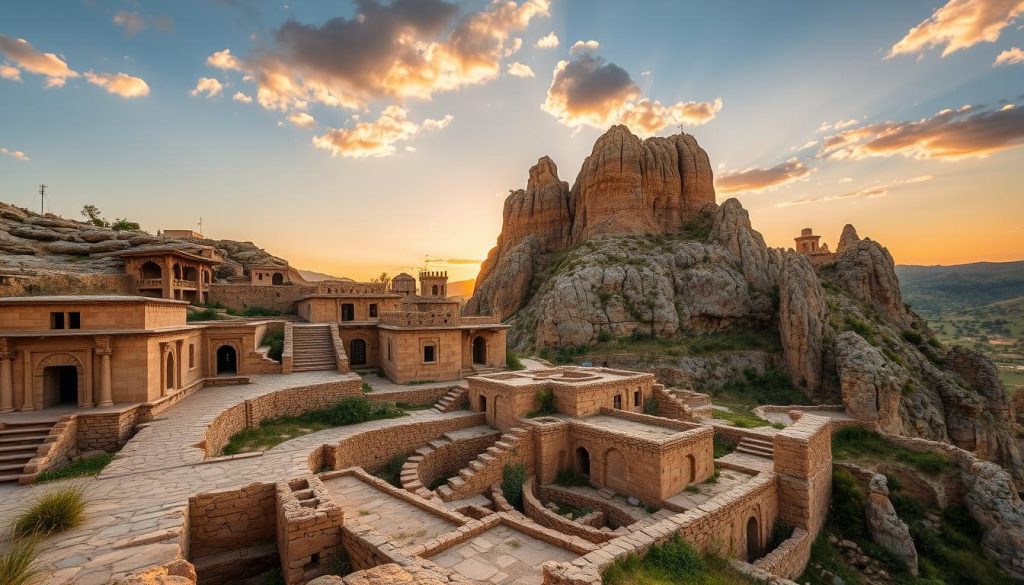
Uplistsikhe dates back to the early Iron Age. It shows us a lot about ancient Georgian history. The site has natural and artificial caves, and man-made structures.
Its architecture, like rock-cut chambers, shows the skills of its people. Learning about Uplistsikhe’s history helps us see how it changed over time.
Notable Historical Events
In the late Hellenistic period, Uplistsikhe was very important. It played a big role during the Arab conquest of Tbilisi. This was between the seventh and eleventh centuries.
It also had religious buildings built in the early Middle Ages. These were likely on old pagan shrines. Despite challenges, like Mongol raids in the 14th century, Uplistsikhe’s legacy is strong in Georgian history.
Geographical Location and Its Importance
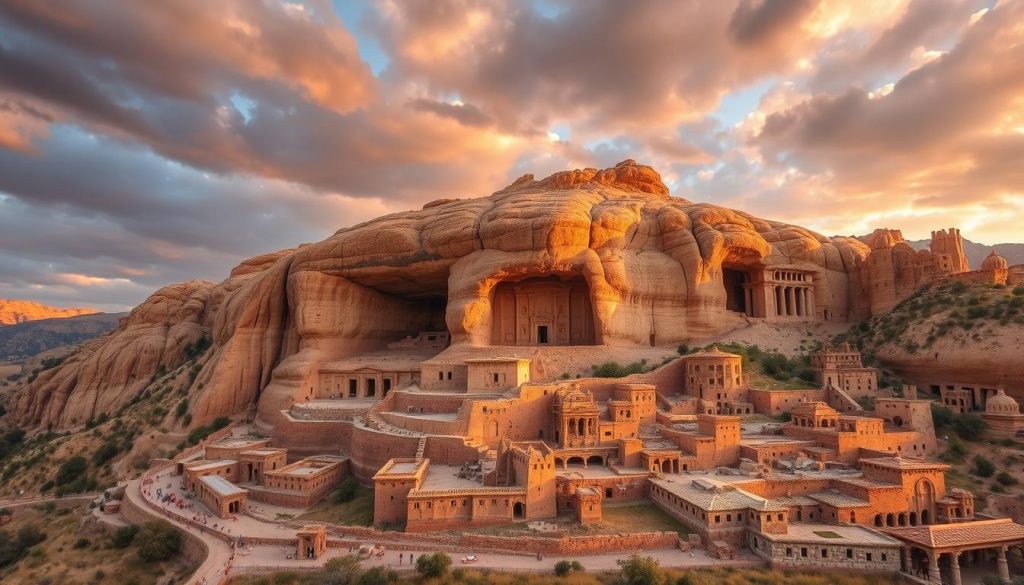
The Uplistsikhe location is key to its history. It sits on a high rocky bank overlooking the Mtkvari River. This spot offers natural defense and is close to important trade paths.
This strategic place in the ancient kingdom of Kartli helped with trade. It also made Uplistsikhe a major cultural spot.

Many cultures interacted here, making Uplistsikhe even more important. The rocky terrain helped protect it while making it easy for travelers and traders to reach. This led to Uplistsikhe becoming a bustling center.
It showed a mix of Anatolian, Iranian, and Greek styles in its buildings.
| Feature | Description |
|---|---|
| Natural Defense | Uplistsikhe’s elevated rock formations provide a formidable defensive position. |
| Trade Routes | The site’s proximity to trade routes allowed for extensive commercial interactions. |
| Cultural Exchange | Uplistsikhe served as a melting pot for diverse cultures, enriching its historical significance. |
| Architectural Influences | The location led to the incorporation of various architectural styles influenced by neighboring civilizations. |
Uplistsikhe’s location and cultural mix made it a key part of Georgia’s history. It shows its value through the ages.
Uplistsikhe’s Role in Ancient Georgian Civilization
Uplistsikhe was key to ancient Georgian history. It was more than just a place to live. It was a center of politics and religion, shaping the culture of the time.
Political and Religious Significance
Uplistsikhe played a big role in the Kingdom of Kartli’s governance. It was a place where leaders came and went, showing its political significance. The city mixed old pagan ways with new Christian ideas, creating a unique culture.
Its buildings tell the story of this mix. Uplistsikhe had many temples, showing its diverse religious life.
Connection to the Kingdom of Kartli
Uplistsikhe was deeply connected to the Kingdom of Kartli. It’s one of Georgia’s oldest cities, dating back to the 2nd millennium BC. It brought together different tribes, forming a big part of Georgian identity.
Stories about Uplistsikhe show its importance to Kartli’s history and culture. Its long history made a lasting impact on the region.
Architectural Features of Uplistsikhe
The architecture of Uplistsikhe is truly impressive. It shows the ancient Georgian craftsmen’s skill and the cultural exchanges over time. These structures have stood the test of time.
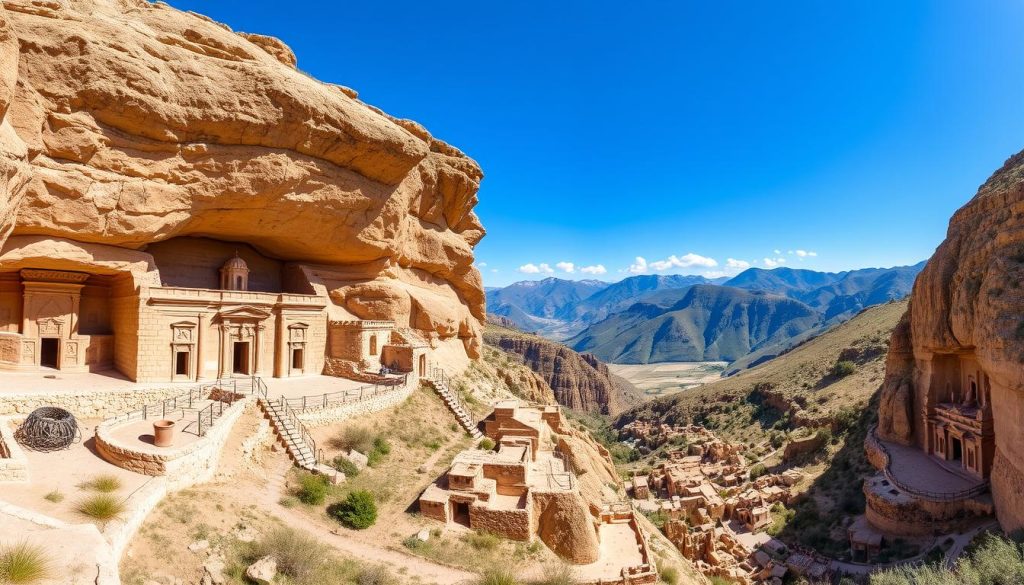
Rock-Cut Structures
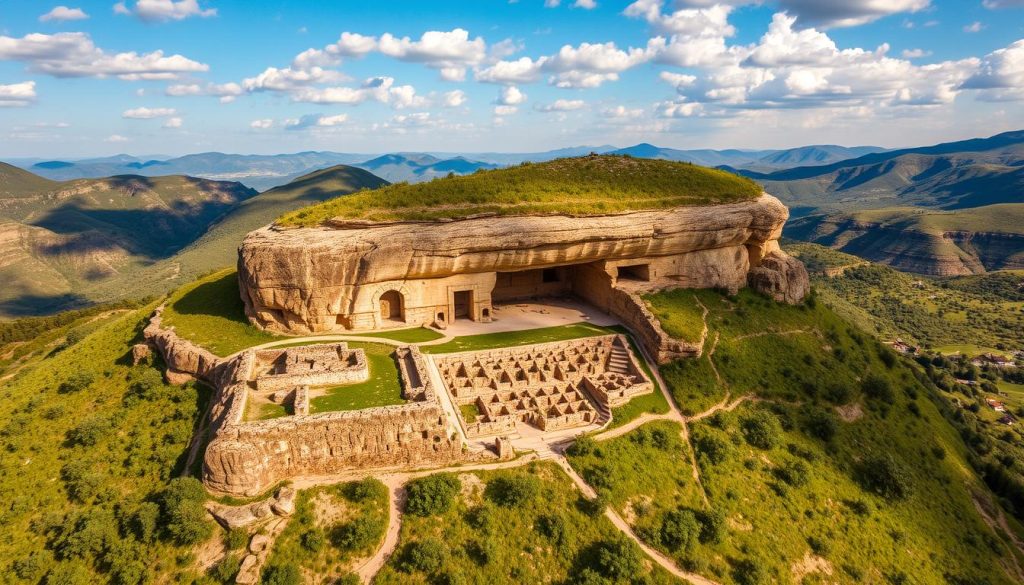
The rock-cut structures at Uplistsikhe are its main attraction. You can see:
- Tamaris Darbazi, a key entrance to the site.
- Ancient Pharmacy, a glimpse into early medicine.
- Pagan Temples, showing the spiritual life of pre-Christian Georgians.
- Wine Cellars, highlighting winemaking traditions.
- A Hidden Tunnel leading to the Mtkvari River, hinting at defense.
These structures were not just for function. They also show Uplistsikhe was once a bustling city with about 20,000 people.
Unique Architectural Styles
Uplistsikhe’s architecture is a mix of styles. You can see influences from Anatolia, Iran, and early Christianity. This diversity is seen in:
- The Roman-type arches found in key buildings.
- Vaulted ceilings, showing the ancient builders’ engineering skills.
This mix of styles tells the story of Uplistsikhe as a place where cultures met. It adds to Georgia’s rich heritage.
Archaeological Discoveries at Uplistsikhe
Uplistsikhe is a key part of Georgia’s ancient history. Archaeologists have found many important artifacts here. These include beautiful jewelry made from gold, silver, and bronze.
They have also found ceramics and sculptures that show the area’s cultural diversity. These discoveries suggest that Uplistsikhe was a thriving place from the 6th century BC to the 11th century AD. It was a center of politics, religion, and culture during this time.
Today, many of these artifacts are in the National Museum in Tbilisi. This lets more people see the skill and creativity of the people who lived here long ago.
| Type of Artifact | Material | Date Range | Location |
|---|---|---|---|
| Jewelry | Gold, Silver, Bronze | Late Bronze Age to Late Middle Ages | National Museum, Tbilisi |
| Ceramics | Clay | Various periods | National Museum, Tbilisi |
| Sculptures | Stone | Late Bronze Age to 11th century AD | National Museum, Tbilisi |
Climate and Environmental Factors Affecting Uplistsikhe
The climate in Uplistsikhe greatly affects its ancient beauty and rock formations. Located in Georgia, it has a subhumid climate. The average air temperature is 16°C, and it rains about 500-550 mm a year. These conditions impact the site’s structure and condition.
Impact of Natural Disasters
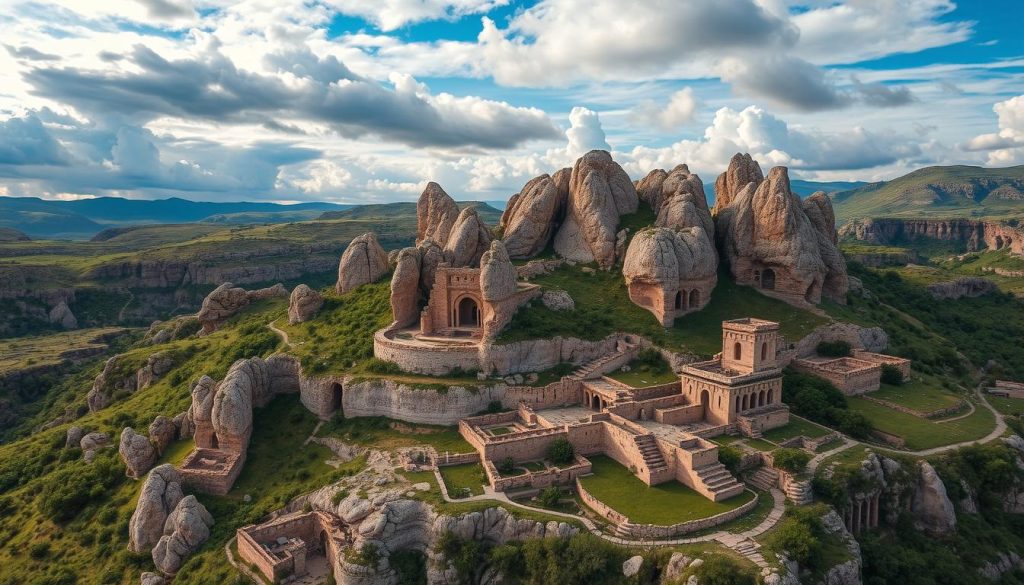
Uplistsikhe deals with environmental challenges like geological stability and weathering. The stone surfaces show signs of scaling and flaking. Weather like blistering and salt efflorescence makes it worse.
The rock’s open porosity, about 13-20%, helps hold moisture. Condensation and seepage from air humidity add to the moisture. A study used 2D-resistivity and infrared thermography to analyze moisture at sites like the Grand Hall and Teatron.
The 1920 earthquake showed how vulnerable Uplistsikhe is to natural disasters. It caused a lot of damage. Conservation efforts are needed to keep Uplistsikhe’s history safe for the future.
Social and Cultural Aspects of Uplistsikhe
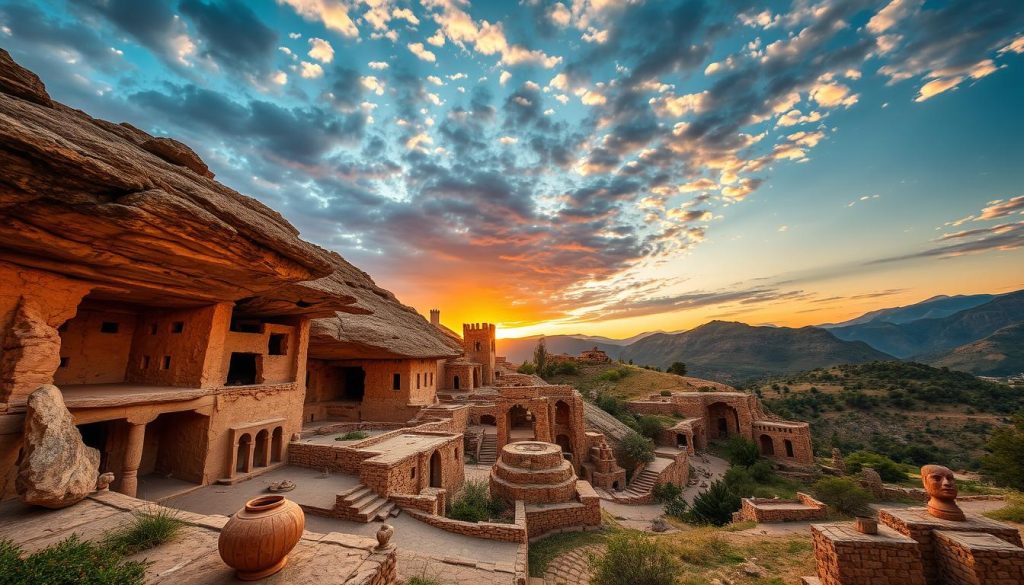
The social life in ancient Georgia’s Uplistsikhe was lively. People worked in trades like metallurgy and winemaking. This work helped them connect and work together.
The rivers nearby, like the Phasis, were key for trade and travel. They linked Uplistsikhe to other areas, making it a hub of activity.
Religion was a big part of Uplistsikhe’s culture. It had both Pagan and Christian temples. This mix of beliefs gave the people a strong sense of identity.
Community events likely happened in the city’s amazing buildings. These events brought people together, strengthening their bonds. They also helped keep the city’s traditions alive.
Uplistsikhe was also a place for art, like pottery and sculpture. Its influence spread to other parts of Georgia. The people of Uplistsikhe left a lasting mark on the country’s culture.
| Social Aspects | Cultural Significance |
|---|---|
| Engagement in trade and metallurgy | Blend of Pagan and Christian influences |
| Community collaboration and connections | Artistic expressions in pottery and sculpture |
| Utilization of rivers for trade | Influence on surrounding regions and legacy |
The Decline of Uplistsikhe’s Influence
The Uplistsikhe decline is a key part of Georgian history. It was once a bustling town but started to fade after the Mongol invasions in the 14th century. The invasions hurt trade, causing the town to lose its importance.
As cities like Mtskheta and Tbilisi grew, Uplistsikhe’s role decreased. This change shows how power and influence shifted in the area. The town eventually became abandoned.

Even though Uplistsikhe is no longer a major center, it still draws visitors. People who take tours there often praise the guides. For example, Anna is known for her dedication to sharing Georgia’s history.
Visits to Uplistsikhe, Gori, and Georgia’s beautiful landscapes mix history and culture. Exploring these ancient sites, you feel the past’s presence. It reminds you of Uplistsikhe’s vibrant past and its decline.
Uplistsikhe in Modern Times
In recent years, Uplistsikhe has become a key focus for archaeology and cultural preservation. This ancient cave city is rich in history and needs protection. Efforts are underway to save it from damage and keep its cultural value alive today.
Conservation Efforts
Many groups, like the Fund of Cultural Heritage of Georgia, are working to save Uplistsikhe. They focus on restoration, making the site stable, and making it easier for visitors to see. Since 2004, thanks to the World Bank and the Georgian government, restoration work has been ongoing.
These efforts are crucial for keeping the site intact and attracting tourists. Now, visitors can see well-kept parts of Uplistsikhe. It has amazing rock-cut structures and ancient finds. Tourism helps keep Uplistsikhe a part of Georgia’s cultural heritage for the future.
Conclusion
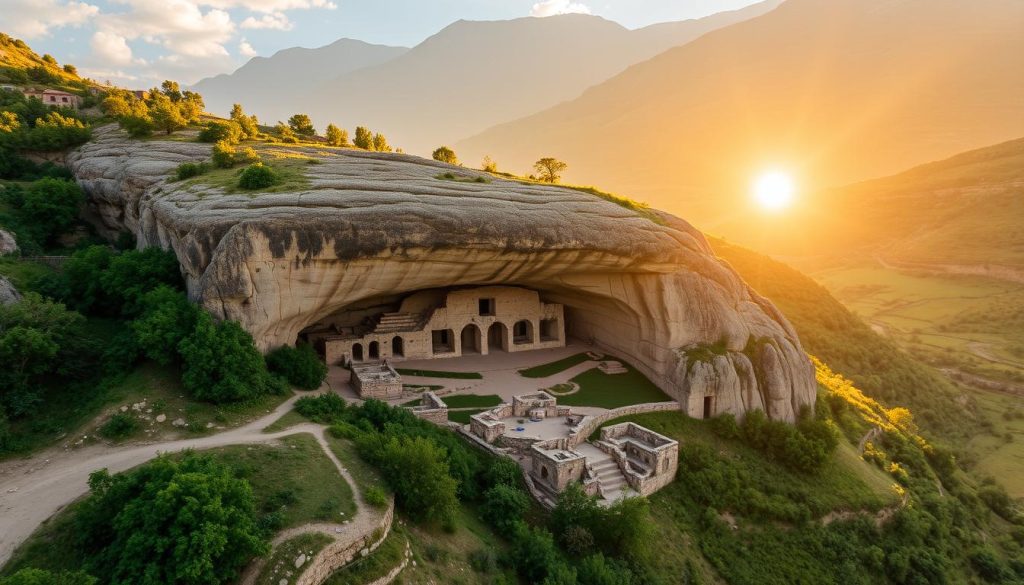
Uplistsikhe is a key part of Georgia’s history. It dates back to the Iron Age, showing us how people lived long ago. This site covers 8 hectares and has hundreds of rooms, showing early urban life and culture.
When you visit Uplistsikhe, you see ancient buildings like the Church of Prince and the Three-Nave Basilica. You learn about Georgia’s history, from the Silk Road to pre-Christian societies. It’s a journey through thousands of years, perfect for history lovers and tourists.
Exploring Uplistsikhe lets you see how it connects to today’s Georgia. Being on UNESCO’s Tentative List since 2007 highlights its importance. It’s a chance to dive into Georgia’s amazing past.