Top Temples in Bagan Beyond Shwezigon, Ananda
Ever wondered about the hidden gems beyond Bagan’s famous Shwezigon and Ananda temples? Bagan, Myanmar, was once a treasure trove of over 10,000 temples. Now, about 2,200 temples remain, each telling stories of ancient skills and faith.
While many visit the well-known sites, the lesser-known temples in Bagan offer a deeper dive into its rich Buddhist history. This article will take you to the must-see temples in Bagan, beyond Shwezigon and Ananda. You’ll learn about their historical importance and architectural wonders.
Introduction to Bagan’s Temples
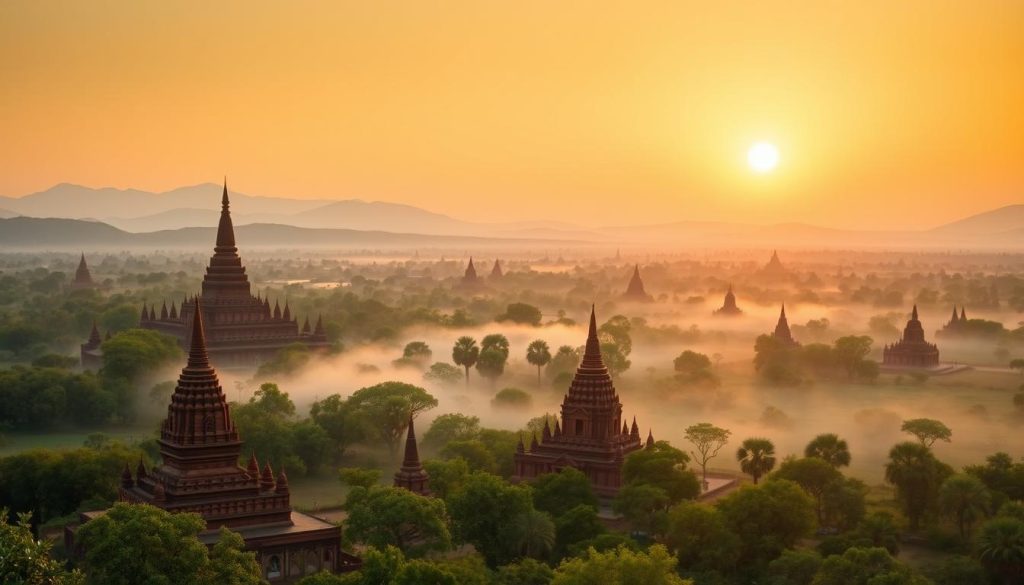
Bagan’s temples are a key part of Myanmar’s culture. Built from the 9th to the 13th centuries, they show the Pagan Kingdom’s faith and art. There are over 10,000 religious sites here, mostly temples, making it a lively spiritual area.
Exploring Bagan’s temples, you’ll see each one tells its own story. They are decorated with intricate designs and have stunning architecture. The Bagan Archaeological Park covers about 40 square miles, giving you lots of space to explore.
Many temples are in the North and Central Plains. The best spots for sunrise and sunset are in the Central and South Plains. Most temples have two floors, but visitors usually only see the first floor. This helps keep the temples in good shape.
It’s best to spend at least three days exploring Bagan. This way, you can fully appreciate the beauty and history of over 2,200 monuments. Places like the Ananda and Thatbyinnyu Temples make Bagan a must-see for history and faith lovers.
Historical Significance of Bagan’s Temples
The Bagan temple history is rich and deeply intertwined with Myanmar’s cultural landscape. It was the capital of the Pagan Kingdom and a key center for Theravada Buddhism. Many temples were built by local kings and wealthy citizens to gain merit and ensure spiritual benefits in the afterlife.
The Shwezigon Pagoda, built in 1059 AD by King Anawrahta, is a symbol of Bagan’s architectural brilliance. It stands at 160 feet and has 550 green glazed terracotta tiles showing Jataka Stories. The Gubyaukgyi Temple, built in 1113 AD, has over 500 murals telling Mon legends, showing the Buddhist culture in Bagan at its peak.
The Dhammayangyi Temple is the largest, built in 1167 AD. It is made of red bricks with minimal gaps, showing Bagan’s grandeur. The Ananda Temple, with its majestic standing Buddhas, highlights the era’s craftsmanship and devotion.
Despite Mongol invasions and earthquakes, preservation efforts have been crucial. In 2019, Bagan was added to the UNESCO World Heritage list, recognizing its cultural and historical value. These temples are not just reminders of the past but also active sites for spiritual practices today.
| Temple Name | Year Constructed | Height (feet) | Key Features |
|---|---|---|---|
| Shwezigon Pagoda | 1059 AD | 160 | 550 terracotta tiles depicting Jataka Stories |
| Gubyaukgyi Temple | 1113 AD | Unknown | 500 murals retelling Mon legends |
| Dhammayangyi Temple | 1167 AD | Largest in Bagan | Pyramid-like structure with tightly laid bricks |
| Ananda Temple | Early Bagan Period | Unknown | Four large standing Buddhas |
| Thatbyinnyu Temple | Mid-12th Century | 201 | Seven terraces facing east |
Must-see temples in Bagan beside Shwezigon and Ananda?
Bagan is famous for its ancient temples. It has many lesser-known temples in Bagan that are worth seeing. These temples offer a glimpse into the area’s rich history and culture.
They feature amazing architecture and a peaceful atmosphere. Each temple has its own story and cultural importance.
Overview of Lesser-known Temples
Dhammayangyi Temple is known for its huge size and spooky stories. Sulamani Temple is loved for its beautiful vaulted openings and detailed murals. Thambula Temple, built by Queen Thembula, shows the area’s deep history.
These temples have unique stories and designs. They are often overlooked but are truly special.
Importance in Buddhist Culture
The lesser-known temples in Bagan are key to the local Buddhist temple culture. People visit these temples for daily prayers, creating a lively religious scene. The temples and the community share a deep bond.
This bond helps visitors understand Buddhism’s role today. It shows how ancient traditions still matter in our world.

Bupaya Pagoda: A Historical Gem
The Bupaya Pagoda is a symbol of Bagan’s rich culture. It sits by the Irrawaddy River, known as the ‘pumpkin pagoda’. Its design is like the old Pyu-style buildings, dating back to the 3rd century.
It was rebuilt after a big earthquake in 1975. The work took place from 1976 to 1978. Now, it shines with gold, drawing people who want to connect with Bagan’s history.

The pagoda is not just beautiful but also offers stunning views, best at sunset. The sky turns into a colorful canvas over the river. It’s a favorite spot for photos. Among over 10,000 temples in Bagan, the Bupaya Pagoda is a standout.
| Feature | Details |
|---|---|
| Location | Banks of the Irrawaddy River |
| Construction Date | 3rd century |
| Reconstruction | 1976-1978 |
| Height | Not specified, but notable for its cylindrical shape |
| Architectural Style | Pyu-style |
| Significance | Symbol of resilience and cultural heritage |
Visiting the Bupaya Pagoda lets you see Bagan’s history. It’s a place where pagodas share stories of faith, art, and time. It invites you to dive into its deep history.
Sulamani Pagoda: The Crowning Jewel
Sulamani Pagoda is a stunning example of Bagan’s rich architectural heritage. It was built in the late 13th century and is considered one of the best temples in Bagan. Its red-brick facade and intricate details show the beauty of that time, making it a must-see for history lovers.
Architectural Features
The Sulamani Pagoda is known for its multi-storeyed structure and tiered terraces. It has ornate carvings that show the skill of its builders. An inscribed stone tells the story of its name, meaning ‘crowning jewel’. Visitors love its stunning frescoes and unique style, influenced by different cultures.
Visiting Tips
When you visit Bagan, go to Sulamani Pagoda in the early morning or late afternoon. These times are perfect for photos, with the light bringing out the temple’s colors. Talking to local caretakers can make your visit even better, sharing the temple’s cultural importance. It’s a chance to see an architectural wonder in a peaceful setting.
Dhammayangyi Temple: A Massive Structure
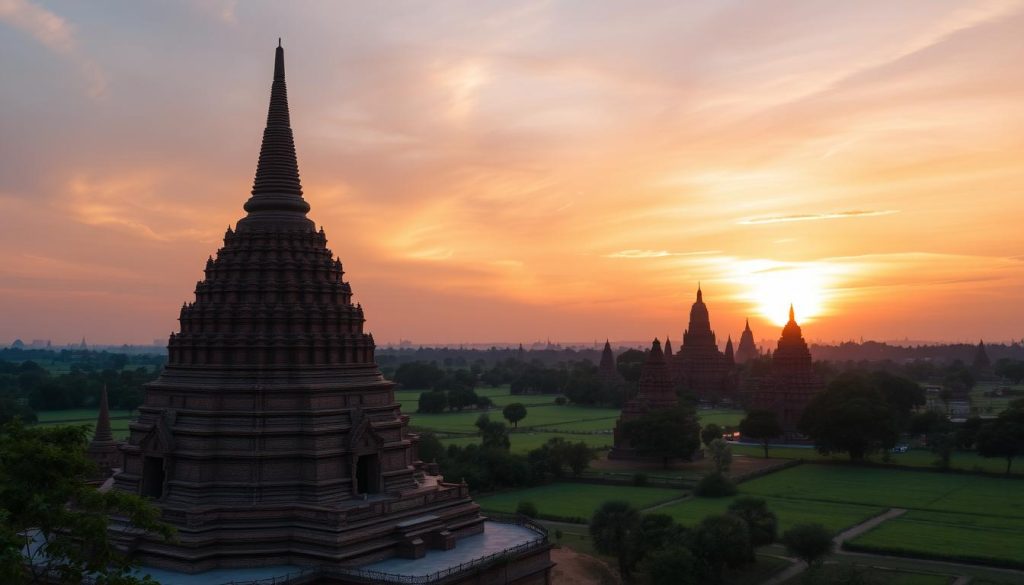
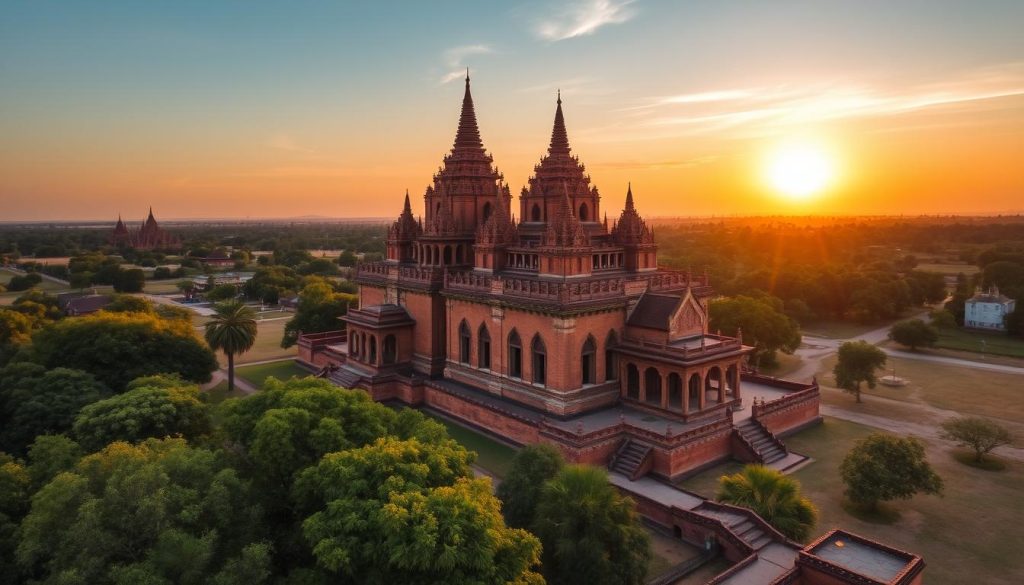
The Dhammayangyi Temple is a marvel of Bagan’s architecture, the largest temple in the area. It was built by King Narathu in A.D. 1167. The temple’s story is tied to the king’s quest for forgiveness.
Its unique feature is its brickwork, built without mortar. The temple has impressive corridors and large halls. It stands out with its grand design.
The Legend of King Narathu
King Narathu was known for his cruelty. He killed workers for small mistakes in the temple’s construction. This harsh act is a dark chapter in the temple’s history.
Despite this, the temple’s design is a testament to the king’s ambition. It mirrors the Ananda Temple, showing off detailed craftsmanship.
Recommended Time to Visit
Visit the Dhammayangyi Temple early in the morning. This way, you can enjoy a peaceful atmosphere and good lighting for photos. The temple’s vast interior and striking features are best seen with fewer people around.
Plan your visit during the cooler months for a more pleasant experience. With the right timing, you can fully appreciate the temple’s history and beauty.
| Attribute | Details |
|---|---|
| Type of Monument | Type III Temple |
| Location | East of Shinbinthalaung and Shwesandaw |
| Region | Old Bagan |
| Built By | King Narathu (Kalagya Min) |
| Date of Completion | A.D. 1170 |
| Unique Features | Two Circumambulatory Vaulted Corridors |
| Brick-laying Technique | Precision and Durability |
| Admission Fee | 25,000 kyat (valid for 5 days) |
| Rental Cost for E-bike | 9,000 kyat per day |
Thatbyinnyu Temple: The Tallest in Bagan
Thatbyinnyu Temple is the tallest in Bagan, reaching 61 meters high. It was built in the mid-12th century. Its design shows the progress of that time and the skill of ancient Bagan’s craftsmen.
People love its grand look, perfect for photos. While you can’t climb it anymore, the area around it has great views. The best time for photos is at sunrise or sunset.
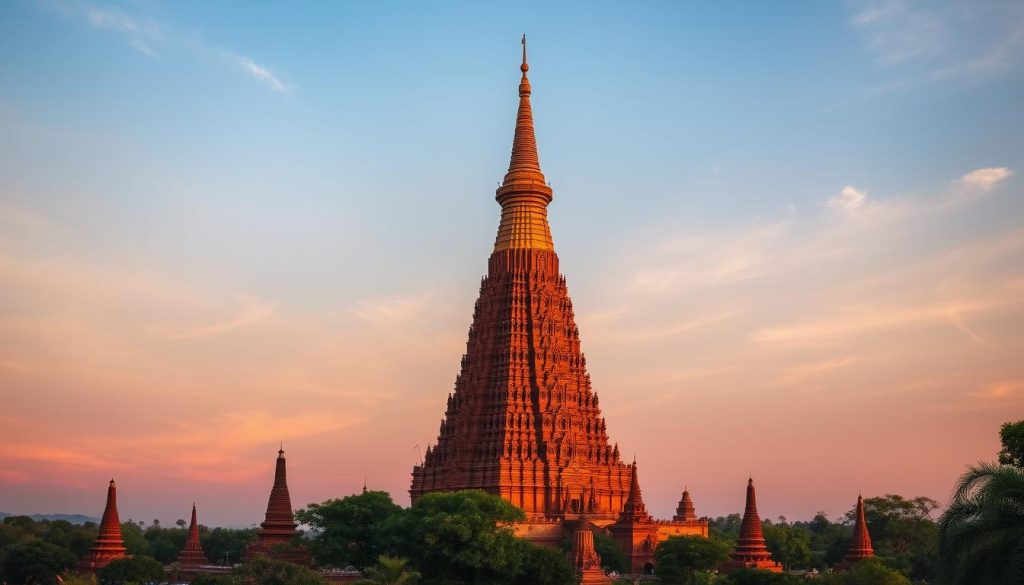
Thatbyinnyu Temple is more than just tall. It’s a key landmark and a sign of Bagan’s rich history and culture. It reminds visitors of the strong Buddhist community that once was.
- Height: 61 meters
- Construction: Mid-12th century
- Significance: Tallest temple in Bagan
- Best Lighting for Photography: During sunrise or sunset
Make sure to visit Thatbyinnyu Temple when you go to Bagan. Its height and history make it a key site to see in this amazing place.
Shwe Gu Gyi Pagoda: The Golden Cave
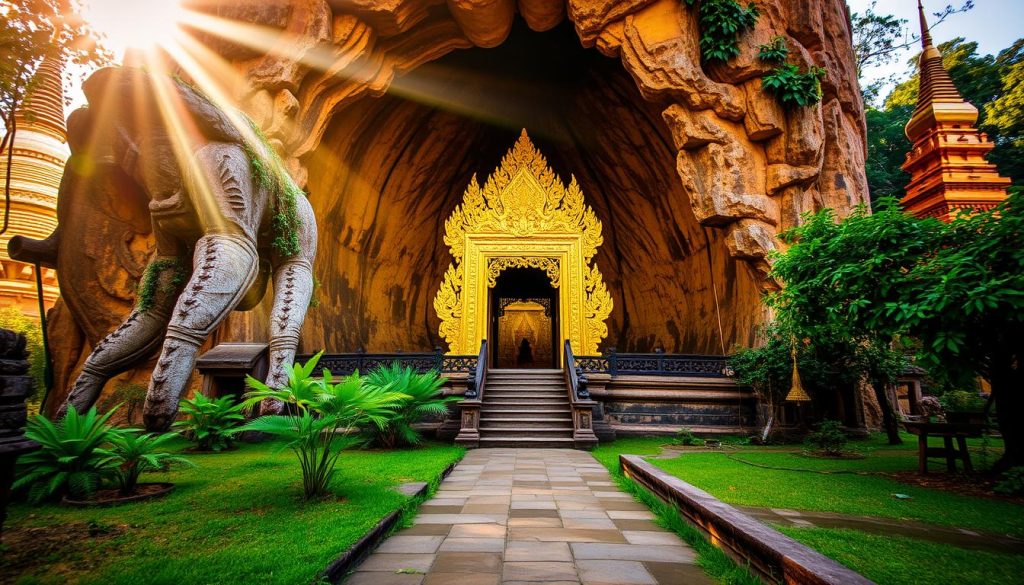
Shwe Gu Gyi Pagoda is known for its beautiful architecture. It was built in the 12th century by King Alaungsithu. The name “The Golden Cave” captures its unique charm.
The pagoda’s surfaces are adorned with intricate designs. These designs show the spiritual significance of this ancient site. They reflect the artistry of the time.
The area around the Shwe Gu Gyi Pagoda is stunning. Standing before it, you see breathtaking views of other temples. It’s a peaceful spot for reflection or photography.
This pagoda is more than just a building. It shows the lasting spirituality of Bagan. Exploring Bagan’s temples, Shwe Gu Gyi reminds us of its history and culture. Each visit connects us to ancient Myanmar’s traditions and art.
Hidden Temples: Exploring Bagan’s Secluded Spots
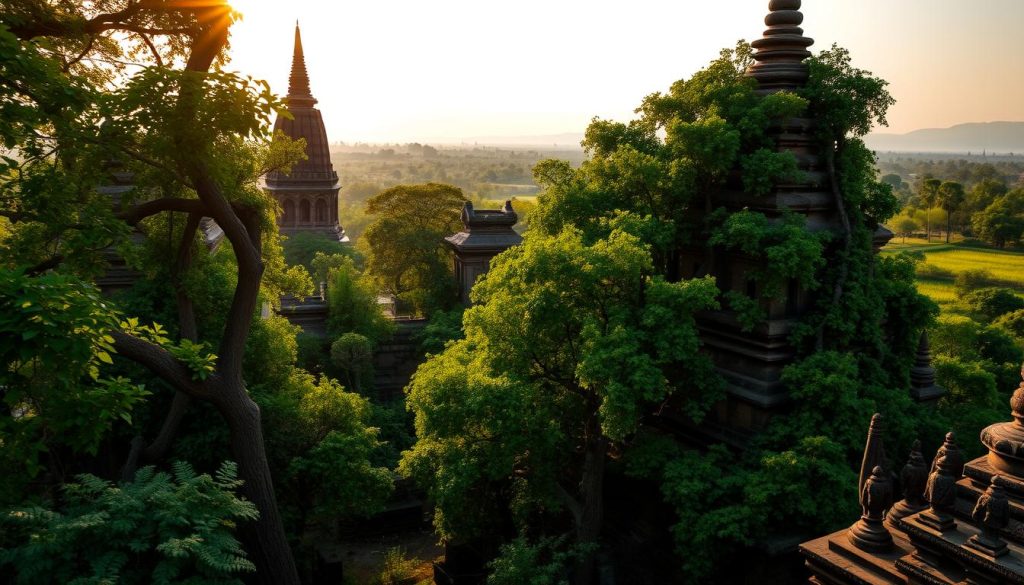
Bagan is known for its famous temples, but there’s more to see. A world of hidden temples awaits those who dare to explore. These secret spots offer a closer look at Myanmar’s history and culture.
Abeyadana Temple and its Unique Frescoes
The Abeyadana Temple is a hidden gem in Bagan. It showcases unique frescoes that mix Hindu and Buddhist art. Built in the 11th century, it lets you see Bagan’s rich religious history up close.
Myoe Daung Monastery: A Hidden Treasure
Myoe Daung Monastery is the oldest monastery in the area. It’s known for its traditional teak architecture. This peaceful place is perfect for those looking to reflect and explore Bagan’s hidden corners.
| Temple Name | Notable Features | Built In | Significance |
|---|---|---|---|
| Abeyadana Temple | Frescoes with Hindu and Buddhist themes | 11th Century | Artistic and cultural syncretism |
| Myoe Daung Monastery | Traditional teak architecture | Ancient Times | Representation of monastic life |
Visiting these hidden temples in Bagan deepens your understanding of its spiritual and historical side. It makes your trip to this amazing place even more special.
Getting Around: Temple Hopping in Bagan
Bagan is a treasure trove of over 2,000 temples and pagodas. Renting bicycles is a great way to explore this vast landscape. It lets you enjoy the scenery at your own pace.
For a unique experience, try a traditional horse cart. E-bikes are also a hit, making it easy to ride on sandy paths. Rentals start at MMK6,000-8,000 per day, making them affordable for visitors.
Bagan covers 67 square kilometers, full of temples to discover. Planning your temple hopping can help you see the best spots without rushing. Old Bagan, Nyaung-U, and New Bagan each have their own attractions and restaurants, like Delicious Restaurant and Sharky’s.
Since 2019, Bagan is a UNESCO World Heritage Site. Climbing temples is now banned to protect this ancient area. Remember to follow these travel tips to make the most of your visit.
Best Times for a Bagan Temple Tour
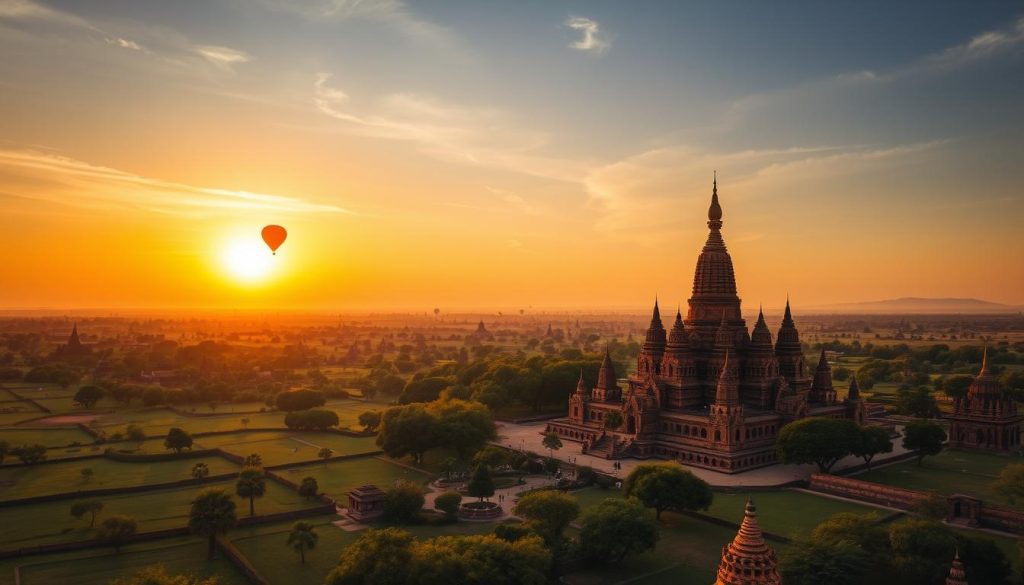
Timing is key when exploring Bagan’s temples. The best times for Bagan temple tour are during the golden hours of sunrise and sunset. These hours offer stunning light, making each temple’s beauty pop and perfect for photos.
Early mornings are peaceful and cool, ideal for deep contemplation and photography. Afternoons can get very hot, often over 40°C in April. Visiting shaded areas in the afternoon is more comfortable.
Seasons also affect the ideal visiting hours in Bagan. The peak season is from mid-October to March, with mild weather and little rain. January is the driest month, while July is the wettest, with 279 mm of rain. March is the least humid, making it great for those who prefer dry air.
Many plan their visits around local festivals. The Ananda Temple Festival and the Shwezigon Pagoda Festival are highlights, offering a peek into Burmese culture. The Bagan Balloon Festival provides stunning aerial views of the temples, adding magic to your trip.
Remember to dress modestly when visiting temples. The dry season’s dust requires face masks and goggles, essential for travel in dusty areas.
| Month | Temperature (°C) | Humidity (%) | Rainfall (mm) | Best Times to Visit |
|---|---|---|---|---|
| January | 21.7 | 60 | 2 | Yes |
| March | 28 | 52 | 5 | Yes |
| April | 40 | 72 | 4 | No |
| July | 30 | 80 | 279 | No |
| November | 30 | 65 | 4 | Yes |
Photography Tips for Bagan’s Temples
Bagan is a dream spot for photographers, with about 2000 temples and buildings full of history and beauty. Here are some tips to capture Bagan’s essence.
Use a tripod for better photos during sunrise and sunset. The soft light makes the temples look amazing. Wide-angle lenses help show the temples’ size and the surrounding landscapes.
- Watch how changing light and shadows change the mood of your photos.
- Go early in the morning or late in the afternoon for fewer people and better photos.
- Local guides can show you secret spots for unique views.
Visiting Manuha Temple is great for photos of Buddha statues. It also lets you learn about Buddhist culture. Try to take photos of locals during rituals at Shwezigon Pagoda.
But Bagan is more than temples. Explore local culture, crafts, and talk to kids selling postcards. With these tips, you’ll make a stunning photo story of your trip.
Conclusion
Your trip to Bagan’s temples is more than just seeing old sites. It’s a deep dive into Myanmar’s culture and spiritual heritage. With over 2,200 temples left from Bagan’s golden days, each one has its own story.
The stunning architecture and deep religious meaning of these temples invite you to explore and reflect. You’ll see grand celebrations at places like Ananda Temple and quiet beauty in lesser-known spots. These moments will leave you with unforgettable memories.
When planning your visit, think about how to get around and the best times to see Bagan. Spending at least four days here lets you fully experience its wonders. Dive into Bagan’s beauty and let its history and temples stay with you forever.