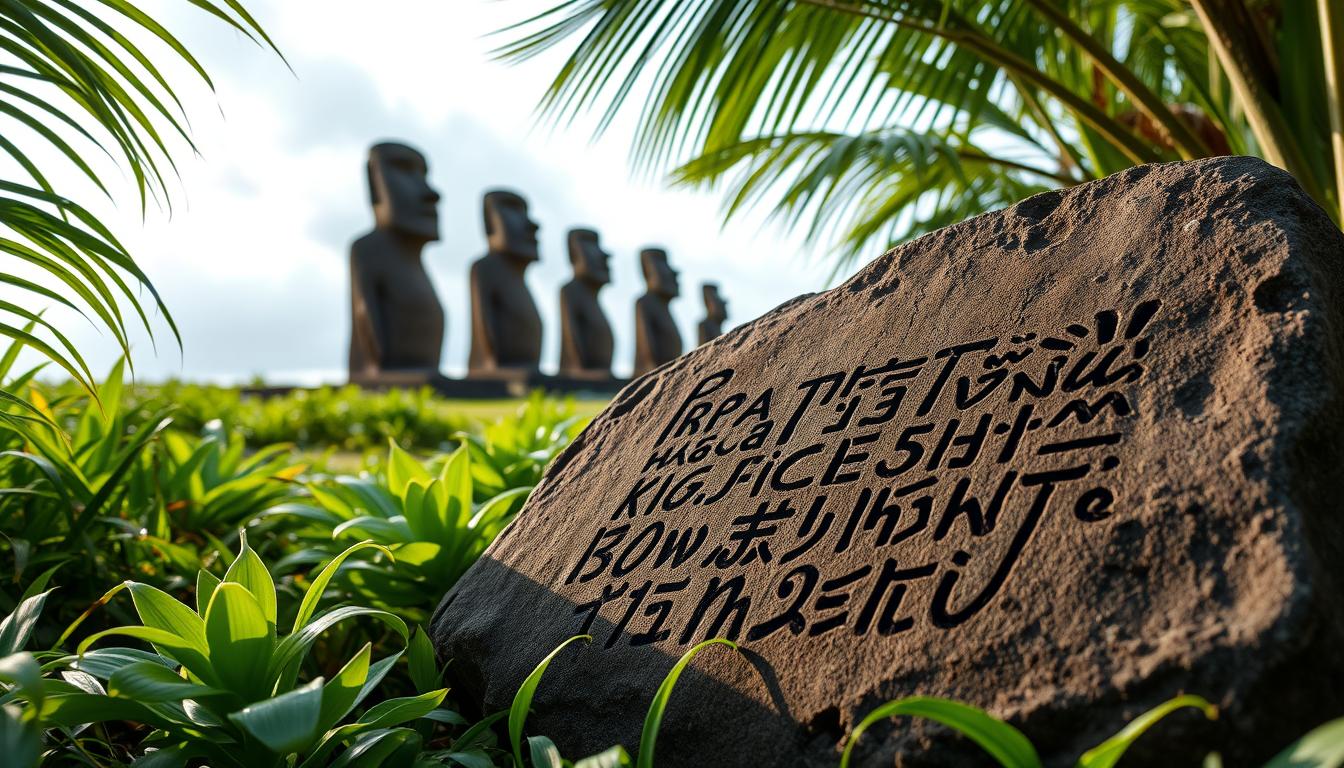
The Surprising Language of Easter Island
Thinking about visiting Easter Island? You might wonder what language they speak. The Easter Island language, or Rapa Nui, is both unique and intriguing. It’s a Polynesian tongue, spoken by about 1,000 people, shaped by the island’s isolation and history.
Learning about Rapa Nui language reveals its cultural value. You might ask, what’s the current state of Rapa Nui, and how is it kept alive for the future? Uncovering these answers helps us understand the Rapa Nui people’s culture and identity.
What Language Is Spoken on Easter Island Today?
The language spoken on Easter Island is Rapa Nui. It’s an Indigenous language of Easter Island and part of the Polynesian language family. You’ll see Rapa Nui is key to the local culture and identity. With about 1,000 speakers, it’s a vital part of the island’s heritage.
Rapa Nui falls under the Austronesian language family, the eastern branch of the Polynesian language. This shows its unique traits and ties to other regional languages. Though it’s an official language, it faced suppression in the past. This was for Spanish in public jobs and education.

But, lately, there’s been a push to keep the Indigenous language of Easter Island alive. Rapa Nui classes are now in schools, and the first Rapa Nui newspaper came out in 2010. These steps aim to help the language grow and stay used by the islanders.
Some important facts about Rapa Nui include:
- It’s spoken by about 1,000 people
- It’s an official language on Easter Island
- It belongs to the Austronesian language family
- There are efforts to save and promote the language
The Origins of Easter Island’s Indigenous Language
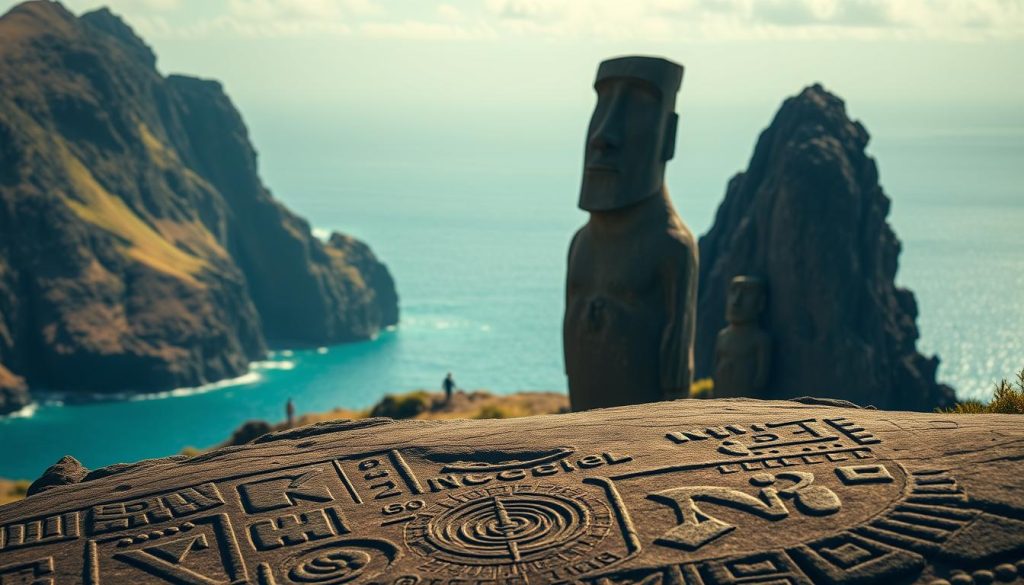
Exploring the Easter Island culture reveals a rich history of its indigenous language, Rapa Nui. It belongs to the Austronesian language family, which started in Taiwan over 5,000 years ago. The early Rapa Nui language was shaped by Polynesian migrations to the islands.
The Langauges of Easter Island have been influenced by the island’s history. This includes the arrival of Europeans and the introduction of diseases. Today, there are efforts to save and promote Rapa Nui, like the Rapa Nui Language Academy since 2004.
- It has only five vowels and ten consonants.
- The number of traditional Rapa Nui language speakers dwindled to about 800 people due to the teaching of Spanish.
- Since the introduction of formal Rapa Nui language classes, there are now more than 3,000 speakers of the native language.
The Rapa Nui language revival started in 1975. Formal teaching began in 1976 for kids from kindergarten to fourth grade. These steps have helped keep the Langauges of Easter Island and Easter Island culture alive for the next generations.
Understanding the Unique Features of Rapa Nui Speech
The Rapa Nui language is special. It’s spoken on Easter Island. It has features that make it stand out. One key feature is reduplication, where words are repeated to change their meaning.
For example, “kai” means “sea”. But “kakai” means “at sea”. This lets speakers share complex ideas and feelings in a short, powerful way.
Another cool thing about Rapa Nui is its dual pronouns. These pronouns show if someone is included or not. This adds depth to conversations. The way Rapa Nui forms sentences is also unique. It uses prepositions and postpositions to show time and how actions are done.
Some key features of the Rapa Nui language include:
- Reduplication: repeating a syllable or word to modify its meaning
- Dual pronouns: distinguishing between inclusive and exclusive pronouns
- Verb phrase structure: using prepositions and postpositions to indicate tense and aspect

The Rapa Nui language is rich and complex. It shows the history and culture of its speakers. By understanding these features, we can see the language’s importance in the lives of its speakers.
The Role of Spanish in Modern Easter Island Communication
Exploring Easter Island’s history shows how Spanish has shaped its language. Over 10,000 people live there, and most speak Spanish in public. Yet, many also use Rapa Nui at home, mainly with family.
The island’s complex history has made its language mix unique. Chile annexed Easter Island in 1888. This has led to many speaking both Rapa Nui and Spanish. In recent years, more people have moved to the island, increasing Spanish speakers.
Spanish’s role in Easter Island’s communication is key to understanding its cultural heritage. The Rapa Nui language, though endangered, is vital to Pacific Island languages. Efforts like bilingual education and cultural programs aim to keep it alive.

- About 800 people still speak Rapa Nui.
- The effort to revive Rapa Nui started in 1975, with Chile’s education ministry.
- Rapa Nui was taught in schools since 1976.
By valuing Rapa Nui and bilingual education, we can protect this unique part of Easter Island’s history and Pacific Island languages.
Traditional Writing Systems and Modern Adaptations
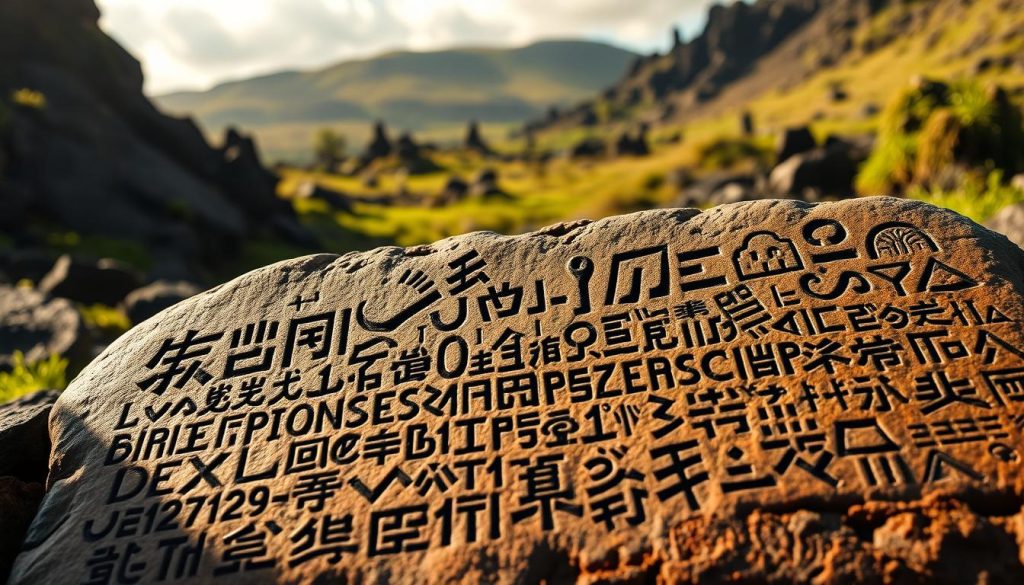
The Rapa Nui language is key to Easter Island’s culture. It uses a writing system called Rongorongo. This system has complex glyphs that are still a mystery, making it very interesting.
In recent times, the Rapa Nui language has been written using the Latin alphabet. This change includes special marks to show unique sounds and how to say words.
Exploring the Rapa Nui language shows its big role in Easter Island’s culture. It’s not just for talking but also for keeping the island’s history and traditions alive. The switch to the Latin alphabet has made it easier for others to learn, yet it keeps its cultural value.
The table below shows why keeping the Rapa Nui language and Easter Island culture alive is so important:
| Aspect | Importance |
|---|---|
| Language Preservation | Preserves cultural heritage and traditions |
| Cultural Significance | Represents the island’s history and identity |
| Adaptation to Latin Alphabet | Increases accessibility and understanding of the language |
In summary, the Rapa Nui language and Easter Island culture are closely linked. Working to keep and adapt the language is crucial for the island’s unique cultural identity.
Language Preservation Efforts on Easter Island
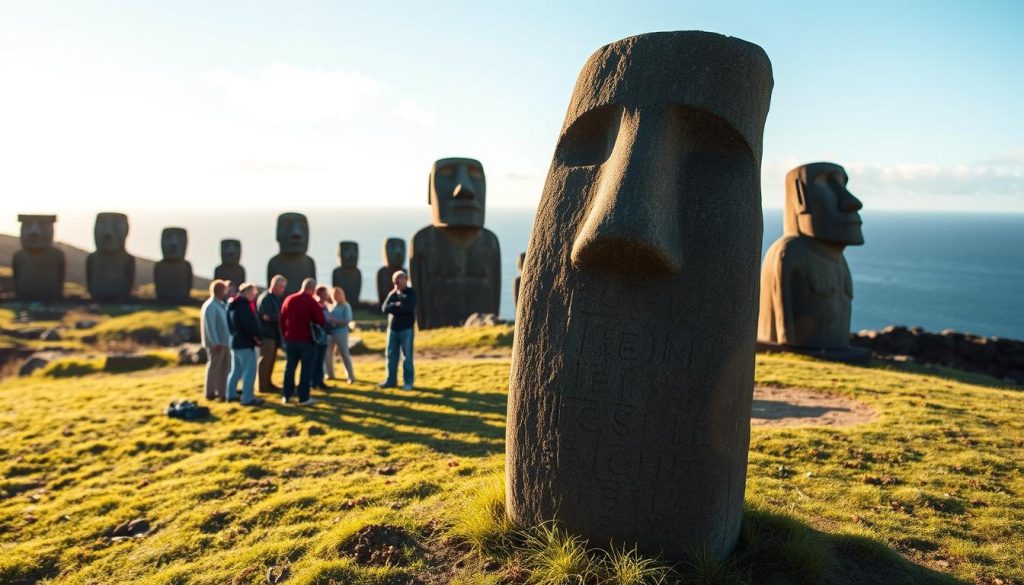
Exploring the Indigenous language of Easter Island shows how vital preservation is. With only 1,000 native speakers, Rapa Nui is seen as severely endangered by UNESCO. The language is key to the island’s culture and identity, with many working to keep it alive.
Community programs, educational efforts, and digital projects are all part of the push to save Rapa Nui. For instance, language classes and cultural programs teach it to the young. Also, documenting the language helps create learning materials and resources.
- Only 10% of children under 18 speak and understand Rapa Nui as of 2017.
- Most adults also speak Spanish, which can harm Rapa Nui’s use.
- The Mayor plans to spend over $3.5 million yearly to support language policies and projects.
These projects aim to keep the Easter Island language alive in daily life, education, and culture. By supporting these efforts, you help protect Easter Island’s unique cultural heritage and its people’s future.
Cultural Significance of Rapa Nui Language
The Rapa Nui language is key to Easter Island’s culture. It has its own special features and history. As part of Pacific Island languages, it’s a big part of the island’s heritage. You can see its importance in traditional songs and chants, which are a big part of the island’s identity.
Storytelling and oral history are very important in Easter Island. They help pass down legends and stories from one generation to the next. The Rapa Nui language is used to share these stories, showing its role in keeping the island’s history and traditions alive. Some key aspects of the Rapa Nui language and its cultural significance include:
- Traditional songs and chants, which are used to express emotions and tell stories
- Storytelling and oral history, which are essential in preserving the island’s cultural heritage
- The use of the Rapa Nui language in daily life, including communication with elders and in cultural ceremonies
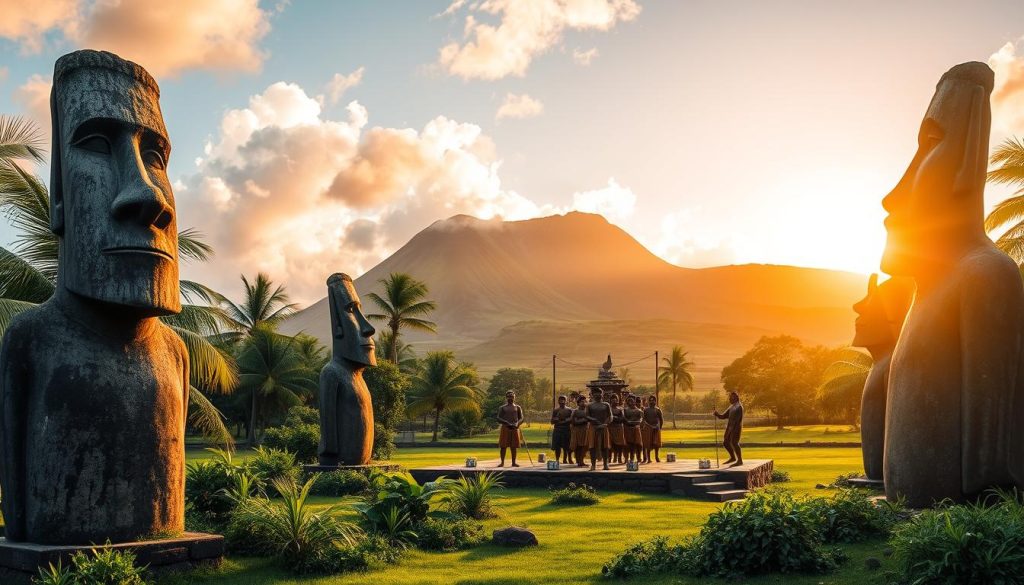
The Rapa Nui language is a unique and vital part of Easter Island culture. Efforts are being made to keep it alive. By understanding the cultural significance of the Rapa Nui language, we can see why it’s important to save Pacific Island languages and the rich heritage they bring.
Language Changes Through Easter Island’s History
Exploring Easter Island history reveals changes in the Rapa Nui language. The island’s culture and language have been influenced by Spanish. The Rapa Nui language has evolved, adding new words while keeping its unique flavor.
The Easter Island story includes times of growth and decline. In 1770, there were about 3,000 people. But by 1877, only 111 remained due to disease and slavery. This loss affected the Rapa Nui language and the ability to understand rongorongo.
Despite these setbacks, the Rapa Nui language lives on. Today, it’s a key part of Easter Island’s culture. Efforts are underway to keep it alive. Here are some interesting facts about the Rapa Nui language and Easter Island:
| Category | Statistic |
|---|---|
| Island Size | 64 square miles (165 square kilometers) |
| Population (1770) | around 3,000 people |
| Population (1877) | just 111 individuals |
| Language | Rapa Nui language |
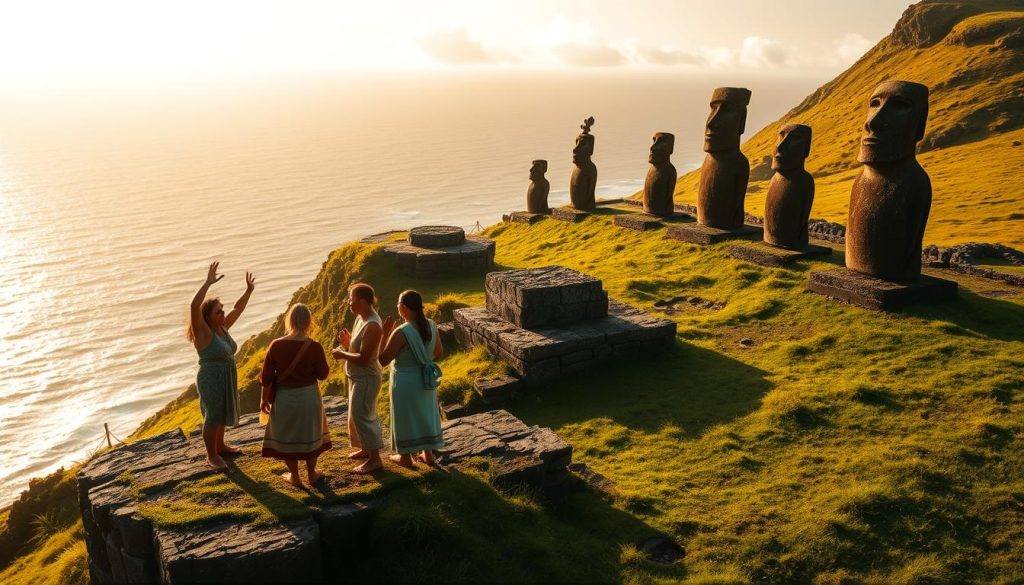
The Rapa Nui language is crucial to Easter Island’s history and culture. As you learn more about the island, you’ll see the importance of the Rapa Nui language in Easter Island history.
The Future of Easter Island’s Indigenous Language
The Indigenous language of Easter Island, known as Rapa Nui, is at risk. Only a few thousand people still speak it. But, there are plans to save and celebrate this language.
Younger people often prefer Spanish or other languages over Rapa Nui. Yet, there’s hope. Young islanders are showing more interest in their culture and language. For instance, many young islanders are singing Rapa Nui songs in the streets of Hanga Roa.
Initiatives to boost Rapa Nui include:
- Language classes for children and adults
- Cultural events and festivals celebrating Rapa Nui culture
- Development of language learning materials and resources

These efforts aim to keep the Rapa Nui language alive. By supporting these projects, we can help the language thrive for generations to come.
Conclusion: Preserving Easter Island’s Linguistic Legacy
The Rapa Nui language is a key part of Easter Island’s culture. By supporting efforts to save this language, you help ensure it lasts for future generations. Programs and community work are vital to keep the Rapa Nui language alive.
Today, Easter Island has about 6,000 people and welcomes over 80,000 tourists yearly. It’s crucial that the Rapa Nui language stays vibrant. By celebrating this language, we protect a vital part of Easter Island’s unique culture. Let’s join hands to preserve the Easter Island and Rapa Nui languages for the future.