Swim with Whale Sharks near Grand Turk | Unique Adventure
Whale sharks are the world’s largest fish, and encounters with them rank among the most memorable experiences available to snorkelers and divers anywhere on earth. Grand Turk, a small island in the Turks and Caicos Islands roughly 575 miles southeast of Miami, sits along one of the most productive marine corridors in the Atlantic, with pristine reefs, exceptional visibility, and proximity to open ocean where these animals feed. This guide covers everything you need to know about planning a whale shark encounter near Grand Turk, from seasonal timing to verified local operators and where to stay.
Introduction to whale sharks
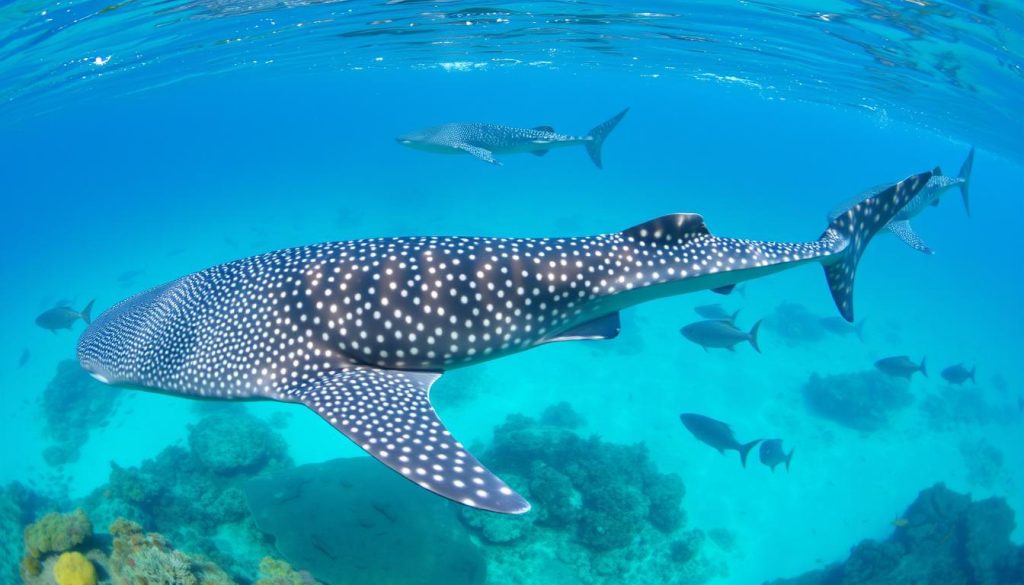
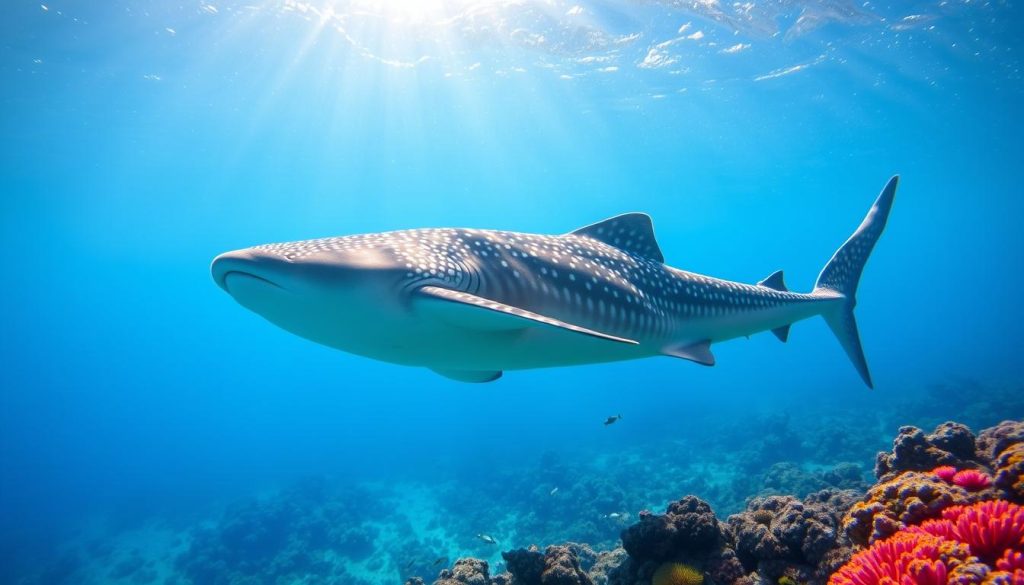
Whale sharks are the world’s largest fish, reaching verified lengths of up to 12 meters and weights exceeding 20 tonnes in large adults. Despite their size, they are filter feeders, sustaining themselves on plankton, small fish, and fish eggs rather than pursuing prey. They feed by swimming forward with their mouths open, filtering water through modified gill rakers that can process hundreds of thousands of gallons per day. Each whale shark’s pattern of white spots and stripes is unique, functioning like a fingerprint that researchers use for individual identification in photo-ID databases.
Why swim with whale sharks?
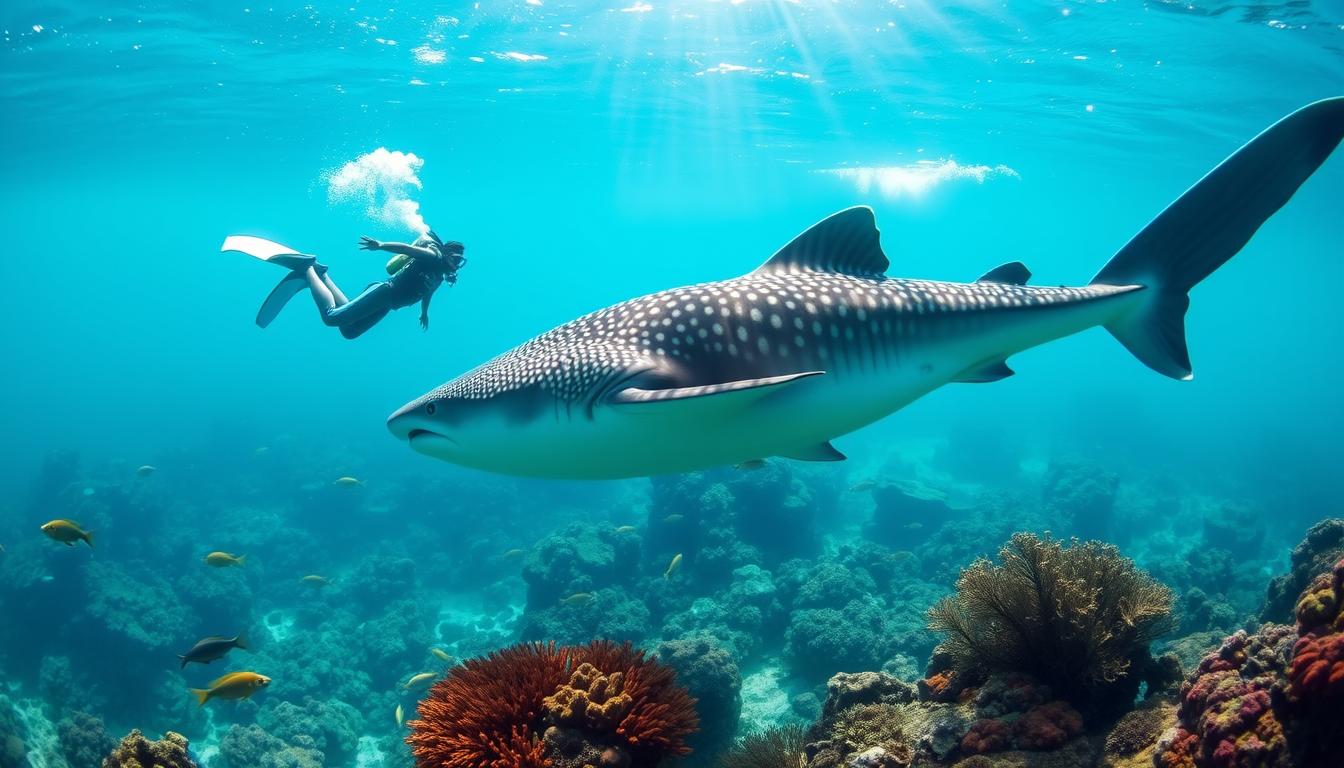
Swimming alongside a whale shark in open water is a fundamentally different experience from observing marine animals through glass in an aquarium. You are in the animal’s environment, matching speed with a creature that moves at a calm 3 to 5 kilometers per hour, close enough to see the geometry of its spots and the motion of its gill slits. The scale of the encounter shifts your sense of proportion in a way that photographs rarely convey. Beyond the personal experience, interactions conducted according to responsible guidelines support conservation awareness and contribute to research programs that track whale shark populations and migration routes.
Can you swim with whale sharks near Grand Turk?
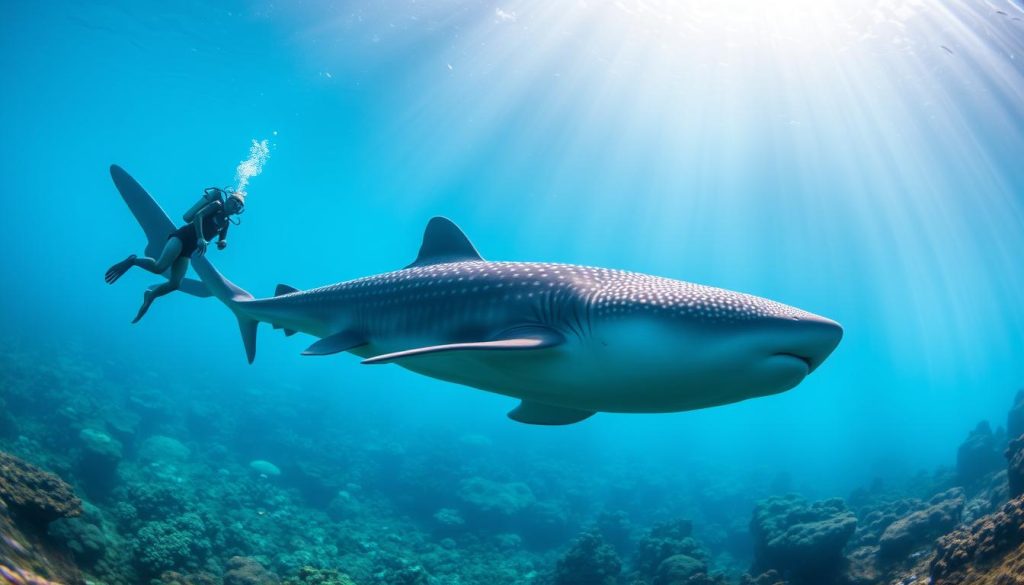
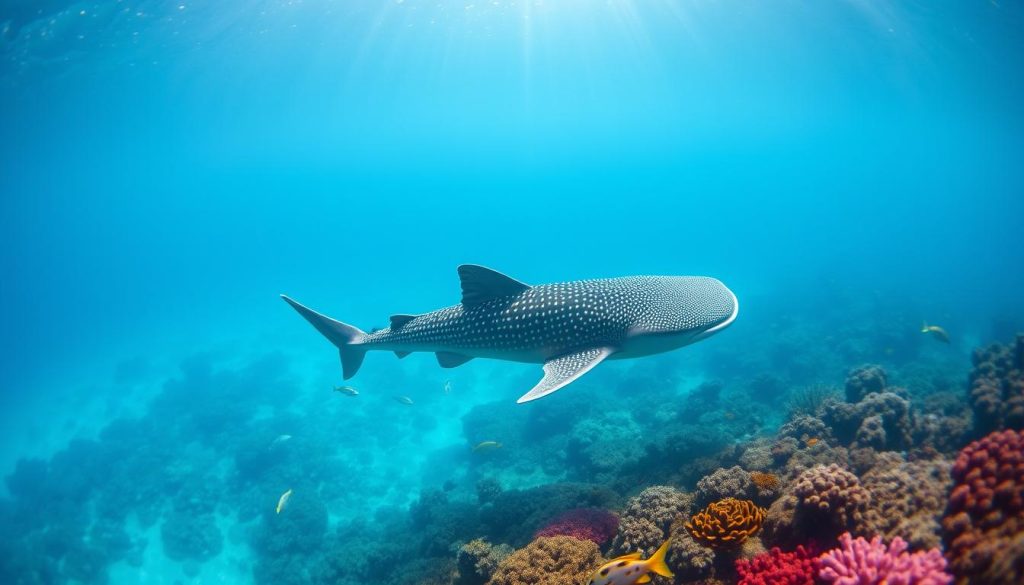
Whale shark encounters near Grand Turk are possible, though sightings are opportunistic rather than guaranteed at a fixed schedule. The Turks and Caicos Islands sit along a major Atlantic migration corridor, and whale sharks follow prey aggregations through these waters. Local dive operators monitor conditions and actively share sighting reports when whale sharks are in the area. The clearest, most accessible water for such encounters lies along the Grand Turk wall, a dramatic reef edge running close to the island’s western shore that drops from approximately 40 feet at the reef crest to over 7,000 feet, providing both coral habitat and access to open water where pelagic species including whale sharks are encountered.
Grand Turk is also one of the Atlantic’s most reliable winter destinations for humpback whale encounters. Every year from approximately late January through early April, humpback whales migrate through the passage between Grand Turk and South Caicos, often passing within snorkeling distance of boats. Many of the same operators offering pelagic wildlife tours combine whale watching and snorkeling with humpback whales in season with general ocean wildlife trips.
The unique experience of whale shark tours near Grand Turk
Whale shark encounters on Grand Turk typically involve small-group boat trips to open water or along the outer reef wall. Operators limit group sizes to reduce disturbance to the animals and improve the quality of each encounter. Tour guides provide pre-departure briefings on approach protocols, including required distances, prohibited behaviors (no flash photography, no chasing, no touching), and in-water positioning to avoid interfering with the animal’s path.
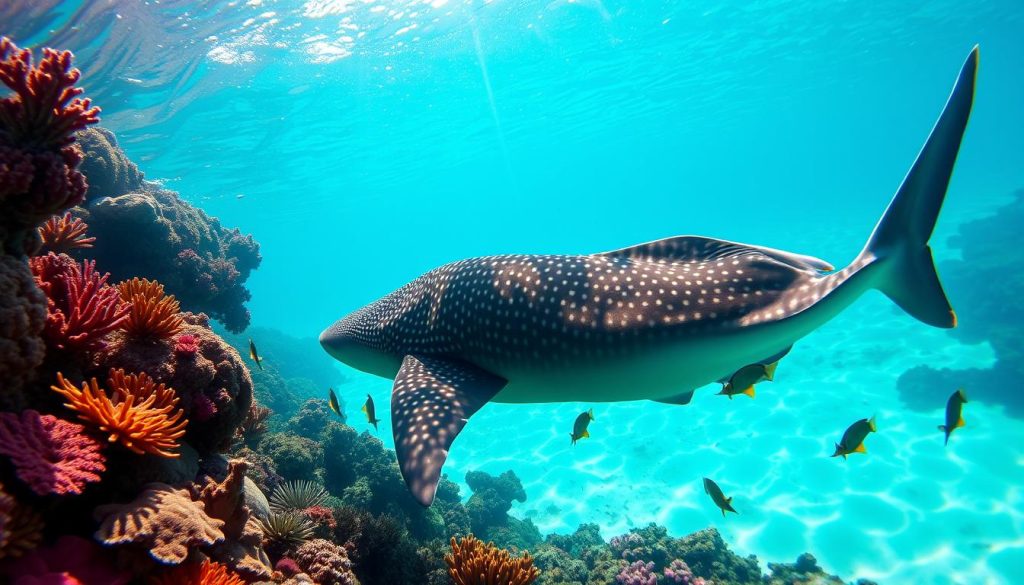
Because Grand Turk has no large-scale tourism infrastructure, most operators run small boats and offer genuinely personalized service. Guides typically have extensive local knowledge of reef geography, current patterns, and where specific species are most likely to appear. In addition to potential whale shark sightings, tours regularly encounter Caribbean reef sharks, nurse sharks, green and hawksbill sea turtles, eagle rays, and a high density of reef fish along the wall system.
Best times for marine wildlife encounters near Grand Turk
Seasonal factors influencing wildlife sightings
The most predictable large-animal season near Grand Turk runs from late January through early April, when humpback whales transit through the Turks Island Passage during their annual migration. Water temperatures in this period range from 77 to 80 degrees Fahrenheit, visibility regularly exceeds 80 feet, and seas are often calm enough for comfortable snorkeling. Whale shark sightings near Grand Turk can occur across a wider range of months and are tied to prey availability rather than a fixed calendar, so travelers should ask current operators about conditions at the time of visit.
| Month | Peak wildlife | Conditions |
|---|---|---|
| January to March | Humpback whales migrating through Turks Island Passage | Calm seas, 77-80°F water, visibility 80-100+ ft |
| April to June | Reef fish spawning aggregations, pelagic species including whale sharks possible | Water warming to 82°F, good visibility |
| July to October | Peak reef diversity, sea turtle nesting season | Warmest water (84-86°F), highest dive volume |
| November to December | Transitional season, early humpback scouts possible | Cooling water, moderate seas |
Weather conditions for optimal experiences
Grand Turk’s climate is consistently warm year-round with the dominant trade winds providing some cooling. The calmest sea conditions typically occur in winter and early spring, which aligns with the humpback whale season. Summer and fall bring warmer water and peak reef productivity but also greater hurricane risk from August through October. Regardless of season, Grand Turk’s wall dive system offers genuinely world-class conditions whenever trade winds permit boat access to the western shore.
Grand Turk marine life encounters
Overview of marine biodiversity
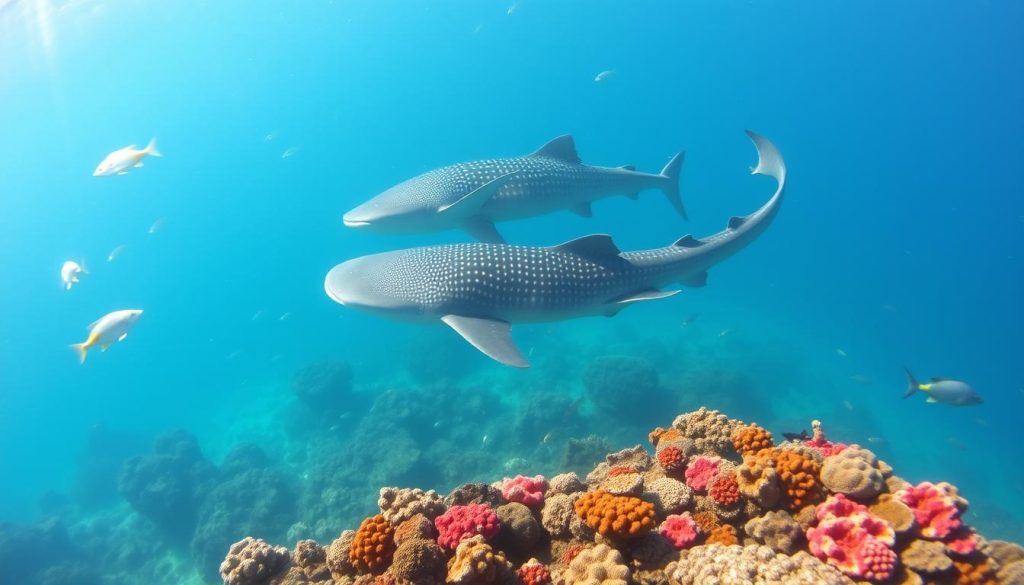
The waters surrounding Grand Turk support exceptional marine biodiversity. The island lies at the edge of the Turks Island Passage, a deep-water channel that concentrates nutrients and supports the full range of Caribbean pelagic species. Visibility along the reef wall regularly exceeds 100 feet, making Grand Turk one of the clearest dive environments in the Atlantic. The wall itself begins at approximately 40 feet and drops to over 7,000 feet, creating a dramatic vertical reef environment hosting sponge gardens, hard and soft corals, and a substantial shark population.
Specific species you’ll encounter
Along the Grand Turk wall and surrounding reefs, consistent resident species include stoplight parrotfish, blue tangs, black durgons, French grunts, yellow goatfish, and large numbers of Caribbean reef fish. Green and hawksbill sea turtles are regularly encountered on both reef and open water trips. Nurse sharks rest under coral formations, and Caribbean reef sharks patrol the wall edge. Gibbs Cay, a small island just east of Grand Turk’s main settlement, is home to a resident population of southern stingrays accustomed to human presence. Big Sand Cay, located roughly 10 miles south of Grand Turk, offers some of the most pristine coral gardens and consistently clear water in the islands.

Tour operators for Grand Turk marine adventures
A small number of established operators run marine wildlife tours from Grand Turk. Deep Blue Charters operates the “I Comin’ Now,” a 31-foot Stamas Tarpon equipped for offshore trips, and offers whale watching, snorkeling cruises, and sport fishing. Their whale watching tours run during the January through April humpback season and include snorkeling with the whales when conditions allow. Ocean Vibes Scuba and Watersports Ltd offers combined whale watching and snorkeling excursions listed through Viator, with small-group departures and a focus on responsible wildlife interaction guidelines. The Turks and Caicos Aggressor operates as a liveaboard dive vessel offering week-long itineraries covering Grand Turk, Salt Cay, and the deeper walls of the Turks Island Passage.
| Operator | Type | Highlights |
|---|---|---|
| Deep Blue Charters | Charter boat (31ft Stamas Tarpon) | Whale watching, snorkeling, sport fishing; beverages and snorkel gear included |
| Ocean Vibes Scuba and Watersports Ltd | Day tours (Viator-listed) | Whale watching and snorkel combination, small groups, ethical wildlife approach |
| Turks and Caicos Aggressor | Liveaboard | Week-long dive itineraries, private cabins, full dive services, Grand Turk wall and Salt Cay coverage |
Understanding whale shark behavior
Whale sharks move at a relaxed 3 to 5 kilometers per hour when surface feeding, which makes them accessible to snorkelers willing to keep a steady pace alongside them. Their feeding behavior involves cruising with their mouths open just below or at the surface, filtering massive volumes of water for plankton and small organisms. When not actively feeding, they may dive to deeper water, sometimes well below recreational diving depths.
Researchers have documented remarkable long-distance movements by tagged whale sharks. A pair of male whale sharks nicknamed Milo and Lucho were tracked by the Marine Megafauna Foundation crossing from the Caribbean to the eastern Atlantic, covering distances exceeding 10,000 miles and demonstrating that these animals connect ocean ecosystems across entire ocean basins. Population estimates for whale sharks suggest that numbers have declined significantly, and encounters with them carry genuine conservation significance.
Swimming with whale sharks: what to expect
Preparation and safety guidelines
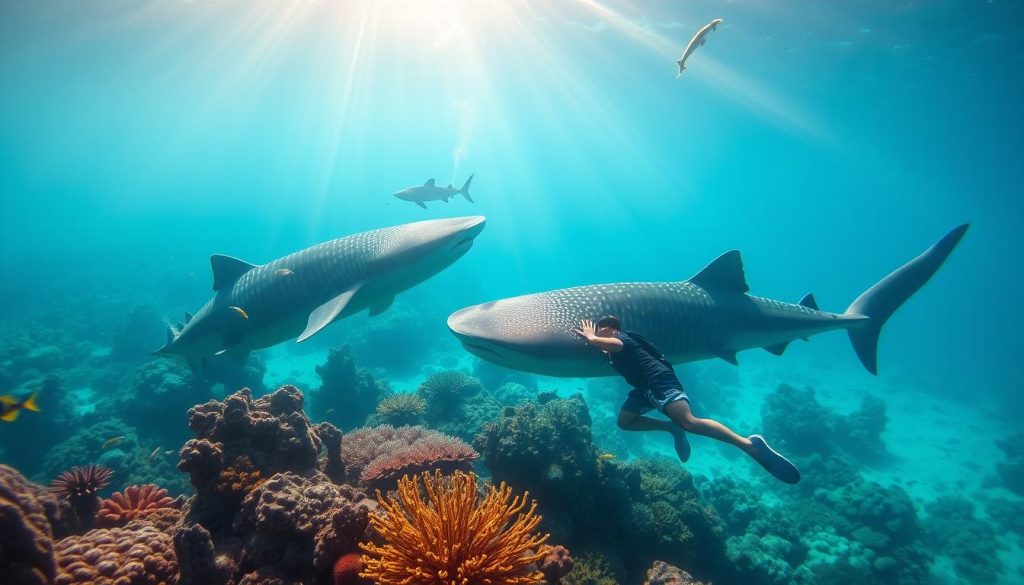
Every responsible operator conducts a pre-departure briefing covering in-water behavior near large marine animals. Standard guidelines prohibit flash photography, require swimmers to stay at least 3 meters from the animal’s body and 4 meters from the tail, and prohibit touching, riding, or impeding the animal’s movement. Swimmers should enter the water calmly without splashing and position themselves parallel to the whale shark rather than in front of it. The animal is protected under Turks and Caicos Islands law, and violations can result in significant penalties.
Equipment provided for tours
Most Grand Turk operators provide masks, snorkels, fins, and snorkel vests or wetsuits as part of tour packages. Water temperature in the whale shark and humpback season (January through April) ranges from 77 to 80 degrees Fahrenheit, which most adults find comfortable with a thin shorty wetsuit or rash guard. Underwater cameras are welcome, though any flash must be disabled. Beginners do not need prior snorkeling experience for most tours, as the water is calm and shallow near the reef.
Top locations for marine wildlife encounters near Grand Turk
The Grand Turk wall, accessible from the island’s western shore in calm weather, is the primary dive and snorkel site where pelagic species including whale sharks and open-water sharks are most likely to be encountered. Columbus Landfall Marine National Park encompasses much of the island’s surrounding waters and provides legal protection for the reef system. Salt Cay, accessible by a 20-minute boat ride or a short domestic flight from Grand Turk, is considered by many divers to be an even better whale watching location due to its proximity to the humpback migration route. Big Sand Cay offers the most pristine snorkeling on undisturbed patch reefs. Gibbs Cay gives non-divers a reliable encounter with marine life through its resident stingray population.
Where to stay in Grand Turk
Grand Turk is a small island of approximately 3,900 residents with a limited number of accommodation options; advance booking, particularly for the humpback whale season from January through April, is essential. The two primary properties cater specifically to divers and marine wildlife travelers.
Bohio Dive Resort is the island’s only full-service dive resort, located on a beach in Cockburn Town approximately a 14-minute walk from the Turks and Caicos National Museum. The property has 16 air-conditioned rooms with private balconies or patios overlooking the sea, a PADI-certified dive center with house dive staff, and the Guanahani restaurant and beach bar on-site. Nightly rates start from approximately $127 for standard rooms and reach $530 for premium oceanview rooms as of 2026, depending on season and availability. The Turks Head Inne at Duke Street in old Cockburn Town occupies a building dating to 1830 that was restored in 2019. The property offers two luxury suites with king beds and balconies, a bar, restaurant, and pizza garden, and provides snorkel gear for guests to access the reef directly from shore. Rates start from approximately $150 per night as of 2026.
Frequently asked questions
Are whale shark sightings guaranteed on Grand Turk tours?
No operator can guarantee whale shark sightings because whale sharks are wild pelagic animals whose movements depend on prey availability and ocean conditions. Grand Turk operators are honest about this. What tours can reliably offer during the January to April season is the opportunity to encounter humpback whales, which migrate predictably through the Turks Island Passage each year, along with the permanent residents of the Grand Turk wall including reef sharks, turtles, and rays.
What is the best time of year to visit Grand Turk for marine wildlife?
The January through early April window combines the best conditions for whale encounters (humpback migration), clearest visibility, and calmest seas. Water temperature sits between 77 and 80 degrees Fahrenheit, which is comfortable for extended snorkeling with a light wetsuit. Summer offers warmer water and peak reef productivity but carries higher hurricane risk from August through October. Divers visit year-round; the wall system is accessible in most weather conditions.
How long is a typical whale watching or snorkel tour from Grand Turk?
Most charter boat excursions from Grand Turk run 3 to 4 hours for half-day trips. Operators typically spend time at multiple sites, combining open-water wildlife watching with reef snorkeling at the wall or at Gibbs Cay. Full-day trips that include Salt Cay or Big Sand Cay run 6 to 8 hours. Liveaboard itineraries with the Turks and Caicos Aggressor typically run 7 nights and cover multiple dive sites across the islands.
Do I need diving certification to participate in whale shark or whale watching tours?
No. All whale watching and whale shark encounter trips near Grand Turk are conducted at the surface with snorkel equipment, making them accessible to non-divers. Standard snorkeling ability (being comfortable floating face-down in open water) is sufficient. For the Grand Turk wall dives, scuba certification is required and most operators request at least an Open Water certification due to the depth and current conditions at the wall edge.
What marine protected areas cover Grand Turk’s reef system?
Columbus Landfall Marine National Park covers the waters around Grand Turk and provides legal protection for its reef system. The park prohibits coral collection, anchoring on reefs, and spearfishing. All tour operators working within the park are required to follow environmental guidelines, and the Turks and Caicos Islands government enforces the Wildlife Protection Ordinance, which covers whale sharks and other protected species. Interactions with protected species including whale sharks are regulated and must follow minimum distance requirements.
How deep is the Grand Turk wall?
The Grand Turk wall begins at a depth of approximately 40 feet at the reef crest and drops vertically to over 7,000 feet. The wall begins very close to the island’s western shore, accessible within a short boat ride from the beach. This extreme drop-off, combined with water clarity that regularly exceeds 100 feet of visibility, makes Grand Turk one of the most dramatic wall dive environments in the Caribbean and a reason why pelagic species including whale sharks occasionally pass through the area.
How far in advance should I book tours in Grand Turk?
During the peak humpback whale season from January through early April, both major accommodation options on Grand Turk fill well in advance, often by October of the previous year. Tour operators also have limited capacity and may be fully booked weeks ahead during peak dates. Travelers aiming for the whale season should book accommodation and tours simultaneously, at minimum 3 to 4 months in advance. For shoulder-season and summer visits, 4 to 6 weeks advance notice is generally sufficient for most operators.