Swahili Phrases to Know Before Visiting Nairobi
Ever thought how a simple greeting in the local language can change your trip? When you visit Nairobi, knowing a few basic Swahili phrases can really help. It makes your interactions with locals better and lets you see the culture more clearly.
Learning Nairobi travel phrases is more than being polite. It’s about showing respect and valuing the local culture. The Kenya Tourism Board says visitors who speak Swahili are welcomed warmly.
As you get ready for your Nairobi trip, add Visiting Nairobi language tips to your plans. This way, you’ll move around the city better, talk to locals, and have a more real experience.
The Value of Speaking Swahili in Kenya’s Capital
Swahili is more than just a language in Nairobi; it’s a bridge to understanding the local culture. When you speak Swahili, you’re not just communicating; you’re showing respect for the local way of life. This can significantly enhance your travel experience in Nairobi.

Breaking Down Language Barriers with Locals
Speaking Swahili helps break down language barriers with locals, making it easier to navigate the city, interact with vendors, and enjoy the local cuisine. Simple greetings like “Jambo” (hello) or “Habari gani” (how are you) can go a long way in making a good impression.
Earning Respect Through Cultural Appreciation
Using Swahili demonstrates your effort to understand and appreciate the local culture, earning you respect from the locals. It’s a sign that you’re not just a tourist but someone willing to engage with the community.
English vs. Swahili Usage in Different Parts of Nairobi
Nairobi is a cosmopolitan city, but the use of English and Swahili varies across different areas. In tourist areas, English is widely spoken, but in local markets and residential areas, Swahili is more prevalent. Knowing some Swahili can be very useful in these areas.
| Area | English Usage | Swahili Usage |
|---|---|---|
| Tourist Areas | High | Low |
| Local Markets | Low | High |
| Residential Areas | Moderate | High |
Understanding Swahili: Kenya’s National Language
To really get into Nairobi, learning Swahili is key. Swahili is a common language in Kenya. It helps people from different backgrounds talk to each other.
A Brief History and Influence of Swahili in East Africa
Swahili has a deep history, shaped by Arabic, English, and local Bantu languages. This mix makes Swahili a special and interesting language. It started in East Africa’s coastal areas and now is a big part of Kenya’s identity.
Pronunciation Guide for English Speakers
Swahili is easy to say because words are written as they sound. English speakers will find many Swahili words simple to say. For example, “safari” is said as “sah-fah-ree.”
Basic Grammar and Sentence Structure
Swahili’s grammar is simple, with a subject-verb-object order. Verbs change based on tense and who is doing the action. Nouns have different types, which affect how adjectives and verbs work. A simple greeting like “Jambo, habari yako?” (Hello, how are you?) shows the basic structure.
| English | Swahili |
|---|---|
| Hello | Jambo |
| Thank you | Asante |
| Goodbye | Kwaheri |
Learning these basics can make your time in Nairobi much better. It lets you enjoy the local culture more.
Essential Swahili Greetings and Introductions
Greetings are key in Swahili culture. Learning them is vital for anyone visiting Nairobi. Knowing how to greet locals shows respect and can lead to deeper connections.
Formal and Informal Hello and Goodbye
In Swahili, greetings change with the level of formality. For formal, use “Hujambo” (hello) and “Kwa heri” (goodbye). For informal, “Jamii” or “Habari” (hello) is better, with “Kwa heri” still for goodbye. This helps you bond with locals.
- Formal: “Hujambo” (hello), “Kwa heri” (goodbye)
- Informal: “Jamii” or “Habari” (hello)
Morning, Afternoon, and Evening Greetings
Swahili culture values time-of-day greetings. Say “Habari za asubuhi” (good morning), “Habari za mchana” (good afternoon), and “Habari za jioni” (good evening). It shows you respect local customs.

Introducing Yourself and Asking About Others
To introduce yourself, say “Naam ni” followed by your name. To ask someone’s name, say “Jina lako nani?” To ask about well-being, use “Habari yako?” (how are you?). Reply with “Mzuri sana” (very good) to show positivity.
Key Phrases:
- “Naam ni [name]” – My name is [name]
- “Jina lako nani?” – What is your name?
- “Habari yako?” – How are you?
- “Mzuri sana” – Very good
Mastering these greetings and introductions will help you navigate Nairobi with confidence. It shows respect for the local culture.
What Are Some Essential Swahili Phrases to Know Before Visiting Nairobi?
Before you head to Nairobi, learning some Swahili phrases is a good idea. Nairobi is a city full of culture and modern life. Knowing basic Swahili can help you connect with locals, move around easily, and respect the culture.
Everyday Expressions and Polite Phrases
Learning everyday and polite phrases in Swahili can really improve your trip. Start with Jambo (hello) and Habari (how are you?). Saying nzuri (fine) or salama (peaceful) shows you care about the culture. Don’t forget asante (thank you) and tafadhali (please) for daily chats.
Numbers, Counting, and Basic Math Terms
Knowing numbers and basic math in Swahili is key for shopping and eating out in Nairobi. Learn to count from one to ten: moja (one), mbili (two), and so on. Terms like ghali (expensive) and rahisi (cheap) help you make smart choices.
Days of the Week, Months, and Time Expressions
Knowing the days of the week, months, and time in Swahili makes planning easier. The days are: Jumatatu (Monday), Jumanne (Tuesday), and others. Use asubuhi (morning), mchana (afternoon), and usiku (night) for time.
Transportation and Direction Phrases for Navigating Nairobi
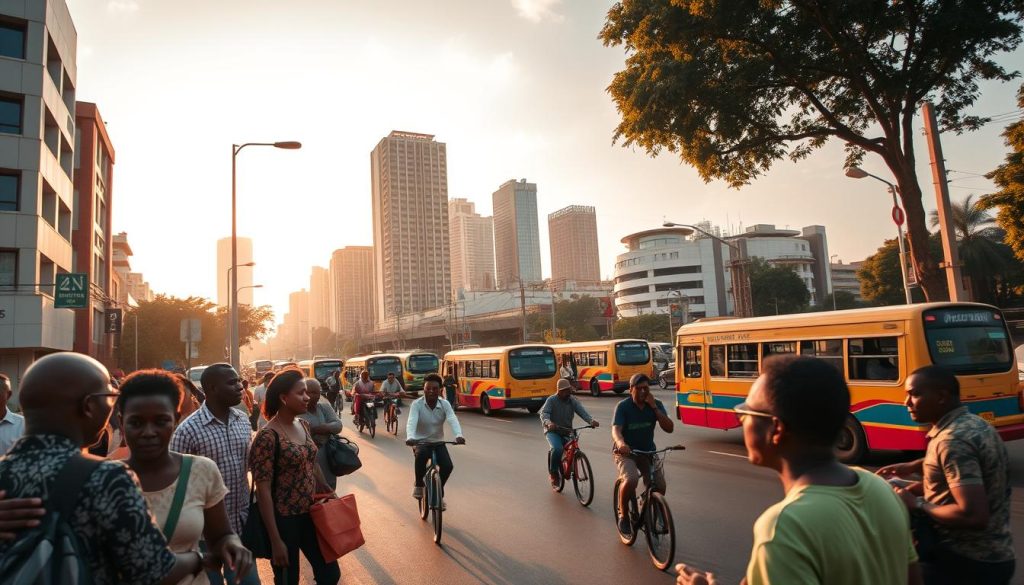
Nairobi’s transport system can be tricky. But, knowing Swahili phrases makes it easier. When you travel, talking to drivers and locals improves your trip.
Matatu and Bus Travel Vocabulary
Matatus and buses are key in Nairobi. To use them, say “Nataka kwenda ku destination” to ask where you’re going. Also, ask “Kiasi gani?” for the fare and “Tunaweza kupata location wapi?” to find a place.
Here are some key matatu words:
- Njia ya – route/path
- Gari moshi – train
- Stesheni – station
Taxi, Uber, and Boda Boda Conversations
Taxis, Ubers, and boda bodas offer private rides. Say “Nipeleke ku destination” to ask for a ride. For the fare, ask “Kiasi gani hadi destination?”
Asking for Directions and Understanding Responses
GPS isn’t always enough. Start with “Unasema wapi?” or “Where is…?” to ask for directions. Locals might say “Kulia” (right), “Kushoto” (left), “Mbele” (straight), or “Nyuma” (back).
Use these phrases to ask for directions:
- Unasema wapi…? – Where is…?
- Njia ya kwenda… – The way to…
Shopping and Bargaining Phrases for Nairobi Markets
Shopping in Nairobi’s markets can be better with a few Swahili phrases. Markets like Maasai Market or City Market have everything from crafts to fresh produce. Knowing how to talk to vendors can improve your shopping and help you find great deals.
Essential Market and Shopping Vocabulary
Knowing basic shopping words is a good start. You’ll need to know “duka” (shop), “soko” (market), and “bei” (price). It’s also useful to say “ninafurahi” (I like it) or “sitaki” (I don’t want it). These words will help you move around the markets easily.

Haggling and Price Negotiation Phrases
Haggling is common in Nairobi’s markets. Start with “Bei gani?” (What’s the price?) or “Unaweza kunipa punguzo?” (Can you give me a discount?). If you want to offer a different price, say “Nitaweza kulipa kiasi gani?” (How much can I pay?). Always be polite and respectful to get a good deal.
“The art of haggling is not just about reaching a mutually agreeable price; it’s about building a connection with the vendor.” – Local Market Tip
Expressing Satisfaction and Dissatisfaction with Products
After buying something, it’s nice to say if you’re happy or not. If you’re pleased, say “Nimefurahi sana” (I’m very happy). If not, a polite “Sijafurahi” (I’m not happy) with a reason can help fix the problem. Vendors value your feedback to improve their service.
Learning these Swahili phrases will help you shop better in Nairobi’s markets. It also shows respect for the local culture, making your shopping more enjoyable and rewarding.
Restaurant and Food-Related Swahili Expressions
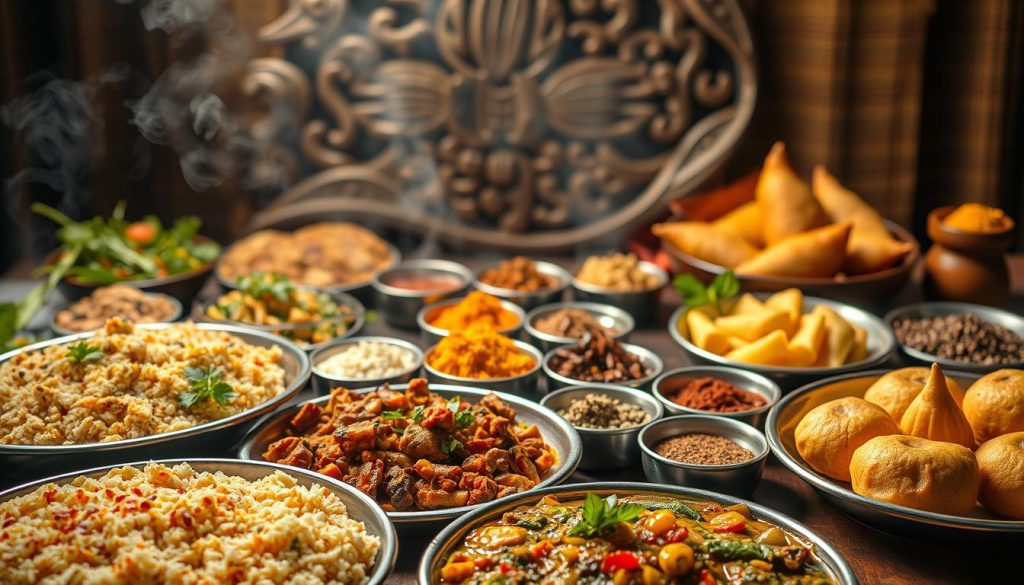
To dive into Nairobi’s food scene, knowing Swahili phrases is key. Kenyan food is rich and varied, thanks to many cultures. Knowing Swahili can make your dining out better.
Ordering Food and Drinks in Local Establishments
Ordering in Swahili at restaurants is very helpful. Here are some phrases you’ll find useful:
- Nipe menu, tafadhali – Give me the menu, please
- Nataka chai/kahawa – I want tea/coffee
- Nipe maji, tafadhali – Give me water, please
- Nitakuwa na nyama ya ng’ombe – I will have beef
- Nina hamu ya samaki – I crave fish
Common Kenyan Dishes and Ingredients in Swahili
Knowing names of Kenyan dishes and ingredients can enrich your dining. Here are a few:
| Dish/Ingredient | Swahili Name | Description |
|---|---|---|
| Ugali | Ugali | Cornmeal staple |
| Grilled Meat | Nyama choma | Roasted meat, usually goat or beef |
| Vegetables | Mboga | Various local vegetables |
Communicating Dietary Needs and Preferences
If you have dietary needs, knowing how to say them in Swahili is helpful:
- Sina kula nyama – I don’t eat meat (vegetarian)
- Nahitaji chakula cha vegan – I need vegan food
- Nina allergy ya gluteni – I have a gluten allergy
- Nataka chakula bila viungo – I want food without spices
Learning these Swahili phrases will make exploring Nairobi’s food scene easier and more fun. It will make your visit even more enjoyable.
Cultural Expressions and Slang Used in Nairobi
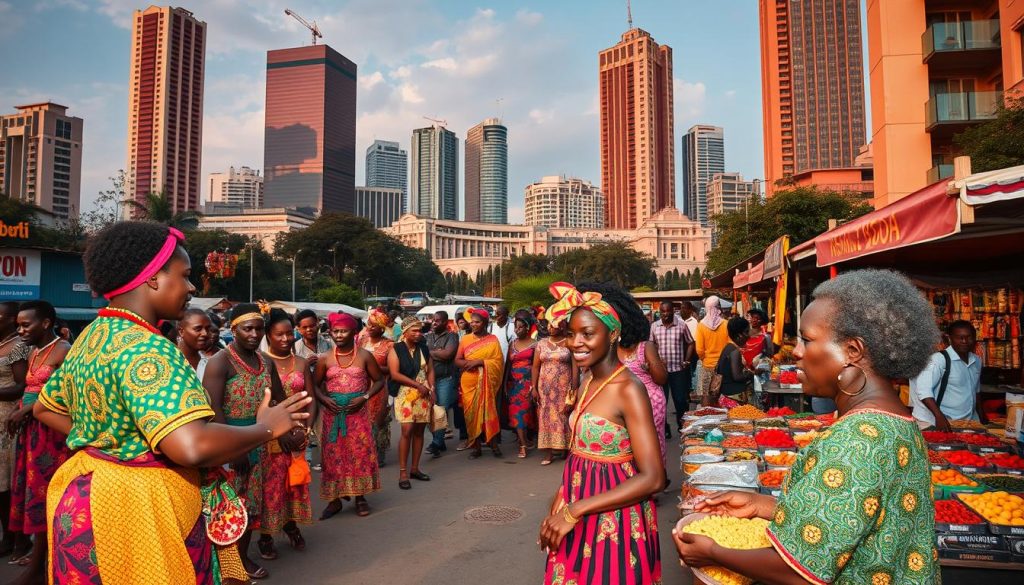
To really get into Nairobi’s vibe, you need to know its cultural sayings. The city’s culture is a mix of many ethnic groups, languages, and influences. Knowing the local slang and phrases makes talking to the city and its people easier.
Understanding Sheng: Nairobi’s Urban Language
Sheng is a special urban language from Nairobi. It combines Swahili, other local languages, and English. It shows the city’s diverse culture. For example, “Msee” (guy) or “Denge” (money) are Sheng terms you might hear.
Getting to know Sheng helps you connect with the young folks and grasp the city’s culture.
Popular Kenyan Sayings and Proverbs
Kenyan sayings and proverbs are full of wisdom and cultural value. “Hakuna matata” (no worries) is a famous phrase that shows the country’s relaxed vibe. Other sayings like “Mgeni siku mbili, siku ya tatu rudisha nyuma” (a guest stays for two days, on the third day, send him back) share insights into traditional values and hospitality.
Learning these phrases helps you understand and appreciate the local culture more.
Expressions That Show Cultural Awareness
Using cultural expressions correctly shows you respect and value Nairobi’s culture. Saying “Asante” (thank you) or “Jambo” (hello) shows you care. Also, knowing when to use certain phrases helps you fit in better.
For example, using formal greetings when meeting elders shows respect.
Conclusion: Embracing Nairobi Through Language
When you’re getting ready to visit Nairobi, learning some Swahili phrases can really make your trip better. By speaking the local language, you can connect with people and show respect. This can make your visit more enjoyable.
Knowing key Swahili phrases helps you in many ways. You can ask for directions or bargain at markets. Simple greetings like “Jambo” or “Habari” can make a big difference in your interactions.
Embracing the local language lets you dive deep into Nairobi’s culture. You’ll make real connections with the people you meet. So, spend some time learning and using Swahili during your visit. You’ll have a more authentic and rewarding experience.