Seattle to Juneau Ferry Route: Your Guide
The ferry from Seattle to Juneau actually departs from Bellingham, Washington, about 90 miles north of Seattle, and takes up to three days through the Inside Passage. The Alaska Marine Highway System (AMHS) operates the only ferry service on this route, connecting Bellingham’s cruise terminal to Juneau’s Auke Bay terminal with stops in Ketchikan, Wrangell, and Petersburg along the way. Passenger fares for the full Bellingham to Juneau segment start around $200-300 per adult as of 2026, with additional charges for vehicles and cabin accommodations.
Bellingham is the real starting point
The Alaska Marine Highway System has no terminal in Seattle. The ferry departs from the Bellingham Cruise Terminal at 355 Harris Avenue, Bellingham, WA 98225. From downtown Seattle, Bellingham is a 90-mile drive north on I-5, typically around 1 hour and 45 minutes without traffic. From Seattle-Tacoma International Airport, add roughly 30 minutes to that estimate.
Bellingham is not just a logistics waypoint. The city sits on Bellingham Bay with views of the San Juan Islands, and the ferry terminal itself offers parking, restrooms, and a waiting area. Online reservations close 4 hours before departure for staffed terminals, so plan to arrive at least 2 hours early if you’re bringing a vehicle.
About the Alaska Marine Highway System
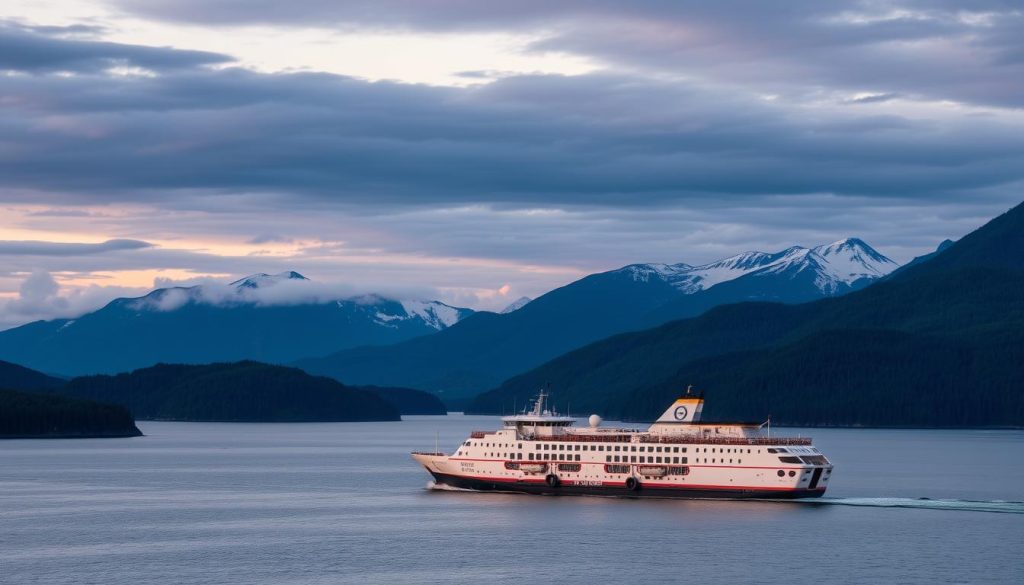
The Alaska Marine Highway System is a state-operated ferry network that has connected coastal Alaska communities since 1963. The system runs a 3,500-mile route with a fleet of 9 vessels serving over 35 ports, stretching from Bellingham in the south to Unalaska in the Aleutian Islands to the west. The U.S. Federal Highway Administration has designated the route an All-American Road, one of only 27 roads in the country to receive that distinction. AMHS moves approximately 300,000 passengers annually statewide.
For travelers heading to Juneau specifically, the relevant portion is the Inside Passage mainline: Bellingham to Juneau via Ketchikan, Wrangell, and Petersburg. Juneau is the only U.S. state capital that cannot be reached by road from the rest of the country, which makes the ferry a practical necessity for residents moving vehicles and equipment, not just a tourist experience.
Mainline vessels on the Bellingham to Juneau route
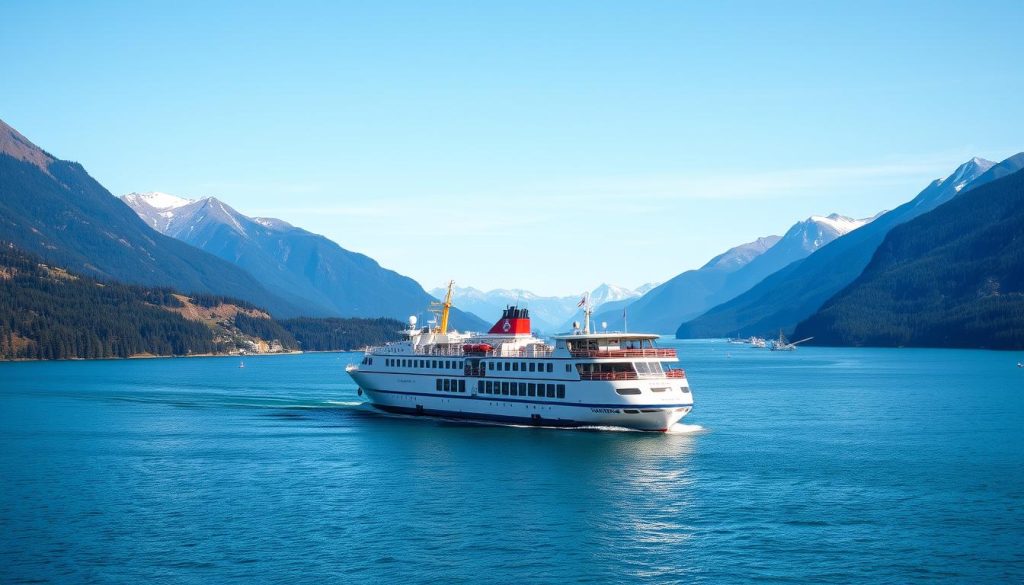
Three mainline vessels operate between Bellingham and Juneau: the MV Columbia, MV Kennicott, and MV Matanuska. Each is equipped to carry both passengers and vehicles, including cars, trucks, RVs, motorcycles, and kayaks. The mainline ferries include cabins, dining, observation lounges, and enclosed solariums. Which vessel you sail on depends on the departure date. The AMHS rotates vessels based on seasonal schedules and maintenance cycles.
The MV Columbia is the largest vessel in the fleet, carrying up to 499 passengers and 107 cabins. The MV Kennicott and MV Matanuska are slightly smaller but offer similar amenities. All three include a solarium deck, where budget-conscious travelers can pitch a tent or spread out a sleeping bag under the Alaskan sky. This is a legitimate and popular option that eliminates cabin costs entirely.

| Vessel | Passenger Capacity | Cabins | Solarium | Dining | Best For |
|---|---|---|---|---|---|
| MV Columbia | 499 | 107 | Yes | Full dining room + cafeteria | Families, long hauls with vehicles |
| MV Kennicott | 499 | 103 | Yes | Full dining room + fast food café | Travelers with RVs or large vehicles |
| MV Matanuska | 500 | 108 | Yes | Dining room + snack bar | Solo travelers, budget deck passengers |
Seattle to Juneau ferry schedule
The Alaska Marine Highway does not offer daily Bellingham to Juneau sailings. Summer sailings (May through September) run more frequently than winter, with one to three departures per week from Bellingham during peak season. The schedule changes year to year, and some sailings operate only on specific dates rather than fixed weekly days. For the current published timetable, check the AMHS sailing search at bookamhs.alaska.gov or call 1-800-642-0066.
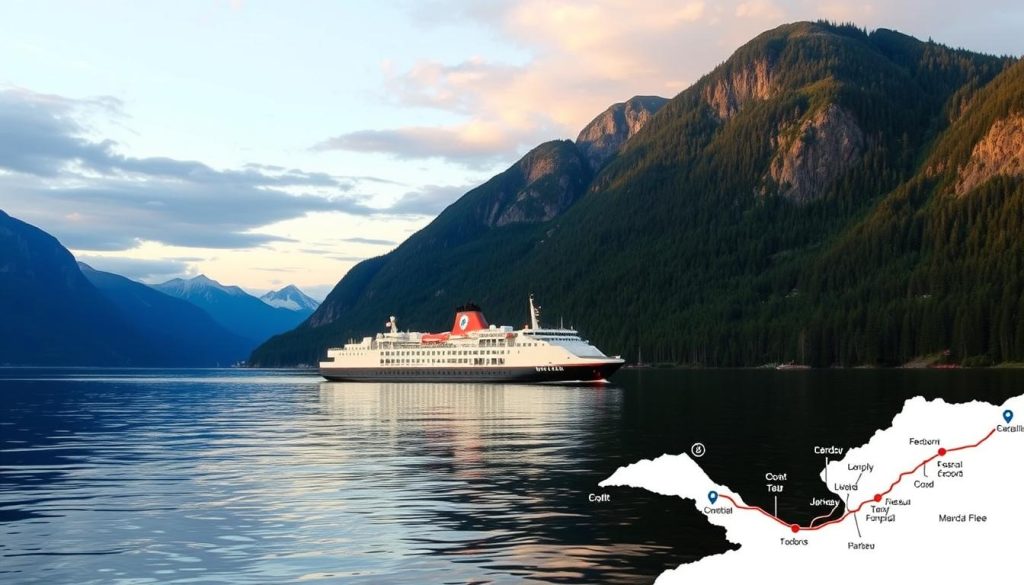
The full journey from Bellingham to Juneau takes approximately 60 to 70 hours, roughly three days, including port stops. Bellingham to Ketchikan is the longest single leg at around 38 hours. From Ketchikan, the ferry continues to Wrangell (6 hours), then Petersburg (3.5 hours), then Juneau (8 hours). Port stops are typically 30 minutes to 3 hours. Passengers can disembark at intermediate ports and reboard a later sailing if they want to explore, but this requires separate ticket segments.
| Leg | Approximate Duration | Notable Stop |
|---|---|---|
| Bellingham to Ketchikan | ~38 hours | First Alaskan port, Misty Fjords nearby |
| Ketchikan to Wrangell | ~6 hours | Wrangell Narrows petroglyphs, LeConte Glacier area |
| Wrangell to Petersburg | ~3.5 hours | Norwegian fishing heritage, Petersburg Creek |
| Petersburg to Juneau | ~8 hours | Tracy Arm fjord views, Stephens Passage |
| Total Bellingham to Juneau | ~60 to 70 hours (3 days) | Auke Bay terminal, Mile 13.5 Glacier Hwy |
How much does the Bellingham to Juneau ferry cost?
Alaska Marine Highway fares are charged separately for passengers, vehicles, and cabin accommodations. Adult passenger fares from Bellingham to Juneau start around $200 to $300 per person as of 2026, depending on season and how far in advance you book. AMHS implemented dynamic pricing, so fares increase as sailings fill up. Booking 3 to 6 months ahead typically secures the lowest rates for summer travel.
Vehicle transport adds a separate fare on top of the passenger ticket. A standard car or truck (up to 21 feet) costs approximately $300 to $450 for the Bellingham to Juneau segment as of 2026. Larger vehicles are charged by foot length. RVs and trailers over 21 feet can exceed $1,000 or more, and very large vehicles can run $3,000 or higher. Motorcycles and bicycles are charged at lower rates than cars.
Cabin accommodations are sold per trip, not per person, and are available on all three mainline vessels. A 2-berth cabin costs more than a 4-berth cabin on a per-person basis. Budget travelers can skip the cabin entirely and use reclining chairs in the forward lounges, or bring a sleeping bag for the solarium deck. Public showers are available on all mainline ferries.

| Category | Approximate Cost (2026) | Notes |
|---|---|---|
| Adult passenger fare | $200–$300 | One-way Bellingham to Juneau; dynamic pricing, book early |
| Child (ages 6–11) | Half of adult fare | Children under 6 travel free |
| Standard car (up to 21 ft) | $300–$450 | Added to passenger fare; charged per vehicle not per person |
| Large RV or truck over 21 ft | $1,000–$3,000+ | Priced per linear foot; large vehicles cost significantly more |
| Bicycle | ~$30–$55 | Much lower than vehicle fares |
| Cabin (2–4 berth, per trip) | $200–$600+ | Sold per cabin not per person; sells out months ahead for summer |
What to expect on board
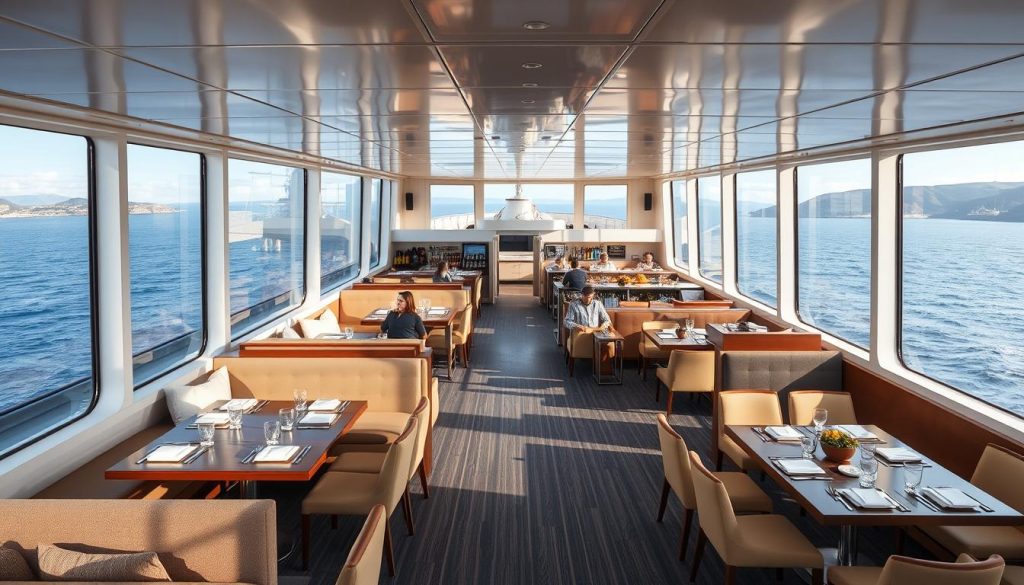
Mainline AMHS ferries are working vessels designed for multiday travel, not cruise ships. Expect functional, comfortable amenities rather than resort-style luxury. Every mainline vessel includes an observation lounge with panoramic windows, an enclosed solarium deck for outdoor viewing in Alaska’s variable weather, and at least one restaurant or cafeteria serving Alaskan seafood, sandwiches, and hot meals. Prices in the onboard dining areas are reasonable compared to Alaska’s general cost of living.
One of the most practical tips for first-time AMHS passengers: once the vessel is underway, you have no access to the car deck. Collect everything you need for three days before you board. Bring a daypack with medications, phone chargers, a jacket, snacks, and anything else you would want during the crossing. Coin-operated ice machines and microwave ovens are available for passengers who bring their own food.
Wildlife sightings are common on the Inside Passage crossing. Humpback whales, orca, Dall’s porpoise, sea otters, bald eagles, and black bears along the shoreline are regularly spotted from the observation decks. Dawn and dusk transits through narrow channels like Wrangell Narrows offer the most dramatic scenery.
How to book the Bellingham to Juneau ferry
The Alaska Marine Highway System handles reservations directly through its official booking site at bookamhs.alaska.gov. The site functions as both a fare calculator and a reservation tool. You can search by departure port, arrival port, and travel dates to see available sailings and current pricing. Reservations can also be made by phone at 1-800-642-0066, Monday through Friday during business hours Alaska time.
For summer travel between June and August, book as early as possible. Cabins on popular sailings can sell out 4 to 6 months in advance. If you are traveling without a vehicle, walk-on passenger space is more readily available, but the lowest-priced fares on any given sailing also fill quickly under the dynamic pricing system. Check the AMHS service notices page before departure, as mechanical or weather-related changes to the schedule do occur.

Arriving at the Auke Bay ferry terminal in Juneau
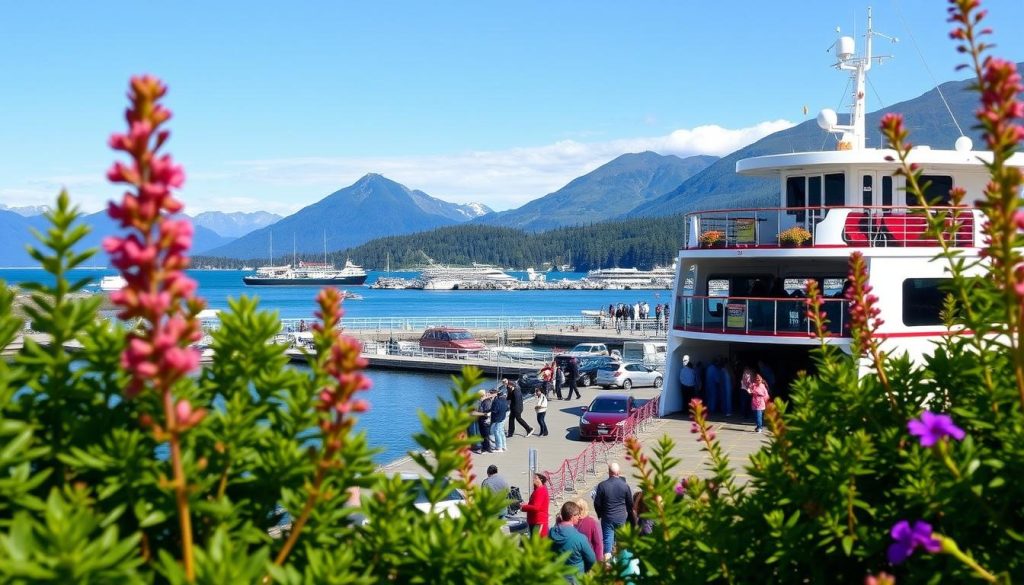
The Alaska Marine Highway terminal in Juneau is located at Mile 13.5 Glacier Highway in the Auke Bay neighborhood, about 14 miles northwest of downtown. The terminal is not served by a regular scheduled bus, particularly for late-night or early-morning arrivals. Taxi service from the terminal to downtown Juneau costs approximately $17 to $35 depending on your destination. Some hotels and lodges offer airport or ferry terminal pickup by arrangement, so call ahead if that is a priority.
Travelers with a rental car have the most flexibility. Several car rental agencies operate in Juneau, and if you are arriving as a foot passenger, arranging a reservation before departure is wise. If you brought your own vehicle on the ferry, the road from Auke Bay into downtown Juneau is a direct 20-to-25-minute drive along Glacier Highway and Egan Drive.
Frequently asked questions
Does the ferry go directly from Seattle to Juneau?
No ferry service departs from Seattle itself. The Alaska Marine Highway System’s southernmost terminal is in Bellingham, Washington, approximately 90 miles north of Seattle. Travelers from Seattle drive or take a shuttle to Bellingham before boarding. The Bellingham Cruise Terminal is at 355 Harris Avenue, Bellingham, WA 98225.
How long does the Bellingham to Juneau ferry take?
The full journey from Bellingham to Juneau takes approximately 60 to 70 hours, or roughly three days, including scheduled port stops in Ketchikan, Wrangell, and Petersburg. The Bellingham to Ketchikan leg alone is about 38 hours. Total travel time can vary slightly based on the specific vessel and any unscheduled delays.
How much does the Bellingham to Juneau ferry cost in 2026?
Adult passenger fares for the Bellingham to Juneau segment start around $200 to $300 as of 2026, with AMHS using dynamic pricing that increases as sailings fill. Vehicle transport is charged separately: a standard car adds approximately $300 to $450, while large RVs can add $1,000 or more. Cabin accommodations are an additional charge on top of both passenger and vehicle fares. Book at bookamhs.alaska.gov for current pricing.
Do I need a passport to take the ferry from Bellingham to Juneau?
No passport is required for U.S. citizens traveling on the Alaska Marine Highway between Bellingham and Juneau, as both are U.S. territories. A government-issued photo ID such as a driver’s license is sufficient. Non-U.S. citizens should carry their passport and any required visa or travel documentation, as they may be checked at certain points.
Can I bring my car on the Bellingham to Juneau ferry?
Yes, all mainline AMHS vessels carry vehicles. Cars, trucks, RVs, motorcycles, bicycles, and even kayaks can be transported. Vehicle fares are charged separately from passenger fares and are based on the vehicle’s length. Be aware that you cannot access the car deck while the vessel is in motion, so take everything you need for the crossing before you board.
Are cabins necessary on the Bellingham to Juneau ferry?
Cabins are optional, not required. Budget travelers regularly complete the three-day crossing without one by using reclining lounge chairs or pitching a tent in the solarium. Public showers are available on all mainline vessels. That said, summer cabins sell out months in advance, so book early if you want one. A 2-berth cabin on the MV Columbia or MV Kennicott typically costs $200 to $400 or more for the full Bellingham to Juneau journey.
What wildlife can I see on the Inside Passage ferry?
The Inside Passage is one of the most productive wildlife corridors in North America. Humpback whales, orca pods, Dall’s porpoise, sea otters, and Steller sea lions are regularly sighted from the ferry decks. Bald eagles perch along nearly every shoreline. The narrow channel transit through Wrangell Narrows, which takes about 3 hours, offers particularly close views of forested shores and is a favorite among wildlife watchers.