Safeguard Passports & Docs on Your Travels
Ever worried about a lost passport ruining your dream trip? We often forget how important it is to keep our travel papers safe. Protecting your passport and documents is crucial. It helps prevent identity theft and keeps travel plans smooth.
Many folks don’t realize the risks of losing their passports. Reports show lost passports are common. They lead to stress and trouble that could be avoided. One couple lost their passports right after arriving in Greece. This shows how easy it is to face such problems.
Being prepared is key to keeping your passport safe while traveling. Know the rules of where you’re going, including visa needs. Joining programs like the Smart Traveler Enrollment Program (STEP) is smart. It keeps you updated about your travel spot. With your documents secure, you can travel confidently and enjoy your trip.
Why Protecting Your Passport and Documents is Essential
Keeping your passport and important documents safe during travel is crucial. It protects your identity and makes crossing borders easier. Losing your passport can mess up your travel plans and cost you money.
Consequences of Losing Your Passport
Losing your passport has many downsides. A U.S. passport gets you into 174 countries without a visa. Losing it can mean cancelling trips, which might cost a lot. Plus, without ID, you could run into legal issues that could delay your trip.
Getting a new passport means dealing with the embassy. This can be stressful and expensive. In 2022, 25% of travel insurance claims were for lost items.
Importance of Document Security
Document security is key for avoiding identity theft and smooth travel. Every year, 25,000 passports are lost or stolen globally. Using hotel safes could cut theft risks by 40%. RFID-blocking wallets can also prevent electronic theft by nearly 70%.
If you travel a lot, you’re more likely to lose your documents. So, keep your passport, travel plans, and health records safe. There are mobile passport features at some airports and cruise ports. But having copies of your documents is the best way to avoid theft.
It’s important to keep your passport dry and safe in your hotel. Waterproof and RFID-blocking wallets add extra security.
| Key Statistics | Value |
|---|---|
| Number of lost or stolen passports annually | Over 25,000 |
| Overall risk reduction when using hotel safes for document storage | Approximately 40% |
| Decrease in likelihood of electronic pickpocketing with RFID-blocking technology | Nearly 70% |
| Percentage of travel insurance claims due to lost belongings in 2022 | 25% |
| Percentage of travelers who experience a loss of travel documents annually | 70% |
| Mobile passport functionality availability | 4 cruise ports and 28 airports |
Pre-Travel Precautions for Document Safety
Before you go on a trip, it’s super important to keep your travel papers safe. This can prevent lots of problems on your journey. Here are some key document protection tips to remember:
Making Copies of Important Documents
Making copies of your important travel papers is a top tip. You should copy your passport, visa, insurance, plans, tickets, and prescriptions. Keep these copies in the cloud and in your bags. Having backups helps if the originals get lost or stolen.
Informing Friends and Family
Tell trusted friends or family about your travel plans and important document details. This includes flight and hotel info, emergency contacts, and your passport copy. Having someone know where you are can be very helpful if you need help. Also, tell your banks and credit card companies you’re traveling. This prevents any service hiccups while you’re away.
Checking Passport Expiration Dates
Make sure your passport is current before your trip. Many places want it to be valid for six months after you arrive. Remember, kids’ passports only last five years. Check expiration dates early and renew if you need to. Also, see a health specialist 4-6 weeks before leaving. This ensures you follow all health and medicine rules where you’re going.

How Can I Protect My Passport and Important Documents While Traveling?
Keeping travel documents safe on the road is very important. There are many ways to make sure your passport and important papers are secure and easy to get to during your trip.
Use of RFID-Blocking Passport Holders
RFID-blocking passport holders are key for protection against electronic theft. RFID tech is often in passports and credit cards. These holders block scans and can cut identity theft chances by almost 60%.
Strategies to Prevent Theft
To stop securing travel documents from being stolen, try these tips:
- Keep documents in portable lockboxes in your hotel to keep them safe when you’re out.
- Wear money belts or undercover wallets to keep things close and hard for thieves to reach.
- Spread out your documents in different bags. If one gets lost, you might still have the others.
- Always use ATMs in places that are well-lit and public. Cover your hand when you enter your PIN.
These steps can help lower the risk of losing your passport and valuable papers. They let you travel without worries.
Choosing the Right Storage for Your Documents
It’s crucial to keep your important papers safe when traveling. Choosing the best way means knowing the good and bad of each option. This part will guide you in choosing document storage wisely.
Portable Lockboxes vs. Hotel Safes
Travelers often find themselves choosing between portable lockboxes and hotel safes. Portable lockboxes let you move around easily and keep control. Studies show they can lower theft by up to 60% if used right. Yet, hotel safes are handy and a standard feature in many places. But, 30% of travelers don’t trust them fully, which can lead to stolen goods.
| Feature | Portable Lockboxes | Hotel Safes |
|---|---|---|
| Security | High (if properly secured) | Moderate |
| Accessibility | Variable | Convenient |
| Mobility | Portable | Fixed |
| Risk of Theft | Low | Medium |
Using Money Belts and Undercover Wallets
Money belts and undercover wallets add security for your documents while on the move. Money belts keep your passport and other papers close, cutting down pickpocket risks. Since most thefts happen in busy spots, these can really protect your stuff. Undercover wallets, worn under clothes, work well too.

Using different methods like portable lockboxes and undercover wallets makes your documents safer. Experts say using at least three storage ways can help keep important papers safe on trips. This approach works for around 85% of those who travel often.
Tips for Carrying Your Passport During Trips
Keeping your passport safe while traveling is crucial. Employing smart strategies can significantly lower risks. Here are some handy tips to help keep your passport secure:
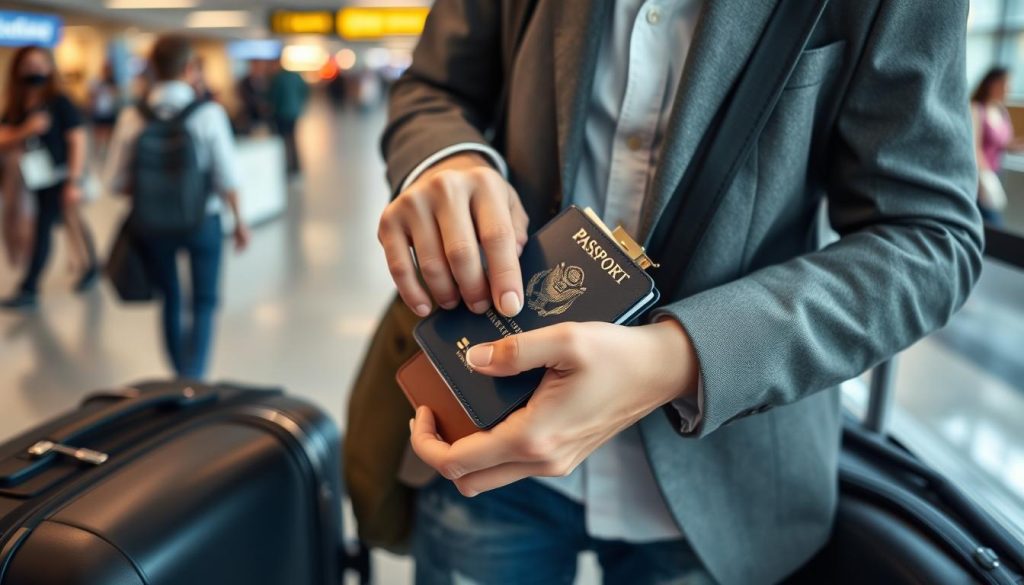
- Utilize Body-Worn Accessories: Consider carrying your passport in a money belt or an undercover wallet that stays close to your body. This helps reduce the risk of theft, especially in crowded areas.
- Accessible but Hidden: Your passport should be easy to reach but hidden. In places where ID checks are common, make sure your passport is not visible to potential thieves.
- RFID-Blocking Sleeves: RFID-blocking sleeves can prevent electronic theft. This is key as hacking technology gets more advanced.
- Avoid Back Pockets: Don’t keep your passport in your back pocket. It’s easy for pickpockets to steal, especially in busy spots like public transport or tourist areas.
- Divide and Conquer: Don’t put all your important documents in one place. Spread them out. If something gets lost or stolen, you’ll still have other essentials and copies.
This table shows different ways to keep your passport safe while you’re traveling:
| Method | Advantages | Disadvantages |
|---|---|---|
| Body-Worn Accessories | Highly secure, discreet, and hard for thieves to get to | May be uncomfortable or not convenient for long times |
| RFID-Blocking Sleeves | Protects against electronic theft, simple to use | Does not protect against someone physically stealing it |
| Keeping in Backpack | Convenient and spacious, fits many documents | Higher theft risk in crowded places, less secure |
| Money Belts | Secure and stays close to your body, hidden under clothes | Getting to it can be hard, especially in public |
By using these tips and choosing the right way to keep your passport safe, you’ll make your travel safer. This reduces the chance of stressful situations while you’re abroad.
Emergency Plans for Lost or Stolen Passports
Losing your passport can make a fun trip very stressful. You need a good plan if your passport gets lost or stolen. Each year, around 400,000 passports from the U.S., Canada, and the U.K. are either lost or stolen. This includes steps for getting a new passport, contacting the closest embassy, and what to do right away after losing it.
How to Get a Replacement Passport
If your passport is lost, getting an emergency replacement is your first move. In the U.S., getting a new passport costs about $130, but if you’re in a hurry, it’s an extra $60. In Canada, it’s $160 CAD plus up to $110 CAD for quick pickup. The U.K. charges £100, and £177 for same-day service. Usually, it takes up to six weeks to replace a passport, but fast service could take 2-3 weeks.
Contacting the Nearest Embassy
It’s very important to get in touch with the nearest embassy or consulate quickly. U.S. citizens can sign up for the Smart Traveler Enrollment Program (STEP) for emergency help while outside the country. For emergencies, U.S. citizens can call 1 (888) 407-4747 in the U.S. and Canada or 1 (202) 501-4444 from other countries. Getting ahold of your embassy quickly helps you get your new passport faster and reduce wait time.
Steps to Take Immediately After Loss
Right after you notice your passport is gone, do these things:
- Report the Loss: Tell the local police and get a report. Embassies usually need this to give you a new passport.
- Contact Your Embassy: As mentioned before, reaching out to the nearest embassy or consulate right away is key.
- Prepare Documentation: Have some ID like a driver’s license and, if possible, a copy of your lost passport ready.
- Complete Forms: Fill out any papers the embassy or consulate gives you for a new passport.
- Arrange Travel Documents: Sometimes, you might need other papers to keep traveling until you get your new passport.
Global Rescue says with their help, you can get a new passport in less than a week, much faster than on your own. By following these tips, you can handle losing your passport well and get back to your travels with little delay.
| Country | Reported Lost/Stolen Passports Annually | Standard Replacement Cost | Expedited Service Cost | Emergency Contact Numbers |
|---|---|---|---|---|
| U.S. | 300,000 | $130 | $60 | 1(888) 407-4747 |
| Canada | 60,000 | $160 CAD | $110 CAD (24 hours) / $50 CAD (2-9 business days) | NA |
| U.K. | 20,000 | £100 | £177 (same-day processing) | NA |
Keeping Your Passport Safe from Environmental Damage
When you’re traveling, keeping your passport safe from harm is key. Water and extreme weather can damage it badly. So, it’s very important to take steps to protect your passport.
Using Waterproof Covers
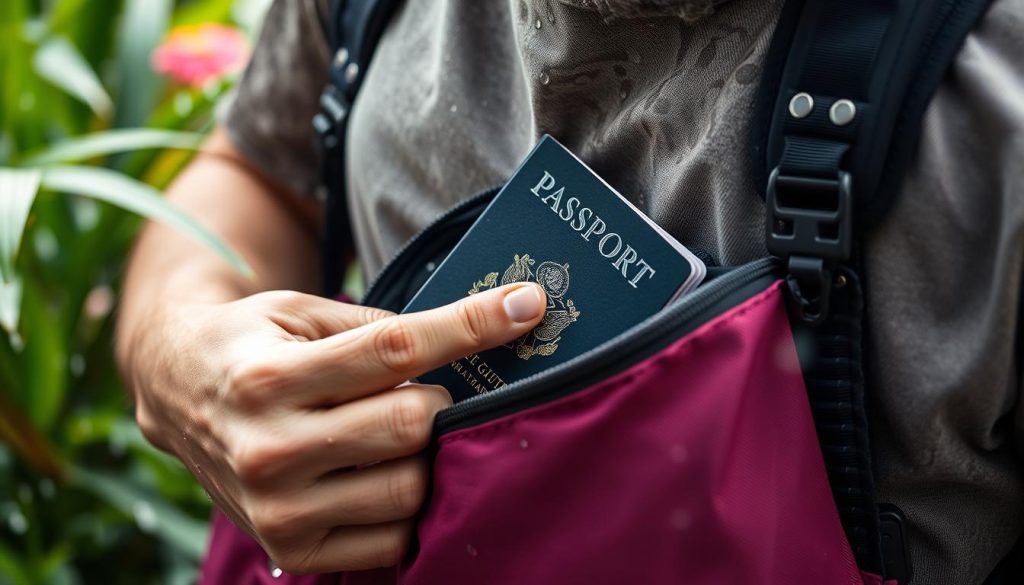
Waterproof passport covers are great for protecting against water damage. Water damage is a big reason travelers often need a new passport. With these covers, your passport will stay dry, even in wet places.
Unfortunately, without such protection, up to 20% of travelers face water damage to their passports.
Protecting Against Humidity and Extreme Temperatures
Humidity and heat can also ruin your passport. High humidity makes the pages warp. Extreme heat can make the binding weak, and pages might fall out.
To keep it safe, keep your passport in a cool, dry spot. RFID-blocking passport holders are an added bonus. They help keep your passport safe in any condition.
Protecting your passport saves you from stress and extra costs of getting a new one. Regular checks on your passport can prevent many issues. Remember, protecting your passport from damage is a smart move. It makes sure your travels are smooth and fun.
- Use of waterproof passport covers to protect against water damage.
- Store passport in cool, dry places to prevent humidity and heat damage.
- Regularly check the passport’s condition to address any potential issues early.
Staying Vigilant: Be Aware of Your Surroundings
When you’re traveling, being aware of your surroundings is key, especially for your personal documents. Every year, over 200 U.S. citizens die in road accidents abroad, says the U.S. State Department. Also, petty theft like pickpocketing and scams is common in many places, making it crucial to watch out for your documents.
Knowing what suspicious behavior looks like is important. For example, if someone is too curious about what you’re doing or your stuff, be cautious. Stay extra alert in crowded spots, as about 22% of thefts happen in such areas, often in places tourists go to.
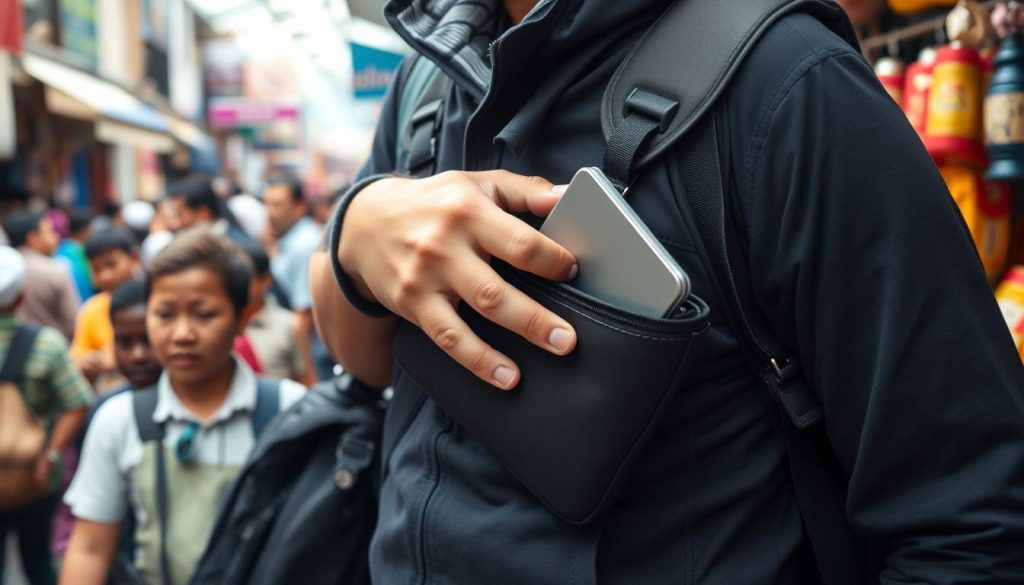
To lessen theft risks, keep valuables close or use crossbody bags. This step alone greatly lowers the chance of theft. The National Crime Victimization Survey shows being careful in public can cut theft risk by 31%.
Being with others in unfamiliar places is smart. Moving in groups, preferably three to five people, mainly at night, boosts safety. Also, checking in with friends or family often adds another safety layer.
Using programs like the Smart Traveler Enrollment Program (STEP) is vital. It registers U.S. citizens traveling abroad, offering safety resources and alerts. Learning about and respecting local cultures helps to blend in, avoiding undue attention in host countries.
Lastly, preventing document theft means safely storing key documents. Even though in-room safes deter theft, about 66% of hotel guests don’t use them. The Federal Trade Commission says, in 2021, there were over 1.4 million identity theft cases, many due to unsecured personal info in public.
| Statistics | Recommendation |
|---|---|
| Over 400,000 passports were reported lost or stolen each year | Keep multiple copies of your travel documents separate from originals. |
| Identity theft incidents increased by 30% in 2022 | Use RFID-blocking technology to protect against electronic theft. |
| 35% travelers unaware of security measures | Educate yourself on safeguarding personal documents abroad. |
| 50% don’t take backups of their travel documents | Always have multiple backups of important documents. |
Conclusion
Keeping your passport and important papers safe while traveling is a must. It’s key to prepare before you go. This means copying important documents, telling friends and family where you’ll be, and checking your passport’s expiry date. These steps help avoid problems from the start.
While traveling, it’s smart to use RFID-blocking holders for your passport, money belts, and portable safes. It’s also important to keep your documents dry and to always be aware of your surroundings. Every year, around 12 million U.S. passports get lost or stolen. And 30% of travelers don’t keep their documents safe, raising their risk of losing them.
Having a plan for emergencies is key. Know how to replace your passport fast and how to contact the nearest embassy. With the rise of identity theft and data breaches, like the Marriott incident in 2018, staying alert is crucial. Secure digital habits and travel insurance further protect you from risks.
In the end, being well-informed and careful, along with the right prep and on-the-road tactics, means you can travel without issues. Keep your documents safe and enjoy your journeys worry-free.