
Palawan Travel Safety During Rainy Season
Palawan is a hidden gem in the Philippines. Many dream of exploring this tropical paradise. But what about visiting during the rainy season?
Is it safe to go then? Should you change your plans? Can you enjoy Palawan when it’s wet, or will the weather spoil your trip?
This guide covers weather patterns and safety tips for Palawan’s rainy season. We’ll help you plan a great trip, rain or shine.
You’ll learn how to handle storms and stay safe. With this info, you can enjoy Palawan any time of year.
Understanding Palawan’s Weather Patterns
Palawan has two distinct seasons: dry from December to May and wet from June to November. These seasons greatly influence the best time to visit this captivating Philippine island province.
Dry Season vs. Wet Season
The dry season brings sunny skies, low rainfall, and calm seas to Palawan. Temperatures can reach up to 33°C (91.4°F) with high humidity. It’s a popular time for tourists.
The wet season brings heavy rains and choppy waters. This can affect activities like island-hopping tours. August and October are the rainiest months, with about 27 rainy days each.
June to November is the off-peak season. It offers fewer tourists and cheaper accommodation. Prices can be up to $100 per night less than during peak season.
The Impact of Global Warming
Global warming has affected Palawan’s weather patterns. The rainy season sometimes extends into November and December. This can lead to flight delays and cancellations.
Local airlines often offer discounted fares during the off-peak season. These can be up to 80% cheaper than regular airfare.

Knowing Palawan’s weather patterns is key to planning a great trip. Consider seasonal changes and global warming effects. This will help you choose the best time to visit and prepare for weather challenges.
Typhoon and Storm Risks in Palawan
Palawan’s location makes it less prone to typhoons than other Philippine areas. However, it still faces severe weather risks during typhoon season. Storms from the South China Sea can impact the island with heavy rains and strong winds.
Palawan is most vulnerable to weather disruptions from June to October. This is the rainy season, bringing potential natural disasters. Travelers should be aware of these storm risks and plan for safety.
- Palawan experiences a tropical climate with warm temperatures and high humidity levels throughout the year.
- The rainy season in Palawan, occurring from June to October, brings heavy rainfall, increased humidity, and occasional typhoons.
- The worst months for tourism in the Philippines are June to November due to heavy rainfall and a high likelihood of typhoons.
- Typhoons in the Philippines peak in intensity between August and October, with August being the most active month.
Visitors during rainy season should prepare for possible weather disruptions. Pack waterproof gear and stay flexible with plans. Consider indoor activities to ensure safety and enjoyment on the island.
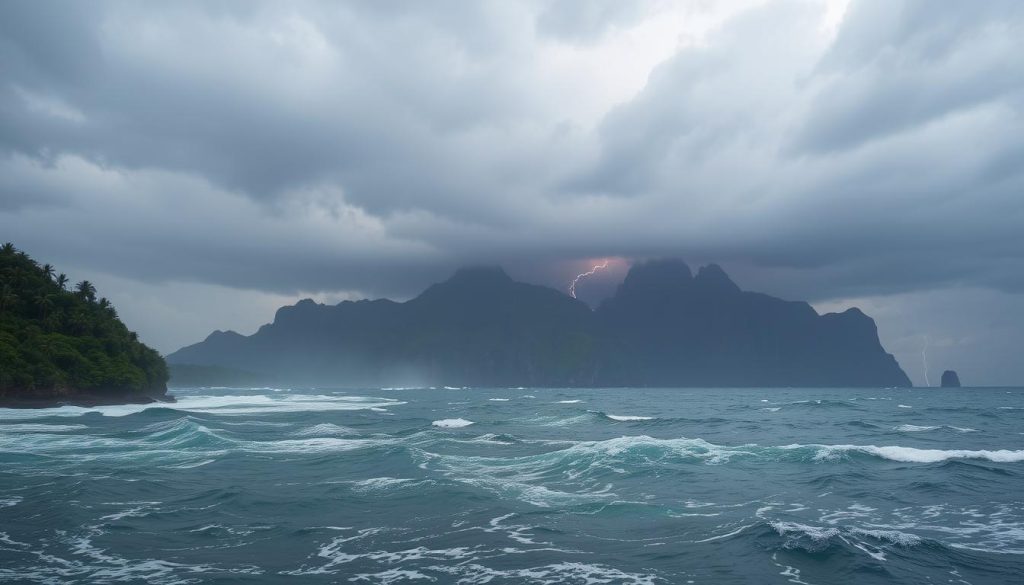
“The rainy season in the Philippines can bring frequent thunderstorms and high humidity, posing significant safety concerns due to the increased likelihood of natural disasters like typhoons, flooding, and landslides.”
Is it safe to travel to Palawan during rainy season?
Palawan, the Philippines’ last frontier, captivates travelers all year. The rainy season runs from June to October. This time raises questions about safety and travel feasibility.
With proper planning and precautions, visiting Palawan during wet season can be enjoyable. The weather may be unpredictable, but the experience can still be memorable.
Potential Weather Disruptions
Rainy season in Palawan brings risks of weather-related disruptions. Heavy rainfall can cause flash floods, landslides, and rough seas. These can affect transportation, outdoor activities, and travel experiences.
Travelers should stay informed about weather forecasts. It’s crucial to follow travel advisories from local authorities or tourism boards.
Travel Advisories and Precautions
- Monitor weather reports and be prepared to adjust your itinerary accordingly.
- Pack appropriate rain gear, including waterproof jackets, pants, and footwear.
- Prioritize indoor activities and attractions during heavy rain, such as exploring Palawan’s museums, galleries, and cultural sites.
- Familiarize yourself with emergency response procedures and keep contact information for local authorities and your accommodation handy.
- Consider purchasing travel insurance to protect against any unforeseen weather-related disruptions or cancelations.
Stay informed, pack the right gear, and be flexible with your plans. This way, you can safely explore Palawan during rainy season.
Palawan’s natural beauty and rich cultural heritage are worth discovering. These attractions shine through, regardless of the weather conditions.

Transportation Challenges During the Rainy Season
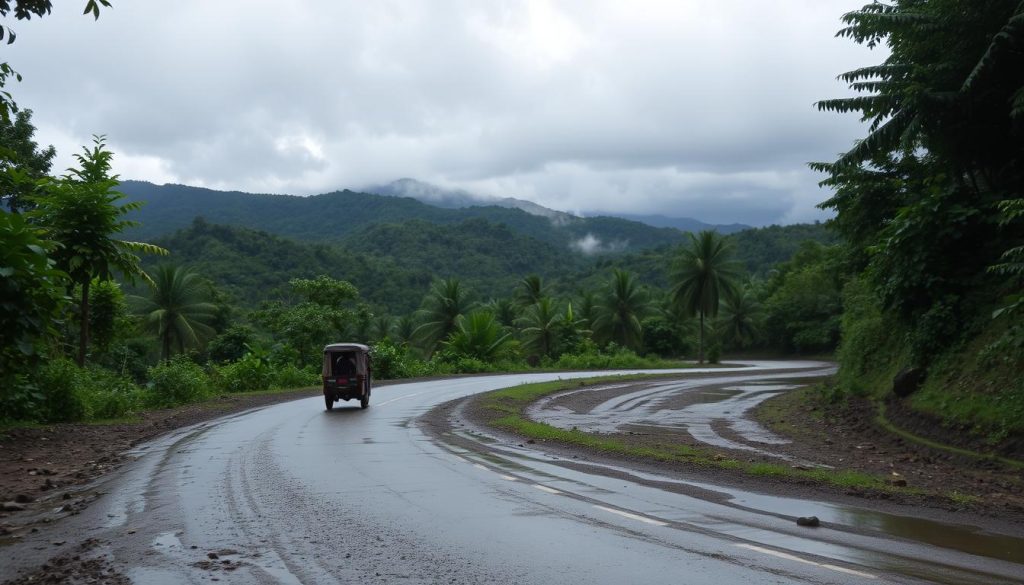
Rainy season travel in Palawan can be tricky. Heavy rains impact road conditions and movement around the island. Floods, landslides, and poor visibility may disrupt your plans.
This is especially true for remote areas. Be prepared for changes to your itinerary. Consider alternative transport options to reach your destinations.
Road Conditions and Accessibility
Rain can damage Palawan’s roads, causing floods and potholes. This makes some areas hard to reach, especially those with unpaved roads. Expect delays and plan for weather-related obstacles.
You might need to change your travel plans. Look into different ways to get around. Be flexible with your schedule to avoid issues.
| Transportation Option | Estimated Travel Time | Advantages | Disadvantages |
|---|---|---|---|
| Public Bus | 4-5 hours | Affordable | Longer travel time, less flexibility |
| Public Van | 3-4 hours | Faster than bus, more comfortable | Less flexibility, more expensive than bus |
| Private Van or Car Hire | Depends on destination | Comfortable, flexible, and efficient | More expensive than public transportation |
| Motorbike | 3 hours (El Nido to San Vicente) | Agile, quick, and allows for exploration | Increased risk during rainy conditions, not suitable for all travelers |
Choose your transport wisely for rainy season trips in Palawan. Plan ahead to ensure a safe and smooth journey. Consider all options before making your decision.
Water Activities and Beach Safety
Palawan boasts crystal-clear waters and pristine beaches. The dry season offers popular activities like island hopping and snorkeling. However, the rainy season from June to October presents challenges for water-based fun.
Coastal waters can become choppy and dangerous during rainy months. Strong currents, high waves, and potential pollution pose risks to travelers. Sudden storms and heavy rain can make beach conditions treacherous.
Rip currents and other hazards become more likely. Always follow local advisories and choose reputable operators for water activities. Pack weatherproof gear to stay dry and comfortable during your visit.
- Heed local advisories and only engage in water activities with reputable and safety-conscious operators.
- Pack weatherproof gear like rain jackets and waterproof shoes to stay dry and comfortable during your visit.
- Be cautious of marine life, such as jellyfish and sea urchins, that may pose risks to swimmers.
- Always use sunscreen with an SPF of at least 30 to protect your skin from the tropical sun.
Stay informed and plan ahead to enjoy Palawan’s beaches safely. Exercise caution and prioritize your safety. Follow local experts’ advice to make the most of your adventure.
| Beach Safety Considerations | Rainy Season Precautions |
|---|---|
| Rip Currents | Stronger and more prevalent during the rainy season |
| Marine Life Hazards | Jellyfish, sea urchins, and other potential risks |
| Weather Conditions | Sudden storms, heavy rain, and choppy waters |
| Lifeguard Presence | Important for immediate assistance in emergencies |
| Beach Flag System | Monitor for safety conditions before entering the water |
Be aware of potential risks during Palawan’s rainy season. Prepare well to enjoy coastal adventures safely. Take proper precautions and seek local guidance for unforgettable memories.

Natural Disaster Preparedness
Palawan is a stunning tropical paradise. However, it faces risks from natural disasters, especially during rainy seasons. Being prepared for emergencies like floods and landslides is crucial.
Familiarize yourself with flood risks and emergency planning procedures. This knowledge will help ensure your safety during your Palawan adventure.
Flood Risks and Emergency Planning
Palawan’s wet season runs from June to November. This period brings increased risks of heavy rainfall and flooding. These events can cause road closures, power outages, and evacuation orders.
Stay informed about local weather conditions. Follow the advice of authorities. Research potential flood-prone zones in areas you plan to visit.
- Familiarize yourself with the emergency contact numbers and evacuation routes in the areas you’ll be visiting.
- Pack an emergency kit that includes essentials like non-perishable food, water, flashlights, and a first-aid kit.
- Monitor local news and weather reports for updates on storm warnings and flood advisories.
- Follow the instructions of local authorities and be prepared to evacuate quickly if necessary.
Be proactive and stay informed about potential risks. This approach will help ensure a safe and enjoyable Palawan experience. You can have peace of mind even during the rainy season.

Travel Insurance and Contingency Plans
Planning a trip to Palawan during rainy season? Consider buying comprehensive travel insurance. It protects against unexpected events like flight cancellations, trip delays, and medical emergencies due to bad weather.
A contingency plan is crucial for a smooth vacation. Have flexible travel dates or alternative destinations ready. This helps minimize the impact of weather disruptions and necessary safety precautions.
| Coverage | Benefits |
|---|---|
| Trip Cancellation/Interruption | Reimbursement for pre-paid, non-refundable expenses if your trip is cancelled or interrupted due to covered reasons, such as severe weather. |
| Trip Delay | Reimbursement for additional expenses incurred, such as meals and accommodations, if your trip is delayed for a covered reason. |
| Medical Coverage | Coverage for medical expenses and emergency evacuation if you become ill or injured during your trip. |
Prepare for potential weather disruptions to enjoy a safe, memorable Palawan trip. Even during rainy season, good planning ensures a great experience.

“Proper planning and preparation are the keys to a successful and stress-free vacation, especially when traveling during the rainy season.”
Local Insights and Tips
Exploring Palawan during the rainy season can be rewarding and unforgettable. Being prepared is key. Local experts offer valuable local insights and travel tips to enhance your visit.
These locals know Palawan’s weather patterns, transport options, and best rainy season activities. Their expertise can help you make smart choices and enjoy this tropical paradise.
Insider Tips from Local Experts
- Learn about the distinct dry and wet seasons in Palawan, and how they can impact your travel plans.
- Discover alternative transportation options, such as tricycles, that can navigate the roads during heavy rainfall.
- Explore indoor activities and attractions that are perfect for rainy days, like museums, cultural centers, or indoor markets.
- Gain insights into the best times to visit popular destinations, such as El Nido and Coron, to avoid peak crowds and take advantage of ideal weather conditions.
- Understand the potential risks and challenges associated with water activities during the rainy season, and learn about safety precautions to take.
Local experts can help you truly understand Palawan. They’ll guide you to create a memorable travel experience, even during the rainy season.
Alternative Destinations for Rainy Season Travel
Worried about Palawan’s rainy season risks? Consider other Philippine islands for your tropical vacation. Bohol or Cebu often have milder weather and safer conditions. These alternatives can provide a memorable and comfortable getaway.
Bohol is famous for its Chocolate Hills and dolphin watching. It’s usually less crowded, even during peak season. The island’s geography helps it handle storms better.
Cebu often avoids the worst of typhoon season. It’s just a short flight from Palawan. You can enjoy natural beauty and culture without severe weather risks.
| Destination | Rainy Season Highlights | Weather Conditions | Safety Considerations |
|---|---|---|---|
| Bohol |
|
|
|
| Cebu |
|
|
|
Always check weather conditions and safety precautions for your chosen destination. Research thoroughly to ensure a great trip, no matter the season.

Conclusion
Palawan, the Philippines’ stunning jewel, offers breathtaking landscapes and vibrant culture. Even during rainy months, careful planning can lead to an unforgettable experience. Visitors can still enjoy Palawan’s wonders with a flexible approach.
Understanding weather patterns and potential risks is crucial for a safe Palawan trip. Pack the right gear and be ready for possible disruptions. These precautions will help you fully enjoy Palawan’s natural beauty and cultural richness.
Palawan’s rainy season can provide a unique travel experience. Explore stunning beaches, venture into lush forests, or enjoy indoor activities. Local insights and flexible itineraries can make your trip memorable.
Palawan’s charm is constant throughout the year. With the right mindset and preparation, you can uncover this Philippine gem’s magic. Embrace the adventure, rain or shine!