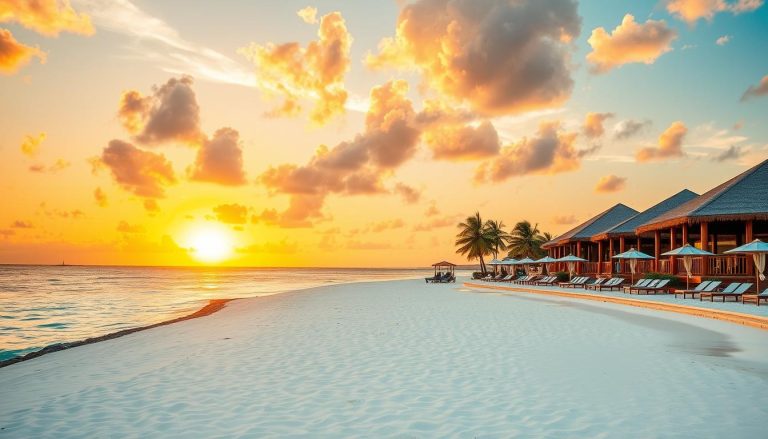
Ocean Swim Safety in Malé: What You Need to Know
Ever thought about swimming in the ocean around Malé? It’s a tempting idea, but is it safe? Planning a trip to the Maldives means knowing how to stay safe in the water. The clear waters and colorful sea life are beautiful, but swimming safely needs more than just a desire to dive in.
Resorts in Malé offer great places to swim and snorkel. But is it really safe to swim in the ocean there? This guide will cover the key points of swimming safety in Malé. You’ll learn about local dangers, safety rules, and how to enjoy the water without worry.
The Importance of Ocean Swim Safety
Visiting the Maldives, around Malé, means swimming safety is key. The clear waters and marine life are tempting but come with risks. It’s vital to stay safe while swimming in Malé.
Swimmers face dangers like strong currents and weather changes. Being prepared and aware is crucial for a safe swim. In the U.S., over 4,000 people die from drowning each year, with kids and men at higher risk.
Since 2021, over 8 British tourists have drowned in Maldives waters. Drinking alcohol near water increases drowning risks. It slows down your reaction and judgment.
Swimming lessons can help prevent drowning. Whether you live here or are visiting, lessons are a good idea. Always watch children closely when they’re near water.
Swimming safely in Maldives means being proactive. Swim with a friend, know your surroundings, and follow local safety rules. This way, you can enjoy the Maldives’ beauty without worry.
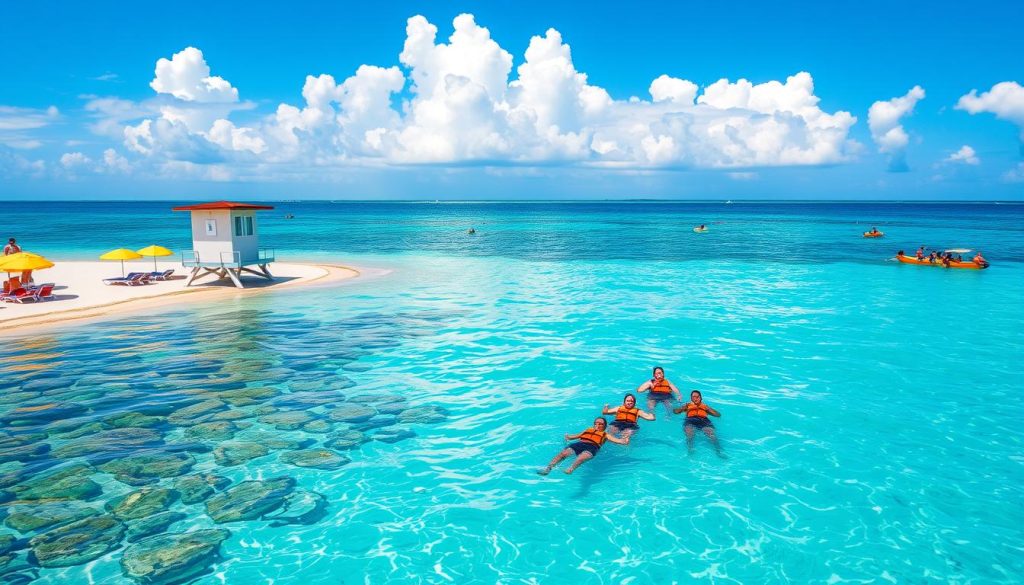
Is it safe to swim in the ocean around Malé?
It’s important to know the local swimming conditions before swimming in Malé’s ocean. Weather, tides, and where you can swim safely all play a role. Make sure you understand these before you go into the water.
Understanding local swimming conditions
The ocean’s behavior changes with the tides. This can affect how high the waves are and how strong the currents are. In the wet months, from May to November, the conditions can change a lot.
July and August are usually the best times to swim. But, storms can make it unsafe. It’s key to swim in areas marked by buoys or signs. These spots are safer because they’re watched over and have calmer water.
Factors influencing safety levels
Several things can affect how safe it is to swim. Strong currents can be dangerous, even for good swimmers. Weather can change quickly, making it hard to see and swim.
Having rescue services nearby is also important. Places far from lifeguards can be riskier. Always think about these things and ask locals, if you’re new to swimming in Maldivian waters.
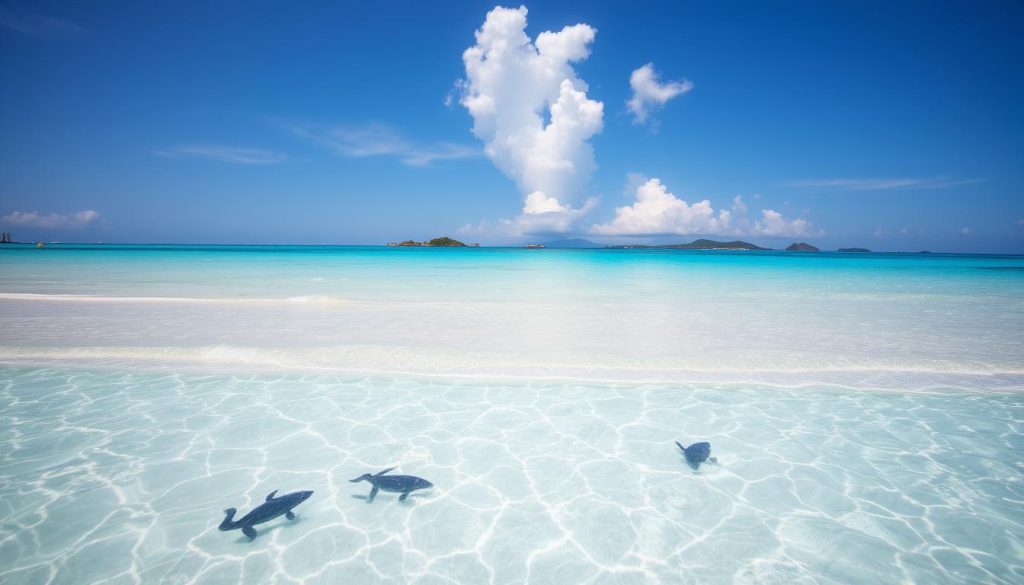
Maldives Water Activities Overview
The Maldives is a paradise for water lovers. It offers many activities like snorkeling and kayaking. It’s key to know the options and how to stay safe while enjoying the water.
Common water sports available
- Snorkeling: Explore vibrant coral reefs and marine life just below the surface.
- Diving: Experience the underwater world with various dive sites featuring unique fauna.
- Kayaking: Glide across calm waters at your own pace and discover hidden lagoons.
- Surfing: Catch waves at popular spots, specially between April and October.
Guidelines for safe participation
Before you start swimming in Malé, follow these safety tips. They will help you have a fun and safe time:
- Check local safety rules and advice from trusted sources.
- Watch the weather to avoid sudden changes.
- Join organized tours for safety gear and expert help.
- Always swim with a friend for safety and help when needed.
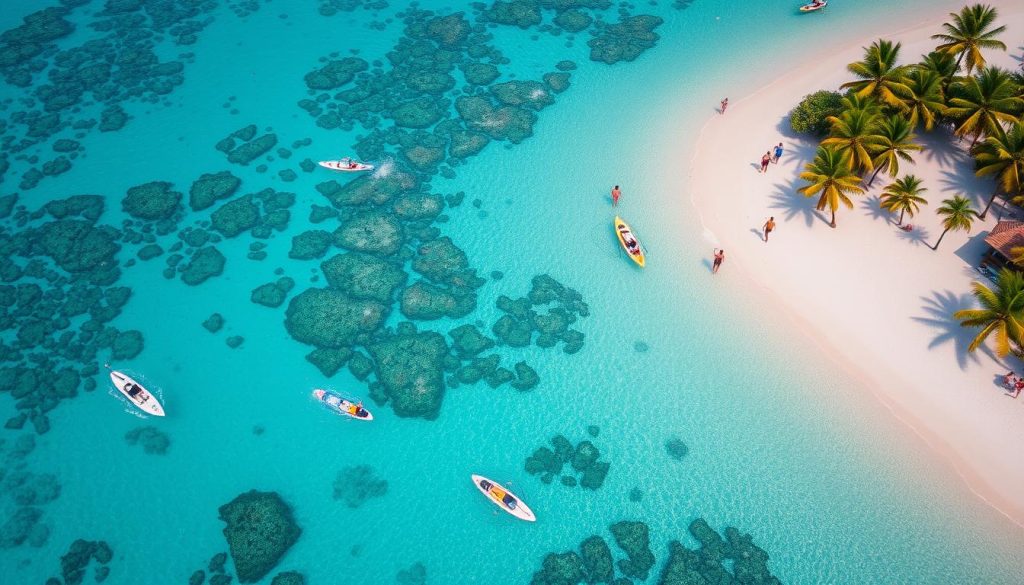
Understanding Malé Ocean Swimming Risks
Swimming in Malé’s waters is both tempting and risky. The Maldives, mostly water, has islands with shallow spots and steep drops. Knowing the Malé ocean swimming risks is key for everyone.
Identifying potential hazards
Several factors make swimming in Malé hazardous:
- Strong currents and rip tides can pull swimmers into deeper waters.
- The underwater landscape changes suddenly, posing dangers to those who don’t know it.
- Some groups, like young girls, may not swim well, making them more at risk.
In 2012, only 10% of 15- and 16-year-olds in the Maldives could swim. Cultural fears about skin tone, mainly for girls, add to the risks.
Common incidents among tourists
Tourists often face problems due to ocean hazards in Malé, such as:
- Unprepared swimmers can drown, with 3.2 deaths per 100,000 in 2019.
- Marine wildlife can cause injuries, even if you can’t see them.
- Swimmers can get lost, not realizing how deep or far they are from shore.
To stay safe, tourists should join guided tours. These tours include professional guides who ensure everyone’s safety. Learning about swimming and ocean safety is vital for a good experience in Malé’s waters.
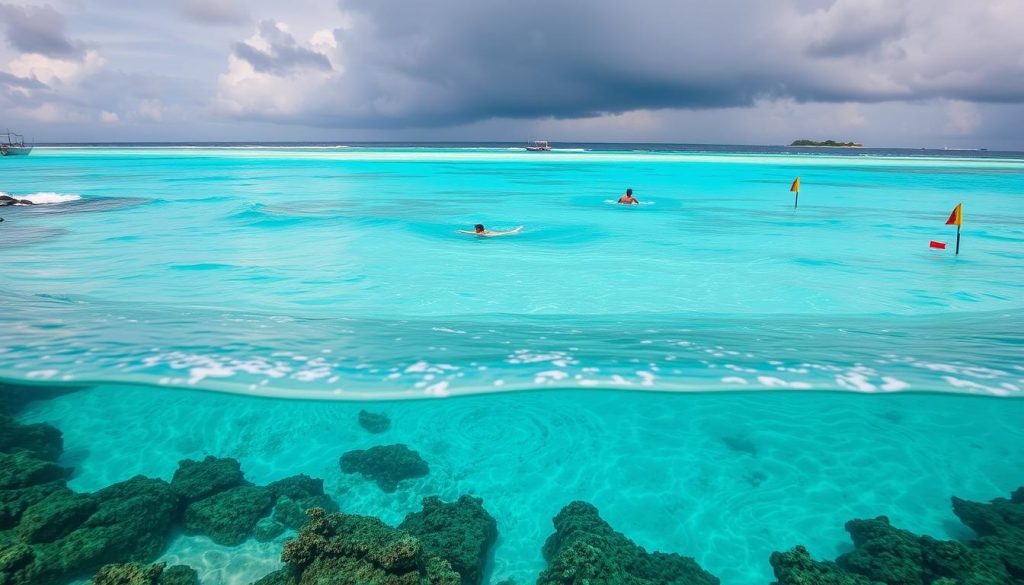
Ocean Hazards in Malé You Should Know About
Knowing about ocean hazards in Malé is key for safe swimming. Strong currents and marine life can be risky. Staying informed helps you enjoy the waters safely.
Strong currents and rip tides
Malé’s strong currents are powerful and can be hidden. They come from tides and weather. Always watch for warning signs and flags on the beach.
The flag system is simple and clear:
| Flag Color | Meaning | Action |
|---|---|---|
| Red | Dangerous conditions | Do not swim |
| Yellow | Moderate caution | Swim with care |
| Green | Safe to swim | Enjoy swimming |
If you get caught in a current, stay calm. Swim parallel to the shore to get out of the current. Then, head back to shore safely.
Marine life encounters
Swimming in Malé’s waters means you might see unique sea creatures. Some are harmless, but others can be risky. Lionfish and Blue-Ringed Octopus are venomous and should be kept at a distance.
It’s important to know which sea creatures to avoid:
- Titan Triggerfish: They can be aggressive during nesting season and may bite.
- Stonefish: The most venomous fish, avoid stepping on them to avoid injury.
- Moray Eels: They are usually calm but can bite if provoked; keep a safe distance.
Knowing about ocean hazards in Malé, like strong currents and sea creatures, makes swimming safer. Always be cautious and respect the ocean and its creatures.
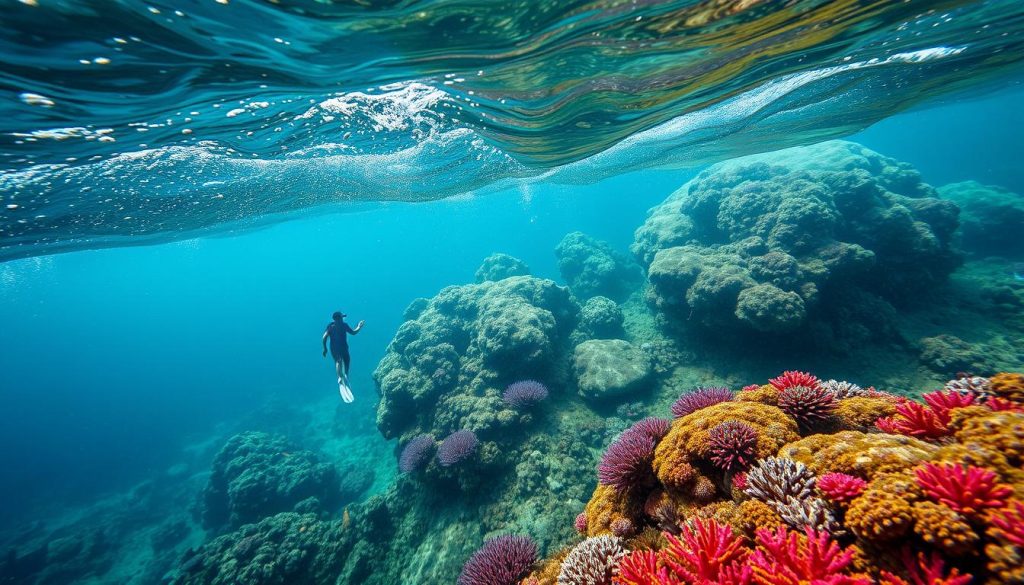
Maldives Beach Safety Regulations
It’s important to know the Maldives beach safety rules if you want to swim here. Following these rules keeps you safe and shows respect for the local community. Safety measures are key, like in places with strong tides or underwater dangers. Always follow the swimming rules at specific beaches or resorts.
Local laws and guidelines for swimmers
The Maldives has strict laws for beach safety. Swimmers might need to wear life vests in certain areas, like where the water is deep or the currents are strong. These rules help prevent accidents and keep everyone safe. Local authorities also use warning systems to tell swimmers about dangers, making the beach safer.
How resorts safeguard guests
Resorts in the Maldives work hard to protect their guests from the sea. They give safety briefings to teach visitors about dangers and how to swim safely. Many resorts have lifeguards who watch the swimming areas closely, ready to help in emergencies. Resorts also work with local authorities to follow the beach safety rules, showing their dedication to keeping guests safe.
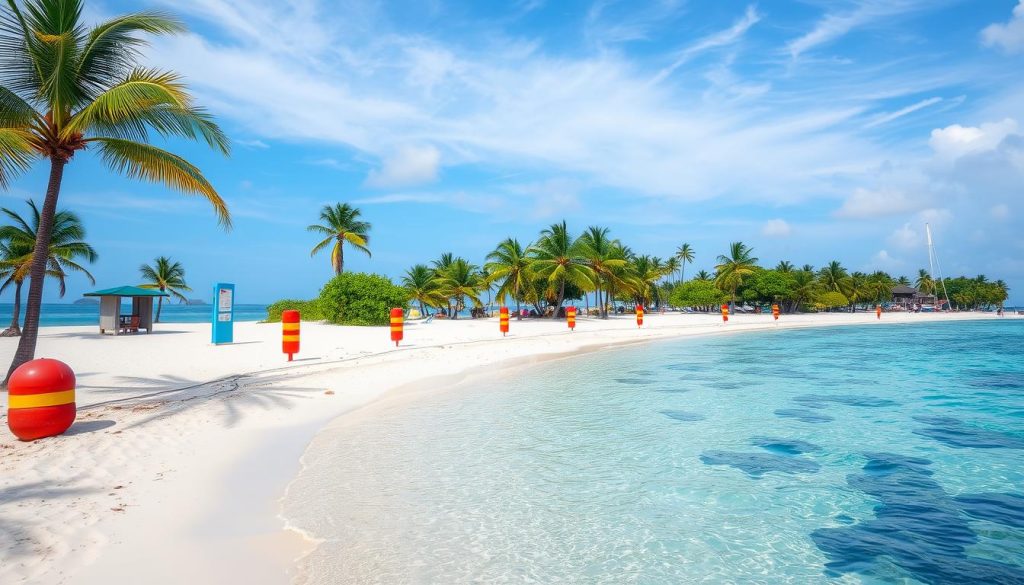
Malé Swimming Guidelines for Tourists
As a tourist in Malé, knowing the swimming guidelines can make your swim safer and more enjoyable. Whether you’re new to swimming or not used to the local waters, following some simple tips can help a lot.
Best practices for novice swimmers
For beginners, swimming safety in Malé is key. Here are some important tips:
- Always swim with a partner to keep an eye on each other.
- Familiarize yourself with the local swimming conditions by checking for signage and asking lifeguards.
- Make sure to warm up before entering the water to prepare your body for swimming.
- Stay within designated swimming areas where lifeguards are present for added security.
- Be aware of your limits. If you feel tired or overwhelmed, exit the water promptly.
Using flotation devices
Using flotation devices can greatly improve your safety while swimming. Consider the following:
- Wear life jackets or other approved flotation devices, even if you’re a confident swimmer.
- Use inflatable pool toys with caution. Ensure they are designed for open water and are easily visible.
- Consider taking lessons on proper use of flotation devices for a better swimming experience.
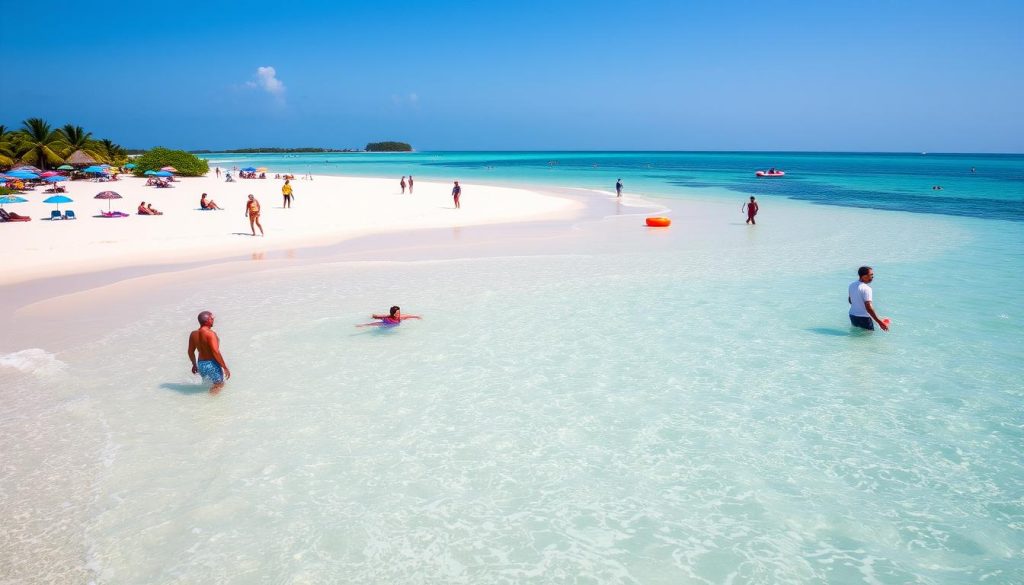
By following these guidelines, you’ll improve your swimming safety in Malé. You’ll also get to enjoy the ocean’s beauty while staying safe. Being prepared and respectful of the water can make your visit unforgettable.
Malé Water Quality Concerns
Water quality in Malé is a big worry, caused by pollution and local conditions. People living there and visitors need to know about these issues. This is important because it affects whether it’s safe to swim.
Understanding water quality measurements
Water quality is checked by looking at contaminants and harmful substances. In Malé, untreated sewage is a big problem. It’s released every half hour, which worries swimmers. Beaches have been closed when sewage levels got too high.
How to check water conditions before swimming
Before swimming, you can check the water like this:
- Ask local authorities or resort managers about water quality reports.
- Look for swimming areas with good sanitation.
- Keep up with environmental checks, like sewage outflows from the Malé Water and Sewerage Company.
- Use online forums or community groups to talk about water quality.
Even if tests seem okay, it’s important to keep watching. Reports show that while immediate dangers might not be high, we still need to be careful all the time.
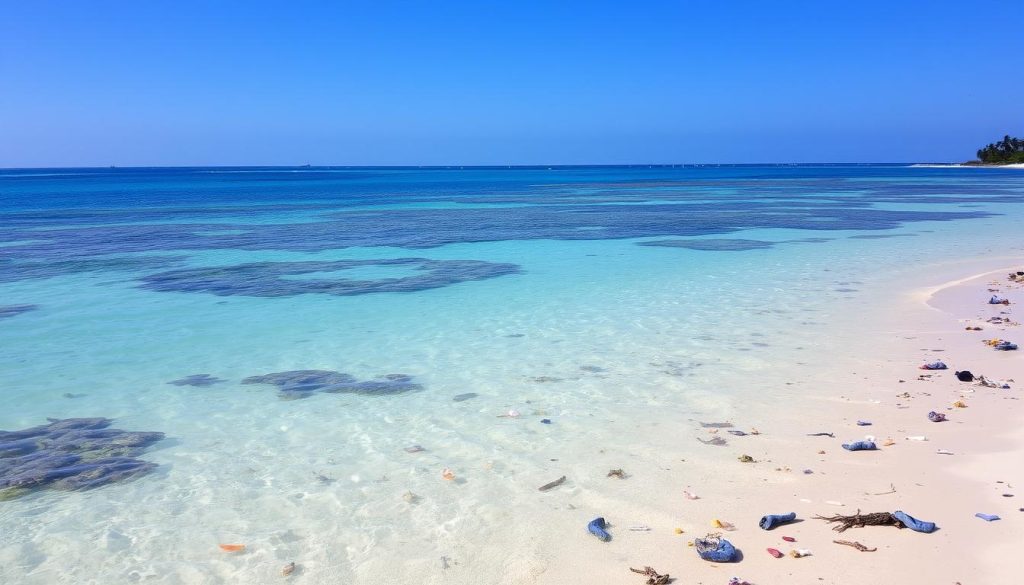
Malé’s water quality worries show we need better rules and protection. With over 100,000 people affected by sewage, staying informed is key to a safe swim.
| Indicator | Description |
|---|---|
| Sewage Discharge | Untreated sewage released every 30 minutes from sewer outfalls. |
| Swimming Restrictions | Specific areas closed due to unacceptable contamination levels. |
| Monitoring Frequency | Continuous monitoring recommended for safety. |
| Environmental Impact | Potential harm to water quality from construction and pollution. |
Tips for Swimming Safely in Malé
Exploring Malé’s waters is exciting, but safety comes first. Following Malé swimming guidelines helps you enjoy the ocean more. Swimming with a friend is key. It ensures help is nearby and makes swimming more fun.
Always swim in pairs
Swimming with a buddy boosts your safety. In emergencies, having someone close can be lifesaving. The ocean can surprise you, so stay alert and enjoy the views safely. Many accidents could be avoided by swimming with a friend.
Recognizing warning signs and flags
Know the flags at beaches before swimming. They show if the water is safe. A green flag means it’s okay to swim. Yellow means be careful, and red means stay out.
Understanding these flags helps you swim safely in Malé. It’s all about making smart choices to stay safe.