Navigate Tokyo: Your Guide to Efficient Public Transport
Japan’s bustling metropolis, Tokyo, is famous for its cultural heritage, advanced technology, and efficient public transportation. If you’re planning to explore this vibrant city, you’ll be pleased to know that public transport Tokyo offers an extensive network of buses, trains, subways, and taxis that can take you virtually anywhere in the city.
However, with so many options available, figuring out the most efficient way to get around Tokyo’s public transport can be challenging. Nevertheless, fear not, as we will guide you through the most convenient and cost-effective ways to navigate Tokyo’s transportation options.
In this comprehensive guide on Tokyo transportation, you’ll learn how to:
- Navigate Tokyo’s public transport network
- Choose the right ticket or pass
- Use the Tokyo metro system
- Master the train system
- Explore Tokyo by subway
- Benefit from essential tips and tricks
- Discover advanced transport hacks
Embark on a thrilling journey through Tokyo’s bustling streets by mastering its public transport system. Let’s get started!
Understanding Tokyo’s Public Transport Network
Before diving into the specifics of navigating Tokyo’s public transport, it’s important to familiarize yourself with the city’s extensive metro, train, and subway systems. In this section, we will provide an overview of Tokyo’s public transport network, including how to navigate the Tokyo metro system, understand the train lines, and make the most of the subway guide.
Tokyo Metro System
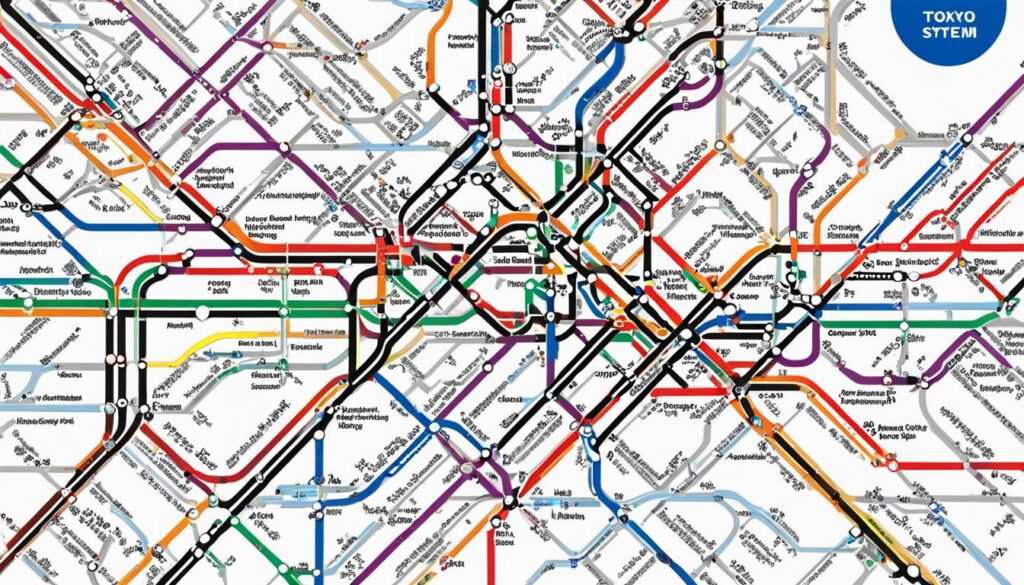
The Tokyo Metro System is the backbone of Tokyo’s public transport network, covering much of the city center and surrounding areas. With 13 separate lines, it can be overwhelming to navigate at first, but once you understand the station layout and map, it’s one of the most efficient ways to travel around Tokyo. For example, the Ginza line is the oldest and most iconic line that runs through the heart of Tokyo and is popular for shopping. On the other hand, the Marunouchi line is ideal for business travelers and runs through the heart of Tokyo’s major business and financial district. Be sure to refer to our comprehensive guide to the Tokyo Metro System for more information about line routes and fares.
Tokyo Train System
The Tokyo Train System connects different neighborhoods and suburbs, making it a crucial part of Tokyo’s public transport network. With a range of different train lines operated by different companies, it can be confusing to navigate. However, learning how to read the train schedule and deal with transfers can make your journey much smoother. For example, the Yamanote line is an iconic train route that circles central Tokyo, stopping at all the major tourist destinations. Used by locals and tourists alike, it’s a great way to get around the city. Refer to our comprehensive guide to the Tokyo Train System for more information about Japan Rail Pass and other discount passes.
Tokyo Subway Guide
The Tokyo Subway Guide is a handy resource for understanding the different subway lines and routes. It can be useful when planning your journey, as it shows the different station names and platforms for transfers. Some subway stations have multiple exits, so it’s important to know which exit to take to get to your desired location. For example, if you’re heading to the popular shopping district of Shibuya, make sure to take exit 8 at Shibuya Station. For more information about navigating the Tokyo Subway, refer to our comprehensive guide to the Tokyo Subway System.
Choosing the Right Ticket or Pass
One of the first steps to navigating Tokyo’s public transport system is choosing the right ticket or pass for your travel needs. With a range of options available, it can be overwhelming to select the best one. However, by understanding the system and your itinerary, you can make an informed decision that saves you time and money.
Here are some tips for choosing the right ticket or pass:
- Single tickets: Ideal for occasional use, these tickets are priced based on the distance you travel and can be purchased at ticket machines or counters at train stations and metro stations.
- Day passes: If you plan to take multiple trips within the same day, consider purchasing a day pass. They are available for 24-hour or 48-hour periods and offer unlimited travel on all Tokyo Metro lines, Toei Subway lines, and JR trains within the Tokyo metropolitan area.
- IC cards: Also known as “smart cards,” IC cards allow you to easily tap on and off across all Tokyo transport systems. They can be used on buses, trains, and subways at discounted fares and are a convenient option for frequent travelers. Suica and Pasmo are popular IC cards available in Tokyo.
Each option has its own price point and features. To determine the best one for you, consider your itinerary and frequency of travel, as well as the cost of each option. For example, if you plan to use the public transport system multiple times throughout the day, a day pass might be a cost-effective option. On the other hand, if you only plan to take a few trips during your stay, purchasing single tickets may be more convenient.
Tokyo Public Transport Ticket and Pass Options
| Ticket/Pass Option | Features | Price Range |
|---|---|---|
| Single Tickets | Priced based on the distance traveled | $1.50-$5.00 per trip |
| Day Passes | Unlimited travel on Tokyo Metro lines, Toei Subway lines, and JR trains within the Tokyo metropolitan area | $8.00-$12.00 |
| IC Cards (Suica, Pasmo, etc.) | Discounted fares and convenient for frequent usage | $5.00-$20.00 (card only) |
Remember that the options and prices may vary depending on the duration of your stay and the transport system you plan to use. By carefully considering your options and planning ahead, you’ll be able to navigate Tokyo’s public transport system efficiently and effectively.
Using the Tokyo Metro System
The Tokyo metro system is an efficient and affordable means of transportation in Tokyo. It operates from 5 am to midnight, and trains run frequently during peak hours. To start, identify the nearest metro station using Google Maps or other apps, and purchase your ticket or IC card before entering the station. There are different types of tickets available for the Tokyo metro system, and the fare is calculated according to the distance traveled. You can also buy a one-day pass if you plan on using the metro system extensively.
When boarding the train, wait for passengers to alight before entering the carriage. Ensure you are standing to the side of the doors to allow an easy exit for other passengers. During peak hours, be prepared for crowded trains, but you can use the overhead straps to maintain balance. When arriving at your station, exit the train promptly to avoid causing congestion.
Pro-tip: If you have a long journey, many metro stations offer lockers to store your luggage safely. This is especially convenient on days when you plan to make numerous stops and do not wish to carry your bags around.
| Distance (in km) | Ticket Cost (in Japanese Yen) | IC Card Cost (in Japanese Yen) |
|---|---|---|
| 0-6 | 170 | 160 |
| 6-11 | 200 | 190 |
| 11-16 | 240 | 230 |
| 16-21 | 280 | 270 |
| 21-26 | 310 | 300 |
| 26-31 | 330 | 320 |
The table above shows the fare comparison between purchasing a ticket versus using an IC card for different distances traveled using the Tokyo metro system. Note that using an IC card is usually more cost-effective than buying tickets, especially for frequent travelers.

Mastering the Tokyo Train System
When it comes to navigating Tokyo’s public transport network, the train system is a crucial mode of transportation that connects different neighborhoods and suburbs. To make the most of your journey, it’s essential to understand the different train lines, schedules, and transfers. Here, we’ll demystify the Tokyo train system to ensure a smooth and efficient ride across the city.

Overview of the Tokyo Train System
The Tokyo train system is operated by a variety of companies, including JR East, which runs most of the train lines within Tokyo. Other companies include Tobu Railway, Keisei Electric Railway, and Seibu Railway, among others. With so many companies operating within the train system, it’s important to study the train map carefully to determine which lines and stations will best serve your needs.
Understanding Train Lines and Schedules
The Tokyo train system comprises four main categories of train lines: local, rapid, express, and limited express. Local lines stop at every station, while rapid and express lines skip some stations to save time. Limited express lines, on the other hand, are reserved trains that have limited stops and offer comfortable amenities like reclining seats and dining areas.
To plan your journey, it’s important to check the train schedule and timetable posted at each station. Train schedules vary depending on the type of train line, time of day, and day of the week. Be sure to double-check the train times and make note of any required transfers to reach your destination.
Transfers and Interchanges
Transferring from one train line to another in Tokyo may seem daunting at first, but with careful planning and attention to detail, it can be a smooth process. When transferring between train lines, follow the signage and listen to the announcements carefully to ensure you’re heading in the right direction. Some of the larger stations in Tokyo, such as Shinjuku and Tokyo Station, can be particularly complex, so take your time and don’t be afraid to ask station staff or fellow commuters for help if needed.
Ticket and Fare Information
As with the Tokyo metro and subway systems, there are a variety of ticket and pass options available for the Tokyo train system. Single tickets, day passes, and IC cards are all commonly used on trains, but it’s important to determine which option is best for your needs based on your travel itinerary and budget.
| Ticket Type | Description |
|---|---|
| Single Ticket | A one-way ticket to the selected destination. Tickets are purchased from ticket machines and fare prices are calculated based on the distance traveled. |
| PASMO / Suica Card | An IC transportation card that can be used across Tokyo’s train, subway, and bus systems. Prepaid fares are charged to the card, allowing for convenient touch-and go-payment at station gates. |
| Day Pass | A one-day pass that allows for unlimited use of Tokyo trains and subways within a 24-hour period. These passes are ideal for travelers who plan to take multiple trips in a single day. |
By understanding the train lines, schedules, transfers, and ticket options, you’ll be well-equipped to navigate the Tokyo train system with ease and efficiency. Be sure to plan your route in advance, take your time when transferring between lines, and don’t be afraid to ask for help if you need it. With a little bit of preparation, you’ll be able to enjoy all that Tokyo has to offer without any transport-related stress.
Exploring Tokyo by Subway
When it comes to navigating Tokyo’s public transport system, the subway is another excellent option. The subway system in Tokyo is a vast network that connects various neighborhoods and destinations throughout the city. To make the most of your subway experience, check out our comprehensive guide below.
Navigating Tokyo subway stations
Like the Tokyo metro and train system, navigating the subway stations can be overwhelming at first. However, with a little bit of preparation and knowledge, you can easily navigate the subway system.
When you arrive at a subway station in Tokyo, the first thing you should do is look for the nearest subway map. These maps are posted throughout the station and will give you an idea of the different subway lines and stations within the system. Once you have an idea of which subway line you need to take, look for signs that point to the appropriate platform.
Understanding the Tokyo subway map
The Tokyo subway map can be complicated, especially for first-time visitors. However, understanding the map is essential for navigating the subway system effectively. To make it easier to understand, the subway map is color-coded, making it easy to differentiate between different subway lines. Additionally, the map indicates the name of each station and clearly marks interchange stations where you can transfer between different subway lines.

Making transfers on the Tokyo subway system
If you need to transfer between subway lines, pay close attention to the signs and announcements. Follow the signs that point to the appropriate line you need to transfer to, and make sure you are heading in the right direction. If you’re unsure, don’t hesitate to ask for assistance at the ticket counter or information desk.
Buying tickets for the Tokyo subway system
Tokyo’s subway system operates on a similar ticketing system as the metro and train systems. You can purchase single journey tickets or reloadable IC cards such as Suica or Pasmo to pay for your fare. If you plan on using the subway frequently, consider purchasing a day pass or multi-day pass to save money on your travel expenses.
Essential Tips for Navigating Tokyo’s Public Transport
Now that you know all about Tokyo’s public transport system, it’s time to learn some essential tips for making the most of your transportation options. Follow these tips to navigate Tokyo’s public transport system like a pro:
Avoid Rush Hour
If possible, avoid traveling during rush hour (between 7-9am and 5-7pm). Trains and subway cars can get extremely crowded during these times, which can make your journey uncomfortable and stressful. If you must travel during rush hour, consider using the women-only cars available on some train lines to avoid overcrowding.
Plan Your Route
Before setting out on your journey, make sure to plan your route in advance. Use smartphone apps like Google Maps, Japan Transit Planner, or Tokyo Subway Navigation to help you find the most efficient way to get where you’re going. Also, familiarize yourself with the different train lines and subway routes to avoid getting lost.
Get an IC Card
Invest in an IC card, such as Suica or Pasmo, to make your travel experience more convenient. These cards can be used on all trains, buses, and subways, and you can recharge them as needed. Plus, using an IC card is often a cheaper option than purchasing individual tickets.
Understand Train Etiquette
When traveling on trains, it’s important to understand proper train etiquette. Avoid talking loudly on your phone, eating or drinking (unless on a long-distance train), and taking up unnecessary space with your belongings. Also, make sure to give up your seat to elderly or disabled passengers if needed.
Stay to the Left
When walking on escalators, make sure to stay to the left side if you’re not in a hurry. The right side is reserved for those who want to walk up or down the escalator quickly. This will help keep the flow of traffic moving smoothly and prevent congestion.
| Tips | Benefits |
|---|---|
| Arrive Early | If you arrive early at your destination, you can avoid crowds and have time to explore the area. |
| Use Station Lockers | If you have luggage, use station lockers to avoid lugging them around with you all day. |
| Try a Night Bus | If you’re traveling long distances between cities, consider taking a night bus to save time and money on accommodations. |
By following these essential tips and tricks, you’ll be well-equipped to navigate Tokyo’s public transport system with ease. Just remember to plan ahead, understand etiquette, and be considerate of your fellow passengers. Happy travels!
Advanced Tokyo Transport Hacks
Congratulations, you’ve already mastered the basics of Tokyo’s public transport network. Now it’s time to take your skills to the next level with some advanced transport hacks that will revolutionize your Tokyo commute. Here are some tips to enhance your overall Tokyo transport experience:
1. Download Smart Transport Apps
Make use of smart transport apps like Google Maps, Transit, or Tokyo Subway Navigation to plan your routes efficiently. These apps will provide you with accurate and real-time information on the Tokyo metro, train, and subway systems, allowing you to navigate the city like a pro.
2. Explore Bike Rentals
If you’re feeling adventurous, consider renting a bicycle to explore Tokyo’s streets. Bike rentals are widely available and can be a fun way to get around the city, providing a fresh perspective on Tokyo’s neighborhoods and landmarks. Just be sure to adhere to traffic rules and wear proper safety gear.
3. Find Relaxing In-Transit Breaks
Long commutes can be exhausting, but Tokyo’s public transport system provides various opportunities for in-transit breaks. Whether it’s visiting a convenience store or checking out a local snack, taking a break to recharge in transit can make all the difference in your Tokyo transport experience.
4. Be Mindful of the Rush Hour
Avoid the morning and evening rush hour, as it can be extremely crowded and overwhelming. You can plan your commute outside of these peak hours to enjoy a more relaxed journey. If you must travel during peak hours, consider using a face mask for personal comfort.
5. Try Car Rentals
If you prefer the luxury and convenience of a car, Tokyo offers a variety of car rental options. You can easily rent a car from Tokyo’s major car rental companies like Nippon Rent-A-Car or Budget Rent a Car. Just be sure to familiarize yourself with the local driving rules and regulations.
By utilizing these advanced transport hacks, you can enhance your Tokyo transport experience and explore the city like a local. Happy exploring!
Conclusion
In conclusion, navigating Tokyo’s public transport system may seem daunting at first, but with the right knowledge and preparation, it can be an efficient and convenient way to explore the city. By understanding Tokyo’s metro, train, and subway systems, choosing the right ticket or pass, and following our expert tips and hacks, you’ll be well-equipped to navigate Tokyo’s public transport like a pro. So, hop on board and embark on an exciting journey through the bustling streets of Tokyo.