Maximize Backpack Storage for Flights Efficiently
Ever wondered why some travelers glide through security with just one backpack? Yet, others struggle with bags that are too full? There’s a secret to packing right. It starts with making the most of the space in your backpack for flights. Do you find your packing leads to paying more for bags and can’t find what you need? It’s time to change how you pack.
For the best ways to keep your backpack organized on planes, you need smart packing tips. Plus, know what you must have with you. By getting better at packing, your trips will go more smoothly. You won’t have to leave behind things you need.
Picture fitting 3 to 5 compression bags in your backpack. This lets you arrange your gear better. Compression bags can add up to 50% more room in your backpack. This helps you stick to carry-on size and dodge extra charges.
Organizing well also helps you not to pack too much. 60% of travelers say they overpack, especially for short trips. Use smart packing ways, like a small, refillable water bottle and clothes that work for anything. This way, your backpack stays neat. You also don’t miss out on comfort or what you need.
Ready to start your next trip with a backpack that’s packed just right? Keep an eye out. We’ll share helpful hints and tricks to help you make the most of your backpack space. Plus, keep everything in order and travel without troubles.
Understanding Your Travel Needs
It’s crucial to first understand what you need for your trip. Each journey is different. The place you’re going and how long you’ll stay are key factors.
Knowing your destination’s climate helps choose the right clothes. For warm places, think light clothes like t-shirts. For colder areas, pack heavier items like sweaters. Here’s what you might pack depending on the weather:
- Warm climates: 6-7 shirts or t-shirts, 7 pairs of underwear, 3 pairs of shorts
- Temperate or cold climates: 3 pairs of pants, 3 pairs of socks, 1 sweater or hoodie, 1 wind/rain jacket
The length of your trip also decides how much to bring. For a week, you’ll need a fresh set of underwear and socks for each day. This keeps your bag light.
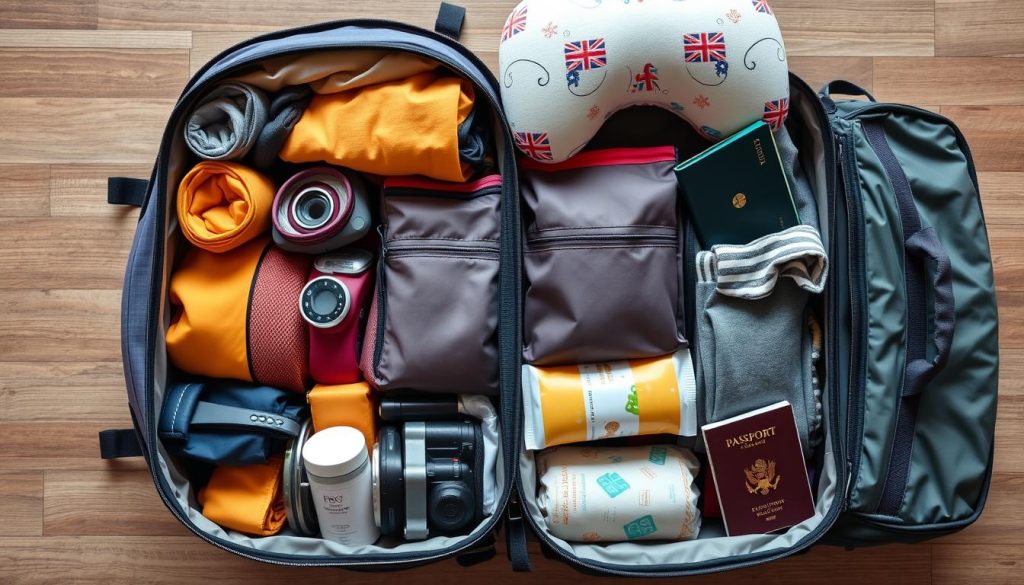
Try to keep your bag under 22 lbs for easier travel. Carry-ons should be 35 to 40 liters to fit airline rules. Some choose bigger bags, but this often means carrying more than needed.
Using packing cubes can help save up to 30% more space. They keep things organized, cutting down the time you spend looking for stuff by half.
Choosing light luggage, like the Osprey Farpoint 40 or Cabin Zero Classic, is smart. They’re light but fit all you need. This is a key to packing right.
Understanding your needs, where you’re going, for how long, and how to pack smartly is vital. It’s the base for preparing well for flights.
Selecting the Right Backpack for Air Travel
Choosing the best backpack for air travel is key to ease and effectiveness. The right backpack fits airline carry-on rules and holds all you need.
Size and Dimensions for Carry-On Requirements
The FAA says carry-on bags must be 45 linear inches or less, including length, width, and depth. Backpacks up to 42 liters often work as carry-ons. Picking a backpack of this size makes boarding easier and fits well on the plane.
A 40-liter backpack typically fits in overhead compartments or under the seat.
Features to Look For: Compartments, Pockets, and Expansions
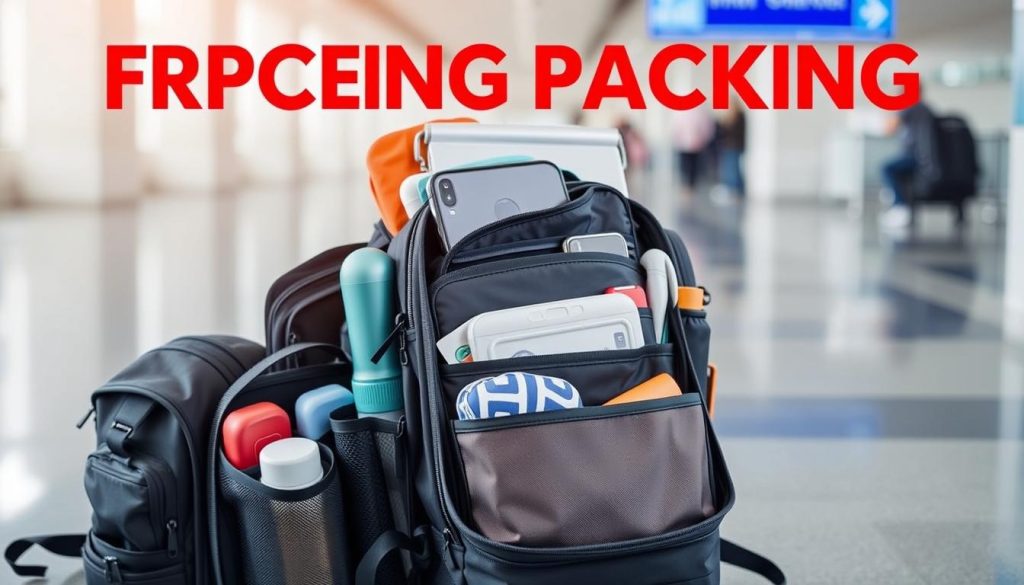
A good travel backpack has many compartments, pockets you can reach from the side, and can expand. These features help you keep your stuff organized and easy to get to. This means you spend less time looking for things.
- Compartments: Separate areas for different items improve organization.
- Side-access pockets: Help you quickly reach necessities like passports or snacks.
- Expandable sections: Allow for extra storage without compromising the dimensions for carry-on.
Backpacks with lockable zippers keep your things safe and meet TSA rules. They use strong materials like YKK zippers and ripstop nylon, making them tough but light. Many people find travel backpacks improve their travel experience by making it easier and less stressful.
Taking Inventory of Your Travel Essentials
Ready for a trip? Start by listing everything you might need. Doing this helps you make the most of your luggage space. Think about what you’ll be doing and where you’re going. This makes sure you pack only what’s needed.
Prioritizing Must-Have Items
First, consider the type of trip. Business? Pack office clothes, your laptop, and important papers. Going for fun? Bring the right outfits, any gear for activities, and toiletries. It’s also smart to keep things like chargers close by on the plane.
Travel packing cubes save up to 70% of space, emphasizing the importance of organized packing strategies.
Rolling your clothes can help you fit more in your bag. You might even skip checking a bag. Packing cubes are great for keeping things tidy and can save you up to 30% more space. Remember, following TSA rules, especially for liquids, is key.
Eliminating Non-Essential Items
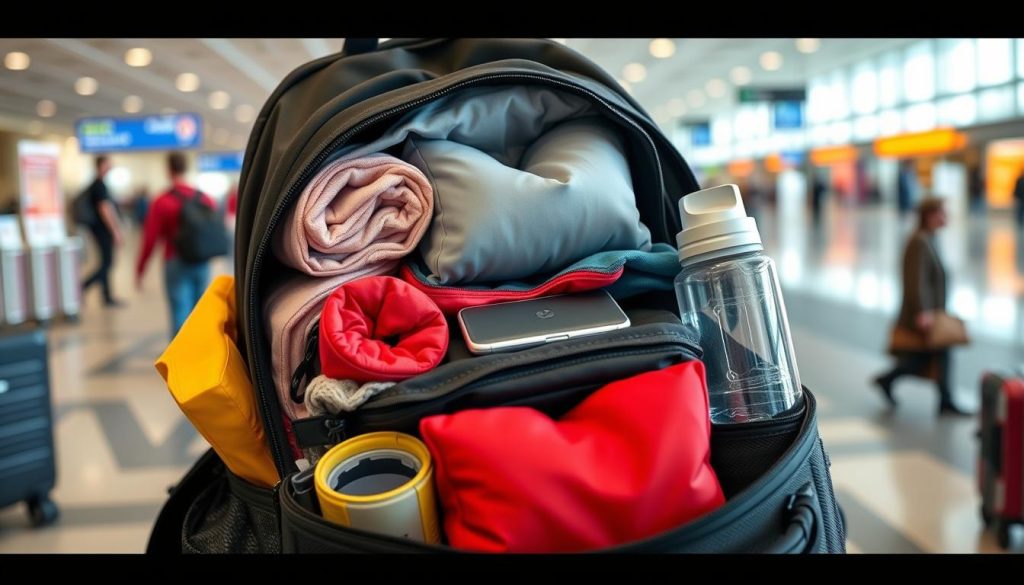
Leave behind things you don’t really need to save space and weight in your bag. Go for items that can do double duty. For instance, a quick-dry towel is great for bathing or as a blanket.
- Clothing: Pick clothes that work well together. This way, you pack fewer pieces.
- Toiletries: Use small bottles and bags that won’t leak, in line with TSA rules.
- Electronics: Only bring the tech and accessories you can’t do without. Remember to take out bigger electronics for screening.
Packing smart means less time digging through your bag. It makes your trip smoother and more enjoyable.
| Item | Reason to Include | Space Optimization Tip |
|---|---|---|
| Clothing | Essential for daily wear | Roll instead of fold to conserve space |
| Toiletries | Maintain personal hygiene | Use travel-sized bottles |
| Electronics | Convenience and work purposes | Pack only necessary items |
By picking what you pack carefully, you can use your luggage space wisely. This leaves more room for the things you truly need.
Efficient Packing Techniques
Many options are available for efficient packing, making it easier to organize your space. You can use travel packing cubes or choose between rolling and folding your clothes. These methods are great for fitting more in your backpack when flying.
Rolling vs. Folding Clothes
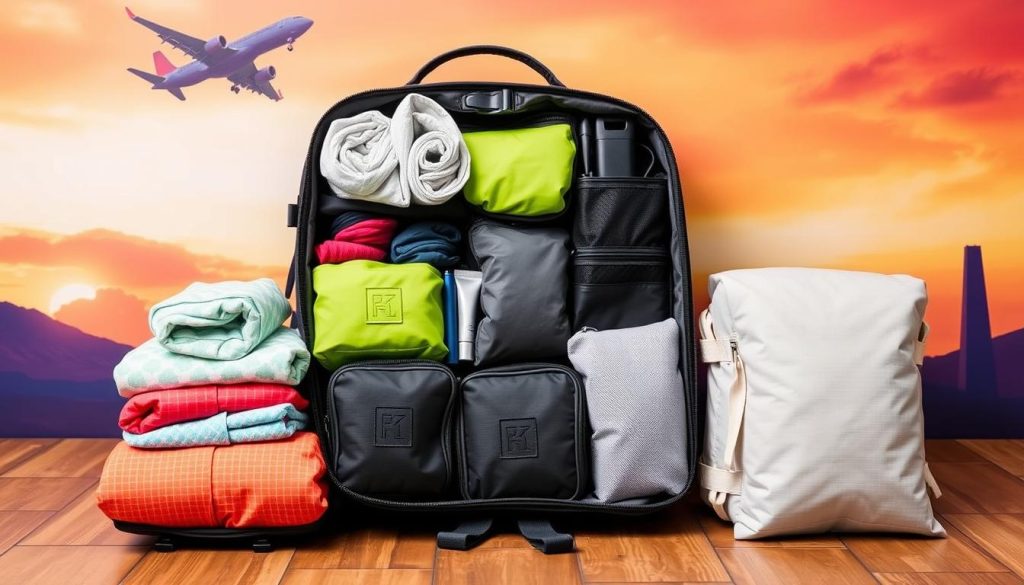
Rolling your clothes versus folding them is a hot topic among travelers. It’s proven that rolling saves up to 20% more space. This method works well for casual clothes and reduces wrinkles. However, folding is best for clothes that need to keep their shape.
To get the best results, mix these methods. Roll items like t-shirts, jeans, and underwear. Fold jackets and formal clothes to keep them looking good.
Utilizing Packing Cubes
Packing cubes can totally change how you pack. They can make you 30% more efficient, helping you fit more into your backpack for flights. They organize your things by category so you can find things without digging. Plus, packing cubes can compress your clothes, allowing you to fit more.
For example, a 25-liter backpack can easily hold enough for a long weekend if you use packing cubes. This makes packing neater and more compact.
Rolling clothes can save up to 20% more space in luggage compared to folding them.
The type of backpack you choose also matters for maximizing space. For example, a Knack Pack, even larger sizes, weighs about 3 lbs. 4 oz. Using it with these packing strategies can help you travel easier.
Organizing Your Backpack for Quick Access
Packing for air travel is more than just squeezing items in. It’s arranging them so you can grab what you need fast, without messing everything up. This is key for items you use a lot, like documents and gadgets.
Dividing Items by Frequency of Use
When you pack your backpack for flying, put the things you’ll use most at the top or front. Stuff like your travel papers, snacks, and electronics should be easy to get to. A study found 75% of travelers like backpacks with lots of pockets for this reason.
- Travel Documents: Keep your passport, boarding pass, and other important papers in an easy-to-reach pocket.
- Electronics: Have a special spot for your laptop and tablet, which 80% of travelers do.
- Food and Beverages: Put snacks and drinks in side pockets so you don’t have to dig for them.
Designating a Place for Important Documents
Keeping your travel documents safe and handy is super important. Picking spots just for them means you won’t panic looking for your passport or tickets. Knack Packs are bags that are light and spacious, with perfect places for these items.
- Dedicated Document Pockets: Go for backpacks that have special sleeves or hidden spots for your papers.
- Use a Travel Wallet: Keep all important documents in a travel wallet, which should fit nicely in one of those spots.
- Safety and Security: Store your valuables in a pocket that’s hard for others to get into.
Following these tips can make travel smoother and less stressful. Packing your backpack right means you can find things quickly and keep them safe. This makes your trip much better from start to finish.
| Essential Items | Recommended Location | Additional Tips |
|---|---|---|
| Passport & Documents | Front or Side Pocket | Use a secure, easily accessible compartment |
| Snacks & Drinks | Side Pocket | Keep separate from electronics |
| Electronics | Dedicated Compartment | Ensure protective padding |
How to Pack Toiletries and Electronics
Packing efficiently for air travel can make a significant difference in how smoothly your journey goes. Leveraging optimal airline storage solutions for backpacks is essential, especially when it comes to toiletries and electronics.
Using Travel-Sized Bottles and Leak-Proof Bags
When packing toiletries, choosing travel-sized bottles is a must to follow TSA rules. These rules state liquids must be in containers of 3.4 ounces (100 milliliters) or less. They also must fit into a quart-sized clear bag. This not only follows guidelines but also saves space in your bag. Also, using leak-proof bags helps prevent spills that could ruin other items.
- Travel-sized bottles (3.4 ounces or less)
- Quart-sized clear bags
- Leak-proof toiletries bags
Protecting Your Electronics
Electronics are essential for travelers today. Packing them safely can stop them from getting damaged. A good way to keep electronics safe in backpacks is to use padded compartments. If your backpack doesn’t have these, try wrapping your devices in clothes or bubble wrap.
- Padded compartments for laptops and tablets
- Protective materials such as bubble wrap
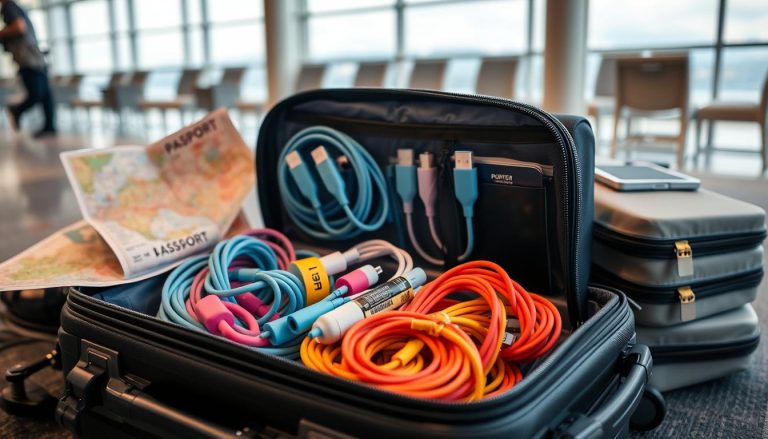
- Keeping cables tidy to prevent tangling
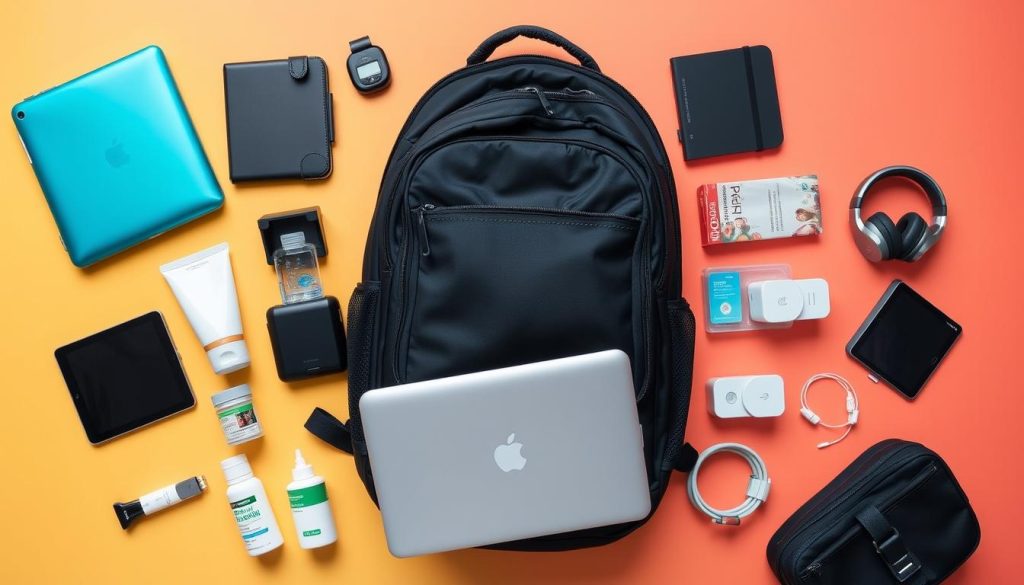
When looking at tips for packing carry-on backpacks, make sure to use space smartly. Try organizing with packing cubes and compartments. These tips can cut down on prep time and make your trip easier.
What are Efficient Ways to Maximize Backpack Storage for Flights?
Finding efficient ways to maximize backpack storage for flights helps you use space well and follow airline rules.
Firstly, know the size limit for carry-ons, often 55cm x 40cm x 20cm for many European airlines. The weight limit is usually 10kg (22lbs). Staying within these limits helps you avoid extra fees.
Having a packing plan is key. Here’s a quick guide:
- Clothing – Choose versatile clothes in a few colors to mix and match easily.
- Toiletries – Use small bottles and follow the TSA 3-1-1 rule for liquids.
- Electronics – Keep these safe in padded, easy-to-reach spots.
- Documents – Store all crucial documents where you can easily find them.
- Stuff – Use extra space for small, non-essential items or gadgets.
Also, think about using packing cubes that can squash items by up to 70%. Rolling clothes rather than folding helps save loads of space. Pick materials like cotton or silk to avoid wrinkles and bulk.
Let’s look at different packing methods with their pros and cons:
| Strategy | Pros | Cons |
|---|---|---|
| Rolling Clothes | Saves space, prevents wrinkles | Can be time-consuming to perfect |
| Compression Cubes | Up to 70% space savings, organized packing | Initial investment cost |
| Layering Multifunctional Items | Reduces the need for multiple items | May limit outfit variety |
| Using Travel-Sized Bottles | Complies with TSA 3-1-1 rule, lightens load | Requires regular refilling |
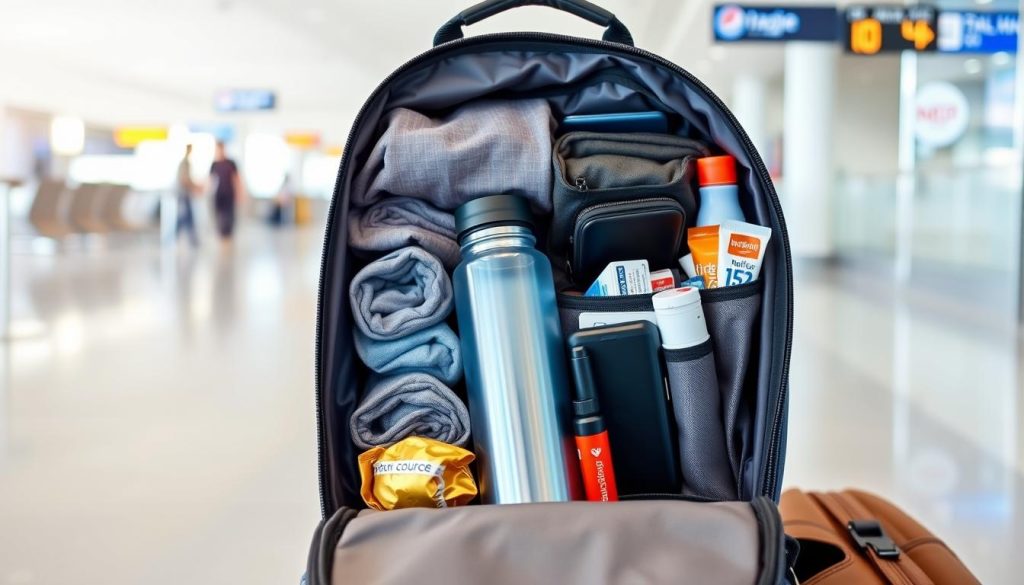
Wear your heaviest clothes during the flight to free up space in your backpack. For example, bulky jackets and heavy jeans.
By using these tips, you can pack smarter and travel more comfortably, no matter how far you’re going.
Optimizing Weight Distribution
It’s important to spread the weight in your backpack right for comfort and ease. Putting your stuff the right way not only makes more room for flights. It also helps you balance better and move easier.
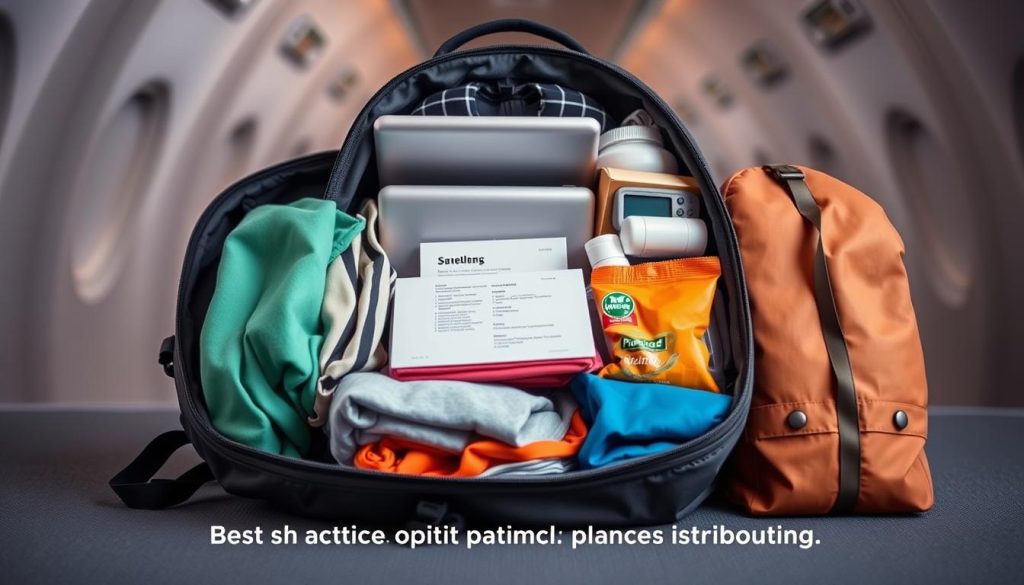
Heavier Items Close to Your Back
To keep your backpack comfy on planes, put heavy things like laptops and shoes near your back. This way, the heaviest stuff is closest to your body’s center, cutting down strain and helping you stand tall. Lightweight yet sturdy backpacks like Knack Packs, at only 3 lbs. 4 oz. for big ones, show how crucial the right backpack is for traveling.
Balancing Through Smaller Pockets
Besides putting heavy items near your back, use small pockets for light stuff. Place essentials, like tiny toiletries and electronics, in specific spots for quick grabs and neat packing. Packing cubes are great too. They squish your stuff so you can fit up to 70% more. This helps keep your backpack balanced and organized for flights.
Here’s a quick guide on where to put things in your backpack for the best weight distribution:
| Type of Item | Recommended Placement | Reason |
|---|---|---|
| Heavier Items (laptops, shoes) | Near Your Back | Maintains Balance and Reduces Strain |
| Lighter Items (toiletries, chargers) | Smaller Pockets | Enhances Accessibility and Organization |
| Fragile Items | Compartmentalized Bags | Reduces Damage During Transit |
By using these tips for good weight distribution, your travels will be more comfy and organized. These smart ways to pack your backpack for flights focus on both being practical and efficient. They make sure you get where you’re going ready for fun.
Tips for Keeping Your Backpack Organized During Your Trip
Keeping your backpack organized can greatly improve your trip. You need to sort and prioritize items based on what you’ll need each day. This makes the most of your space and keeps important stuff easy to find.
- Travel packing hacks: Sort items every night based on the next day’s itinerary. This practice keeps your backpack tidy and reduces the time spent searching for items.
- Organizing backpack for air travel: Use a combination of rolling and folding techniques to maximize space and minimize wrinkles in your clothing. Rolling soft clothes and folding stiffer items helps utilize every inch of space effectively.
It’s smart to regularly check and rearrange your backpack. This keeps clutter away and ensures everything essential is easy to grab. This is especially important for things you use a lot, like your phone, charger, ID, and snacks.
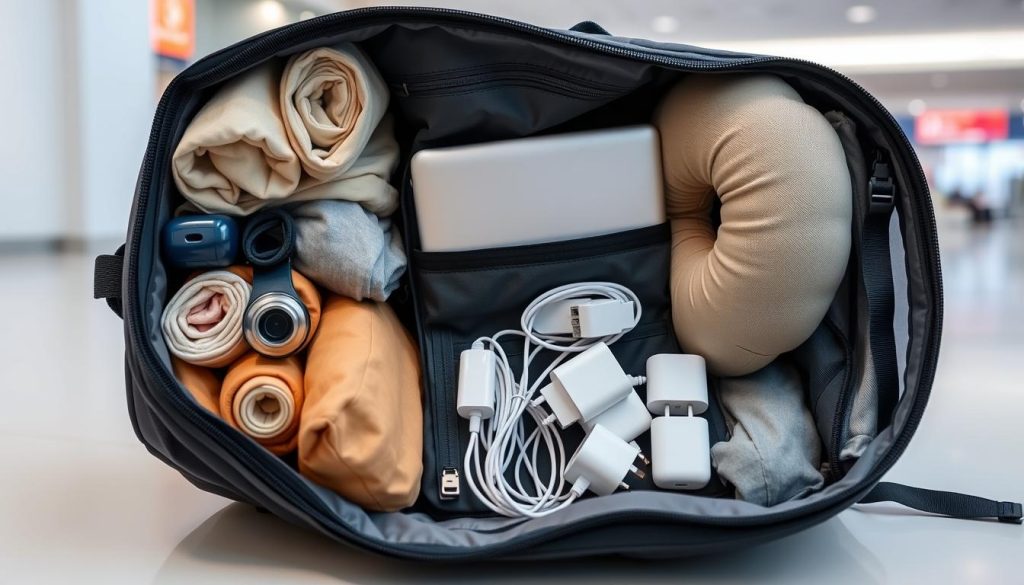
Packing cubes are great travel hacks. They can boost space in your backpack by up to 30%. They make it easier to separate different items too.
For organizing your backpack for air travel direction, put heavy things near your back. It makes carrying your backpack easier and less tiring. Quick-grab items like jackets or sunglasses should go in outer pockets. 75% of travelers do this for easy access.
| Essential Items | Packing Tips |
|---|---|
| Phone and Charger | Keep in an easily accessible pocket. |
| Identification Documents | Store in a secure, yet reachable slot. |
| E-reader or Tablet | Use a padded compartment to protect the device. |
| Laptop and Charger | Place laptop against your back for stability. |
| Comfort Items | Store in the main compartment for quick retrieval. |
Finally, lay everything out flat before you pack. It helps plan your packing and keeps essentials easy to reach. Staying organized makes travel smoother and more fun.
The Importance of Travel-Size Items
Travel-size items are key for smooth travel. They meet TSA rules and fit in your carry-on perfectly. Following the 3-1-1 rule lets you pack liquids in 100ml bottles. This makes packing easier and speeds up security checks.
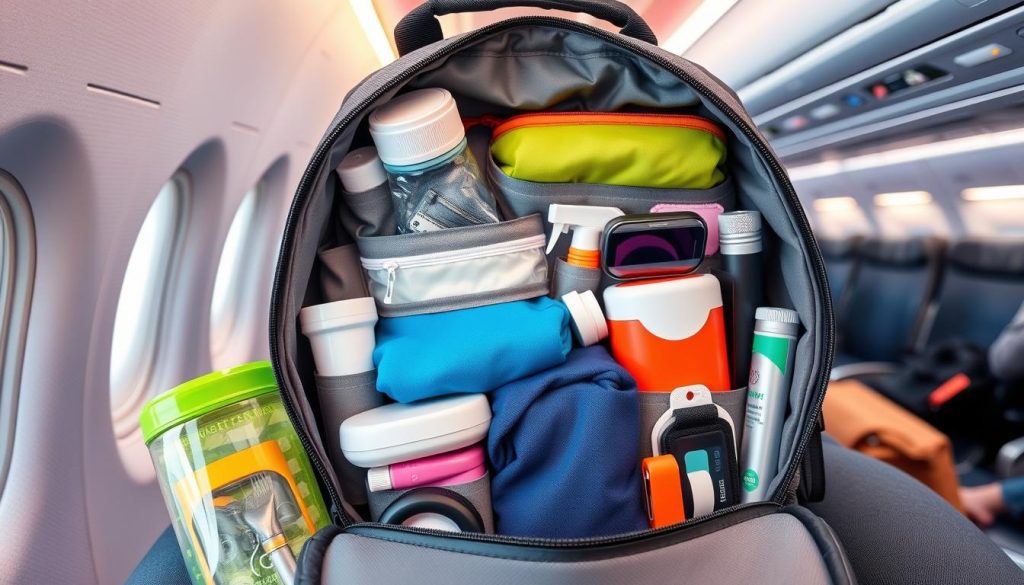
Also, using travel-size items helps save space and lighten your load when flying. Brands like REI, North Face, and Patagonia make strong and handy travel-sized items.
Why You Should Never Pack Full-Size Products
Packing full-size products takes up too much room and might get taken away at security. Following TSA’s advice, always choose travel-size for easy packing. Smaller items fit better in packing cubes and make packing simple.
Recommended Travel-Size Brands
Many trusted brands offer quality travel-size items for all kinds of trips. REI has great travel-sized toiletries for those who love adventures. The North Face and Patagonia provide compact, sturdy, and eco-friendly products. These brands help you pack light but still bring what you need.
Choosing these travel-size items lets you pack smarter and follow airline rules. This way, you breeze through security and enjoy a worry-free trip.
Conclusion
Getting your backpack ready for a flight mixes smart planning with careful packing. Knowing what you need for your trip and picking the right backpack is key. This makes sure your journey starts off smooth. Choosing backpacks that fit airline sizes helps you save time and skip problems during travel.
Packing your backpack right for a flight is really important. If you roll your clothes and use packing cubes, you can fit more in by up to 30%. Keeping must-haves like your passport and gadgets in easy-to-reach spots cuts down on searching by half. Also, following TSA rules for liquids and gadgets helps you breeze through security checks.
Putting things in your backpack the right way makes your trip better. Keep heavy stuff close to your back for more support. Things you need often should be easy to grab. Use pockets on the outside for stuff you need quick. These tips help you make the most of your backpack space on flights. So, you can worry less about your bags and enjoy your adventures more.