Learning the Basics: Common German Phrases You Should Know
Are you planning to travel to Germany or interested in learning a new language? Knowing some basic German phrases is essential for effective communication. This section will introduce you to some of the most commonly used phrases in German to help you navigate daily interactions with ease.
What are some of the most common German phrases you should know? These include simple phrases to greet others, ask for directions, order food and drinks, shop, and make reservations. Learning these phrases will not only enhance your travel experience but also deepen your understanding of German language and culture.
By familiarizing yourself with these common German phrases, you’ll be able to connect with locals, make new friends, and navigate Germany with ease. So, let’s get started and explore some of these phrases in more detail!
Greetings and Introductions
If you want to make a good first impression, start by learning basic German phrases for greetings and introductions. Whether you’re meeting new people in a social setting or introducing yourself in a professional environment, these essential German phrases will come in handy.
Here are some basic German phrases for greetings:
- Hallo – Hello
- Guten Morgen – Good morning
- Guten Tag – Good day
- Guten Abend – Good evening
To ask someone how they are doing, use the phrase “Wie geht es dir?” (pronounced: vee geht ess deer), which means “How are you?”
When introducing yourself, use the phrase “Ich heiße…” (pronounced: ich hi-suh), which means “My name is…” followed by your name. For example, “Ich heiße Sarah.”
It’s also important to know how to address someone formally. When meeting someone for the first time, it’s best to use the formal “Sie” (pronounced: zee) instead of the informal “du” (pronounced: doo).
Here’s an example conversation to help you practice:
A: Hallo, wie geht es Ihnen?
B: Guten Tag, es geht mir gut. Danke. Und Ihnen?
A: Mir geht es auch gut. Ich heiße Anna. Wie heißen Sie?
B: Ich heiße Herr Müller.
Keep practicing these basic German phrases for greetings and introductions to improve your language skills.

Asking for Directions: Useful German Phrases for Everyday Interaction
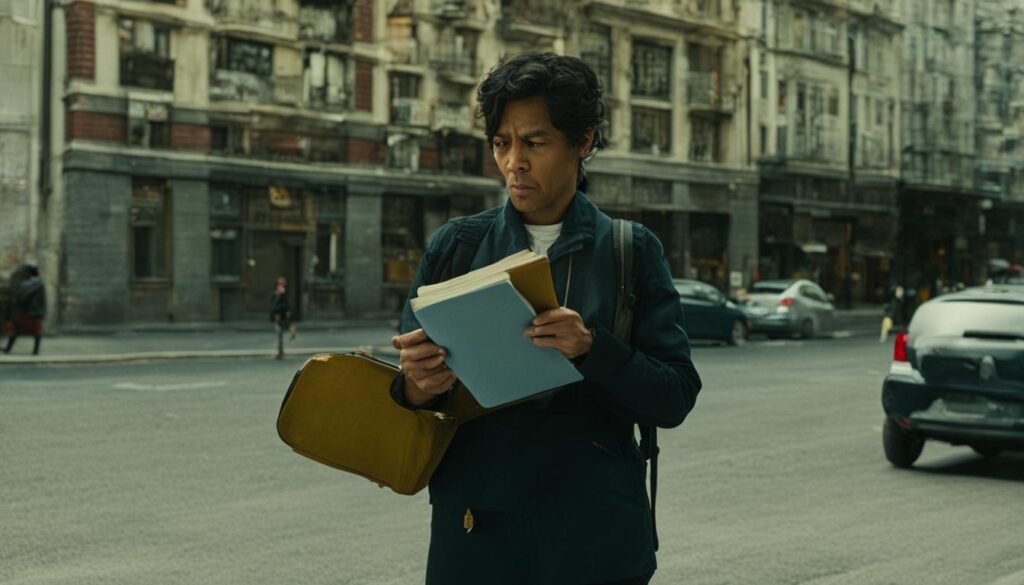
Germany is a beautiful country to explore, and asking for directions can be essential when you’re out and about. Here are some useful German phrases to help you navigate your way:
| German | English |
|---|---|
| Entschuldigung, können Sie mir helfen? | Excuse me, can you help me? |
| Wo ist die nächste U-Bahn-Station? | Where is the nearest subway station? |
| Wie komme ich zum Rathaus? | How do I get to the town hall? |
| Ich suche den Dom. | I’m looking for the cathedral. |
| Links oder rechts? | Left or right? |
| Gehen Sie geradeaus. | Go straight ahead. |
| Biegen Sie an der Ampel links ab. | Turn left at the traffic light. |
| Wie weit ist es bis zum Bahnhof? | How far is it to the train station? |
Remember, it’s essential to be polite and courteous when asking for directions. Using simple phrases like “Entschuldigung” (excuse me) and “Können Sie mir helfen?” (can you help me?) can go a long way in ensuring a positive interaction.
Spend some time practicing these phrases, and you’ll be able to ask for directions with ease and confidence during everyday interactions in Germany.
Ordering Food and Drinks
Germany is known for its tasty, hearty cuisine, from traditional sausages and sauerkraut to delicious beer and wine. When dining out, it’s helpful to know some popular German phrases for ordering food and drinks. Here are some everyday German phrases you can use:
At a Restaurant or Cafe:
| German Phrase | English Translation |
|---|---|
| Ich hätte gerne… | I would like… |
| Die Speisekarte, bitte. | The menu, please. |
| Das Tagesgericht, bitte. | The daily special, please. |
| Noch eine Portion, bitte. | Another serving, please. |
| Darf ich die Rechnung haben, bitte? | Can I have the bill, please? |
At a Bar:
| German Phrase | English Translation |
|---|---|
| Ein Bier, bitte. | A beer, please. |
| Ein Glas Wein, bitte. | A glass of wine, please. |
| Ich hätte gerne einen Cocktail. | I would like a cocktail. |
| Noch ein Getränk, bitte. | Another drink, please. |
| Können wir die Rechnung haben? | Can we have the bill? |
Remember to always be polite and use “bitte” (please) when ordering food and drinks in Germany. Prost (Cheers) to enjoying the delicious German cuisine!
Shopping and Negotiating Prices
Are you planning to go shopping in Germany? It’s essential to know some basic German phrases for shopping and negotiating prices. Here are some useful phrases:
Wie viel kostet das?
(How much does that cost?)
This is a simple phrase to ask for the price of an item. You can use this phrase to ask for the price of anything from clothes to souvenirs to food.
Können Sie mir einen Rabatt geben?
(Can you give me a discount?)
If you want to negotiate the price of an item, you can use this phrase to ask for a discount. It’s a polite way to negotiate without being too aggressive.
If you’re happy with the price, you can use the following phrase:
Ich nehme es.
(I’ll take it.)
This phrase is a simple way to indicate that you would like to purchase the item.
When shopping, it’s also important to know your German numbers.
| Number | German | Pronunciation |
|---|---|---|
| 1 | eins | eyns |
| 2 | zwei | tsvy |
| 3 | drei | dry |
| 4 | vier | feer |
| 5 | fünf | fwuhnf |
| 6 | sechs | zeks |
| 7 | sieben | zee-ben |
| 8 | acht | ahkt |
| 9 | neun | noyn |
| 10 | zehn | tsayn |
Knowing the numbers in German will help you understand prices better and communicate more clearly when shopping or negotiating.
Now that you know some popular German phrases for shopping and negotiating prices, it’s time to hit the stores!

Transportation and Travel
When you’re traveling in Germany, knowing basic German phrases related to transportation can make your experience much easier. Whether you’re taking public transport, hiring a taxi, or flying out of a German airport, these essential German phrases will help you navigate your way around.
Public Transport
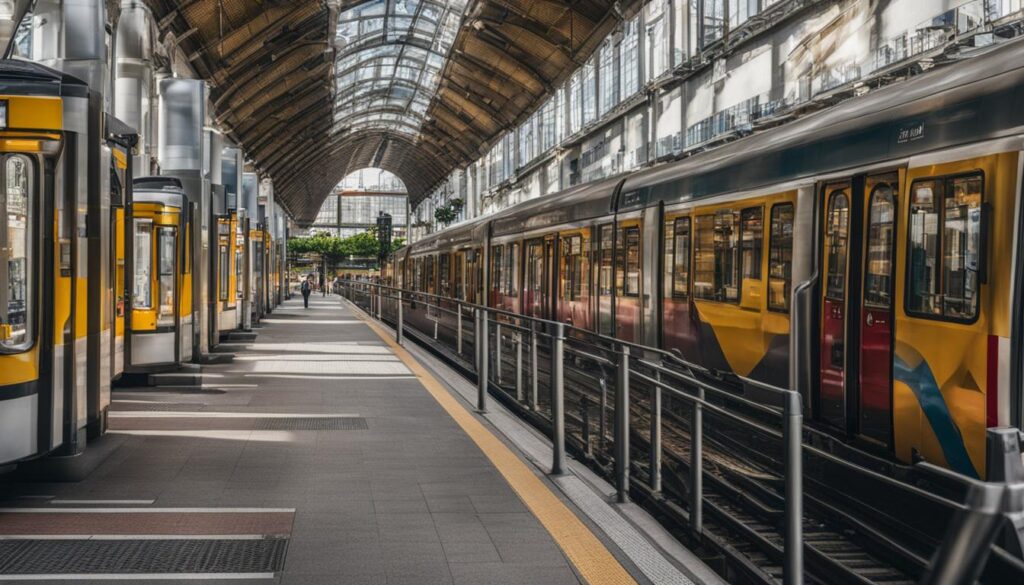
Germany has an extensive public transportation system that is efficient, reliable, and affordable. Here are some basic German phrases that will help you navigate public transportation:
| German | English Translation |
|---|---|
| Entschuldigung, wo ist die Haltestelle? | Excuse me, where is the stop? |
| Wann kommt der nächste Bus/Zug/Tram? | When is the next bus/train/tram? |
| Wie viel kostet eine Fahrkarte nach [destination]? | How much does a ticket to [destination] cost? |
| Ich möchte eine Fahrkarte nach [destination]. | I would like a ticket to [destination]. |
Airports
If you’re flying to or from Germany, here are some useful German phrases to help you navigate the airport:
| German | English Translation |
|---|---|
| Wo ist der Check-in-Schalter? | Where is the check-in counter? |
| Ich habe einen Flug nach [destination]. | I have a flight to [destination]. |
| Wo ist das Gate für meinen Flug? | Where is the gate for my flight? |
| Wie lange dauert der Flug? | How long is the flight? |
Taxis
If you’re hiring a taxi in Germany, here are some essential German phrases to help you communicate with your driver:
| German | English Translation |
|---|---|
| Ich möchte zum [destination]. | I would like to go to [destination]. |
| Wie viel kostet die Fahrt? | How much does the ride cost? |
| Könnten Sie bitte langsamer fahren? | Could you please drive slower? |
| Ich möchte anhalten. | I would like to stop. |
In conclusion, whether you’re taking public transport, flying out of a German airport, or hiring a taxi, these essential German phrases will help you navigate your way around and ensure a smooth travel experience. Practice these basic German phrases, and you’ll be communicating with ease in no time.
Making Reservations and Booking Accommodation
Planning to stay in Germany? Knowing how to make reservations and book accommodation is crucial. Here are some essential German phrases for making hotel reservations, discussing room preferences, and handling check-in and check-out procedures.
| German | English |
|---|---|
| Ich möchte ein Zimmer reservieren. | I would like to make a room reservation. |
| Haben Sie ein Zimmer frei? | Do you have any rooms available? |
| Wie viel kostet das Zimmer pro Nacht? | How much is the room per night? |
| Gibt es ein Frühstück inklusive? | Is breakfast included? |
| Ich hätte gerne ein Zimmer mit Aussicht. | I would like a room with a view. |
| Kann ich ein Nichtraucherzimmer bekommen? | Can I have a non-smoking room? |
| Wann ist der Check-in? | What time is check-in? |
| Kann ich später auschecken? | Can I check out later? |
| Wo ist der Frühstücksraum? | Where is the breakfast room? |
These useful German phrases will make your stay in Germany more comfortable and enjoyable. Don’t be afraid to ask for assistance if needed.
Expressing Basic Needs and Emergencies
In any situation, it’s important to know how to express your basic needs and seek help if you’re in an emergency. Here are some common German phrases that can help you communicate your needs:
Ich habe Hunger. (I’m hungry.)
Ich habe Durst. (I’m thirsty.)
Ich habe Schmerzen. (I’m in pain.)
If you find yourself in an emergency situation, use these essential German phrases to ask for assistance:
Hilfe! (Help!)
Ich brauche einen Arzt. (I need a doctor.)
Feuer! (Fire!)
It’s also important to know how to call emergency services in Germany. The national emergency number is 112, and you can use it to contact the police, ambulance, or fire department.
Familiarize yourself with these phrases to ensure that you can communicate effectively in an emergency. Don’t hesitate to call emergency services if you require immediate assistance.
Socializing and Small Talk
Traveling to Germany can be exciting, but it can also be challenging, especially if you don’t know anyone there. To make new friends and immerse yourself in the local culture, it’s essential to learn how to socialize and engage in small talk in German. Here are some popular and everyday German phrases that can help you start conversations and connect with locals:
- “Wie geht es dir?” – How are you?
- “Mir geht es gut, danke. Und dir?” – I’m doing well, thanks. And you?
- “Woher kommst du?” – Where are you from?
- “Ich komme aus [insert your country here].” – I’m from [insert your country here].
- “Was machst du gerne in deiner Freizeit?” – What do you like to do in your free time?
- “Ich mag [insert your hobby here].” – I like [insert your hobby here].
Once you’ve started a conversation, it’s essential to keep it going. Here are some tips for maintaining a conversation:
- Ask open-ended questions.
- Show genuine interest in the other person.
- Try to find common interests.
Remember that small talk is all about building rapport, so don’t worry too much about saying the exact right thing. Just be friendly, smile, and show interest in the other person.
Now that you’ve learned some basic German phrases for socializing and small talk, it’s time to put them into practice. Don’t be shy! Start a conversation with a local or another traveler and see where it takes you.
Conclusion
Congratulations! You have now learned some of the most common German phrases that will enhance your communication skills while traveling or studying in Germany. By familiarizing yourself with these basic phrases, you’ll be able to navigate daily interactions with ease and gain a better understanding of the German language and culture. Keep practicing and exploring, and soon you’ll be speaking German fluently.
Learning a new language can be challenging, but it’s also rewarding. As you continue to study German, remember to take it one step at a time, practice daily, and have fun with it. Whether you’re planning a trip to Germany or just want to expand your language skills, knowing German phrases can make a huge difference in your ability to communicate with others.
Take advantage of resources such as language exchange programs, online courses, and immersion experiences to continue improving your skills. The more you immerse yourself in the language and culture, the more confident you’ll become in using German phrases in your everyday life.
Thank you for joining us on this journey to learn some of the most essential German phrases. We hope this guide has been helpful and wish you the best of luck in your language learning endeavors.