Is Floating in the Dead Sea Safe for Everyone? Safety Tips
Ever thought about floating in the Dead Sea? It’s a natural wonder with super salty water. People wonder if it’s safe for everyone. Before you go, it’s good to know the Dead Sea floating safety tips.
The Dead Sea is much saltier than regular ocean water. Knowing this is key. You’ll learn how to stay safe and have fun. Find out who needs to be careful, what to do first, and how to enjoy the water.
Introduction to the Dead Sea Experience
The Dead Sea is a natural wonder, 429 meters (1,407 feet) below sea level. It’s the lowest dry land point and has very salty water. Floating here is a unique experience because you won’t sink easily.
Its mineral-rich mud is famous for skin benefits. Many resorts offer treatments with this mud. Before you float, it’s good to know a few things.
- If you have cuts or scrapes, the high salt can be very uncomfortable.
- Watch out for saltwater in your eyes or mouth, as it can irritate.
- The area gets busy, so plan your visit for less crowded times.
- Wadi Mujib Nature Reserve is only for those 18 and older.
Following safety tips is key for a great visit. With the right preparation, you can enjoy the Dead Sea’s healing waters safely.

Understanding the Unique Properties of the Dead Sea
The Dead Sea is famous for its special features that attract visitors worldwide. It sits about 423 meters below sea level, making it the lowest spot on Earth. This low elevation adds to the water’s unique effects, with a salinity of about 34%.
This high salt level is ten times more than regular seawater. It creates a place where you can float easily. Many ask, is Dead Sea buoyancy safe? Yes, it’s safe and offers a relaxing float like Dead Sea floatation therapy.
The Dead Sea’s water and mud are also known for their health benefits. The water has over 30% salinity and contains minerals like magnesium, calcium, and potassium. These minerals help with skin conditions, respiratory issues, and more.
The mud, rich in about 25 minerals, is great for skin treatments. It’s believed to boost cell metabolism and blood flow. This makes the Dead Sea a top spot for wellness and relaxation.
Best times to visit are March to May and late September to November. The weather is cool during these months. Public beaches like Amman Tourist Beach cost around $19, making it easy to enjoy this natural wonder. The water stays around 72°F (22°C) all year, perfect for a therapeutic float.
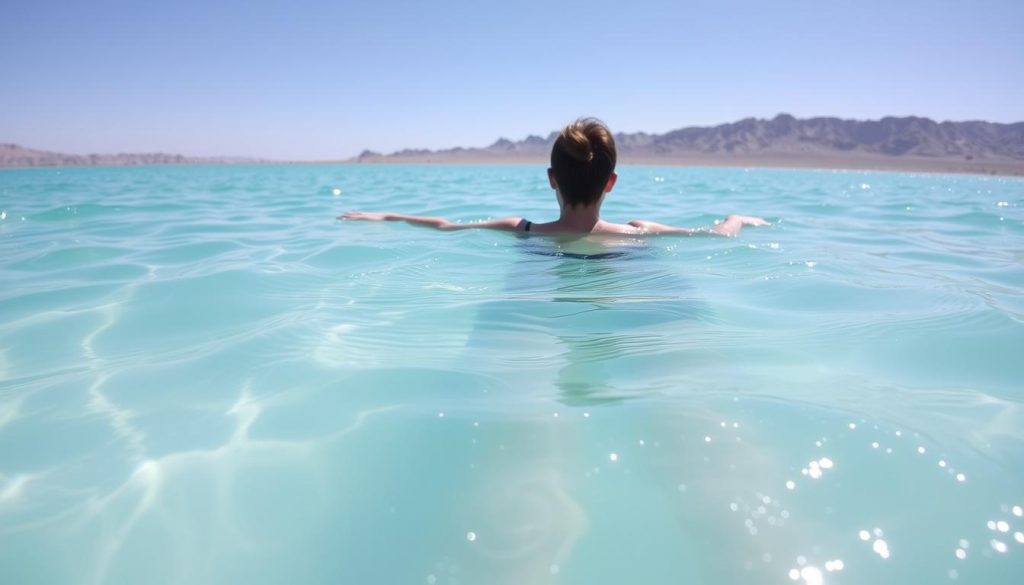
Is Floating in the Dead Sea Safe for Everyone?
Floating in the Dead Sea is a unique experience. But, it’s important to think about your health before you go. While many can enjoy it safely, some groups need extra care. Knowing the risks helps make your visit enjoyable.
Considerations for Different Populations
Some groups should be careful when floating in the Dead Sea. Pregnant women should talk to a doctor first. People with heart problems or weak immune systems should also be cautious. Checking your health is key to a great time.
Common Health Concerns
Those with sensitive skin should be careful. The Dead Sea’s salt, at 33%, can irritate skin. It’s also important to protect your eyes from splashes. A health check before you go can help avoid irritation or injury.
Essential Dead Sea Floating Safety Tips
Planning a trip to the Dead Sea? It’s important to know how to stay safe while floating. Getting ready and knowing what to bring will make your visit better.
Preparing for Your Trip
The Dead Sea’s water is very salty. Many people suggest not shaving for at least 24 hours before going in. This helps avoid any stinging from the salt.
Also, wear your bathing suit when you arrive. This saves time and avoids the mess of locker rooms. Start in the shallow end to get used to the saltwater slowly.
What to Bring When Visiting
Here’s what you should pack for a great visit:
- Waterproof bandages for any scrapes or cuts, providing protection against discomfort.
- An old bathing suit since the salt can discolor fabrics.
- Water shoes to protect your feet from sharp rocks beneath the surface.
- A GoPro or camera; remember to take photos before entering the water to capture the experience, and use your camera wisely to avoid blurry footage caused by salt.
- Mineral-infused skincare products, being cautious to choose trusted brands like Ahava to ensure safety and avoid harmful chemicals.
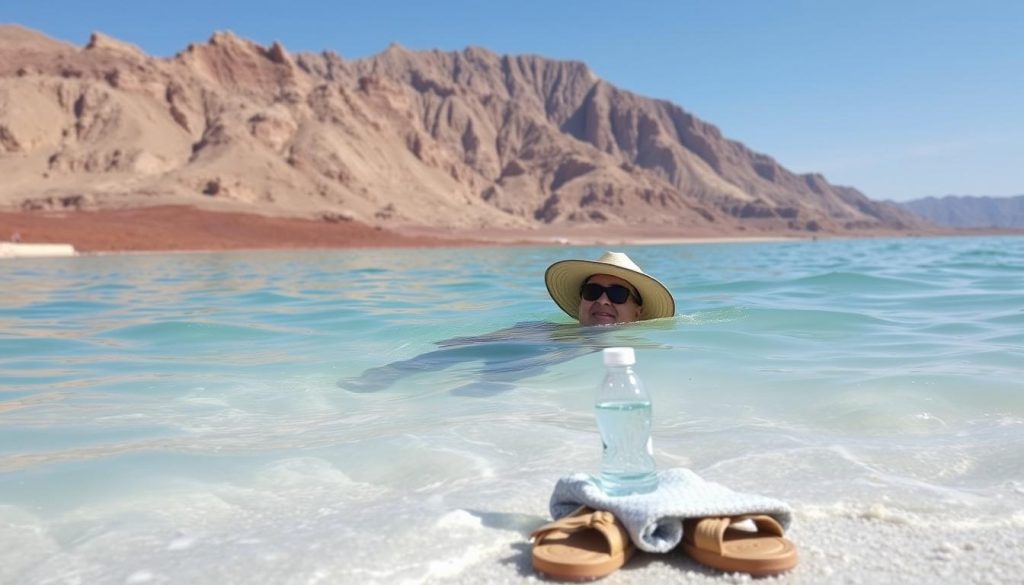
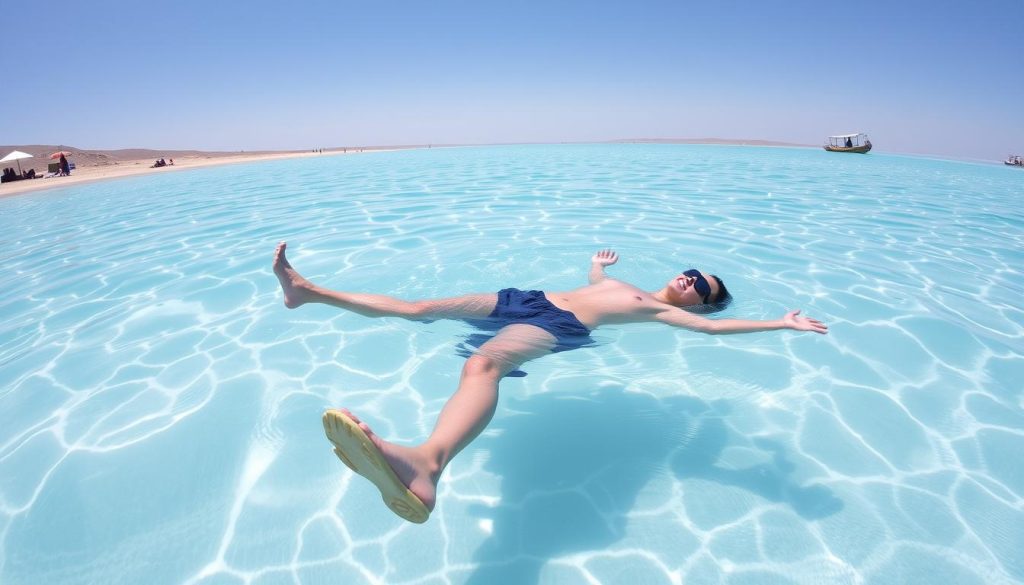
By following these tips, you can enjoy the Dead Sea’s healing waters safely. Remember to float instead of swim. The saltwater’s buoyancy will lift you up effortlessly.
Health Risks Associated with Floating in the Dead Sea
Floating in the Dead Sea is a unique and memorable experience. But, it’s important to know the health risks involved. The high salt concentration can affect your skin. Knowing these risks helps ensure a safe visit.
Skin Sensitivity and Salt Concentration
The Dead Sea’s salt concentration is about 34 percent, much higher than ocean water’s 3.5 percent. This high salt can make your skin more sensitive and cause irritation. People with skin conditions may experience rashes and stinging.
Even those without skin issues may react negatively to the salt. This is more likely with longer exposure.
Precautions for Cuts and Scrapes
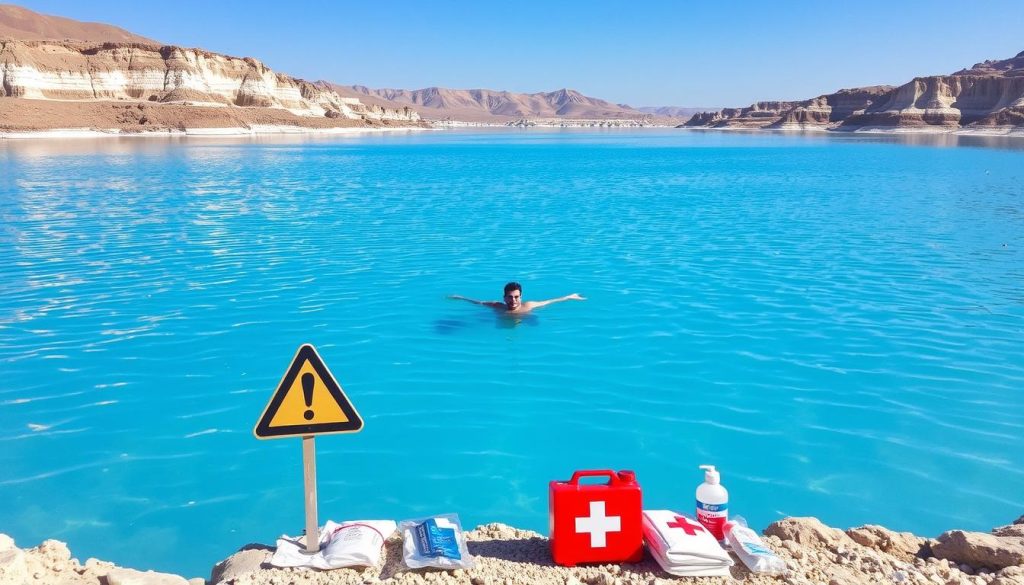
It’s important to cover any open wounds or cuts with waterproof bandages before swimming. The salty water can make exposed skin uncomfortable and increase the risk of infection. Taking the right precautions ensures a safe and enjoyable experience.
Here are some key tips for skin care and safety:
- Do not shave for a couple of days prior to your visit to prevent irritation.
- Apply waterproof bandages on cuts or scrapes before floating.
- Avoid touching your face while in the water to minimize irritation.
- Limit your time in the water to 20 minutes to avoid dehydration and maintain skin health.
| Risk Factor | Description | Recommended Action |
|---|---|---|
| Skin Sensitivity | High salt concentration can irritate sensitive skin | Limit exposure and cover affected areas |
| Cuts and Scrapes | Saltwater can exacerbate pain and lead to infections | Cover with waterproof bandages |
| Dehydration | Prolonged exposure can lead to electrolyte imbalances | Follow time limits for swimming |
Learning about floating in Dead Sea health risks helps you stay safe while enjoying its benefits. It’s all about being responsible for your health.
Important Dead Sea Floating Precautions
When you float in the Dead Sea, it’s important to follow some precautions. This makes your experience more comfortable and safe. It helps you enjoy this natural wonder fully.
Avoiding Eye Irritation
Getting Dead Sea water in your eyes can be very uncomfortable. It’s crucial to protect your eyes. If water gets in, rinse them with fresh water right away.
Wearing goggles can also prevent any discomfort while floating.
Limiting Time in the Water
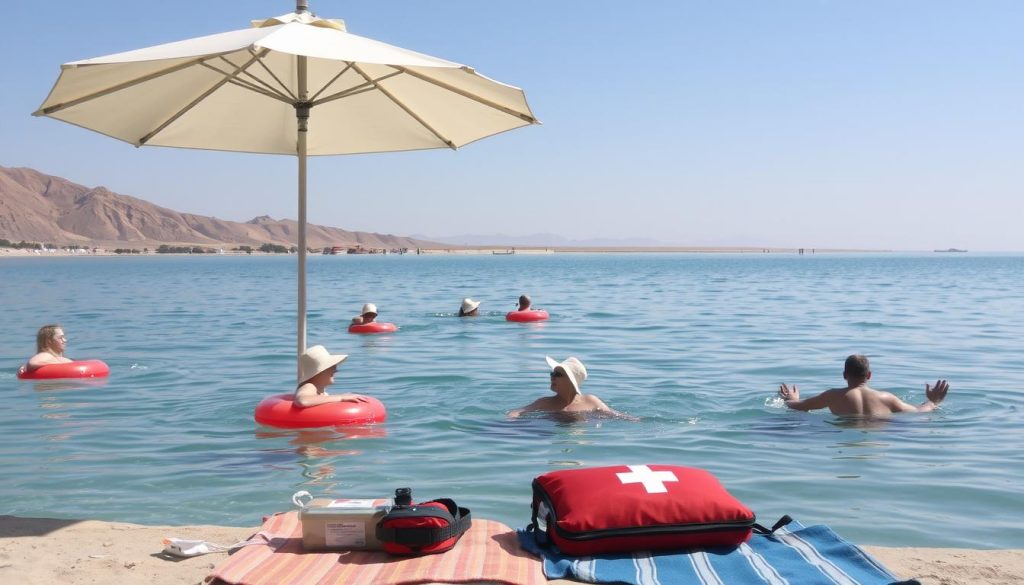
The Dead Sea’s water is very salty. It’s best to stay in the water for 15-20 minutes. Longer times can cause skin irritation and discomfort.
Take breaks to let your skin recover. This makes your float more enjoyable.
| Precaution | Description |
|---|---|
| Avoid Eye Contact | Keep your eyes above water or wear goggles to prevent irritation. |
| Limit Floating Duration | Stay in the water for no more than 20 minutes at a time. |
| Rinse Off After Floating | Use fresh water to wash off the salt from your skin immediately after floating. |
| Stay Hydrated | Drink plenty of water to keep your body hydrated. |
| Seek Shade | Take breaks in shaded areas to avoid sunburn and overheating. |
Following these precautions ensures a safe and enjoyable float in the Dead Sea. A little preparation makes a big difference.
Dead Sea Floating for Children
Floating in the Dead Sea is a fun adventure for kids. It’s a beautiful place with a special kind of water. The water is very salty, but it’s safe if you follow some rules. Always keep an eye on your kids to make sure they’re okay.
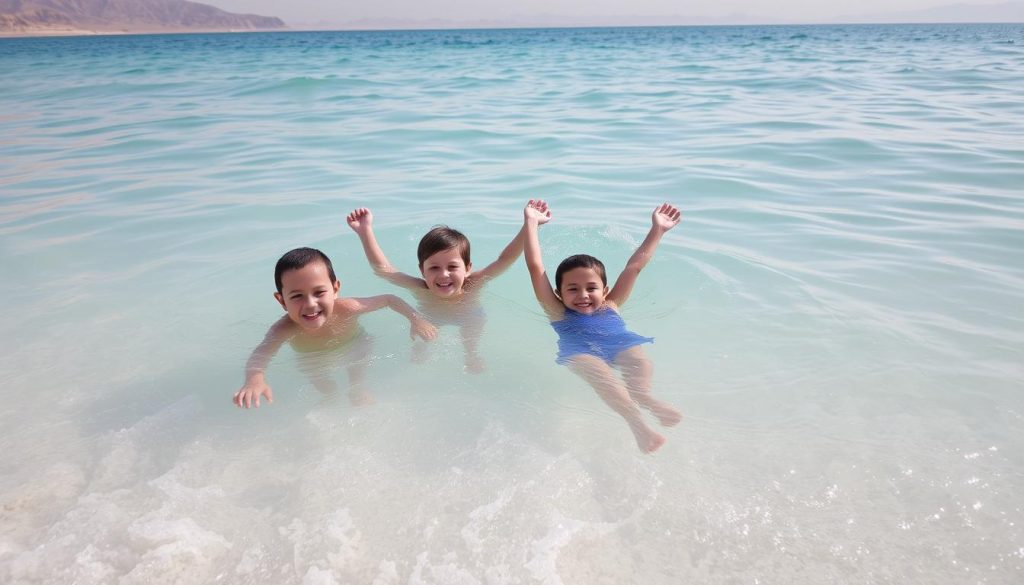
Tell your kids about the risks of the Dead Sea’s water. It’s much saltier than regular ocean water. Knowing this helps them stay safe and have fun.
Here are some key points to enhance safety:
- Always supervise children closely while floating.
- Explain the importance of not swallowing the water.
- Ensure that children do not have open cuts or scratches before entering.
- Limit their exposure time in the water to avoid overexposure to the high salt content.
Getting ready is important for a good time. By following these tips, your kids can enjoy the Dead Sea safely. They’ll make great memories and stay healthy.
| Description | Tip |
|---|---|
| Supervision | Always have an adult watching the children. |
| Water Safety | Explain the dangers of drinking the water. |
| Open Wounds | Ensure no cuts or scrapes are present before entering. |
| Time Limit | Set a time limit for floating to avoid fatigue. |
How to Safely Enter and Exit the Dead Sea
Learning how to safely get in and out of the Dead Sea is key. It helps you enjoy your visit without accidents. Knowing these tips will keep you safe and comfortable.
Techniques for Entering the Water
Start by walking slowly until the water is knee deep. This helps you get used to the temperature and how you float. When you’re ready, lean back to float.
This way, you avoid splashing and discomfort. Following these tips will make your time in the Dead Sea better.
Best Practices for Exiting the Water
Getting out of the Dead Sea needs care to avoid slipping. As you float towards the shore, feel the ground with your hands. When you can touch the bottom, stand up slowly.
Be careful not to flip over. This could cause water to get in your mouth and eyes. By following these steps, you’ll have a safe and enjoyable time at the Dead Sea.
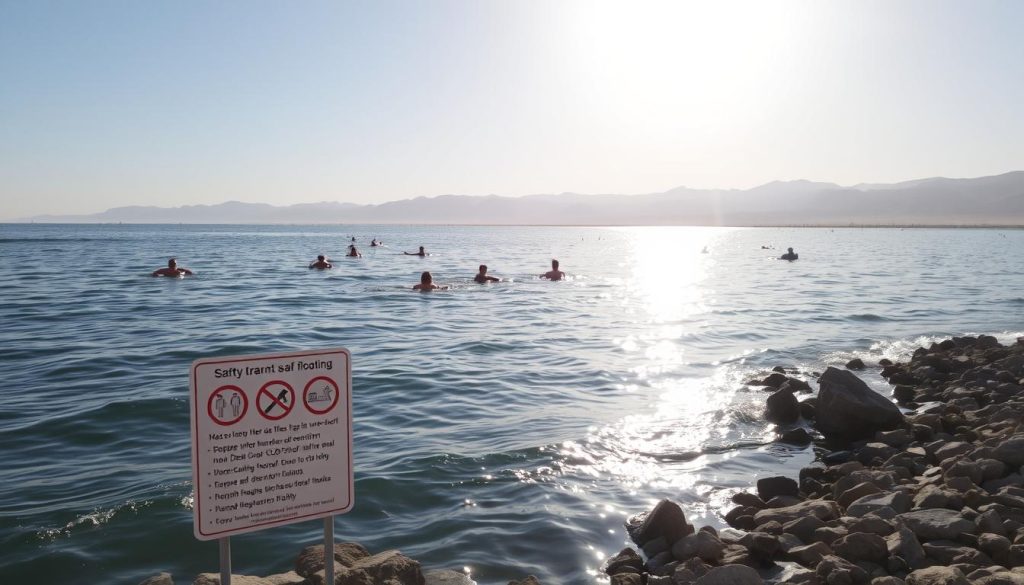
Being aware of your surroundings and using these techniques can greatly improve your visit. These methods not only make your experience better but also ensure your safety. This makes your trip both fun and safe.
Buoyancy and its Effects on Floating
The floating experience in Dead Sea is truly unique. The water’s high salt content, about 34.2%, makes it very buoyant. This is much higher than regular ocean water, which is only 3.5% to 5% salty. This difference makes floating here incredibly easy, allowing you to relax and enjoy the water’s support.
But, you might wonder if Dead Sea buoyancy is safe. Swimming here is different because of the water’s buoyancy. It changes how your body moves. It’s important to keep your head up to avoid the salt’s sting if it touches your face.
It’s also important to watch out for sharp salt crystals on the sea floor. Wearing water shoes can help keep your feet safe. The Dead Sea is known for its healing properties, thanks to minerals like magnesium and potassium. These minerals are good for your skin and joints.

What to Know Before Floating in the Dead Sea
Planning your visit to the Dead Sea needs careful thought. Knowing about the weather and environment can make your trip better. It also keeps you safe while you enjoy floating.
Environmental Factors and Weather
The Dead Sea has a unique environment. Summer temperatures can hit up to 41°C (106°F) in July. Winter is milder, with averages around 21°C (70°F) in January.
Weather can change fast. Always check forecasts to stay comfortable and safe.
Water temperatures also vary. In August, it’s warm at 33.5°C (92°F), perfect for floating. Spring, from March to April, offers warm air and water, great for floating.
Facility Availability and Accessibility
Facilities at the Dead Sea vary by location and season. Public beaches can get crowded during peak times. Arrive early if you can.
Entrance fees differ by beach. Ein Gedi Spa, for example, costs but offers showers and pools for relaxation.
Knowing the floating precautions is key. Some areas have limited services, so plan ahead. Stick to designated swimming spots for better amenities.
Conclusion
Floating in the Dead Sea is an adventure unlike any other, but safety comes first. You might wonder, “Is floating in the Dead Sea safe for everyone?” The key is knowing your health and taking the right steps. By following the safety tips in this guide, you can enjoy this unique experience fully.
The Dead Sea is one of the saltiest places on Earth, with a salinity of 33%-35%. Its water offers incredible buoyancy. But, not being prepared can cause discomfort. Paying attention to your health and the environment lets you enjoy its healing properties safely.
Visiting the Dead Sea can be rewarding if you’re well-prepared. Respect its unique nature and you’ll make unforgettable memories in this remarkable place.