Exploring the History of Hoboken, NJ
Ever wondered how Hoboken, NJ, went from indigenous roots to a busy city? The story of Hoboken is a captivating look at its past. It shows how it became key for transport and fun. From early days with the Lenni Lenape to the Industrial Revolution, Hoboken’s history is full of diverse groups and big events.
This journey through time reveals the city’s deep history. It shows how Hoboken’s past still shapes today’s life. You’ll learn about the city’s lively history and see how it affects us now.
Introduction to Hoboken’s Historical Significance
The historical significance of Hoboken comes from its growth from a Lenni Lenape camp to a lively city. It has been a key spot for explorers and immigrants over the years. Hoboken has seen significant events that shaped its identity and the nation’s history.
The first organized baseball game took place in 1846, a big moment in American sports. During World War I, Hoboken’s ports were vital for military efforts, showing its strategic importance. These events highlight the Hoboken heritage, showing how local and national histories are linked.
Looking into its history, you’ll see Hoboken’s part in the American story. It shows how community and history are deeply connected.
| Year | Significant Event | Impact on Hoboken |
|---|---|---|
| 1846 | First Organized Baseball Game | Established Hoboken as a key location in sports history |
| 1914-1918 | World War I | Transformed Hoboken into a major military port |
| 1970s | Industrial Decline | Led to urban revitalization and cultural shifts |
What is the history of Hoboken?
Hoboken, NJ, has a rich history filled with important events and changes. It shows how the city grew from its early days to now. The story starts with the early settlers, who were the Indigenous tribes. Then, European explorers came, changing the city’s course.
Early Beginnings: The Lenni Lenape and European Exploration
The Lenni Lenape lived in the area first. They called Hoboken “Hopoghan Hackingh,” meaning “Land of the Tobacco Pipe.” This name shows how important the area was to them. In 1609, Henry Hudson arrived, starting a new chapter in Hoboken’s history.
Colonial Development and Land Deals
After explorers came, Hoboken saw many land deals and changes in ownership. In 1658, Dutch Governor Peter Stuyvesant made a deal with the Lenni Lenape. This deal helped attract more settlers. Later, Colonel John Stevens bought the land in 1784 and changed Hoboken for the better.
| Year | Event | Significance |
|---|---|---|
| 1609 | Henry Hudson’s Expedition | Marked European interest in the region |
| 1658 | Land Deals by Governor Stuyvesant | Established colonial presence and ownership transitions |
| 1784 | Purchase by Colonel John Stevens | Major influence on Hoboken’s growth and infrastructure |
| 1855 | Incorporation as a City | Formal recognition of Hoboken as an urban center |
Hoboken’s Early Settlers and Development
The story of Hoboken, NJ, starts with its early settlers. They set the stage for a thriving community. Colonel John Stevens was key in shaping Hoboken into what it is today.
The Role of Colonel John Stevens
Colonel John Stevens bought land in 1784 and changed Hoboken for the better. He made the area more welcoming. Stevens worked hard to improve the waterfront, adding parks that drew people from New York City.
He was a visionary leader. He aimed to make Hoboken a major part of the region’s growth.
Transformation into a Recreational Hub
Thanks to Colonel Stevens, Hoboken became a place for fun and relaxation. The creation of Elysian Fields was a big step. It became a popular spot for weekend outings.
People came to enjoy various activities. This brought more visitors and helped the area grow. Over time, these spots became a big part of Hoboken’s culture and helped it expand.
| Aspect | Details |
|---|---|
| Year Land Acquired | 1784 |
| Key Figure | Colonel John Stevens |
| Main Attraction | Elysian Fields |
| Visitor Demographic | New Yorkers seeking recreation |
| Impact on Culture | Social gatherings and community events |
Hoboken’s early efforts and settlers made it a key urban spot. It became a place for fun and culture. This shows how important its early days were.
Historical Landmarks in Hoboken
Hoboken is full of historical landmarks that show the city’s rich past and culture. Sybil’s Cave Hoboken and the Elysian Fields are two key sites. They tell different parts of American history.
Sybil’s Cave: A Unique Attraction
Sybil’s Cave Hoboken is a standout among Hoboken’s landmarks. Built in 1832, it’s the oldest man-made structure around. It was part of a fun spot created by the Stevens family, showing off Hoboken’s natural beauty.
When you visit, you feel connected to the city’s early days of fun and the dreams of its founders.
The Elysian Fields: Birthplace of Modern Baseball
The Elysian Fields are crucial in Hoboken’s history. They’re where the first organized baseball game took place in 1846. This event changed the game’s history in America.
These fields draw sports fans and show Hoboken’s commitment to sports and fun. Along with Sybil’s Cave, they highlight how Hoboken’s landmarks tell stories of culture and community.
| Landmark | Year Established | Significance |
|---|---|---|
| Sybil’s Cave | 1832 | Oldest man-made structure in Hoboken |
| Elysian Fields | 1846 | Birthplace of modern baseball |
Hoboken’s Cultural Heritage
Hoboken’s culture is a rich mix of different groups. These groups have made the city what it is today. They bring together a vibrant culture that is truly unique.
Diverse Communities and Ethnic Vitality
In Hoboken, you’ll find people from Germany, Ireland, Italy, and Latin America. Each group adds its own flavor to the city. Festivals are a big part of this, celebrating traditions from these cultures.
The Influence of the Stevens Family
The Stevens family played a big role in Hoboken’s growth. They helped start the Stevens Institute of Technology. This school has been key in making Hoboken a place of learning and innovation.
The Stevens family also helped keep Hoboken’s culture alive. They support events and projects that celebrate the city’s heritage.
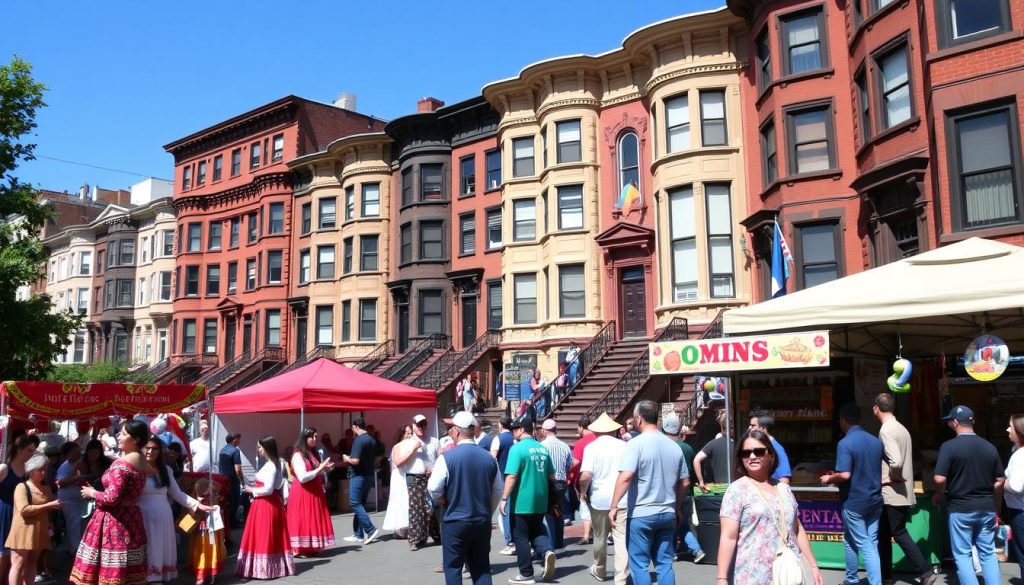
| Ethnic Community | Influence on Culture | Notable Festivals |
|---|---|---|
| German | Beer gardens, Oktoberfest celebrations | Hoboken Oktoberfest |
| Irish | Parades and music traditions | St. Patrick’s Day Parade |
| Italian | Culinary festivals, vibrant streets | Hoboken Italian Festival |
| Latino | Diverse culinary options, cultural awareness | Cinco de Mayo Festival |
Significant Events in Hoboken’s History
Hoboken’s history is filled with key events that shaped its identity and growth. This part will look at major moments in Hoboken’s timeline. It will focus on the effects of World War I and the decline after containerization.
World War I and Its Impact
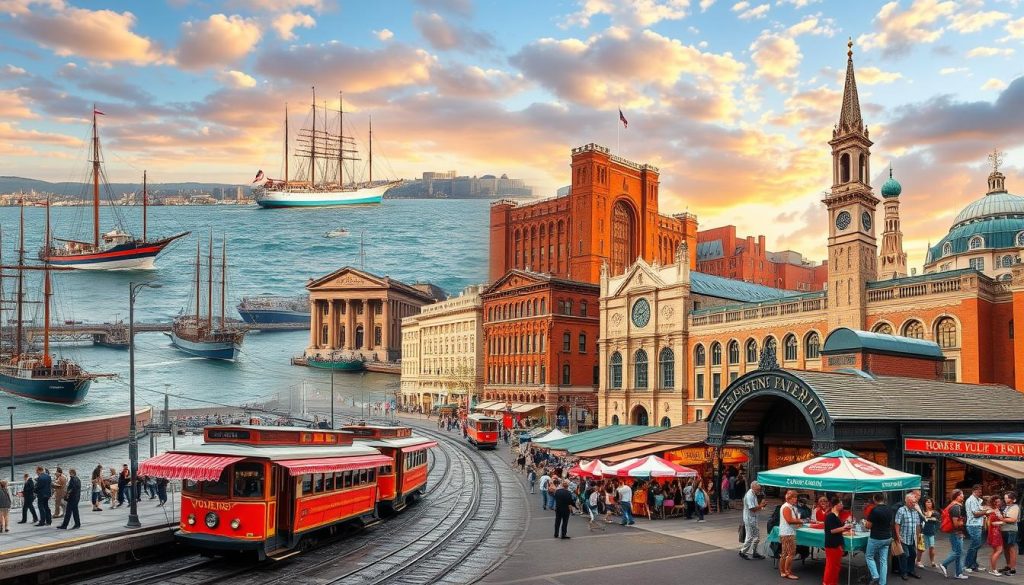
During World War I, Hoboken became a vital port for sending troops off to war. This role showed how important Hoboken was in the U.S. military’s efforts. The saying “Heaven, Hell or Hoboken…by Christmas” showed how much soldiers and their families longed to be back home.
This period left a lasting mark on Hoboken’s history. It’s a time many residents remember well.
The Containerization Decline
The 1950s and 60s were tough times for Hoboken, thanks to containerization changing how goods were shipped. This new way of shipping meant less work for Hoboken’s ports. The local economy suffered, and the city’s look changed too.
Old warehouses and shipping areas turned into homes and businesses. These changes tell us about the big events that made modern Hoboken.
Historical Facts About Hoboken
Exploring Hoboken’s history shows us how it has been visited by famous people over time. George Washington, Charles Dickens, and Walt Whitman have all walked its streets. They left a mark that still shapes Hoboken today.
Famous Visitors and Historical Characters
Hoboken has welcomed many famous visitors. It’s a city that has played a big role in American literature and politics. These visitors helped make Hoboken a center for art and politics.
- George Washington – Noted for strategic military command during the Revolutionary War.
- Charles Dickens – Engaged audiences with literary readings during his U.S. tour.
- Walt Whitman – An influential poet who celebrated the essence of American life in his works.
Hoboken’s Role in the Industrial Revolution
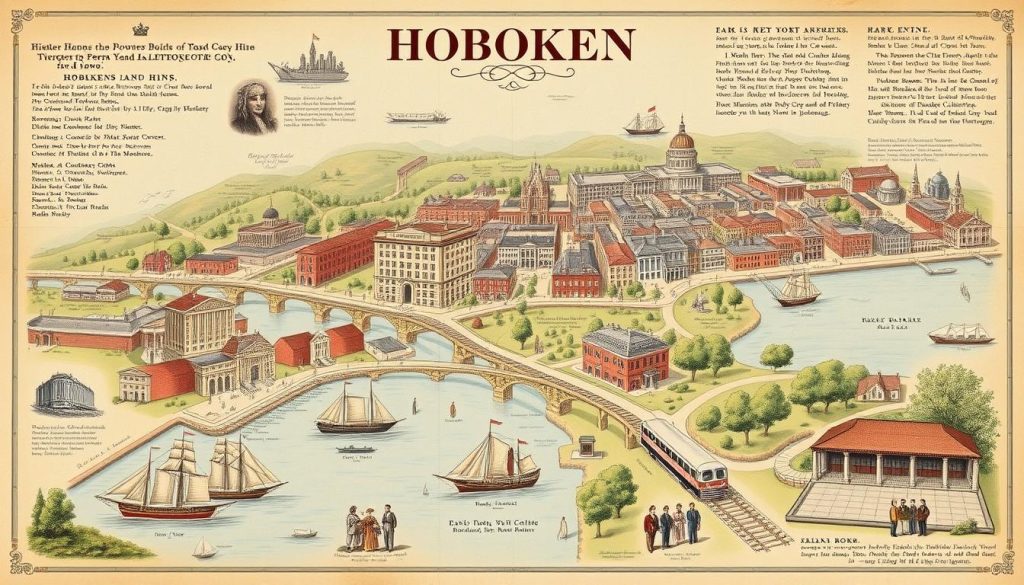
Hoboken was key during the Industrial Revolution. Its location made it a major hub for moving goods and people. This helped the U.S. economy grow and brought immigrants looking for new chances.
| Era | Impact on Hoboken | Key Developments |
|---|---|---|
| Pre-Industrial | Transition from agricultural to urban | Emergence of docks and trade routes |
| Industrial Revolution | Economic growth and population surge | Establishment of factories and railroads |
| Post-Industrial | Shift towards service economy | Urban development and cultural enrichment |
Exploring Hoboken’s Historical Society
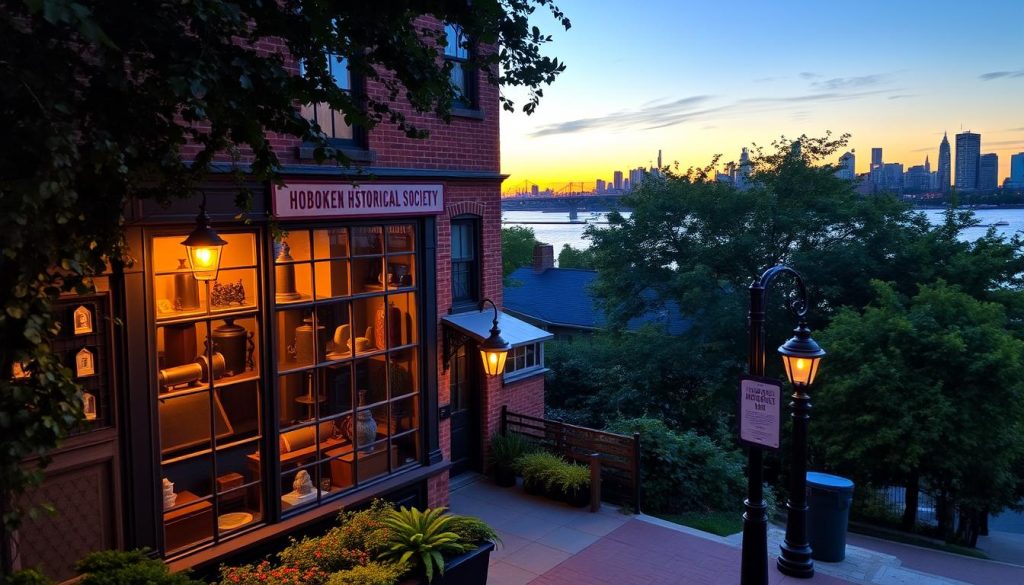
The Hoboken historical society is key to saving the city’s rich history. It brings the community together with efforts to keep Hoboken’s stories and old buildings alive. This helps everyone see the value of this lively place.
Preservation Efforts and Community Involvement
Preserving Hoboken’s history is the society’s main goal. Volunteers and local experts team up to fix up old buildings and keep landmarks safe. This teamwork makes people feel proud of their city’s past. Joining these efforts lets you help shape Hoboken’s story.
Educational Programs and Tours
The society has many educational programs for everyone. These include tours that let you see important places and learn about their history. Workshops and lectures teach people of all ages about Hoboken’s history. This helps everyone value Hoboken’s place in American history more.
Hoboken History Tour: Discovering the City
A Hoboken history tour is a great way to learn about the city’s past. You can check out recommended sites Hoboken like the Stevens Institute of Technology, Sybil’s Cave, and Elysian Fields. Each spot offers a special look into Hoboken’s history and culture.
Recommended Sites and Itineraries
Here are some top places to visit:
- Stevens Institute of Technology: This spot shows Hoboken’s dedication to learning and new ideas.
- Sybil’s Cave: See this natural spot that has drawn people for years.
- Elysian Fields: Admire the place known as the start of modern baseball.
Walking vs. Biking Tours: What to Choose
Deciding between walking or biking for your history tours Hoboken changes your experience. Walking lets you enjoy the sights at a slow pace. Biking lets you see more in less time, perfect for those wanting to visit many places in one day. Either way, you’ll feel the history of Hoboken come alive.
Modern Restoration and Hoboken Today
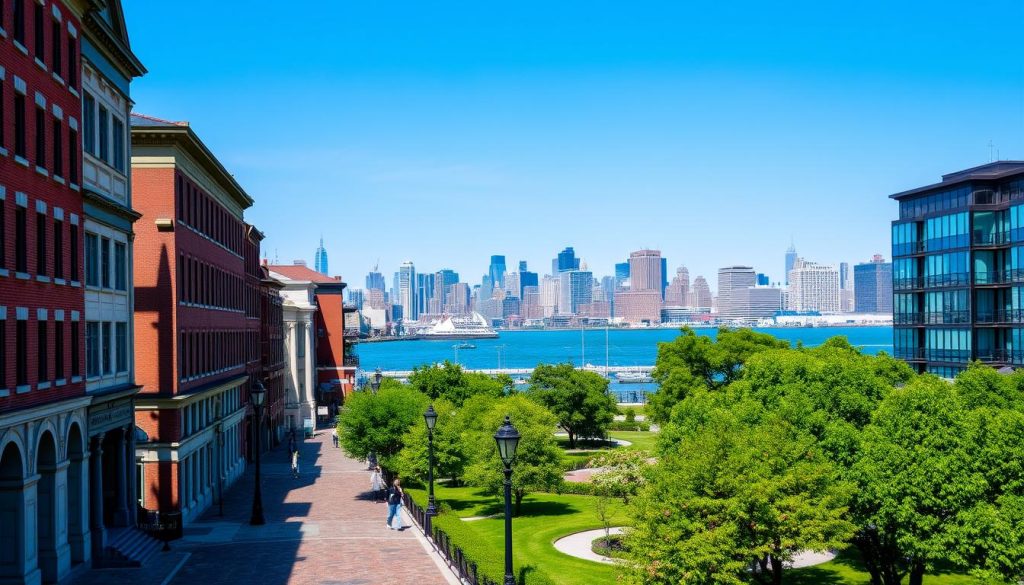
Hoboken today shows how a city can keep its history alive while moving forward. It’s all about making historic buildings modern again. Local groups and the government work together to keep these buildings important for today and tomorrow.
The Revival of Historic Buildings
Recent projects show Hoboken’s big push for modern restoration. Owners and developers are making old buildings work for today while keeping their look. This makes the city look better and helps the environment by using what we already have.
Cultural Events and Festivals Celebrating History
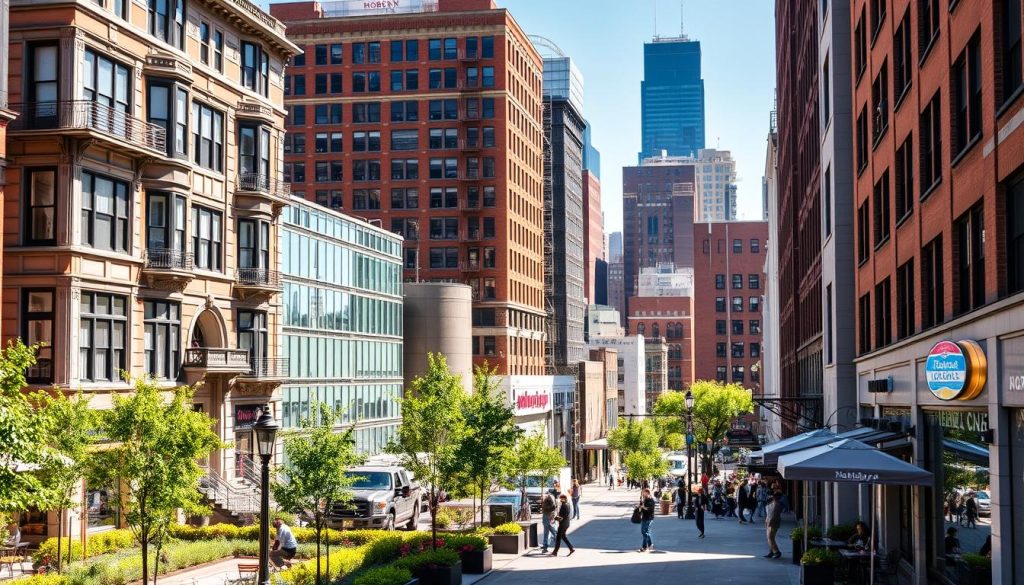
But it’s not just about fixing up buildings. Cultural events in Hoboken bring people together. With festivals, art shows, and reenactments, the city celebrates its history. These events make people proud to live in Hoboken and show how important their heritage is today.
| Event | Description | Date |
|---|---|---|
| Hoboken Arts and Music Festival | Celebration of local artists and musicians, showcasing talent and creativity. | September |
| Hoboken Historical Museum Events | Varied programs focusing on the city’s history through lectures and exhibitions. | Year-round |
| Street Festivals | Local food, entertainment, and community spirit highlight the city’s cultural diversity. | Summer Months |
Conclusion
Hoboken’s history shows us the heart of urban America. It’s a city where different cultures blend and historical figures leave their mark. This mix makes Hoboken’s story unique.
From a small settlement to a bustling city, Hoboken’s story is one of change and strength. It shows how cities can grow and overcome obstacles through time.
Today, Hoboken invites you to experience its history firsthand. With landmarks, preservation efforts, and cultural events, you can feel the city’s past. Whether you live here or are just visiting, knowing Hoboken’s story connects you to its lively spirit.