Exploring Tatev Monastery’s Storied Past
Have you ever wondered how a remote monastery can hold centuries of history, art, and spirituality? Tatev Monastery is a key part of Armenia’s cultural heritage. It’s not just a historic site but a place of knowledge and creativity.
Located on a cliff overlooking the Vorotan Gorge, it was built between the 9th and 13th centuries. Its architecture shows the skill of its creators.
Exploring Tatev Monastery means more than just seeing a site. You’ll also ride the Wings of Tatev cableway, the world’s longest reversible cableway. It offers a smooth ride with stunning views of the monastery.
The monastery’s walls are covered in intricate carvings. These tell stories of medieval craftsmen’s skill. It feels like a living museum, preserving history.
In this article, we’ll explore Tatev Monastery’s history. We’ll look at its architecture and the community that once thrived there. Are you ready to uncover its secrets?
The Journey to Tatev Monastery
Traveling to Tatev Monastery is an amazing experience. You’ll see beautiful landscapes and learn about ancient history. The trip starts in Ararat and Vayots Dzor provinces.
As you get closer to Halidzor village, you’ll see the “Wings of Tatev” cableway. It’s the longest reversible aerial tramway in the world. You’ll get stunning views of the Vorotan Gorge during your ride.
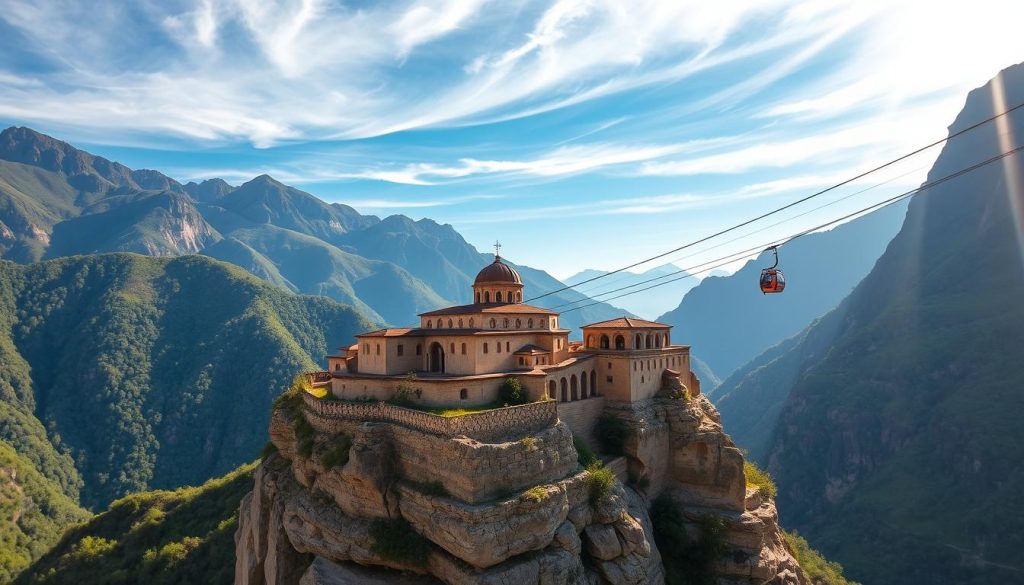
The drive from Goris to Tatev takes about 40 minutes by taxi. At Halidzor, a 15-minute aerial tramway ride takes you to the monastery. Tatev Monastery is nearly 2,000 feet above the Vorotan Gorge.
The monastery overlooks the Vorotan River. It flows through a narrow crevice to a travertine cave. The cave is filled with natural springs.
Plan your visit well; the monastery was once home to 700 devotees. Now, it’s a key spot for eco and adventure tourism. The best times to visit are spring and autumn. Visiting Tatev Monastery is a journey to Armenia’s culture and spirituality.
Understanding the Historical Significance of Tatev Monastery
Tatev Monastery was founded in the 9th century. It is a symbol of Armenian culture and spirituality. Its history shows how it survived through many challenges.
In the 11th century, the monastery was a university. It had up to 1,000 monks and artisans. The library had over 10,000 manuscripts. This period greatly influenced Armenian identity.
Despite facing many challenges, including earthquakes, Tatev Monastery has endured. The 1931 earthquake damaged it, but it was restored. It has always been a place of knowledge and spiritual guidance for the Armenian people.
The ‘Wings of Tatev’ aerial tramway connects visitors to the monastery. It is the longest reversible tramway in the world. It offers stunning views of the Armenian landscapes.
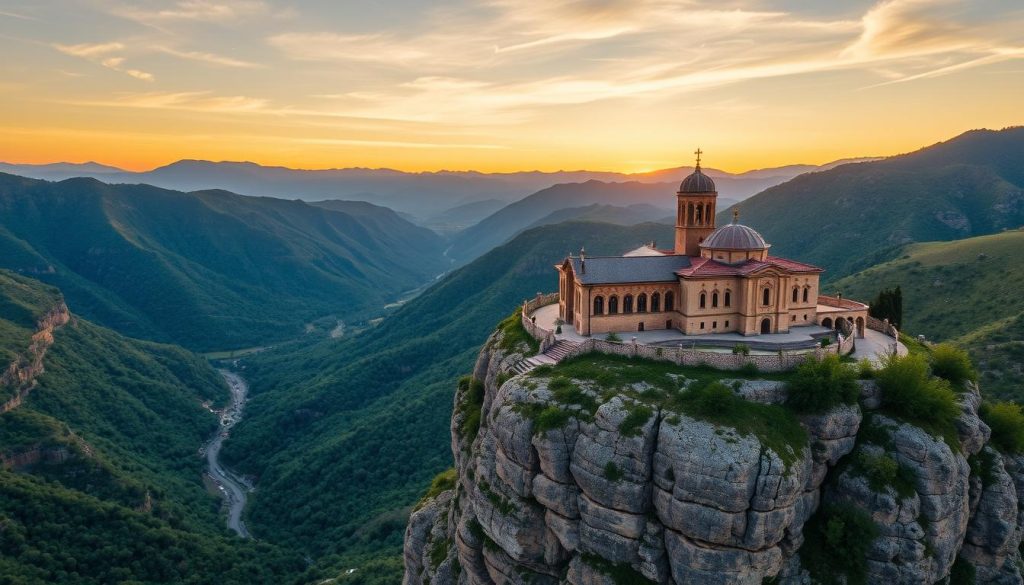
The significance of Tatev Monastery goes beyond its beauty. It is a key part of Armenian history and culture. It inspires people and is a vital part of Armenia’s heritage.
What is the history of Tatev Monastery?
Tatev Monastery sits on a basalt plateau in southeastern Armenia. It has a rich history, starting in the 9th century. It became a key spiritual and educational center. Its location near the Vorotan Gorge made it even more important in Armenian culture.
The Origins and Founding of Tatev Monastery
The Armenian Apostolic Church founded Tatev Monastery. By the 11th century, it was home to about 1,000 monks. This showed its big cultural and economic role.
The monastery’s buildings, like the Church of Saints Peter and Paul, are very significant. It’s a rectangular basilica with a central dome and a unique roof.
Major Historical Events Influencing Tatev Monastery
Many events shaped Tatev Monastery’s story. The Seljuk invasions in the 12th century caused a lot of damage. A raid in 1170 destroyed over 10,000 valuable manuscripts.
Later, Timur Lane and Shah Rukh’s invasions in the 14th and 15th centuries added to the damage. But, the monastery saw a revival in the 14th century. It became a hub for science, culture, and philosophy.
In the 17th and 18th centuries, the monastery was restored despite being looted by Persian forces. After a big earthquake in 1931, rebuilding efforts continued. This shows the *Tatev Monastery influence* on Armenian heritage.
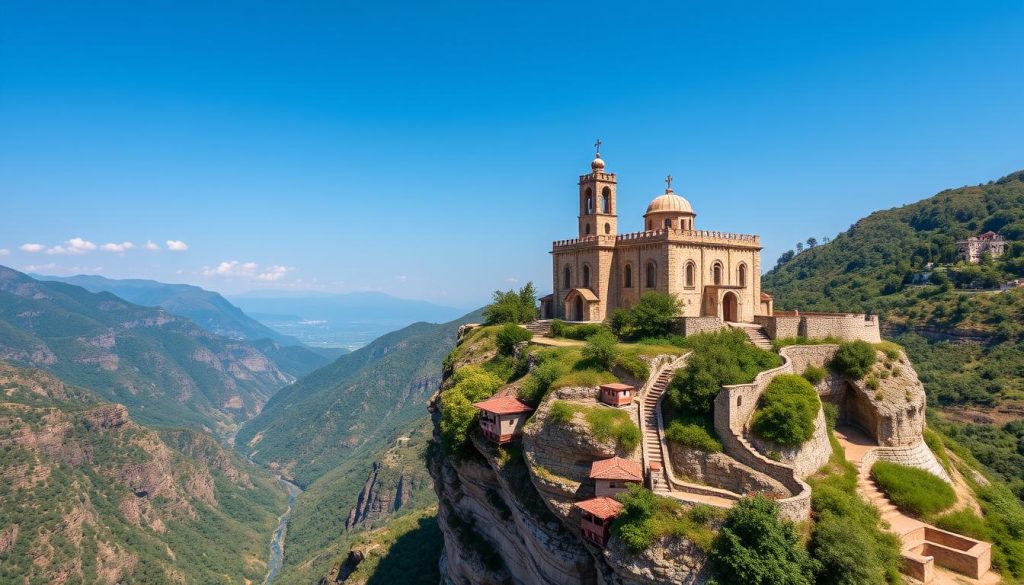
Architectural Marvels of Tatev Monastery
Tatev Monastery is a stunning example of medieval architecture. It was founded in the 9th century. The monastery’s structures show the skill of ancient artisans.
The craftsmanship in these structures has made a lasting impact on Armenian architecture.
Notable Structures Within the Monastery Complex
The main church, the Church of Saint Paul-Peter, is the largest. It was consecrated in 906. The belfry, built in 1286, adds to its grandeur.
It features intricate carvings and unique designs. These are key architectural features of Tatev Monastery.
The Church of Saint Astvatsatsin, consecrated in 1087, stands out. Its design is different from typical Armenian churches. This shows how architecture evolved over time.
The Oil Press, built in the 13th century, is also significant. It was used for producing consecrated oil.
The monastery complex also includes:
- Refectories
- Bakery
- Kitchen with a vaulted roof hall
- Mausoleum of Grigor Tatevatsi
Tatev Monastery faced challenges like the 1931 earthquake. It destroyed the belfry and the Church of Saint Paul-Peter. Restoration in the 1990s brought these structures back to life.
Now, they continue to inspire visitors with their architectural beauty.
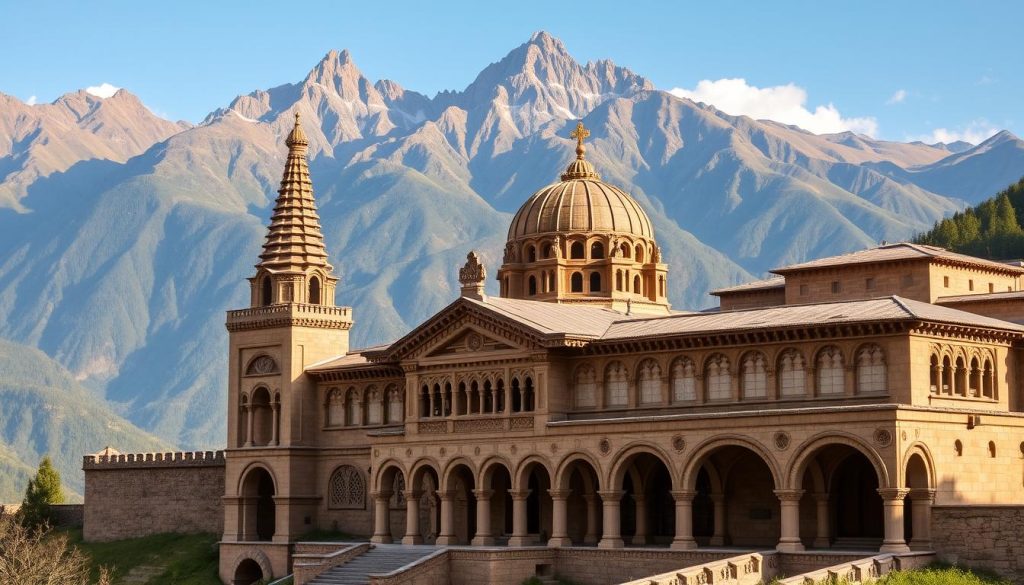
| Structure | Year Constructed | Significance |
|---|---|---|
| Church of Saint Paul-Peter | 906 | Largest church; houses historic belfry |
| Church of Saint Astvatsatsin | 1087 | Distinct design; architectural evolution |
| Oil Press | 13th century | Used for producing consecrated oil |
| Church of Saint Grigor Lusavorich | 1295 | Replaced an earlier church; historic value |
| Gavazan Siun Pillar | 904 | 8-meter high seismic alarm |
These structures, along with others, make Tatev Monastery a cultural and historical gem in Armenia.
The Landscape and Its Influence on Tatev Monastery
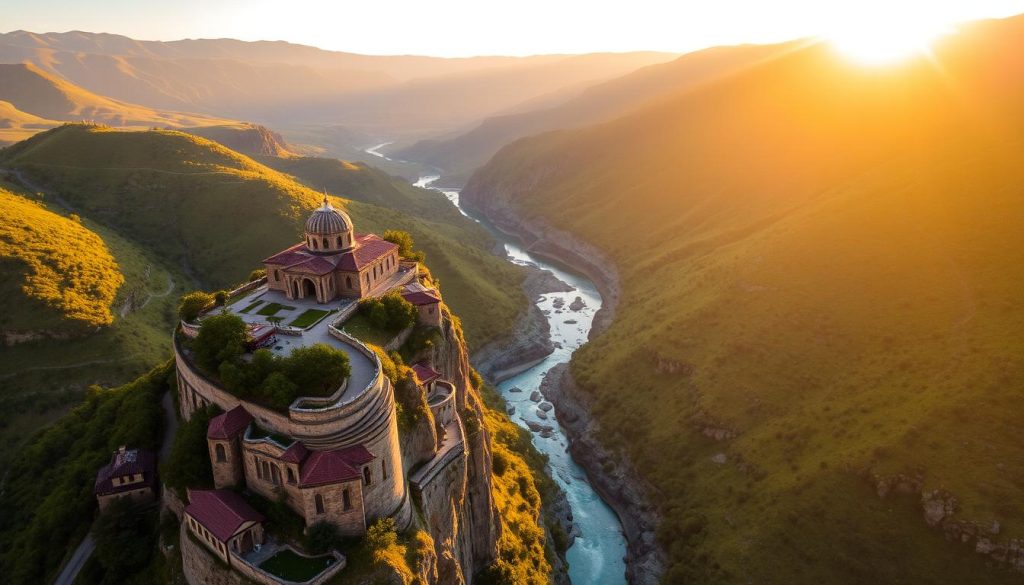
The stunning landscape around Tatev Monastery adds to its rich history and spiritual vibe. It sits on a big basalt plateau, overlooking the amazing Vorotan Gorge. The gorge’s steep cliffs and the river below offer a breathtaking view.
This beautiful setting not only makes the monastery look grander. It also inspires the monks and scholars who live there. They find peace in this quiet place.
Surrounding Features of Vorotan Gorge
The Vorotan Gorge is known for its deep ravines and unique rock formations. It attracts visitors from all over. The scenery is perfect for photography and nature lovers.
Here are some key features that make the area special:
- Stunning cliffs: The cliffs around the gorge give the monastery a natural fortress feel, showing its seclusion.
- Flowing river: The Vorotan River flows under the monastery, adding to its peaceful atmosphere.
- Devil’s Bridge: This unique rock formation shows the power of erosion, shaped over thousands of years.
- Wings of Tatev cableway: The world’s longest reversible cable car offers stunning views of the monastery and gorge. It takes visitors on a thrilling 12-15 minute ride.
Tatev Monastery and Armenian Cultural Heritage
Tatev Monastery is a key part of Armenian cultural heritage. It dates back to the 9th century. This site has kept alive religious traditions, art, and learning in Armenian society.
The monastery’s cultural value is huge. It has shaped Armenia’s national identity. It was also a hub for scholars and monks in ancient times.
The monastery has amazing buildings, like the Church of Saint Paul-Peter. It shows off Armenian architecture. For centuries, it was home to 500 monks and artists, enriching Armenian culture.
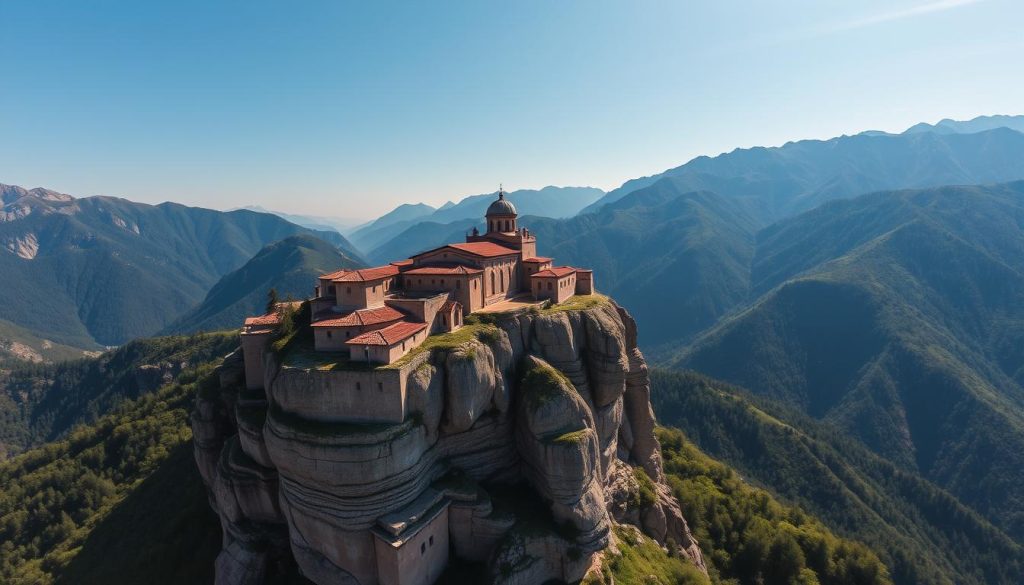
In the early 10th century, Tatev started a medieval university. It was a big step in education. The school helped grow the Armenian language and literature, boosting the monastery’s cultural role.
But, the Mongol invasions closed the university in the 14th century. Despite this, Tatev Monastery’s impact on Armenian culture remains strong.
Today, Tatev Monastery is a UNESCO World Heritage Site. The “Wings of Tatev” cableway connects it to Halidzor. It’s a modern wonder that makes visiting easier.
After the 1931 earthquake, Tatev Monastery was restored. It shows Armenia’s commitment to preserving its cultural heritage.
Prominent Figures Associated with Tatev Monastery
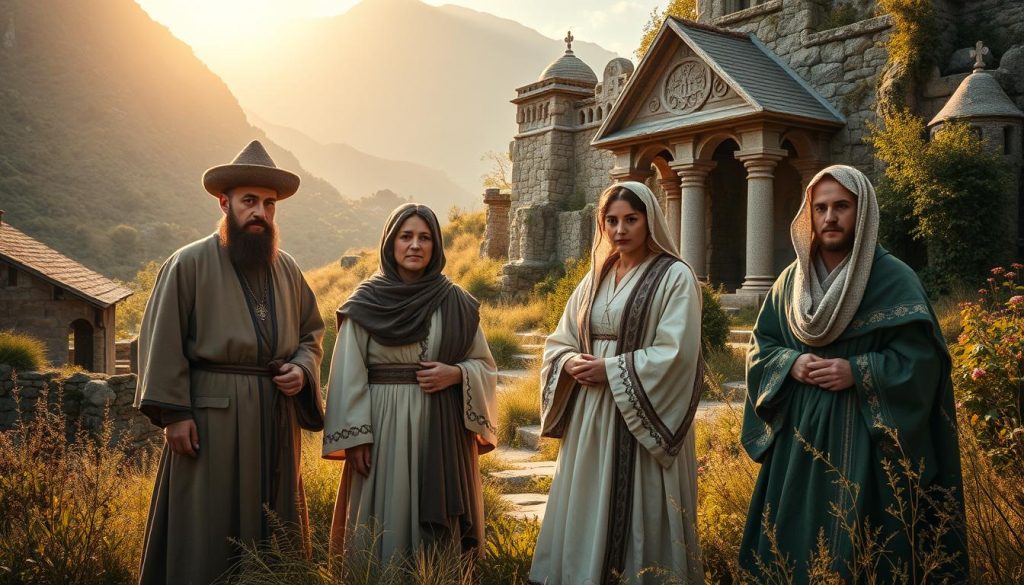
Tatev Monastery has been a key place for Armenian spirituality and learning. Many notable figures at Tatev Monastery helped make it famous. They created a place where learning and religious thought thrived, deeply impacting Armenian culture.
Key Monks and Scholars
The monks of Tatev were very important, from the 10th to the 14th centuries. This time was when the monastery was at its peak. It had Tatev University, the biggest center for philosophy and science in medieval Armenia.
Many scholars and theologians worked there. Their work became a big part of Armenian literature and teachings.
- Grigor Tatevatsi: A key scholar at Tatev University, he made substantial contributions to Armenian philosophy and theology.
- Sargis Tatevatsi: Known for his writings on ethics and morality, he influenced the spiritual life of the region.
- Hovhannes Tatevatsi: A prolific author whose texts were essential in transmitting Armenian literary tradition.
These figures at Tatev Monastery did a lot for education and culture. They helped create a unique Armenian identity during hard times. Their work still inspires scholars and monks today, keeping the monastery’s spirit alive.
| Notable Figures | Contributions | Impact on Armenian Culture |
|---|---|---|
| Grigor Tatevatsi | Philosophical and theological writings | Foundation for Armenian philosophical thought |
| Sargis Tatevatsi | Ethical teachings | Influence on moral education in Armenia |
| Hovhannes Tatevatsi | Preservation of Armenian literature | Significant contributions to Eastern Christian literature |
Modern-Day Significance of Tatev Monastery
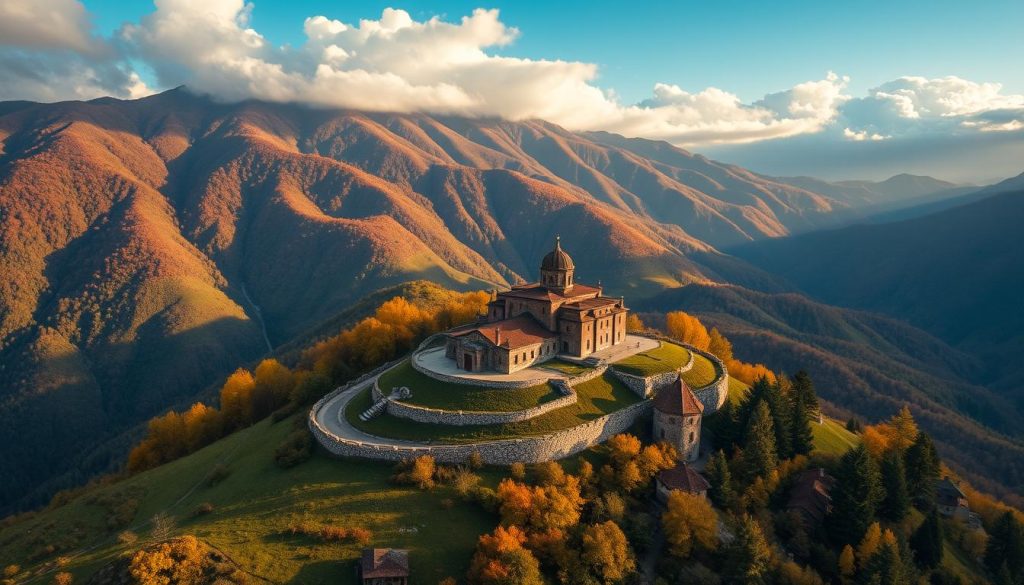
Tatev Monastery today is a symbol of Armenia’s rich culture and faith. It’s not just a historical site; it’s a lively place for pilgrims and tourists. They find peace in its beautiful views, stunning buildings, and long history. Tatev Monastery’s importance today goes beyond its past, showing its role in Armenian identity today.
The monastery, built in the 9th century, has amazing buildings like the Sts. Paul and Peter Church and the St. Gregory Church. These structures mix Armenian and Byzantine styles, drawing visitors in. Recent restorations aim to keep this cultural treasure alive for future generations.
Since 2010, the ‘Wings of Tatev’ aerial tramway has made visiting easier and more fun. It’s the longest reversible tramway in the world. The tramway offers stunning views of the Vorotan Gorge, highlighting Tatev Monastery’s modern appeal.
Today, Tatev Monastery is key in promoting green tourism. This helps protect Armenia’s culture and boosts local economies. Education is a big part of the monastery’s mission, teaching visitors about its history and the need to preserve it.
The charm of Tatev Monastery today is in its history and its role in Armenian culture. Exploring this site, you’ll see how it inspires, educates, and brings people together.
| Feature | Detail |
|---|---|
| Founding Year | 9th Century |
| Prominent Structures | Sts. Paul and Peter Church, St. Gregory Church |
| Tourist Attraction | ‘Wings of Tatev’ Aerial Tramway |
| Key Focus | Sustainable Tourism & Heritage Preservation |
| Location | Near the village of Tatev, Syunik Province |
| Accessibility | Approximately 250 km from Yerevan |
| Historical Significance | Medieval University and Spiritual Center |
Visiting Tatev Monastery: Tips and Recommendations
When planning your visit to Tatev Monastery, think about the best times for photos and exploration. Early mornings or late afternoons are perfect. They offer great lighting and a calm atmosphere, letting you capture the monastery’s beauty against the stunning Vorotan Gorge.
For a memorable experience, ride the “Wings of Tatev” cableway. It’s the world’s longest reversible aerial tramway. You’ll see breathtaking views from high above, adding to your understanding of this historic site.
To show respect, wear modest clothes when visiting Tatev Monastery. Joining a guided tour is also a good idea. These tours give you insights into the monastery’s architecture and history, making your visit both informative and memorable.
Guided tours are a top recommendation for Tatev Monastery. They help you explore the original manuscripts and learn about the monks who lived there.
Lastly, prepare for your journey. The drive from Yerevan takes about 4.5 hours. If you’re taking a taxi, expect to pay between $50 to $70, depending on your destination. For the adventurous, consider a two-day Southern Armenia tour. It’s a great way to see Tatev and other notable sites in Syunik.
With these tips in mind, your visit to Tatev Monastery will be fulfilling and enriching. This historic and picturesque destination awaits you.