Exploring Tak Bat Alms Giving Ceremony Rituals
Ever thought about how giving can be so deeply spiritual? The Tak Bat alms giving ceremony in Laos is a key alms offering tradition. It shows the heart of Theravada Buddhism. As morning comes, Luang Prabang’s streets fill with monks in saffron robes.
They take part in a Buddhist monk alms ceremony. Here, food given to them is more than just a meal. It’s a sign of humility, generosity, and a search for merit.
Be part of this daily ritual and dive into its rich history and spirituality. Every offering turns the ordinary into something sacred. It touches both those giving and watching.
Introduction to the Tak Bat Alms Giving Ceremony
The Tak Bat ceremony is a key part of the Lao people’s spiritual and community life. It happens every morning, showing the heart of Buddhist culture. This tradition has been around since the 14th century, when Luang Prabang was the capital of the Kingdom of Lan Xang.
Before the sun rises, hundreds of monks come out to take part in this important ritual. People gather to give them sticky rice, fruits, and other foods. It’s not just about feeding the monks; it’s also a way for everyone to show kindness and respect.
Being part of the Tak Bat ceremony teaches us about respect and humility. Visitors are asked to be quiet, wear simple clothes, and follow the rules. It’s a chance for both locals and visitors to experience a tradition that is very important to Luang Prabang.

| Key Elements of the Tak Bat Ceremony | Details |
|---|---|
| Timing | Daily, before sunrise |
| Origins | 14th century, Kingdom of Lan Xang |
| Typical Offerings | Sticky rice, fruits, traditional foods |
| Participation Customs | Maintain silence, dress modestly, respect personal space |
What is the Tak Bat Alms Giving Ceremony?
The Tak Bat alms giving ceremony is a key tradition in Luang Prabang, Laos. It happens every day at sunrise. Many people, locals and tourists, join in.
It’s important to know the cultural background of this ritual. This helps us understand its value in the community.
Understanding the Cultural Context
This ceremony has roots dating back to the 14th century. It involves giving food, like sticky rice and fruit, to 200 monks. These monks depend on alms for their meals.
This act is crucial for their spiritual practice. It also strengthens the connection between monks and their communities.
Almsgiving is a way to gain spiritual merit. It reminds us of our role in preserving cultural heritage. Participants kneel and keep their heads lower than the monks, following customs.
This practice builds community and respect. It connects people with their spiritual leaders.
The Significance of Almsgiving in Buddhism
In Buddhism, almsgiving is more than giving. It’s a path to enlightenment and spiritual growth. By participating in the Tak Bat ceremony, you gain merit.
This merit is key for positive karma. It helps develop a spiritual ecosystem. It also strengthens social bonds across generations.
Joining this ceremony lets you dive into its meaning. Luang Prabang has over 30 Buddhist monasteries. This daily event is deeply meaningful and enriches both hearts and souls.
How Does the Tak Bat Alms Giving Ceremony Work?
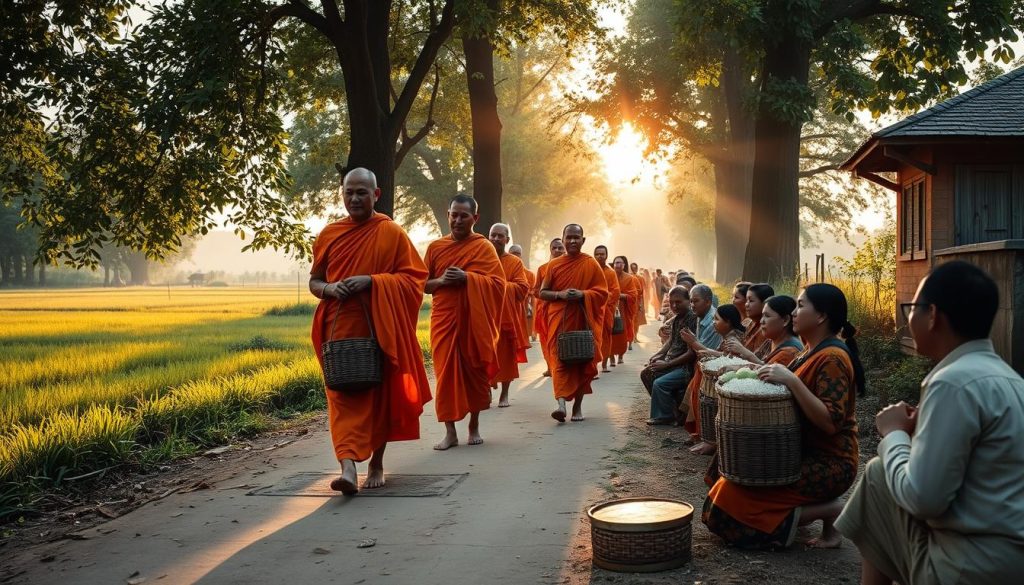
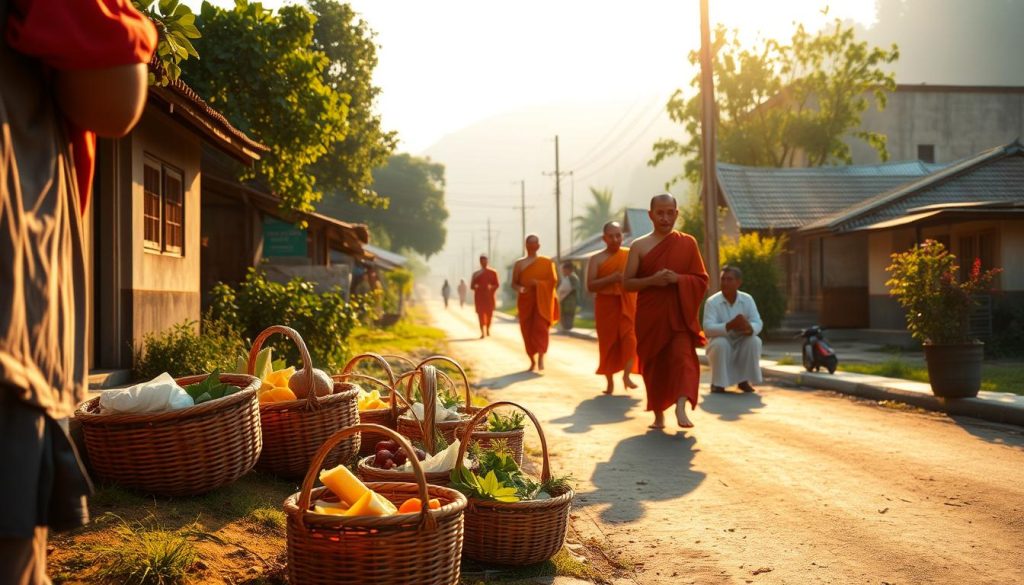
The Tak Bat alms giving ceremony happens every morning at dawn. It brings together locals and tourists to see a key Buddhist tradition. People prepare sticky rice, fruits, and other items the night before. They put these in baskets along the streets for the monks.
When the sun comes up, monks walk barefoot in a line. This creates a peaceful scene. Visitors from places like Thailand and China join in. They put their offerings into the monks’ bowls with their right hand, showing respect.
It’s important not to give heavy items like water bottles. This keeps the focus on food that’s meaningful. Sometimes, food from tourists is shared with nearby villages. This shows the community’s spirit.
It’s crucial to act respectfully during the ceremony. Making noise or blocking the monks’ path is not okay. The Senior Monk reminds everyone to dress properly and buy fresh rice from local vendors.
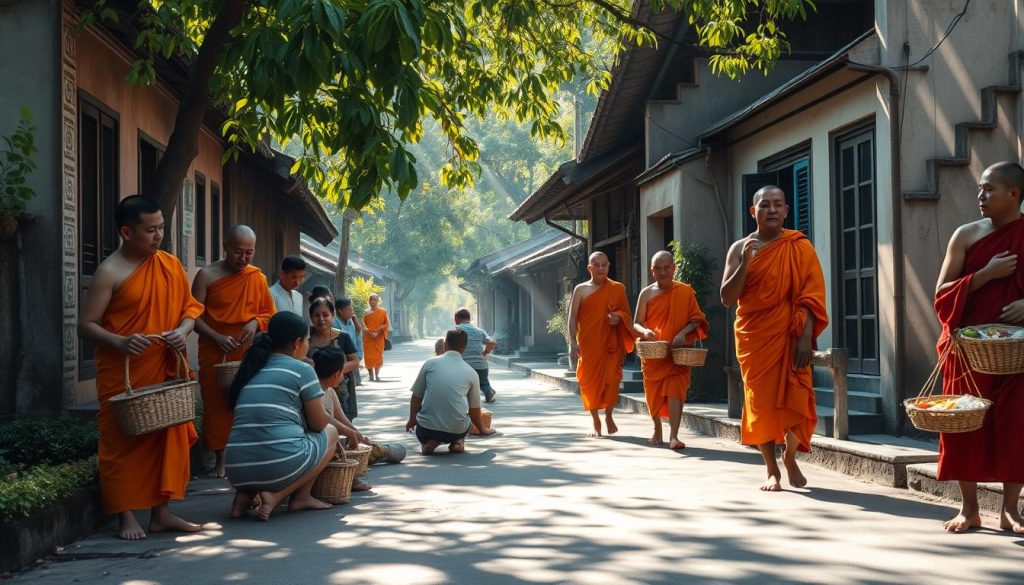
This tradition has a long history, dating back to the 14th century. Luang Prabang was once the capital of the Kingdom of Lan Xang. Since 1995, it’s been a UNESCO World Heritage Site. Millions come to see this beautiful Buddhist monk alms ceremony, keeping its legacy alive.
History of the Tak Bat Ceremony
The Tak Bat ceremony is a key part of Lao culture. It goes back to the early days of alms giving in Laos. This tradition started with Theravada Buddhism in the 14th century. It has woven itself into the community’s spiritual and social life.
Exploring this tradition shows the deep bond between monks and laypeople. It’s a special connection that has lasted for centuries.
Origins of Alms Giving in Laos
Alms giving shows the spiritual bond in Buddhist communities. It began with Buddhism’s arrival. The Tak Bat tradition has kept monks and locals connected through respect.
This bond has lasted for centuries. It shows the value of community in the Buddhist almsgiving tradition.
Evolution of the Ritual Through the Centuries
The evolution of the Tak Bat ceremony has kept its core values. It has changed with society, welcoming all to join. Today, it brings people together, showing the spiritual heritage of the local community.
By participating in this ceremony, you see its importance in Lao culture. It mixes tradition with modern relevance beautifully.

The Spiritual Importance of the Ceremony
The Tak Bat ceremony is deeply rooted in Laos’ spiritual life. It blends everyday activities with religious practices. At its core, it’s about gaining merit through giving alms. People not only feed the monks but also strengthen their spiritual bond and community ties.
Gaining Merit Through Almsgiving
In Buddhism, gaining merit is key to your spiritual path. By giving alms, you create positive karma. This act shows compassion and selflessness, helping you grow while supporting monks.
The Role of Community and Monks in the Ritual
The Tak Bat ceremony shows the bond between monks and the community. Monks, who rely on alms, are crucial in this ritual. As they walk barefoot at dawn, people gather to give food. This strengthens their ties to the monks and each other.
This daily ritual emphasizes the value of working together, faith, and shared traditions. It shows the deep values that connect you to Laos’ vibrant culture.
Participating in the Tak Bat Alms Giving Ceremony
If you want to dive into Laos’ rich culture, joining the Tak Bat ceremony is a great choice. Many people find it both meaningful and enlightening. The ceremony happens in Luang Prabang from 05:30 am to 06:30 am. From November to February, it starts a bit later, at 06:00 am.
Visitors should arrive early to see the locals get ready. This adds to the experience.
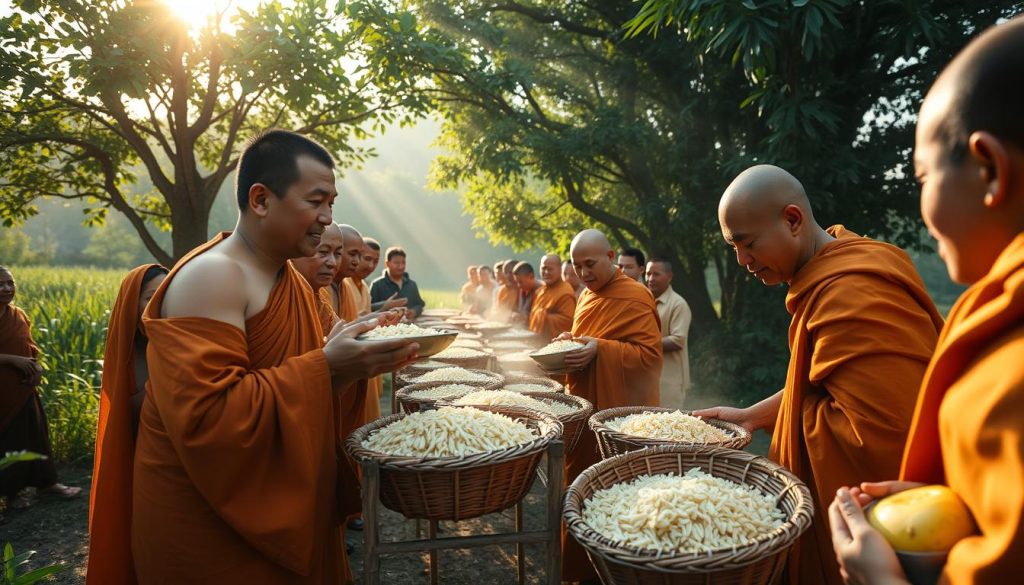
During the ceremony, you’ll see mostly women participating. They line up with food like sticky rice and bananas. These are traditional offerings for the ritual.
Hotels like the Avani+ Luang Prabang Hotel help you join in. They provide food and advice. This helps you understand local customs and be respectful.
Prices for places to stay in Luang Prabang vary. You can find everything from budget options to luxury resorts. Prices range from $29 to $785 per night.
The Tak Bat ceremony is more than just watching. It invites you to join in. Plan your visit to get a closer look at the local culture and community.
Observing the Ceremony: Etiquette and Guidelines
When you join the Tak Bat alms ceremony, knowing the etiquette is key. It’s important to act with respect and reverence. Dress code and silence are crucial parts of this.
Dress Code and Behavior Expectations
The ceremony values modesty in what you wear. Make sure your shoulders and knees are covered. This shows respect and keeps the ceremony solemn.
Here are some tips to follow:
- Wear clothing that covers shoulders and knees.
- Avoid clothing that is overly revealing or casual.
- Remove shoes before approaching monks or participating in the ceremony.
- Bow respectfully when facing the monks to show your reverence.
- Keep a respectful distance to maintain personal space.
Understanding the Silence of the Ceremony
Keeping silent during the Tak Bat is very important. It makes the ceremony more spiritual. Silence helps everyone focus on the moment.
- Promotes introspection and personal reflection.
- Enhances the ambiance, inviting a deeper appreciation of the ceremony.
- Preserves the integrity of the ritual, illustrating its significance in the Buddhist tradition.
- Asks observers to refrain from using cameras with flashes, which can distract from the solemnity.
- Encourages individuals to be present in the moment, fostering a sense of communal respect.
Following the etiquette, like dressing modestly and staying silent, is vital. It helps keep the ceremony respectful. Your thoughtfulness helps preserve this cultural tradition.
Timing and Location of the Tak Bat Ceremony
The Tak Bat ceremony starts every day at dawn. The exact time changes with the seasons. You can usually find it from 4:30 AM to 6:45 AM.
In summer, it begins around 5:30 AM. Winter mornings see it start closer to 6:30 AM. Arriving early is key to get a good spot in Luang Prabang’s main streets.
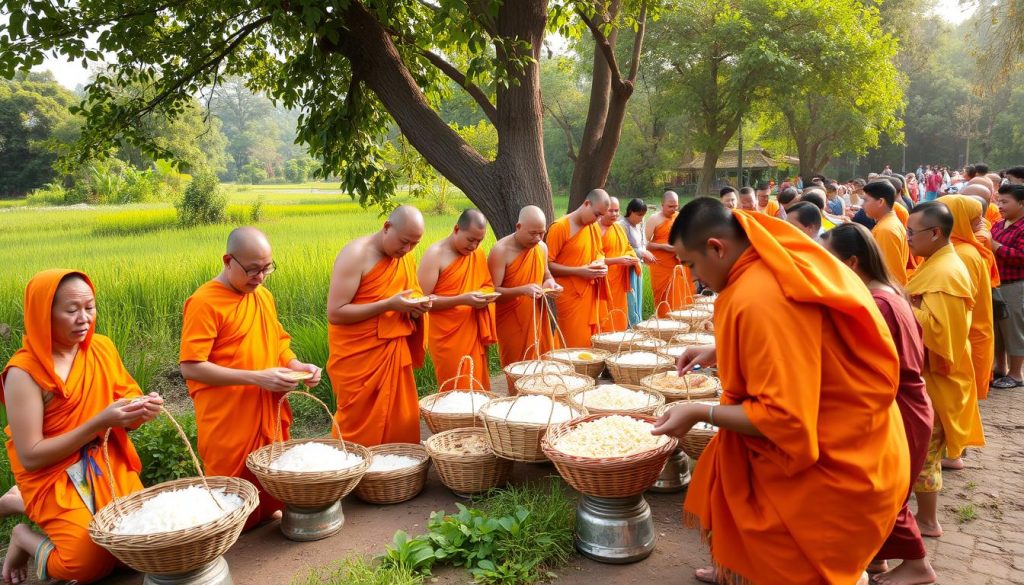
This ceremony takes place in Luang Prabang’s central streets. It’s a lively scene, welcoming both locals and visitors. Monks, wearing their traditional robes, move in groups to receive offerings.
People gather to watch, adding to the community feeling. This experience is deeply rooted in culture and spirituality.
If you want to join in, dress modestly and be respectful. Keeping quiet will make your experience richer. It’s a chance to see a tradition that’s deeply meaningful.
What Are the Offerings in the Tak Bat Ceremony?
The Tak Bat almsgiving ceremony is more than a spiritual event. It’s a chance for the community to come together. People offer food to Buddhist monks, showing respect for their monastic life. Knowing what foods are commonly offered can make your experience richer.
Common Foods Offered to the Monks
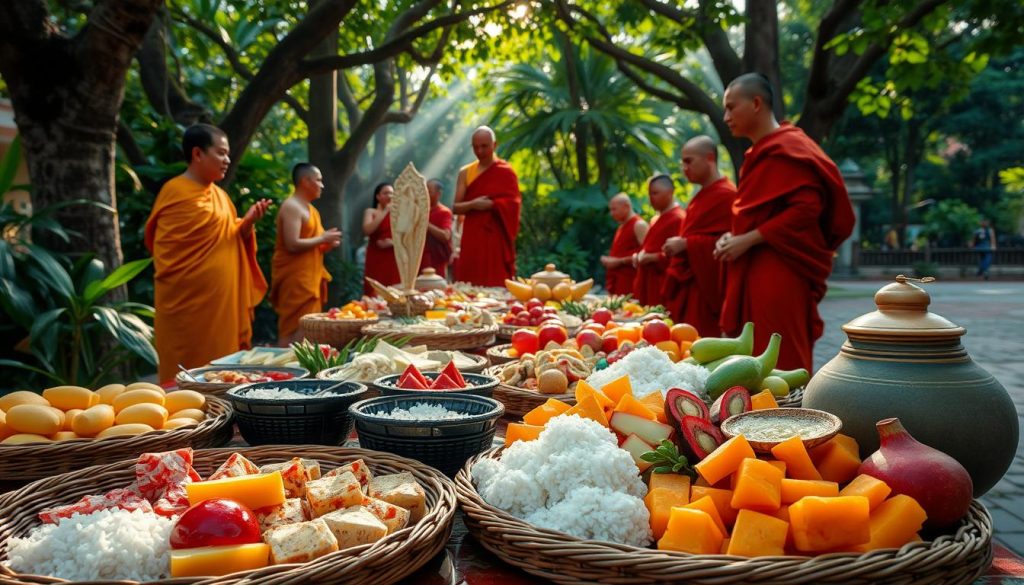
People prepare many foods for the monks. These include:
- Sticky rice – a key part of the Laotian diet, often the main offering.
- Fruits – picked at the right time, they show gratitude and freshness.
- Traditional snacks – chosen to honor the monks, these can be sweets or local treats.
These foods are not just for eating. They show the community’s support for the monks, who eat only until noon.
The Ritual of Food Presentation
Presenting food during Tak Bat is a special and respectful act. It’s a time for mindfulness and following cultural rules. Here’s how to participate:
- Keep a respectful distance of at least 5 meters to honor the ceremony.
- Wear modest clothes, covering shoulders and legs, as a sign of respect.
- Show quiet respect as the monks walk by, recognizing the moment’s importance.
By offering food, people strengthen their connection with the monks. It’s a meaningful act of giving.
Challenges Faced by the Tak Bat Alms Giving Ceremony
The Tak Bat ceremony in Luang Prabang is deeply meaningful but faces challenges. Tourism’s rise affects the ceremony’s integrity, including the impact on almsgiving. Locals worry about tourists disrupting the event’s spiritual vibe.
The Impact of Tourism on the Ritual
Many tourists come to see the morning alms giving. Hundreds of monks walk through streets to collect food. But, this scene has changed a lot.
For example, 20 excited visitors from a guesthouse can make a quiet street busy. People often push through the monks to take photos. They also crowd the monks, ignoring basic manners.
- Visitors ignore signs about keeping distance and being quiet.
- Loud talks and camera flashes ruin the ceremony’s sacred moments.
- Some tourists disrespect the event, seeing it only as a photo spot.
Preserving the Authenticity of the Ceremony
Keeping traditional customs alive is key for the Tak Bat ceremony. Teaching tourists how to respect the ceremony is vital. Monks and locals stress the importance of understanding almsgiving customs.
Proper dress, quiet watching, and avoiding disruptions are crucial. Hotels give out guides on how to respect the ceremony. But, not all visitors follow these rules. Learning and following etiquette helps connect tourists with locals and keeps the tradition alive.
| Tourism Behavior | Impact on Ceremony | Suggested Actions |
|---|---|---|
| Disruptive Flash Photography | Distracts monks and alters the spiritual setting | Encourage quiet observation without equipment |
| Crowding the Procession | Disrupts the flow and respect of the ritual | Educate on maintaining a respectful distance |
| Loud Conversations | Disrespects the solemn atmosphere | Promote a culture of silence and reverence |
How tourists act during the ceremony can either help or harm its authenticity. It’s crucial to understand and respect the Tak Bat ceremony to keep it alive.
Conclusion
The Tak Bat alms giving ceremony is a key part of Luang Prabang’s culture and spiritual life. It happens every morning at dawn. This tradition, based on Theravada Buddhism, shows the importance of giving to monks and building community.
In the lively streets and beautiful UNESCO World Heritage sites, the Tak Bat ceremony brings people together. It shows the power of giving and respect in our world today. Local vendors play a big role, showing the community’s support for this tradition.
When you take part in the Tak Bat ceremony, you help keep it alive for the future. It’s not just about giving food; it’s about honoring a long tradition in Laotian culture. By participating, you show respect for this beautiful part of Laotian heritage.