Exploring Roman Ruins in Pula Beyond the Amphitheater
Did you know Pula offers much more than its famous amphitheater? Take a trip back in time to explore the rich history of this enchanting city. We’re going beyond the common sights to uncover ancient Roman ruins hidden in Pula.
Visit the majestic Temple of Augustus and the cozy Small Roman Theatre. Each place tells a story from the Roman Empire’s peak. Imagine walking where emperors did, seeing triumphal arches, and admiring ancient mosaics.
Are you ready to explore Pula’s Roman ruins with us? Let’s step beyond the amphitheater and discover the city’s secret past together.
The Temple of Augustus: A Glimpse of Ancient Pula
The Temple of Augustus is a remarkable Roman ruin in Pula. It was built under Emperor Augustus’s rule. This well-kept temple shows us ancient Pula’s architectural beauty.
In Pula’s center, the Temple of Augustus shows Roman civilization’s splendor. Its grand Corinthian columns and detailed friezes reflect the ancient Romans’ building skills.
Walking into the temple is like stepping back in time. You’ll notice the beautiful design typical of Roman architecture. The carvings tell stories from Roman myths and history, giving us insight into ancient Roman culture.
The Temple of Augustus reminds us of Pula’s rich history. It honors the first Roman emperor, Augustus. This place also shows the lasting impact of Roman culture in this region.
“The Temple of Augustus is a remarkable example of Roman architecture in Pula. Its beauty and historical significance make it a must-visit attraction for anyone interested in ancient Roman ruins.”
Visit the Temple of Augustus to journey through time. It offers a deep dive into the history and stories of ancient Romans.
Interesting Facts about the Temple of Augustus
| Fact | Description |
|---|---|
| 1 | The temple was built between 2 BC and 14 AD. |
| 2 | The temple was dedicated to the goddess Roma and Emperor Augustus. |
| 3 | It was originally part of a larger complex that included a library. |
| 4 | The temple was damaged during World War II but was later restored to its former glory. |
| 5 | Today, the temple is a popular tourist attraction and a symbol of Pula’s Roman heritage. |
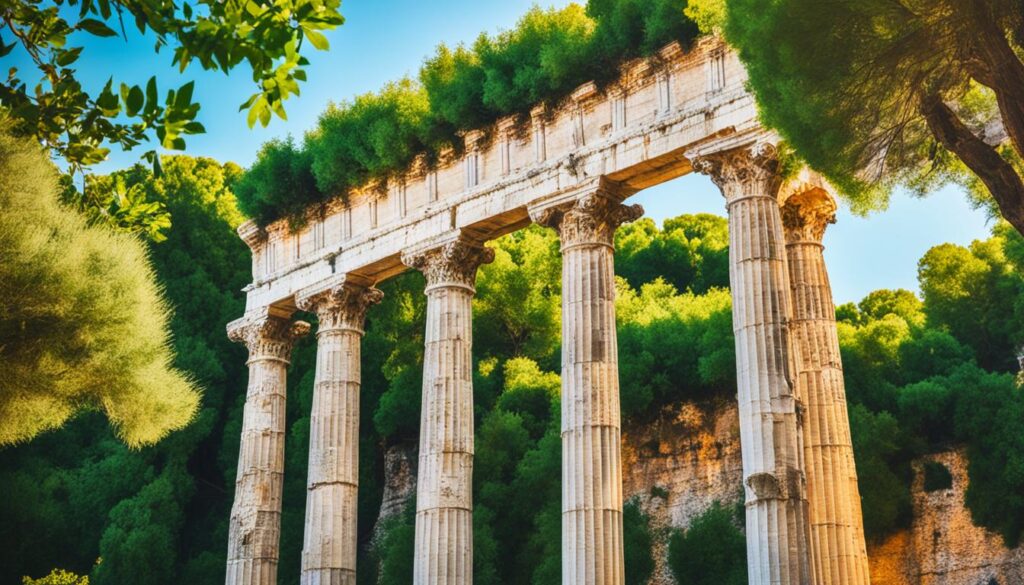
Explore the Temple of Augustus’s captivating beauty and historical importance in Pula. It showcases the ancient Romans’ genius and is essential for anyone interested in their history and architecture.
The Roman Forum: Center of Ancient Life
Step into the past as you explore the Roman Forum in Pula. This site was once the hub of ancient life, with markets, temples, and gatherings.
Imagine walking through ancient Pula’s lively streets. Here, traders swapped goods and worshippers visited sacred temples. The Forum was where city life pulsed with energy.
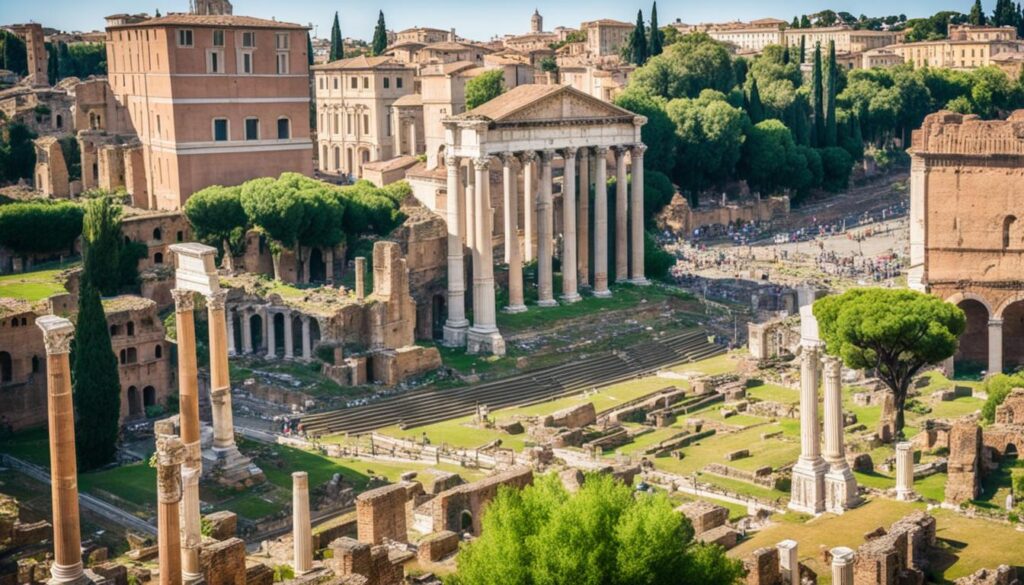
The Roman Forum showcases the grandeur of ancient Rome. You’ll see columns, walls, and foundations. These remains are a window into a sophisticated past.
Wander the site to find where ancient markets thrived. Merchants sold their goods here. It feels like their conversations and scents of food still hang in the air.
But the Forum wasn’t just about trade. It was also a religious center. Temples for gods like Jupiter, Juno, and Minerva were here. The ruins hint at the Romans’ deep faith.
Picture the community buzzing with life here. People talked politics, celebrated, and watched shows. It was a place for making friends and sharing ideas.
Visiting the Forum, you connect with Pula’s rich history. You’ll feel closer to the lives of those who walked these streets long ago. Let the ancient stones tell their stories.
Triumphal Arch of Sergii: A Symbol of Power
Step into history at the Triumphal Arch of Sergii. This grand symbol of ancient Rome’s power is breathtaking. It stands tall in Pula, showing off ancient Rome’s military wins and architectural talent.
The Triumphal Arch of Sergii was raised in the 1st century BC. It honors three powerful Roman families from Pula. Its front is covered with detailed carvings and scenes from Roman history, taking visitors back to the empire’s glorious days.
Look closely at this grand arch to see its amazing details. The craftsmanship has lasted through many years. Its Corinthian columns and elegant designs make everyone respect and admire the past’s great works.
A special thing about the arch is its attic’s inscription. It brags about the founders and honors the Roman emperor. This message shows us why the arch was built and its importance in ancient times.
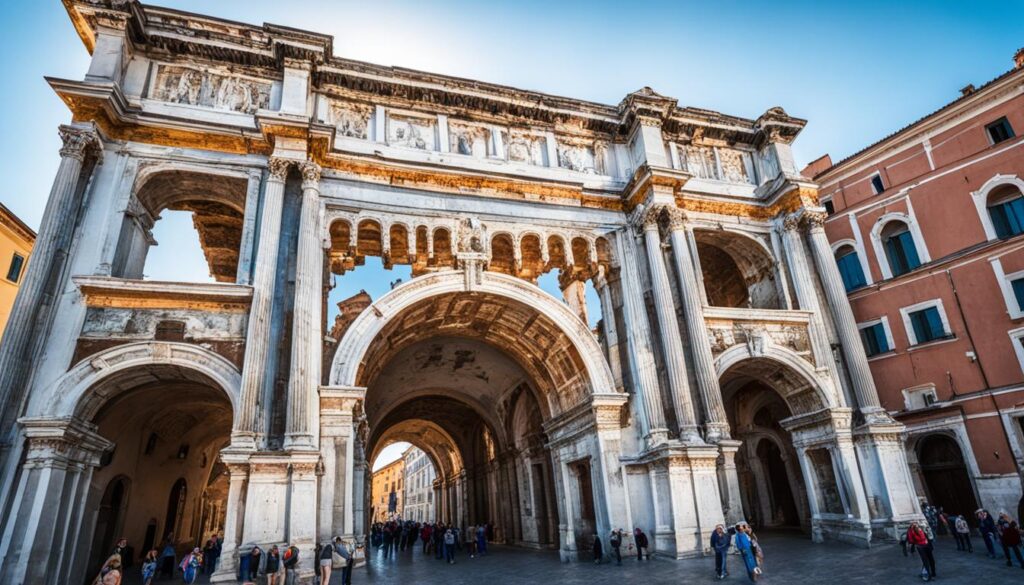
Walking through the Triumphal Arch of Sergii is an unforgettable experience. This incredible monument celebrates ancient military wins. It also symbolizes power, strength, and Rome’s lasting influence.
| Key Features of Triumphal Arch of Sergii | Highlights |
|---|---|
| 1. Corinthian Columns | Exquisite architectural details |
| 2. Intricate Carvings and Reliefs | Depictions of Roman history |
| 3. Inscription on Attic | Dedication to Roman emperors |
Seeing the Triumphal Arch of Sergii is a chance to dive into Pula’s rich past. You’ll marvel at this power symbol and travel back to a historic time. Let the past’s grandeur sweep you away to another era.
The Cathedral of the Assumption of the Blessed Virgin Mary: A Blend of Styles
Dive into the stunning architecture of the Cathedral in Pula. It’s a tribute to the city’s history, blending Romanesque with Gothic styles.
This Cathedral marks a key spot among Pula’s ancient monuments. It began in the 6th century, on an old Roman temple’s site. This shows the area’s ongoing spiritual importance.
The Cathedral’s exterior is impressive, with detailed carvings. Its rose window highlights the Gothic style. The Romanesque bell tower, strong and tall, symbolizes centuries of endurance.
The Influences of Romanesque and Gothic Architectural Styles
“The Cathedral combines Gothic grace with Romanesque simplicity. It’s a masterpiece that shares the region’s cultural story.” – Architectural historian
Inside, the Cathedral’s beauty is breathtaking. Romanesque arches offer peace, while Gothic ceilings inspire awe. Stained glass windows add a magical light effect.
Look closely at the frescoes and artifacts within. They display stories of faith, providing insights into past spiritual life.
Preserving History and Inspiring Awe
The Cathedral remains a key place for worship today. It welcomes those seeking peace or connecting with Pula’s history. Visiting it is highly recommended.
“The Cathedral reflects Pula’s architectural strength. It keeps history alive, encouraging artistic work and community unity.” – Local historian
| Key Features | Architectural Styles | Significance |
|---|---|---|
| Grand façade | Romanesque and Gothic | Showcase of architectural fusion |
| Rose window | Gothic | Elegant decorative element |
| Romanesque bell tower | Romanesque | Symbol of historical resilience |
| Romanesque arches | Romanesque | Create a sense of serenity |
| Gothic vaulted ceilings | Gothic | Evoke a feeling of transcendence |
The Double Gate: An Entrance to the Past
Step back in time as you enter the Double Gate. It’s a grand entrance into Pula’s ancient city. This structure has stood the test of time, welcoming visitors into the Roman settlement.
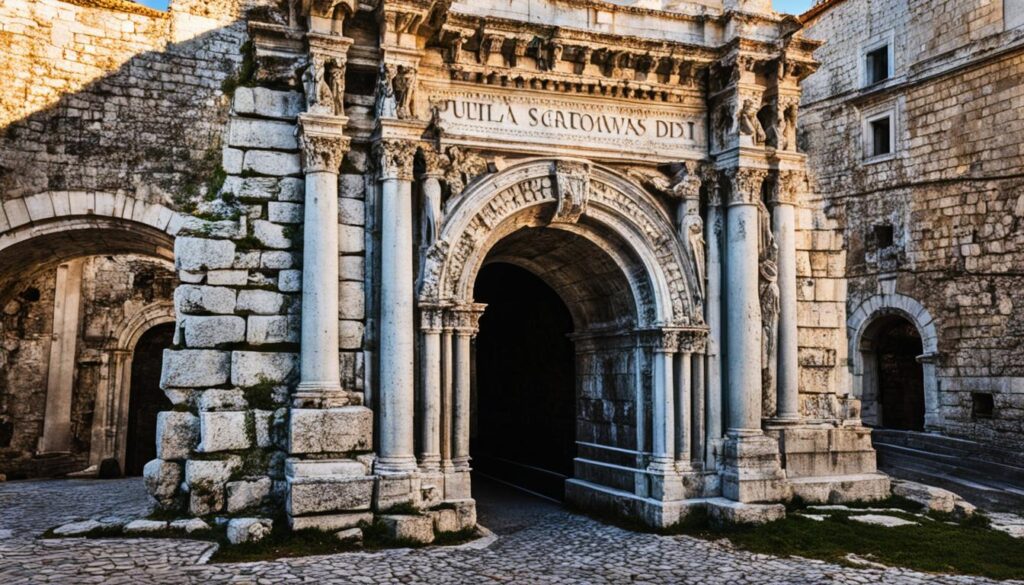
The Double Gate showcases the grandeur of ancient Rome. It stands tall, drawing you in with its detailed design.
Back in the 2nd century AD, the Double Gate was key for travelers entering Pula. It linked the city’s east and west, boosting trade.
Walking through the Double Gate, you feel history all around. Its design and durability highlight Roman engineering skills.
Key Highlights of the Double Gate:
- Monumental entrance to the ancient city of Pula.
- Constructed during the 2nd century AD.
- Connects the eastern and western parts of the city.
- Well-preserved architectural marvel.
The Small Roman Theatre: Intimate Performances
Step into the enchanting world of the Small Roman Theatre in Pula. This ancient theater sits among the city’s Roman ruins. It offers a unique, close-up experience. Feel the history as you explore this well-preserved site where performances once captivated many.
In Pula’s center, the Small Roman Theatre is a historic jewel. Constructed in the 1st century AD, it hosted a variety of shows. This intimate setting let people feel closely connected to the action on stage, unlike the larger Amphitheater.
Imagine sitting on the ancient steps, surrounded by history. Here at the Small Roman Theatre, the past’s energy seems to come alive. This place lets you dive deep into ancient Pula’s artistic spirit.
Behold the Small Roman Theatre’s stunning architecture. Notice the detailed stage, decorated walls, and grand columns. The theater’s acoustics were designed to make every performance sound perfect.
The Small Roman Theatre isn’t just an ancient relic. It represents Pula’s vibrant culture. Nowadays, it hosts events like concerts and plays. These gatherings bring the theater’s magic to today’s audiences.

Highlights of the Small Roman Theatre:
- Intimate atmosphere that brings you closer to the performances
- Well-preserved architectural features and ornate decorations
- Impeccable acoustics for optimal sound projection
- Continues to host smaller cultural events
Make sure to visit the Small Roman Theatre when exploring Pula. It’s a window to the city’s rich artistic and cultural legacy.
The Gate of Hercules: Mythology and History
Explore the blend of myth and history at Pula’s Gate of Hercules. This remarkable Roman site welcomes you at the city’s entrance. It is adorned with symbols and inscriptions dedicated to the legendary Hercules.
Hercules was a demigod known for outstanding strength and daring quests. The Gate of Hercules links us to his legendary tales, making his stories live forever in stone.

This gate showcases the Roman Empire’s skill in building, with its grand design and detailed carvings. Approaching it, you’re met by two large towers. They feature reliefs that bring Roman myths and history to life.
One notable part of the gate is its limestone Hercules Relief on the south tower. It depicts Hercules in legendary poses, emphasizing his feats and cultural importance.
Walking through the gate, think of the many people who have passed here. Their histories echo around you, blending past and present.
“The Gate of Hercules serves as a tangible connection to the legendary hero, immortalizing his tales in stone.”
The gate wasn’t just symbolic; it defended the city too. It marked the entrance to a fortified Roman area, keeping invaders out.
Now, you can visit and marvel at this historic site yourself. Experience firsthand the astounding mix of legend and engineering that has stood the test of time.
The Gate of Hercules at a Glance:
| Location | Date Built | Architectural Style |
|---|---|---|
| Entrance of Pula | 1st century AD | Roman |
The Gate of Hercules is a bridge to Pula’s rich history and Roman legacy. It reminds us of the city’s ancient roots and Roman ingenuity.
The Floor Mosaics of Pula: Artistic Treasures
Take a look at the Pula floor mosaics. They are amazing works that make ancient Roman history come alive. Crafted with care, these mosaics show the skill of their makers. Every piece tells a story from ancient Pula’s daily life and culture.
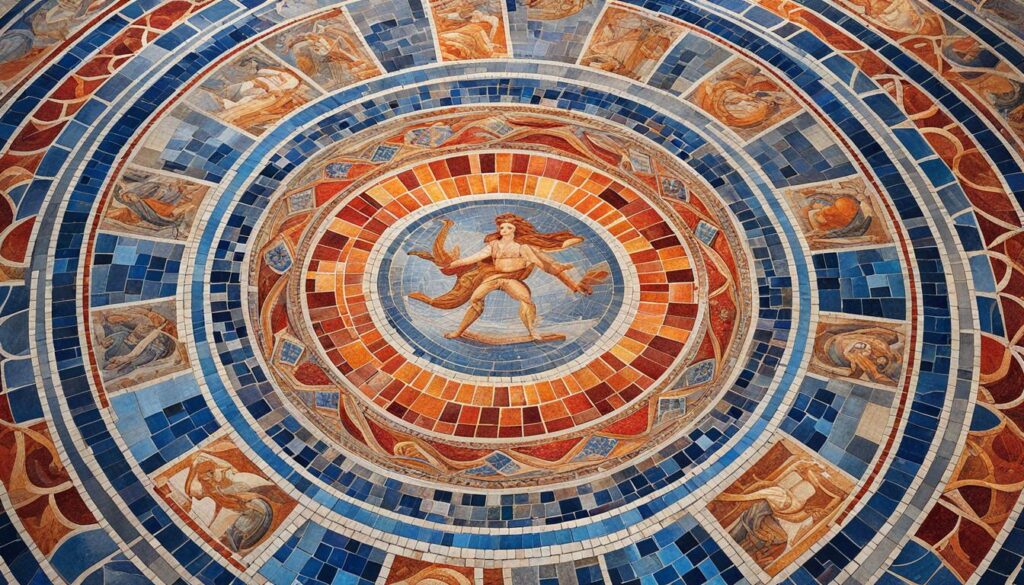
The Intricate Beauty of Pula’s Mosaics
The Pula floor mosaics are full of detailed patterns and bright colors. They beautifully capture classical Roman art. Creating them required placing tiny colored tiles by hand to make complex designs. Such mosaics decorated homes and public spaces in old Pula.
A Glimpse into Roman Daily Life
Walking on these mosaics takes you back to ancient Pula. They give a peek into Romans’ everyday lives. You’ll see scenes of mythology, feasts, markets, and patterns. These images show how rich and diverse Roman culture was.
“The Pula floor mosaics are like windows to the past. They show how people in that ancient city lived and dreamed.” – Dr. Maria Petrov, Archaeologist
Preserving History for Future Generations
Keeping the Pula mosaics safe is key to understanding ancient Rome. Archaeologists and heritage experts work to protect these valuable pieces. Their efforts let us see the beauty of Pula’s ancient mosaics today.
| Mosaic Name | Description |
|---|---|
| Tridentine Mosaic | Depicts Neptune, god of the sea, holding a trident |
| Orpheus Mosaic | Features the legendary musician surrounded by animals and mythological creatures |
| Labours of Hercules Mosaic | Illustrates the heroic feats of Hercules as he battles various monsters |
| Diana Mosaic | Showcases the goddess Diana surrounded by hunting scenes and woodland creatures |
Dive into the fascinating Pula floor mosaics. Discover the stories they tell from the past. During your visit to Pula’s Roman ruins, take time to enjoy these ancient artistic gems.
The Archeological Museum of Istria: Preserving Pula’s Past
Dive into Pula’s history at the Archeological Museum of Istria. Located in the city’s heart, it shows off artifacts that tell us about ancient times. Walk around, and you’ll feel like you’ve stepped back, learning about the Roman roots of this city.
Enter the museum’s grand halls and explore Pula’s archaeological finds. Every piece has a story of old life, culture, and buildings.
The Archeological Museum of Istria shines a light on Roman Pula. It has things like pottery, sculptures, and old Roman coins. These items give us a peek into how Romans lived in Pula.
Don’t miss the museum’s Roman statues and sculptures. They show the skill of ancient artists. As you look at them, you’ll see the attention to detail they gave.
Also, check out the collection of ancient Roman coins. It tells us how Pula’s economy worked back then. These coins share the story of the city’s past trade.
While walking through, read the displays and stories next to each exhibit. They help you understand everything better. This museum makes history come alive. It connects you to Pula’s rich past.

If you love history or just want to learn, visit this museum in Pula. Let the artifacts show you a world of ancient glory and beauty.
The Gate of the Olive Tree: Symbol of Peace
In the ancient Roman ruins of Pula, you’ll find the Gate of the Olive Tree. It’s a beautiful structure with detailed carvings and engravings. It’s full of history and meaning.
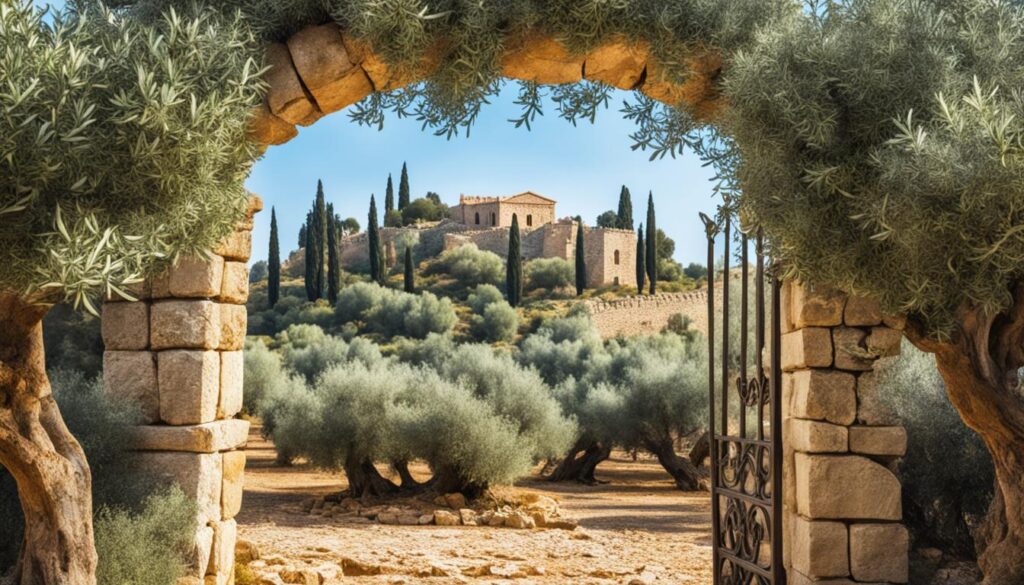
The Gate of the Olive Tree is a peace sign, showing what ancient people valued. An olive tree picture is on the gate. It stands for unity, wealth, and calm.
“The Gate of the Olive Tree shows how nature and humans can live together in peace. Its carvings show scenes of harmony and wealth. It highlights the need for balance and working together.”
During the Roman times, the Gate was both an entrance and a symbol of Pula’s success. It greeted visitors, showing them the great culture of the city.
Now, the Gate of the Olive Tree lets us see ancient Rome’s lasting impact. Its well-kept state gives us a peek into the past and the artists’ skills back then.
Exploring the Gate of the Olive Tree: A Journey into History
Visiting the Gate, look closely at the stone carvings. Notice the olive tree shapes, showing peace and wealth, and the Roman myths and events shown.
Walking through the gate, think of stepping back in time. Imagine Roman soldiers and traders around you. Feel the rich history and ancient stories these walls tell.
- Admire the impressive architecture: Marvel at the structure’s imposing size and the intricate carvings that adorn its facade.
- Reflect on the symbolism: Contemplate the olive tree motif and its representation of peace and unity, transcending time and reminding us of the universal values humans have always cherished.
- Immerse yourself in history: Allow yourself to be transported to ancient times as you walk through the Gate of the Olive Tree, imagining the vibrant life that once bustled behind these walls.
The Gate of the Olive Tree in Pula is a top spot for anyone into history or seeking a special cultural spot. It captures ancient Roman life and invites you to connect with history while enjoying today’s beauty.
Conclusion
Dive into Pula’s rich history by checking out Roman ruins besides the well-known amphitheater. See the majestic Temple of Augustus and its beautiful floor mosaics. Each site tells a vibrant story of the past.
Imagine ancient markets and gatherings as you walk through the Roman Forum. Look up at the Triumphal Arch of Sergii, showcasing Roman glory and victories.
Visit the Cathedral of the Assumption of the Blessed Virgin Mary, mixing Romanesque and Gothic styles. Feel history come alive at the Double Gate. Be amazed by the intimacy of the Small Roman Theatre and the mythology-rich Gate of Hercules.
Make sure to visit the Archeological Museum of Istria for an extensive collection of artifacts. Its Gate of the Olive Tree stands for peace and harmony. Pula’s Roman ruins offer a deep dive into history. Discover the ancient secrets that the city holds.