Exploring Amman’s Food Scene: Diversity & Flavors
Have you ever thought about how a city shares its story through food? Amman’s food culture is a mix of traditional Jordanian dishes and diverse flavors. As you explore the capital of Jordan, you’ll find everything from street food to fancy restaurants.
From a hot falafel to the famous mansaf, each dish connects you with the local community. It’s a way to experience Amman’s heart and soul.
So, what’s the food scene like in Amman? It’s a mix of tastes and traditions. You can explore local markets, take cooking classes at Beit Sitti, or try the top restaurants in Amman.
This journey will not only delight your taste buds but also show you the true spirit of Jordanian hospitality.
Introduction to Amman’s Culinary Landscape
Amman’s culinary scene is a world where flavors blend and traditions shine. This vibrant city’s dining scene is a mix of cultures. It offers a delightful mix of tastes that locals and visitors love.
Exploring Amman’s food culture, you’ll see how history and diversity shape its dishes. With over four million people, including Jordanians and refugees, Amman’s food tells stories of survival and celebration. It’s a feast for the senses, with colors, tastes, and smells.
Must-try dishes include falafel, fattet hummus, and mansaf, a symbol of Jordanian hospitality. Places like Hashem serve these dishes, attracting both tourists and locals. Each meal brings people together, sharing stories and traditions.
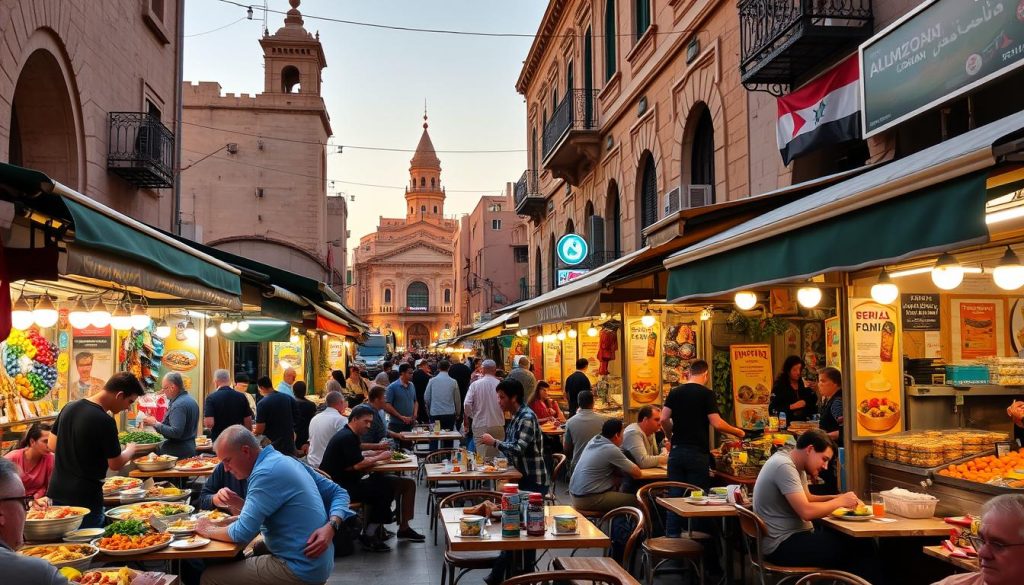
Amman also boasts modern restaurants that blend tradition with innovation. This mix of old and new shows Amman’s love for its roots and openness to change. It’s a city that values its heritage while embracing new ideas.
What is the food scene like in Amman?
The food scene in Amman is rich and diverse. It’s shaped by many cultures and traditions. You’ll find a mix of flavors that show the city’s history and trade routes.
This cuisine blends Mediterranean, Middle Eastern, and North African styles. Dining here is a joy. Expect to taste fresh ingredients, aromatic spices, and traditional cooking methods.
Diverse Influences on Jordanian Cuisine
Exploring Jordanian cuisine reveals Amman’s food scene. It’s a mix of flavors from different cultures and trade. Restaurants like Hashem serve amazing falafel, using local ingredients and old recipes.
Places like Shams El Balad and Rainbow Street focus on local produce. They create dishes that celebrate the land’s heritage.
The Role of Hospitality in Amman’s Dining Culture
Hospitality in Amman is a big part of its culture. Sharing meals is key, showing community, generosity, and connection. At Dali or Habibeh Knafeh, locals welcome you with open arms.
They share their food traditions with you. This makes every meal a warm and friendly experience.
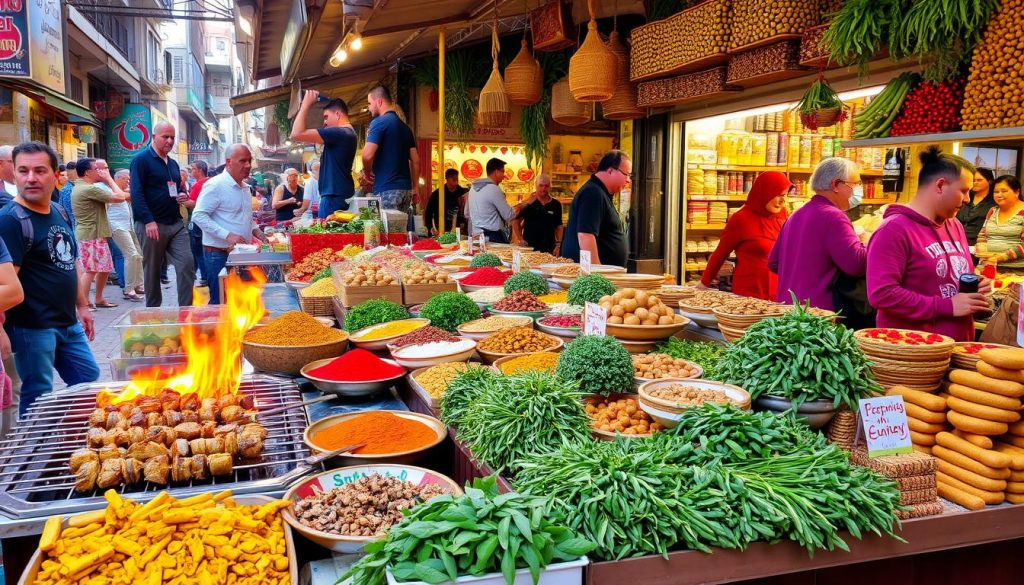
| Restaurant | Notable Dish | Location |
|---|---|---|
| Hashem | Falafel | Al-Balad |
| Shams El Balad | Local Delicacies | Jabal Amman |
| Dali | Cafés with Indoor/Outdoor Seating | Downtown |
| Habibeh Knafeh | Knafeh | Amman |
| Al-Khather | Mansaf | Jabal Al Lweibdeh |
Traditional Jordanian Cuisine
Exploring Traditional Jordanian cuisine reveals a world of rich flavors and cultural significance. At its heart is Mansaf, Jordan’s national dish. It features lamb in a unique yogurt sauce, served over fragrant rice. You’ll also find dishes like Zarb, cooked in an earth oven, and traditional favorites like falafel and warbat. Each dish showcases Jordan’s unique heritage.
Must-Try Dishes: Mansaf and More
Mansaf is the star of Jordanian celebrations, appearing at weddings and funerals. Don’t miss out on:
- Zarb: A traditional dish cooked in an earth oven.
- Falafel: A convenient street food option available throughout Amman.
- Warbat: A sweet pastry, perfect for dessert aficionados.
- Manakish: A flatbread topped with savory ingredients, often enjoyed for breakfast.
For an authentic experience, visit local favorites like Hashem Restaurant and Sufra Restaurant. They are celebrated for their dedication to traditional Jordanian cuisine.
Unique Ingredients in Jordanian Cooking
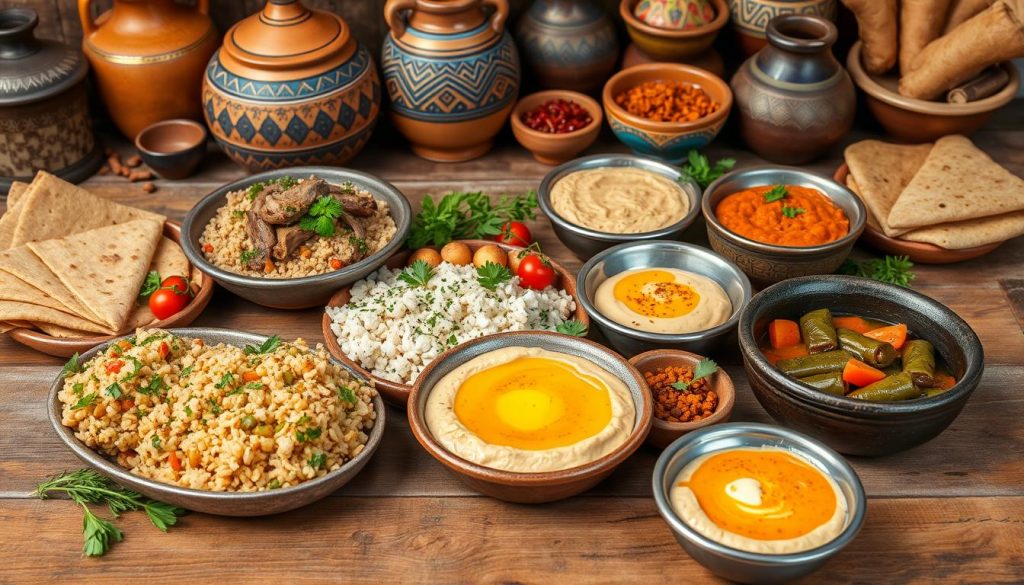
Unique ingredients are key to Jordanian cooking’s signature flavors. Essential staples include:
| Ingredient | Description | Common Use |
|---|---|---|
| Za’atar | A blend of herbs, often used as a seasoning. | Sprinkled on breads or mixed with olive oil. |
| Jameed | Dried yogurt, a key component in Mansaf. | Rehydrated for use in sauces. |
| Fresh Vegetables | Locally grown vegetables enhance nutrition. | In salads, side dishes, or mains. |
This rich tapestry of flavors not only satisfies the palate but also offers a glimpse into the cultural heritage of Jordan. Each meal is an experience to cherish.
Best Restaurants in Amman
Amman’s food scene is vibrant, with many choices. You can find everything from local dining favorites to fancy places. Whether you love traditional Jordanian cuisine or new takes on old dishes, there’s something for everyone.
Local Gems: Where to Find Authentic Flavor
Exploring unique eateries is key to finding the best restaurants in Amman. Here are some local spots you should try:
- Hashem Restaurant – Famous for its delicious falafel and a true embodiment of authentic Jordanian street food.
- Shawerma Reem – Offers tasty shawarma sandwiches at an attractive price point, ideal for a quick bite.
- Abu Mahjoob – Renowned as one of the oldest falafel spots, reflecting a rich tradition.
- Tamreyet Omar – Known for its affordable and delectable desserts, notably temreyah.
Upscale Dining Choices for Food Lovers
For a fancy evening out, Amman has many upscale options. Here are some top choices:
- Sufra – Merges traditional recipes with a modern twist, providing a sophisticated dining atmosphere.
- Wild Jordan – Features a menu highlighting local ingredients within a stunning setting.
- Shams El Balad – Offers an artistic experience alongside flavorful dishes, complemented by local artisans selling authentic crafts.
- Floriana – Known for its innovative use of pizza dough in flatbreads, creating unique flavors.
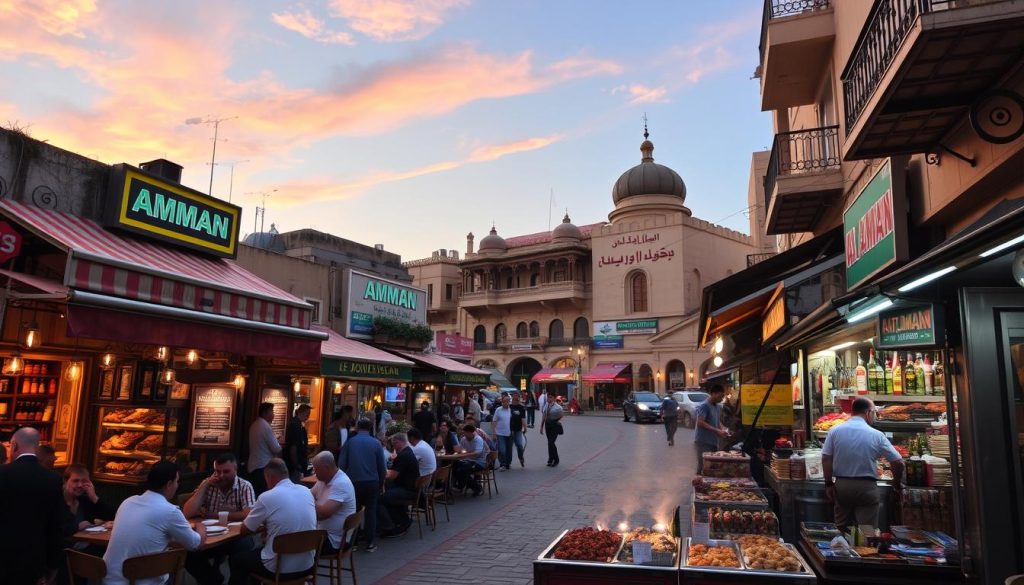
Amman’s food scene is diverse, with influences from the Middle East, Latin America, and more. As the dining scene grows, you’ll find more outdoor seating. This makes dining in Amman even more enjoyable, whether you’re looking for fancy meals or hidden gems.
Street Food Delights
Street food in Amman is a lively way to dive into the city’s food scene. It shows the fast life of its people and the deep traditions of Jordanian food. Try dishes like falafel and hummus to taste the true flavors of Jordan.
Famed Street Eats: Falafel and Hummus
Falafel is a top pick among Middle Eastern street foods. It’s made from chickpeas, herbs, and spices. Al Quds Falafel on Rainbow Street serves a memorable version.
Hummus is also a hit in Amman. It’s often used in sandwiches. Abu Jbara on Madina Al Munawara Street has a tasty hummus that will delight you.
Exploring Local Markets for Culinary Treasures
Amman’s local markets are a key part of exploring its food scene. You’ll find everything from warm ka’ak at Abu Abdullah’s Bakery in Swefieh to fuul at Hashem on King Faisal Street. For something adventurous, try fresh green chickpeas or turmos near the Grand Husseini Mosque.
Shawarma stands like Shawarma Reem at the second circle in Jabal Amman serve tender meat in flatbread with tahini sauce. Don’t miss out on Palestinian knafeh at Palestinian Habiba Downtown. It’s not just food; it’s an experience of Amman’s lively street food culture.

| Street Food Item | Location |
|---|---|
| Falafel | Al Quds Falafel, Rainbow Street |
| Hummus | Abu Jbara, Madina Al Munawara Street |
| Fuul | Hashem, King Faisal Street |
| Shawarma | Shawarma Reem, Second Circle |
| Knafeh | Palestinian Habiba Downtown, Marwan Madi Complex |
| Ka’ak | Abu Abdullah’s Bakery, Swefieh |
Culinary Experiences in Amman
Exploring Amman’s culinary scene opens a window into Jordanian culture. Food tours let you find local favorites. Cooking classes teach you to make authentic Jordanian dishes.
Food Tours: Discovering Amman’s Hidden Gems
Food tours in Amman, like the Eat Like A Local Tour, dive deep into the city’s neighborhoods. For about 30 Jordanian dinars (around $43 USD), you get a three-hour tour with tastings. You’ll visit places like Hashem’s Restaurant for amazing falafel and Habibah for the best Kunafa.
These tours show Amman’s food scene and its hidden spots. They highlight traditional tastes and reveal Amman as a haven for food lovers.
Cooking Classes: Learn to Prepare Jordanian Dishes
Cooking classes in Amman, like those at Beit Sitti, teach you about local ingredients and flavors. You’ll learn to make four dishes, including a main course, side, salad, and dessert. This supports local women and builds social connections.
You might learn to make ‘fattet magdoos,’ a layered dish that captures Jordanian cooking’s essence. Beit Sitti’s warm atmosphere makes your learning experience richer through shared stories and interactions.
Amman Dining Scene: A Blend of Modern and Traditional
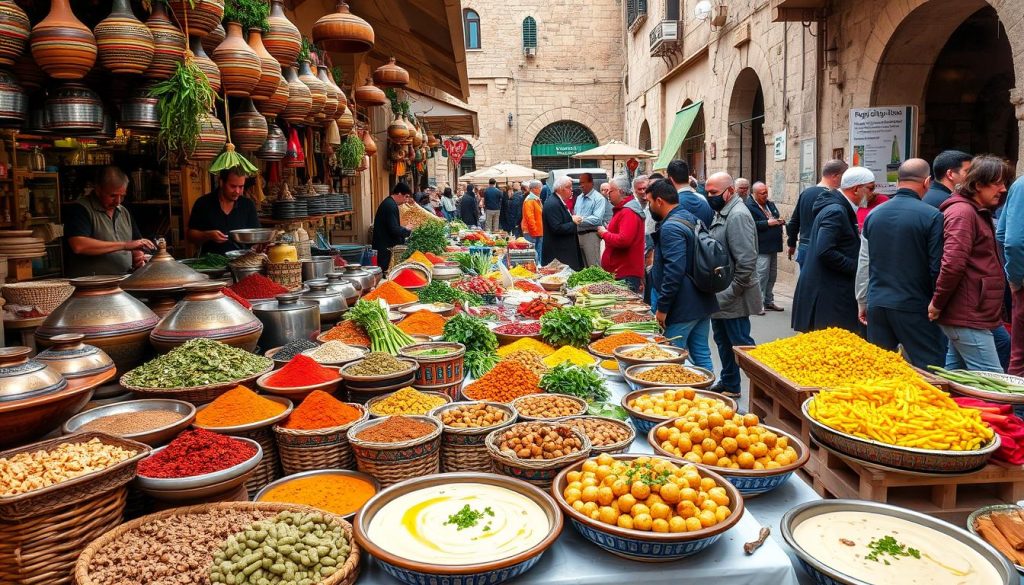
The Amman dining scene is a mix of modern and traditional. It offers a wide range of restaurants and trendy cafes. These places take classic dishes and make them new, while keeping Jordanian flavors alive.
Restaurants Offering Contemporary Takes on Classics
Places like Sufra show off modern dining in Amman. They serve fancy versions of local favorites, like mansaf. Dara Dining by Sara Aqel also impresses with creative takes on classic dishes.
These restaurants focus on fresh ingredients and true flavors. They make sure everyone has a great time, whether you’re a visitor or a local.
Trendy Cafés with Local Flair
Manara Arts and Culture Center is a top spot for trendy cafes. It’s perfect for enjoying snacks and unique coffee. The lively vibe makes it great for meeting new people and sparking creativity.
Here, you can enjoy tasty treats or chat with friends. It’s all set against a backdrop of local art, making your meal even more special.
Amman Food Culture and Community
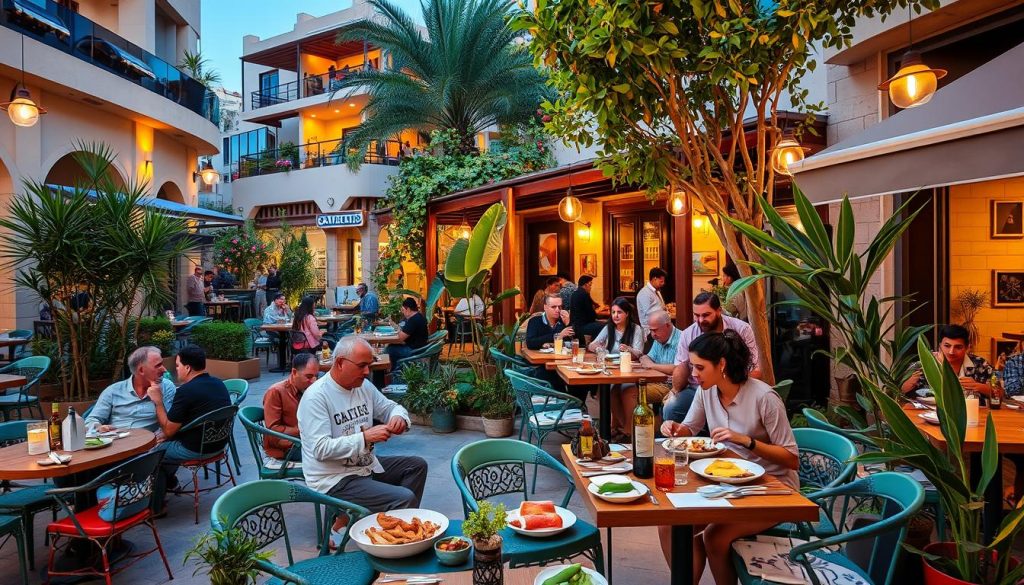
The food culture in Amman is all about hospitality and generosity. It makes everyone feel welcome, locals and visitors alike. Sharing meals is a big part of Jordanian life. You’ll feel the warmth of Amman’s hospitality, whether in a restaurant or a home.
Expectations of Hospitality and Generosity
In Amman, you’ll be greeted with open arms and plenty of food. It’s a sign of caring for others. You might see families sharing dishes, showing off their culinary heritage. This kindness often leads to deep conversations and new friendships.
Connecting with Locals through Food
Exploring Amman’s food culture is a great way to meet locals. Join community events where food brings people together. You can also visit markets and cooking classes to learn about the region’s history and taste authentic dishes.
Unique Culinary Ingredients in Jordan
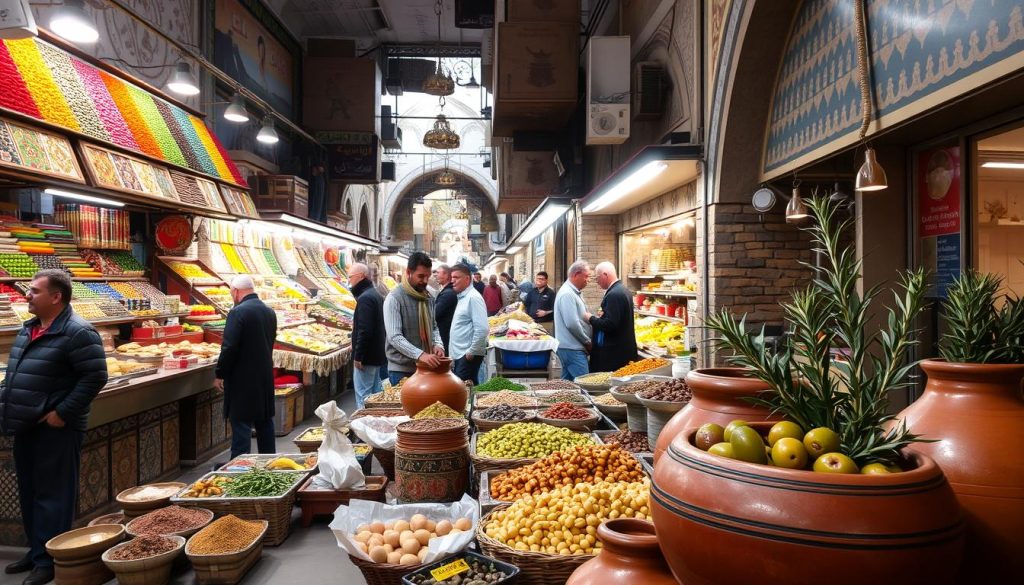
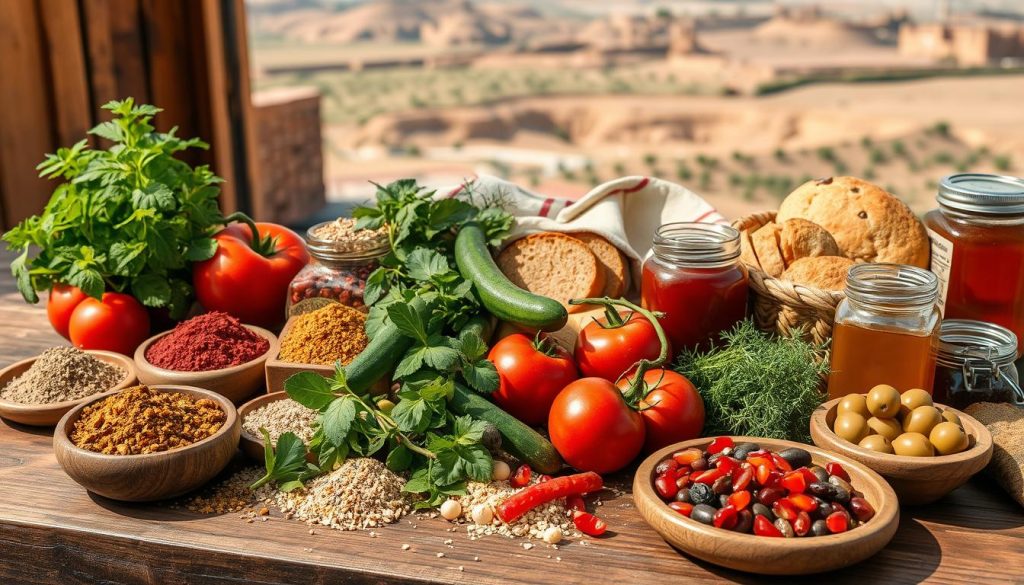
Jordanian food is known for its special ingredients. Za’atar, a favorite herb mix, is used in many dishes. Bread and olive oil are also key, adding to the local food culture. These ingredients show what makes Jordan’s food scene so vibrant.
Exploring Za’atar and Other Local Spices
Za’atar is a mix of thyme, sesame seeds, and sumac. It’s a big part of Jordanian meals. Each area has its own version, with Jordan’s being known for its rich taste.
Other spices like cumin, coriander, and cardamom add depth to dishes. They make salads and stews taste better.
Daily Staples: Bread, Olive Oil, and Beyond
Everyday items in Jordan are important in its food. Arabic bread, or khobz, is always there, perfect for dips. Olive oil, known for its taste and health benefits, is also a must.
These ingredients are the heart of Jordanian meals. They show the country’s love for fresh, seasonal food. You can find them in local markets, showing Jordan’s dedication to quality.
| Ingredient | Description | Usage |
|---|---|---|
| Za’atar | A blend of dried thyme, sesame seeds, and sumac. | Used in dips, on bread, and as a seasoning. |
| Khobz (Arabic Bread) | Freshly baked flatbread, often served warm. | Accompanies main dishes and used as a scoop. |
| Olive Oil | High-quality oil sourced from local olives. | Drizzled on salads and used for cooking. |
| Cumin | A spice with a warm, earthy flavor. | Commonly used in stews and meat dishes. |
| Cardamom | A fragrant spice used in both sweet and savory dishes. | In rice dishes and desserts. |
Must-Try Dishes in Amman
Your journey through Amman’s food scene is not complete without trying traditional Jordanian dishes. You’ll find many hummus variations, each with its own twist. From the classic smooth hummus to fattet hummus with crispy pita and savory toppings, every dish is a taste of Jordan’s rich flavors.
Exploring these hummus variations lets you see how fresh ingredients and local techniques make each bite unique. It’s a way to appreciate the small differences that make Jordanian cuisine special.
Exploring Hummus Variations
Don’t miss out on Jordan’s sweet treats like knafeh and baklava. Knafeh is a pastry filled with creamy cheese, soaked in syrup, and baked until golden. Baklava, with its layers of filo dough and nuts, shows Jordan’s skill in making delicious desserts.
Habibah Sweets, famous since 1948, makes baklava that’s a must-try. Their flaky, nutty pastries are a taste of tradition. These desserts are more than just sweet treats; they’re a way to connect with Jordan’s culture and traditions.
Sweet Treats: Knafeh and Baklava
As you explore Amman, trying these dishes will make your trip unforgettable. The food scene here is all about community and tradition. It shows the importance of sharing meals with others, a key part of Jordanian culture.
So, when you plan your trip, make sure to try both savory and sweet dishes. They are key to experiencing Amman’s vibrant food culture.