Explore the Must-See Historical Landmarks in Fes
Have you ever wondered what secrets lie hidden within the ancient Medina walls of Fes? This city is a treasure trove of unforgettable experiences. It’s rich in history, culture, and architecture. As you wander through its narrow streets, you’ll discover a world where tradition and heritage come alive.
Fes is a must-visit destination for anyone fascinated by the past. Its historical significance is palpable, with landmarks that tell stories of a bygone era. In this article, we’ll take you on a journey through the must-see historical sites in Fes. We’ll explore the top Fes historical spots that make this city a cultural gem.
The Ancient City of Fes: A Historical Overview
When you enter the ancient city of Fes, you dive into a world filled with history and culture. Fes is the oldest city in Africa, with a history going back to the 9th century. Its Medina is a UNESCO World Heritage Site and one of the biggest medieval cities globally.
The Three Districts of Fes
Fes is split into three areas: Fes el-Bali, the old walled city; Fes el-Jdid, the new city built by the Marinid dynasty; and La Ville Nouvelle, the modern French colonial city. Each area has its own unique character and historical importance.
Fes’s UNESCO World Heritage Status
Fes’s Medina was named a UNESCO World Heritage Site in 1981. This honor recognizes its cultural and historical value. It shows the city’s preserved architecture and rich cultural heritage.
The Cultural Significance of Fes
Fes has always been a place of learning and culture, drawing scholars and intellectuals from everywhere. Its Al-Qarawiyyin University, founded in 859 AD, is one of the oldest universities in the world. Fes remains a cultural center, inspiring artists, writers, and musicians today.

What Are the Top Historical Sites in Fes? Your Essential Guide
Visiting Fes is like stepping into a living museum. The city is filled with historical sites like the Al-Qarawiyyin Mosque and University, Bou Inania Madrasa, and Al-Attarine Madrasa. These places show off the city’s rich history and stunning architecture.
Understanding Fes’s Historical Significance
Fes is known for its ancient architecture and Islamic history. Its narrow alleys and souks are filled with historical sites. Visiting these sites lets you see what life was like in the past.
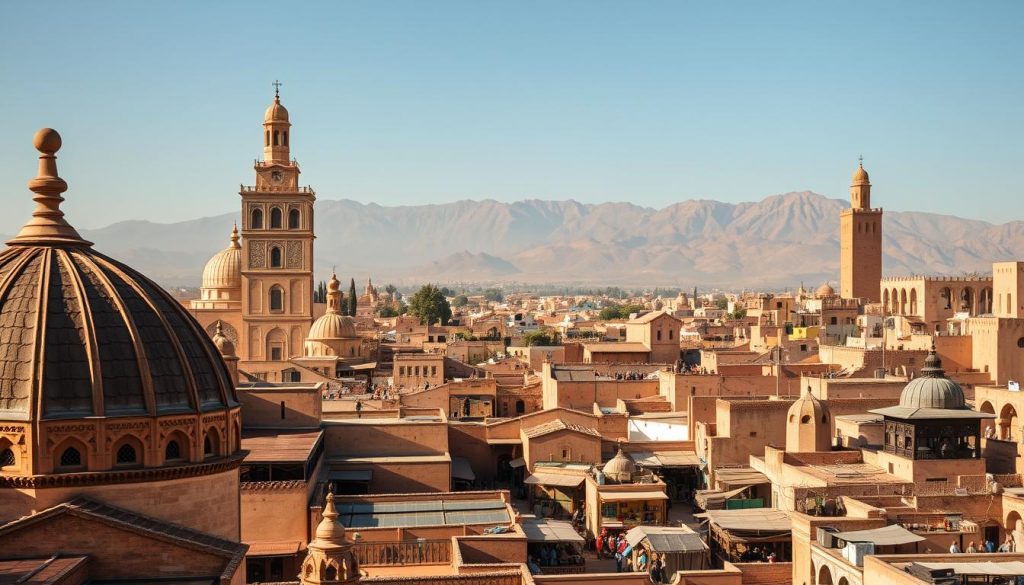
Planning Your Historical Tour
Planning is key to enjoying Fes. First, pick the top historical sites you want to see. The Al-Qarawiyyin Mosque and University is a must-see for its history and design.
Best Times to Visit Historical Sites
The best times to visit are early morning or late afternoon to avoid the sun. Also, visit during cooler months for a more comfortable tour. This way, you can fully enjoy the best historical places in Fes.
Fes el-Bali: Navigating the World’s Largest Car-Free Urban Area
Exploring Fes el-Bali is like stepping into a world without cars. Every alleyway has its own story. You’ll find a maze of narrow streets and souks filled with history and landmarks.
The Ancient Medina’s Layout
Fes el-Bali is full of winding alleys and lively souks. Its layout shows its long history. Different areas are for different crafts and trades.
You can visit places like the Souk el Attarine (Perfume Market) and Souk el Haddadine (Iron Market). Each souk gives a unique look into the city’s culture.
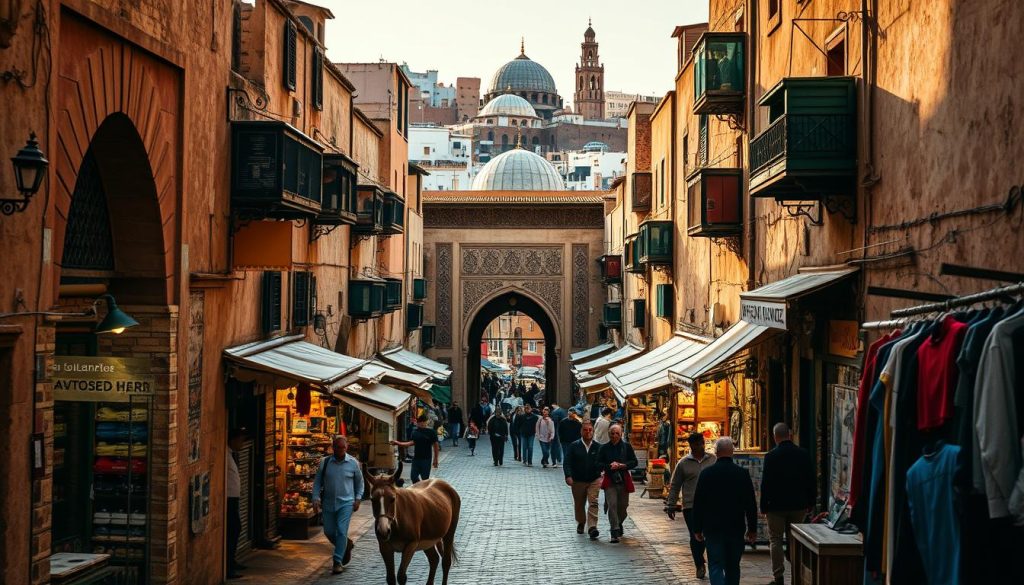
Tips for Exploring the Winding Streets
Here are some tips for visiting Fes el-Bali:
- Wear comfy shoes for walking on uneven paths.
- Carry a map or use a GPS to find your way.
- Be ready for crowds and haggling in the souks.
- Explore different areas to find hidden treasures.
Notable Gates (Babs) of the Medina
The Medina of Fes el-Bali has impressive gates called “Babs.” Some notable ones are:
| Gate Name | Description |
|---|---|
| Bab Mahrouk | A historic gate in the western part of the Medina. |
| Bab Ftouh | The southern entrance to the Medina. |
| Bab Bou Jeloud | The main entrance, known for its beautiful architecture. |
Exploring Fes el-Bali reveals its rich history and culture. Its unique layout, lively souks, and impressive gates make it a key spot for those interested in Fes historical monuments and Fes ancient sites.
The Magnificent Al-Qarawiyyin Mosque and University
Exploring Fes, you’ll find the Al-Qarawiyyin Mosque and University. It’s a key historical site and shows the city’s rich culture.
The World’s Oldest Continuously Operating University
Founded in 859 AD, the Al-Qarawiyyin Mosque and University is the world’s oldest continuously operating university. It has been a place of learning for centuries, drawing scholars from everywhere. Its long history highlights Fes’s role as a knowledge and culture center.
Architectural Highlights and Historical Significance
The Al-Qarawiyyin complex is a stunning example of Islamic architecture. It boasts intricate tile work and carved wood. These features show the area’s rich cultural and religious background.
The Famous Library and Its Ancient Manuscripts
The Al-Qarawiyyin library is famous for its ancient manuscripts. It has rare copies of the Quran and other important texts. The library is a treasure of knowledge, giving us a glimpse into the Islamic world’s intellectual and cultural past.
| Feature | Description | Significance |
|---|---|---|
| Intricate Tile Work | Complex geometric patterns and designs | Reflects Islamic art and architectural excellence |
| Carved Wood | Intricately carved wooden elements | Adds to the aesthetic and historical value |
| Ancient Manuscripts | Rare copies of historical texts | Provides insights into the intellectual history of the Islamic world |
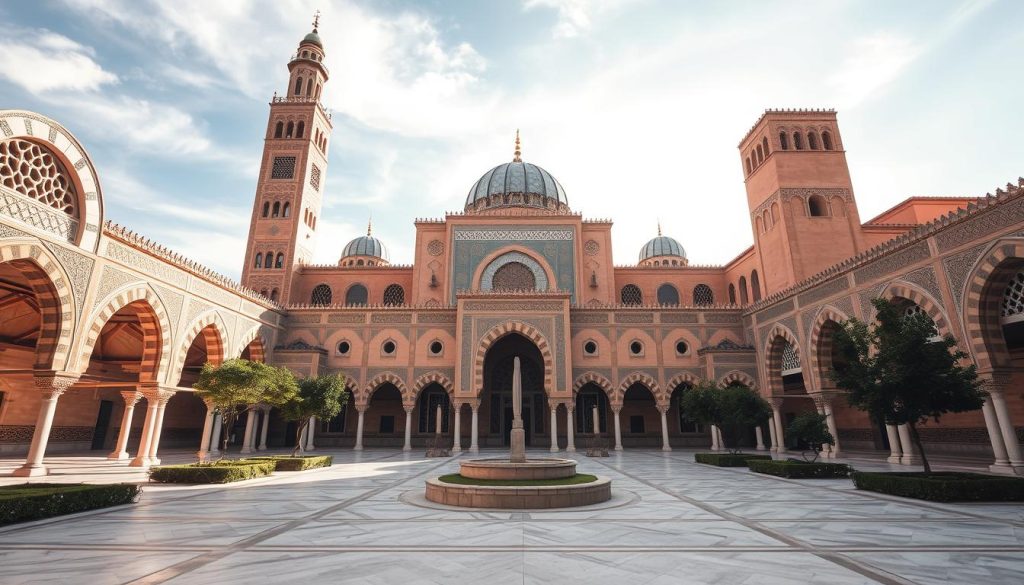
Visiting the Al-Qarawiyyin Mosque and University is a journey through Fes’s history and culture. It’s a Fes historical landmark you can’t miss.
Bou Inania Madrasa: A Masterpiece of Marinid Architecture
Bou Inania Madrasa is a key part of Fes’s rich history. It shows off the best of Marinid architecture. Built in the 14th century, it’s famous for its detailed work and historical importance.
The Intricate Zellige Tilework
The zellige tilework at Bou Inania Madrasa is truly stunning. Its walls and floors are covered in small, colorful tiles. These tiles form intricate patterns, showing off the skill of the Marinid era.
Key features of the zellige tilework include:
- Intricate geometric patterns
- Vibrant color schemes
- Precision craftsmanship
The Madrasa’s Historical Function
Bou Inania Madrasa was a place of learning. It was a religious school where students studied theology and jurisprudence. Its design helped with both education and religious activities.
The Unique Water Clock
The madrasa is also home to an ancient water clock. It shows the cleverness of medieval Islamic engineers. The water clock helped keep time and signal when to pray.
Visiting Bou Inania Madrasa lets you see the architectural and historical beauty of Fes. It’s a must-see among the top Fes historical spots.
Al-Attarine Madrasa: A Gem of Islamic Design
Al-Attarine Madrasa is a stunning example of Islamic design. Its detailed tile work and peaceful courtyard draw visitors from everywhere. It’s one of the best historical places in Fes, showing the city’s deep cultural roots.
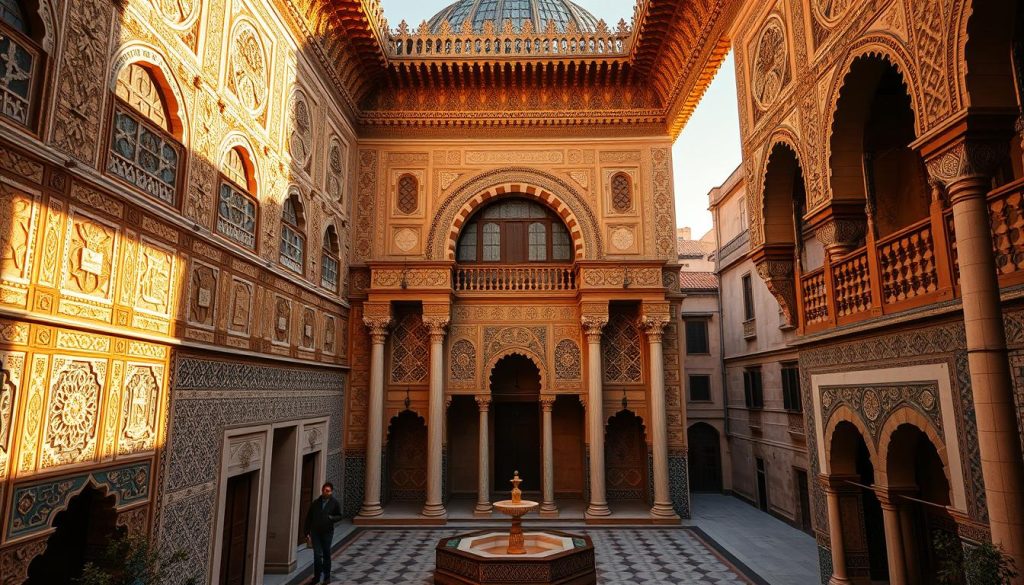
The Courtyard’s Artistic Elements
The courtyard of Al-Attarine Madrasa is a wonder of Islamic art. It boasts beautiful zellij tile work and carved cedar wood. The meticulous craftsmanship is a key part of its design, creating a calm and lovely atmosphere.
- Intricate zellij tile work adorning the walls and floors
- Carved cedar wood used in the construction of the madrasa
- A serene courtyard that provides a peaceful oasis
Historical Context and Significance
Built in the 14th century, Al-Attarine Madrasa has been crucial for Fes’s education and religion. Its importance is clear, making it a top Fes historical attraction for visitors worldwide.
Connection to the Nearby Spice Market
The madrasa’s spot near the lively spice market enhances its appeal. It lets visitors enjoy Fes’s ancient medina’s sights, sounds, and smells. As you explore the madrasa, the spice market’s vibrant colors and scents add to your experience.
Seeing Al-Attarine Madrasa is a rewarding journey into Fes’s history and culture. Walking through its lovely courtyard and admiring its tile work deepens your understanding of the city’s historical significance.
The Famous Chouara Tanneries: Living History in Action
As you explore Fes, you’ll find the Chouara Tanneries. It’s a living example of traditional craftsmanship. This historic site is a key part of Fes’s rich cultural heritage.
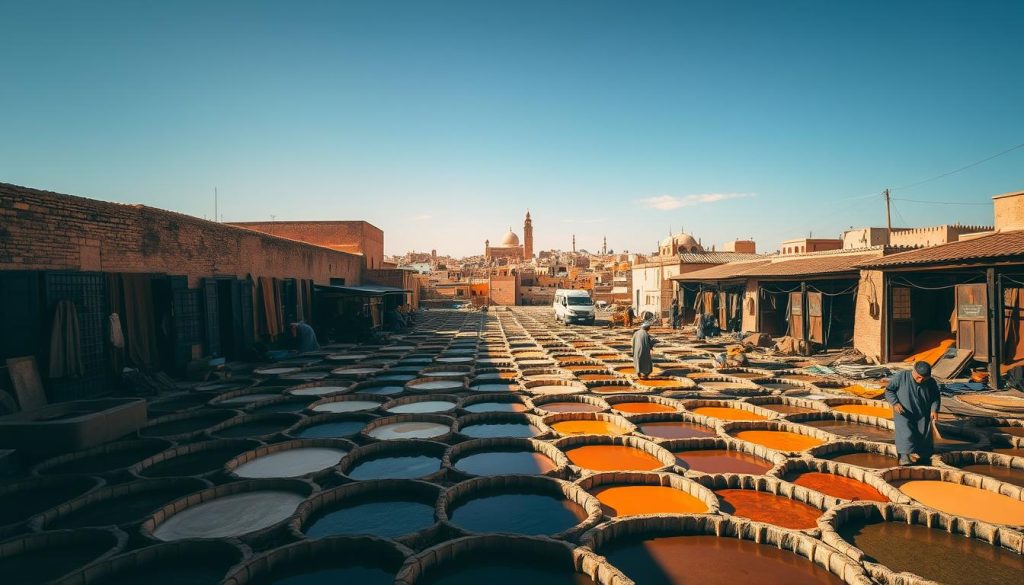
The Ancient Leather-Making Process
The Chouara Tanneries are famous for their leather-making. Artisans use old techniques to make high-quality leather goods. The process includes soaking, liming, tanning, and finishing, done with great care.
Best Viewpoints and Visiting Tips
For the best views, visit the viewpoints around the tanneries. These spots are great for photos. Don’t forget a scarf or mask for the smells. Visit early to avoid the crowds.
The Cultural Importance of Leather Crafts in Fes
Leather crafts are vital to Fes’s economy and culture. The tanneries, like Chouara, are tourist attractions that keep traditional crafts alive. By supporting local artisans, visitors help preserve this ancient craft and Fes’s cultural heritage.
Dar Batha Museum: Moroccan Arts and Crafts Through the Ages
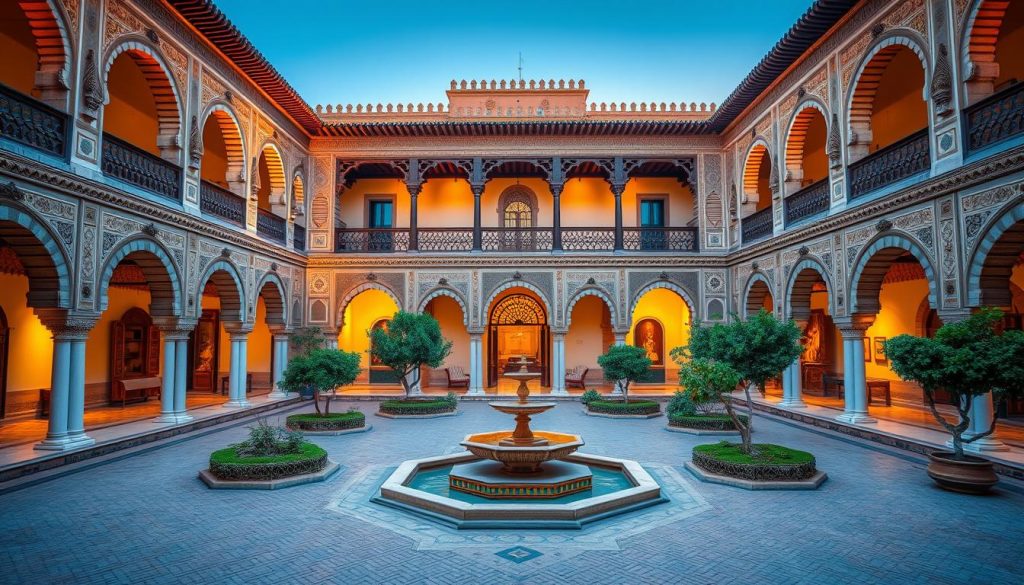
The Dar Batha Museum is in a former royal palace. It shows the traditional arts and crafts of Morocco. You’ll see beautiful ceramics, intricate textiles, and stunning woodwork.
The Collection Highlights
The museum’s collection shows Fes and Morocco’s rich culture. You’ll see delicate ceramics and intricate textiles. Each piece shows the skill of Moroccan artisans.
The Former Royal Palace Building
Dar Batha Museum is known for its collection and architecture. The building is a masterpiece of Moroccan craftsmanship. It has beautiful tile work and traditional design.
Notable Ceramic and Textile Exhibits
| Exhibit | Description | Century |
|---|---|---|
| Ceramic Tiles | Intricately designed tiles showcasing traditional Moroccan patterns | 19th |
| Textile Collection | A variety of woven fabrics, including traditional Berber textiles | 20th |
Visiting the Dar Batha Museum lets you understand Fes’s history and culture. It’s a must-see spot in Fes.
The Mellah: Fes’s Historic Jewish Quarter
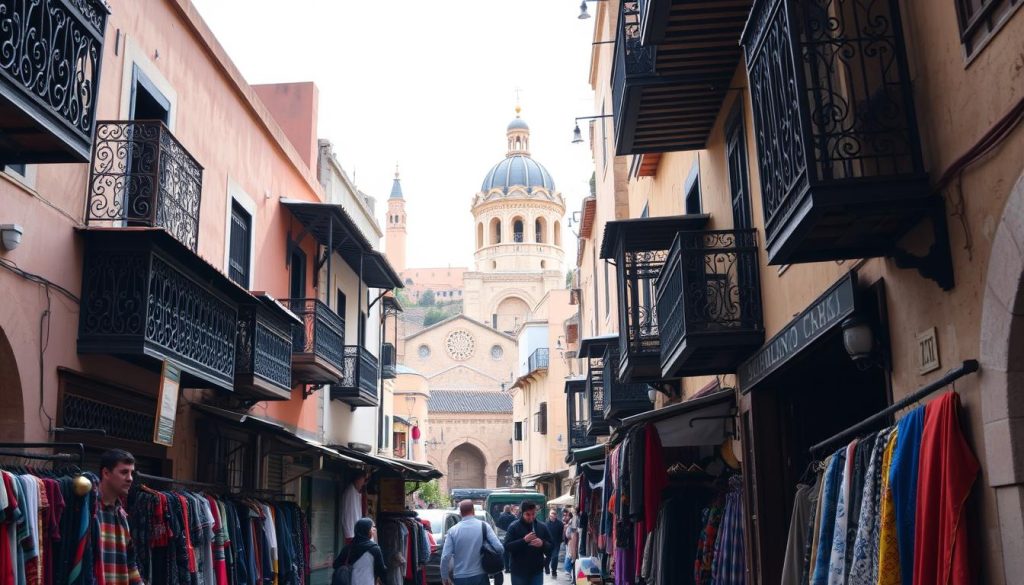
As you explore Fes’s ancient streets, you’ll find the Mellah. It’s a historic Jewish quarter that shows the city’s rich culture. This area is filled with landmarks that tell the city’s diverse story.
The Ibn Danan Synagogue
The Ibn Danan Synagogue is a key spot in the Mellah. It’s from the 17th century and is a beautiful example of old craftsmanship. Walking through, you’ll see the detailed work and feel the calm atmosphere.
The Jewish Cemetery and Cultural Heritage
The Jewish Cemetery in the Mellah is also worth seeing. It gives a glimpse into Fes’s Jewish community and their role in the city’s culture. It’s a place for reflection and learning about Fes’s Jewish history.
The Multicultural History of Fes
Fes has been shaped by many cultures, including Islamic, Jewish, and Christian. The Mellah shows this diversity, where different groups have lived together. Exploring the Mellah helps you understand how these cultures have shaped Fes’s architecture, food, and traditions.
The Mellah is more than just history; it’s a lively part of Fes’s culture. Visiting here lets you see the city’s diverse heritage up close. It shows the importance of this special neighborhood.
The Royal Palace of Fes (Dar el-Makhzen)
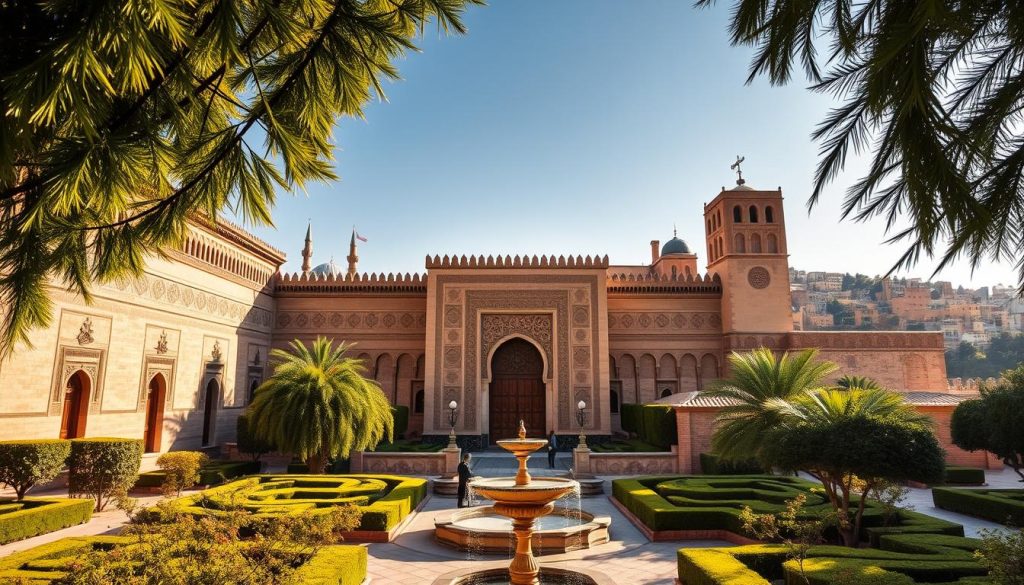
The Royal Palace of Fes, known as Dar el-Makhzen, is a stunning complex. It shows the city’s deep history. As the King of Morocco’s official home, it stands for Morocco’s rich past and royal traditions.
The Magnificent Seven Bronze Gates
The palace is famous for its seven bronze gates. These gates show off Moroccan artisans’ skill. They mark the palace’s grand entrance and the royal institution’s majesty.
The Palace’s Role in Moroccan History
Dar el-Makhzen has been key in Moroccan history. It’s not just a royal home but also a hub for governance and administration. Over the years, it has seen many events that shaped Moroccan politics and culture.
Surrounding Gardens and Architecture
The palace is surrounded by lovely gardens. These gardens add to the palace’s calm atmosphere. The palace’s architecture, with its detailed designs and grand structures, showcases Morocco’s rich cultural heritage. It’s a top historical site in Fes.
Visiting the Royal Palace of Fes gives a special look into Morocco’s history and royal customs. As you wander through the palace and its gardens, you’ll learn more about Fes’s historical importance and its place among Fes’s historical landmarks.
Practical Information for Visiting Fes’s Historical Sites
To get the most out of your trip to Fes, knowing the cultural rules and tips is key. These insights will make your visit better and show respect for the local culture.
Cultural Etiquette and Dress Codes
When you’re at Fes’s historical sites, it’s important to dress modestly. Cover your shoulders and knees as a sign of respect. Also, remember to remove your shoes before entering some buildings.
- Dress conservatively to avoid offending local sensibilities.
- Remove your shoes when required.
- Avoid public displays of affection.
Guided Tours vs. Independent Exploration
You can pick between guided tours and exploring on your own. Guided tours give you deep insights into the sites’ history. Exploring by yourself lets you set your own pace.
Photography Tips and Restrictions
Be respectful when taking photos. Some places, like mosques, might not allow pictures. Always check before you snap.
By being informed and respectful, your visit to Fes’s historical sites will be more rewarding.
Conclusion: Experiencing the Living History of Fes
Exploring Fes’ historical spots feels like walking through ancient streets. For centuries, Fes has been a center of culture and history. Sites like the Al-Qarawiyyin Mosque and University, Bou Inania Madrasa, and the Chouara Tanneries show its rich heritage.
Visiting Fes is like going back in time. Its architecture, souks, and landmarks are well-preserved. You can dive into local culture by exploring Fes el-Bali’s narrow streets. Here, you’ll find sights, sounds, and smells that are truly fascinating.
Whether you love history, culture, or just exploring, Fes has something for you. So, come and see Fes’ living history for yourself. Discover why it’s one of the most captivating cities in the world.