Explore Marine Life Snorkeling in Grace Bay
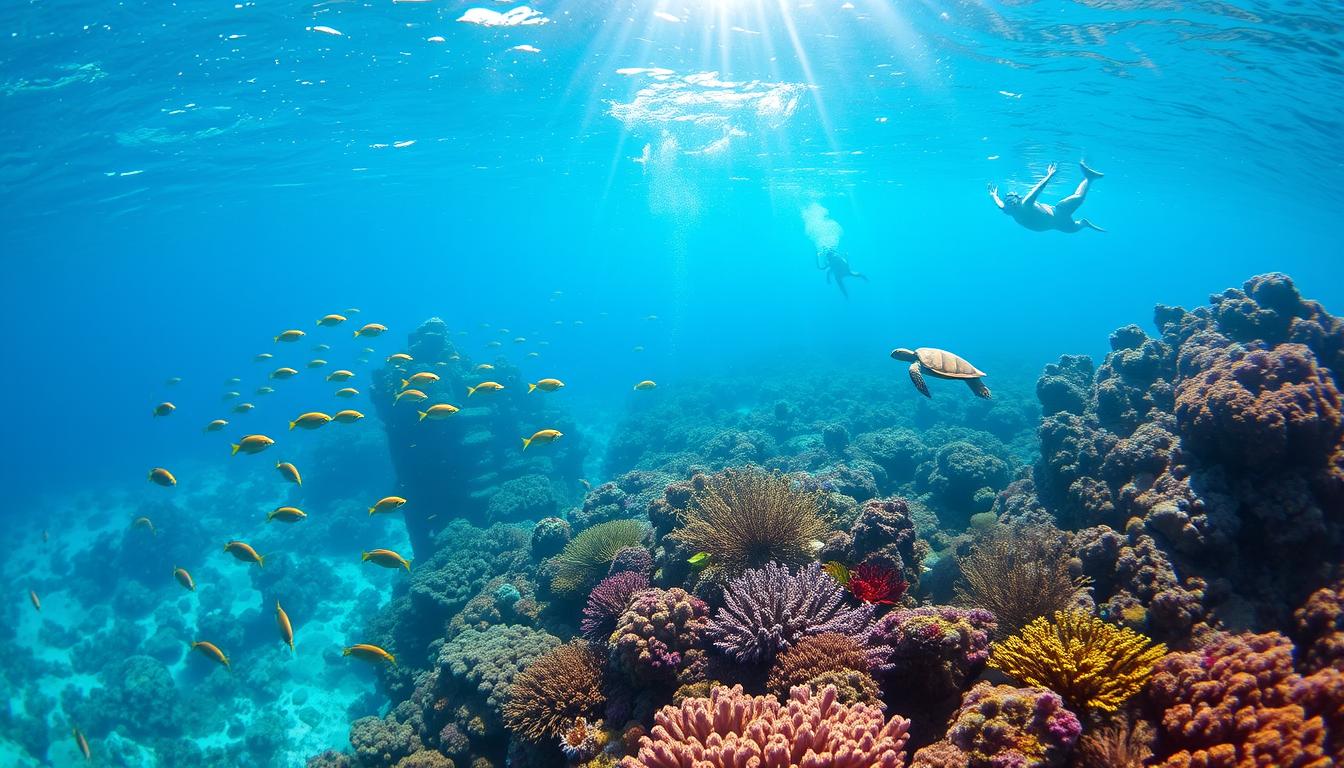
Have you ever wondered what lies beneath the mesmerizing surface of Grace Bay’s crystal-clear waters? Imagine the thrill of swimming alongside vibrant coral reefs. You’ll encounter a kaleidoscope of *marine life in Grace Bay*. This popular snorkeling destination, located in Providenciales, is a paradise for underwater explorers.
It offers a unique opportunity to witness stunning ecosystems and countless aquatic species up close. As you prepare to embark on this unforgettable snorkeling adventure, let this guide illuminate the best spots and incredible experiences awaiting you in Grace Bay.
Introduction to Grace Bay’s Marine Life
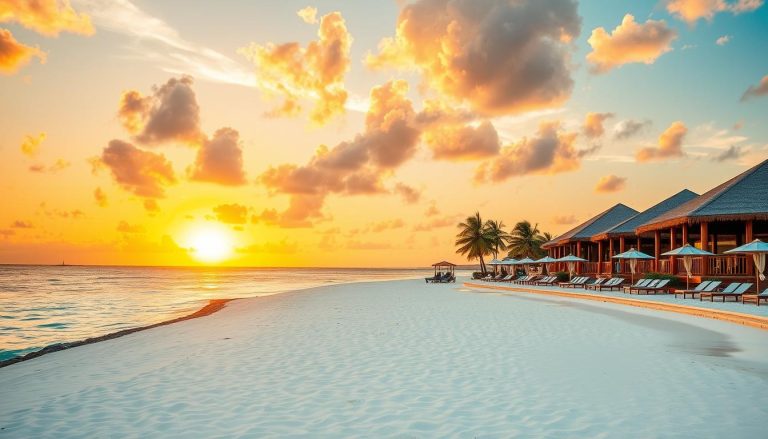
Grace Bay is famous for its beauty and awards. It’s not just a pretty beach. It’s home to a rich variety of marine life, thanks to its coral reefs and ocean conditions.
The tropical weather and warm waters make it perfect for marine life. You can see the colorful creatures that live here. It’s a great spot for snorkeling and exploring the ocean.
There are many places to stay near the bay. Resorts along the beach make it easy to get to the underwater world. It’s a great place for both new and experienced snorkelers.
Best Snorkeling Spots in Grace Bay
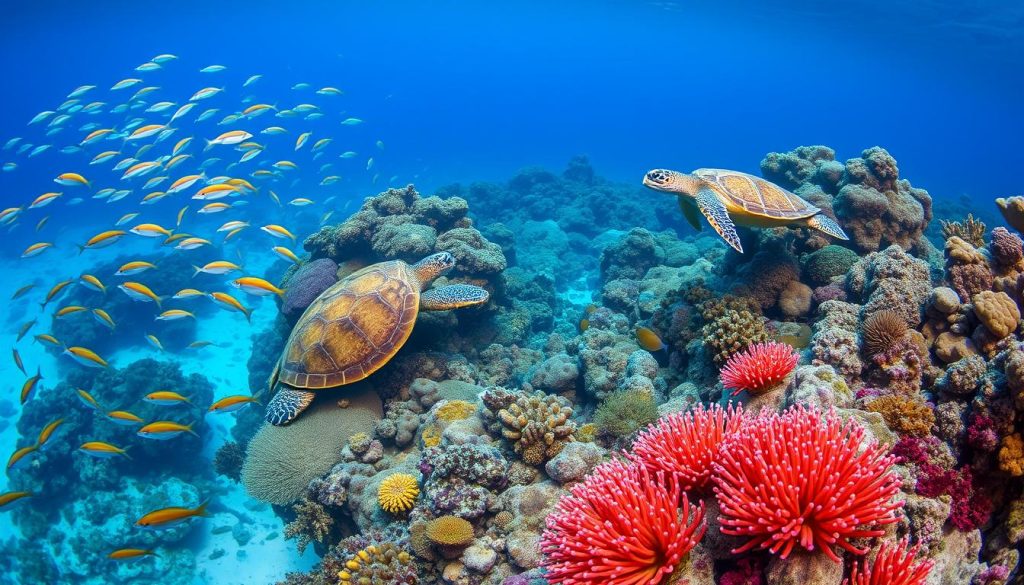
Grace Bay has many beautiful snorkeling spots for everyone. You can find clear waters, colorful coral reefs, and lots of marine life. Places like The Bight Reef, Smith’s Reef, and others along the shore are favorites.
The Bight Reef at Coral Gardens is in Princess Alexandra National Park. It stretches almost 400 feet into the sea. Depths range from 15-20 feet, perfect for shore snorkeling.
Smith’s Reef, near Turtle Cove marina, is famous for its colorful fish. You can snorkel from the shore here and see the beauty of Grace Bay underwater.
The Northwest Point Beaches in Provo offer a quiet snorkeling spot. Here, you can see sharks and rays. Long Bay Beach has a unique wreck to explore, the La Famille Express.
Little Water Cay, or “Iguana Island,” is great for spotting stingrays and lemon sharks. Salt Cay lets you swim with humpback whales from December to April. Gibbs Cay is known as “Stingray City” for its friendly stingrays.
Taylor Bay Beach and Sapodilla Bay Beach are perfect for families. They offer easy snorkeling with barracudas and bonefish. Long Cay off South Caicos is famous for sea turtles, eagle rays, and rock iguanas.
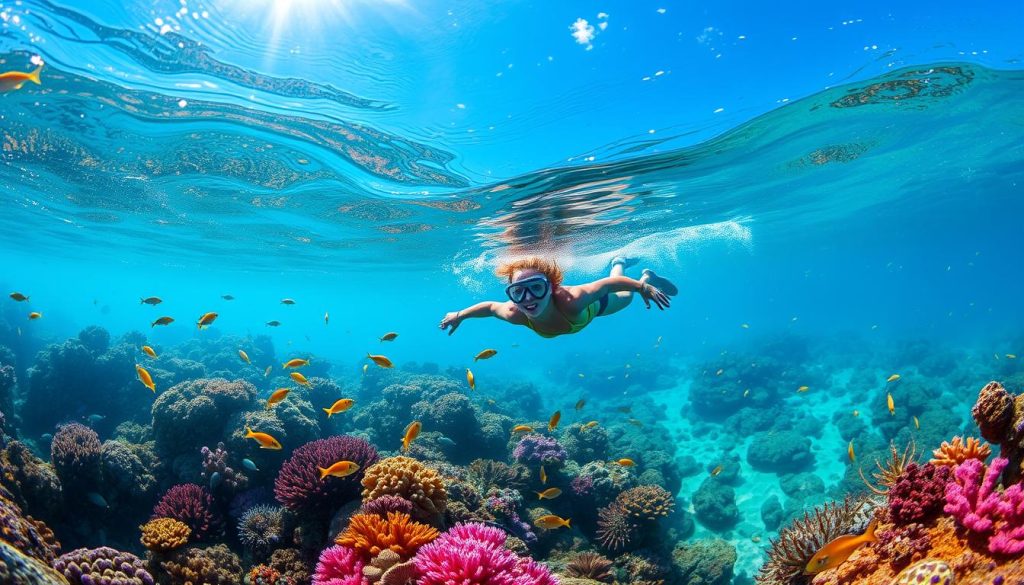
In summary, Grace Bay snorkeling spots are unforgettable. Whether you snorkel from shore or explore further, you’ll see amazing marine life and coral reefs. It’s a top spot for snorkelers of all ages.
The Bight Reef: A Marine Wonderland
The Bight Reef is famous for its beautiful underwater views and lots of snorkeling marine life. It’s known as Coral Gardens and is great for families and beginners. Just a short swim from Grace Bay, it lets you explore colorful coral and clear waters.
What to Expect at the Bight Reef
At the Bight Reef, get ready for an amazing adventure. As soon as you dive in, you’ll see a lively underwater world. Its calm waters are perfect for everyone, from beginners to experts.
Expect to see stunning coral and many marine animals swimming around you. Snorkeling here means getting up close to its vibrant ecosystem.
Common Marine Species at This Location
The Bight Reef is full of different species, making each snorkeling trip special. You might see:
- Eagle rays gliding through the water
- Green turtles eating sea grass
- Many colorful fish, like parrotfish, angelfish, and trumpetfish
These animals, along with corals and gorgonians, make a beautiful setting for photos and exploration. It’s a great place to see the ocean’s natural beauty.
Smith’s Reef: Seclusion and Vibrant Life
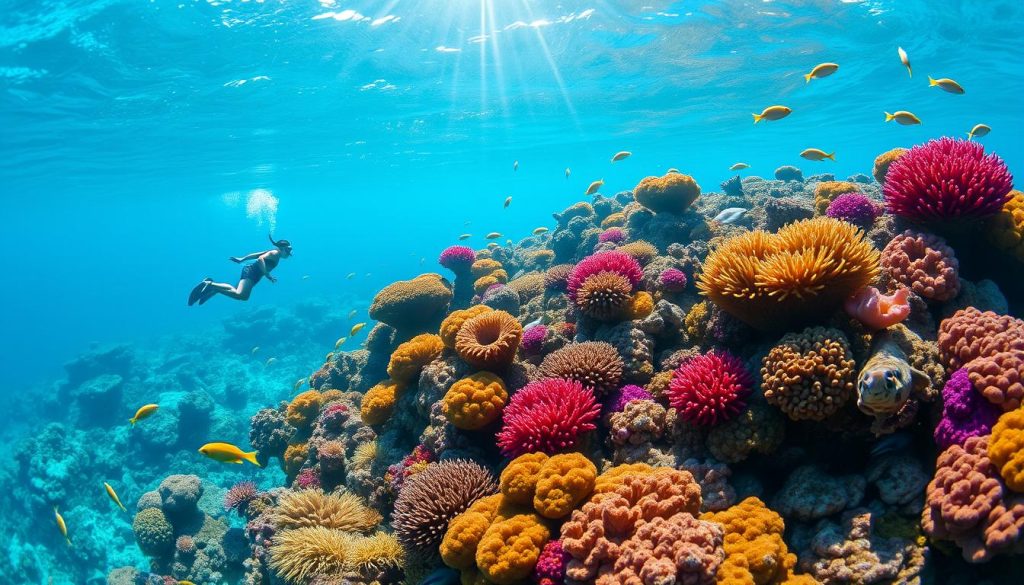
Smith’s Reef is in the Turtle Cove area, a peaceful spot for snorkeling. It’s away from the crowds and has easy beach access. The underwater world is full of life, with coral and seagrass beds that support many marine species.
Accessible Points for Snorkeling
Smith’s Reef has three public beach spots for easy access. Each spot offers a different view of the reef. As you get closer to shore, the water is calm and clear, perfect for snorkeling.
Animals You Might Encounter
Snorkeling at Smith’s Reef lets you see many marine animals. The clear waters are home to:
- Spiny lobsters
- Southern brown stingrays
- Eagle rays
- Various reef fish like barracudas and parrotfish
- Green and hawksbill turtles
Its quiet setting means you might have close encounters with these creatures. Nighttime snorkeling is also exciting, with squid and octopuses sometimes appearing.
Exploring the Grace Bay Reefs
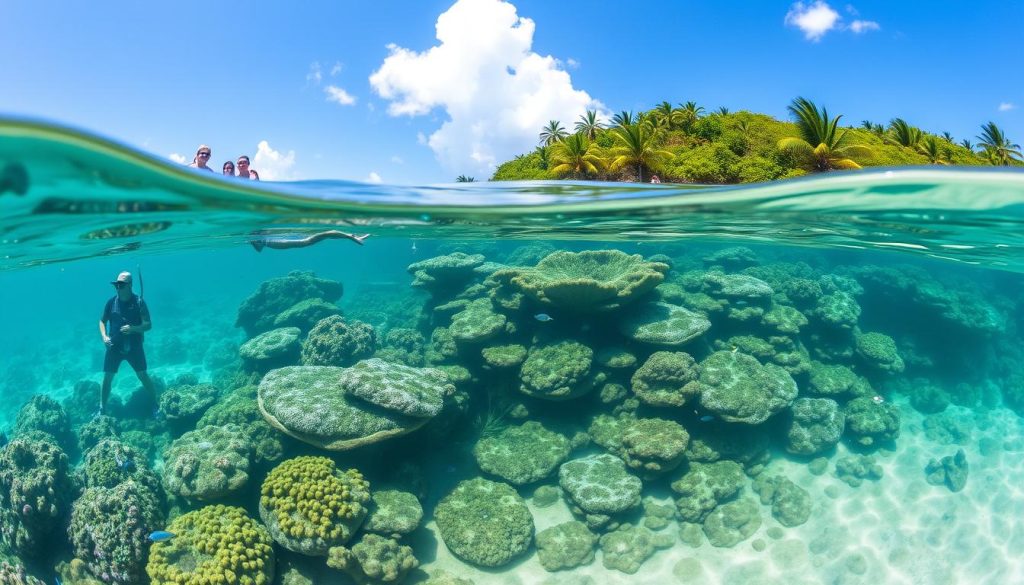
The Grace Bay reefs offer an amazing snorkeling experience. You’ll see stunning coral heads and vibrant marine life. These reefs are close to shore, making them perfect for snorkeling.
Overview of the Coral Heads
Grace Bay is famous for its coral heads. These colorful formations are home to many sea creatures. The coral heads are between the beach and the barrier reef, ideal for snorkeling.
The clear waters around the reefs let you see everything clearly. This makes the underwater world even more beautiful.
Fish Species Commonly Seen in This Area
While snorkeling in Grace Bay, you’ll see many fish species. Some common ones are:
- Blue tangs
- Wrasses
- Black durgons
- Parrot fish
- Eagle rays
- Sea turtles
The variety of marine life shows the reef’s health. This makes Grace Bay a top snorkeling spot. Always remember to respect the reef and wear reef-safe sunscreen.
What Marine Life Can Be Seen While Snorkeling in Grace Bay?
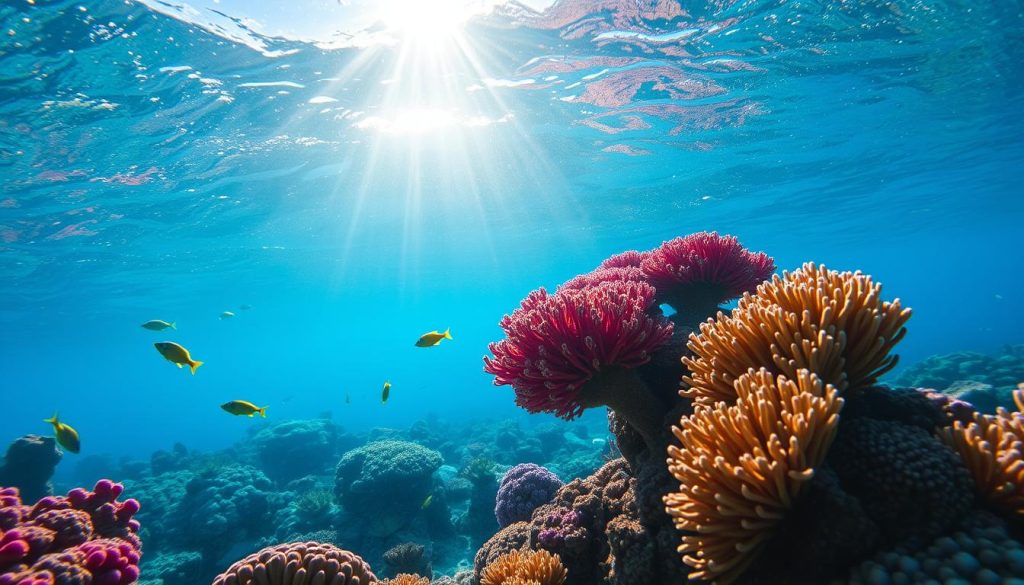
Snorkeling in Grace Bay is an exciting adventure. You’ll see a wide variety of marine life. From coral reefs to sandy bottoms, there’s a lot to discover. Whether you’re new to snorkeling or have done it before, you’ll find something fascinating.
Highlights of Marine Biodiversity
As you dive into the water, notice the different habitats. These support many species. Here are some highlights:
- Coral Reefs: The Bight Reef is home to beautiful corals, more on the deeper eastern side.
- Turtles: Hawksbill turtles are common here, swimming smoothly through the water.
- Rays: Seeing southern brown stingrays and spotted eagle rays is thrilling.
- Fish Populations: You’ll see parrotfish, grouper, and other colorful fish in schools.
- Other Marine Life: Look for Caribbean spiny lobsters, banded coral shrimp, and moray eels.
Unique Underwater Species to Look For
Grace Bay is also home to unique species. These make each snorkeling trip special. Keep an eye out for:
- Sharks: Nurse sharks and Caribbean reef sharks are often seen, with rare sightings of others.
- Squid and Octopus: These hide well, making them exciting to find for those who look closely.
- Bottlenose Dolphins: You might see dolphins playing in the water near your boat.
- Burrowers: Look for yellowhead jawfish, blennies, and gobies in the sandy shallows.

The Barrier Reef Advantages
The Grace Bay barrier reef is key to the marine life of the Turks and Caicos Islands. It’s the third largest barrier reef globally and boosts the area’s biodiversity. It’s a home for many sea creatures and a perfect spot for snorkeling and diving because of its calm waters.
Significance of the Barrier Reef in Grace Bay
This coral reef system is full of benefits, supporting many marine life forms and protecting against big waves. The underwater landscape of the Turks and Caicos Islands is breathtaking, attracting visitors for its snorkeling. They get to see the amazing marine life up close.
Popular Species Found Near the Barrier Reef
Snorkelers near the vibrant coral reefs of Grace Bay can see many marine species. You might see:
- Colorful reef fish like parrotfish and angelfish
- Graceful eagle rays swimming by
- Occasionally, bigger fish like barracudas and nurse sharks
- Beautiful sea turtles moving through the reefs
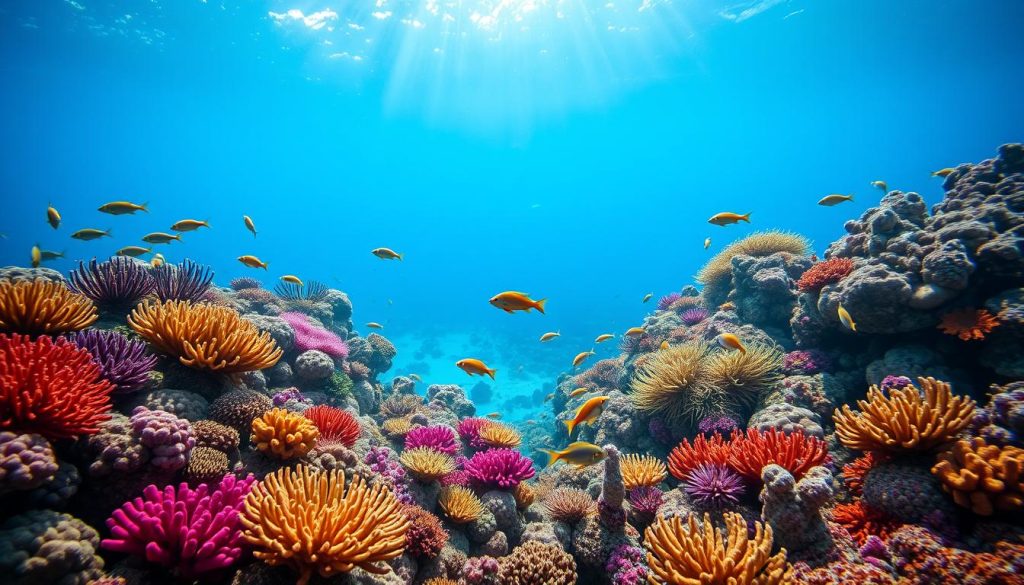
The coral reefs offer a safe place for smaller fish and crustaceans. This creates a rich and diverse underwater world. Visitors are amazed by the marine life and the reefs’ role in keeping our oceans healthy.
Marine Biodiversity in Grace Bay
Marine biodiversity in Grace Bay shows how different species work together. This highlights the value of marine life interactions. The area is full of life, from colorful coral to many fish species. These all live together, keeping the marine environment healthy.
How Ecosystems Interact
The relationships in these ecosystems are complex but vital. Fish like parrotfish help by eating on coral reefs. This keeps the reefs healthy and growing. Sharks also play a part by controlling the numbers of smaller fish.
This balance helps all species in the marine environment to thrive. It lets them live and grow together.
Health of the Marine Environment
Keeping the marine environment healthy is key for Grace Bay’s aquatic life. Efforts are made to protect coral reefs and support marine biodiversity. Visitors should snorkel responsibly to avoid harming these delicate places.
Learning about marine life interactions helps in preserving these ecosystems. It ensures a future where all marine species can continue to thrive.
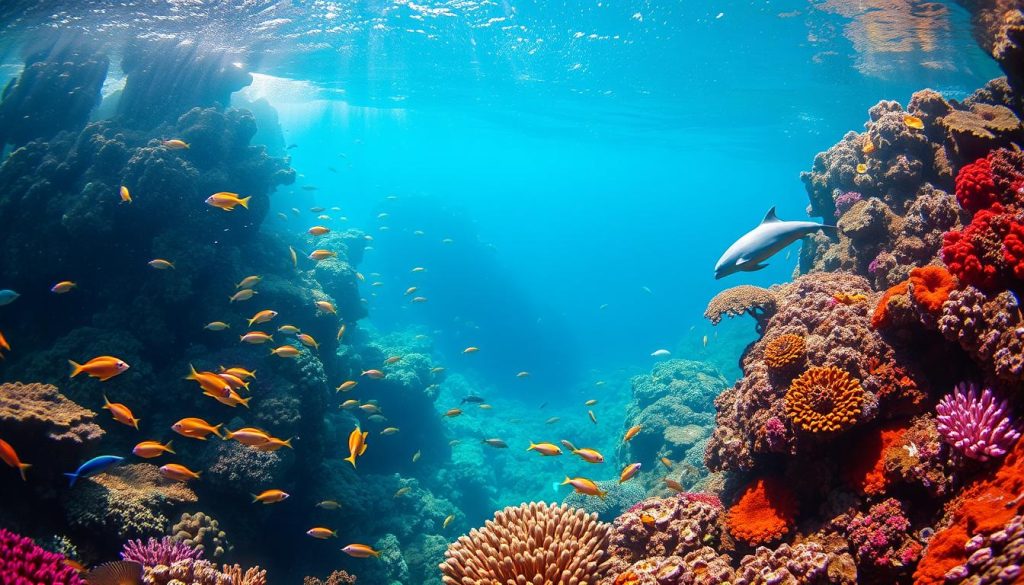
What to Bring for Your Snorkeling Adventure
Getting ready for snorkeling in Grace Bay means packing the right gear. You’ll need a mask, snorkel, fins, and maybe a wetsuit. Many resorts rent out equipment, but having your own can be more comfortable and fit better.
The clear, warm waters of the Turks and Caicos Islands are stunning. With over 230 miles of coral reef, there’s a lot to see underwater.
Essential Gear for Snorkelers
Along with basic snorkeling gear, don’t forget sun-protective clothes and reef-safe sunscreen. A waterproof camera and a reusable water bottle are also good to have. Places like Bight Reef and Smith’s Reef are great for beginners because of their calm waters and colorful sea life.
Safety Tips for New Snorkelers
Always prioritize safety when snorkeling. Stay near the shore and avoid swimming against strong currents. Snorkeling with a buddy is safer too.
Knowing the local marine life makes your snorkeling trip better and helps protect it. Wear a life jacket if you’re not a strong swimmer. Learn about snorkeling spots to explore safely in this amazing underwater world.