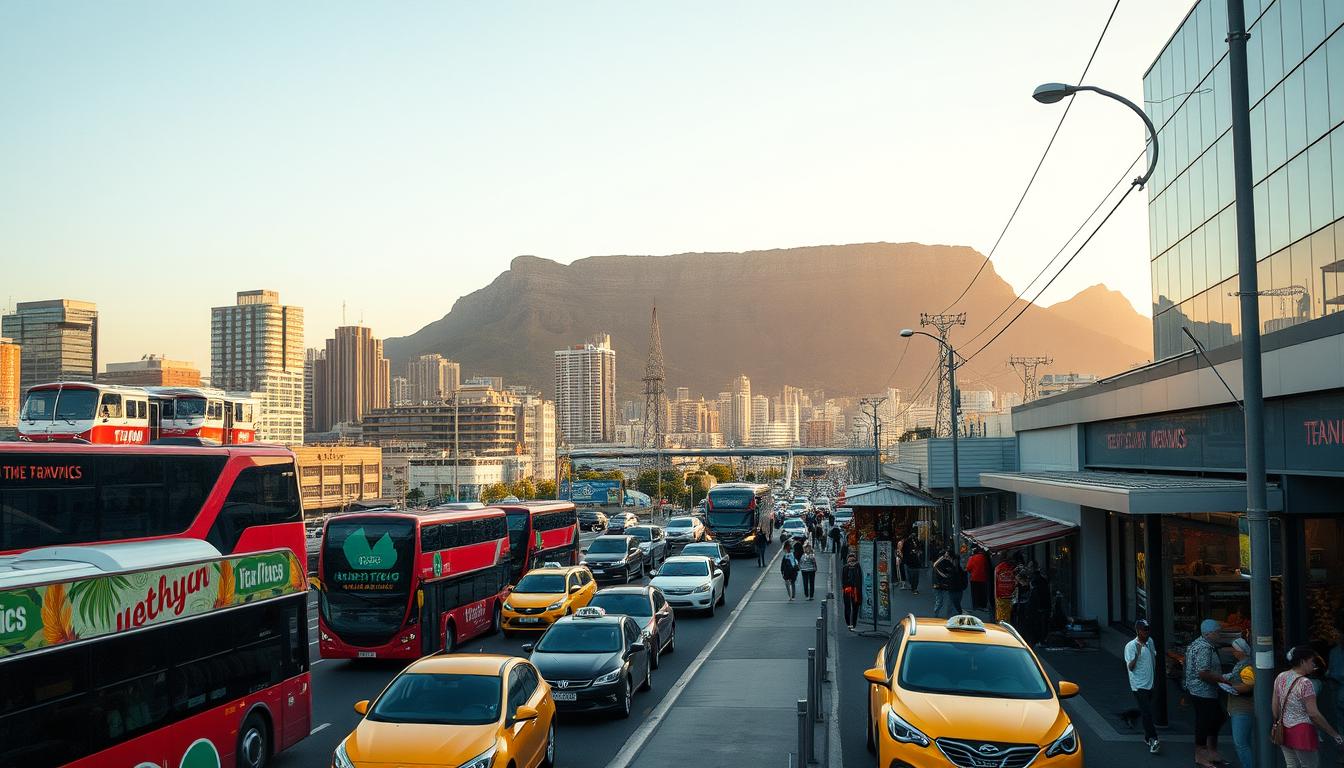
Explore Cape Town: Your Guide to Getting Around
Are you ready to explore one of South Africa’s most vibrant cities? Cape Town is full of cultural experiences, stunning landscapes, and unforgettable adventures. But, have you thought about how you’ll get around this beautiful city?
Knowing your Cape Town travel options is key to enjoying your trip. Uber is a favorite among travelers for getting around. It’s affordable and convenient, with attractions not too far apart.
Our guide will give you getting around Cape Town tips and insights into the city’s transport. This will help you prepare for an amazing time in Cape Town.
Cape Town’s Transportation Landscape
To get around Cape Town well, you need to know the city’s transport scene. It’s a big city with many ways to travel. Understanding this helps you move around easily.
Geography and Its Impact on Transportation
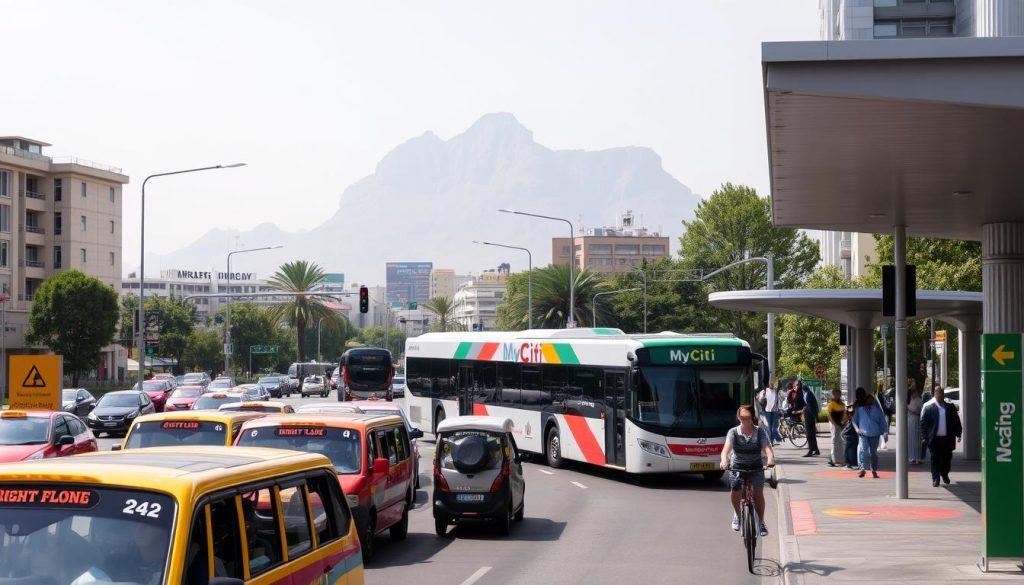
Cape Town’s shape affects how people get around. The city stretches out with suburbs and a central area. Knowing the layout helps pick the best transport. The mountains can cause traffic jams in some spots.
Also, the city’s shape limits some transport types. Some places have few buses because they’re far away.
Peak Hours and Traffic Patterns
Cape Town has busy times that slow down traffic. These busy times are usually morning and late afternoon on weekdays. Knowing these times helps you avoid traffic and save time.
- Morning peak: 7:00 AM – 9:00 AM
- Afternoon peak: 4:00 PM – 6:00 PM
Seasonal Considerations for Transportation
Seasons also change how people travel in Cape Town. Tourist season brings more traffic. Planning and using different transport can help. Public transport or ridesharing is better during busy times.
What is the Best Way to Get Around Cape Town?
Cape Town has many ways to get around, but the best one depends on your plans and budget. Knowing your options helps you move around the city easily.
Comparing Transportation Options
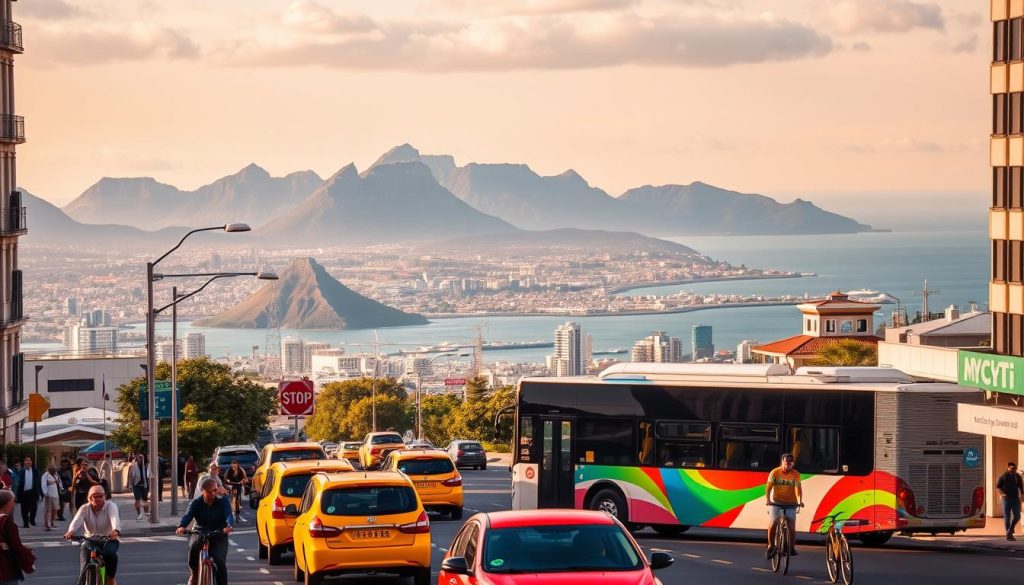
Cape Town has public transport, ridesharing, and car rentals. Think about cost, ease, and where you want to go when choosing.
- Public Transportation: MyCiTi buses and Metrorail trains are cheap and good for getting around.
- Ridesharing Services: Uber and Bolt are handy and flexible.
- Car Rentals: Great for those who like to drive, giving you freedom to explore.
Choosing Based on Your Itinerary
Choose transport that fits your travel plans. For city center trips, public transport or walking works well. Rent a car for more freedom or to see the outskirts. Ridesharing is perfect for short trips or when you value ease.
Transportation Costs and Budgeting
It’s important to know the costs of each transport type for budgeting. Public transport is the cheapest, with a MyCiTi bus ride costing $1-$2. Uber rides in the city cost $5-$15. Car rentals start at $20-$50 a day, plus fuel.
By thinking about these points, you can pick the best transport for your budget and needs. This makes your trip to Cape Town smooth and fun.
Public Transportation in Cape Town
Cape Town has a wide range of public transport options. You can pick the one that fits your needs and budget best.
MyCiTi Bus System
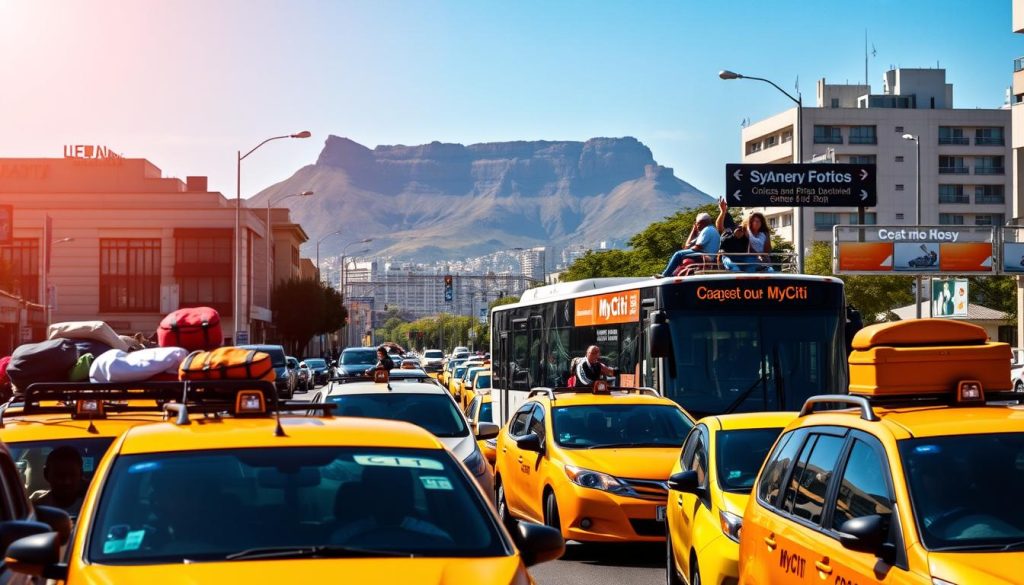
The MyCiTi Bus System is modern and efficient. It has set bus stops and schedules for a reliable ride.
Routes and Schedules
MyCiTi buses cover many routes in the city. You can find schedules online or at stops to plan your trip.
MyConnect Card and Fares
To ride MyCiTi, get a MyConnect card. It’s easy to top up and use for fares. You get discounts for regular travel.
The City of Cape Town says, “The MyCiTi service is efficient, reliable, and safe. It’s great for locals and tourists.”
Metrorail Trains
Metrorail trains are another good choice. They link the city center to suburbs, perfect for daily trips.
Trains run on a set schedule. Check the latest times online or at stations.
Golden Arrow Buses
Golden Arrow Buses cover more areas than MyCiTi. They offer a reliable and affordable ride.
Accessibility on Public Transport
Cape Town’s transport is accessible for all, including those with disabilities. Many vehicles have wheelchair ramps and special seats.
“Accessibility is a key consideration in the design and operation of Cape Town’s public transportation system, ensuring that everyone can travel safely and comfortably.”
Knowing your options makes traveling in Cape Town easy and confident.
Ridesharing and Taxi Services
Ridesharing and taxi services make traveling in Cape Town easy. You can pick the best option for your needs and budget.
Uber and Bolt
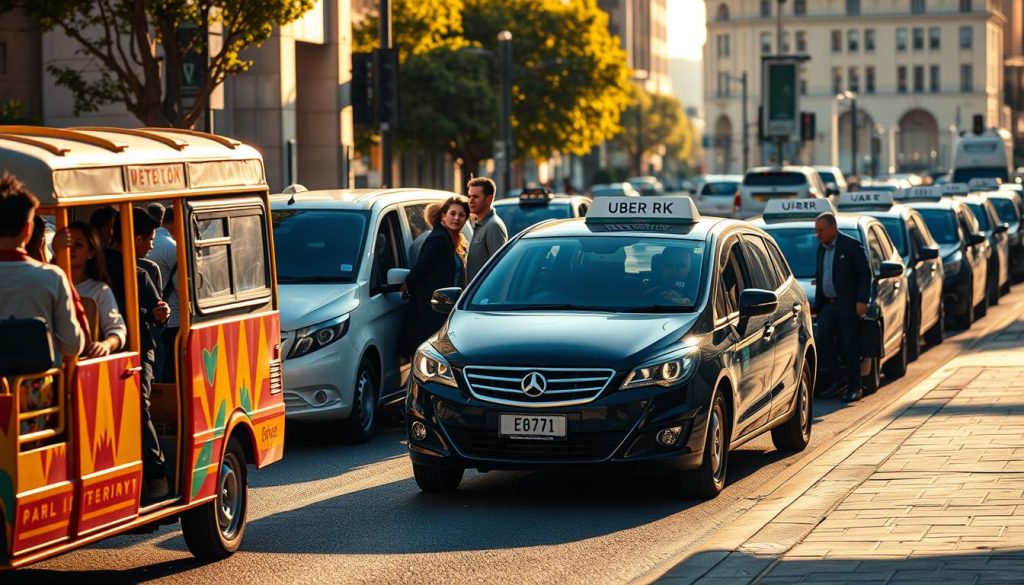
Uber and Bolt are big names in Cape Town’s ridesharing scene. They offer a cheap and easy way to move around. You can book a ride, see where your driver is, and pay with your phone. Uber has lots of services, like UberX and UberBlack. Bolt is known for being the cheapest.
Metered Taxis
Metered taxis are another choice for getting around. You can find them on the street or book ahead. Make sure the taxi’s meter is working to avoid high costs. Some taxi services in Cape Town have apps for easier booking.
Minibus Taxis: The Local Experience
Minibus taxis give you a real taste of Cape Town’s culture. They follow set routes and stop at specific places. They might not be the most comfortable, but they let you see the city like a local.
Safety Tips for Using Taxis and Rideshares
Always check the driver’s ID and license before getting in. Stick to trusted services and apps. Also, tell someone about your trip for safety.
| Service | Cost | Convenience |
|---|---|---|
| Uber | Moderate | High |
| Bolt | Competitive | High |
| Metered Taxis | Variable | Medium |
| Minibus Taxis | Low | Low |
Renting a Car in Cape Town
Visiting Table Mountain or exploring coastal routes? Renting a car is a great choice. It lets you make your own travel plans, focusing on what you love.

When to Consider Car Rental
Car rental is best for seeing places outside the city center. It’s also good for groups or if you like setting your own pace.
Consider car rental if:
- You plan to explore beyond Cape Town.
- You’re traveling with a group or have a lot of luggage.
- You prefer the flexibility to create your own schedule.
Driving Rules and Regulations
In Cape Town, drive on the left side. Make sure you’re okay with this if it’s different for you. Also, know the local traffic laws and signs.
Key driving rules to remember:
- Speed limits are 60 km/h in cities and 120 km/h on highways.
- Everyone must wear a seatbelt.
- Driving with a mobile phone is banned unless it’s hands-free.
Parking in Cape Town
Parking in Cape Town can be tough, mainly in busy spots. Be ready to pay for parking and follow signs.
Tips for parking:
- Find designated parking lots or garages.
- Know about parking rules and costs.
- Always lock your car and hide valuables.
Fuel Costs and Road Tolls
Fuel prices change, so budget for them. Some roads, like highways, have tolls. Have cash or a payment method ready for tolls.
Budgeting tips:
- Check fuel prices before you go.
- Think about toll costs when planning your trip.
- Choose fuel-efficient cars for rental.
Walking and Cycling Around Cape Town
Cape Town is perfect for exploring on foot or by bike. Its stunning views and mild weather make it ideal. You can see the city’s natural beauty, vibrant culture, and diverse neighborhoods at your own pace.

Walkable Neighborhoods
Cape Town has many neighborhoods great for walking. The City Center and V&A Waterfront are lively with attractions, restaurants, and shops. You can walk along the waterfront, visit the Two Oceans Aquarium, or explore Bo-Kaap’s colorful houses and cobblestone streets.
Clifton and Camps Bay are trendy with boutiques and cafes. The Atlantic Seaboard has scenic paths. These areas show you Cape Town’s lifestyle and culture.
Bike Rental Options
For cycling, Cape Town offers many bike rental services. You can find mountain bikes, hybrid bikes, and electric bikes. Rental shops are near tourist spots, making it easy to pick up and drop off your bike.
Some rental companies offer guided tours. These tours are a great way to see the city’s scenic routes and learn about its history and landmarks.
Popular Cycling Routes
Cape Town has cycling routes for all levels. The Atlantic Seaboard offers beautiful ocean views and stops. Cycling to the top of Table Mountain is challenging but rewarding.
For a relaxed ride, try the Cape Flats or Southern Suburbs paths. These areas mix urban and natural landscapes, offering a full Cape Town experience.
Neighborhood-Specific Transportation Guide
Getting around Cape Town is easier when you know the local transport options. Whether you’re in the city center or the outskirts, the right transport makes your trip better.
City Center and V&A Waterfront
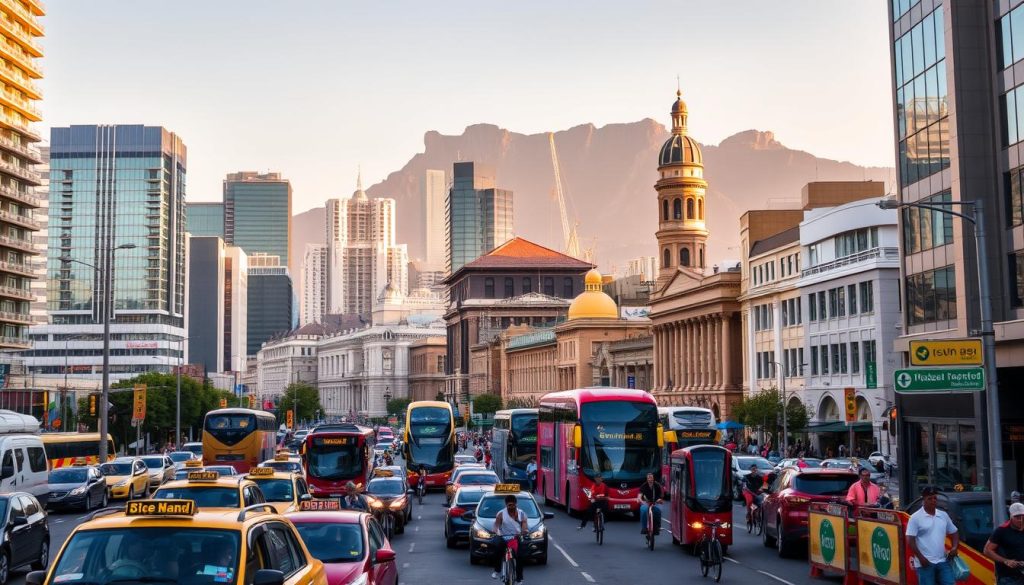
The city center and V&A Waterfront have good public transport. You can use the MyCiTi bus and taxis. Walking is also easy between attractions.
“The city center is very walkable, and you’ll find that many of the main attractions are within a short distance of each other,” says a local guide. For longer trips, Uber and Bolt are available.
Atlantic Seaboard (Camps Bay, Clifton)
The Atlantic Seaboard is famous for its beaches. You can get there by car or ridesharing. The MyCiTi bus is an option for city center trips, but traffic can be bad.
Southern Suburbs (Constantia, Kirstenbosch)
The Southern Suburbs are peaceful, with lovely gardens and vineyards. Public transport is less frequent here. Renting a car or using ridesharing is better. The Metrorail connects some areas to the city center.
Cape Flats and Townships
Cape Flats and townships use minibus taxis a lot. Visitors can use these, but it’s safer with a local or tour guide.
Getting to and from Cape Town International Airport
At Cape Town International Airport, you have shuttle services, Uber, and car rentals. The MyCiTi bus also goes to the city center.
Knowing the transport in each area helps plan your trip. You’ll enjoy Cape Town more.
Day Trips and Excursions from Cape Town
Looking for adventure or cultural experiences? Cape Town has it all. Its location is perfect for exploring South Africa’s beauty and history.

Getting to Table Mountain
Table Mountain is a must-see in Cape Town. You can ride the Table Mountain Aerial Cableway for a scenic view. Or, hike up via trails like Platteklip Gorge.
Transportation to Cape Point and Cape of Good Hope
Cape Point and the Cape of Good Hope are in the Cape Peninsula. A scenic drive along the Atlantic coast gets you there. You can rent a car or take a guided tour service with transport. Public transport is limited, so plan ahead.
Reaching the Winelands
The Winelands, like Stellenbosch and Franschhoek, are near Cape Town. Drive via the N1 highway or take a shuttle service or guided tour. The trip takes about an hour, depending on traffic.
Visiting Robben Island
Robben Island is where Nelson Mandela was imprisoned. Take a ferry from the V&A Waterfront. The Robben Island Museum offers tours with transport and a guide.
Conclusion: Navigating Cape Town with Confidence
Getting around Cape Town is easier than you think. There are many ways to travel in the city. You can pick the best option for you.
This guide has helped you understand how to move around Cape Town. You can use public transport, ride-sharing, or rent a car. You can also walk or cycle to see the sights.
When planning your trip, think about the cost, convenience, and views each way offers. With this info, you’ll travel around Cape Town well. And you’ll enjoy your trip more.