Essential Lao Phrases for Your Vientiane Trip
Ever thought how a few simple phrases can change your trip abroad? Whether you’re walking Vientiane’s busy streets or having a meal at a local place, knowing some essential Lao phrases can make your trip better. It helps you talk to people, understand their culture, and connect with the friendly folks of Laos.
In this article, you’ll find important Lao language phrases for your Vientiane trip. You’ll learn greetings, words for food and shopping. These phrases will help you talk to locals and make your travels more meaningful!
Introduction to Lao Language
The Lao language is the official tongue of Laos and belongs to the Tai-Kadai family. It has about 15 million speakers, mainly in Laos and Thailand. Knowing basic Lao in Vientiane is very important.
This language is tonal, like Thai. But, small changes in tone can change words’ meanings. This can be tricky for learners.
Laos’s language scene is rich and varied. There are 50 million Tai-Kadai speakers across several countries. Also, about 90 million Austroasiatic speakers add to the mix. The Lao language is spoken by around 20 million people worldwide.
Even though English is common in tourist spots, locals value language learners. The lack of a Latin script makes learning harder. But, the benefits of learning and showing respect are huge.
Literacy rates show how the language is used: 30-60% for the first language, and 50-75% for the second. This shows both the challenges and opportunities of learning Lao.
| Language Family | Speakers | Countries Spoken |
|---|---|---|
| Tai-Kadai | 15 million (Lao), 50 million (Tai-Kadai languages) | Laos, Thailand, China |
| Austroasiatic | 90 million | Laos, Vietnam, Cambodia, Malaysia |
Learning Lao makes your travels better and builds lasting connections. Vientiane Lao is key in media, making it a good focus for travelers. Even a few words will make your cultural experience richer in Vientiane and elsewhere.
Why Learn Lao Phrases for Your Trip
Learning the local language makes your trip much better. By learning Lao phrases, you can connect more with the Laotian people. This creates a friendly atmosphere wherever you go.
Simple greetings or thanks can make a big difference. They show respect for Laos’ rich culture. This can make your visit more meaningful.
So, why learn Lao phrases? Using basic phrases can make your interactions warmer. Laotians are very friendly, and speaking their language impresses them.
It’s not just about making friends. Speaking Lao opens doors to unique experiences. You’ll get to see things that most tourists don’t.
Whether you’re buying food or talking to shopkeepers, Lao phrases make your trip special. They turn your vacation into unforgettable memories.
Greetings and Basic Expressions
Learning greetings in Lao is key when meeting locals. Greetings show respect and build connections. Using basic Lao phrases makes your trip better and shows respect for the people you meet. A friendly greeting can make you feel closer to Laos’s lively culture.
Understanding the importance of greetings
Greetings are a big part of daily life in Lao. Saying Sabaidee (ສະບາຍດີ) is a common way to greet, meaning hello, good day, and goodbye. This shows the value of being friendly to others. Bowing slightly and smiling while greeting adds to the warmth of your interactions.
Common greetings in Lao
- Sabaidee – Hello/Good Day/Goodbye
- Khop Jai – Thank you
- Jao saibaidee baw? – How are you?
- Sabaideebor – How are you doing? (Informal)
- Kin khow leo bor? – Have you eaten?
The phrase Kin khow leo bor? is a common greeting among Lao people. It shows the importance of sharing meals in their culture. Learning these phrases makes talking easier and shows respect for their traditions.

What are some essential phrases to know in Lao before visiting Vientiane?
Learning some key Lao words before you go to Vientiane is crucial. Knowing these phrases will help you in everyday talks and moving around the city. They make your visit more fun and interactive.
Some important phrases include:
- Sabaidee (Hello)
- Khop Jai (Thank you)
- Hong nam yu sai? (Where is the bathroom?)
- Tao dai? (How much?)
Learning these phrases lets you talk better with the locals. Even though English is common in Vientiane, speaking Lao shows respect for the culture. Using these phrases will make your trip unforgettable and smooth.
Navigating Vientiane with Essential Phrases
Exploring Vientiane is easier when you know key phrases for directions. This knowledge is crucial for moving around the city smoothly. Knowing local transportation terms can also make your trip better. Here are some tips to help you on your journey.
Key phrases for asking directions
Knowing how to ask for directions can open up Vientiane’s attractions. Here are some useful phrases:
- “Hong nam yu sai?” (Where is the bathroom?)
- “Pae ta laat” (Go to the market)
- “Yuut/Pai” (Stop/Go)
Understanding local transportation vocabulary
Vientiane offers a laid-back way to get around. Tuk-tuks are popular for their bright colors and comfort. It’s good to know a few key terms to navigate the local transport better. Knowing landmarks is more helpful than street names, given the city’s layout.
At the Restaurant: Ordering and Dining
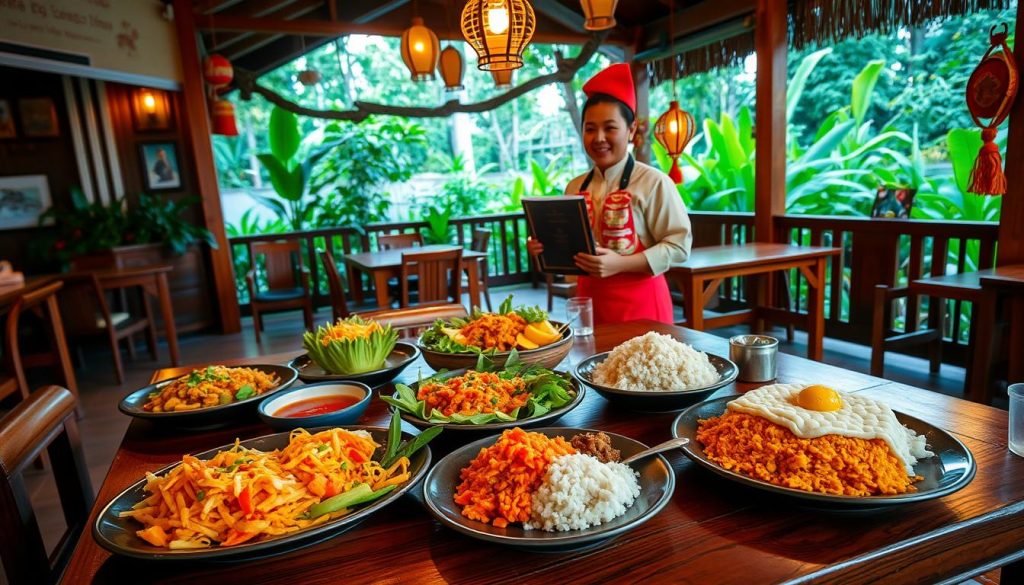
Dining out in Vientiane is a great way to try Lao cuisine. Knowing how to order food in Lao makes your meal better. It helps you tell the server what you want.
Essential phrases for ordering food
Start by saying Khoy Hew Khao (I’m hungry) to show you’re ready to order. If you don’t want sugar, say Baw Sai Nam Tan (Don’t put sugar). After eating, say Sep (delicious) to thank the staff.
Here’s a small table of some common dishes you might encounter while ordering:
| Dish Name | Description |
|---|---|
| Khao Niew | Sticky Rice, the staple food of Laos, often eaten by hand. |
| Jaew Bong | A spicy hot pepper dip served with meats or vegetables. |
| Sai Oua | Grilled herbal pork sausage made with ground pork and spices. |
| Tam Muk Muang | A refreshing green mango salad that packs a spicy punch. |
| Naem Khao | Crispy coconut rice, a specialty from Vientiane. |
| Laab Ped | Minced duck salad, recognized as the national dish of Laos. |
Knowing these phrases and dishes makes your dining experience better. The food in Laos is vibrant and worth trying.
Shopping and Bargaining in Markets
Shopping in Vientiane is an exciting adventure, thanks to the local markets. Here, you can find great deals by using Lao bargaining phrases. These phrases make shopping more fun and effective.
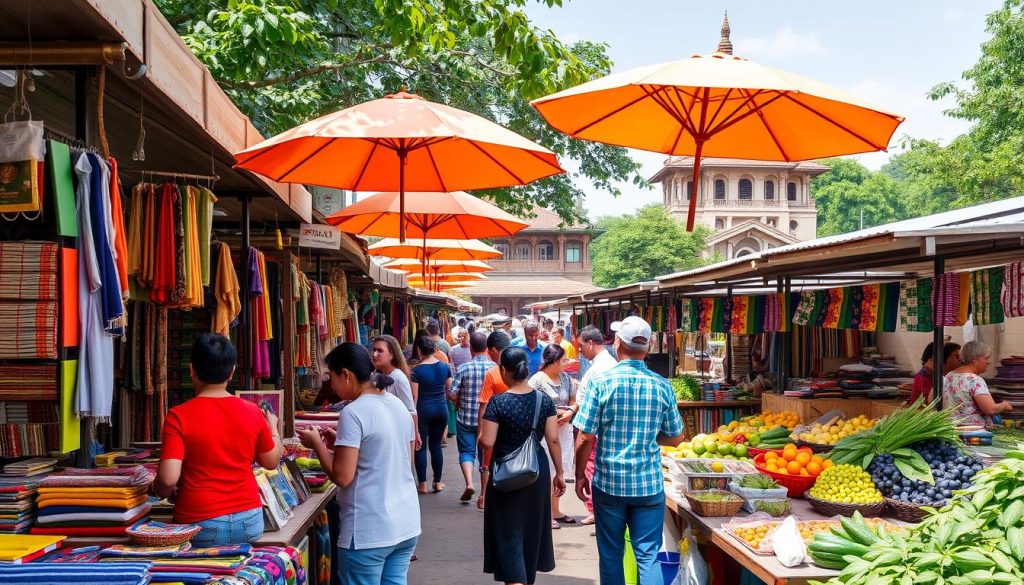
When you’re out, try saying “Pheng Lai, Lud dai baw?”. It means “Very expensive, can you lower the price?” This is key for getting better deals. Also, remember “Lai Ngun Deh”, which means “Check please,” for when you’re ready to pay.
Being polite is important when you’re shopping. Showing respect and saying thank you can make your experience better. Here are some more phrases to help you:
- Sabaidee – Hello
- Khawp chai – Thank you
- Nai?” – How much?
- Keow deuh – Can I try?
Buying from village craftsmen can be cheaper than in big markets. But, Vientiane offers unique items you might not find elsewhere. For a wide selection, Luang Prabang is famous for its handicrafts, including textiles and silver jewelry.
| Market | Location | Hours of Operation |
|---|---|---|
| Handicraft Night Market | Luang Prabang | Daily from 5 PM to 10 PM |
| Kopnoi Gallery | Luang Prabang | Mon-Sat: 7 AM – 10 PM, Sun: 10 AM – 10 PM |
| Ma Te Sai | Luang Prabang | Daily from 8:30 AM to 8 PM |
| Morning Market | Luang Prabang | Daily from 5 AM to 10 AM |
With these Lao phrases and market knowledge, shopping in Vientiane will be rewarding. Dive into local traditions, enjoy the lively markets, and connect with vendors. You’ll find unique treasures along the way.
Understanding Numbers in Lao
Learning numbers in Lao is key for smooth interactions in Vientiane. It helps when shopping or dining. Knowing basic numbers is essential for daily transactions.
Importance of knowing numbers
Numbers are crucial for communication. They help you negotiate prices and understand time. Counting and recognizing numbers lets you express your needs better.
By learning Lao numbers, you dive deeper into Vientiane’s culture and daily life.
Common numbers used in daily transactions
Knowing common numbers in Vientiane makes daily interactions easier. Here’s a table with essential Lao numerals:
| Lao Number | Pronunciation | English Translation |
|---|---|---|
| ນຶງ | Nung | 1 |
| ສອງ | Song | 2 |
| ສາກ | Saak | 3 |
| ສີ | Si | 4 |
| ຫ້າ | Ha | 5 |
| ຫົກ | Hok | 6 |
| ແຈດ | Jet | 7 |
| ແປດ | Pad | 8 |
| ໍາ | Gao | 9 |
| ສິບ | Siip | 10 |
Knowing these numbers in Vientiane makes every interaction better. It helps in shopping, calling services, or setting times. Learning Lao numerals enriches your journey.
Making Friends: Engaging with Locals
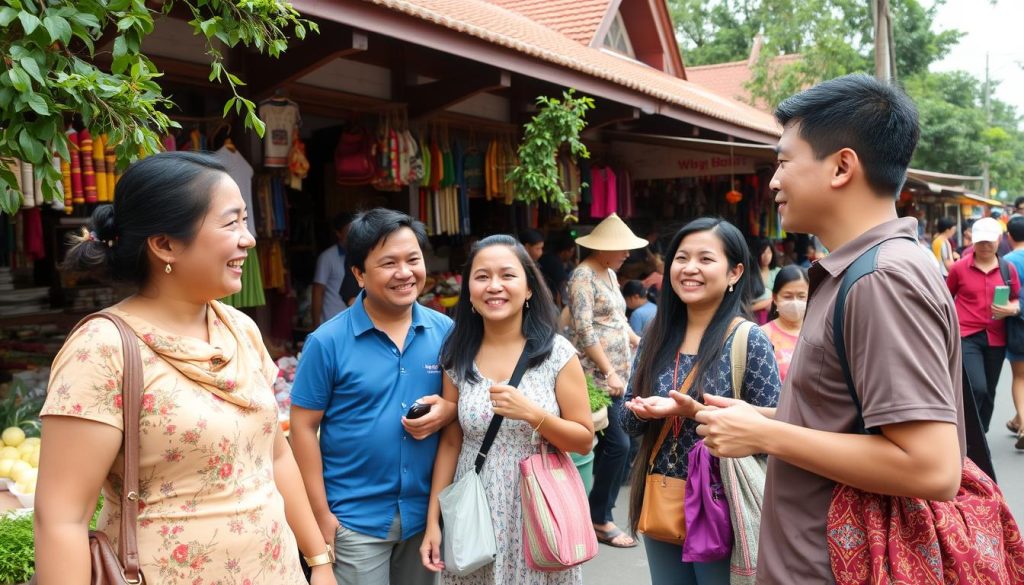
Building friendships in Vientiane makes your trip better. Start by using simple but meaningful phrases. For example, saying “Gin Khao Leo Baw?” (Have you eaten yet?) can connect you through food. This shows respect for their culture.
Learning basic phrases shows you care. Locals appreciate it when you try to speak their language. It makes a big difference.
Try using cultural expressions like “Tham Keo!” (Cheers!). It shows you’re ready to join in their traditions. Making an effort to make friends in Laos is often met with kindness.
Take part in local events like festivals and markets. These are great ways to learn more about Lao traditions. You’ll also get to practice your language skills and make friends.
| Cultural Activity | Location | Engagement Type |
|---|---|---|
| That Luang Festival | Vientiane | Religious ceremonies |
| Boun Pha Vet | Nationwide | Candlelit processions |
| Pi Mai (Lao New Year) | Nationwide | Water fights and celebrations |
| Local Markets | Vientiane | Shopping and bargaining |
| Cooking Classes | Various venues | Food culture engagement |
Exploring meaningful interactions takes patience and openness. It leads to lasting friendships. Engaging with locals in Vientiane offers a deep look into Lao culture. These experiences stay with you long after you leave.
Helpful Lao Expressions for Everyday Situations
Learning helpful Lao expressions can make your daily life in Laos better. Phrases like “Khaw toot” (excuse me) are great for crowded places. They help you communicate and show respect for the culture.
When you face small problems, saying “Baw Pen Nyang” (Don’t worry about it) helps a lot. It shows you’re friendly and want to connect with people.
Showing thanks with “Khob chai” (thank you) is also important. It helps you bond with locals and shows you care about their language. Using these phrases makes your trip more meaningful.
Here are some more useful Lao phrases:
- “Dee piang” (I’m hungry)
- “Phaen jan”/em> (I feel good)
- “Mi pawat”/em> (What happened?)
Using these phrases in your daily life in Vientiane makes your stay better. It helps you connect with the local community positively.
Conclusion
Learning Lao language essentials is key to your Vientiane journey. Mastering a few phrases makes communication smoother. It also lets you dive deeper into the local culture.
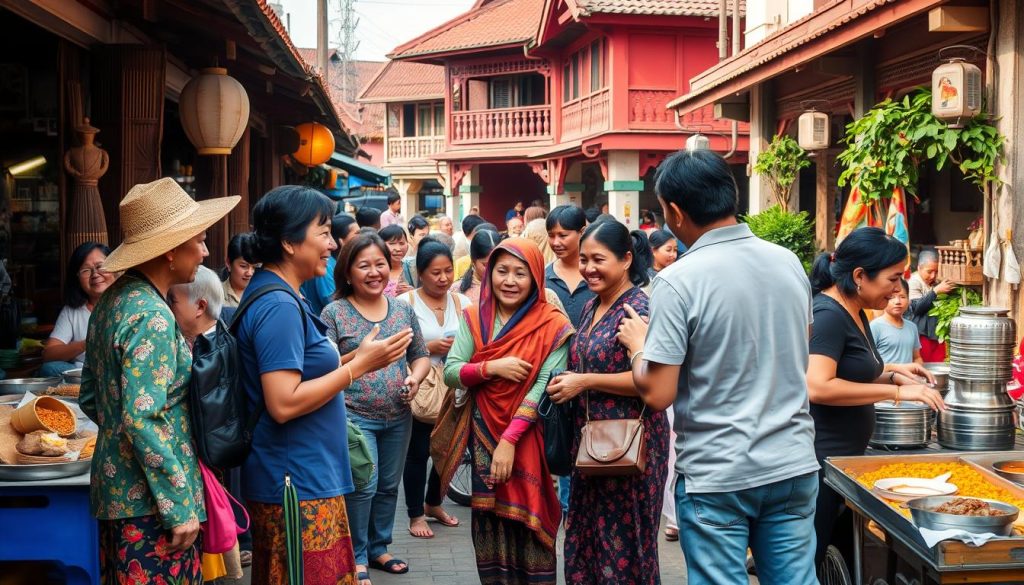
Knowing Lao phrases opens doors to real interactions. You can order food at Talat Sao or talk to tuk-tuk drivers. It’s all about connecting with the locals.
Exploring Laos becomes richer with language knowledge. At market stalls, bargaining is part of the fun. Greeting locals in their language shows respect for their heritage.
So, as you get ready for your adventure, learning essential phrases is crucial. It will make your Vientiane trip unforgettable.
Traveling through Vientiane becomes more meaningful with Lao language insights. You’ll enjoy the local way of life and food more. It makes your trip memorable and life-changing.
Whether hiking or visiting famous sites like Pha That Luang, speaking Lao enriches your experience. It lets you appreciate Laos’s rich culture more.