Essential Guide to Adventure Travel Packing List
Have you ever questioned if you’re really ready for your next adventure? Packing for it isn’t as simple as tossing items into a bag. It’s a careful plan that greatly affects your trip. Whether you go on a wildlife trip, walk through tropical forests, or tackle cold winter trails, the right packing list is key.
Travel pros with around 12 years under their belts stress the value of quality gear for different settings. Names like Patagonia, Lululemon, and Osprey top the list of essentials needed for adventure trips, offering both comfort and utility.
Picture preparing for Iceland’s Laugavegur trail, where summer temps vary between 5-20°C, or needing a strong 75-liter duffel for a group trip. These scenarios ask for precise packing skills to avoid taking too much or forgetting important stuff. Continue reading for tips on perfecting your adventure travel packing strategy.
Your Adventure Travel Packing List: Getting Started
Begin by thinking about your trip’s needs. Look at where you’re going, what you’ll do, and how long your adventure lasts. A good packing list means you’ll have everything necessary and avoid taking too much. Here are the steps to get ready effectively.
Your key items change based on the adventure. What you need for hiking, cycling, or a safari varies. Each requires certain gear and clothes for a great, safe, and comfy time.
- Destination Consideration: Where you’re going affects what you pack. For warm places, bring light clothes. For cold areas, take warm layers and coats.
- Activity Preparedness: Your activities shape your packing list. For hiking, sturdy boots and poles are key. Wildlife trips might need binoculars and special clothes.
- Duration of the Trip: How long you’ll be away impacts what you take. Smart travelers plan their packing 1 to 16 weeks before and do a trial pack a week ahead to make sure everything fits.
Start packing early and focus on the essentials. Use these tips to pack better:
- Layering Systems: Wear layers to adjust to different temperatures. Packing merino wool shirts and socks is a great idea.
- Backpack Options: Pick a backpack that fits your trip. A 40L backpack works for hiking, while a 18-23L pack is good for short trips.
- Safety Gear: Always carry vital medical supplies and medications in your kit.
- Basic Footwear: Choose durable and comfortable shoes like hiking boots or sandals, based on your activities.
Use compression sacks to keep your stuff organized. A well-planned packing checklist for adventure trips ensures you’re ready and can fully enjoy your adventure.
Choosing the Right Backpack
Finding the right backpack is key for a great adventure. It must fit all your items and be comfy for long wear. A bad choice can cause discomfort or injury, making your trip less fun. Let’s talk about how to pick the perfect pack for adventure travel.
Selecting Backpack Size
The size of your backpack changes your adventure. A 60-liter pack, like the Osprey Farpoint 80, works well for many trips. But for light travel or short trips, a smaller 35-liter pack, such as the Granite Gear Perimeter 35L, is enough.
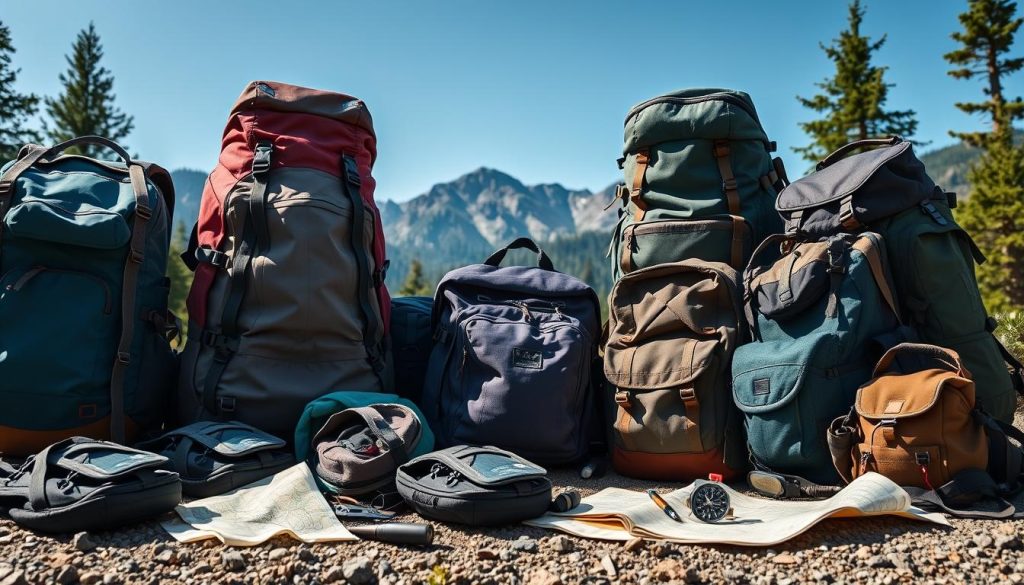
- Smaller backpacks (40-50 liters) are perfect for single-night trips, designed to carry loads of less than 25 pounds.
- Medium-sized backpacks (50-75 liters) can accommodate two to four days on the trail, carrying up to 40 pounds.
- Larger backpacks (75-90 liters) are ideal for a week or more, capable of holding 50-60 pounds.
- The largest backpacks (100 liters or more) are suited for multiweek expeditions or carrying supplies for multiple people.
Features to Look For in an Adventure Backpack
When looking for the perfect backpack, certain features are key. Here are some important ones:
- Adjustability: Good fit is key. Your hips should hold 75-80% of the pack’s weight.
- Comfort: Padded straps and belts help. Straps at a 45-degree angle can prevent strains.
- Access and organization: Look for multiple pockets, detachable daypacks, and hydration spots for ease.
- Durability: Choose tough materials like ripstop nylon, strong zippers, and good stitching.
- Safety features: Bright colors, rain covers, and whistle buckles increase safety.
Knowing these tips will help you pick the right pack for adventure travels. Preparation matters, so choose wisely for your specific needs.
| Backpack Size | Capacity (liters) | Ideal For | Weight Range (pounds) |
|---|---|---|---|
| Small | 40-50 | Single-Night Trips | |
| Medium | 50-75 | 2-4 Days | Up to 40 |
| Large | 75-90 | Week or More | 50-60 |
| Extra Large | 100+ | Multiweek Expeditions | 60+ |
Clothing Essentials for Various Climates
Packing the right clothes for your adventure is very important. Whether you’re going to steamy jungles or snowy mountains, having the right gear matters. You’ll stay comfy and ready, no matter the weather.
Clothing for Tropical Climates
For trips to warm places, choose clothes that let your skin breathe. Look for gear from brands like Columbia and Patagonia. These options help you stay cool even when it’s very hot and humid.
- Main Items: Lightweight shirts, shorts, and trousers
- Swimwear: Multiple swimsuits
- Accessories: Sun hats, sunglasses, and lightweight wraps
- Footwear: Comfortable sandals and water shoes

Clothing for Cold Climates
When packing for cold places, layering and insulation are key. Include items like Patagonia’s Nano-Air Light Hybrid Jacket for warmth without bulk. Also, wear tough shoes like Canada Goose’s Armstrong Boot for cold temps.
- Main Items: Base layers, insulated jackets, and waterproof pants
- Outerwear: Winter coats or puffies
- Accessories: Thermal gloves, scarves, and beanies
- Footwear: Heavy-duty snow boots
| Item | Brand | Cost | Weight |
|---|---|---|---|
| Osprey Packs Farpoint 40 | Osprey | $185.00 | 3 lbs 2 oz |
| Osprey Ultralight Dry Sack | Osprey | $20.00 | 2 oz |
| Marmot PreCip Eco Jacket | Marmot | $99.95 | 10 oz |
A good packing list makes your adventure great. It lets you have fun in both hot and cold spots. So, make sure these items are on your list for a smooth and exciting time, no matter where you go.
Footwear: Striking the Right Balance
Finding the perfect shoes is key for any adventure. They must be comfy, durable, and safe for different places. Knowing your options will help you choose the right gear for exciting trips.

- Low-cut hiking shoes: Great for easy trails and light walks. They offer some ankle support and suit moderate weather.
- Mid-cut shoes: Good for moderate loads on several days out. They give more ankle support and work for many adventures.
- High-cut shoes: Best for tough paths and heavy loads. They provide top balance and support, key for tough treks.
- Lighter trail shoes: Comfy for new hikers but not durable on hard ground; ideal for light adventurers.
- Heavy mountaineering boots: Fit for any ground, with great ankle support. They take time to adjust to but last long and keep you safe.
The material of your shoes also plays a big role:
- Full-grain leather: Tough and water-resistant, found in backpacking boots.
- Split-grain leather: Light and airy but not as strong against water and wear; usually has waterproof linings.
- Nubuck leather: Handles water and scrapes well but needs time to soften.
- Synthetics (polyester, nylon): Light, dries fast, and saves money; but might not last as long.
- Waterproof boots: Have special layers like Gore-Tex® for wet places but could be too hot in dry areas.
The midsole matters too, affecting comfort and shock absorbtion:
- EVA (Ethylene Vinyl Acetate): Light and affordable, with different supports.
- Polyurethane: Tougher and lasts longer, found in shoes for backpacking and climbing.
Knowing these details helps you pick the right shoes for thrilling journeys. Choose wisely to make your trip safe and fun.
Packing List Essentials for Adventure Travel
Getting ready for an adventure means creating a detailed packing list. This ensures you have fun without stress. Whether you’re off to the mountains or the jungles, don’t forget these important items.
Core Items
Picking the right gear is crucial for a great adventure. Start with a reliable backpack. A daypack should hold over ten liters, and a hip pack needs four liters. Choose Blundstone boots for their tough build and comfy fit. They’re great for different places.
| Item | Description | Why Needed |
|---|---|---|
| Backpack | Daypack (10L+) or Hip Pack (4L+) | Essential for carrying personal items and gear |
| Boots | Blundstone Boots | Durable, comfortable, and water-resistant |
| Lightweight Jacket | Wind and water-resistant | Crucial for shoulder-season trips |
| Insulated Water Bottle | Maintains temperature | Enhances hydration |
| Portable Power Bank | Holds at least two full charges | Ensures device accessibility |
| Combination Padlock | No keys required | Secures items in hostels |
| Hiking Poles | Adjustable, lightweight | Aids in stability on trails |
Accessories and Extras
Adding extra items can make your journey even better. A insulated water bottle keeps drinks warm or cold. Remember a wide-brim hat for the sun and a light journal for your stories. Packing cubes help organize your stuff quickly.
Always pack a small first aid kit, snacks, and fully charged electronics for day trips. A waterproof phone case is key for water activities. Noise-canceling headphones can block out noise during travel and hostel stays.

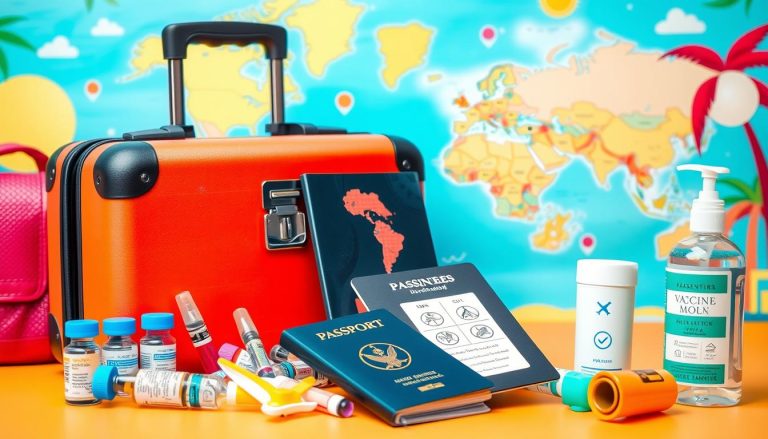
- Check visa and vaccination requirements six months prior to travel.
- Ensure your passport has at least six months’ validity for foreign travel.
- Include a travel insurance plan to cover potential issues like delays or illnesses.
- Bring a small amount of cash in your home currency for easy conversion.
Following these packing tips for outdoor adventures will help you travel with ease. Always look up the weather before you go. Give yourself time to get used to new hiking boots, avoiding blisters and discomfort on your journey.
Outdoor and Adventure Gear
If you’re heading out for an adventure, the right gear is key. Start with a list that includes must-have items fitting for various activities and climates.
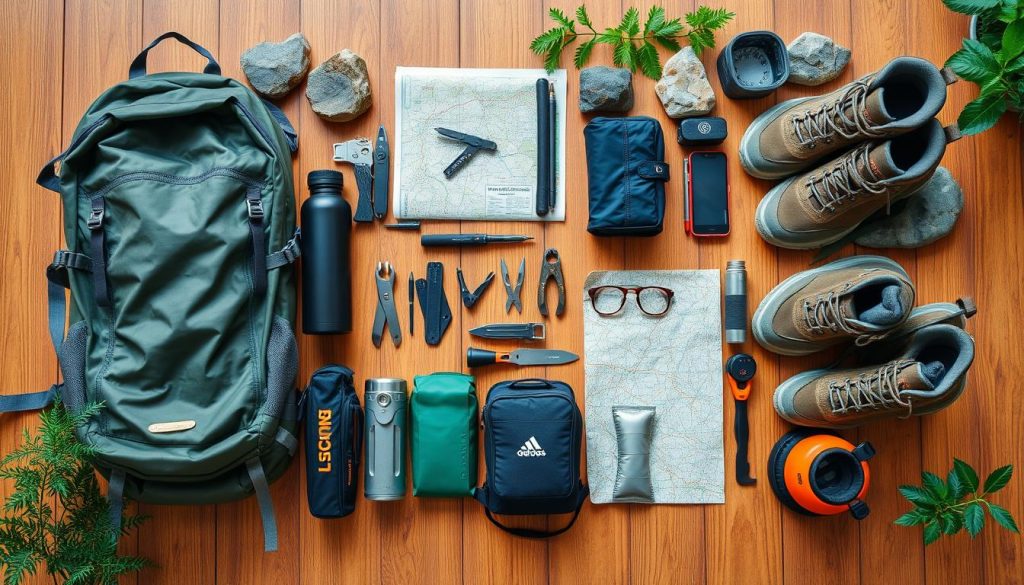
For most outdoor activities, choose a big backpack, around 70-90 liters. It should fit all you need. For shorter day trips, a 20-30 liter daypack works well. It holds essentials like a raincoat, warm layer, extra clothes, toothbrush, and meds.
Packing properly means using nylon bags or Ziplocs in different sizes. Group your stuff into categories – socks, shirts, pants, toiletries, and rain gear, for example. This makes it easy to find things and keeps your bag organized.
For long trips, consider a big duffel bag, 80-100 liters. Pick one that’s soft-sided with wheels to avoid hassle and make moving it around easy.
| Gear Type | Recommended Size/Capacity | Usage |
|---|---|---|
| Backpacking Backpack | 70-90 liters | Outdoor trips |
| Daypack | 20-30 liters | Day trips |
| Duffel Bag | 80-100 liters | Checked luggage |
It’s important that travelers, especially students, know their luggage. About 80% of packing is done by parents. But students should help pack to know where their items are.
For biking, a hydration pack like Osprey’s Raptor 10 is perfect. It keeps you hydrated and holds what you need. If the weather changes, a light, water-resistant jacket from Rapha can keep you dry.
Don’t forget to pack a prepaid debit or credit card for unexpected costs. Having the right gear and knowing how to pack makes trips better and more fun.
Essential Toiletries and Personal Care Items
Packing the right toiletries and personal care items makes a big difference on adventure trips. Here’s what you need for your packing checklist for adventure trips.
Basic Toiletries
First, think about size to meet TSA guidelines. Here’s a list of what you should bring:
- Toothpaste, toothbrush, and floss – Daily oral hygiene is a must. A long-lasting toothbrush is best.
- Soap and shampoo – Go for travel-size versions. You can also gather soap bars from hotels to save space.
- Sunscreen (SPF 30) – A must-have for every traveler. Apply it daily for protection.
- Deodorant – Underarm wipes are great for a quick refresh.
- Hand sanitizer wipes or spray – Essential for clean hands after flights, used by 85% of travelers.
- Travel-sized toiletry bottles – Perfect for liquids. They help you pack light and follow TSA rules.
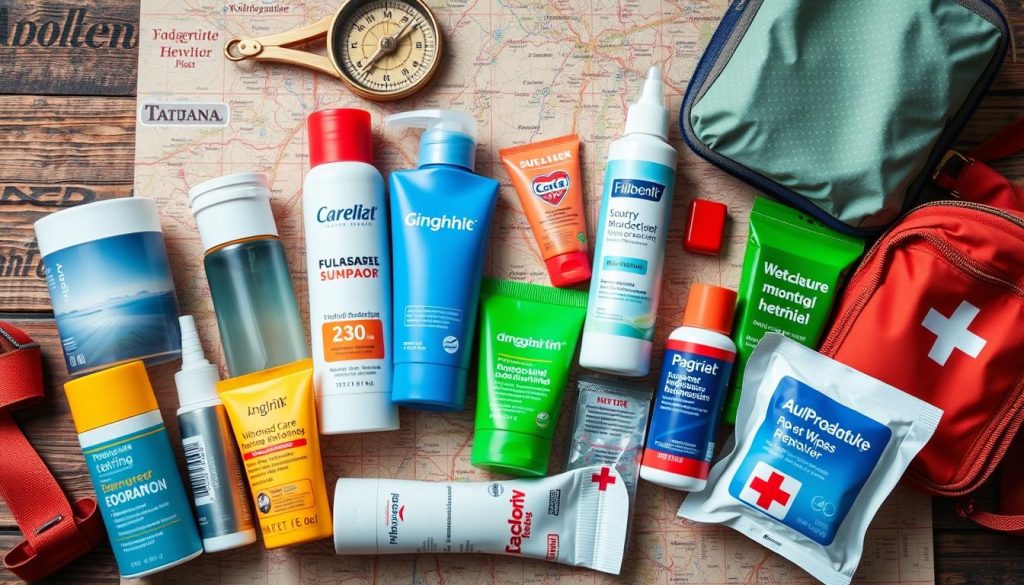
Additional Care Items
Here are more items for comfort and dealing with surprises:
- Insect repellent – A must-have in bug-heavy areas.
- Multi-purpose products – Like dual-voltage hair tools. Half of travelers find them handy abroad.
- First aid kit – A small kit can quickly address minor injuries.
- Medications – Bring basics like Pepto Tablets and any prescriptions for common issues.
- Mini razor – Keeps you groomed, important for 40% of travelers.
- Poo-Pourri sprays – Three-quarters of travelers use them for comfort.
- Lip balm and moisturizer – Essential for skin care in any weather.
Ninety percent of travelers say a well-prepared toiletry bag boosts trip enjoyment. Choose your items wisely for hassle-free adventures. Include these tips in your packing checklist for adventure trips for a better journey.
Tech Gadgets and Travel Electronics
Getting ready for an adventure? The right tech gadgets and travel electronics are key. They help you capture the beauty of your travels and keep you connected. These items are essential for any adventure.
Necessary Tech for Adventure Travelers
Need to save those special moments? Try a durable, waterproof camera. GoPro and similar models work great in tough spots. GPS devices are also vital, helping you navigate remote places.
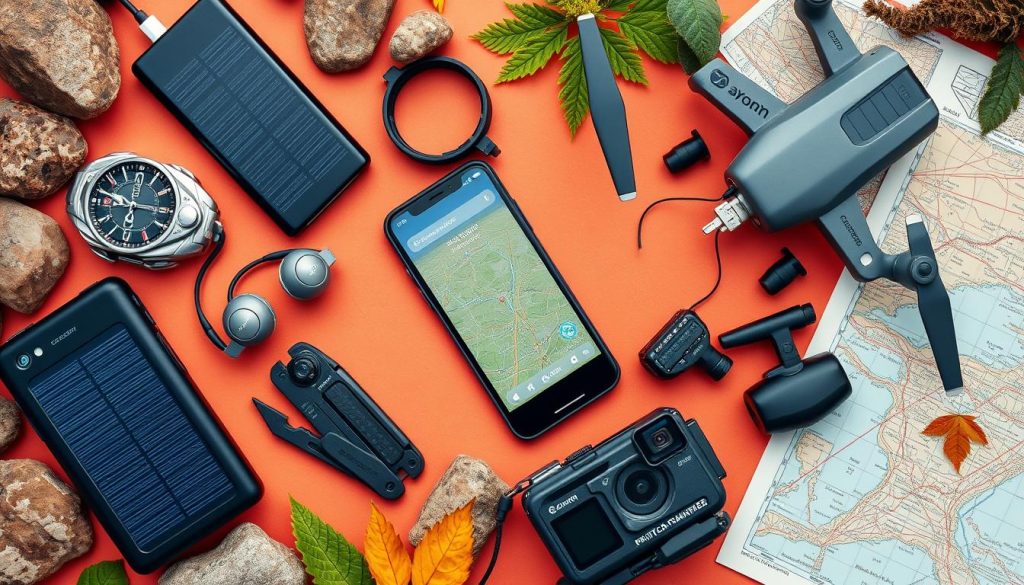
Some top tech picks include:
- Sony WH-1000XM4 Wireless Headphones: At $348, enjoy 30 hours of battery life and quick charge.
- MiiKARE Handsfree Travel Phone Holder: Only $11.48, it holds your phone securely, keeping it handy.
- Bagsmart Carry-On Travel Backpack: Adjustable from 28L to 38L, available for $69.99.
- BÉIS The Weekend Bag: With 49 liters of space, it’s ready for all your stuff at $108.
Charging Essentials and Adaptors
It’s important to keep your gadgets charged. A good charger is key. The UGREEN Nexode Pro Compact USB C Charger is a powerhouse. For $55.99, it charges a MacBook Air 13-inch up to 51% in 30 minutes.
The Beeiker Travel Power Strip is also essential, for $20.00. It offers 4 outlets and 6 USB/USB-C ports. These make sure you can charge all your devices anytime.
Don’t forget the Elebase USB to USB C Adapter for $9.99, and the MEE Audio Bluetooth Wireless Audio Transmitter & Receiver for $59.99. They keep all your devices connected easily.
These gadgets and electronics are must-haves for adventure travel. They offer both convenience and the ability to capture every thrilling moment of your journey.
Organizing Your Packing List
Making a packing list helps ensure you’re ready for your trip. Group your items into essentials, clothing, gear, and personal care to make packing easier. This way, you won’t leave behind any important items. For seasoned travelers, having an organized list saves time and cuts down on stress from packing last minute.

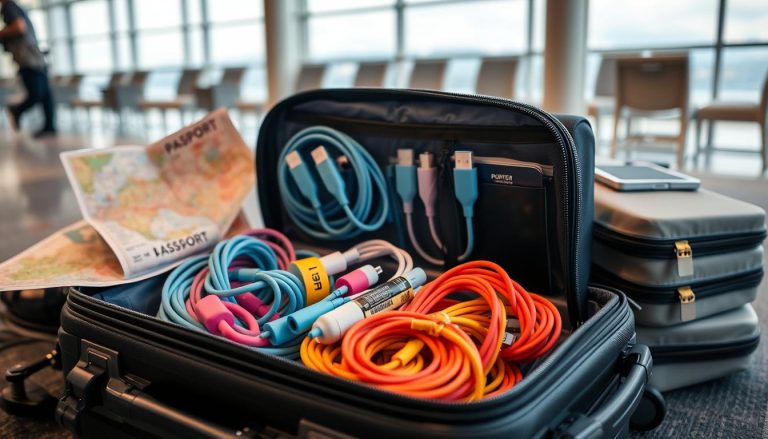
Start by sorting your things into packing cubes or bags. This makes both packing and finding what you need easier. Using cloth organizers can help you find items 70% faster. Make sure your essentials pack has everything from your passport and medications to snacks and small toiletries.
After traveling in many places, the author shares a good plan:
- Begin sorting your items one month before your trip. This avoids rushing and ensures you pack everything.
- Keep important papers in travel wallets to avoid losing them. Studies show this lowers the chance of forgetting them by 15%.
- Organize your meds in pill organizers and label your toiletries. This makes finding them 60% easier.
Wearing your heaviest clothes while traveling saves about 30% of suitcase space. Using mini bottles saves up to 80% space over full-sized ones. A little packing mishap can spoil your trip and lead to extra costs.
| Category | Items | Tips |
|---|---|---|
| Must-Haves | Passport, ID cards, Prescription Medications | Pack in a travel wallet |
| Creature Comforts | Snacks, Travel-size Toiletries, Change of Clothes | Use labeled containers and organizers |
A well-planned packing list lowers travel stress a lot. By sticking to these tips and packing adventure travel essentials, your trip will be better. You’ll be prepared for whatever adventures come your way.
Practical Tips for Packing Light
Packing light is key for backpacking trips. It helps you move easily and feel less tired. Knowing what to bring can greatly improve your trip. Here are tips to pack well.
Why Packing Light is Important
Travelers who keep their bags under 10kg (22 lbs) have more freedom. The best bag size for light packing is 35 to 40 liters. This fits most carry-on limits. Light packing makes you more comfortable, lowers injury risk, and lets you enjoy your trip more.
Strategies for Minimizing Your Load
- Choose Multi-purpose Items: Pick gear and clothes that have more than one use. A jacket that’s also a raincoat or pants that turn into shorts save a lot of space.
- Prioritize Necessities: Just bring what you really need. Aim for a week’s clothes, about 6-7 shirts, 7 underwear, and 3 pants. This makes laundry simple and avoids extra packing.
- Consider Clothing Materials: Merino wool is great for trips. It keeps you warm even when wet, dries quickly, and doesn’t smell bad quickly. It’s more expensive, but well worth it.
- Lightweight and Efficient Packing Gear: Choose lightweight bags like the Osprey Farpoint 40 or the Cabin Zero Classic. They help you pack more without the extra weight.
- Keep Accessories Minimal: Only bring essential items. Cut down on toiletries and gadgets. Use packing cubes to keep things tidy and compact.
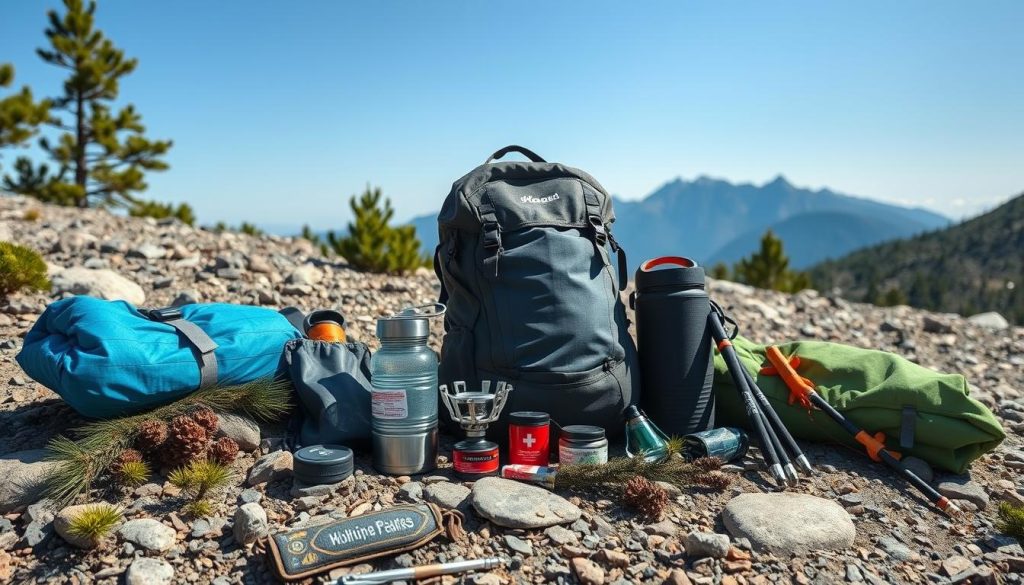
Using these tips will ensure you have all you need for your trip, while keeping your bag light. A minimalist approach makes your travel simpler and more enjoyable. It lets you focus on the adventure, not the weight of your luggage.
Health and Safety Gear
Making sure you’re healthy and safe is key for an adventure trip. Adding packing essentials for active vacations can change your travel for the better. This guide will show you what you need to stay safe and healthy during your trips.
“The 10 Essentials comprise a collection of items critical for health and safety during adventure travel, emphasizing the necessity of first aid and emergency preparedness.”
A top thing to have is a well-stocked first aid kit. Make it personal with your own meds and check their dates often. Always have 1-2 quart/liter-sized water bottles or a Camelback to avoid dehydration, especially when you’re active in the heat.
It’s crucial to protect yourself from the sun too. Bring sunglasses, sunscreen, and clothes that protect you from the sun. The weather can change fast, so pack extra warm clothes like thermal underwear, jackets, and hats just in case. For emergencies, have a shelter like tents or space blankets ready.
Keeping up your energy is important. Take along snacks like trail mix and granola bars; pack extra in case you get delayed. For making a fire safely, carry waterproof matches and know the fire rules of your destination.
- First aid kit: customized to personal needs
- Hydration system: 1-2 quart/liter-sized water bottles or Camelback
- Sun protection: sunglasses, sunscreen, protective clothing
- Insulation gear: thermal underwear, jackets, hats
- Emergency shelter: tents, space blankets
- Nutrition: extra day’s supply of high-energy, non-perishable food
- Emergency fire-starting: waterproof matches, fire starters
Don’t forget your way. Take maps and GPS devices with you so you won’t get lost. A small repair kit with duct tape and multi-tools can fix most problems quickly.
Lastly, having something like a satellite phone means you can call for help if you need it. Make sure to pack the Ten Essentials and adapt your packing list for where you’re going.
| Item | Description | Recommendation |
|---|---|---|
| First Aid Kit | Customized to personal medical needs, regularly checked for expiration dates | Mandatory |
| Water Bottles/Camelback | 1-2 quart/liter-sized | Mandatory |
| Sun Protection | Sunscreen, sunglasses, protective clothing | Mandatory |
| Insulation Gear | Thermal underwear, jackets, hats | Mandatory |
| Emergency Shelter | Tents, space blankets | Mandatory |
| Emergency Fire-Starting | Waterproof matches, fire starters | Mandatory |
| Navigation Tools | Topographical maps, GPS devices | Mandatory |
| Repair Kit | Duct tape, multi-tools | Mandatory |
| Emergency Communication | Satellite phones | Mandatory |
Conclusion
Getting ready for an adventure means careful planning with a detailed packing list. It’s tailored for where you’re going and what you’ll do. Picking the right backpack and clothes for different weather is crucial. Each item must help make your trip smooth and fun.
Packing well saves space and follows airline rules, like the TSA’s liquid rule for flights abroad. Packing cubes and compression sacks organize and create space. Rolling clothes instead of folding them also saves space and avoids wrinkles.
When choosing shoes and clothes, think about the weather. In summer, about 70% of travelers pick breathable materials like cotton. It’s smart to bring travel-sized toiletries and clothes that serve many purposes. This saves space. Also, more than 75% of travelers use solid toiletries or reusable containers to meet TSA rules.
A good packing list makes sure you have everything you need for a great trip. Using good packing tricks makes your trip better, letting you focus on fun. The success of your adventure is in how well you prepare.