Eco-Friendly Visits to Chitwan National Park
Ever thought about how your travel can help save animals like the Bengal tiger and the one-horned rhinoceros? Chitwan National Park, a UNESCO World Heritage Site, is a special place. It lets you see these amazing creatures while supporting the environment.
With its diverse wildlife and focus on green tourism, your trip can be both exciting and meaningful. You’ll help protect animals and support local people through community programs.
Choosing eco-friendly travel makes you part of a big effort to save nature. This article will show you the green activities and initiatives in Chitwan. They make your visit not just fun but also responsible.
Introduction to Chitwan National Park
Chitwan National Park was set up in 1984 as Nepal’s first national park. It covers a huge area of 54,400 hectares. It’s known for its rich biodiversity and is a UNESCO World Heritage Site.
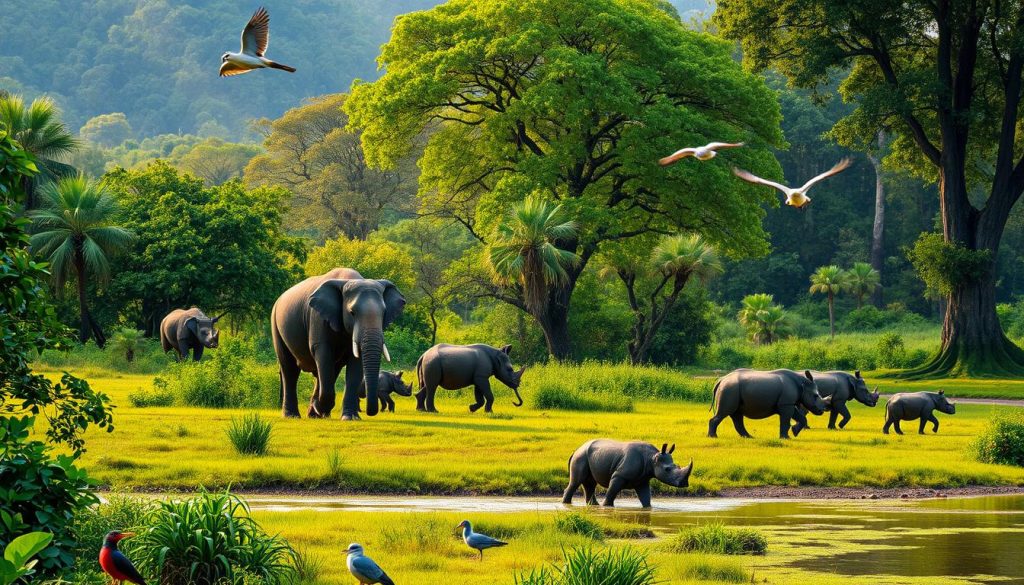
The park is home to tropical jungles and savannah grasslands. These environments support a wide variety of wildlife.
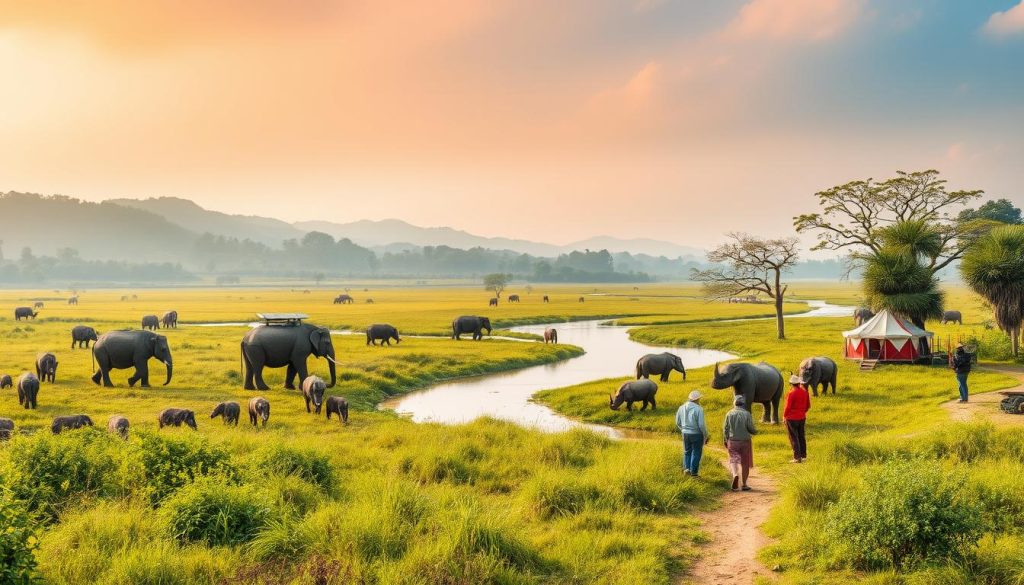
When you visit Chitwan National Park, you can see about 68 mammal species and nearly 600 bird species. There’s also a lot of aquatic life. Its location near Sauraha and the Rapti and Narayani rivers makes it easy to get to from Kathmandu.
This park is key to saving endangered species. It works hard to protect its plants and animals. Visiting Chitwan National Park is a chance to see nature’s beauty and learn about its importance.
Why Choose Eco-Friendly Tourism?
Choosing eco-friendly tourism lets you help protect the environment and support local communities. It’s about traveling in a way that doesn’t harm nature. By doing this, you help with conservation and boost local economies.
Being part of sustainable tourism has many perks. You can cut down on waste, save energy, and protect animals’ homes. It’s a way to live in harmony with nature, making sure both you and the environment do well.

Also, choosing sustainable options means you leave places better than you found them. This helps locals live better and keeps the area’s beauty intact. Eco-friendly tourism makes your travels meaningful and helps our planet for the future.
Sustainable tourism practices in Chitwan National Park?
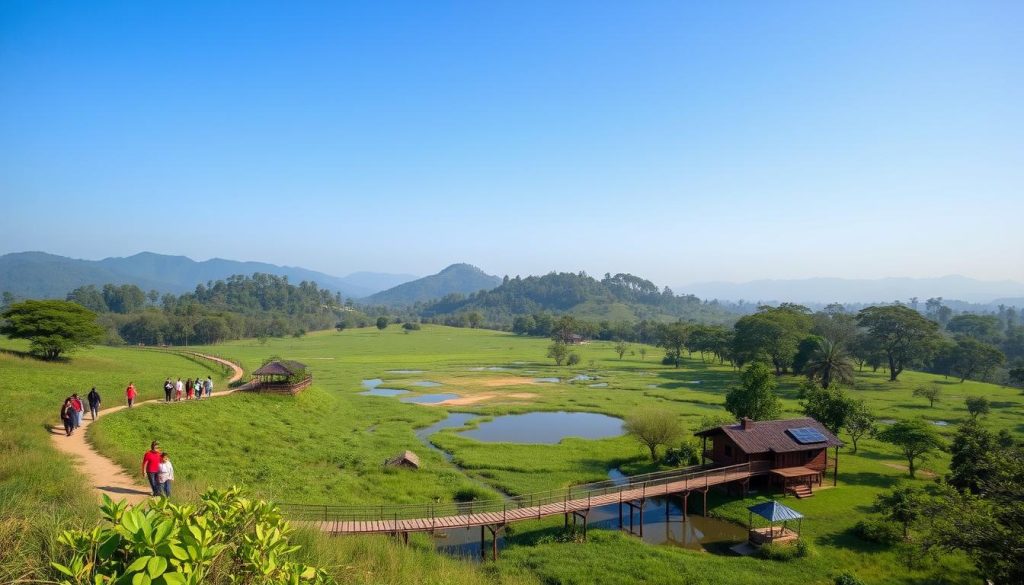
Chitwan National Park is a leader in sustainable tourism. It offers many ways for visitors to help the environment and support local communities. These efforts aim to balance tourism, wildlife, and local development.
Plastic-Free Initiatives
Chitwan focuses on reducing plastic waste. It provides biodegradable packaging and reusable containers. Education campaigns teach visitors about plastic’s harm to wildlife and habitats.
These steps help keep the park clean. They make tourism more sustainable.
Community Engagement Programs
Chitwan’s community programs bring locals and tourists together. Visitors learn about local culture and help the community. Workshops, tours, and activities showcase traditional crafts.
These programs improve the visitor experience. They also help local communities financially.
Wildlife Conservation Efforts
Wildlife conservation is key in Chitwan. It promotes responsible wildlife viewing and protects endangered species. Conservation includes research, habitat restoration, and anti-poaching efforts.
Visitors can actively participate in these efforts. They make a real difference during their stay.
| Initiatives | Focus | Impact |
|---|---|---|
| Plastic-Free Initiatives | Reduce plastic waste | Cleaner environment |
| Community Engagement Programs | Empower locals | Economic benefits |
| Wildlife Conservation Efforts | Protect biodiversity | Preserve ecosystems |
Eco-Friendly Activities in Chitwan
Chitwan National Park offers many eco-friendly activities. These let you enjoy nature while being kind to the environment. They also help support local conservation efforts. Here are some activities you might enjoy.
Canoeing on the Rapti River
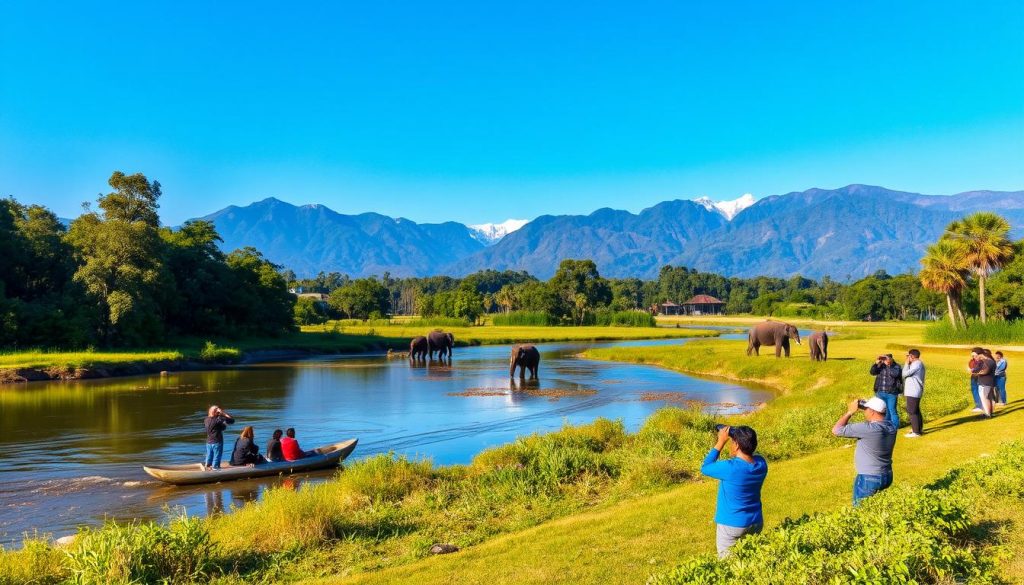
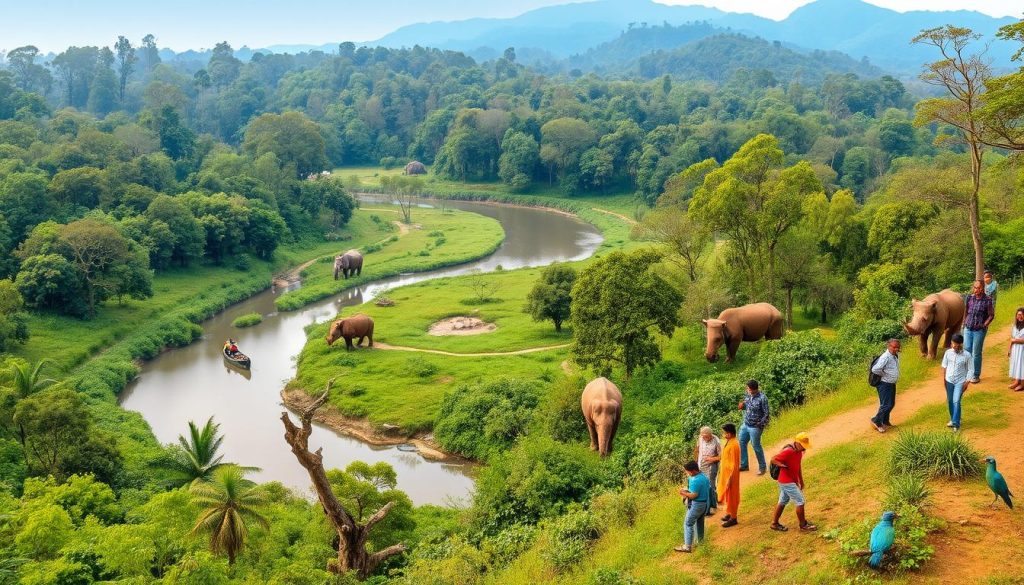
Canoeing on the Rapti River is a peaceful way to see the park. As you paddle, you might see animals along the riverbanks. It’s a great way to see the river’s beauty without harming it.
Guided Jungle Walks
Guided jungle walks let you get close to Chitwan’s plants and animals. With a guide, you’ll explore rich landscapes and learn about the ecosystem. It’s a way to connect with nature and learn about conservation.
Bird Watching Safaris
Bird watching in Chitwan is perfect for bird lovers. With over 500 bird species, you can see many birds in their homes. Guides will help you spot different birds and teach you about their lives.
| Activity | Description | Environmental Impact |
|---|---|---|
| Canoeing | Explore the Rapti River, observing wildlife along the banks. | Minimal impact; promotes water conservation. |
| Guided Jungle Walks | Immerse yourself in nature with a local guide. | Encourages respect for natural habitats. |
| Bird Watching Safaris | Observe diverse bird species in their habitat. | Promotes awareness of avian protection. |
Accommodations Committed to Sustainability
Looking for places to stay that care about the environment makes your trip to Chitwan National Park better. Many places focus on being green and still offer a cozy place to rest. Picking the right place to stay helps local businesses and makes your trip more eco-friendly.
Eco-Friendly Lodging Options
There are many places that use green practices. Look for places that:
- Use energy from the sun and wind
- Save water
- Build with local materials
- Offer food that’s organic and from around here
These places help you leave a smaller footprint and give you a chance to enjoy nature more.
Supporting Local Businesses
Choosing eco-friendly places to stay helps local businesses in Chitwan. This helps the local economy and supports green practices. When you pick these places, you might:
- Get a real taste of local culture
- Join in on community projects
- Find services that meet your green needs
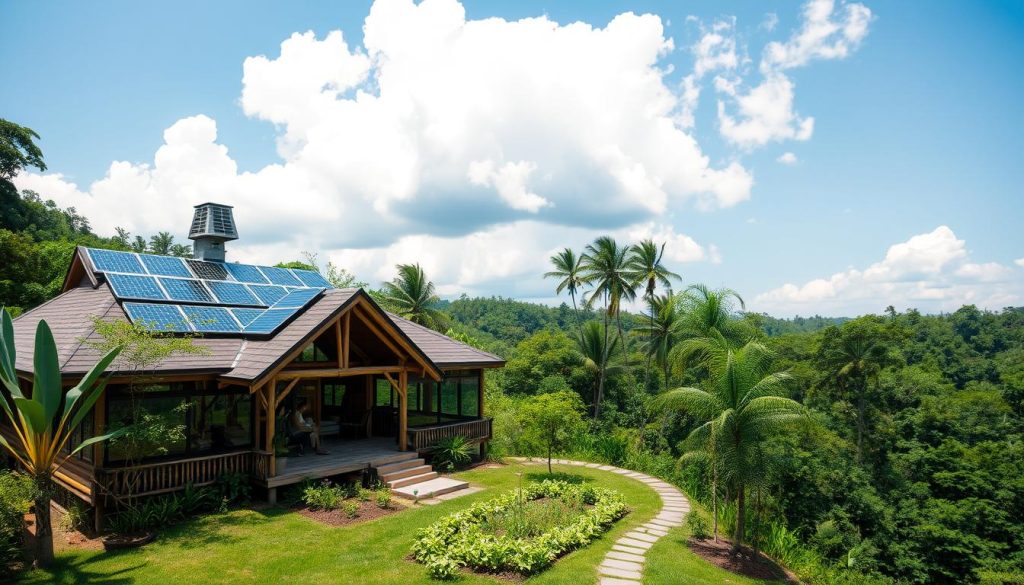
This mix makes your trip more meaningful and sustainable in the stunning Chitwan National Park.
Experience the Tharu Culture
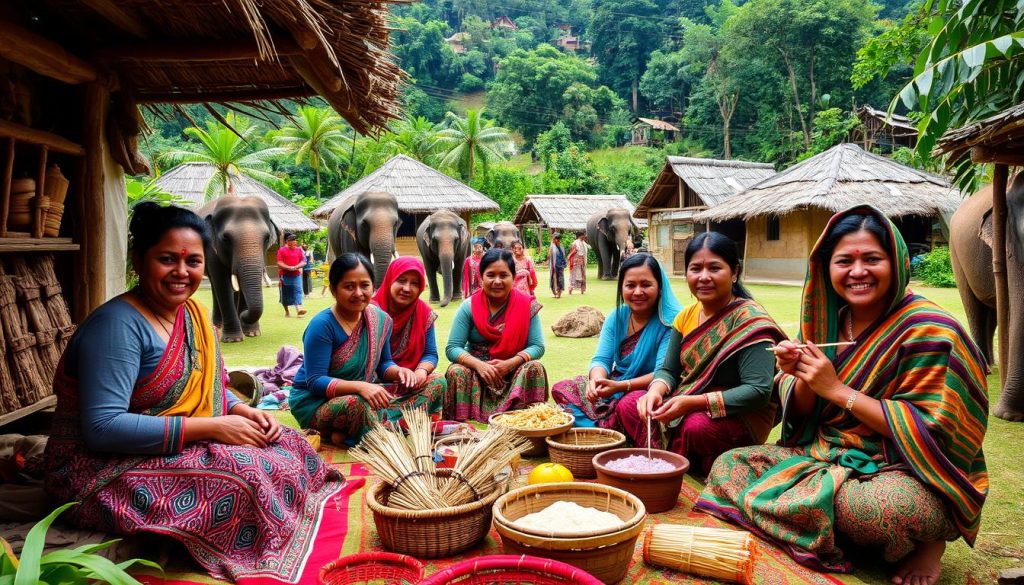
Exploring the Tharu culture gives you a peek into the rich heritage of the Terai region’s indigenous people. This community lives in harmony with Chitwan’s nature, keeping their traditions alive despite modern tourism’s impact.
By joining local festivities, you can see their vibrant dance performances. Trying their authentic food made from local ingredients is a treat for your taste buds. It also lets you experience their culinary traditions.
Visiting Tharu villages lets you see their daily life and rituals. These have been passed down for generations. The Tharu Cultural Museum also offers a deeper look into their history, crafts, and social life. It shows their lasting legacy.
Travel Tips for Responsible Travel Initiatives
Traveling responsibly is key to keeping Chitwan National Park beautiful and rich in culture. To make your trip better and help the environment, follow these tips. They focus on respecting wildlife and reducing your carbon footprint.
Respecting Wildlife and Natural Resources
Start by understanding the need to respect wildlife. Watch animals from a distance to not disturb them. Follow park rules to keep the ecosystem balanced. Don’t feed wildlife and stay on paths to protect their homes.
Minimizing Your Carbon Footprint
Try to lower your carbon footprint while traveling. Use eco-friendly ways to get around like walking or biking. Choose hotels that care about the planet and support local, ethical businesses. Bring reusable items like water bottles and cutlery to cut down on waste.
Frequently Asked Questions
Thinking about visiting Chitwan National Park? These FAQs can clear up any doubts about eco-friendly tourism. Knowing the best time to go is key for a great trip. The best months are October to March, with nice weather and lots of wildlife.
Remember, safety is important in the park. Stay alert around animals, keep a distance, and listen to park rangers. Helping local communities makes your trip better and supports green efforts. Choose activities that are good for the environment and people.
When packing, think about being kind to the planet. Here are some eco-friendly items to bring:
- Reusable water bottles to cut down on plastic
- Eco-friendly toiletries
- Comfortable hiking shoes for walks
Your visit can really help conservation. Eco-friendly tourism questions often ask how to help. Stay in green hotels and pick local guides who care about the environment.
| Question | Answer |
|---|---|
| What is the best time to visit Chitwan National Park? | October to March is the most favorable period for wildlife sightings and comfortable weather. |
| Are there safety measures to follow in the park? | Maintain a safe distance from wildlife and adhere to park ranger instructions at all times. |
| How can I support local communities while visiting? | Engage in community-focused activities, ensure your spending benefits local businesses, and seek eco-friendly tourism practices. |
| What should I pack for an eco-friendly trip? | Bring reusable items like water bottles, eco-friendly toiletries, and comfortable hiking shoes. |
Conclusion
Your trip to Chitwan National Park can be more than just fun. It can also be a way to help the environment and support local people. By picking eco-friendly activities, you get to see nature’s beauty and help protect animals and communities.
Choosing sustainable tourism makes your trip better for the planet. You’ll dive into the area’s rich wildlife and Tharu culture. This way, you support good travel practices and help protect the park’s beauty.
Exploring Chitwan is an adventure that helps the planet. By caring for nature and its creatures, you ensure future travelers can enjoy the same wonders. Let’s work together to keep travel and nature in harmony.