Discover Vientiane’s Top Historical Landmarks to Visit
Ever wondered about the stories behind Vientiane’s stunning buildings? As Laos’ capital, Vientiane is full of historical sites to explore. From Pha That Luang to the independence monument, each place tells a story of culture and history.
On this adventure, you’ll find many historical sites in Vientiane. Each one shows the city’s spiritual and lively past. You’ll see amazing art at Wat Si Saket and the grand Patuxai. These landmarks are not just beautiful but also share Southeast Asia’s rich history. Get ready to uncover Vientiane’s sites filled with heritage and charm.
Introduction to Vientiane’s Historical Richness
As you walk through Vientiane, you’ll see a mix of old Laotian culture and French colonial touches. This blend makes the city welcoming, showing its history and lively today.
The city’s old temples, like That Luang Stupa, and French-style buildings tell stories of the past and today. With fewer than a million people, Vientiane feels close and personal. It lets you feel its deep culture and traditions through its landmarks.
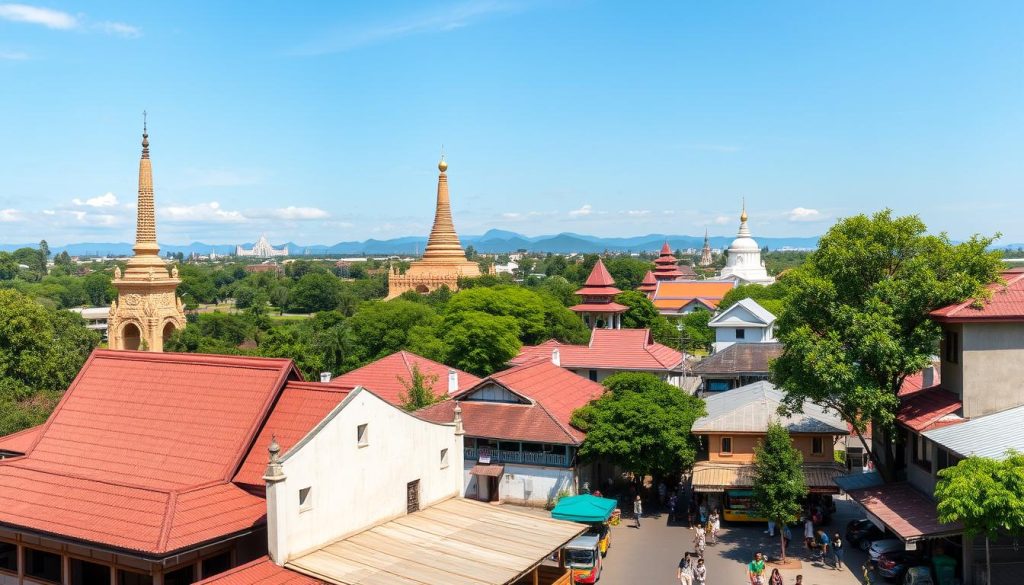
The Patuxai stands for the city’s fight for freedom. That Luang, a symbol of Laos, shares tales of faith and heritage. Every Vientiane sightseeing trip takes you back in time, showing the city’s royal past and its modern ways.
Visiting these places helps you understand and value Vientiane’s rich history. Every corner has a story, waiting for you to find it.
Pha That Luang: The Great Stupa
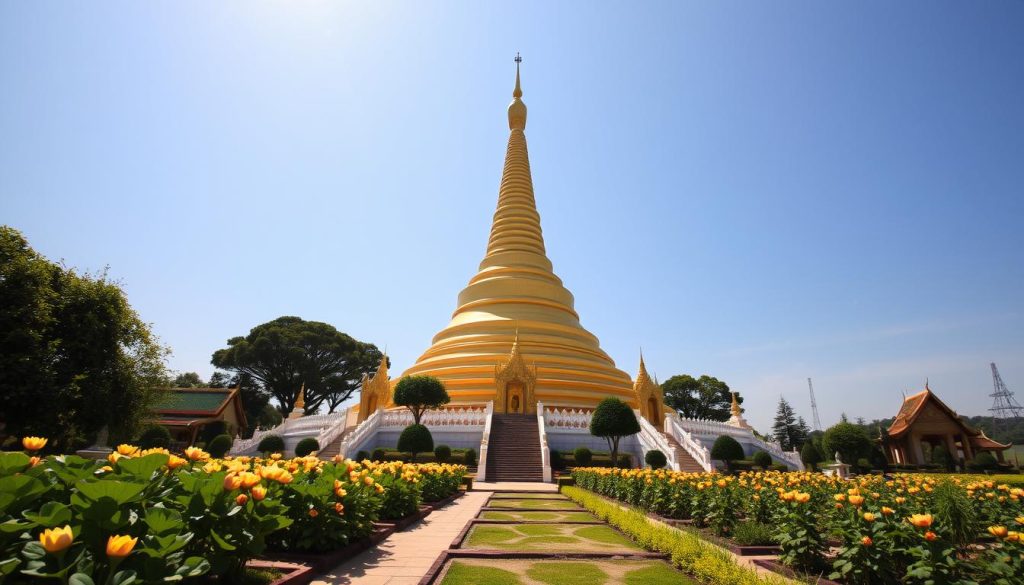
Pha That Luang is a key Vientiane historical site and a symbol of Laos. It’s a national treasure and a window into Laos’ culture. Built in the 3rd century, it has been rebuilt several times, most notably in the 16th century.
It was damaged in 1828 by the Thai invasion. Today, it’s a major attraction for those interested in Cultural sites in Vientiane.
Significance and History
Pha That Luang is more than just a beautiful building. It represents the three realms of Buddhism. It’s a place of pilgrimage, showing the deep spirituality of Laos.
It’s a top historical site in Vientiane. Many tourists come to see its history and meaning.
Architectural Details
Pha That Luang is about 45 meters tall. It has three levels with detailed craftsmanship. The first level is 68 by 69 meters, the second and third are smaller.
The top is covered in gold, shining brightly. The walls around it add to its grandeur, making it a standout Laos landmark.
Visiting Tips
Visit Pha That Luang from November to April for better weather. An entrance fee of 5,000 Lao Kip lets you see inside. It’s a chance to learn about its spiritual importance.
Wear modest clothes to show respect. Visiting early morning or late afternoon can be less crowded.
Patuxai: The Arc de Triomphe of Vientiane
The Patuxai monument is a tribute to Laos’ fight for freedom. It looks like the Arc de Triomphe in Paris but has Laotian touches. Finished in 1968, it honors Laotian soldiers and shows the nation’s spirit. It’s a key site when you explore Vientiane’s history.
Dedication and Purpose
Patuxai reminds us of those who fought for Laos’ freedom. It cost 63 million kips to build and has five towers for unity. Architect Tham Sayasthsena got 30,000 kips for his design.
Visiting for Panoramic Views
Visiting Patuxai is more than seeing history. The climb to the top gives you amazing views of Vientiane. For 3000 kip, you get to see the views and the monument’s art.
Inside, you can find a marketplace for souvenirs. There’s also a musical fountain from China, adding to the monument’s charm.
Wat Si Saket: A Glimpse into Laos’ Buddhist Heritage
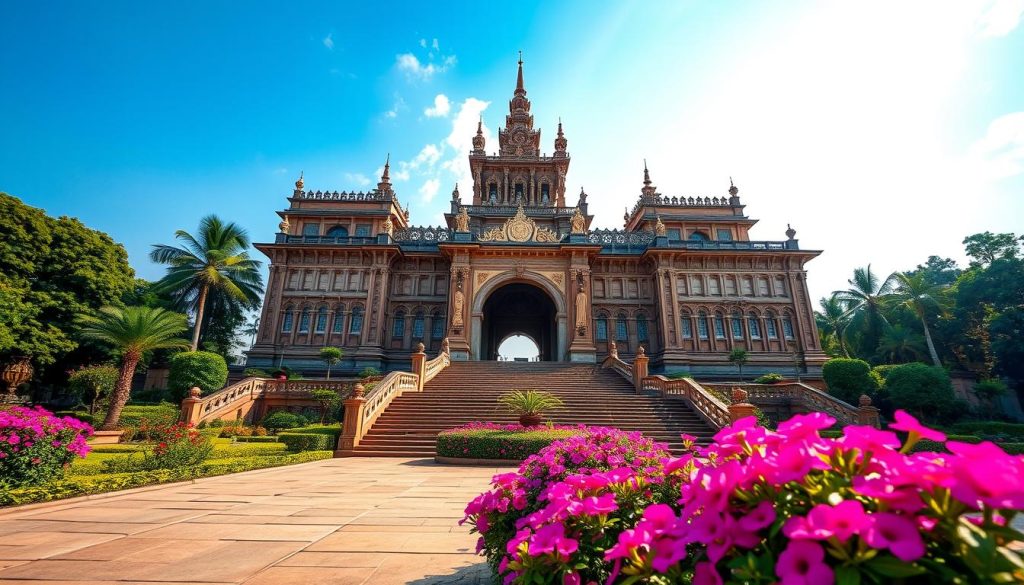
Visiting Wat Si Saket gives you a peek into Laos’ deep Buddhist history and stunning architecture. Built in 1818, this temple shows Laotian strength, surviving a devastating Siamese invasion. It’s the oldest temple in Vientiane without damage, making it a key site to see.
Historical Background
Wat Si Saket’s design shows the mix of Laotian and Siamese styles, seen in Vientiane’s landmarks. Its builders focused on balance, decoration, and spiritual meaning. Every part of the temple tells stories of faith, strength, and creativity from its time.
Notable Features and Artifacts
Inside, you’ll find over 6,840 Buddha images, crafted from bronze and wood. The Emerald Buddha is a standout. The temple’s walls are covered in detailed murals, adding to its calm vibe. A peaceful garden around the temple is great for quiet reflection, connecting with Laos’ culture.
Buddha Park: Where Spirituality Meets Art
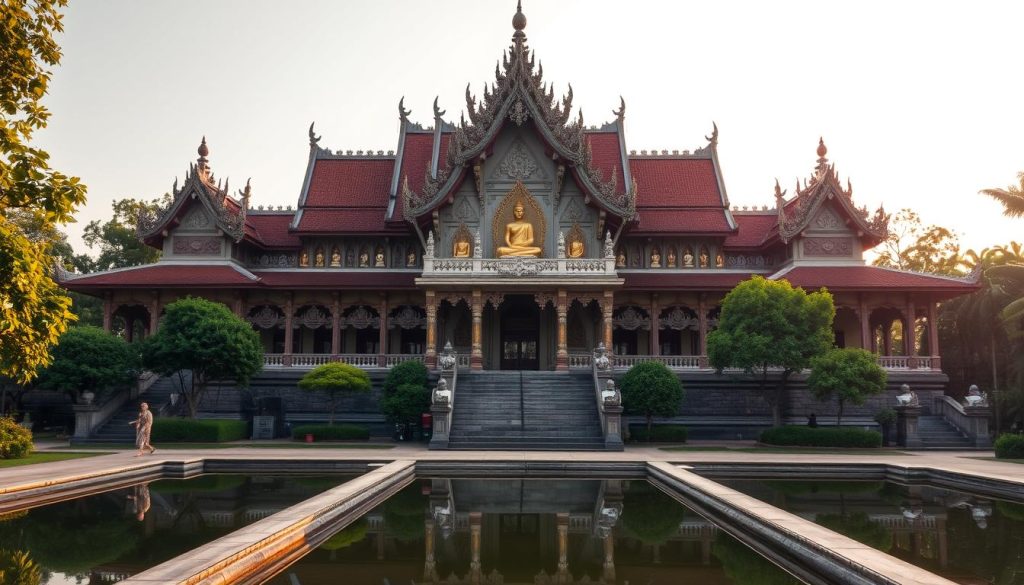
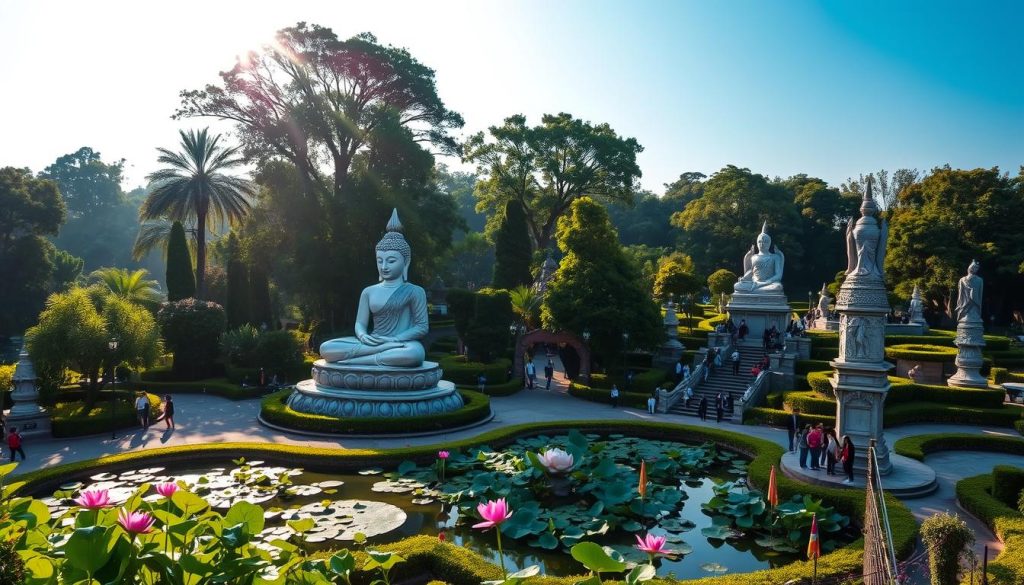
Buddha Park, also known as Xieng Khuan, is a special place near Vientiane. It’s about 25 kilometers from the city along the Mekong River. This park is a mix of spirituality and art, with over 200 sculptures. It shows both Buddhist and Hindu traditions.
It was started in 1958 by a priest named Luang Pu Bunleua Sulilat. The park is a peaceful place to learn about Vientiane’s history and culture.
Overview of the Park
The park is famous for its big statues, mostly made of concrete. These statues show important religious figures. The calm setting is perfect for experiencing Laotian culture.
Recently, the park got better walkways and facilities. It’s not expensive to visit, with adult tickets at 10,000 Lao Kip (about 1.10 USD). Kids under 12 get in cheaper.
Key Statues and Their Significance
The park’s highlight is a 40-meter reclining Buddha. It draws lots of visitors. The statues have special hand gestures, like the dhyana and abhaya mudras, showing different teachings.
There are also statues of Hindu gods like Shiva and Vishnu. You can walk around, take pictures, and even climb some statues. It’s a unique place to see in Vientiane.
What historical landmarks are worth visiting in Vientiane?
Vientiane is known for its cozy vibe and rich history. It has many historical landmarks that show its cultural importance. Each place invites you to explore the stories that shaped Laos. If you wonder what historical landmarks are worth visiting in Vientiane, you’ll find many interesting ones.
Insight into Vientiane’s Cultural Sites
The Lao National Museum is a must-see, with over 850 artifacts telling Laos’ story. It’s open from 8 a.m. to noon and 1 p.m. to 4 p.m. on weekdays. Don’t miss Wat Si Saket, the oldest temple in the city, built in 1818. It has nearly 7,000 Buddha statues.
Both places are key parts of Vientiane’s cultural history. They show the city’s rich heritage.
Additional Must-See Historical Sites
The Kaysone Phomvihane Museum gives insights into Laos’ revolutionary leader. It has galleries full of historical artifacts. For an artistic experience, visit Buddha Park, about 25 kilometers east. It has over 200 religious statues.
Exploring these sites helps you understand Laos’ history and culture. It makes your visit to Vientiane a memorable part of your journey.
Ho Phrakeo Museum: A Royal Legacy
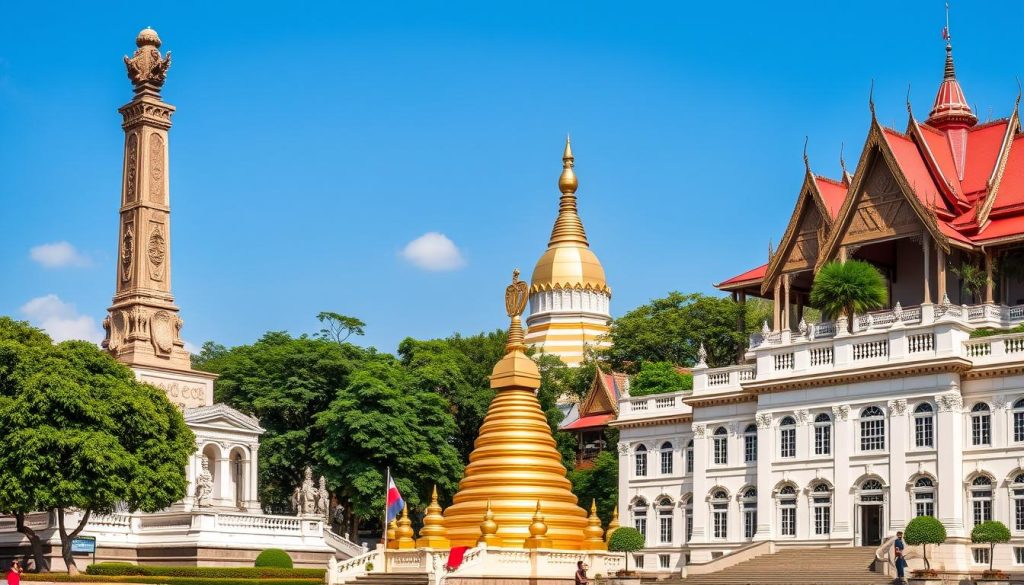
The Ho Phrakeo Museum was built in the 16th century. It was meant to house the Emerald Buddha. This place is a key part of Vientiane historical sites and shows Laos’s rich culture.
After the Emerald Buddha moved to Bangkok in 1779, the temple’s importance waned. But, it was rebuilt in the 19th century under French rule.
In the 1970s, the Pathet Lao government turned it into a museum. Now, people can explore Vientiane’s historical sites and learn about Laos’s history. The museum shows off traditional Laotian architecture.
Its design is inspired by Buddhism, with intricate details. This shows the mix of religion and art.
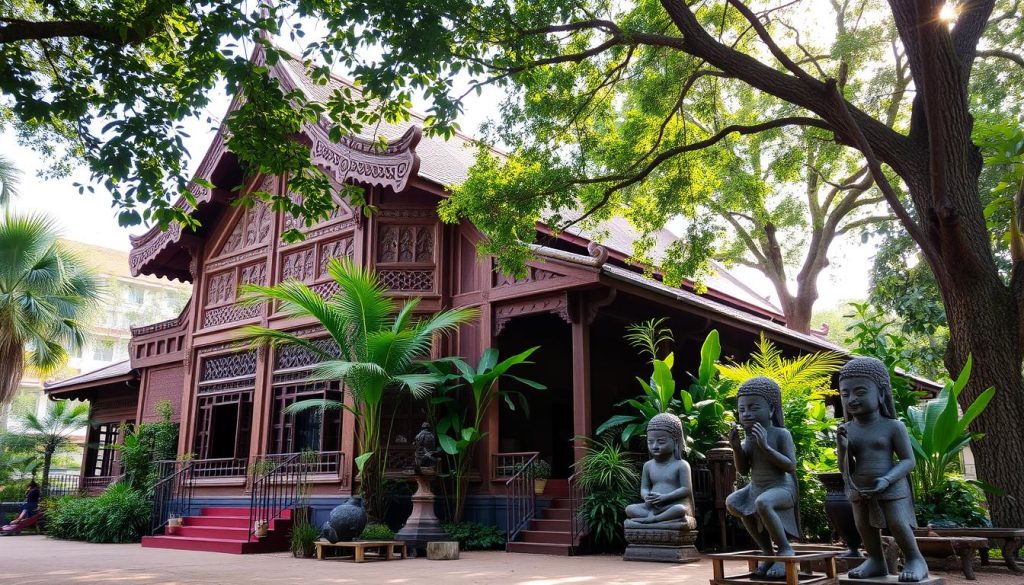
The temple’s layout is special, with a cruciform design. This allows for chapels and halls for events. Efforts to save Ho Phrakeo are ongoing, with help from around the world.
Despite issues like climate change and tourism, the museum is a key part of Laos’s story.
| Year | Event |
|---|---|
| 1565 | Ho Phrakeo originally constructed |
| 1779 | Emerald Buddha relocated to Bangkok |
| 19th Century | Reconstruction during French colonial rule |
| 1970s | Converted into a museum |
| Present | Stable conservation status, ongoing preservation efforts |
Wat Ong Teu: The Temple of Bronze Statues
Wat Ong Teu is a key historical site in Vientiane, blending culture and architecture. It was built by King Setthathirath I in the 16th century. After being destroyed, it was rebuilt in the 19th and 20th centuries. Today, it’s a top cultural site in Vientiane, known for its grand architecture and rich history.
Exploring the Temple’s Structure
The design of Wat Ong Teu mixes Laotian culture with Indian architecture. Its entrance gate is striking, marking the shift from the everyday to the sacred. It has unique features like:
- Baroque frieze adorned with carved and gilded vine leaves.
- A pointed double archway showcasing intricate designs.
- The Naga, a mythical serpent, positioned as the guardian at the entrance.
Inside, wooden doors and windows are decorated with Buddhist images. The roof combines Asian styles, with curved roofs to keep evil spirits away. The French used modern techniques in its rebuilding.
Unique Features of Wat Ong Teu
The temple is famous for its large bronze Buddha statue, Phra Ong Teu. It’s over 6 meters tall and sits in meditation. Wat Ong Teu Mahawihan is not just a place of worship but also a school since 1929. It teaches the Theravada Buddhist tradition.
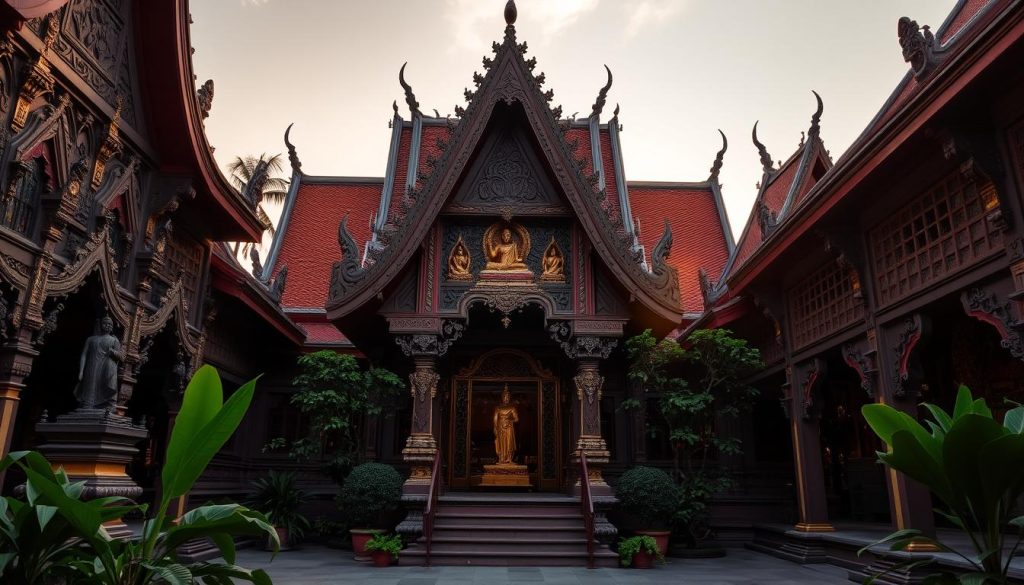
Visitors can see this important temple from 8:00 am to 5:00 pm daily. There’s no entrance fee. Its rich history and easy access make it a must-see in Vientiane.
Kaysone Phomvihane Museum: A Reflection on Laos’ History
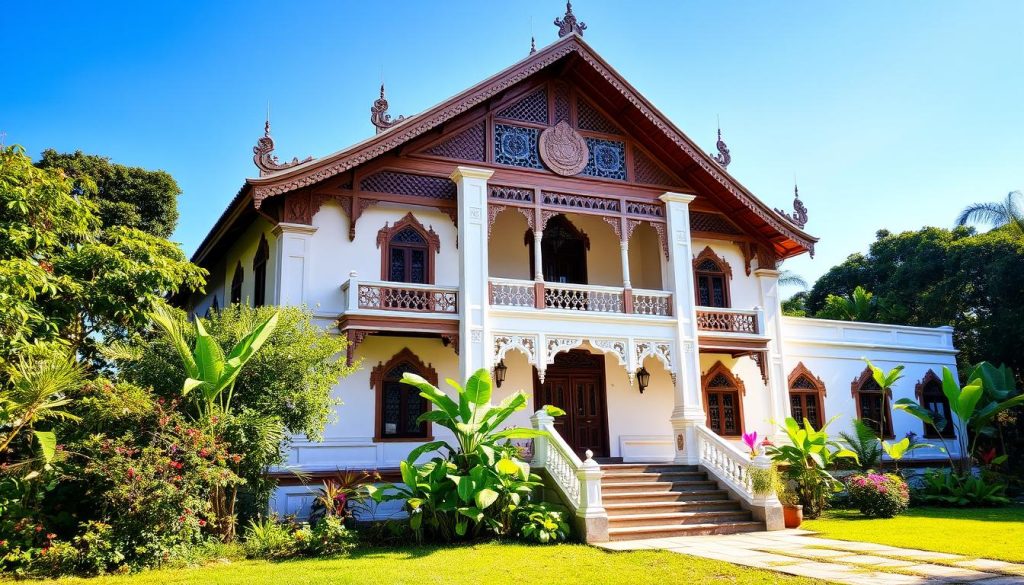
The Kaysone Phomvihane Museum is a key tribute to Laos’ leader. It opened on December 11, 2000. It shows Laos’ history through artifacts, documents, and multimedia.
In Vientiane, the museum tells Kaysone Phomvihane’s story. He went from student activist to Laos’ first Prime Minister. His leadership is documented, giving insight into Laos’ political growth.
You can easily get to the museum by Tuk-tuk, taxi, bicycle, or walking. It’s open from 8:00 am to 4:00 pm on weekdays. It welcomes both locals and tourists to its exhibits.
When visiting Vientiane historical sites, don’t miss the Kaysone Phomvihane Museum. It’s a key place to learn about Laos’ history and its hero.
Conclusion
Exploring Vientiane’s historical sites lets you dive into Laos’ rich culture and spirituality. Landmarks like Pha That Luang and Buddha Park tell stories that shaped the nation. These sites not only show the city’s charm but also highlight Laos’ lasting legacy.
Vientiane is known for being affordable yet lively. You can explore markets, try local food, or enjoy the Mekong River views. Walking through ancient temples and colonial buildings shows why Vientiane is a top spot for both history buffs and casual visitors.
Plan to spend at least three days in Vientiane to fully experience it. You’ll find a city that welcomes you to explore its history, peaceful landscapes, and friendly culture. Vientiane is a perfect mix of old and new, offering an experience you won’t forget.