Dead Sea’s Fate: Is the Dead Sea Disappearing?
Have you ever looked at the Dead Sea and wondered if it’s more lucky than it seems? Recent studies show that the Dead Sea might disappear soon. It used to be over 50 miles wide, but now it’s about 30 miles. This shows how serious its situation is.
It’s losing three feet every year. This loss is due to human actions and natural events. The consequences for the environment are huge.
The situation is critical. Sinkholes and less water are harming the area’s balance. Learning why the Dead Sea is drying up helps us understand the big challenges it faces. These challenges affect not just the local area but the whole world.
Introduction to the Dead Sea
The Dead Sea is known for its very salty water. It’s the lowest point on Earth, making it easy to float on its surface. Because of its high salt, no living things can survive in it, earning it the name Dead Sea.
Many people visit the Dead Sea for its healing properties. Yet, the Dead Sea ecology faces threats from human actions and environmental issues. This delicate balance is at risk.
The Dead Sea history is rich and fascinating. It’s home to sites like Masada and the Dead Sea Scrolls. These finds are important to Jews and Christians, showing the area’s deep historical value.
Exploring the Dead Sea, you feel the presence of ancient times. The landscapes tell stories of long-lost civilizations.
But, the Dead Sea faces big problems today. It’s losing water fast, shrinking by up to 4 feet a year. Over fifty years, its size has dropped by a third. This situation needs quick action to save it for the future.
Understanding the Geography of the Dead Sea
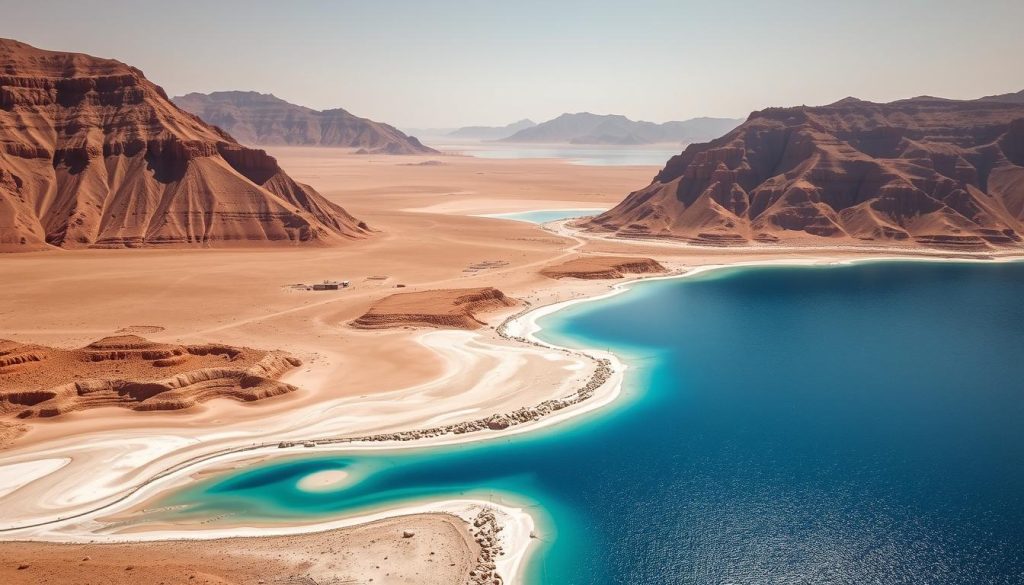
The Dead Sea is the lowest point on Earth, sitting at about 430.5 meters (1,412 feet) below sea level. It’s a lake formed by the Syrian-African Rift Valley over millions of years. The mountains around it create a natural basin that holds freshwater from the Jordan River and mineral-rich springs.
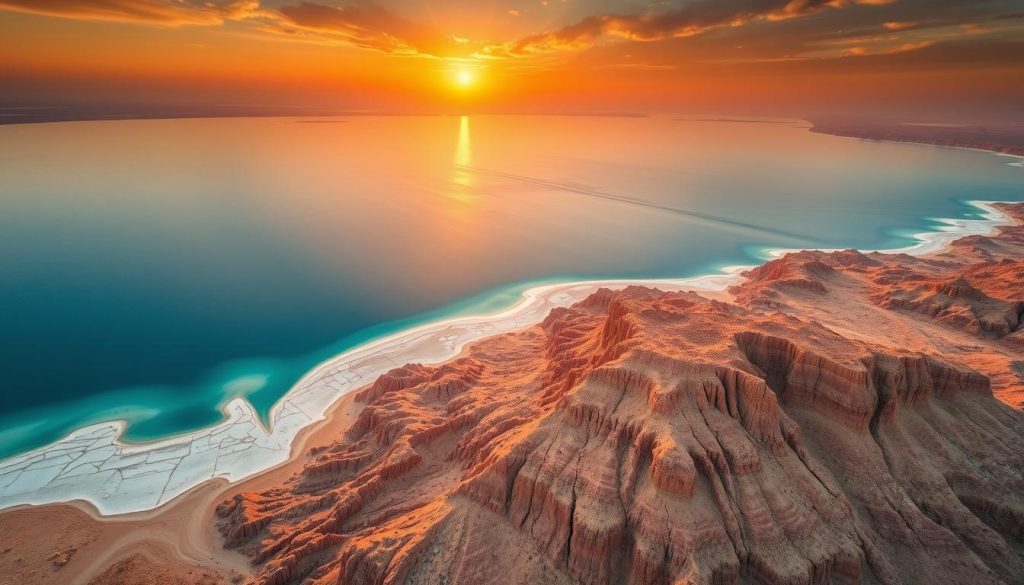
The Dead Sea’s size has changed a lot, shrinking from 1,050 km² (410 sq mi) in 1930 to 605 km² (234 sq mi) in 2019. Its northern part is 50 kilometers (31 miles) long and up to 15 kilometers (9 miles) wide. It’s the deepest hypersaline lake, with a depth of 304 meters (997 feet).
The Dead Sea is incredibly salty, with a salinity of 342 g/kg. This is about 9.6 times saltier than the ocean. Its unique environment supports only certain types of life. The area gets very little rain, with the north getting about 100 mm (4 in) and the south around 50 mm (2 in) each year.
The geography of the Dead Sea is crucial for the communities and ecosystems around it. Knowing about it helps us understand the challenges and changes the Dead Sea is facing today.
Is the Dead Sea Disappearing?
The question “Is the Dead Sea disappearing?” worries many. The water levels are dropping fast, losing more than a meter each year. This change is a big problem for the Dead Sea’s special chemistry and its natural beauty.
Rate of Decline in Water Levels
The Dead Sea’s water surface has shrunk by about a third since the 1960s. Many things cause this drop. For example, mining in Israel and Jordan takes a lot of water, about 500 million cubic meters a year. This is about 25% of the water lost from the Dead Sea.
Also, the National Water Carrier project takes water from the Sea of Galilee. This makes the problem worse.
Historical Context of Water Levels
Water levels in the Dead Sea used to be more stable. In the past, natural runoff gave it about 300 million cubic meters of water each year. But now, it gets only about 100 million cubic meters a year.
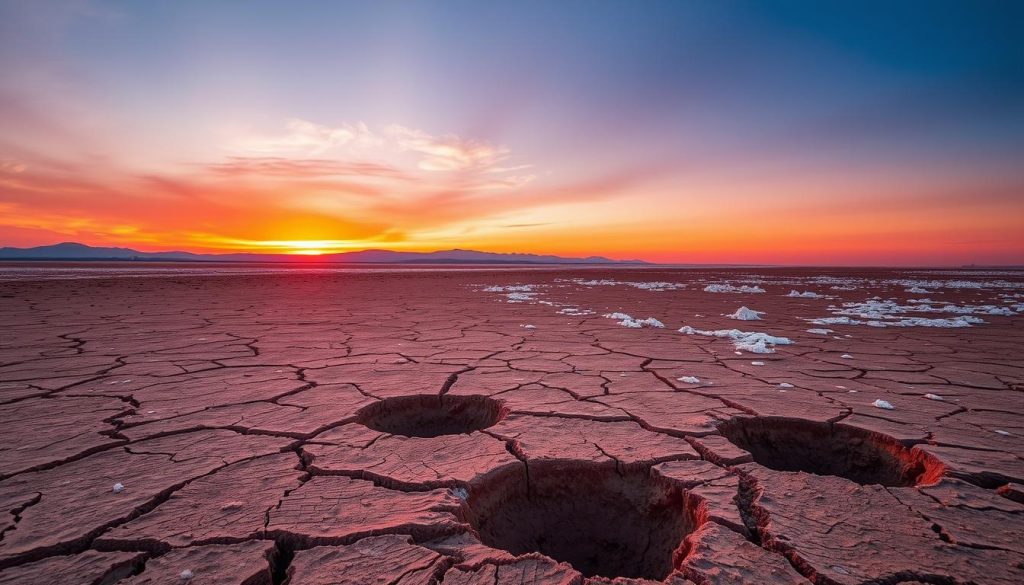
This big change shows we need to find ways to save the Dead Sea. Over 6,000 sinkholes have formed along the Israeli shore in 40 years. This shows how urgent it is to fix the Dead Sea’s problems.
Dead Sea Environmental Issues
The Dead Sea faces serious environmental challenges. These come from both natural and human causes. It’s vital to tackle these issues to keep this unique place healthy and sustainable.
Impact of Human Activity
Human actions have greatly harmed the Dead Sea. Over fifty years, it has lost a third of its size. Most of the Jordan River’s water is used for farming, leaving the Dead Sea with just 5% of its former water.
Every year, the Dead Sea loses over a meter of water. This has caused severe environmental damage.
- More than 800,000 visitors travel to the Dead Sea each year, attracted by its unique features.
- Ahava Dead Sea Laboratories generates nearly $150 million in sales annually, fueled by the thriving cosmetics industry valued at $723 million in 2021.
- Alarming statistics reveal over 3,000 sinkholes forming on the western side due to these declining water levels.
Climate Change Effects
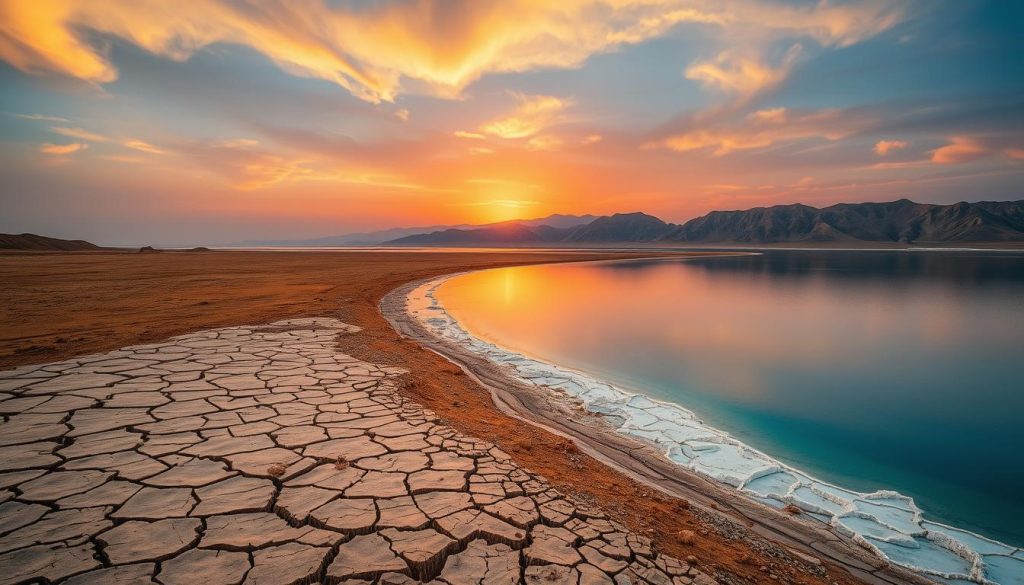
Climate change adds to the Dead Sea’s problems. Warmer temperatures make the water evaporate faster, increasing salt levels. If trends continue, the Dead Sea could drop to 1,800 feet below sea level by 2100.
Without action, the Dead Sea might disappear by 2050. This would be disastrous for local ecosystems and economies that rely on it.
Consequences of Dead Sea Shrinking
The Dead Sea’s shrinking has big effects on the environment and local people. Water is going down by over a meter each year. This creates big problems like sinkholes along the Dead Sea’s banks.
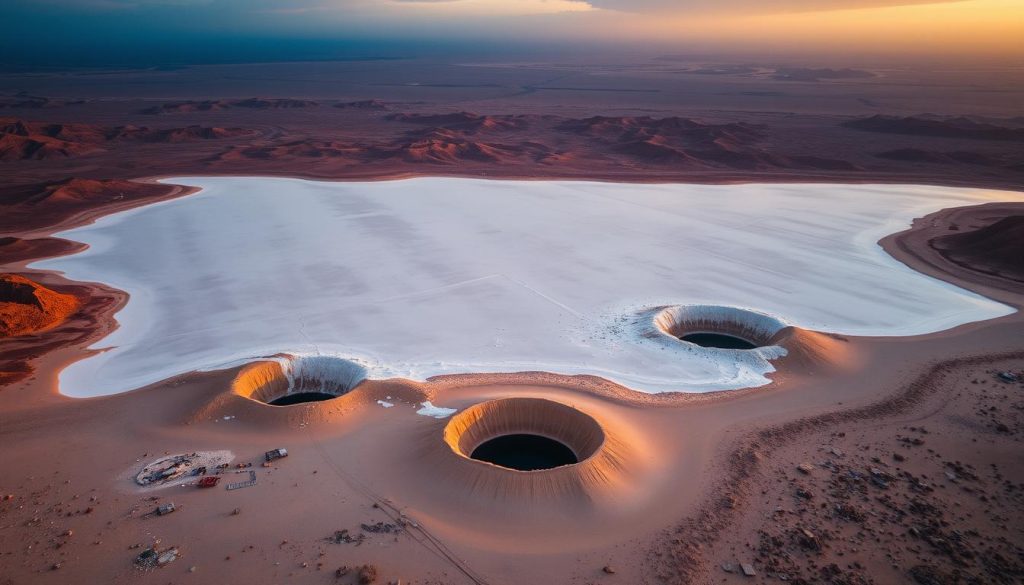
More than 8,000 sinkholes have appeared in 40 years. These holes are a big problem for people living and working nearby.
Formation of Sinkholes
Sinkholes happen when salt deposits erode because of fresh water. As the water goes away, these areas collapse suddenly. This is dangerous for roads and farms.
People have to be careful because of these sinkholes. It’s hard to do daily tasks safely.
Risks to Local Infrastructure
As the land changes, roads and buildings near the sea are at risk. Sinkholes can swallow them, making travel hard. Resorts and other tourist spots might get cut off.
This hurts the local economy. Places that rely on tourism and farming struggle. It makes planning and building harder for cities.
| Consequence | Description |
|---|---|
| Sinkhole Formation | Over 8,000 sinkholes formed in 40 years, causing sudden land collapses. |
| Infrastructure Damage | Risk of roads and buildings being swallowed, affecting accessibility. |
| Economic Impact | Tourism and agriculture suffer due to the hazards presented by sinkholes. |
Water Levels in the Dead Sea
The Dead Sea’s water levels are dropping fast, worrying many. This change is clear when we compare today’s water levels to the past. Knowing these changes helps us understand the Dead Sea’s future.
Current Water Contents and Measurements
The Dead Sea is now over 1,300 feet below sea level. Its water is ten times saltier than the ocean’s, creating a unique environment. Sadly, the water level has dropped to just 5% of what it was, mainly because of human activities.
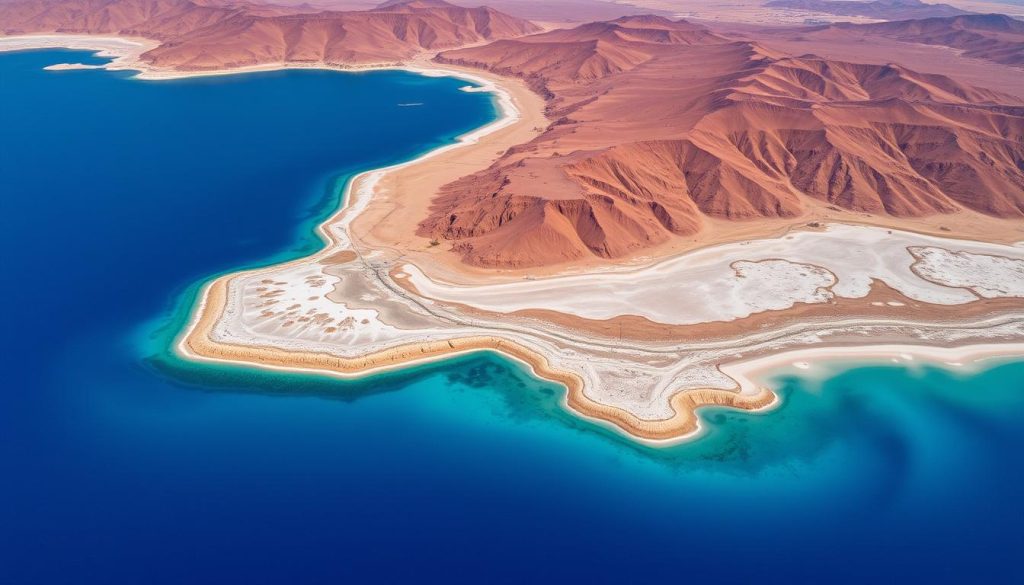
The lake has shrunk to about 30 miles long, down from 50 miles. This shrinkage has made swimming rare and has closed all beaches in the northern basin.
Comparison Over the Decades
In the last fifty years, the Dead Sea has lost a third of its size. Since the 1990s, it has dropped by over 25 meters. If this keeps up, the Dead Sea could disappear by 2050.
Experts say we lose about three feet of water each year. This is alarming. The Dead Sea once drew two million tourists yearly, but now sinkholes are forming, threatening its future as a tourist spot.
| Year | Length of Dead Sea (miles) | Estimated Water Inflow (% of original) | Average Salinity (%) |
|---|---|---|---|
| 1970 | 50 | 100 | 26 |
| 1990 | 45 | 75 | 30 |
| 2020 | 30 | 5 | 33 |
| Projected 2050 | N/A | 0 | 34+ |
Dead Sea Conservation Efforts
Many groups are working hard to save the Dead Sea. They focus on sustainable ways to bring back this special place. Their goal is to keep the Dead Sea alive for future generations.
Organizations Involved in Conservation
Friends of the Earth Middle East is leading the charge. They want to make the Dead Sea a UNESCO World Heritage site. This would help protect it from harm and ensure it’s considered in development plans.
Other important groups include local and international NGOs, scientists, and government agencies. They work together to spread the word and start meaningful projects to manage water better.
Proposed Solutions to Replenish Water Supply
There are new ideas to add water back to the Dead Sea. The Red Sea-Dead Sea Conveyance Project is one plan. It would bring water from the Red Sea to the Dead Sea, adding about 1 billion cubic meters each year.
This could slow down the Dead Sea’s water loss, which is currently losing about one meter annually. It’s also important to increase water from the Jordan River. Working together and using water wisely can help keep the Dead Sea healthy.
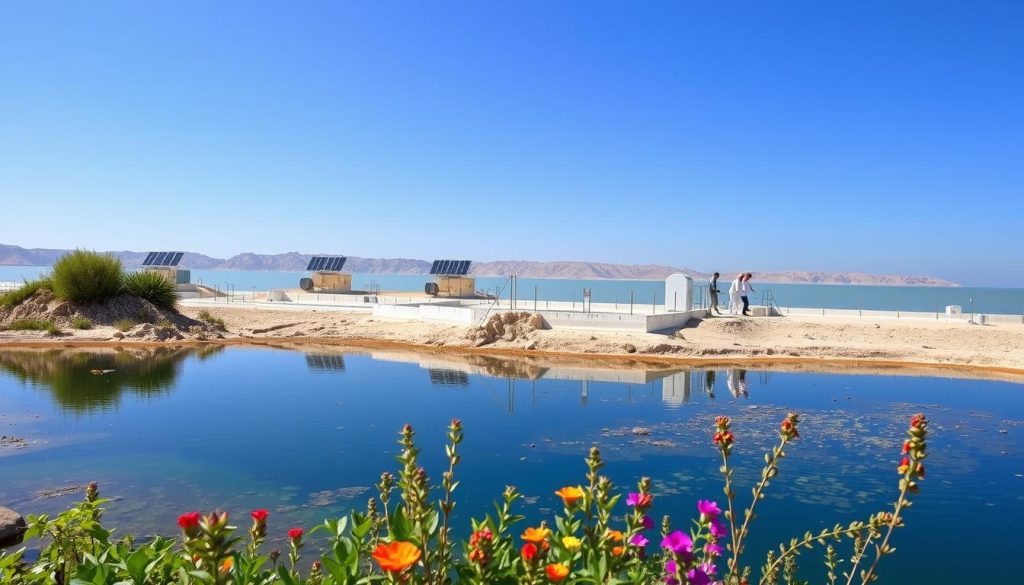
Impact of Dead Sea Evaporation
The evaporation of the Dead Sea poses big problems for the environment and economy. As the water level drops, local ecosystems face huge changes. This puts many species at risk.
The decrease in freshwater and loss of habitats harm plants and animals unique to the area. Birds that stop here during migration find less food, threatening their survival. Saving these habitats is crucial as evaporation’s effects worsen.
Effects on Local Ecosystems
The Dead Sea’s evaporation has big effects on local ecosystems. Many living things depend on steady water levels. As evaporation speeds up, habitats for plants and animals shrink, leading to less biodiversity.
For migratory birds, finding food becomes harder as their usual spots disappear. We need quick action and new strategies to save what’s left.
Economic Implications for Tourism
Tourism also feels the pinch. The Dead Sea’s unique features draw visitors worldwide for wellness and adventure. But, as water levels drop, getting to resorts becomes harder, cutting down on visitors.
This drop in tourism hurts local economies that count on visitors for income. It’s clear we need sustainable tourism to protect the ecosystem while still offering great experiences.

Dead Sea Drying Up: A Global Concern
The drying up of the Dead Sea is a big deal worldwide. It’s not just a local issue. It’s a mix of human actions, water politics, and environmental problems. These factors affect both nearby communities and global relations.
Regional Water Politics
Water politics in the region are key to the Dead Sea crisis. Countries like Israel, Jordan, and Syria are taking freshwater away from the Dead Sea. They need it for drinking water and farming.
This has caused the Dead Sea to shrink by about four feet every year. Old disputes make it hard for these countries to work together. Israel’s mining of minerals like potash also hurts the environment.
Potential Global Environmental Impact
The Dead Sea’s drying has big environmental effects worldwide. As it shrinks, it creates holes in the ground. These holes threaten buildings and homes.
Experts think the Middle East might get even drier if warming keeps going. This could lead to more water fights and make things worse between countries. Saving the Dead Sea is about more than just a lake. It’s about water, climate, and people’s lives.
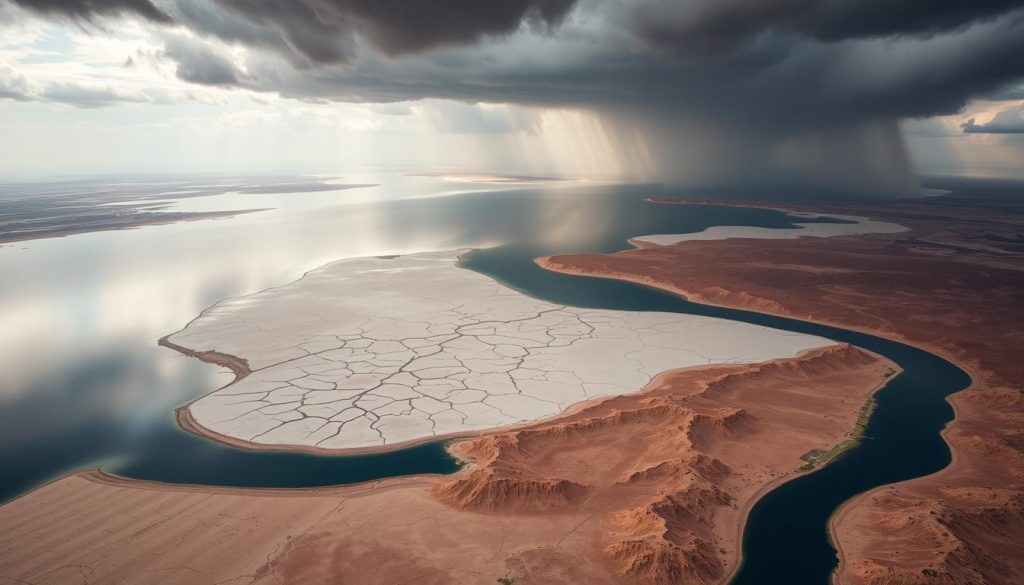
| Year | Water Level Change (Feet) | Current Depth (Feet) | Surface Area Change (%) |
|---|---|---|---|
| 1970 | – | 1,000 | 0 |
| 2023 | -4 | 950 | 15 |
Conclusion
The Dead Sea’s decline shows a bigger environmental crisis. It’s caused by human actions and climate change. The water line is falling three feet every year. This makes saving the Dead Sea very urgent.
Knowing about these problems helps start talks on saving the environment. This isn’t just for the Dead Sea but for all ecosystems. The Jordan River, the Dead Sea’s only water source, is being used for farming. We need to work together to protect the Dead Sea.
The Dead Sea’s situation shows how important it is to protect our planet. Rising temperatures and less rain will make things harder. We must work together to keep the Dead Sea safe for the future.