Currency in Thimphu: Discover Bhutan’s Money System
Ever thought about how a small kingdom in the Himalayas handles its economy? Bhutan’s money system, seen in Thimphu, the capital, shows a lot about the nation’s identity and traditions.
In this article, we’ll dive into Bhutan’s currency system. You’ll learn about the Ngultrum, the main currency. Introduced in 1974, it’s more than just money; it’s a symbol of Bhutan’s unique character and values. We’ll explore the world of money in Thimphu, including the evolution of its currency, the role of the Indian Rupee, and tips for managing your money while visiting.
Introduction to Bhutan’s Currency System
The currency system in Bhutan shows the country’s economic journey and its move to modern money. The Ngultrum, Bhutan’s currency, started in 1974. It replaced a barter system that was common in the area. This change was a big step towards making Bhutan’s money system like the rest of the world’s.
In Thimphu, the capital, the Ngultrum is key for buying and selling things. Knowing about this currency helps understand Bhutan’s economy, its strong link with India. The Ngultrum is tied to the Indian Rupee, keeping trade stable. Learning about Thimphu’s currency makes visiting this beautiful country better.
The Bhutan money system has different money types for daily deals. The Royal Monetary Authority of Bhutan manages these rules, helping the currency work well. With a 5.2% inflation in 2015, keeping the Ngultrum’s value is a big goal for Bhutan’s economy.
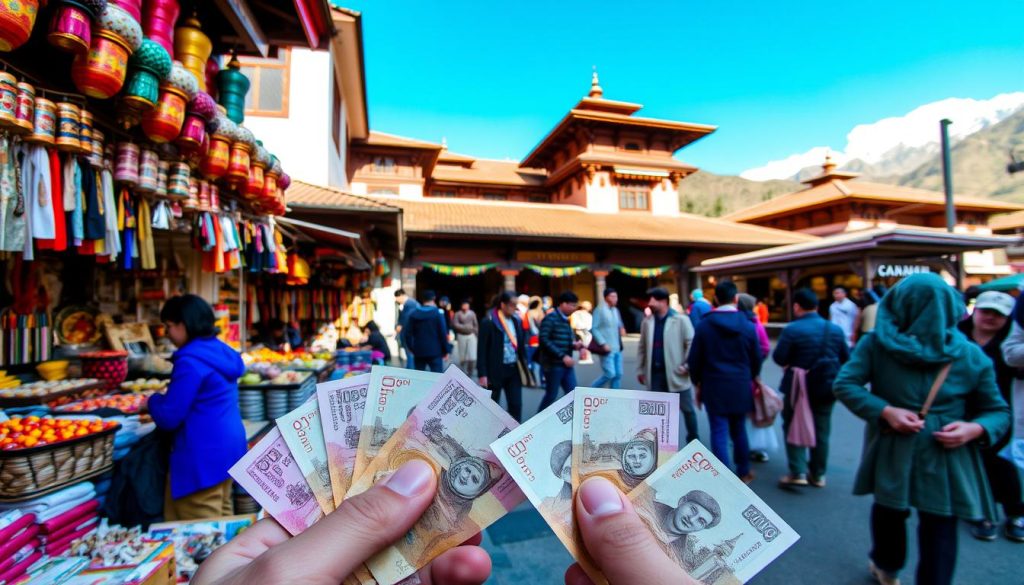
What is the currency used in Thimphu?
The currency in Thimphu is the Ngultrum. It’s a key part of Bhutan’s money system. The Ngultrum was introduced to make Bhutan’s money easier to use, during the modernization in the late 20th century. Learning about the Ngultrum history shows how Bhutan’s money changed from old ways to new ones.
Introduction to Ngultrum
The Ngultrum, or BTN, is Bhutan’s official money. It’s split into 100 Chetrum. Coins are used for small amounts, and paper money for bigger ones. Since 1974, the Ngultrum has been the same value as the Indian Rupee, which affects its use.
Historical Context and Evolution
Before, Bhutan used a barter system with things like rice and wool. The move to coins started in the late 18th century. The Ngultrum was officially launched in 1974, marking a big change in Bhutan currency evolution. This change shows how Bhutan’s economy and society moved from old to new ways of handling money.
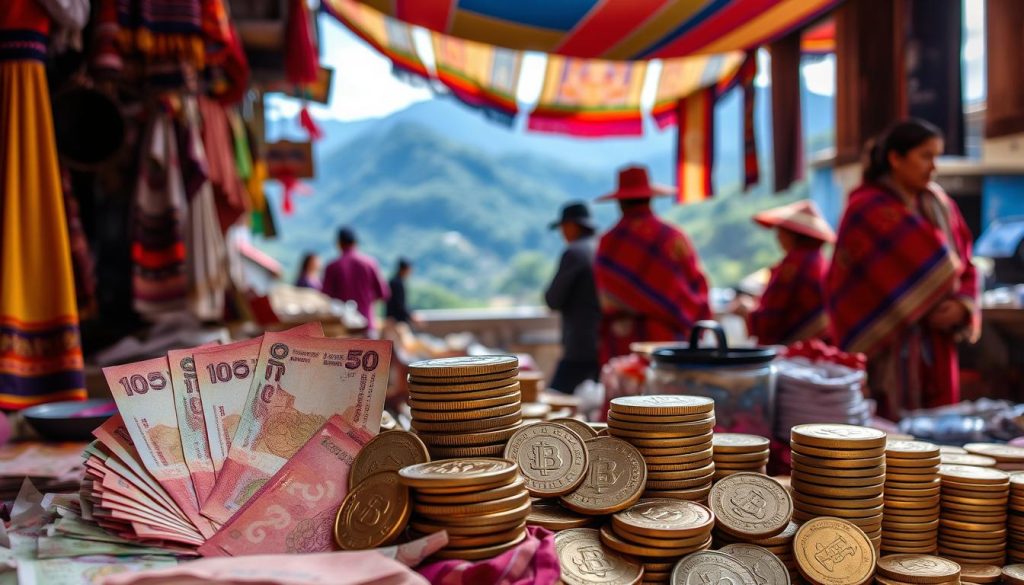
Understanding the Ngultrum
The Ngultrum is key to Bhutan’s economy and culture. It has been the official currency since 1974. Its design features Ngultrum show the country’s values and heritage. Learning about the denominations of Ngultrum and their designs helps us appreciate this unique currency.
Current Denominations of Ngultrum
The Ngultrum is divided into 100 chhertum. Coins come in several denominations:
- Ch. 0.20
- Ch. 0.25
- Ch. 0.50
- Nu. 1
- Ch. 5
- Ch. 10
Banknotes have larger denominations of Ngultrum:
- Nu. 1
- Nu. 5
- Nu. 10
- Nu. 20
- Nu. 50
- Nu. 100
- Nu. 500
- Nu. 1000
Design Features of the Ngultrum
The design features Ngultrum highlight Bhutan’s rich culture. Each note and coin shows important parts of the country’s history and heritage. Landmarks, symbols, and leaders are featured, telling a story of Bhutan.
The 2006 banknote series continues this tradition. It makes the currency not just useful but also a piece of art that shows national pride.
| Denomination | Type | Details |
|---|---|---|
| Nu. 1 | Banknote | First issued in 1974, with significant cultural symbol |
| Nu. 10 | Banknote | Features a key national landmark |
| Ch. 0.50 | Coin | Made from aluminum, introduced early in 1974 |
| Nu. 500 | Banknote | One of the higher denominations, reflects modern Bhutan |
| Ch. 10 | Coin | Bronze material introduced in 1979, popular with locals |
The Historical Journey of Currency in Bhutan
The history of currency in Bhutan is quite interesting. It started with a barter system, where people traded goods and services directly. This system worked but wasn’t efficient for a growing economy.
Transition from Barter to Currency
The journey of currency in Bhutan began with Cooch Behar coins in 1789. These coins were the first step towards a more advanced monetary system. By the mid-20th century, Bhutan began to formalize its currency.
The introduction of Tigchung coins was a big step before the Ngultrum. In 1966, there was a plan to mint coins in India. This showed Bhutan’s economic growth. The Bank of Bhutan was established in 1968, marking a shift towards modern banking.
Introduction of Coins and Paper Notes
The introduction of coins was a key moment in Bhutan’s history. The first coins were silver, called chetrum. In 1974, the Ngultrum became Bhutan’s official currency.
The first paper notes were one, five, and ten Ngultrum. They were designed by Khikhor Lopon and PB Chitnis and printed in India. By 1979, the Ngultrum was the only legal currency in Bhutan. The growth of banking services helped establish a stable financial system.
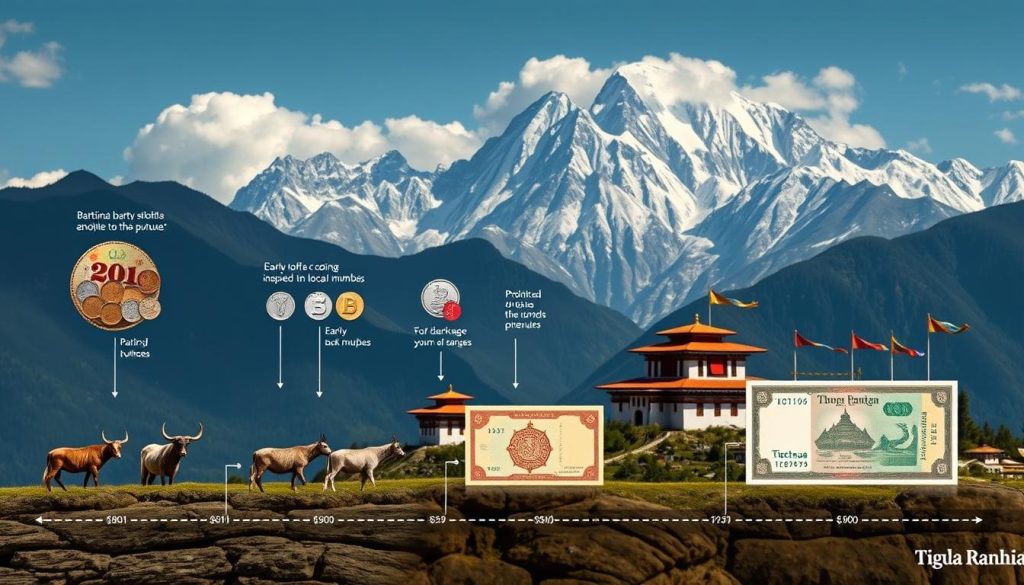
| Year | Event |
|---|---|
| 1789 | Circulation of Cooch Behar coins begins. |
| 1966 | Proposal to mint Tigchung coins in India. |
| 1968 | Establishment of the Bank of Bhutan. |
| 1974 | Launch of the Ngultrum as legal tender. |
| 1979 | Ngultrum becomes the sole legal tender in Bhutan. |
| 1983 | Royal Monetary Authority starts issuing new banknotes. |
The Role of the Indian Rupee in Bhutan
The Indian Rupee is key in Bhutan for daily spending. This is because of the strong economic bond between the two countries. The Ngultrum’s value is tied to the Indian Rupee, making trade and tourism smoother. Knowing how the Indian Rupee is used in Bhutan is important for both visitors and locals.
Pegging of the Ngultrum to the Indian Rupee
The Ngultrum is pegged to the Indian Rupee, making money moves easy between Bhutan and India. This setup keeps the currency exchange stable, helping the economy between the two countries. So, the Ngultrum’s value stays the same as the Indian Rupee, helping everyone.
Usage of Indian Rupees in Bhutan
In Bhutan, Indian Rupees are widely accepted, mainly in big cities like Thimphu and Paro. This makes it easy for tourists to use their money without needing to exchange it right away. But, some Indian Rupee notes, like the 2000 rupee note, might not be accepted everywhere. It’s best to carry smaller notes for easier spending.
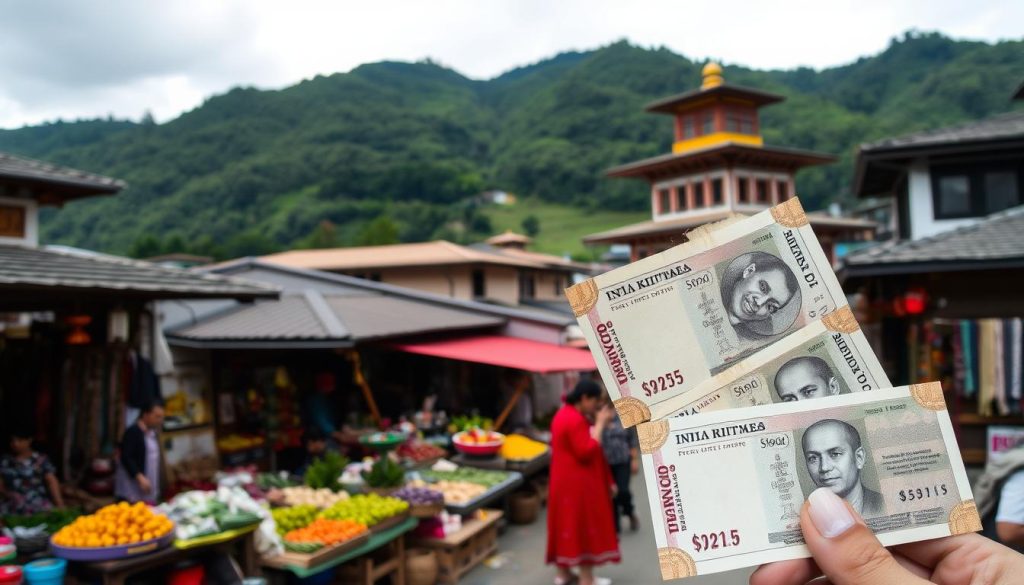
| Currency | Exchange Rate |
|---|---|
| 1 USD | 82.93 BTN |
| 1 CAD | 61.17 BTN |
| 1 EUR | 89.07 BTN |
| 1 GBP | 103.45 BTN |
| 1 HKD | 10.59 BTN |
| 1 AUD | 53.19 BTN |
Currency Exchange in Thimphu
Traveling in Thimphu can be better if you know where to exchange money. The city has many places for you to get local currency. You can choose from banks, currency exchange counters, or hotel services.
Where to Exchange Currency
Banks like the Bank of Bhutan in Thimphu are great for exchanging money. They have many branches around the city. Currency exchange shops also offer good rates.
It’s smart to read reviews before using local shops. Online services like Wise can also exchange money. They often give better rates without extra fees.
Accepted Foreign Currencies
Thimphu accepts some foreign currencies. The most common are:
- U.S. Dollar (USD)
- Indian Rupee (INR)
- Euro (EUR)
- Australian Dollar (AUD)
Not all currencies are accepted. Always check with your exchange service. They usually deal with major currencies.
Carrying small U.S. dollar bills is helpful. $1 and $5 notes are good for small purchases.
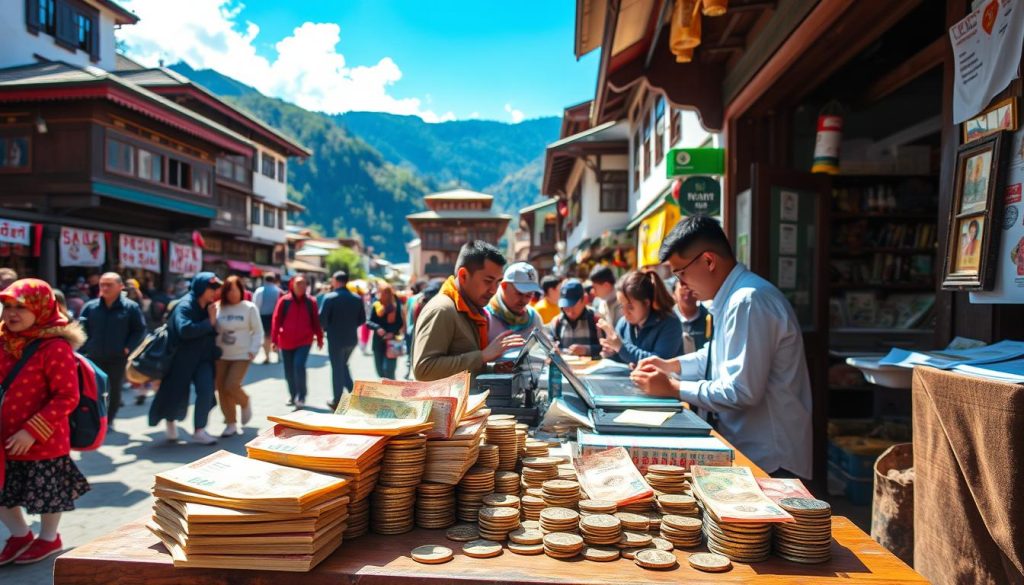
| Currency | Exchange Rate (1 BTN) | Recommended Usage |
|---|---|---|
| US Dollar (USD) | 83.38 BTN | Preferred for transactions |
| Indian Rupee (INR) | Fixed to Ngultrum | Widely accepted |
| Australian Dollar (AUD) | 54.68 BTN | Occasional use |
| New Zealand Dollar (NZD) | 50.87 BTN | Occasional use |
Thimphu’s currency exchange services make your trip easier. Keep cash ready, mainly for areas outside the city center.
Managing Your Money While Traveling in Thimphu
Managing your money in Thimphu is key to a great trip. Carry a mix of cash in Ngultrum and cards. Cash is best for small buys. ATMs at the Bank of Bhutan let you withdraw with Mastercard, but watch the limits and fees.
Knowing the local currency is important. USD is used in big towns, but Ngultrum gives better rates. Indian Rupees are also good, with many denominations accepted.
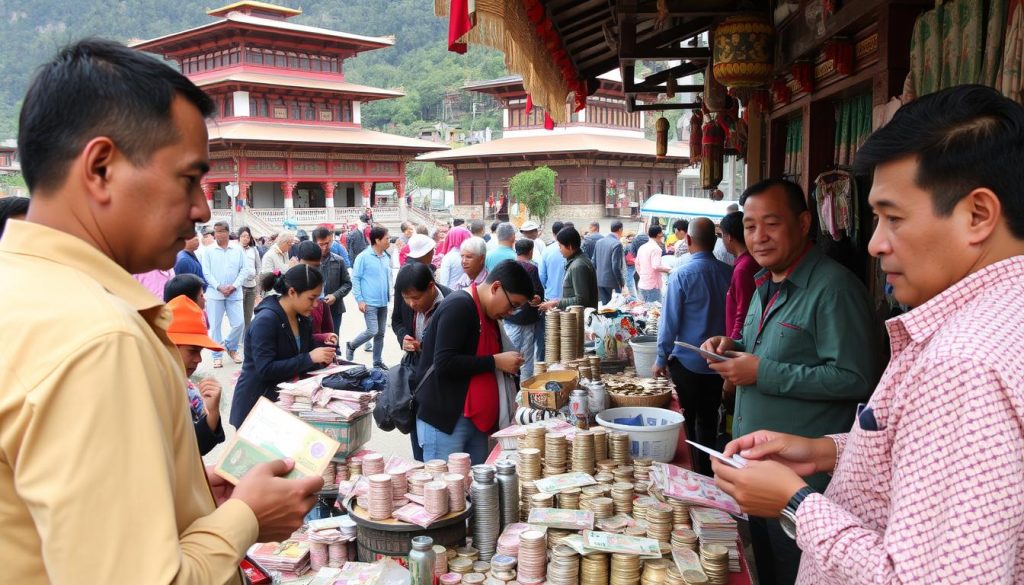
In smaller shops, credit cards might not work. Bring your passport for any payment issues. Plan your money well to enjoy Bhutan’s culture and views.
| Payment Methods | Usage Details |
|---|---|
| Cash (Ngultrum) | Most widely accepted; essential for small purchases. |
| Credit/Debit Cards | Accepted at select establishments in larger towns; not common in rural areas. |
| USD | Accepted in large cities; exchange for better rates. |
| Indian Rupee | Accepted in most towns (excluding old notes); useful for local transactions. |
Coins and Notes: A Closer Look
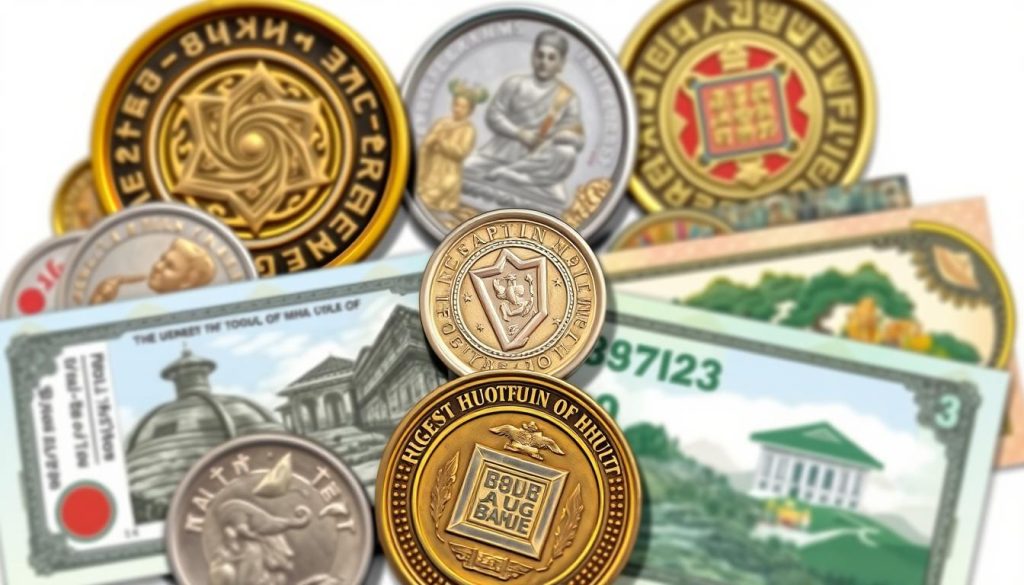
Bhutan’s currency is a mix of tradition and modern use. It includes Bhutan currency coins and detailed banknote designs Ngultrum. These items show the rich heritage of Bhutan.
Physical Characteristics of Coins
Bhutan’s coins come in different values like 1, 5, 10, 20, 25, and 50 Chetrum. They are mostly made of copper and brass. The coins have special inscriptions like “Royal Government of Bhutan” and “Food for All.”
They show Bhutan’s culture through symbols and images. Each coin tells a story, connecting people to Bhutan’s culture.
Significance of Banknote Designs
The banknotes of Bhutan, known as Ngultrum, have more than just value. They show important parts of Bhutanese life. You can find them in values from 1 to 1000 Ngultrum.
These notes feature key historical figures and cultural themes. Their bright colors and detailed patterns make them beautiful. They also share Bhutan’s history, making them special items to collect.
Current Economic Relations and Currency Value
Bhutan’s economy is closely tied to the Indian Rupee, which affects the Ngultrum’s value. The Ngultrum’s fixed rate with the Rupee keeps its value stable. This connection is key to understanding Bhutan’s financial situation.
In 2022, Bhutan’s economy was valued at about $2.707 billion. This translates to a GDP per capita of $3,144. The country’s modest economy is influenced by factors like a 7.35% inflation rate in 2021. These numbers give insight into Bhutan’s economic state.
Trade with India is crucial for Bhutan, with 93.3% of exports going to India and 77.3% of imports coming from there. This close trade relationship means changes in the Rupee’s value can affect the Ngultrum’s rate. This is important for both visitors and businesspeople in Bhutan.
Recent estimates suggest a hopeful GDP growth rate of 4.5% for FY24. This growth shows Bhutan’s ongoing efforts to improve its economy. Knowing about these currency dynamics helps you understand Bhutan’s economic situation better. This knowledge is useful when planning your visit.
| Economic Indicator | Value |
|---|---|
| Population of Thimphu (2021) | 780,000 |
| GDP (Nominal, 2022) | $2.707 billion |
| GDP per Capita (2022) | $3,144 |
| GDP Growth Rate Estimation (FY24) | 4.5% |
| Inflation Rate (2021) | 7.35% |
| Exports to India | 93.3% |
| Imports from India | 77.3% |
| Foreign Direct Investment (FDI) (Dec 2017) | $160.4 million |
| Current Account Balance (2017) | -$547 million |
| Gross External Debt (Dec 2017) | $2.671 billion |
| Government Debt as % of GDP (2017) | 106.3% |
Practical Tips for Using Bhutanese Currency
Traveling in Bhutan means understanding its currency system well. Knowing tips for using Bhutanese currency makes your trip smoother. It’s important to know the current exchange rates and to be careful with cash.
Understanding Currency Conversion Rates
Start by learning the currency conversion rates. Right now, BTN 69 is about USD 1, and BTN 80 is 1 Euro. Rates can change, so check reliable apps or websites for updates.
Using currency conversion tips helps you spend wisely. Knowing the value of foreign currencies is helpful. The Ngultrum (Nu, BTN) is tied to the Indian Rupee at 1:1, making calculations easier for those with Indian Rupees.
Cautions When Handling Cash
Even though cash is common, it’s smart to be careful. Always practice cash handling caution to stay safe. Don’t carry too much cash in public and keep your money in a safe place, like a hidden pouch or locked bag.
ATMs in Bhutan are mostly in big cities like Thimphu and Paro. Credit cards work in fancy hotels and shops, but cash is best for small places. Pick ATMs in safe spots to avoid risks.

Conclusion
The currency in Thimphu is key to enjoying Bhutan’s rich culture. The Bhutanese Ngultrum (BTN) is more than just money. It shows the nation’s traditions and ties with the Indian Rupee. Knowing about the Ngultrum helps you manage your money better while traveling.
Learning about currency exchange is important for a great trip. Using a travel debit card, like a Wise card, saves money. It also avoids high fees. Knowing the mid-market exchange rates helps you use your money wisely.
Understanding the Ngultrum’s role in Bhutan’s economy makes your trip better. It also shows respect for Bhutan’s customs. Carry both cash and cards to have a smooth time in Thimphu.