Conservation Efforts in Lumbini: Safeguarding Heritage
Have you ever thought about how Lumbini, a place of deep cultural importance, can keep its sacred nature alive? It’s the birthplace of the Lord Buddha and a UNESCO World Heritage site. Lumbini faces many challenges in preserving its heritage.
What efforts are being made to save Lumbini? This article will look into the different ways Lumbini is working to protect its heritage. You’ll learn about restoration projects and efforts to keep the environment safe. These actions are crucial to make sure Lumbini’s legacy lives on for future generations.
Lumbini: A Sacred Heritage Site
Lumbini is in the Rupandehi district of Nepal. It’s a sacred place for millions of pilgrims worldwide. It’s where Siddhartha Gautama, later known as the Buddha, was born.
Exploring Lumbini, you’ll see amazing archaeological finds. These show its deep history and spiritual value.
The Ashoka Pillar is a key feature here. It shows Emperor Ashoka’s commitment to Buddhism. The Sacred Garden nearby is peaceful, perfect for reflection.
UNESCO has named this area a World Heritage Property. It’s about 130 by 150 meters. Here, visitors learn about early Buddhist pilgrimages and the beliefs that shaped this place.
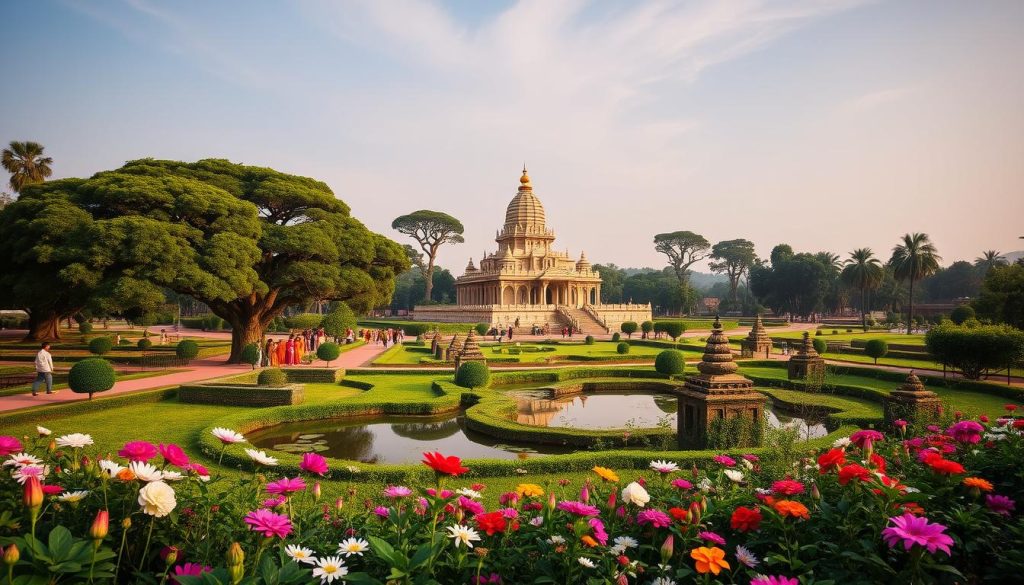
In Lumbini, every stone and path tells a piece of Buddhism’s story. The site’s beauty blends with nature, showing harmony. Visiting here lets you connect with Buddhism’s history and its lasting impact on culture.
What are the conservation efforts in Lumbini?
Lumbini is a key place for saving its special heritage. Many efforts are being made to protect this sacred site. People from around the world are working together to keep its culture and history safe.
Learning about these efforts helps us see why they’re so important. It shows us the value of saving Lumbini’s treasures.
Overview of current initiatives
A big project is the “Strengthening Conservation and Management of Lumbini,” funded by Japan through UNESCO. It ran from 2010 to 2013. It focused on a few key areas:
- Addressing challenges related to archaeological sites
- Building capacity among local experts
- Establishing effective monitoring systems
The Integrated Management Plan (IMP) is central to these efforts. It aims to keep Lumbini safe for future generations. The plan uses teamwork to protect both the site and its surroundings.
Project highlights from UNESCO
UNESCO’s work has uncovered a lot about Lumbini’s past. Recent research found ancient structures from the 6th century BCE. These findings highlight the need for ongoing research into Lumbini’s history.
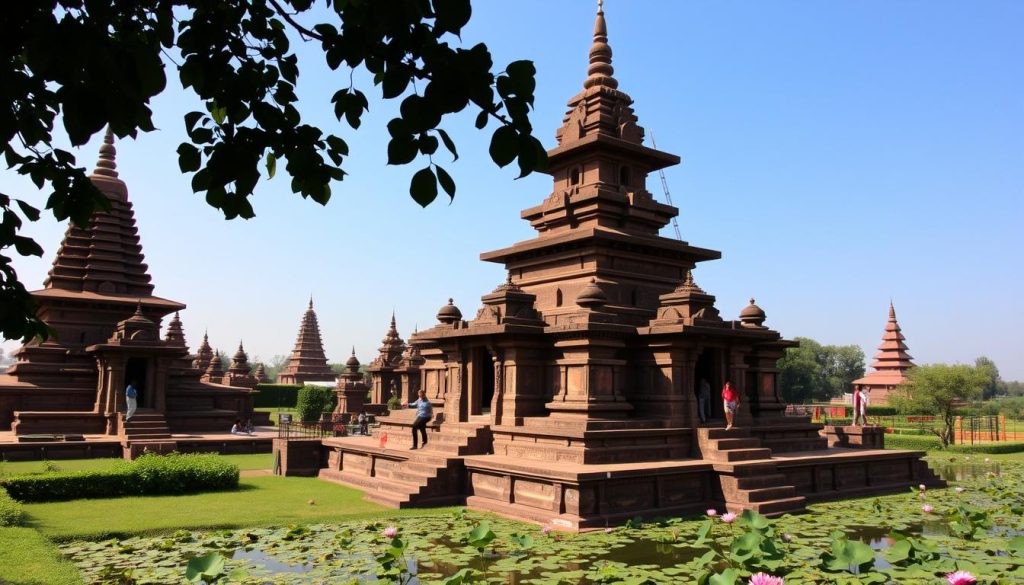
The Role of UNESCO in Lumbini’s Preservation
UNESCO is key in keeping Lumbini safe. They focus on funding collaboration and careful project watching. They get help from both public and private groups, which is crucial for keeping the site and its area safe.
Funding and project collaboration
Local and international teams working together have made a big difference. The Japanese government and many groups have given important money. This money helps with projects that protect the site and promote green practices.
Master Plan development and implementation
The Kenzo Tange Master Plan is a big step for Lumbini, starting in 1978. It aims for a balance between keeping the site safe, welcoming visitors, and involving the community. It has a special area to keep the Sacred Garden safe, making sure new developments help protect it.
| Aspect | Description |
|---|---|
| Funding Sources | Contributions from the Japanese government and various NGOs |
| Key Objectives | Heritage preservation, sustainable tourism, community participation |
| Implemented Features | Buffer zones, archaeological site restoration, infrastructure improvements |
| Stakeholders | Local authorities, international experts, UNESCO |
Lumbini Conservation Initiatives
The work on Lumbini conservation is crucial for keeping its heritage alive. These efforts cover cultural and environmental protection. They aim to create a lasting framework for future generations. Key actions include:
- Restoration of Archaeological Sites: Teams work hard to restore important sites, keeping their history intact.
- Conservation of Significant Markers and Sculptures: The care for cultural markers and sculptures keeps Lumbini’s history alive.
- Integrated Management Plan (IMP): The IMP uses a strategic plan to manage resources, following UNESCO’s guidelines.
The Lumbini Development Trust works with the Department of Archaeology. This partnership ensures conservation efforts meet global standards. It shows a strong commitment to preserving Lumbini’s heritage. This includes both its physical and spiritual aspects, important to millions.
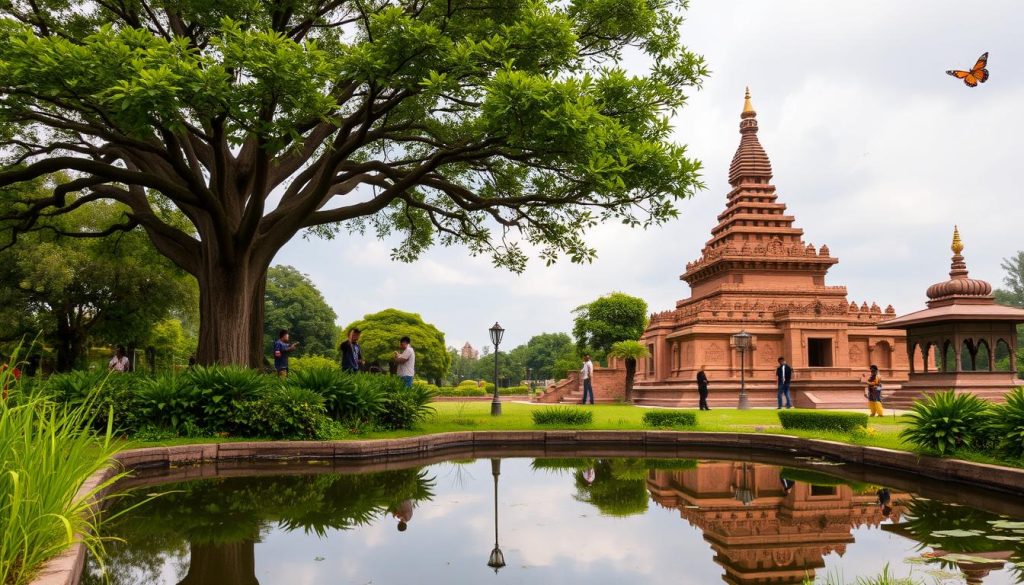
You can help these efforts too. By joining community programs and spreading awareness, you can support Lumbini’s protection. Understanding its importance helps us all work together to preserve it.
Key Preservation Actions in Lumbini
Lumbini is a treasure trove of history and culture. It’s a place where past and present meet. Preservation efforts focus on restoring the site for future generations. This includes protecting it from natural and human threats.
Restoration of archaeological sites
The Maya Devi Temple and the Sacred Garden are key to Lumbini’s preservation. Restoration efforts include:
- Repairing ancient structures to maintain their integrity.
- Improving visitor access to encourage exploration and education.
- Creating informative displays that narrate the site’s historical context.
Markers and sculptures conservation
Conserving historical markers and sculptures, like the Ashoka Pillar, is crucial. This involves:
- Regular assessments to monitor condition and degradation.
- Implementing protective measures against environmental factors.
- Conducting restoration work when necessary to prevent loss of heritage.
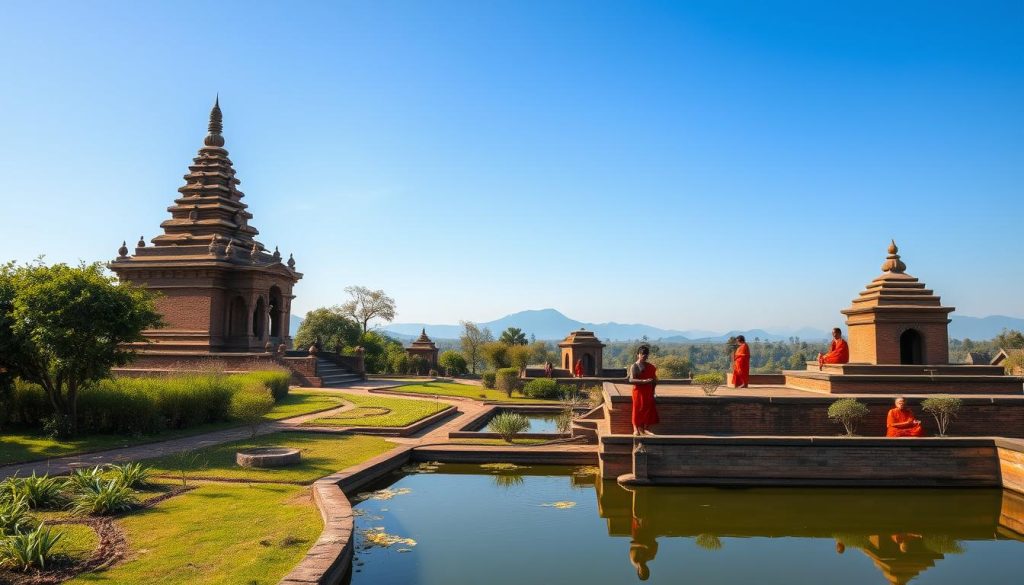
These efforts are vital for Lumbini to remain a place of learning and spiritual growth.
Understanding the Integrated Management Plan (IMP)
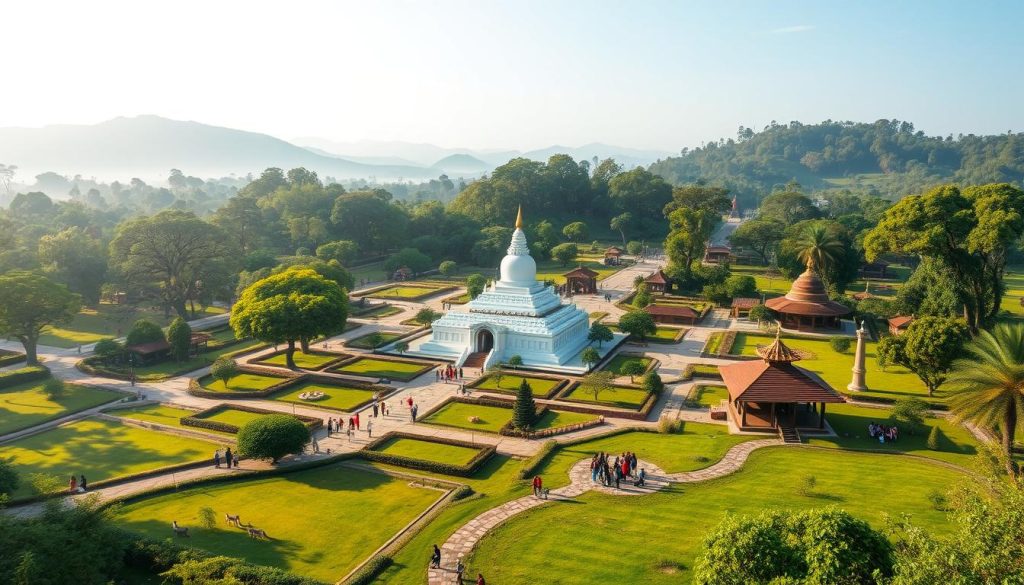
The Integrated Management Plan (IMP) for Lumbini is a detailed plan for managing this famous site. It aims to mix environmental care with tourism and keeping cultural heritage alive. The plan tackles the big challenges Lumbini faces and sets out ways to manage the site sustainably.
Creating the IMP needed teamwork from scientists, policymakers, and local people. It combines science and community views to make a plan that values both nature and culture.
Here’s a brief overview of the major components of the Integrated Management Plan:
| Component | Description |
|---|---|
| Environmental Management | Focuses on preserving natural habitats and biodiversity through targeted Lumbini ecological projects. |
| Community Involvement | Encourages local residents to participate in conservation efforts and decision-making. |
| Policy Recommendations | Offers guidelines for sustainable tourism practices that minimize environmental impact. |
| Long-Term Vision | Aims to safeguard Lumbini’s heritage for future generations through continuous monitoring and adaptation. |
The Integrated Management Plan tries to keep a balance between visitors and protecting Lumbini’s cultural and natural treasures.
Lumbini Sustainability Projects
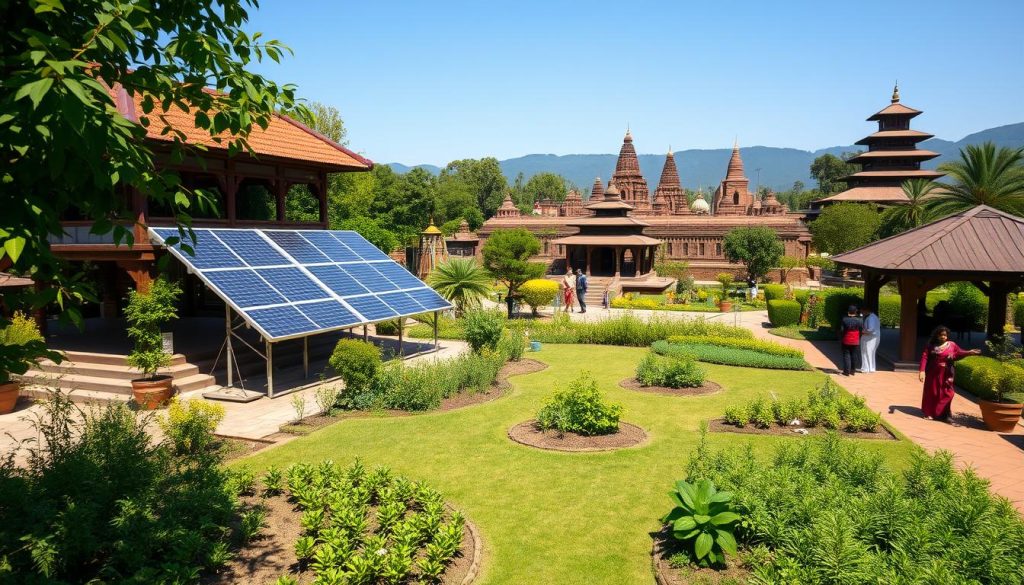
Lumbini’s sustainability projects are key to protecting its natural beauty and religious importance. They aim to keep the environment safe while welcoming visitors. The Johnson program guides these efforts, focusing on reducing the impact of tourism.
It’s all about finding a balance. We want to keep Lumbini sacred and its environment and culture safe.
Johnson and operational guidelines
The Johnson program sets the stage for responsible tourism in Lumbini. It includes important rules:
- Visitor Education: Teaching tourists why saving the environment is crucial.
- Sustainable Practices: Promoting the use of local materials to cut down on carbon emissions.
- Waste Management: Creating effective ways to handle waste and keep the site clean.
- Water Conservation: Working to use less water during pilgrimages.
These steps show Lumbini’s dedication to protecting the environment. They also make sure visitors have a respectful and meaningful time. Lumbini is not just preserving its heritage. It’s also showing the world how tourism can be green.
| Project Focus | Implementation Strategies | Expected Outcomes |
|---|---|---|
| Visitor Education | Workshops, informational signage | Increased awareness about environmental protection Lumbini |
| Sustainable Practices | Use of local suppliers, eco-friendly materials | Lower carbon footprint from tourism |
| Waste Management | Recycling programs, litter cleanups | Cleaner environment, reduced littering |
| Water Conservation | Water use audits, rainwater harvesting | Reduction in water waste |
By focusing on sustainability, Lumbini ensures its beauty and culture will last for generations. It also offers a deep and meaningful pilgrimage experience.
Environmental Protection Efforts in Lumbini
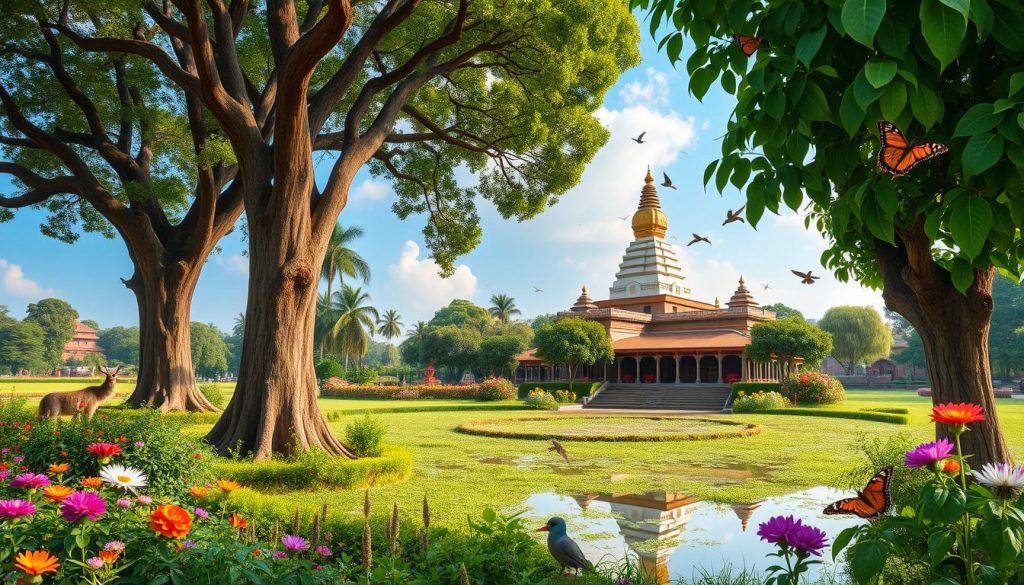
In Lumbini, there are special efforts to protect the environment. These aim to bring back the area’s natural life. The focus is on fixing both plants and animals in the Sacred Garden and around it.
Improving water quality in lakes and ponds is a big goal. This is crucial for the area’s wildlife and plants. To do this, they’re working on controlling pollution caused by more tourists.
Getting the community involved is key. Local people help in caring for the environment. This helps them understand and value nature. Programs teach everyone about the importance of protecting Lumbini’s natural beauty.
Conservation Strategies in Lumbini
Conservation efforts in Lumbini aim to balance tourism and protect heritage. This balance ensures cultural sites are safe while welcoming visitors. It makes sure everyone can enjoy Lumbini’s history without harming it.
Balancing tourism and heritage preservation
Your help in Lumbini’s preservation is key to sustainable tourism. Important projects include:
- Managing visitor numbers to protect sites.
- Creating paths for tourists to avoid damage.
- Starting educational programs to teach about Lumbini’s heritage.
These steps are vital for Lumbini’s sustainability. Teaching visitors about the site’s value helps everyone respect it. This way, Lumbini’s sacred places are preserved for the future.
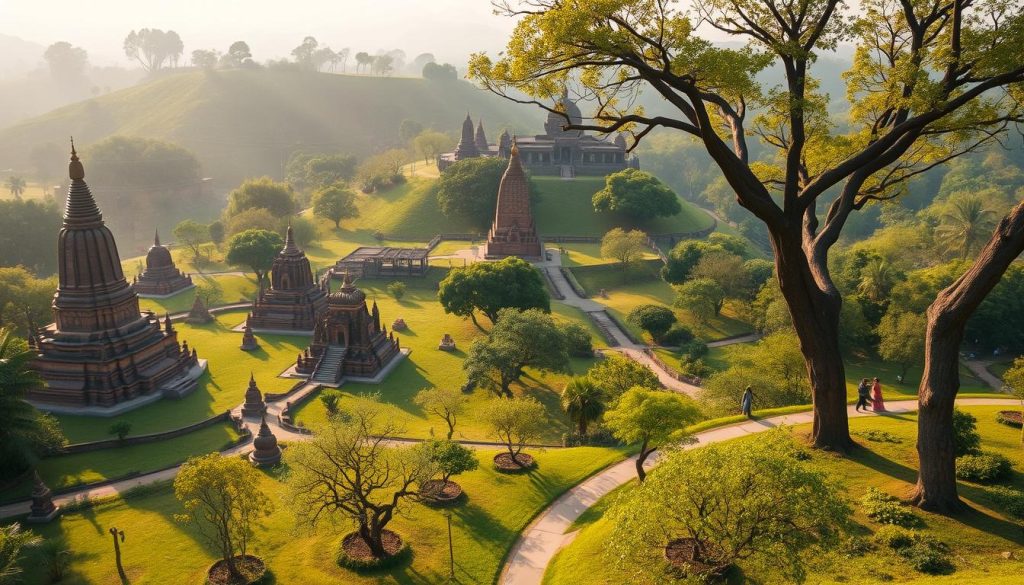
Working together, local groups, communities, and preservationists aim to protect Lumbini’s heritage. They also want to support tourism that helps the local economy. Your support is crucial in keeping these efforts alive.
| Conservation Strategies | Impact on Heritage Preservation | Tourism Benefits |
|---|---|---|
| Visitor management | Protects archaeological integrity | Enhances visitor experience |
| Designated pathways | Minimizes damage to sensitive areas | Increases safety for tourists |
| Educational programs | Fosters cultural appreciation | Encourages responsible behavior |
Community Engagement in Conservation
Community engagement is key to Lumbini’s conservation success. Active participation by locals boosts awareness of Lumbini’s heritage. This lays the groundwork for effective conservation.
Working together, conservationists and community members start projects. These projects promote sustainable living. Some examples include:
- Stewardship programs that encourage local participation in preservation activities.
- Workshops designed to educate community members about the importance of their heritage.
- Volunteer opportunities that enable residents to contribute actively to Lumbini conservation initiatives.
When locals get involved, they become champions for conservation. Their efforts help keep Lumbini’s cultural values alive for the future. This teamwork makes conservation efforts more effective.
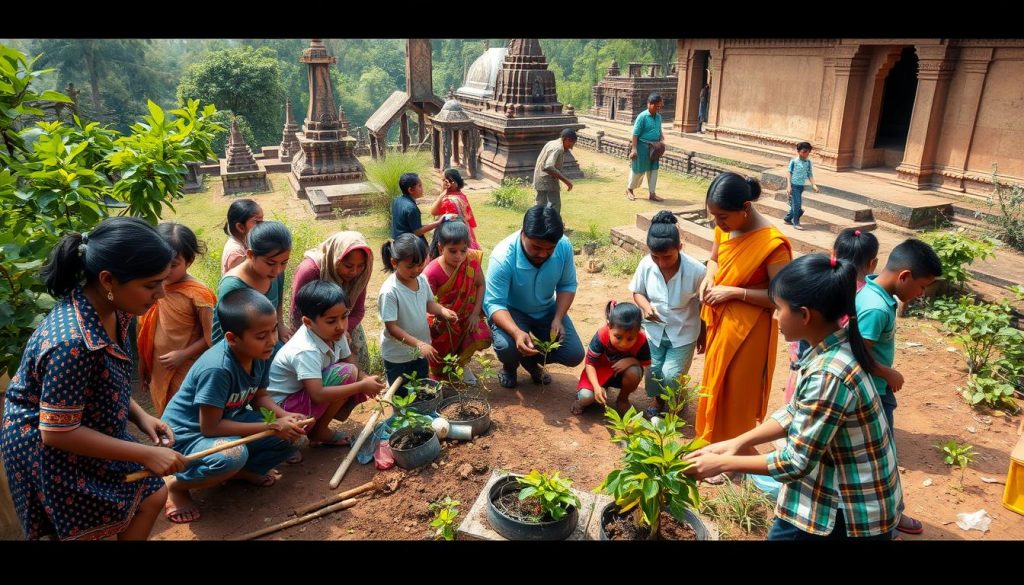
Collaboration between residents and conservation groups strengthens local identity. It also supports sustainable development. Community involvement not only helps conservation but also enriches Lumbini’s cultural scene.
Future of Lumbini: Ongoing Challenges
The future of Lumbini faces big challenges due to development pressures. These threats could harm its status as a UNESCO World Heritage site. The balance between growth and preserving heritage is key. It’s important to understand these issues for sustainable development.
Addressing development pressures
This rapid growth poses problems for local authorities and conservationists. Working together is crucial. The government, local communities, and international groups must collaborate for Lumbini’s conservation.
Without teamwork, Lumbini’s cultural and natural beauty is at risk. Engaging local people in decisions can help. This way, we can protect the site while allowing responsible tourism.
Here are some strategies to tackle these challenges:
- Develop strong rules to manage tourism growth.
- Encourage eco-friendly practices that respect local culture.
- Hold workshops and training for community members on conservation.
- Make sure Lumbini’s history and importance are part of tourism education.
By focusing on the Future of Lumbini, we can help create a sustainable model. This model will enhance both cultural heritage and the environment.
Conclusion
The conservation efforts in Lumbini are crucial for protecting this sacred site for the future. By learning about these efforts, we see the importance of preserving Lumbini’s culture and environment. UNESCO, the Nepalese government, and local communities work together to achieve this goal.
These efforts protect Lumbini’s Buddhist history and keep it a key pilgrimage site. Preserving Lumbini is not just a promise; it’s a shared duty to keep its spiritual and historical value. This is vital for its future.
With ongoing commitment to these conservation plans, Lumbini will continue to shine as a cultural and environmental leader. It’s important for us all to understand and support these efforts. This way, Lumbini’s legacy will live on for many years.