Climbing Sigiriya Lion Rock: Sunrise Safety Guide
Are you ready to explore one of Sri Lanka’s most stunning natural wonders? Climbing Sigiriya Lion Rock is not just about seeing a beautiful sunrise. It also comes with its own set of challenges. This guide will give you the safety tips you need for a safe and fun climb up this UNESCO World Heritage site.
Standing tall at 200 meters (660 feet), Sigiriya Lion Rock has about 1,200 steps. It promises a breathtaking view for those who make it to the top. Are you ready to face the challenges and enjoy one of the world’s most stunning views? Let’s explore what makes this climb both possible and unforgettable.
Introduction to Sigiriya Lion Rock
Sigiriya Lion Rock is a symbol of Sri Lanka’s deep history and architectural brilliance. It’s known as the Eighth Wonder of the World. This ancient fortress is in the island’s heart, with steep cliffs and detailed designs that tell its story.
King Kasyapa I built it in the 5th century. The fortress was not just for defense but also had royal gardens and stunning frescoes. Exploring it, you’ll see old water systems that show the engineering skills of that time.
As a UNESCO site, Sigiriya attracts many visitors. Climbing to the top, you get amazing views. It makes you think about the skill and dreams behind its creation.
What Makes Sigiriya a UNESCO World Heritage Site
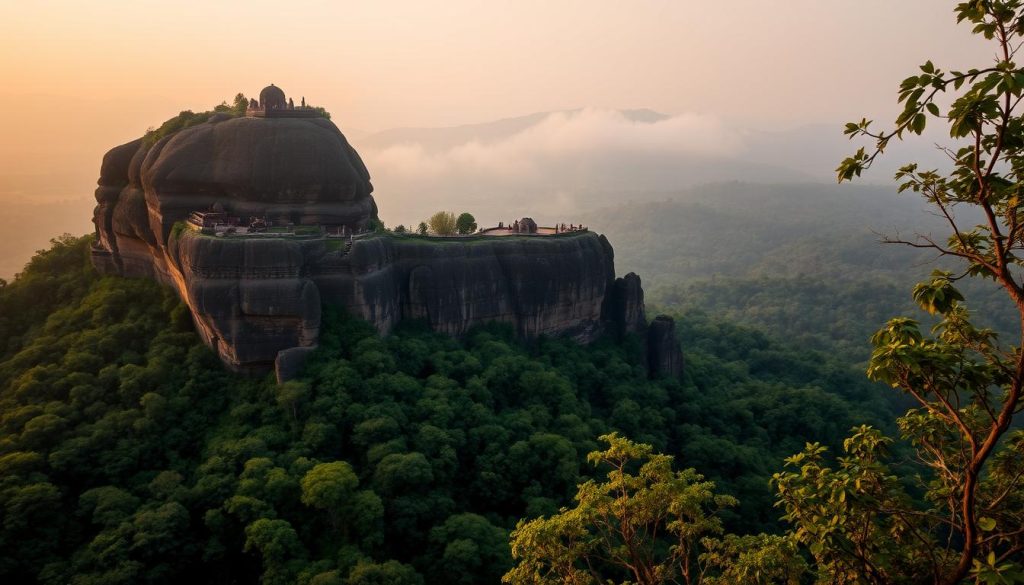
Sigiriya is a standout UNESCO World Heritage site. It’s known for its deep historical significance and amazing architecture. The site combines urban planning, art, and nature, showing the ancient Sri Lankan civilization’s genius.
Originally a royal citadel, Sigiriya’s design is both beautiful and practical. It has vast gardens, detailed frescoes, and a clever water system. These features show the creativity of its creators.
Research into Sigiriya’s history reveals its rich story. It’s a mix of culture, spirituality, and politics. This research has made it a key part of Sri Lanka’s heritage and a global landmark. The well-preserved architecture gives visitors a peek into the past’s innovative designs.
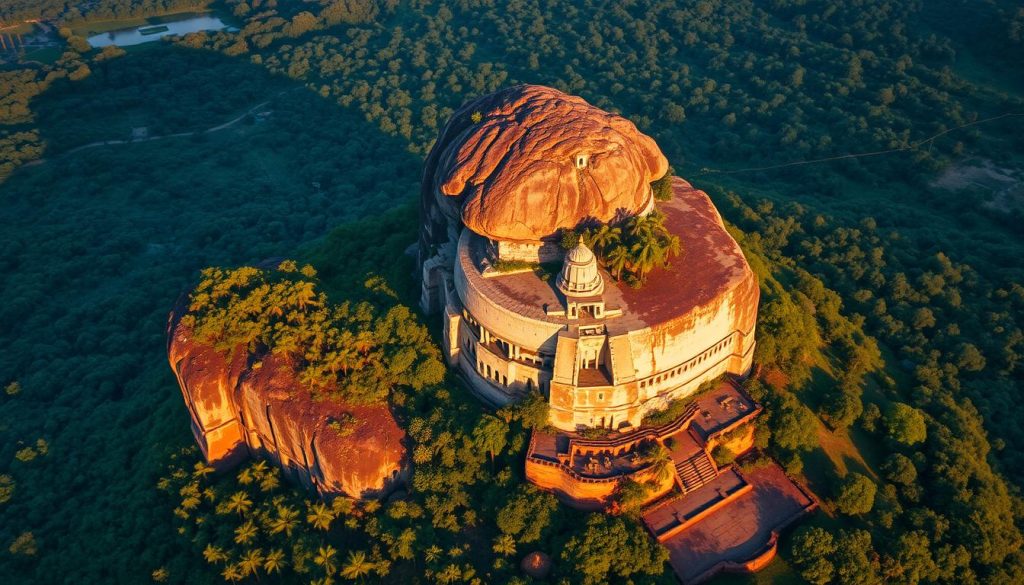
The area around Sigiriya adds to its global importance. The mix of natural beauty and human-made wonders makes it unique. Sigiriya is a symbol of ancient architects’ and planners’ achievements, showing what it means to be a UNESCO World Heritage site.
| Feature | Description |
|---|---|
| Gardens | Designed with precision, showcasing ancient landscaping techniques. |
| Frescoes | Vivid paintings that narrate tales of the past, providing deep cultural insights. |
| Water Management | Innovative systems that highlight advanced engineering practices. |
| Architectural Design | A blend of beauty and functionality reflecting regal intentions. |
Climbing Sigiriya Lion Rock: Tips for safety and sunrise?
Climbing Sigiriya Lion Rock is a mix of amazing views and fun physical challenges. Knowing the climbing difficulty is key for a safe and fun trip. Being ready helps you reach the top successfully.
Understanding Climbing Difficulty
The hike up Sigiriya Lion Rock is considered medium-difficulty. It may take about an hour, based on your fitness. You’ll face steep and uneven paths, especially when it’s hot in the middle of the day.
Getting ready physically and mentally can really help you tackle these obstacles.
Recommended Climbing Hours for Sunrise
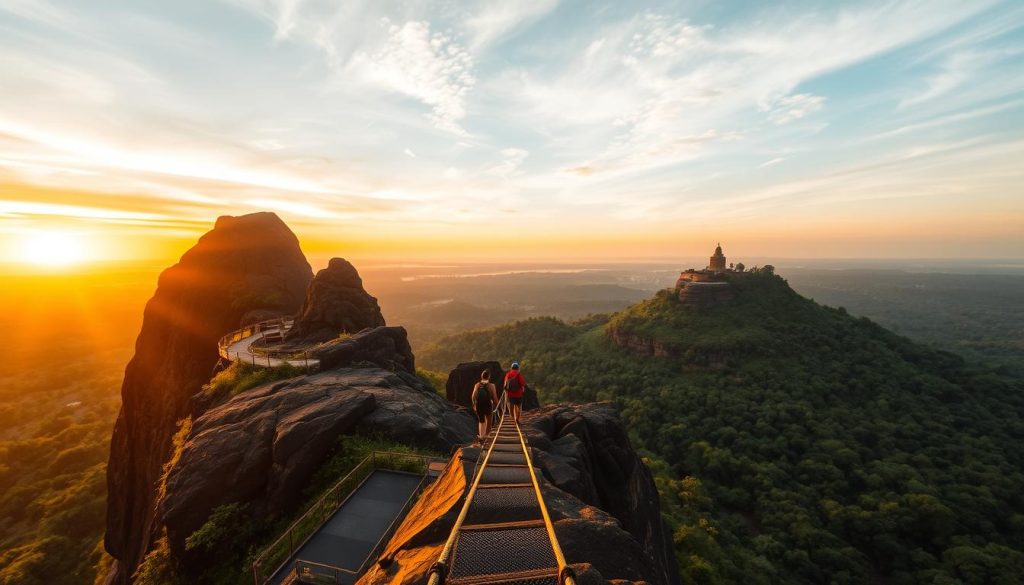
For a peaceful Sigiriya sunrise hike, start climbing between 4:30 and 5:00 AM. This lets you see the sunrise at about 5:30 AM, making the view magical. Climbing early also means you avoid the hottest part of the day, making your climb more enjoyable.
Preparing for the Climb
Getting ready for your climb to Sigiriya Lion Rock is important. You need to pick the right clothes and gear. Here are some tips to make your climb safe and enjoyable.
What to Wear and Pack
Wear light and breathable clothes to stay cool. Don’t forget to pack:
- Sunscreen to protect your skin
- A wide-brimmed hat for shade
- Insect repellent to ward off mosquitoes
- Sufficient water, as hydration stations are not available once the climb begins
Choosing the Right Footwear
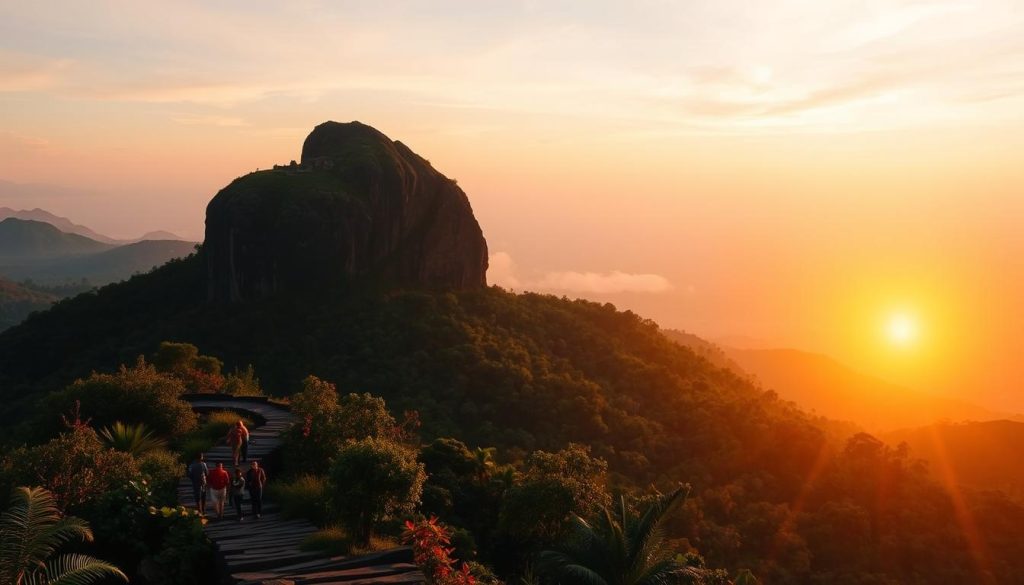
Choosing the right shoes is key for your climb. Sturdy sneakers or hiking shoes are best. They give you better grip and support than flip-flops or sandals.
The climb has stone and iron steps. So, the right shoes help you stay stable and prevent injuries. This is especially important for your safety.
Understanding Sigiriya’s Opening Hours and Entrance Fees
Planning your visit to Sigiriya Lion Rock means knowing about entrance fees and opening hours. This knowledge will make your trip better. You’ll get to see the stunning views and rich history of this UNESCO world heritage site.
Current Entrance Fee for Sigiriya
The entrance fee for Sigiriya is Rs. 5,500 (about USD 30) per person. You can buy tickets at the entrance. This makes it easy to get into this amazing historical site.
Best Times to Visit
The best times to visit Sigiriya are early morning or late afternoon. These times help you avoid the hot sun. You’ll have a better climbing experience.
The months from December to March are the best for visiting. The weather is great, so you can enjoy Sigiriya’s beauty without rain.

History of Sigiriya Rock Fortress
The Sigiriya history starts with its building as a royal fortress in the 5th century by King Kasyapa I. It was built to protect against his half-brother. The fortress shows the advanced skills of the time, adding to the Sigiriya fortress origins.
After Kasyapa lost, the site became a Buddhist monastery. This lasted until the 14th century. It shows how Sigiriya changed over time, staying important in Sri Lanka.
Now, Sigiriya is more than just a fortress. It’s a symbol of the many cultures that have influenced the area. Each stone tells a story of the past, inviting you to discover its rich history.
Top Safety Tips for Climbing Sigiriya
Climbing Sigiriya, a stunning UNESCO World Heritage site, needs careful planning and safety tips. It’s important to stay hydrated and watch the weather.
Stay Hydrated During the Hike
Drinking water is key to keeping your energy up and focus sharp. Bring enough water for your whole climb, as there’s no place to buy more or refill. Drink water often to avoid getting dehydrated, especially in Sigiriya’s warm weather.
Weather Considerations
Always check the weather before you start your climb. Climbing in the rain makes the paths slippery, which can be dangerous. Watch out for thunderstorms, especially from May to November. Knowing the weather helps you plan a safer and more enjoyable climb.
| Safety Tip | Description |
|---|---|
| Stay Hydrated | Carry sufficient water for the hike to prevent dehydration. |
| Check Weather | Avoid climbing in heavy rain to reduce slip hazards. |
| Monitor Thunderstorms | Be vigilant about the possibility of storms, particularly in warmer months. |
What to Expect During the Climb
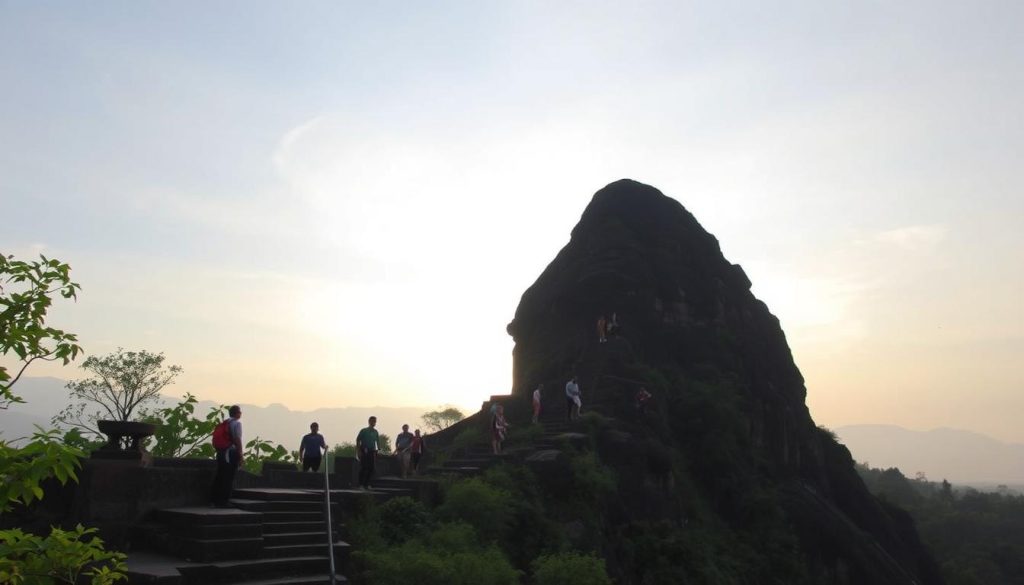
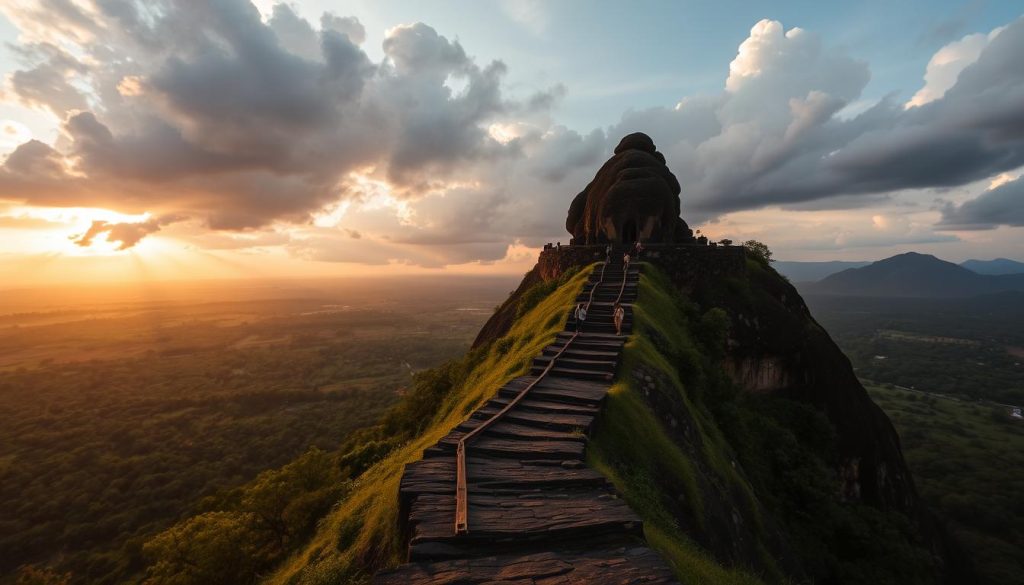
The Sigiriya climb is a mix of adventure and history. You’ll go up the famous rock fortress. The path has about 1,200 steps, with stone paths and iron stairs.
Break your climb into parts to rest. You’ll find places to stop along the way. Even when it’s busy, the views and structures are worth the wait.
Steps and Staircases Overview
The steps help you reach the top while making the journey better. Key parts of the climb include:
- Stone and iron staircases for different challenges
- Rest areas to catch your breath
- Signs to guide you through
- Platforms with amazing views
Scenic Stops Along the Way
Enjoy the views at Sigiriya’s scenic spots. Notable stops include:
- The Mirror Wall with ancient graffiti
- Frescoes of celestial maidens
- Lookout points for photos
The Unique Features of Sigiriya
Sigiriya is a remarkable monument that blends art and nature beautifully. The water gardens show off ancient engineering skills. They use a hydraulic system that highlights the site’s history.
Visitors can enjoy the design, with ponds, fountains, and terraced gardens. These create a peaceful atmosphere.
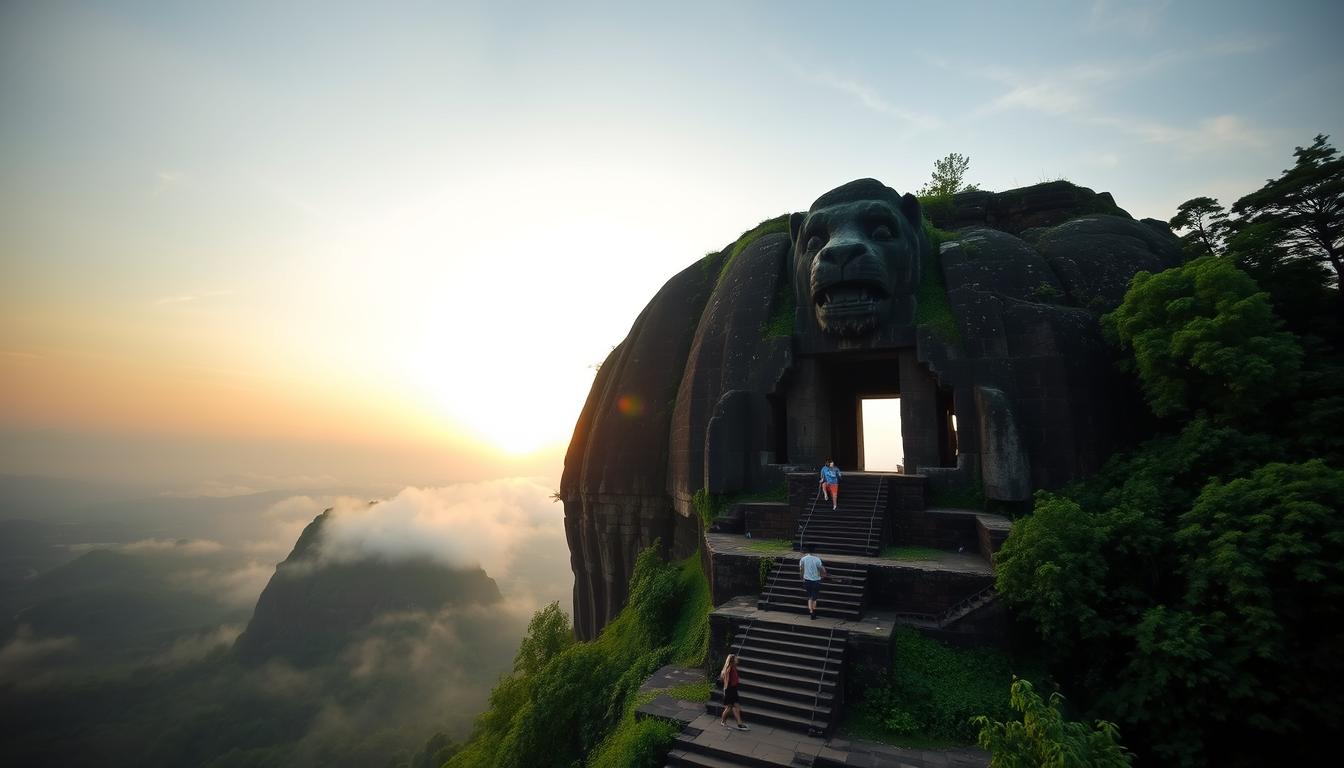
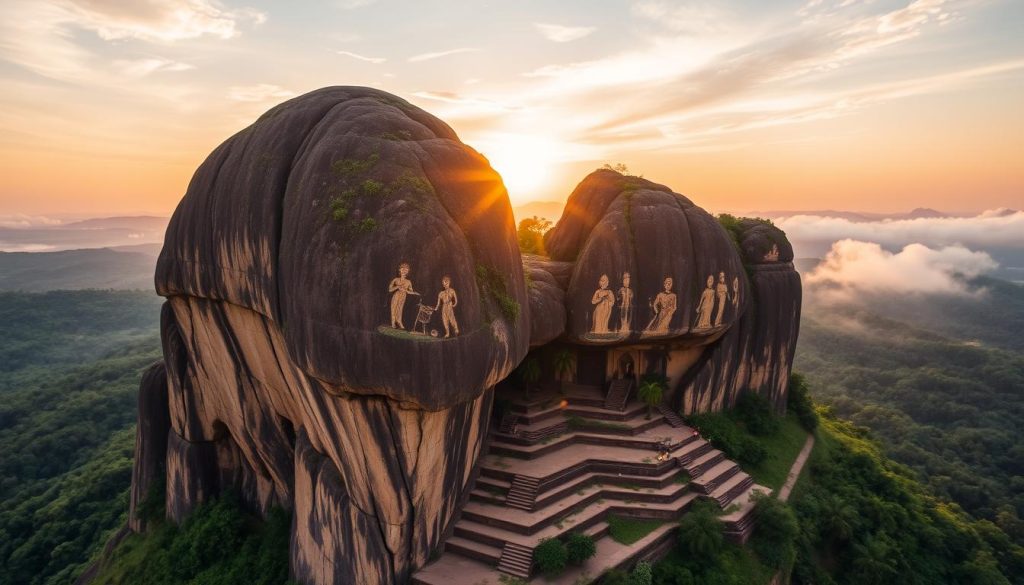
The Lion’s Gate is another highlight, serving as the fortress’s grand entrance. It once had a huge lion statue. This gateway shows the site’s grandeur and offers stunning views.
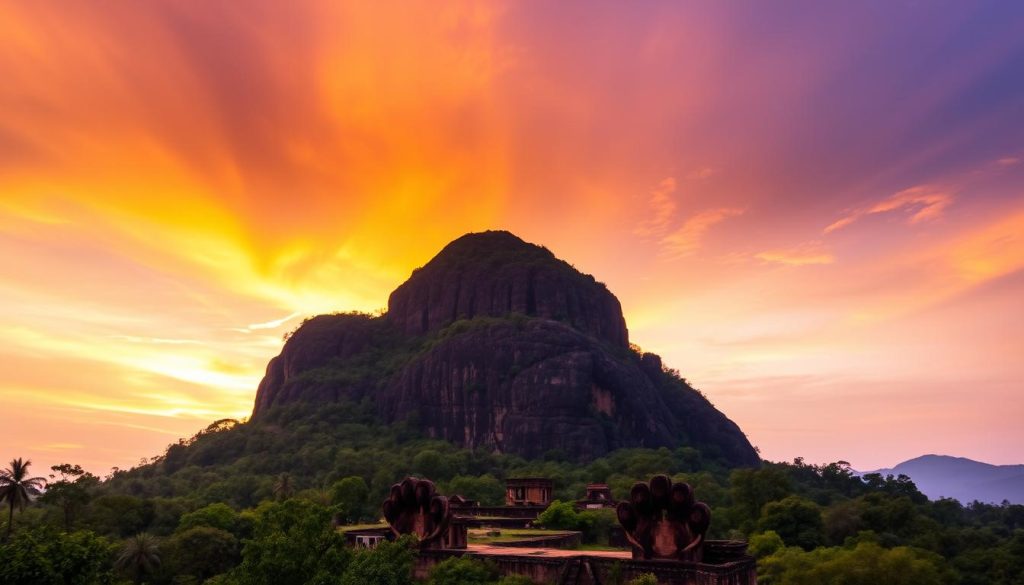
The Lion Rock highlights include the lion’s paws, showing the era’s craftsmanship.
Art lovers will enjoy the ancient frescoes on the rock face. They feature beautifully painted celestial maidens. These murals showcase the rich culture and artistry of the time, making Sigiriya a heritage canvas.
In short, Sigiriya combines its captivating features with natural beauty. It invites you to explore its historical treasures up close.
Additional Activities in Sigiriya Area
Looking for more to do in Sigiriya? The area has lots to offer, from adventure to culture. You can hike Pidurangala Rock or explore the Sigiriya Museum. Both give you a new view of the area’s history and beauty.
Pidurangala Rock Hike
The Pidurangala Rock hike is a hit with adventurers. It’s a bit tough but worth it. You’ll see amazing views of Sigiriya Rock from the top. It costs about Rs. 1,000 (USD 3) to get in.
Make sure to bring your camera. The views are truly breathtaking.
Visiting the Sigiriya Museum
The Sigiriya Museum is near the entrance. It dives deep into the rock fortress’s history. You’ll see cool exhibits and learn about the area’s culture.
Plan to spend 30 to 60 minutes here. It’s a great way to learn more about Sigiriya.
| Activity | Duration | Entrance Fee | Highlights |
|---|---|---|---|
| Pidurangala Rock Hike | 30-45 minutes | Rs. 1,000 (USD 3) | Stunning views of Sigiriya Rock |
| Sigiriya Museum | 30-60 minutes | Included in entrance fee | Educational exhibits on historical artifacts |
Preparing for the Descent
Reaching the summit of Sigiriya is a big win. As you start your way down, remember to stay safe. Sigiriya descent tips can help, but watching your steps and the area around you is key.
Tips for Safe Descending
Going down is usually faster than going up, taking 20 to 30 minutes. Here’s how to descend safely:
- Stay alert, especially on steep parts.
- Don’t rush; there’s no hurry going down.
- Use handrails to keep your balance.
- If you’re tired, take breaks to rest your legs.
- Be careful of loose stones that could slip your footing.
Remember these tips to descend confidently. A careful approach will let you enjoy the views and ensure a safe return from your adventure.
Travel Tips for Visiting Sigiriya
Planning a trip to Sigiriya is an exciting adventure. It’s filled with unique experiences and stunning sights. Follow these travel tips for Sigiriya to make your visit smooth.
- Respect local customs: Being polite to the locals can make your trip better. Take time to learn about their traditions.
- Stay safe: Keep your things safe. Use bags that prevent theft and watch your surroundings.
- Pack essentials: Bring water, sunscreen, and snacks for the climb. Wear comfy clothes and sturdy shoes.
- Weather awareness: Check the weather before you go. Try to visit when it’s not raining for a better experience.
- Phrase learning: Learning a few words in Sinhala or Tamil shows you care about the culture. Simple greetings are very helpful.
For a deeper experience, visit during local festivals or join community events. This will give you a better understanding of Sri Lankan culture. Remember these Sigiriya visit advice tips as you explore this historic site.
Conclusion
Climbing Sigiriya Lion Rock is an unforgettable experience. It combines the beauty of nature with Sri Lanka’s rich history. As you climb, you’ll see stunning views and cultural landmarks.
Your early morning trek offers breathtaking sunrises. These illuminate the lush landscape, creating memories you’ll cherish long after your visit.
Being well-prepared is key to a safe and enjoyable climb. Use Climbing Sigiriya tips for the best experience. This includes wearing the right shoes and staying hydrated.
By following these guidelines, you can enjoy the climb without worry. This way, you can fully immerse yourself in the experience.
Your journey up and down Sigiriya Lion Rock is more than just a climb. It’s a journey through time and culture. It shows the ingenuity of ancient civilizations.
It’s a highlight of your travel itinerary. Take time to appreciate every moment. Embrace the incredible stories this UNESCO World Heritage Site has to tell.