Capturing Petra’s Essence: Key Photography Tips
Ever wondered how to capture Petra’s beauty perfectly? This ancient city, known as the Rose City, is a photographer’s dream. Its pink-hued sandstone and stunning landscapes are a sight to behold.
With over two millennia of history, Petra is a UNESCO World Heritage site. It’s not just Jordan’s top tourist spot but also a marvel of the Nabateans’ engineering. Here, you’ll learn how to capture Petra’s essence through photography.
From using natural light to mastering composition, we’ve got you covered. Get ready to explore Petra’s beauty through your lens. Every photo will take you deeper into its rich cultural heritage.
Understanding the Allure of Petra
Petra, known as the “Rose City,” is a wonder with its rock-cut architecture and history dating back to the Nabataeans. Its walls of pink sandstone tell stories, drawing photographers. To capture Petra’s essence, focus on its unique formations and stunning views.
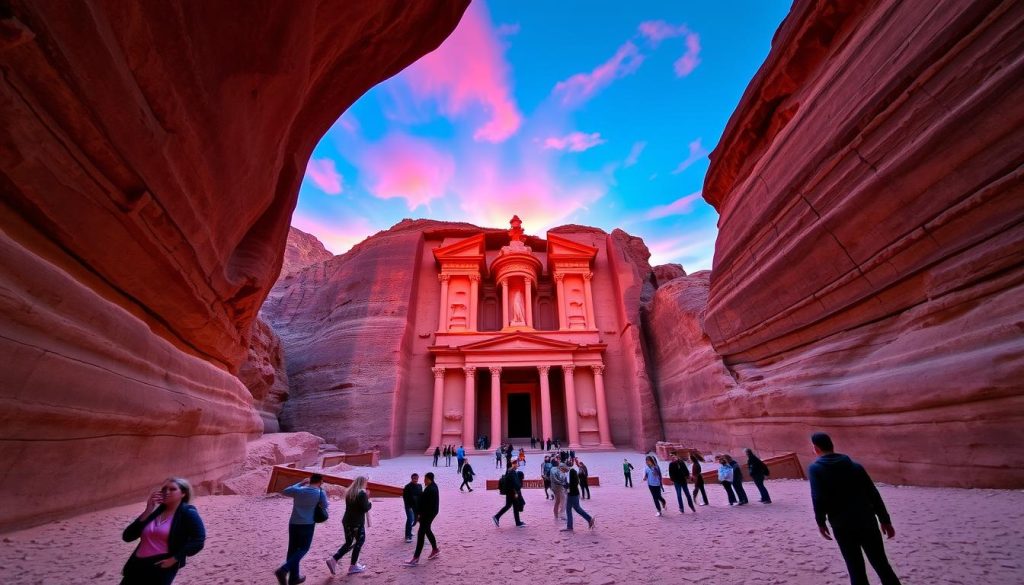
The Siq, a narrow gorge, leads into Petra and stretches 1.2 kilometers (0.75 miles). It offers a dramatic entrance that enhances photos. Towering walls, reaching 200 meters (approximately 650 feet) high, create an awe-inspiring setting. The best time to photograph the Siq’s crack is early morning or late afternoon for the best light.
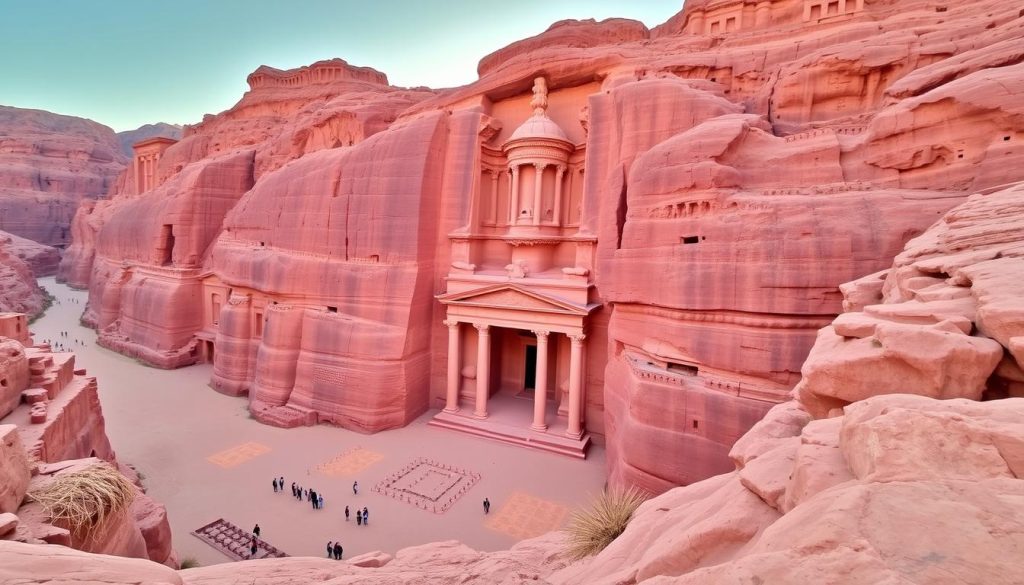
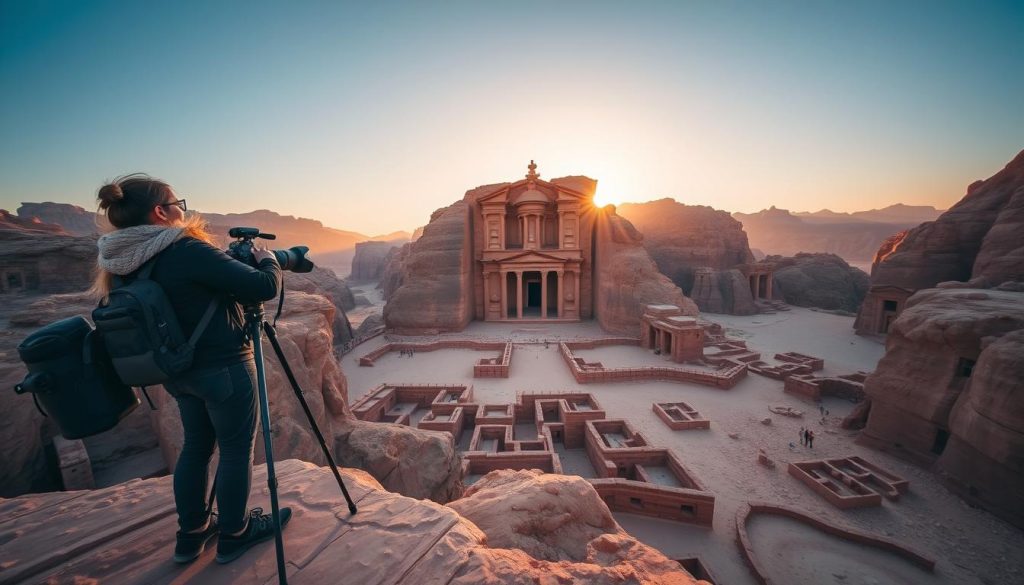
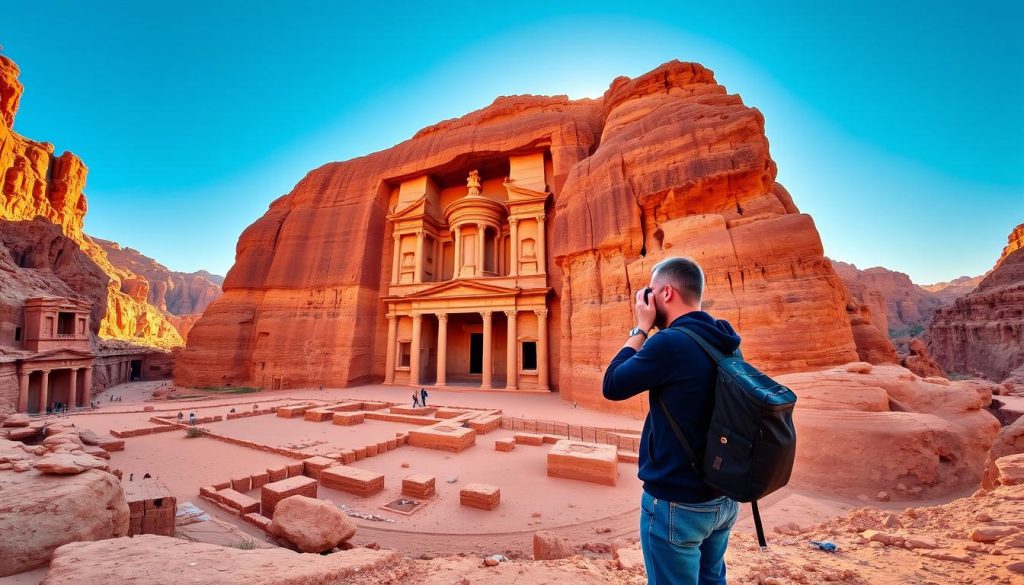
Al-Khazneh, or the Treasury, is a standout treasure in Petra. It’s one of the most photographed spots. For a captivating front shot, visit early in the morning to avoid crowds. Expert tips suggest taking elevated shots for a different view of the Treasury. These views require a climb but are rewarding.
Explore Petra’s lesser-known sites for diverse photographs. The Royal Tombs, including the Urn Tomb and the Corinthian Tomb, offer great opportunities. Understanding Petra’s history and natural beauty will enhance your experience and photos, capturing its spirit.
Photography Tips for Capturing the Beauty of Petra
Petra’s landscape is a photographer’s dream. To get the most out of your visit, learn the best ways to take pictures. Use natural light and plan your visits to capture stunning images of Petra.
Utilizing Natural Light
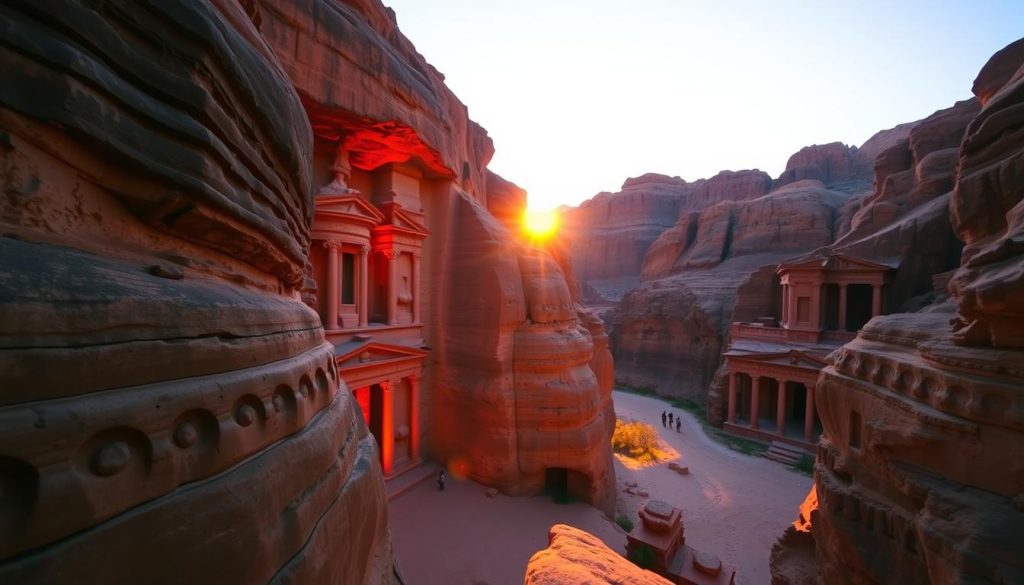
Natural light is key in photography, and Petra is no exception. The sandstone formations change colors with the day. Early mornings and late afternoons are best for photos, with soft light bringing out the colors.
Using a tripod is crucial for sharp photos, even in the soft light of sunrise or sunset. This technique highlights the beauty of places like the Treasury without harsh shadows.
Timely Visits to Iconic Spots
Timing is everything when you’re taking photos in Petra. Arrive early to avoid crowds and capture the essence of the place. Famous spots like the Treasury are best visited at specific times.
By planning your visits, you can take photos that truly capture Petra’s beauty. This way, your images will reflect the site’s remarkable heritage.
Best Times to Shoot in Petra
When you take photos in Petra, the time of day matters a lot. The light changes and can make your photos better or harder. Knowing when to take your photos can really help, like during the golden hour and at midday.
Golden Hour Opportunities
The golden hour is in the morning and late afternoon. It gives Petra a warm, golden look. This light makes the sandstone textures and colors pop, making your photos feel alive.
Getting there early means fewer people. You might have the Treasury all to yourself. It’s a magical place for photos.
Facing Midday Challenges
Shooting at midday has its own set of problems. The light is too harsh, making colors and contrasts extreme. But, it can also create dramatic shots, like in the Siq canyon.
Learning to adjust your camera settings can help. This way, you can still capture Petra’s beauty, even when it’s hard.
| Time of Day | Lighting Conditions | Photography Tips |
|---|---|---|
| Early Morning | Soft, warm light | Arrive at sunrise for fewer crowds and beautiful vistas. |
| Midday | Harsh, direct light | Utilize shaded areas and look for contrasts in the Siq canyon. |
| Late Afternoon | Golden, diffused light | Capture the Monastery and other structures with enhanced detail. |
| Evening (Petra by Night) | Illuminated scenes | Experiment with long-exposure shots; bring a tripod. |
Mastering Composition Techniques
Good composition can make your photos truly stand out. The key is to think about how you arrange things and what’s around you. Using elements like leading lines and foreground objects adds depth and tells a story.
Leading Lines and Perspective
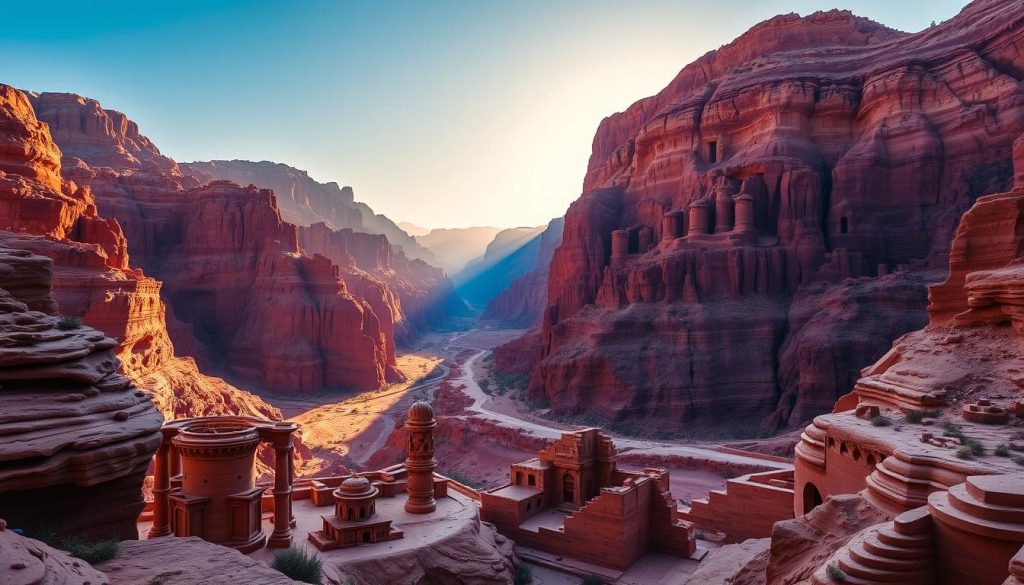
Use natural lines to lead the viewer’s eye. Paths, rocks, and buildings can be great lines. The Siq leading to the Treasury is a perfect example of how perspective draws you in.
By placing yourself right along these lines, you can create a powerful photo.
Incorporating Foreground Elements
Foreground elements add context and depth to your photos. Try using local plants, stones, or artifacts to reflect the area’s history. This makes your photos layered and interesting.
Learning about Petra’s photography techniques helps you use these elements well.
| Composition Technique | Description | Benefits |
|---|---|---|
| Leading Lines | Natural lines directing the viewer’s eye | Guides attention, creates depth |
| Foreground Elements | Objects in the foreground that frame the subject | Adds context, enhances depth |
| Rule of Thirds | Dividing the image into thirds for balance | Creates more engaging compositions |
| Negative Space | Using empty space around the subject | Focuses attention on the subject |
Catching the Crowds: Timing Your Visit
Petra is Jordan’s top attraction, drawing about 1 million visitors yearly. To get amazing photos without the crowds, plan carefully. Arrive early, at 6 AM when Petra opens. This way, you can take stunning pictures of famous spots without many people around.
Also, think about the seasons. Spring and fall are the best times to visit because of the nice weather. These months are perfect for early morning visits, when the light is best. Remember, the Treasury gets sunlight only from 9-11 AM, so catch it then for the best photos.
For unique views, hike to the high viewpoint of the Treasury. It takes about 35 minutes and gives you amazing photo spots. The Monastery looks beautiful in the late afternoon sun. But, getting there involves a 40-minute hike with over 800 steps.
Adding local culture to your photos makes them even better. Pictures with Bedouins and their animals show the real Petra. Zoom in on the stone carvings to tell a deeper story with your photos.
Essential Gear for Photographing Petra
Getting the right gear is key for capturing stunning images in Petra. The right equipment makes your photography journey better. It helps you show off Petra’s beauty.
Knowing what tools and settings to use is important. It prepares you for any situation you might face.
Choosing the Right Camera Equipment
For a Petra adventure, a DSLR or mirrorless camera is best. They are versatile for different conditions. Here are some essential items:
- DSLR or Mirrorless Camera: Essential for high-quality images.
- Tripod: Great in low light, like at Petra By Night.
- Sturdy Bag: Keeps your gear safe while you carry essentials like water and snacks.
Lens Recommendations for Different Perspectives
Choosing the right lens is crucial for capturing Petra’s essence. Here are some lens suggestions based on photography tips:
| Lens Type | Use Case |
|---|---|
| Wide-Angle (e.g., 16-35mm) | Perfect for wide landscapes and detailed architecture. |
| Standard Zoom (e.g., 24-70mm) | Flexible for both wide shots and close details. |
| Telephoto (e.g., 70-200mm) | Great for distant features and isolating subjects. |
Strategic Locations for Stunning Photos
Finding the right spots is key to capturing Petra’s beauty. Each spot offers a unique view, showing off the city’s architecture and landscapes. Here are some top places to visit for amazing photos.
Must-Visit Vantage Points
To truly capture Petra’s essence, focus on these key spots:
- The Treasury: This iconic spot features a breathtaking 40-meter-high façade carved into a sandstone cliff, making it a must for any photographer.
- The Monastery (Ad-Deir): Climbing to this high location rewards you with panoramic views that are unparalleled.
- The High Place of Sacrifice: Ascend to this vantage point for a captivating view of Petra’s vastness, showcasing multiple structures intertwined with nature.
- Petra’s Theater: Capture the impressive design of this rock-carved theater that seats over 4,000 people, reflecting the city’s thriving past.
Exploring the Hidden Corners of Petra
Discovering Petra’s hidden spots can reveal stunning photos and unique angles. Here are some off-the-beaten-path suggestions:
- Royal Tombs: These intricately designed tombs provide excellent opportunities for photography, with softer light adding to their beauty.
- Byzantine Church: Known for its beautifully preserved mosaic floors, this location invites you to capture the delicate details.
- The Street of Facades: This area, lined with tombs and houses carved into cliffs, creates a dramatic backdrop for exploring the history of Petra.
Using these Petra photography tips will make your visit even better. Whether you focus on famous landmarks or explore hidden spots, your camera is sure to capture stunning moments.
Working with Unique Lighting Conditions
When you’re taking pictures of Petra, knowing how to handle different lighting is key. The light can change the mood of your photos a lot. So, it’s important to be quick to adjust to these changes. Expert tips for taking photos of Petra help you make the most of this.
Adapting to Changing Natural Light
The light at Petra changes a lot. In the morning, it’s soft and diffused. But at sunset, it gets warm and vibrant. Going early lets you see the details of Petra’s buildings well.
When the sun is low, you get great silhouette shots. These are pictures of people or objects against a bright background.
- Morning Light: Great for soft images that show details well.
- Golden Hour: About an hour after sunrise and before sunset, it’s warm.
- Sunset Shots: Use long exposures of 6s to 8s to get dreamy pictures.
- Cloudy Conditions: Good for softening harsh contrasts.
Changing your camera settings is crucial when the light changes. Try different ISO settings like ISO 64 or ISO 200. Use aperture settings like f/5.6 during the golden hour to add depth.
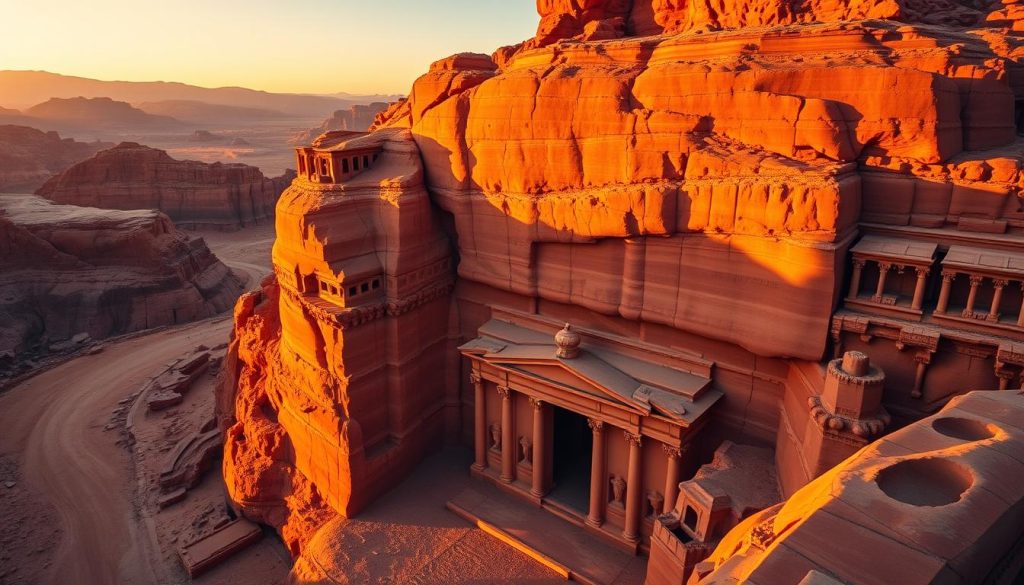
Watch how shadows fall on Petra’s buildings. Shadows add depth and contrast to your photos. Being ready to change your view based on the light makes your photos more dynamic. With careful planning and attention to light, your photos of Petra will be as stunning as the place itself.
Engaging with Local Life in Your Photos
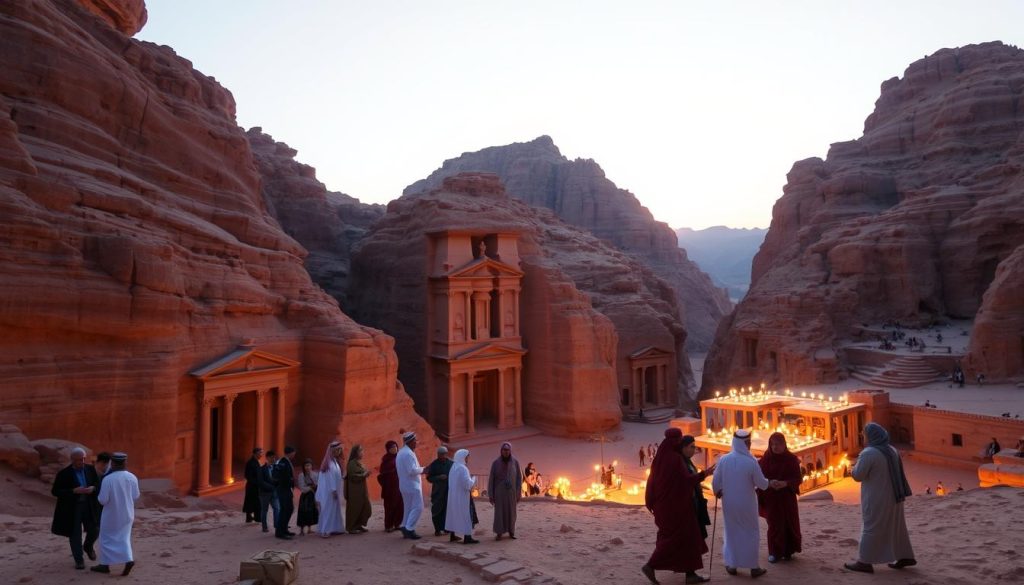
Photography in Petra is more than just the buildings and nature. It’s about capturing the local life too. This adds depth and character to your photos. It shows the rich culture around this ancient site.
Photograph the Bedouins who live nearby. Their traditional clothes and lifestyle are a big part of Petra’s history. Always ask before taking their picture. This way, you get a real and respectful photo.
Local vendors are also great subjects. You’ll see artisans with their crafts. These photos not only improve your work but also connect you with the community.
- Documenting local events, such as traditional festivals.
- Capturing moments of daily life, like herding animals or preparing food.
- Photographing vendors in bustling markets, showcasing local produce and crafts.
| Engagement Activity | Description |
|---|---|
| Photographing Bedouins | Capture the lifestyle and attire of the local Bedouins, representing timeless customs. |
| Visiting Local Markets | Engage with vendors and capture the vibrancy of local commerce and culture. |
| Documenting Cultural Events | Participate in local festivals to photograph unique traditions and celebrations. |
By including these elements in your photos, you make your portfolio richer. You also honor the community’s history in Petra. Exploring local life connects the past with the present in a powerful way.
Editing and Enhancing Your Petra Photos
Editing your photos is key to making them stand out. With the right tools, you can turn your images into stunning works of art. Adobe Lightroom or Photoshop are great for making adjustments. Here are some tips to help you improve your photos.
Post-Processing Techniques to Consider
Here are some editing tips for your Petra photos:
- Adjust contrast to highlight the differences between light and dark areas.
- Enhance sharpness to draw attention to the intricate details of the sandstone carvings.
- Utilize cropping to improve composition, focusing on powerful elements within the frame.
- Consider applying filters sparingly to enrich colors while maintaining a natural look.
Highlighting the Colors and Textures of Petra
Highlighting Petra’s colors and textures is essential. To do this:
- Bring out the warm hues of the sandstone in your edits, ensuring they reflect the natural warmth of the site.
- Emphasize the striations and unique textures that give Petra its distinct appearance.
- Experiment with vibrance adjustments to enhance colors without oversaturation.
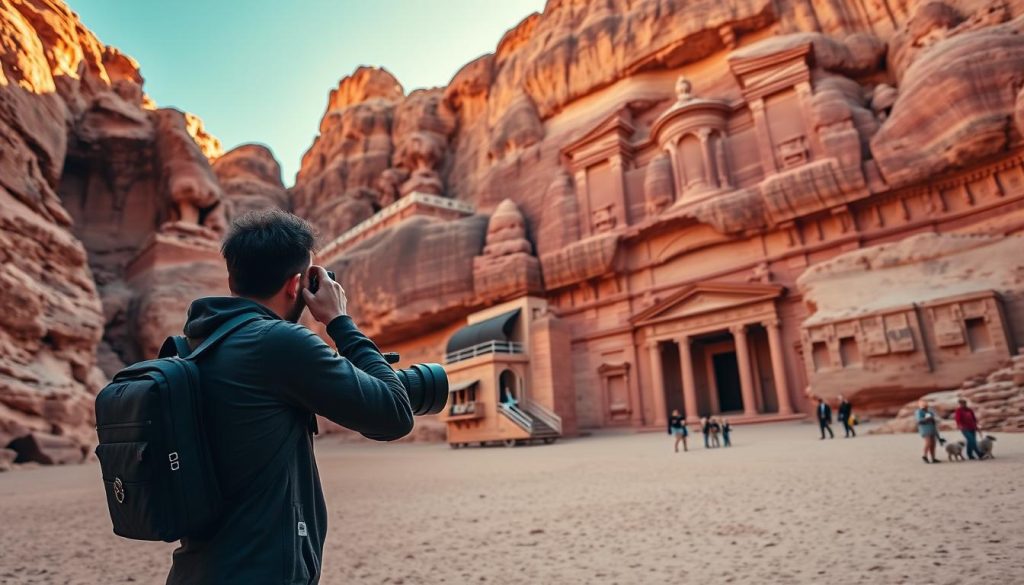
Using these editing tips can greatly enhance your Petra photos. They help you create images that not only show your visit but also capture the site’s beauty.
Conclusion
Capturing Petra’s essence in photos is more than just mastering technical skills. It’s about understanding the rich history and beauty of this ancient city. By following the expert tips in this article, you can take powerful photos that show both the iconic structures and the soul of Petra.
Your photography journey through Petra can reveal timeless moments. You might find beauty in the stunning architecture of the Treasury or in the vibrant local culture. Using the golden hour for its enchanting glow and trying unique angles can make your photos stand out. Each visit brings new stories, inviting you to explore more of Petra’s visual treasures.
The stories you tell through your photos will touch the hearts of those who see them. They capture not just the landscape but the essence of a place that has fascinated people since its rediscovery by Johann Ludwig Burckhardt in 1812. With every photo, you add to Petra’s allure and its remarkable history, making your journey unforgettable.