Best Time to Visit Bagan for Your Dream Trip
Best Time to Visit Bagan for Your Dream Trip
Choosing the right season to visit Bagan is key to a great trip. Knowing Bagan’s climate helps plan your journey. Bagan has three seasons: hot from March to May, rainy from June to October, and cool from November to February. Each season has its own pros and cons.
The hot season is very hot, with temperatures over 100°F. The heat and humidity can make it hard to enjoy your day. Traveling then needs careful planning to stay comfortable. On the other hand, the cooler months offer nice weather for exploring Bagan’s ancient sites.
Most visitors suggest staying at least two days and three nights. Renting an e-bike for about 6,000 Kyat ($4.50) is a good way to see the temples. Don’t forget to buy a Bagan Archaeological Zone Pass for 25,000 Kyat. It’s needed to visit all the temples. With over 2,200 sites across 50 square kilometers, planning is crucial to enjoy your trip.
What is the best time to visit Bagan?
Figuring out when to visit Bagan can really make your trip better. The area changes with each season, showing different weather patterns. Knowing the best time to go lets you enjoy your trip more, while staying comfortable and easy to get around.
Overview of Weather Conditions
Bagan has three main seasons: hot, rainy, and cool. The best weather is from November to February, with temperatures around 30 degrees Celsius (86 degrees Fahrenheit). This time is great for exploring temples and taking photos because the skies are clear and it doesn’t rain much.
Temperature Variations Throughout the Year
Bagan’s temperature changes a lot throughout the year. March and April can get very hot, sometimes over 43 degrees Celsius (109 degrees Fahrenheit). On the other hand, June, July, and October are rainy months. August and September get the most rain. These changes affect what you can do outside and when you should travel.
| Month | Average Temperature (°C) | Rainfall (mm) | Recommended for Travel |
|---|---|---|---|
| November | 30 | 5 | Yes |
| December | 28 | 9 | Yes |
| January | 27 | 7 | Yes |
| February | 29 | 6 | Yes |
| March | 34 | 5 | Somewhat |
| April | 36 | 4 | No |
| May | 33 | 30 | Somewhat |
| June | 30 | 200 | No |
| July | 29 | 240 | No |
| August | 28 | 230 | No |
| September | 28 | 190 | No |
| October | 30 | 70 | Somewhat |
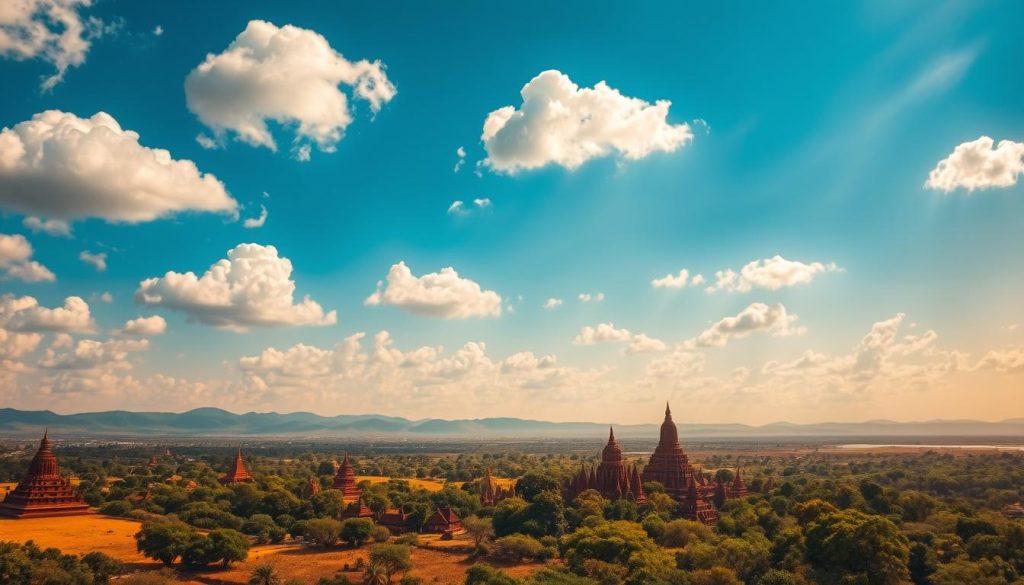
Best Season to Visit Bagan
Choosing the right season to visit Bagan can make your trip better. Knowing the differences between seasons helps you pick the best time for you.
High Season: November to February
The high season in Bagan is from November to February. It’s the time when the weather is perfect for exploring, with temperatures around 30°C (86°F). Many tourists come to see the temples, making it lively.
The Taunggyi Tazaungdaing hot air balloon festival in November is a big draw. It brings over 50,000 visitors, showing Bagan’s charm.
Shoulder Season: March to May
The shoulder season is from March to May. It gets very hot, sometimes over 43°C (110°F). But, if you like warm weather, Bagan is still worth visiting.
There are fewer people around, so you can see the sites more easily. It’s a quieter time to explore.
Low Season: June to October
The low season is from June to October, with monsoon weather. Some might not like the rain, but September can be a good time. It’s less crowded, with fewer than ten tourists at popular spots.
Hotels are almost empty, offering lower prices. It’s a chance to see Bagan’s beauty without the usual crowds.

| Season | Period | Temperature Range (°C) | Visitor Density |
|---|---|---|---|
| High Season | November to February | 20°C – 30°C | High |
| Shoulder Season | March to May | 30°C – 43°C | Moderate |
| Low Season | June to October | 25°C – 35°C | Low |
Bagan Tourist Season: When to Go
Knowing when to visit Bagan is key for a great trip. The best time is from November to February. The weather is cool and nice, perfect for seeing the pagodas.
Bagan has a tropical climate all year. But, from October to February, it gets busier. Booking early is smart to enjoy sites like Shwezigon Pagoda and Htilominlo Temple without crowds.
Visiting from June to October might not be as good. The rain can ruin the temple views. But, September is a hidden treasure. It’s less crowded and the weather is getting better, making it a great time to see Bagan.
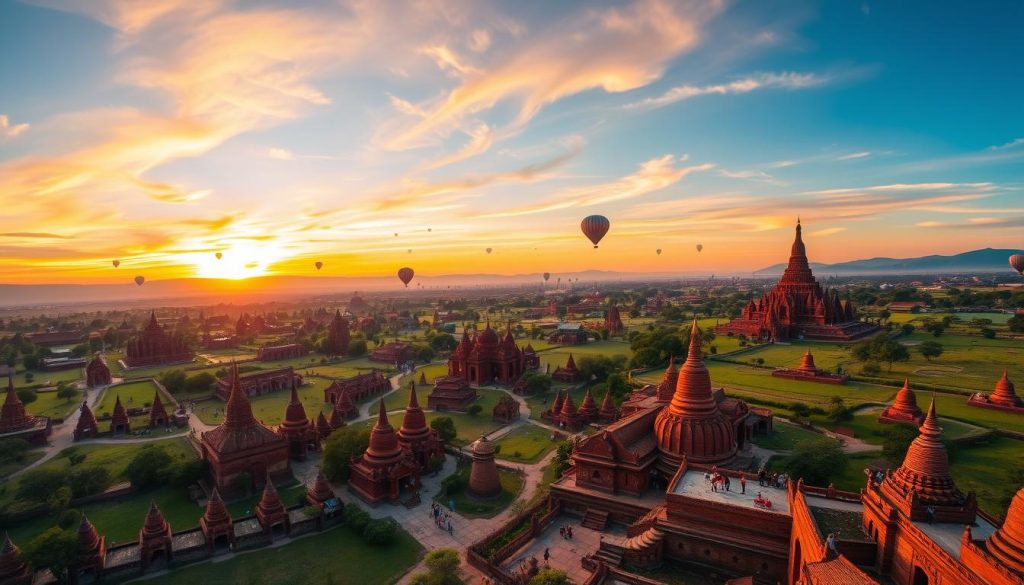
The Bagan tourist season offers different experiences. November to February is the best for exploring and learning about the culture. Planning your trip for these months ensures unforgettable adventures in Bagan’s ancient sites.
Ideal Time for Bagan Trip
To fully enjoy Bagan, knowing the ideal time for Bagan trip is key. This place is famous for its beautiful temples and rich culture. It’s important to plan your visit around big events and the weather.
Popular Festivals and Cultural Events
Joining in popular festivals in Bagan makes your trip special. The Ananda Pagoda Festival in January is a highlight. It offers colorful culture, tasty food, and traditional shows. These festivals let you dive into local traditions and see the community’s passion.
Benefits of Off-Peak Travel
Traveling in the shoulder season has many perks. You’ll see fewer people, making your visit more personal. With less crowd, you can find hidden spots and talk to locals. These Bagan travel tips help you experience the true essence of Bagan.

| Month | Temperature Range (°C) | Rainfall (mm) | Tourist Season |
|---|---|---|---|
| January | 17-30 | 14 | Low |
| February | 19-35 | 2 | High |
| March | 23-38 | 8 | Shoulder |
| April | 24-41 | 30 | Very Low |
| May | 25-38 | 50 | Very Low |
| November | 20-33 | 12 | High |
| December | 18-30 | 20 | Peak |
Bagan Weather Guide for Travelers
Knowing the weather in Bagan is key to planning your trip. Learning about rainfall and humidity will make your visit better. This stunning place is worth exploring.
Annual Rainfall Patterns
Bagan gets about 36 inches of rain each year. Most of it falls from June to September, during the monsoon. July is the wettest month, with 279 mm of rain.
Traveling in July can be less crowded and cheaper. But, you might face rain. January is dry, making it great for exploring.
Humidity Levels and Their Impact on Travel
Humidity in Bagan changes with the seasons. It’s highest in July and August, at about 80%. March has the lowest humidity, around 52%, making it better for outdoor fun.
High humidity can make you feel uncomfortable, more so in the hot months from March to May. Temperatures can hit 43°C (110°F) then. Knowing the humidity helps you prepare for your trip.
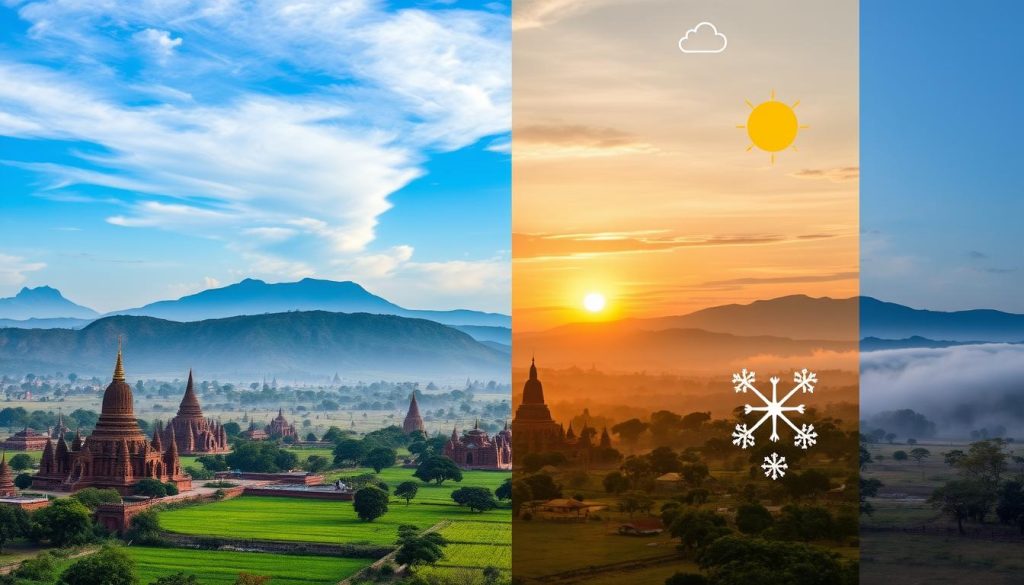
Top Time to Go to Bagan for Outdoor Activities
Timing is key for an amazing time in Bagan. The stunning views and ancient temples are perfect for photos and exploring. The early morning and late evening are the best times to see Bagan’s beauty.
Best Times for Sunrise and Sunset Views
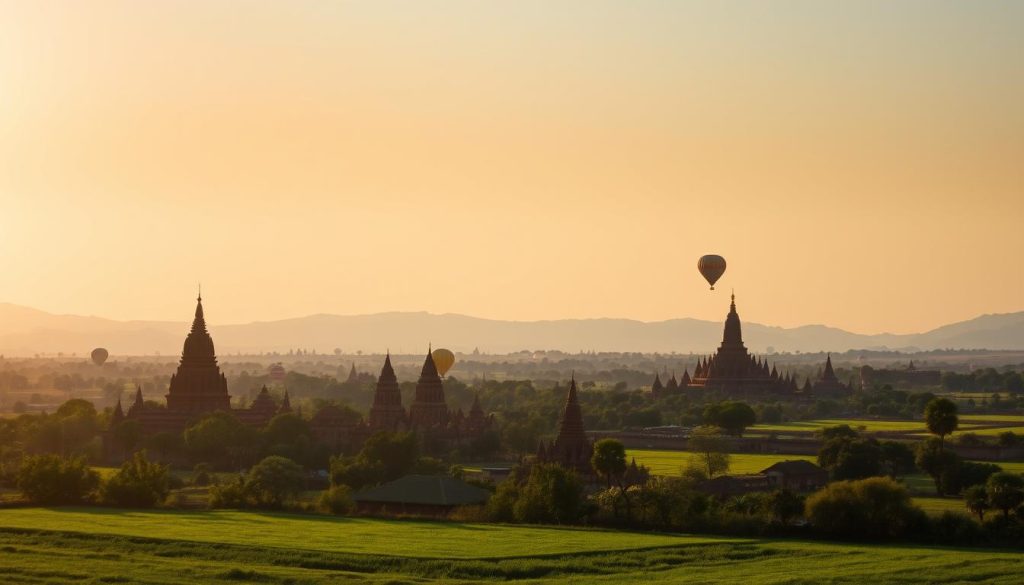
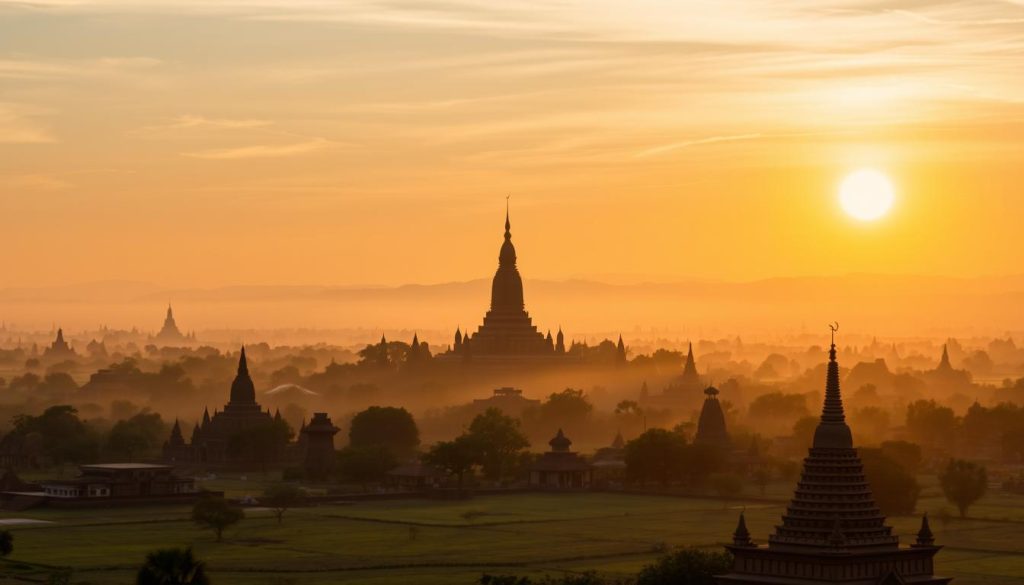
The sunrise and sunset in Bagan are truly magical. Over 2,200 temples glow in the golden light. Law Ka Ou Shaung and Myauk Guni are great spots to watch.
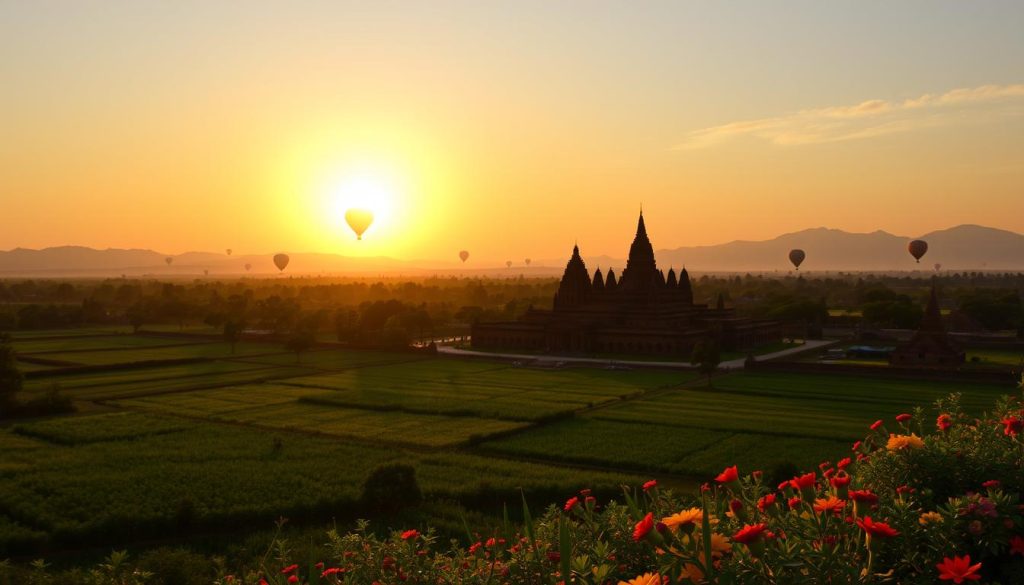
Arrive early to see hot air balloons against the sunrise. For sunset, get to your spot early to see the colors.
Hot Air Balloon Rides Timing
Hot air balloon rides in Bagan happen from November to March. They offer a unique view of the temples in the morning or afternoon light. Each ride lasts about 45 minutes.
These rides are exciting and let you see Bagan’s vast beauty. Make sure to plan ahead as weather can change.
| Activity | Best Time | Duration |
|---|---|---|
| Sunrise Photography | 5:30 AM to 6:30 AM | About 1 hour |
| Sunset Photography | 5:30 PM to 6:30 PM | About 1 hour |
| Hot Air Balloon Ride | November to March | 45 minutes (can vary) |
Stay hydrated in Bagan because the sun is strong. You can find snacks and drinks outside major temples. Bagan’s beauty is waiting for you to explore.
Bagan Travel Tips for Your Visit
Getting the most out of Bagan means knowing how to dress and how to get around. The right clothes and transport make your trip better. They make it comfy and fun.
How to Dress for Bagan’s Climate
Bagan’s hot weather requires careful dressing. Wear light, loose clothes that breathe. It’s also good to dress modestly to respect local ways.
Don’t forget hats and sunglasses for sun protection. Evenings can get cooler, so bring layers. These tips help you stay comfy and respectful.
Transportation Options Around Bagan
Bagan has many ways to get around, fitting all travel styles. Renting an e-bike is flexible and fun. It’s also easy on the wallet.
For a comfy ride, hire a car with a driver. If you’re on a tight budget, local buses are a cheap way to travel. Knowing your transport options makes your trip better.
Exploring Bagan’s Historical Sites: Timing Your Visits
Visiting Bagan’s historical sites at the right time can make your trip unforgettable. With over 3,000 temples, some are truly breathtaking. By planning well, you can enjoy the peace without crowds.
Best Temples and Pagodas to Visit
Here are some top sites to see:
- Dhammayang Gyi Temple: Known for its size and unique design.
- Shwezigon Pagoda: Famous for its golden stupa and views.
- Sulamani Temple: A mix of architecture, restored after an earthquake.
These temples offer a peek into Bagan’s history and architecture. They are must-sees during your visit.
Avoiding Crowds in Popular Spots
To have a peaceful Bagan historical site visit, go early or late. This way, you miss the busy times. Also, try visiting less famous temples for quiet moments.
| Temple/Pagoda | Highlights | Best Time to Visit |
|---|---|---|
| Dhammayang Gyi Temple | Unique architecture, historical significance | Early morning or late afternoon |
| Shwezigon Pagoda | Golden stupa, stunning views | Morning for sunrise views |
| Sulamani Temple | Restored beauty, intricate designs | Afternoon to avoid large crowds |
Plan your visits carefully to make your Bagan trip special. Enjoy the beauty and calm of this amazing place.
Conclusion
Figuring out the best time to visit Bagan means knowing about its climate and tourist seasons. Each season offers a special experience. You can enjoy cultural festivals in cooler months or explore temples in warmer months.
Whether you want to see over 4,400 temples or go on a hot air balloon ride, planning ahead is key. This ensures a trip you’ll always remember.
Bagan’s entrance fee is 25,000 kyaths for three days. This lets you see about 2,000 pagodas and temples. It’s known as the “Temple Capital of the World.”
Renting an E-bike at 8,000 kyaths a day is a smart move. It lets you travel up to 30 km/h. Plus, Bagan is less crowded than places like Angkor in Cambodia.
When you’re getting ready for your trip, remember the best time to visit. You’ll see amazing sunrises over ancient temples. This will make your trip even more special.
Final thoughts on visiting Bagan show that with the right knowledge and excitement, you’re set for an amazing trip. You’ll create memories that will last a lifetime.