Beat the Rush: How to Avoid Crowds at Petra?
Ever dreamed of seeing Petra’s beauty without the crowds? This UNESCO World Heritage Site is famous for its stunning architecture and history. Yet, many visitors get lost in the sea of people during busy times. Knowing when to visit can make all the difference for a peaceful experience.
Back in 2010, Petra welcomed almost a million visitors. But, recent years have seen a big drop due to global issues. From 2011 to 2017, visitor numbers fell by half. This means you can now enjoy Petra in a more peaceful way. We’ll share tips on avoiding crowds and finding quiet spots. Are you ready to explore Petra without the rush? Let’s start!
Understanding Petra’s Popularity
Petra’s beauty comes from its amazing rock-cut buildings and rich history. It has won the hearts of many, showing the Petra cultural significance that mixed different cultures over time. As a key trade center for the Nabateans, its smart water systems show ancient wisdom.
The Cultural Significance of Petra
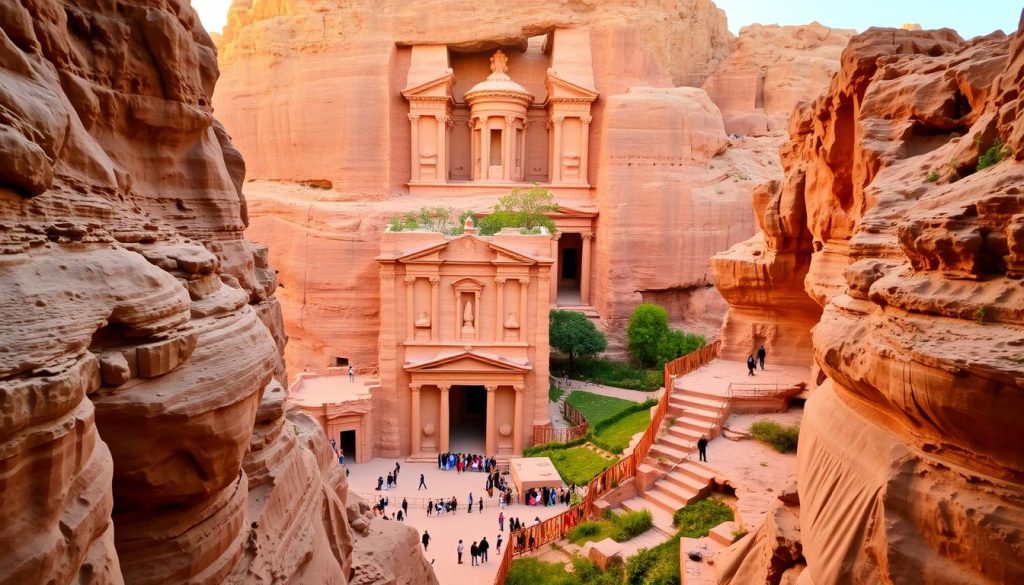
People love Petra for its mix of nature and culture. It’s a UNESCO World Heritage Site and one of the New Seven Wonders. The city’s stunning buildings, like the Treasury and Royal Tombs, show the Nabateans’ skill.
The Impact of Tourism on Petra
More tourists mean big changes for Petra, worrying about keeping it safe. The impact of tourism on Petra has led to rules for visitors. Too many people can damage the ancient buildings, making it hard to keep them safe.
Choosing the Best Time to Visit
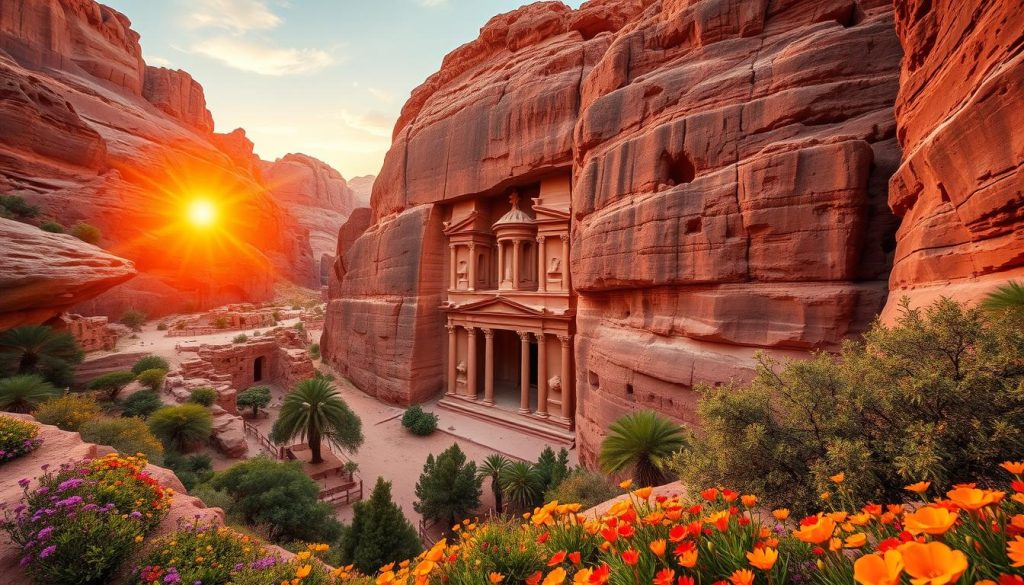
Knowing the seasons is key to planning your Petra trip. The best time to visit Petra can make your experience better. Visiting when it’s less crowded lets you enjoy the ancient city’s beauty without the rush of tourists.
Identifying Peak Seasons
Petra’s peak seasons are from March to May and September to October. These months see up to 4,000 visitors daily, making paths and viewpoints busy. Spring and autumn are great for outdoor fun like hiking and cycling, but it’s still crowded.
Summer is very hot, with temperatures over 40°C. This heat keeps many tourists away, making it quieter for visitors.
Exploring Off-Peak Travel
Visiting Petra off-peak is perfect for a peaceful experience. Winter, from December to February, is rainy and sometimes snowy. Nighttime can be very cold. Yet, it’s a chance to see Petra’s sandstone in vibrant colors.
Early June offers nice weather without the summer crowds. If you want a more personal experience at Petra, consider these off-peak times.
How to Avoid Crowds at Petra?
Timing is key when visiting Petra. By using smart crowd control strategies, you can enjoy this UNESCO World Heritage Site in peace. Arriving at the right time and avoiding holidays can make your visit unforgettable.
Strategic Arrival Times
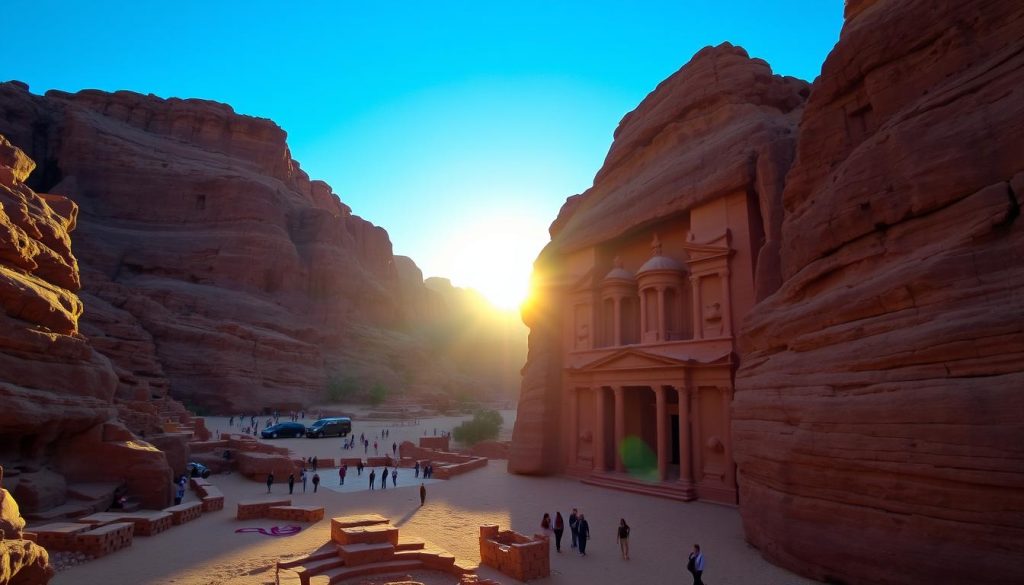
Getting to Petra before 6:00 AM lets you see its beauty in quiet. Most people come later, so an early start helps you beat the crowds. By 8:00 AM, you’ll have seen the Treasury and Siq with fewer people around.
Planning Around Major Holidays
Visiting Petra during holidays can be busy. Try to go during the off-season or on weekdays for a better experience. Knowing when locals celebrate and when tourists flock here can make your trip special.
| Recommendation | Details |
|---|---|
| Arrival Time | Before 6:00 AM for minimal crowd interaction. |
| Peak Visiting Hours | 8:00 AM onwards, high density of tourists. |
| Best Days to Visit | Weekdays and off-peak seasons recommended. |
| Holiday Awareness | Be mindful of local holidays that may attract more visitors. |
Planning an Extended Stay
Planning an extended stay in Petra lets you dive deep into its ancient wonders. Rushing through the highlights can make your experience feel shallow. A Petra multi-day ticket lets you explore the rich history and stunning landscapes at your own pace.
The Benefits of a Multi-Day Ticket
A multi-day ticket saves money and makes your visit better. A one-day adult ticket costs 50 JD, or about $70. But a multi-day pass lets you see more of Petra’s history. You can spend 6 to 12 hours a day seeing the main sights.
An extended stay lets you explore areas many miss because of time. This way, you can see more of Petra’s beauty.
Exploring Lesser-Known Trails
There’s beauty waiting off the main trails. With more time, you can find hidden spots like the Garden Triclinium and the High Place of Sacrifice. These places are peaceful, unlike the busy areas like the Treasury.
You can see amazing views and enjoy quiet moments. With 85% of Petra still undiscovered, your stay lets you be part of its story.
Timing Your Visit for Optimal Experience
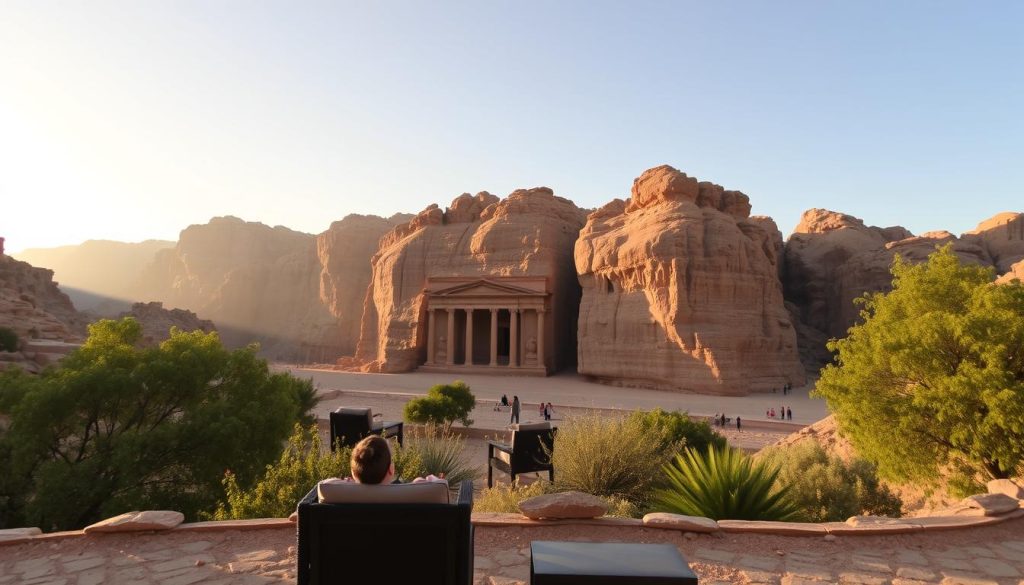
Planning your visit to Petra is key for a great experience. The best times to visit are early morning or late afternoon. These hours are cooler and less crowded, making your visit more peaceful.
Early Morning and Late Afternoon Visits
Visiting Petra early in the morning gives you clear skies and beautiful light. It’s perfect for taking photos of places like Al-Khazneh. You’ll also feel closer to Petra’s ancient history with fewer people around.
In the late afternoon, you can enjoy a quieter visit. The atmosphere is calm as the day ends, making it ideal for exploring.
Weather Considerations
Weather in Petra is important to consider when planning your trip. Summers can be very hot, so it’s best to avoid the midday sun. Check the weather forecast to find the best time to visit.
The entrance fee for Petra is 50JOD (about $70). Spending 2-3 days there is a good idea to make the most of your visit.
| Season | Average Temperature (°F) | Best Time for Visit | Recommended Duration |
|---|---|---|---|
| Spring | 60-75 | March to May | 2-3 days |
| Summer | 80-95 | June to August | 1 day (early visit) |
| Fall | 55-80 | September to November | 2-3 days |
| Winter | 40-60 | December to February | 2-3 days |
Considerations During Ramadan
Visiting Petra during Ramadan offers a unique view of this ancient city. Many think Ramadan limits travel, but it’s actually more welcoming. Attractions and services stay open, making it a great time to explore without crowds.
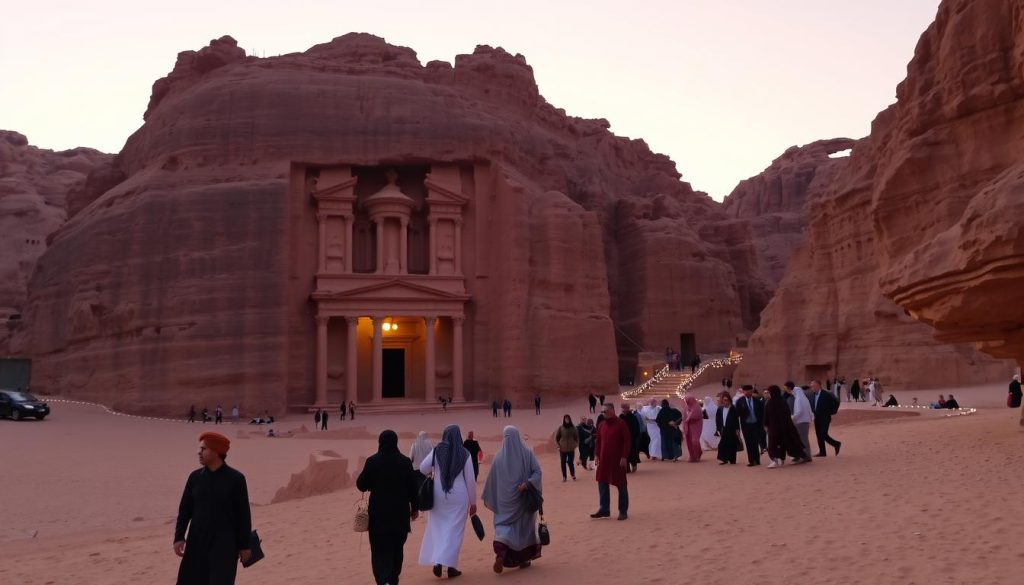
This period is lively, with a special atmosphere after sunset. You can see traditional practices and feel the community spirit.
Unique Aspects of Visiting During Ramadan
Visiting Petra during Ramadan brings a special cultural feel. Fewer tourists mean a more peaceful experience. Most places in Jordan, like Amman and Petra, stay open.
In Amman, Petra, and Karak, you can find lunch services. Evening iftars are a highlight, adding to your experience.
Potential Benefits of Fewer Tourists
One big plus of visiting Petra during Ramadan is fewer people. You can explore Petra’s wonders more closely. Tours in Wadi Rum also run smoothly, offering adventure without the rush.
Remember to dress modestly and respect local customs. This makes your visit better and builds good relations with the community.
Transportation Options for a Crowd-Free Visit
Planning your trip to Petra is key, and transportation is a big part of that. Your choice can make your visit better or worse. Knowing how to get to Petra can make your trip more enjoyable.
Traveling by Rental Car
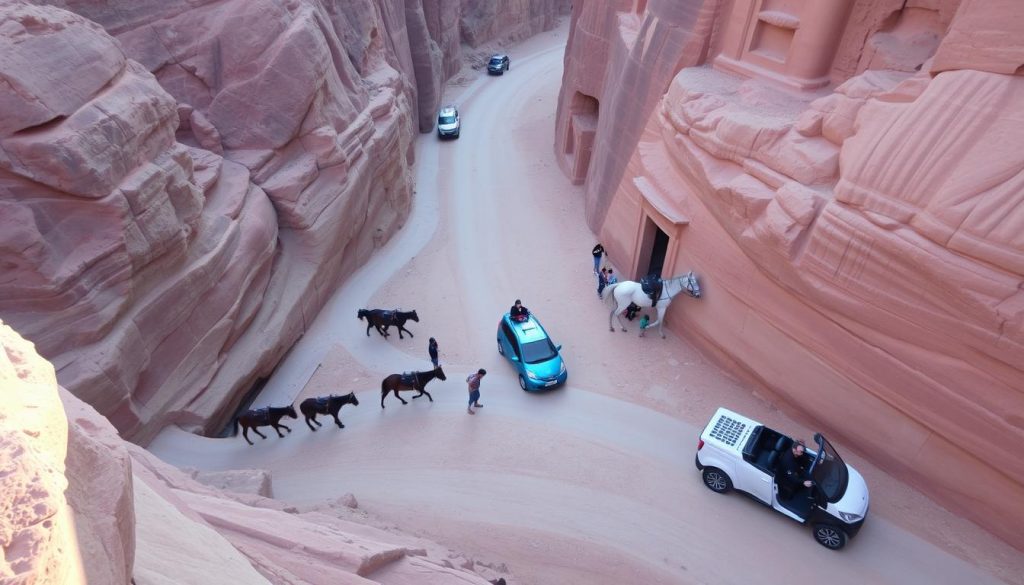
Getting a Transportation in Petra rental car is a great idea. It lets you go at your own speed and see more. The drive from Amman to Petra takes about 3 to 4 hours, offering beautiful views.
Renting a car costs between 25 to 35 JD (around $35 to $45 USD) a day. This includes insurance, making it a good deal.
Utilizing Public Transport Options
For a cheaper way, try Petra’s public transport like JETT buses and minivans. A one-way bus ticket from Amman to Petra is about 11 JD. A roundtrip ticket is 18 JD for the same day.
On a tight budget? A public minibus ride is just 5 JD ($7 USD). These options save money and help you avoid tour crowds.
Exploring Beyond the Main Attractions
Many people visit Petra to see famous spots like the Treasury and the Monastery. But, there’s more to this UNESCO Heritage Site than just these landmarks. Exploring Petra’s hidden gems reveals a world of history and beauty. These paths away from the crowds offer a unique experience, filled with stories and stunning views.
The Hidden Gems of Petra
Petrifying visitors with its stunning beauty, Petra has much more to offer. The hidden gems of Petra include places like Wadi Farasa and the Roman Tombs. These spots show the Nabateans’ artistic skill and let you enjoy ancient ruins in peace. Here’s a quick look at these hidden wonders:
| Hidden Gem | Description | Accessibility |
|---|---|---|
| Wadi Farasa | A less frequented trail leading through scenic landscapes and fascinating carvings. | Moderate trekking required. |
| Roman Tombs | An impressive collection of ancient tombs showcasing intricate architectural details. | Accessible via a short walk from the main path. |
| Byzantine Church | A remarkable site with stunning mosaics, often overlooked by many. | Requires a bit of hiking but worth the effort. |
Engaging a Local Guide for Off-The-Beaten-Track Experiences
To really understand Petra, think about getting a local guide. A guide makes your local guide experiences in Petra better by sharing stories and showing you secret spots. They know Petra’s history and can take you to hidden gems that tell old stories. With a guide, your visit to Petra will be unforgettable.

Conclusion
To fully enjoy Petra’s beauty without the crowds, it’s key to plan well. Visit in spring or autumn for a quieter experience. Arriving at 6 AM lets you see Petra’s wonders without the rush.
Using smart tips like exploring hidden trails and timing your visit for Petra by Night makes your trip better. By planning ahead, you can see Petra’s beauty and help keep it safe for future visitors.
It’s not just about avoiding crowds; it’s about experiencing Petra’s magic. Enjoy its views without the noise and connect with its rich history. Petra is truly one of the world’s wonders.