Ace TSA Security with Top Tips and Tricks
Have you ever noticed how some travelers breeze through airport security? Understanding TSA security is key to starting your trip on the right foot. We’re here to help with top TSA security tips. These tips provide a smooth airport experience. They cover everything from knowing the TSA’s strict rules to packing smart. With our essential airport security checklist, you’re all set.
Want to learn the best travel security measures used by expert travelers? Keep reading to learn how to move through TSA like a pro. Follow our advice, and enjoy stress-free, pleasant travel from the start.
Prepare in Advance: Research TSA Guidelines
Before heading to the airport, it’s crucial to familiarize yourself with the latest TSA guidelines. Knowing these rules can make your security check faster. This is especially true during busy travel times when airports are packed. TSA packing tips are key to avoiding delays from banned items or wrong packing.
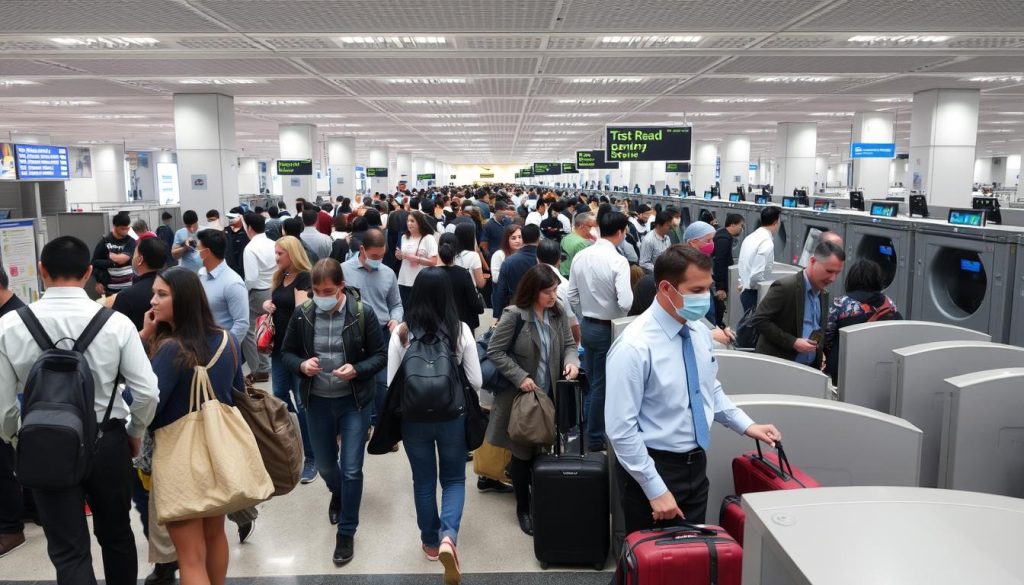
Every day, TSA checks about 3.3 million carry-on bags and 1.3 million checked bags. It’s important to follow TSA security checkpoint guidelines. Remember, powders over 12 oz. / 350 mL must go in checked bags. This avoids extra screening.
Knowing what you can bring in carry-on and checked luggage avoids problems. Here’s a brief look at some important rules:
| Item | Carry-On | Checked Bag |
|---|---|---|
| Liquids (3.4 oz / 100 mL or less per container) | Permitted | Permitted |
| Prescription Medications | Permitted (unlimited if screened) | Permitted |
| CBD Oil (hemp-derived, FDA approved) | Permitted | Permitted |
| Powders over 12 oz / 350 mL | Not Permitted | Permitted |
| Breast Milk | Permitted (unlimited if screened) | Permitted |
| Hand Sanitizer (3.4 oz / 100 mL max) | Permitted | Permitted |
Always arrive early for your flight: 2 hours for domestic and 3 hours for international. This gives you time for any unexpected TSA checks. Using the MyTSA app can help too. It gives live updates on security wait times and TSA PreCheck lanes, making your trip smoother.
Packing Tips for a Seamless TSA Experience
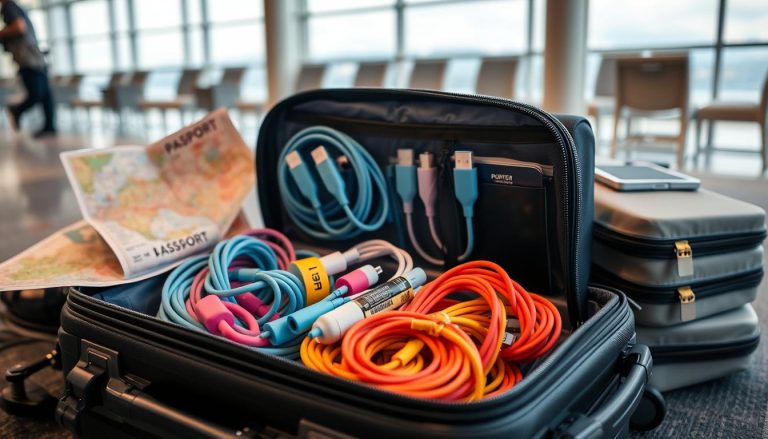
For a smooth TSA checkpoint experience, follow some key tips. Start by organizing your carry-on essentials. You’re allowed one carry-on bag and one personal item. This shows why packing efficiently is crucial.
Make sure to pack valuable items like your passport and electronics where you can easily get them. Every year, the TSA screens 70 million electronic devices. This makes organized packing essential.
Avoid bringing banned items to the TSA checkpoint. Don’t pack large liquids or sharp things. Stick to the 3-1-1 rule for liquids; they must be under 3.4 ounces. Use packing cubes to organize better and save 30% packing time.
If you’re a TSA PreCheck member, you’ll go through security faster, often in under 10 minutes. Packing in layers helps TSA officers inspect faster. This can speed up your checkpoint experience.
| Essential Item | Benefits at TSA Checkpoint |
|---|---|
| Passport & Travel Documents | Quick Identification |
| Electronics (Laptop, Tablet, etc.) | Efficient Screening |
| 3-1-1 Compliant Liquids | Smooth Security Check |
| Packing Cubes | Enhanced Organization |
To quickly get through TSA, pay attention to your carry-on essentials and follow airport rules. By organizing thoughtfully and following the 3-1-1 liquids rule, you make your airport security experience better and less stressful.
Choosing the Right Carry-On Bag
Picking the right carry-on bag is key for a *fast pass through TSA checkpoint*. To avoid trouble, it must fit airline size regulations. The Federal Aviation Administration says carry-ons can’t be bigger than 22 by 14 by 9 inches. But some airlines like Air Canada and Frontier have their own sizes.
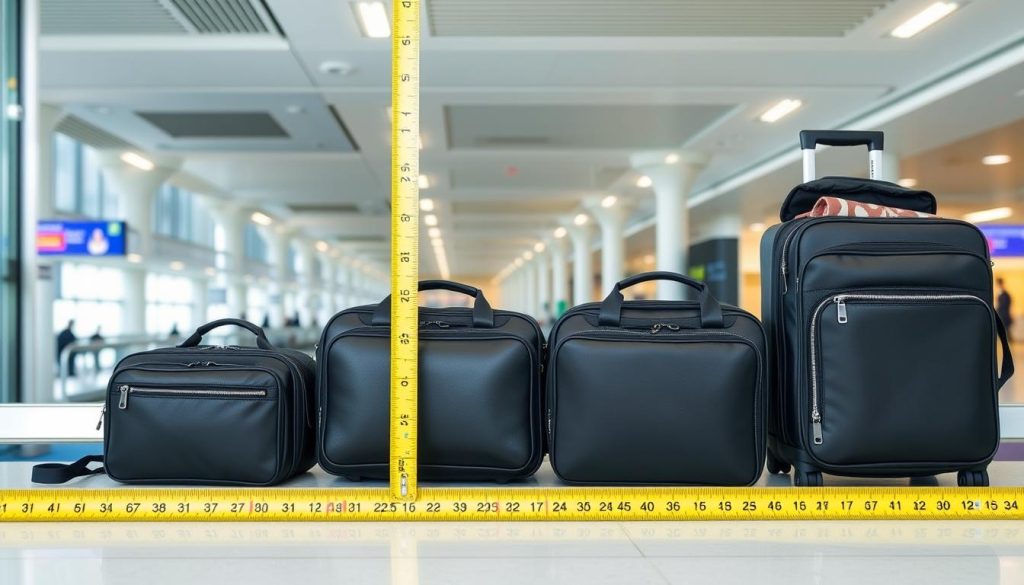
Having a bag that’s easy to get into is crucial. About 40% of *delays at TSA checkpoints* happen because of electronics. A bag with special spots for your laptop and other gadgets helps you move faster through security.
Being comfortable matters too, especially during busy travel times. The American Automobile Association (AAA) says over 119 million people will travel this holiday, and almost 8 million will fly. A bag that’s easy to handle will make moving through the airport a breeze. And it might even help you avoid long waits at TSA, where over 858 million passengers were screened in 2023. Choosing the right bag, that fits all the *TSA security tips*, makes flying easier.
| Airline | Max Dimensions (inches) | Weight Limit (lbs) |
|---|---|---|
| Air Canada | 21.5 x 15.5 x 9 | 22 lbs |
| Frontier Airlines | 24 x 16 x 10 | 35 lbs |
| American Airlines | 22 x 14 x 9 | 40 lbs |
Packing cubes also work wonders, they can save up to 30% of your bag’s space. They make checks faster too. Keeping your electronics in an easy-to-reach spot means a *fast pass through TSA checkpoint*. Remember these *TSA security tips* for a smoother journey.
Preparing for Security Checks: TSA Tips and Tricks
To move through security quickly, learn some key TSA security tips. Start by making sure your carry-on follows the TSA’s 3-1-1 rule. All liquids and gels must be in containers no larger than 3.4 ounces (100 milliliters). They must fit in a single quart-sized bag. Items like shampoo, toothpaste, and lotion are included. Following the 3-1-1 rule makes the check faster.
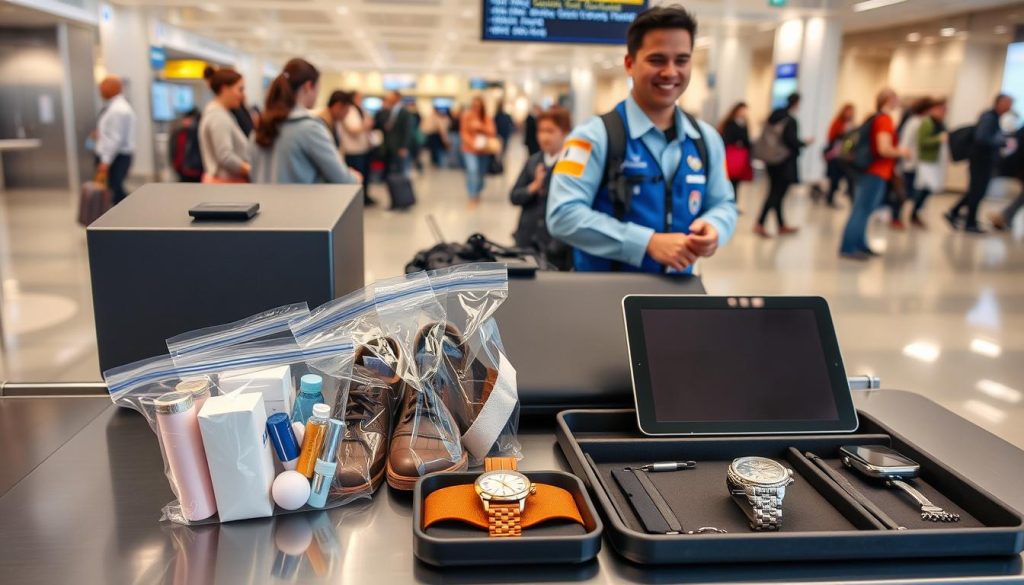
An airport security checklist helps too. Keep electronics like laptops and tablets ready to place in bins. Valuables should go in your carry-on’s inner compartments. This keeps them safe. Around 95% of passengers have a smoother experience by doing these things.
Get to the airport two to three hours early, especially before busy times. This helps during the holiday season when lines grow long. Working well with TSA agents also helps. It might cut down extra checks by 50%.
Using these TSA tips and measures helps make your airport time easier.
Efficient Strategies for TSA Security Checkpoints
Understanding how to move quickly through TSA security is crucial. The TSA screens about 4 million passengers every day at 450 airports in the U.S. Being ready is key for a smooth start to your trip.
Learning the rules for TSA checkpoints is vital. Stick to the 3-1-1 rule for carrying liquids. This means each container should hold 3.4 ounces or less and fit in one quart-sized bag. This makes screening faster.
- TSA PreCheck members get through security much quicker, usually five times faster than others. They don’t have to take off shoes, belts, or jackets.
- Being early is important. Get to the airport two hours before domestic flights and three hours before international ones.
- Flying when it’s less busy, like early mornings or late at night, can mean shorter lines.
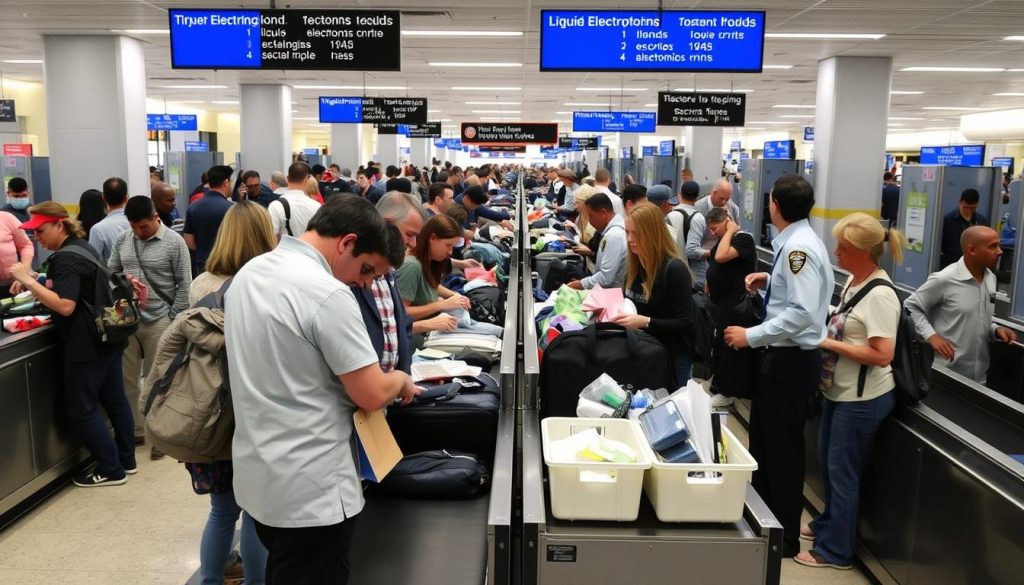
Pack smart to go through security quickly. Make sure your liquids, electronics, and papers are easy to get to. Using your phone instead of a paper boarding pass also saves time.
“Staying calm and cooperating at security helps you get through faster without trouble.”
If you’re flying with your family, use the special family lanes. These lanes are bigger, making it easier to go through with kids and extra stuff.
- TSA PreCheck usually means less than 10 minutes in line at security.
- Families should pick lanes that fit more people to speed up the process.
Know what you can bring through security. Only take items that are allowed. This avoids extra screening or having things taken away. This is in line with TSA rules for a better travel experience.
Following these tips and knowing how TSA works can make security checks go smoothly.
Understanding TSA’s 3-1-1 Liquids Rule
The TSA 3-1-1 rule helps air travelers in the U.S. get through security. It allows you to carry containers with up to 3.4 ounces (100 milliliters) of liquids. These must fit in a quart-sized, clear, plastic, zip-top bag. It helps you know: What Qualifies as Liquids?
It’s important to understand Airport security regulations about liquids. This includes gels, creams, pastes, and some liquid foods like soups and salsa. TSA packing tips recommend packing wisely to avoid delays.
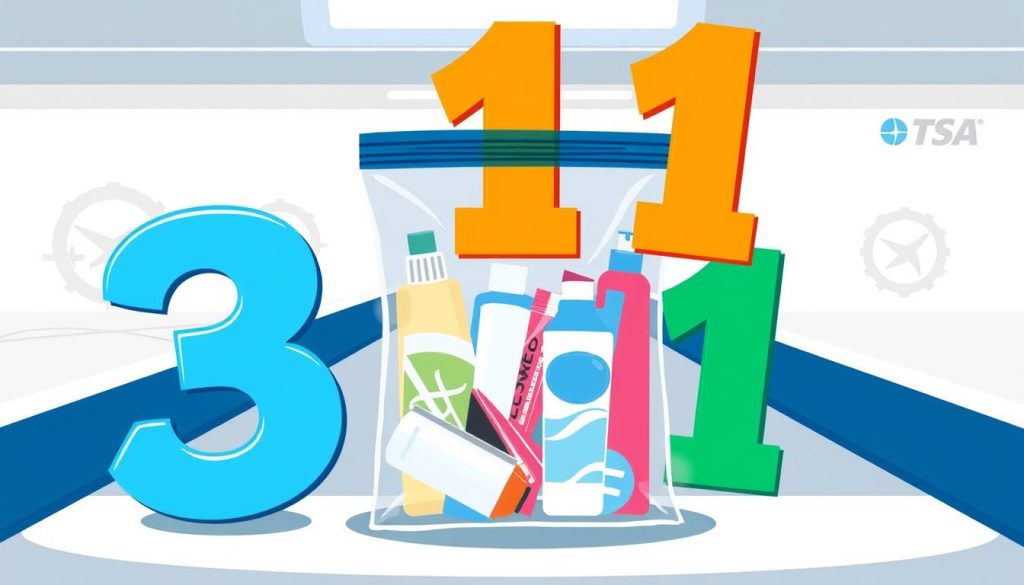
Make sure your liquids follow the volume rules and are packed right. This rule came in after a terror threat in 2006, leading to worldwide similar rules. It’s crucial during peak travel times, such as Thanksgiving or early December. Not following the rules can cause long waits during screening.
Here’s a simple guide to follow at the airport:
- Keep liquid containers to 3.4 ounces (100 milliliters) max.
- Put all your liquid containers in one clear plastic quart-sized bag.
- Tell security about any liquids you need for medical reasons.
- Rules are different for baby formula and breast milk.
- You can bring duty-free liquids bought in the last 48 hours if they’re in a secure bag.
Knowing Airport security regulations and TSA packing tips helps prevent extra bag checks. Always figure out What Qualifies as Liquids before you pack. This way, you help everyone have a smoother trip through security.
Utilizing TSA PreCheck and Global Entry Programs
Learning how to apply for TSA PreCheck and Global Entry Programs makes travel smoother. These programs let you skip long lines at TSA checkpoints. They are designed to speed up the screening process.
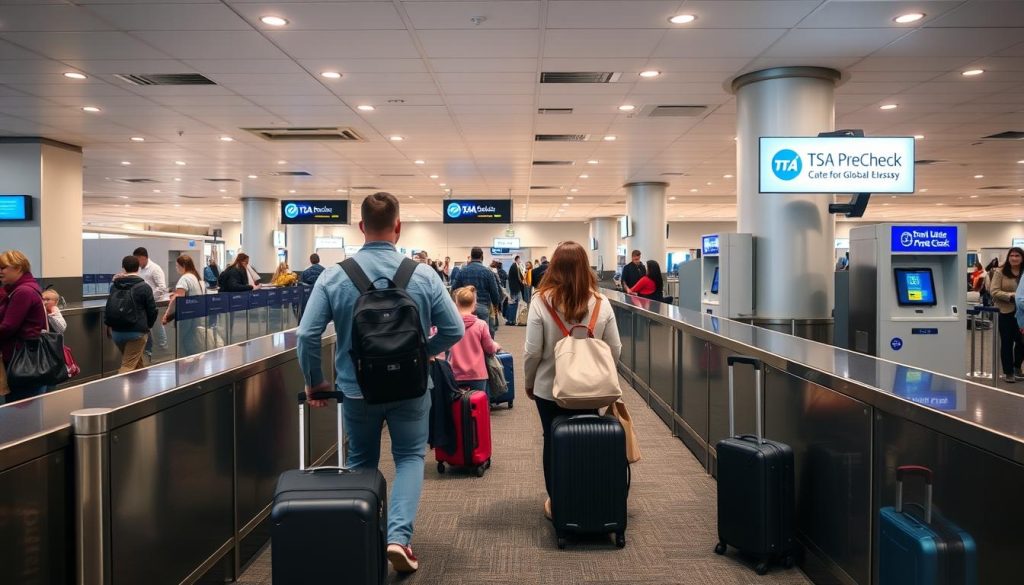
TSA PreCheck costs between $77 to $85 for five years. Members don’t need to remove their shoes, jackets, or laptops at security. About 90% of passengers wait less than 10 minutes. Applying for this program saves you time and trouble.
Global Entry costs $100 for five years and includes TSA PreCheck. It lets you bypass customs lines when returning to the U.S. This can save you between 30 minutes to two hours. The application process for Global Entry can take some time, but scheduling interviews midweek at less busy airports helps.
Another option is Clear® membership, which costs $189 annually. This service uses biometric verification to let members skip regular lines. Clear Plus works in 58 U.S. airports, making travel easier for frequent flyers.
| Program | Cost | Duration | Benefits |
|---|---|---|---|
| TSA PreCheck | $77-$85 | 5 years | No need to remove shoes, light jackets, or laptops |
| Global Entry | $100 | 5 years | Includes TSA PreCheck; skip customs lines |
| Clear® | $189 | 1 year | Bypass regular security lines with biometric verification |
Applying for these programs offers many benefits, including saving time. By understanding how to apply correctly, you can choose the best program for your travels. Be informed and prepared to speed through TSA checkpoints on every journey.
Keeping Valuables and Electronics Secure
Traveling? Make sure your valuable items and electronics are safe. Here’s how to keep them secure and easily get through TSA checks:
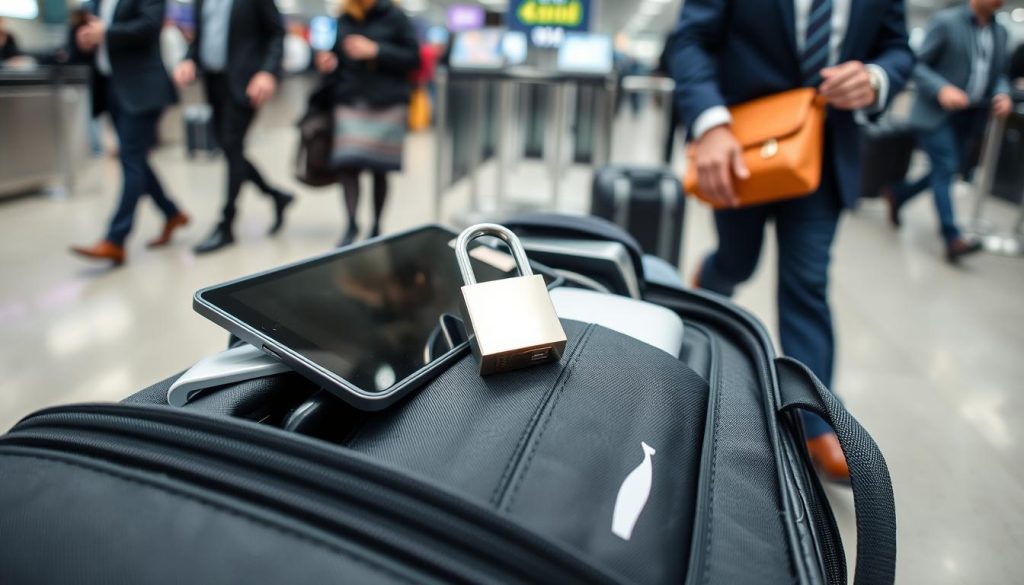
- Use a Secure Carry-on: Keep laptops, tablets, and cameras in a carry-on with special compartments. This protects them and makes security checks smoother.
- Keep Items Within Sight: Theft can happen even in seemingly secure areas. Always watch your stuff, particularly at TSA checkpoints.
- Prepare for Checkpoints: Organize your carry-on to quickly get to items that need a separate screening. Put electronics in TSA-approved bins to avoid hold-ups.
Follow these tips to keep your belongings safe and accessible:
| Security Measure | Benefit | Action |
|---|---|---|
| Compartmentalizing | Enhanced protection and quick access | Store valuables in dedicated sections |
| Use of TSA Pre✓ | Save up to 30 minutes | Enroll in the program |
| Global Entry | Reduces processing times by over 50% | Apply for membership |
| Vigilance | Prevents theft | Keep items within sight |
| Optimize Packing | Faster screening process | Use compartments for electronics |
Stay safe during your travels by being aware and prepared. Keep an eye on your valuables, organize your bags, and consider TSA Pre✓ and Global Entry. These steps will help make your TSA checkpoint experience quick and stress-free.
Peak Travel Times: Navigating Busy Airports
Flying when it’s busy can be tough because more people are traveling. It’s key to Planning Ahead to move smoothly through security. With passenger numbers up by over 20% during holidays and summer, waits get longer. Arriving early—two hours for domestic and three for international flights—is wise.
A top TSA security tip is to check in online, saving about 20 minutes at the airport. Packing your carry-on right, following the rules, helps avoid delays. Studies show that wrong carry-on items slow down over 30% of passengers.
From 6 a.m. to 8 a.m., TSA lines are the busiest. Looking up less busy security spots in the airport can help. Using TSA PreCheck or Global Entry lets you go through security faster.
About 20% of travelers miss their flights because of security waits. And nearly 30% miss them by arriving late. Being early and using less crowded security can reduce these risks. Tuesdays and Wednesdays are quieter, offering a smoother airport visit.
“Major airports see increased travel during spring breaks and summer vacations, especially on Fridays and weekends,” states the TSA.
Here’s a quick guide for an easier time at busy airports:
| Key Considerations | Details |
|---|---|
| Arrive Early | At least two hours before domestic and three hours before international flights. |
| Online Check-in | Saves an average of 20 minutes in terminal waiting time. |
| Compliant Carry-Ons | Avoid delays by ensuring carry-ons meet TSA’s regulations. |
| Alternative Security Checkpoints | Research and utilize less crowded checkpoints within the airport. |
| Programs like TSA PreCheck and Global Entry | These provide expedited security and customs clearance. |
| Peak Hours | Tend to be busiest between 6 a.m. and 8 a.m.; plan accordingly. |
Staying informed and ready makes moving through packed airports easier. Following these TSA security tips and airport rules betters your travel experience.
Tips for Traveling with Children or Pets
Traveling with children or pets needs extra planning. It’s important to know what documentation required, follow TSA security advice, and stick to specific travel security measures. Learn about the screening rules for kids and pet transport guidelines.
- Children aged 12 and under can keep their shoes, light jackets, and headwear on during screening. However, light jackets must be removed for Advanced Imaging Technology (AIT) screening.
- If a child alarms during the screening process, multiple attempts to pass through the screening technology can minimize the need for a pat-down.
- All carry-on items, including toys and blankets, undergo X-ray screening.
- For children’s medically necessary liquids, such as formula and breast milk, quantities greater than 3.4 ounces are allowed and can be screened separately from other items.
- Contact TSA Cares 72 hours ahead for assistance if your child has disabilities or medical conditions.
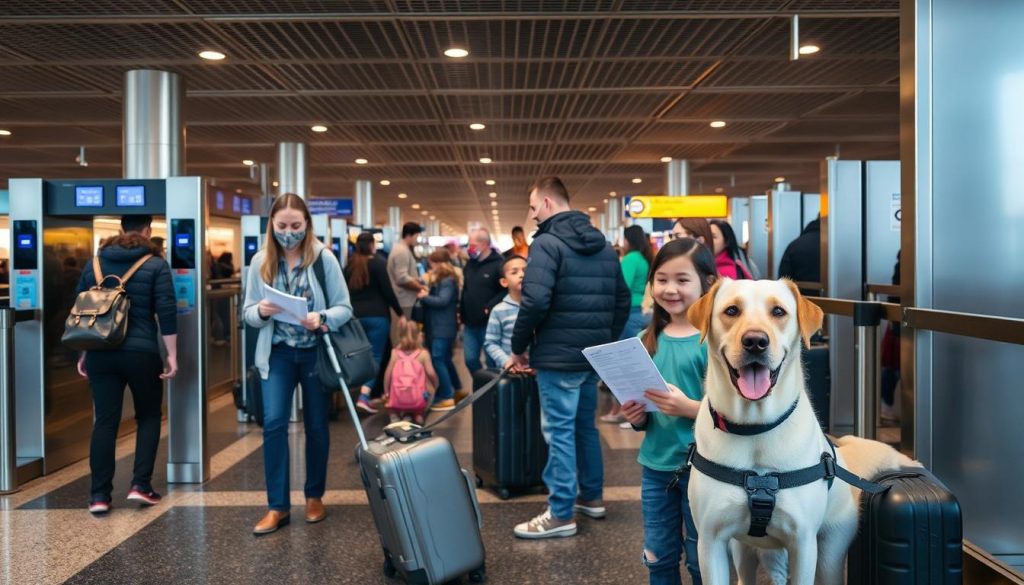
For pet travel, be sure all your documentation required is ready, like vaccine papers. TSA allows pets in a carrier. Make sure your pet is okay with the carrier before you leave.
| Age Group | Screening Procedure | Special Considerations |
|---|---|---|
| Children 12 and under | Modified TSA screening | Shoes, light jackets, headwear can be worn, but light jackets off for AIT |
| Children 13 and older | Standard TSA screening | Follow all regular security procedures |
| Pets | Out of carrier for screening, carrier undergoes X-ray | Ensure all pet records and documentation required are handy |
Check the myTSA app or TSA website to see what you can take through security. Avoid drinks to skip delays. These TSA security tips make your trip with kids and pets easier.
Handling Unpredictable Situations at TSA
Dealing with the unpredictability at TSA checkpoints can be tough. You might face delays or find forbidden items in your bag. Keeping calm and following the rules can help fix problems quickly.
Delays at security are common. Arrive two hours early for local flights and three hours for international ones. This reduces stress and makes your TSA experience better. Satisfied travelers are often 20% happier with their journey.
Last year, over 5,000 guns were found at checkpoints. Knowing what you can’t bring is crucial. If you accidentally bring a banned item, tell the TSA officer calmly. Positive interactions with TSA staff often lead to a satisfying experience.
Lost documents stress out 30% of travelers. Keep your documents handy to avoid this. TSA PreCheck and Global Entry make screening faster for a fee. They let you skip some steps, like removing shoes or taking out laptops.
Always pack essentials like chargers in your carry-on. 40% of people run out of battery waiting for flights. And 55% of travelers like having digital content ready for the wait.
To handle surprises well, stay calm and follow TSA’s rules. Using these tips before flying can help you face unexpected events. This makes travel less stressful.
Conclusion
Every year, over 300 million people fly in the U.S. alone. But, you can lower stress at airport security with good TSA packing tips. Knowing TSA rules, picking the right carry-on, and using TSA PreCheck can make flying easier. TSA PreCheck helps 95% of users speed through checks.
Airports get very busy, especially at peak times. But, smart packing and understanding TSA’s 3-1-1 liquids rule can make things smoother. It’s important for those who need help or have disabilities. Accessible features at airports lead to better travel for 60% of people.
Some airports, like Ben Gurion and Changi, have strong security for lots of passengers. Using TSA packing tips can help you move quickly through checks. This info prepares you to face airport security confidently. Have a safe trip!