What are some of the most common Spanish phrases I should know?
Are you a beginner looking to learn Spanish? Knowing some of the most common Spanish phrases can be incredibly helpful as you start your language-learning journey. Whether you plan to visit a Spanish-speaking country or simply want to expand your communication skills, these phrases will come in handy.
In this section, we will explore the most common Spanish phrases. By familiarizing yourself with these expressions, you can start to navigate everyday conversations in Spanish with confidence. Let’s get started!
Greetings and Introductions
Learning basic greetings and introductions is essential when starting your journey to speaking Spanish. Use these basic Spanish phrases to greet people and introduce yourself in different settings:
¡Hola! – Hello!
¿Cómo estás? – How are you?
Me llamo… – My name is…
Encantado/a de conocerle. – Nice to meet you.
Knowing these essential Spanish phrases will help you connect with Spanish speakers and make a good first impression. Use them in everyday situations, such as meeting new people, starting conversations with coworkers, or interacting with locals while traveling.
In addition to these basic Spanish phrases, there are also some cultural differences to keep in mind. For example, in formal settings, it’s common to use the formal “usted” instead of the informal “tú” when addressing someone. Additionally, in Latin American culture, it’s customary to greet acquaintances with a kiss on the cheek (la besa).
Ordering Food and Drinks
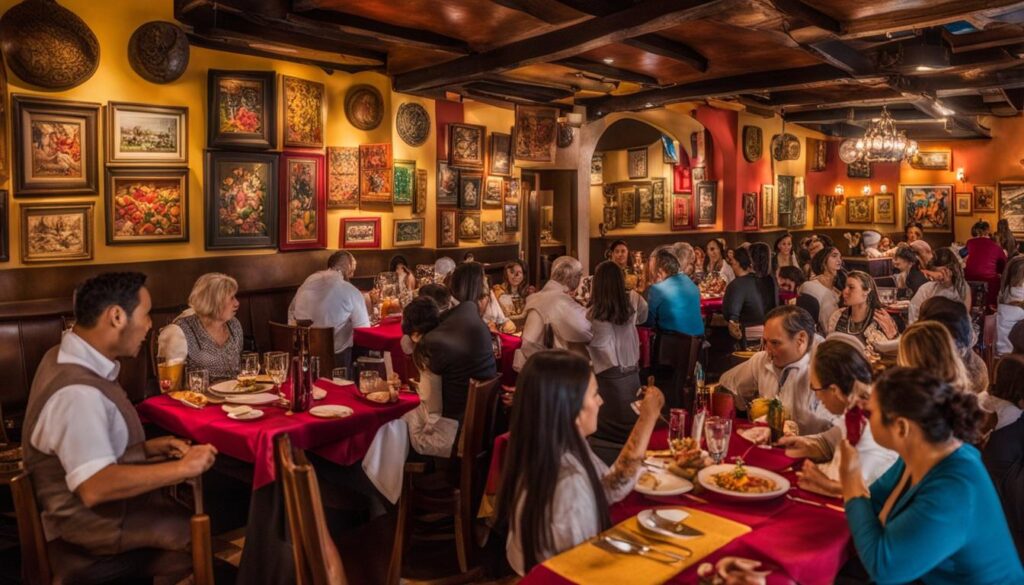
One of the best things to do in a Spanish-speaking country is to try the local cuisine. Whether you’re at a restaurant or a café, it’s essential to know how to order food and drinks in Spanish. This section will introduce you to some popular and useful Spanish phrases that will help you have a smooth dining experience.
Before we dive into the phrases, it’s important to note that dining customs may differ from country to country. Some countries might have different meal times or different ways of ordering and paying for food. So, always keep an open mind and be prepared to adapt.
Ordering Food
When you’re ready to order, the server might ask, “¿Qué desean comer?” which means “What would you like to eat?” Here are some responses you can use:
| Spanish | English |
|---|---|
| Quisiera | I would like |
| Me gustaría | I would like |
| Para mí | For me |
Once you’ve indicated that you would like to order, the server might ask you what you want specifically. These are some of the most popular dishes that you can try:
- Empanadas – savory pastries filled with meat, cheese, or vegetables
- Tortilla española – a Spanish omelet made with potatoes and onions
- Paella – a rice dish with seafood or meat
- Tacos – tortillas filled with meat, beans, or vegetables
Don’t be afraid to ask the server for recommendations or to clarify any doubts you may have about the dishes. Here are some useful Spanish phrases:
| Spanish | English |
|---|---|
| ¿Qué me recomienda? | What do you recommend? |
| ¿Qué lleva? | What does it have? |
| ¿Es picante? | Is it spicy? |
Ordering Drinks
When it comes to ordering drinks, there are a few key phrases to keep in mind. To order a drink, the server might ask you, “¿Qué van a tomar?” which means “What would you like to drink?” Here are some useful responses:
| Spanish | English |
|---|---|
| Quiero | I want |
| Me gustaría | I would like |
| Para mí | For me |
Here are some popular drinks that you can order:
- Agua – water
- Cerveza – beer
- Vino – wine
- Margarita – tequila-based cocktail
If you’re not sure what type of beer or wine to order, you can ask the server for recommendations:
| Spanish | English |
|---|---|
| ¿Qué me recomienda? | What do you recommend? |
| ¿Tiene algún vino/cerveza local? | Do you have any local wine/beer? |
Lastly, if you’re not in the mood for alcohol, you can order a non-alcoholic beverage:
| Spanish | English |
|---|---|
| Sin alcohol, por favor | Non-alcoholic, please |
| Agua mineral sin gas | Still mineral water |
| Jugo de naranja | Orange juice |
Now that you know some important Spanish phrases for ordering food and drinks, it’s time to put them to practice. ¡Buen provecho!
Asking for Directions
When you’re exploring a new place, it’s important to know how to ask for directions in Spanish. Whether you’re lost or looking for a specific location, these basic Spanish phrases will come in handy:
| Spanish | English |
|---|---|
| Perdón, ¿dónde está…? | Excuse me, where is…? |
| ¿Cómo llego a…? | How do I get to…? |
| ¿Me podría indicar el camino a…? | Could you show me the way to…? |
| ¿Hay una estación de metro por aquí? | Is there a metro station around here? |
When listening to directions, be sure to understand the following key words:
- Derecha: right
- Izquierda: left
- Recto: straight
- Arriba: up
- Abajo: down
Take note of landmarks and major buildings to help orient yourself. Don’t be afraid to ask for clarification or to repeat directions if needed. With these essential Spanish phrases, you’ll be able to find your way around like a pro!
Numbers and Counting
Being able to understand and communicate numbers is essential in any language. Whether you’re shopping, telling time, or exchanging phone numbers, knowing basic Spanish phrases for numbers is a must. Here are some of the most popular Spanish phrases for counting:
| Number | Spanish | Pronunciation |
|---|---|---|
| 0 | cero | SEH-roh |
| 1 | uno | OO-noh |
| 2 | dos | dohs |
| 3 | tres | tress |
| 4 | cuatro | KWAH-troh |
| 5 | cinco | SEEN-koh |
| 6 | seis | sayss |
| 7 | siete | see-YEH-teh |
| 8 | ocho | OH-choh |
| 9 | nueve | NWAY-veh |
| 10 | diez | DYEHZ |
Here are some other basic Spanish phrases that use numbers:
- ¿Cuánto cuesta? (How much does it cost?)
- Tengo veinte años. (I am twenty years old.)
- A las tres de la tarde. (At three in the afternoon.)
Now that you know the basic Spanish phrases for numbers, practice counting in Spanish with a friend or by yourself. It’s a great way to reinforce your language learning and become more confident in your Spanish communication skills.
Expressing Gratitude
Learning to express gratitude is important in every language, and Spanish is no exception. Showing appreciation is a great way to connect with Spanish speakers and build positive relationships. Here are some useful and popular Spanish phrases to express gratitude:
¡Muchas gracias! – Thank you very much!
¡Mil gracias! – A thousand thanks!
¡Te lo agradezco mucho! – I appreciate it a lot!
¡Qué amable de tu parte! – How kind of you!
These phrases can be used in various situations, such as when someone helps you, gives you a gift, or does something nice for you. It’s important to use them sincerely and with enthusiasm to convey your gratitude.
Another way to express gratitude is by using body language and tone of voice. A smile, a nod, or a pat on the back can go a long way in showing appreciation. Make eye contact and use a cheerful tone of voice to convey your gratitude.
Remember, expressing gratitude is not only polite but also a great way to build relationships and show kindness. Practice these popular Spanish phrases and use them often to make meaningful connections with Spanish speakers.
Making Small Talk
Engaging in small talk can be a great way to connect with Spanish speakers and build relationships. Here are some basic Spanish phrases to initiate conversations and keep them going:
“¿Cómo estás?” – How are you?
“Mucho gusto” – Nice to meet you
“¿De dónde eres?” – Where are you from?
“¿Qué te gusta hacer?” – What do you like to do?
Showing interest in someone’s hobbies or interests is a great way to keep the conversation flowing. Here are a few more phrases to help you:
“¿Te gusta la música?” – Do you like music?
“¿Cuál es tu deporte favorito?” – What’s your favorite sport?
“¿Tienes algún pasatiempo?” – Do you have any hobbies?
Remember, small talk is all about being friendly and approachable, so don’t be afraid to use these phrases and start a conversation!

As you continue to practice your Spanish, you’ll notice that small talk phrases come in handy in a variety of situations. From making new friends to networking in a professional setting, being able to initiate and navigate small talk can be an invaluable skill to have.
Common Phrases for Travel
Traveling to a Spanish-speaking country can be an exciting adventure, but it’s also important to be prepared for navigating unfamiliar territory. Knowing some essential Spanish phrases can help make your trip smoother and more enjoyable.
Airports and Transportation
When traveling by air, you may need to communicate with airport staff and navigate various transportation options. Here are some basic Spanish phrases to help you:
| Spanish Phrase | English Translation |
|---|---|
| ¿Dónde está el mostrador de la aerolínea? | Where is the airline counter? |
| Necesito facturar mi equipaje | I need to check my luggage |
| ¿Cuándo sale mi vuelo? | When is my flight departing? |
| Quiero reservar un taxi, por favor | I would like to book a taxi, please |
Hotels
Staying at a hotel in a Spanish-speaking country may require communication with hotel staff and other guests. Here are some basic Spanish phrases to help you:
| Spanish Phrase | English Translation |
|---|---|
| ¿Dónde está mi habitación? | Where is my room? |
| ¿Puedo registrarme? | Can I check in? |
| Quiero reservar una habitación | I would like to book a room |
| ¿Hay un restaurante cerca? | Is there a restaurant nearby? |
General Phrases
Here are some additional basic Spanish phrases that can come in handy during your travels:
- Perdón, ¿habla inglés?
- Excuse me, do you speak English?
- ¿Dónde está el baño?
- Where is the bathroom?
- ¿Cuánto cuesta esto?
- How much does this cost?
By knowing these essential Spanish phrases for travel, you can navigate new places with more confidence and ease.
Emergency Phrases
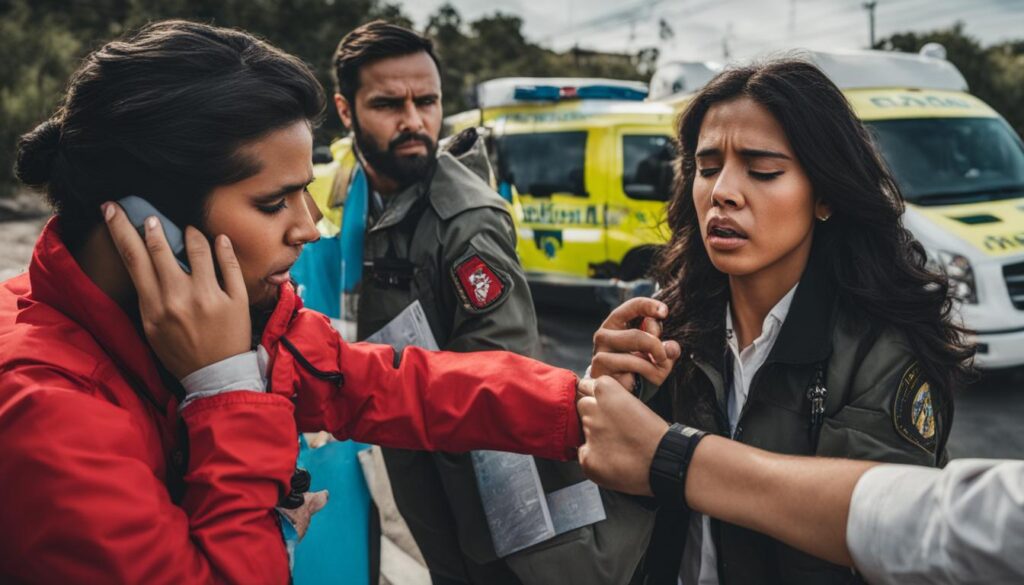
When you’re in an emergency in a Spanish-speaking country, it’s crucial to know some basic Spanish phrases to communicate with others and seek help. Here are some essential Spanish phrases to remember:
| English | Spanish |
|---|---|
| Call the police! | ¡Llama a la policía! |
| Call an ambulance! | ¡Llama a una ambulancia! |
| Help! | ¡Ayuda! |
| Stop! | ¡Alto! |
| I need a doctor. | Necesito un médico. |
| I’m lost. | Estoy perdido/a. |
| Where is the hospital? | ¿Dónde está el hospital? |
It’s essential to know how to pronounce these phrases correctly, so practice saying them out loud. Additionally, it’s a good idea to carry a phrase book or have access to translation apps on your phone in case of an emergency.
Remember, staying calm and knowing these basic Spanish phrases can make all the difference in an emergency situation. Keep them in mind and stay safe!
Time and Dates
Time and dates are essential components of everyday conversation. Understanding basic time and date-related Spanish phrases can help you make plans, schedule appointments, and keep track of your daily activities.
Popular Spanish Phrases for Time
| Phrase | Translation |
|---|---|
| Ahora | Now |
| Más tarde | Later |
| A las (número) en punto | At (number) o’clock |
| A la(s) (número) | At (number) o’clock |
Example: ¿Qué hora es? (What time is it?)
Popular Spanish Phrases for Dates
Spanish dates are written with the day first, then the month, then the year.
| Phrase | Translation |
|---|---|
| ¿Cuál es la fecha de hoy? | What is today’s date? |
| ¿Cuándo es tu cumpleaños? | When is your birthday? |
| Es el (número) de (month) | It’s the (number) of (month) |
- Practice telling time and dates in Spanish with a Spanish-speaking friend or language partner.
- Use a calendar or planner to keep track of important dates and events in Spanish.
- Watch Spanish news or television shows to hear time and date-related phrases used in context.
Common Expressions and Slang
Learning popular Spanish phrases beyond the basics can help you understand and connect with Spanish speakers on a deeper level. Here are some essential Spanish phrases for slang and colloquial expressions:
“¡Qué chévere!”
Meaning: How cool!
“¡No me digas!”
Meaning: You don’t say!
“Está chido/Está padre.”
Meaning: It’s awesome.
“No hay pedo.”
Meaning: No problem.
It’s important to note that some slang words and expressions can be region-specific and may not be commonly used in all Spanish-speaking countries.
Additionally, practice caution when using slang and colloquial expressions, as they may not always be appropriate in formal settings.

Now that you have learned some popular Spanish phrases, continue to practice and expand your vocabulary to communicate like a true Spanish speaker!
Conclusion
Congratulations on taking the first step towards learning the essential Spanish phrases! By familiarizing yourself with these phrases, you’re on your way to becoming a confident Spanish speaker.
Practice Makes Perfect
Remember that learning a language takes time and practice, so don’t be discouraged if you don’t pick up everything right away. Keep practicing and expanding your vocabulary to become more proficient in your Spanish communication skills.
Continued Learning
Now that you know some beginner Spanish phrases, consider taking a course or finding a language exchange partner to further improve your skills. By immersing yourself in the language and culture, you’ll be able to expand your knowledge and understanding of Spanish.
Embrace the Spanish Language and Culture
Learning Spanish is not just about learning the language, but also about embracing the culture. Keep an open mind and enjoy the journey of discovering all that Spanish has to offer.
Thank you for reading and we hope this guide has been helpful in your journey to learning essential Spanish phrases.