Explore the Top Marrakech Cuisine You Can’t Miss
Ever wondered why Marrakech cuisine draws food lovers from everywhere? Marrakech is famous for its rich food culture. It’s a mix of Moroccan food traditions, African, Arab, and Mediterranean flavors.
Walking through Marrakech’s busy streets, you’ll smell exotic spices and fresh bread. It’s like your senses are calling you to try the local food. Marrakech has everything from tasty tagines to sweet pastries, making it a unique food journey.
In this article, we’ll show you Marrakech’s best foods. We’ll guide you through the top dishes you must try in this food paradise.
The Rich Culinary Heritage of Marrakech
Exploring Marrakech reveals a rich culinary heritage shaped by many cultures. The city sits at the crossroads of Africa, the Arab world, and the Mediterranean. This makes it a unique blend of culinary traditions.
Historical Influences on Marrakech’s Food Culture
Marrakech’s food culture has been shaped by its history. The Berbers, Arabs, and French have all influenced local cuisine. They introduced new ingredients and cooking methods.
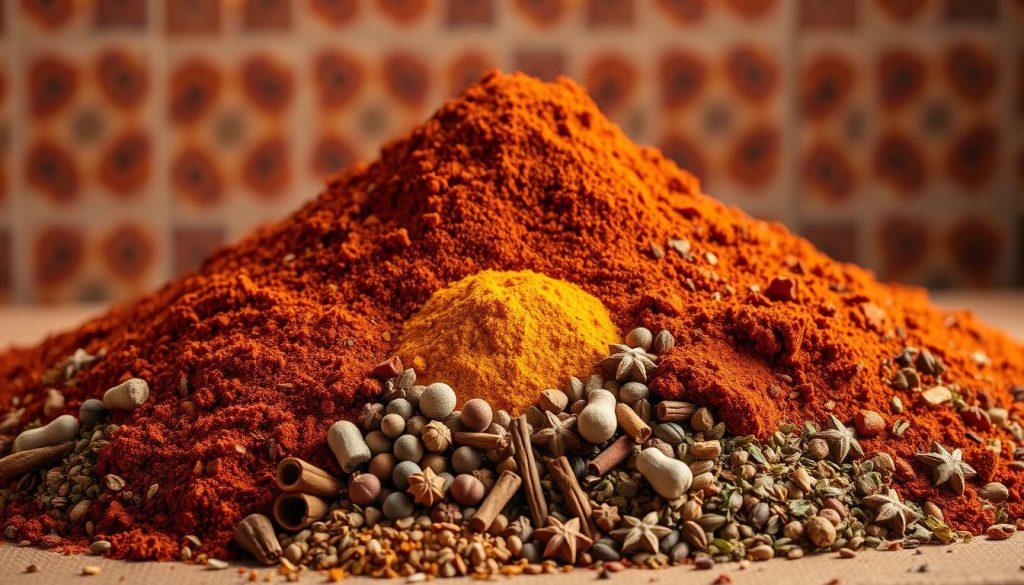
The use of ras el hanout, a complex spice blend, comes from the city’s ties to the Middle East.
- The Berber influence is seen in local ingredients like argan oil and preserved lemons.
- Arab cuisine adds rich flavors and aromas to Marrakech’s dishes.
- French colonialism brought new cooking techniques and pastry traditions.
The Significance of Spices in Moroccan Cooking
Spices are key in Moroccan cooking, adding depth to dishes. Cumin, coriander, cinnamon, and ginger are common. Ras el hanout adds a unique flavor.
The art of blending spices is a cherished tradition. It’s passed down through generations.
What Are the Must-Try Foods in Marrakech?
As you explore Marrakech’s lively streets, you’ll find amazing smells and tastes. The city’s food is a mix of Arab, Mediterranean, and African flavors.
Iconic Dishes That Define Marrakech’s Cuisine
Marrakech is famous for its delicious food. You must try Tagine, a slow-cooked stew cooked in a special pot. Also, don’t miss B’stilla, a pie with meat and spices wrapped in flaky pastry.
Harira is another must-try. It’s a rich soup with tomatoes, lentils, and chickpeas.

Seasonal Specialties Worth Seeking Out
Marrakech’s food changes with the seasons. In spring, try the fresh fava beans and artichokes. They’re great as sides or in tagines.
In winter, warm up with Khobz bread soup. It’s a comforting dish.
To really enjoy Marrakech’s food, visit local markets and street stalls. There, you can find seasonal and iconic dishes.
Tagine: The Quintessential Moroccan Dish
Exploring Marrakech’s food scene means trying tagine, a dish that shows Morocco’s rich food culture. Tagine is more than food; it’s a symbol of Morocco’s culinary history. The name “tagine” also refers to the clay pot it’s cooked in.
Popular Tagine Varieties in Marrakech
Marrakech has many tagine types, each with its own taste. Some favorites include:
- Chicken tagine with preserved lemons and olives
- Lamb tagine with prunes and almonds
- Vegetarian tagine with seasonal vegetables
These options show how versatile tagine is, appealing to many tastes and diets.
The Art of Slow Cooking in Clay Pots
Slow cooking in clay pots is key to making a real tagine. The clay pot cooks ingredients slowly, making flavors richer and meat tender. This method is not just cooking; it’s a way to connect with Moroccan traditions.
“The slow cooking process in a clay pot infuses the tagine with deep, rich flavors that are hard to replicate with modern cooking techniques.”
Where to Find the Most Authentic Tagines
To try the best tagines in Marrakech, eat at local riads or traditional Moroccan restaurants. Some top spots are:
- Riad Yacout, famous for its traditional dishes
- Dar Moha, with many tagine choices in a historic setting
- Le Tobsil, serving real tagines in a restored riad
Visiting these places will delight your taste buds and show you Marrakech’s rich food culture.
Couscous: The National Dish of Morocco
Couscous is more than a meal in Morocco; it’s a cultural event that unites people, mainly on Fridays. This traditional North African dish is crafted from crushed durum wheat semolina. It’s a key part of Moroccan cuisine.
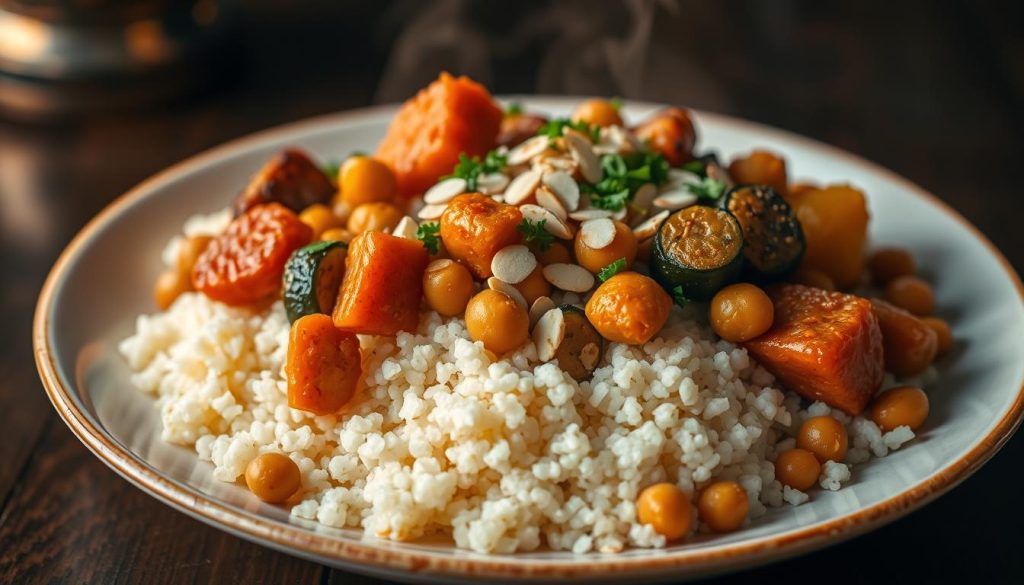
The importance of couscous in Moroccan culture is rooted in its tradition and history. Every Friday, families come together for a couscous meal. It’s a day filled with togetherness and celebration.
Traditional Friday Couscous Ritual
The Friday couscous ritual is a cherished tradition. Families gather to enjoy this beloved dish. The couscous is served with various vegetables and meats, steamed to perfection in a couscoussier.
This weekly ritual strengthens family bonds. It’s a time to relax and enjoy good food and company.
Regional Variations Found in Marrakech
While couscous is a national staple, different regions in Morocco have their own twists. Marrakech is no exception. Here, couscous is often served with a mix of spices, dried fruits, and nuts.
This reflects the city’s rich culinary diversity.
Street Food Treasures of Marrakech
As you explore Marrakech’s lively streets, the smells and tastes of street food will amaze you. Marrakech’s street food is a journey through the city’s rich culture.
Jemaa el-Fnaa Food Stalls
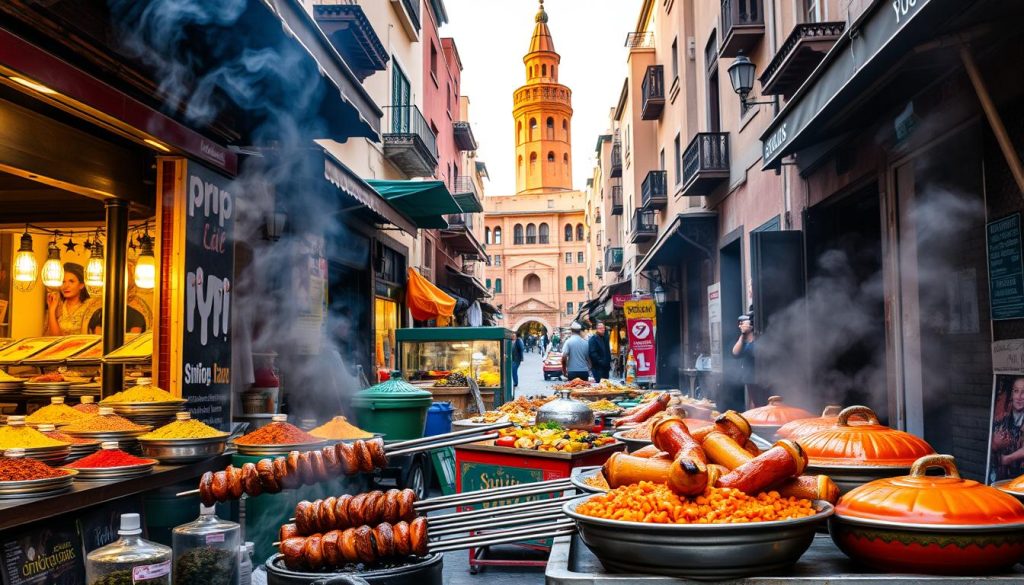
Jemaa el-Fnaa, Marrakech’s famous square, is a top spot for street food lovers. Here, food stalls serve up traditional Moroccan dishes like tagines and pastries. Enjoy these local treats while soaking in the square’s energy.
Must-Try Street Snacks
Exploring Marrakech’s street food, you’ll find some snacks you must try. Traditional pancakes and grilled meats highlight the variety of Moroccan cuisine.
Msemen and Beghrir Pancakes
Msemen and Beghrir are Marrakech’s favorite pancakes. Msemen is folded and filled with savory ingredients. Beghrir is small and fluffy, best with honey or syrup.
Grilled Meats and Seafood
Grilled meats and seafood are big in Marrakech’s street food. You’ll find skewers of marinated meat and fresh seafood, all grilled to perfection.
Navigating Food Safety While Enjoying Street Food
When trying street food in Marrakech, remember to stay safe. Choose stalls with lots of customers, as they often serve fresh food. Also, drink bottled or filtered water to stay healthy.
Moroccan Breads and Pastries
Moroccan breads and pastries are more than just food in Marrakech. They are a big part of the city’s rich food history. As you explore, you’ll find many traditional breads and pastries filled with history and cultural importance.
Essential Bread Varieties in Marrakech
Marrakech offers a wide range of breads, with Khobz being a favorite. This bread is round, with a crispy outside and soft inside. It’s great with meals or for scooping up tagines and stews.
Msemen is another popular choice. It’s a thin, folded flatbread enjoyed with honey, butter, or in savory dishes.
Sweet Pastries and Their Cultural Significance
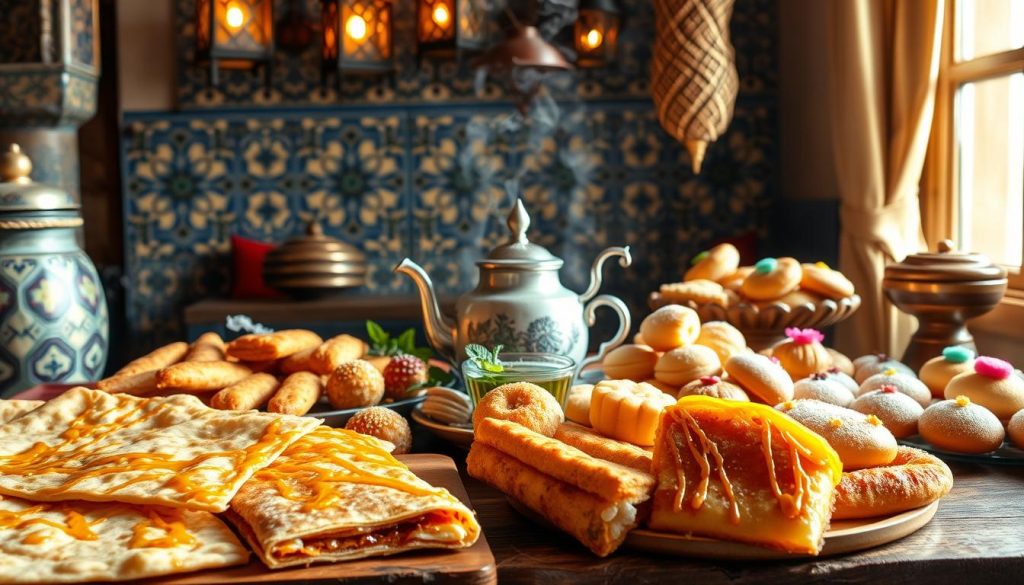
Moroccan pastries are famous for their sweetness. They often include almonds, honey, and orange blossom water. These pastries are important in Moroccan culture, enjoyed during special times.
Honey-Soaked Treats
Chebakia and Ghoriba are loved during holidays. Chebakia is a cookie shaped like a flower, deep-fried and soaked in honey, with sesame seeds on top.
Almond-Based Delicacies
Almond Ghriba and Croquant aux amandes are almond-based treats. They are tasty and beautiful, often served at gatherings. They show the rich food traditions of Marrakech.
| Bread/Pastry | Description | Cultural Significance |
|---|---|---|
| Khobz | Traditional round bread, crusty outside, soft inside | Staple bread served with most meals |
| Msemen | Thin, folded flatbread | Often enjoyed with honey or as part of savory dishes |
| Chebakia | Honey-soaked, flower-shaped cookies | Popular during festive periods and celebrations |
Mint Tea and Coffee Culture
In Marrakech, mint tea and coffee are more than drinks. They are cultural symbols that deeply impact daily life. Both locals and visitors cherish these traditions.
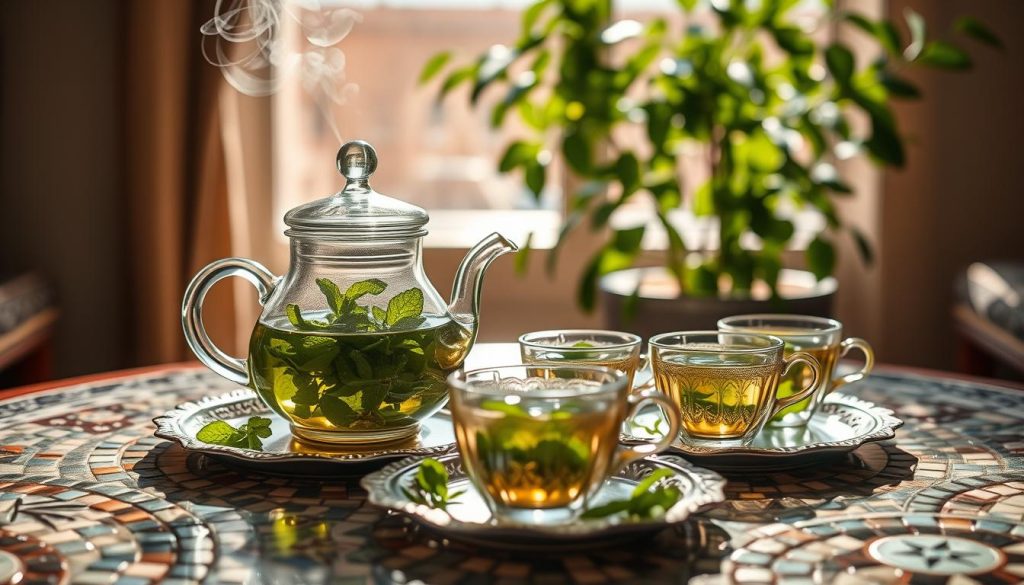
Mint tea, or “Atay,” is key in Moroccan hospitality. It welcomes guests, showing respect and generosity.
The Art of Moroccan Tea Service
Making mint tea is an art in Morocco. It combines green tea, fresh mint, and sugar in special glasses. This mix is a big part of the tea service.
When you try Moroccan tea, you’ll see the tea is poured high. This makes it frothy. It’s not just about drinking; it’s about the moment and the company.
Coffee Traditions in Marrakech
Coffee is big in Marrakech too. Moroccan coffee, or “qahwa,” uses ground coffee beans and spices like cardamom. It’s a unique taste.
You can find coffee in many places, from busy cafes to quiet riads. Marrakech offers a special coffee experience, whether you like it strong or spiced.
| Beverage | Traditional Ingredients | Cultural Significance |
|---|---|---|
| Mint Tea | Green tea, fresh mint, sugar | Symbol of hospitality and friendship |
| Moroccan Coffee | Coffee beans, cardamom, sugar | Integral to social gatherings and daily routines |
Unique Ingredients That Define Marrakech Cuisine
Exploring Marrakech’s food scene reveals a world of unique ingredients. Aromatic spices, preserved lemons, and argan oil make Moroccan dishes stand out. These elements create a distinct taste that’s all about Marrakech.
Essential Spice Blends: Ras el Hanout and More
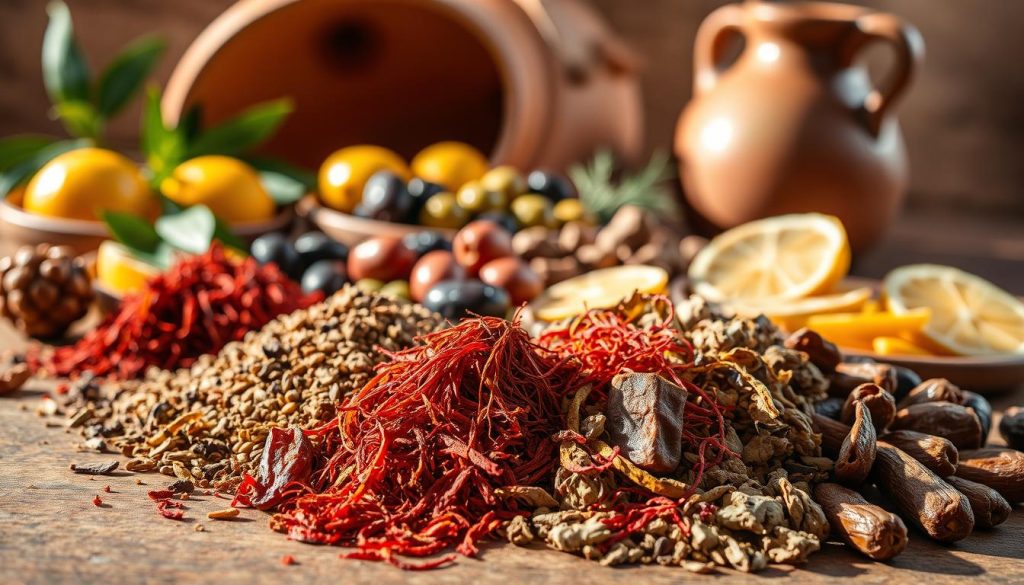
Ras el Hanout, or “head of the shop,” is a key spice mix in Moroccan cooking. It’s a blend of over 30 spices, like cumin, coriander, and cinnamon. Other important mixes include baharat and chermoula, used for marinades.
Preserved Lemons, Argan Oil, and Other Local Ingredients
Preserved lemons, or limon malhouk, add a salty, tangy taste to dishes. Argan oil, full of antioxidants, is used in cooking and as a finishing touch. Fresh herbs, olives, and dates also add to Marrakech’s unique flavors.
Dining Experiences: From Riads to Restaurants
Marrakech’s dining scene is a mix of old riads and new restaurants. It shows the city’s rich culture. You’ll find many places to eat, each with its own style.
Traditional Dining in Authentic Riads
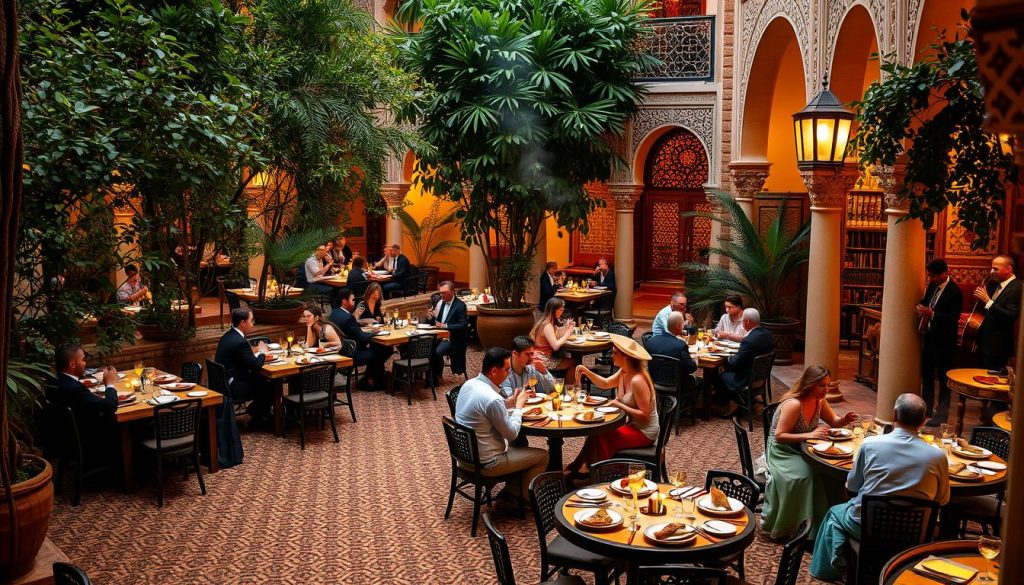
Eating in a riad is a special experience. These old houses have beautiful designs and calm gardens. They offer traditional Moroccan food like tagines and couscous.
Expect a warm welcome and a cup of mint tea. Riads like Riad Yacout and Riad Fes are famous for their great food and service.
Modern Moroccan Fusion Restaurants
For a mix of old and new flavors, try Marrakech’s fusion restaurants. Places like Le Foundouk and Dar Moha serve creative dishes. They use local ingredients in new ways.
These restaurants offer a modern dining experience. Yet, they still respect Morocco’s cooking traditions.
Dining Etiquette and Customs to Observe
Respecting local customs is key when eating in Marrakech. Always use your right hand to eat, as the left is seen as unclean. Finishing your meal shows you appreciate the food.
In riads, you might sit on cushions or low chairs. Knowing these customs makes your meal better and shows respect for the culture.
| Dining Experience | Characteristics | Recommended For |
|---|---|---|
| Traditional Riads | Intimate setting, local cuisine, historic ambiance | Those seeking authentic Moroccan culture |
| Modern Fusion Restaurants | Innovative dishes, blend of local and international flavors | Adventurous eaters and those looking for a contemporary twist |
Dietary Considerations for Travelers
Marrakech is known for its rich food culture. It has many options for those with special dietary needs. You can find dishes that fit your dietary requirements as you try the local cuisine.
Vegetarian and Vegan Options in Marrakech
Marrakech is great for vegetarians and vegans. Many traditional dishes don’t have animal products. You can try vegetable tagines, couscous with preserved lemons, and different pastilla fillings.
Many restaurants now mark their menus with vegan and vegetarian choices. This makes it easier to find what you need.
| Dish | Description | Dietary Category |
|---|---|---|
| Vegetable Tagine | Slow-cooked vegetables in a clay pot | Vegetarian, Vegan |
| Couscous with Preserved Lemons | Traditional couscous dish with preserved lemons and olives | Vegetarian, Vegan |
Navigating Food Allergies and Restrictions
If you have food allergies, it’s important to tell restaurants about them. Many places in Marrakech are welcoming, even in tourist spots. Knowing a bit of Arabic, like “I am allergic to [food],” can help a lot.
Some restaurants also offer gluten-free dishes. This shows they care about their guests’ needs.
Conclusion: Embracing the Flavors of Marrakech
Exploring Marrakech reveals a world of flavors as rich as its history. The city’s air is filled with the scent of spices. Its tagines warm the heart, showing off its cultural roots.
You’ve tried many dishes, like couscous and sweet pastries. Each one gives you a taste of Marrakech’s traditions. Keep exploring to find more amazing flavors in the city’s lively streets.
Embracing Marrakech’s flavors means diving into its culture. From traditional riads to modern restaurants, every bite tells a story. So, sit down at a local spot, enjoy a mint tea, and let Marrakech’s tastes stay with you.