Gandhi’s Legacy in Durban: What You Need to Know
When you look into Mahatma Gandhi‘s history in South Africa, you might ask how Durban influenced his beliefs. Arriving in Durban in 1893 was the start of his fight for civil rights.
Gandhi spent 21 years in South Africa, growing his ideas that would shape India’s fight for freedom. In Durban, he faced racism, which made him more determined to help the Indian community. This time was key in making his legacy, offering deep insights into his later work.
Exploring Gandhi’s work in Durban shows his big impact on the local community and the fight against apartheid.
Gandhi’s Arrival in South Africa: The Beginning of a Journey
Gandhi’s time in Durban was a key moment in his growth as a leader. As a young lawyer, he wanted to make a name for himself. But, it was his experiences in South Africa that shaped his future activism.
The Young Lawyer’s First Impressions of Durban
Gandhi arrived in Durban in 1893, a time of great activity. The vibrant port city left a lasting impression on Gandhi. He was struck by the diversity of people and culture.
As he settled, Gandhi noticed racial tensions in the city. These tensions would later become a key part of his activism.
The Infamous Train Incident at Pietermaritzburg
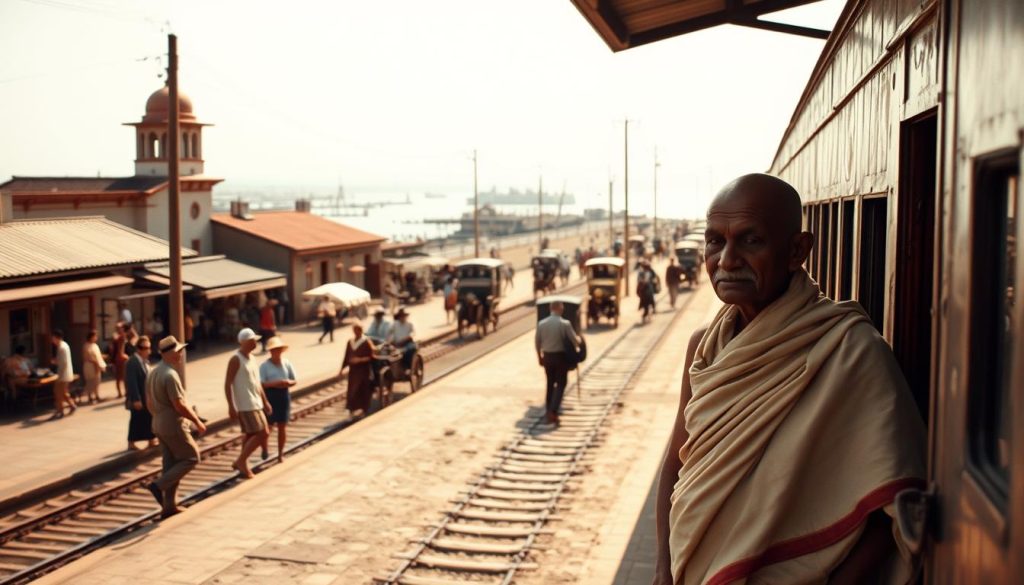
A key moment in Gandhi’s journey was when he was forcibly removed from a train at Pietermaritzburg because of his race. This incident woke Gandhi up to the deep racial prejudices in South Africa. It sparked his determination to fight racial discrimination.
This event deeply affected Gandhi. It made him resolve to challenge unjust laws and fight for Indian rights in South Africa. It was the start of his journey as an activist, leading him to India and inspiring civil rights movements worldwide.
What Did Gandhi Do in Durban? His Key Activities and Contributions
In Durban, Gandhi played a key role in fighting racial discrimination. He did many things, like starting a law firm and creating groups and papers for the Indian community.
Establishing His Legal Practice in Durban
Gandhi came to Durban in 1893 to be a lawyer. He quickly set up his law office. This was the start of his fight against unfair laws.
Founding the Natal Indian Congress
In 1894, Gandhi started the Natal Indian Congress. It was to help the Indian community fight against bad laws. This group was very important in uniting Indians against racism.
Publishing “The Indian Opinion” Newspaper
Gandhi also started “The Indian Opinion” newspaper in 1903. It was for the Indian community in South Africa. The paper shared news and fought for Indian rights.
| Gandhi’s Activities | Year | Impact |
|---|---|---|
| Established Legal Practice | 1893 | Foundation for future activism |
| Founded Natal Indian Congress | 1894 | Unified Indian community against discrimination |
| Published “The Indian Opinion” | 1903 | Voiced concerns of Indian community |
Gandhi’s work in Durban helped the Indian community a lot. It set the stage for his future work in India and elsewhere.
The Phoenix Settlement: Gandhi’s Experimental Community
The Phoenix Settlement was Gandhi’s dream near Durban. It was a place of communal living and simplicity. This community showed Gandhi’s belief in self-sufficiency and non-violence.

Founding Principles and Vision
The Phoenix Settlement was built on simplicity, self-reliance, and living together. Gandhi wanted a place where people could live in harmony with nature and each other. He wanted to free them from the trap of materialism.
“The true function of a newspaper is to educate the masses, to enlighten them.”
This quote shows the educational and enlightening role the settlement had.
Daily Life and Activities at the Settlement
Daily life at the Phoenix Settlement was hard work and community. People farmed, made crafts, and worked together for the community’s good. It was more than a home; it was a center for social and economic equality.
Through their work, people lived Gandhi’s ideals of simplicity and non-violence. The Phoenix Settlement was key in Gandhi’s Durban timeline. It shaped his views and actions for social change. The community’s focus on living together and being self-sufficient was a start to Gandhi’s later work in India.
Gandhi’s Fight Against Racial Discrimination in Durban
In Durban, Gandhi fought hard against racial discrimination. He used non-violent resistance in many ways. His campaigns, protests, and legal fights changed the way people saw racial discrimination.
The Anti-Registration Campaign
Gandhi fought against the Asiatic Registration Act. This act made Indians register with the government. This was a big fight for Gandhi, showing his dedication to peaceful resistance.
Peaceful Protests and Civil Disobedience
Gandhi led peaceful protests and encouraged civil disobedience. These actions faced opposition from the authorities. But Gandhi never gave up on his non-violent stance. His actions inspired many to join the fight against racial discrimination.
Legal Battles for Indian Rights
Gandhi also fought for Indian rights in court. He worked hard to challenge unfair laws. His legal victories helped protect Indian rights and brought attention to the community’s struggles.
Gandhi’s work in Durban left a lasting impact. His fight against racial discrimination continues to inspire people today.
The Development of Satyagraha in Durban
Gandhi’s time in Durban was key to creating Satyagraha. This philosophy would later change history. Durban’s impact on Gandhi’s thoughts and actions was huge.
Birth of Non-Violent Resistance Philosophy
In South Africa, Gandhi faced racial discrimination. In Durban, he struggled and found a new way to fight. He created Satyagraha, a philosophy of non-violent protest for change.
Early Applications and Successes
In Durban, Gandhi’s Satyagraha showed early wins. The Indian community supported his non-violent protests. They fought against unfair laws, like the Asiatic Registration Act.
Gandhi’s efforts helped repeal the Asiatic Registration Act. This was a big victory for his movement.
| Year | Event | Significance |
|---|---|---|
| 1907 | Introduction of Asiatic Registration Act | Sparked widespread protests among Indians |
| 1908 | Gandhi’s first major application of Satyagraha | Led to the repeal of the Asiatic Registration Act |
| 1913 | Successful campaign against poll tax and other grievances | Further established Satyagraha as an effective tool for social change |
Looking into Mahatma Gandhi’s time in Durban shows Satyagraha’s importance. This philosophy shaped his activism and influenced civil rights worldwide.
Gandhi’s Relationship with the Durban Community
Exploring Gandhi’s time in Durban reveals his connections with various groups. He worked closely with local Indians, European settlers, and indigenous African communities. These interactions shaped his beliefs and actions.
Interactions with Local Indians
Gandhi’s efforts focused on helping local Indians in Durban. He established the Natal Indian Congress to fight for their rights. Gandhi saw the Indian community in South Africa as a mirror of Indian society, with its many castes, languages, and religions.
This unity was key in facing challenges together.
Relationships with European Settlers
Gandhi tried to connect with European settlers, aiming to build bridges. He advocated for non-violent resistance, which some Europeans supported. Gandhi believed in the power of the Indian spirit, which he said was crucial to their victory.
Connections with Indigenous African Communities
Gandhi’s interactions with indigenous African communities were important, even though they were limited. He saw their struggles against colonialism and racism as connected to the Indian community’s fight.
“The struggle of the Indian community was not isolated, but part of a broader fight for justice and equality in South Africa.”
Key Historical Sites of Gandhi’s Durban
To grasp Gandhi’s influence in Durban, visiting key sites is vital. These spots not only celebrate his legacy but also shed light on his fight against racism. They also highlight his development of the Satyagraha philosophy.
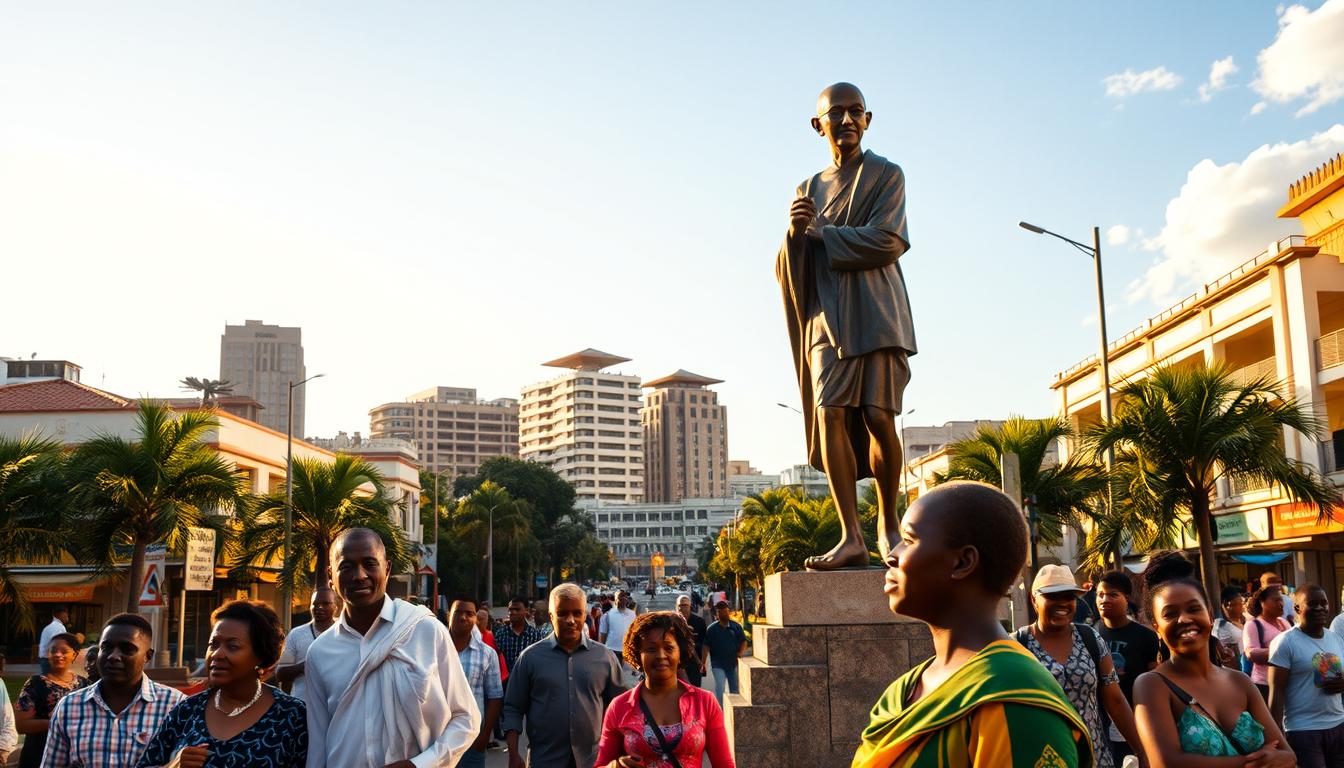
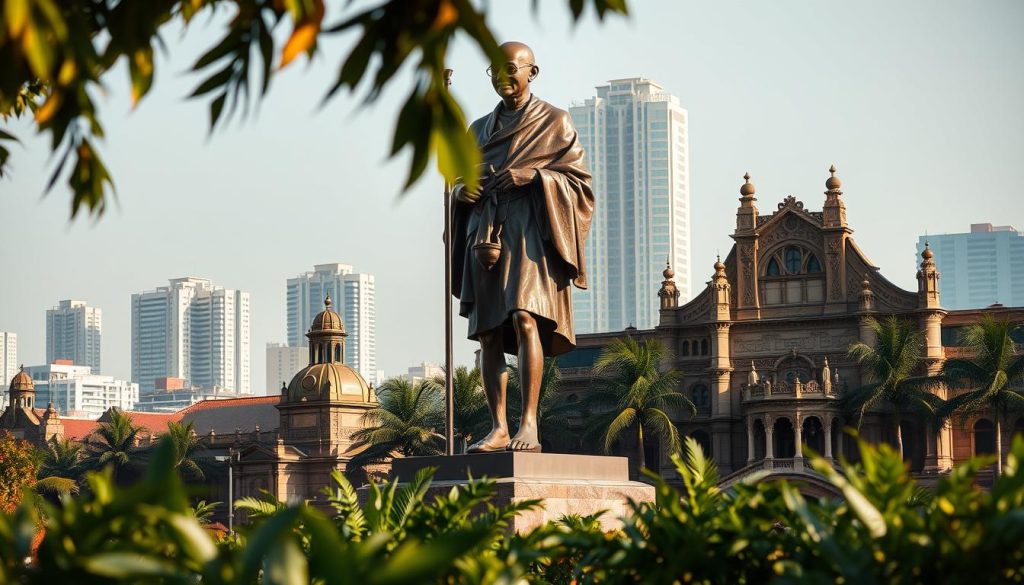
The Gandhi Statue at the Durban City Hall
The Gandhi statue at the Durban City Hall is a major landmark. This statue is a must-see for those interested in Gandhi’s story. It shows the deep respect Durban has for Gandhi’s work and ideas.
The Phoenix Settlement Today
Gandhi founded the Phoenix Settlement in 1904. It’s a key site that shows his vision of a self-sufficient community. Though it has changed, it’s still a vital historical spot. Visitors can see its importance in Gandhi’s Satyagraha journey.
The Old Courthouse and Other Historical Landmarks
The Old Courthouse and other landmarks in Durban were crucial in Gandhi’s legal battles. These sites offer a peek into Gandhi’s life and work in Durban. They highlight his legal efforts and interactions with the community.
- The Old Courthouse
- Gandhi’s former legal practice locations
- Other significant historical sites related to Gandhi’s activism
How to Visit Gandhi’s Durban Today
Visiting these sites is easy, with many in central Durban. Tourists can plan their trip to include these sites. This will give them a deeper understanding of Gandhi’s time in Durban and his lasting impact. Guided tours are also an option for a more detailed experience.
Gandhi’s Durban Timeline: 21 Years That Changed History
Durban was where Gandhi started his fight for justice. This period was crucial and changed history. You’ll learn about key moments that shaped his beliefs and actions.
1893-1896: Early Years and First Return to India
Gandhi came to Durban in 1893 to work as a lawyer. But racism pushed him to help the local Indian community. His first big challenge was being kicked off a train at Pietermaritzburg, which made him more determined to fight for justice.
During these years, Gandhi set up his law practice. He also worked to unite the Indian community against unfair laws.
1897-1906: Establishing Roots and Growing Activism
When Gandhi returned to Durban in 1897, he faced more racism. But he didn’t give up. He started his law practice and grew his activism. He created the Natal Indian Congress in 1894 to fight for Indian rights.
Gandhi’s leadership and his work on The Indian Opinion helped unite the community. It also raised awareness about their struggles.
1907-1914: Satyagraha Campaigns and Final Departure
Between 1907 and 1914, Gandhi developed the Satyagraha movement. This was a non-violent way to resist. He led the Passive Resistance Campaign and faced many imprisonments.
In 1914, Gandhi left South Africa for India. He had set the stage for future civil rights movements.
| Year | Event | Significance |
|---|---|---|
| 1893 | Gandhi arrives in Durban | Beginning of Gandhi’s activism in South Africa |
| 1894 | Founding of Natal Indian Congress | Organized resistance against Indian disenfranchisement |
| 1907-1914 | Satyagraha Campaigns | Development of non-violent resistance philosophy |
The Global Impact of Gandhi’s Durban Experience
Durban was where Gandhi’s ideas began to take shape. These ideas later helped India gain freedom and inspired civil rights worldwide. Gandhi’s time in Durban was key in forming his belief in non-violent resistance.
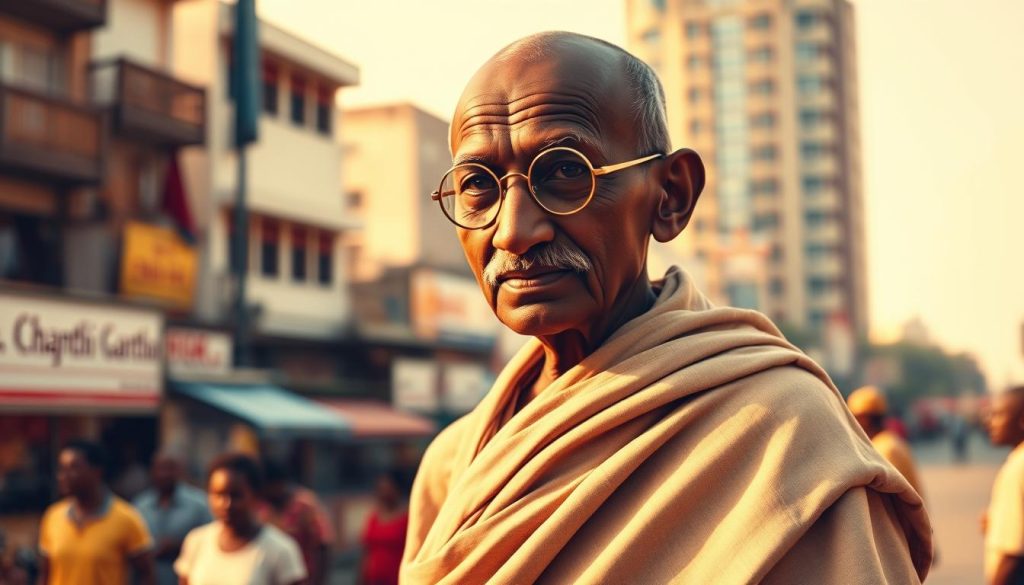
How Durban Shaped Gandhi’s Philosophy
Gandhi’s time in Durban changed his view of the world. The harsh realities of racial discrimination he faced deeply affected him. He decided to fight for justice without violence.
From South Africa to India’s Independence Movement
Gandhi’s work in Durban prepared him for India’s fight for freedom. The strategies he developed in South Africa, like civil disobedience, were used in India.
“The spirit of the people, the consciousness of the people, is being awakened, and it is a matter of great joy.”
Influence on Civil Rights Movements Worldwide
Gandhi’s non-violent resistance inspired movements everywhere. Leaders like Martin Luther King Jr. in the United States were influenced by Gandhi. They used his methods to fight for equality and justice.
Conclusion: Gandhi’s Enduring Legacy in Durban and Beyond
You’ve seen how Mahatma Gandhi’s work in Durban still affects us today. His fight against racial discrimination and injustice is a lasting legacy. In Durban, Gandhi helped shape the Indian community and fought for their rights.
Thinking about Gandhi’s work in Durban shows his impact went far beyond law. He started the Natal Indian Congress and “The Indian Opinion” newspaper. He also created the Phoenix Settlement, showing his belief in simplicity and self-sufficiency. These efforts helped Indians in Durban and inspired global civil rights movements.
The history of Mahatma Gandhi in Durban is both rich and complex. His legacy of non-violent resistance still motivates people worldwide. Gandhi’s work in Durban and beyond reminds us of the power of courage, compassion, and conviction.