
Your Guide to the Best Season for Sydney Travel
Are you ready to explore Sydney’s vibrant city? It’s famous for its landmarks, beaches, and culture. Planning a trip here can be tough, but knowing when to go is key.
Sydney, Australia, draws millions of visitors yearly. Its climate and activities are great, but the timing matters a lot for your trip.
When planning your Sydney vacation, think about the weather, tourist seasons, and things to do. We’ll help you find the best time to visit. This way, your trip will be smooth and enjoyable.
Understanding Sydney’s Climate and Seasons
Planning a trip to Sydney means knowing its climate and seasons. Sydney has a temperate climate with warm summers and mild winters. This makes it a great place to visit all year.

Sydney’s Unique Weather Patterns
Sydney’s weather is known for being consistent and pleasant. The temperature varies from 53°F (12°C) in July to 79°F (26°C) in January. Its coastal location keeps the temperature moderate, perfect for outdoor fun all year.
How Sydney’s Seasons Differ from the Northern Hemisphere
Sydney’s seasons are opposite to those in the Northern Hemisphere. When it’s winter in New York, it’s summer in Sydney. This means December to February are Sydney’s warmest months, and June to August are the coolest.
Knowing this is key for packing right and enjoying your visit.
What Is the Best Time of Year to Visit Sydney?
Sydney is beautiful all year round. But, the best time to visit depends on what you like. You might want beach weather, cultural events, or to avoid the crowds. Knowing Sydney’s climate and tourist seasons is important.
Factors That Define the “Best” Time
The “best” time to visit Sydney depends on weather conditions, tourist season, and personal preferences. Mild temperatures and lots of sunshine are big attractions. Festivals and events also make some times better.
Tourist seasons affect your visit. Peak season is lively but crowded. Shoulder season is less busy, offering a more relaxed vibe.
Overview of Optimal Visiting Periods
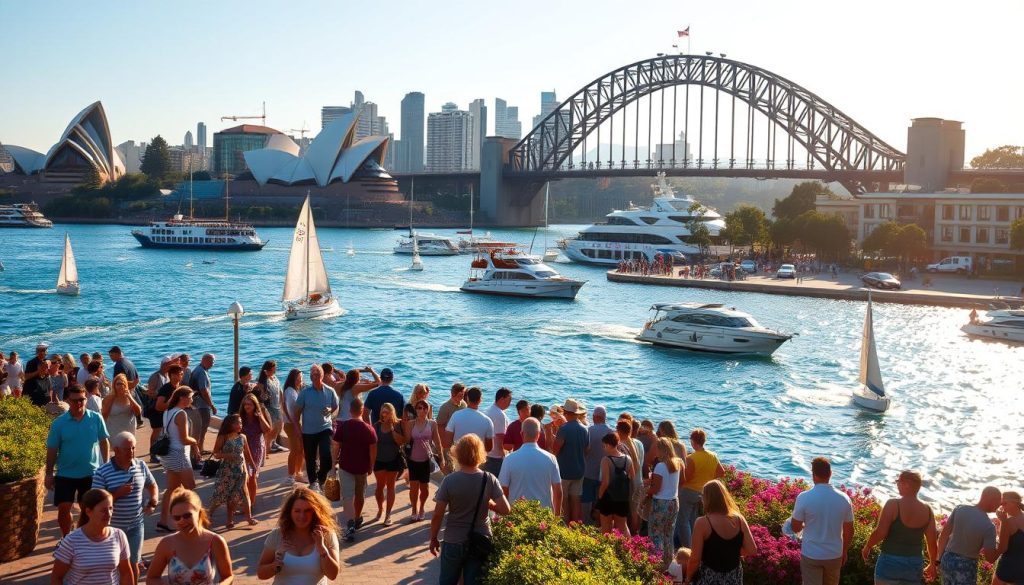
The best times to visit Sydney are spring (September to November) and autumn (March to May). The weather is nice, and there are fewer people than in summer. These seasons are perfect for outdoor fun, cultural events, and exploring the city without the rush.
By thinking about these points, you can pick the best season for your trip. This way, you’ll have a great and memorable visit to Sydney.
Summer in Sydney: December to February
Summer in Sydney is a busy time for tourists. It’s warm and perfect for enjoying the beaches and outdoor fun. The city comes alive with events and activities.
Weather Expectations and Beach Culture
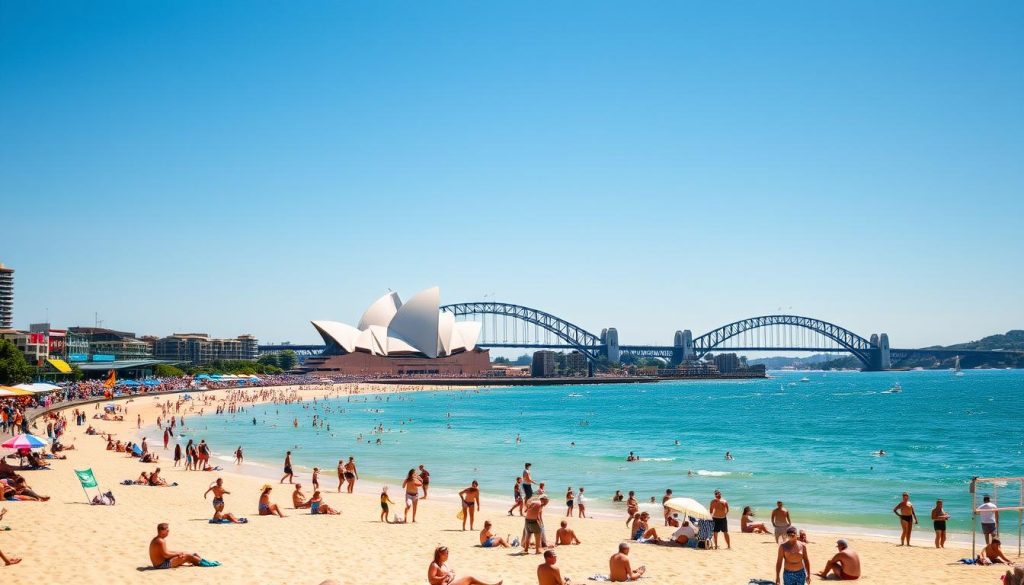
Sydney’s summer is warm, with temperatures between 18°C to 26°C (64°F to 79°F). Famous beaches like Bondi and Manly are full of people. You’ll find surfing, volleyball, and sunbathing everywhere.
Major Summer Events and Festivals
Summer in Sydney is filled with big events and festivals. The Sydney Festival offers music, dance, and theater. The New Year’s Eve celebrations at Sydney Harbour are famous worldwide.
Summer Outdoor Activities and Attractions
There’s lots to do outside in Sydney’s summer. You can go on a harbor cruise or visit the Taronga Zoo. Parks and gardens are also great to explore. Outdoor concerts and movies add to the fun.
Pros and Cons of Summer Travel
Visiting Sydney in summer has good and bad points. The weather is great for beaches, but it’s also the busiest time. Expect big crowds and higher prices for places to stay and flights.
| Pros | Cons |
|---|---|
| Warm weather ideal for beach activities | Peak tourist season with larger crowds |
| Variety of summer events and festivals | Higher prices for accommodations and flights |
| Outdoor activities and attractions | Potential for heatwaves |
Autumn in Sydney: March to May
Autumn in Sydney brings a refreshing change with its mild weather and stunning landscapes. As the summer heat dissipates, the city transforms into a vibrant autumn paradise. It’s an ideal time to explore its many attractions.
Weather and Natural Beauty
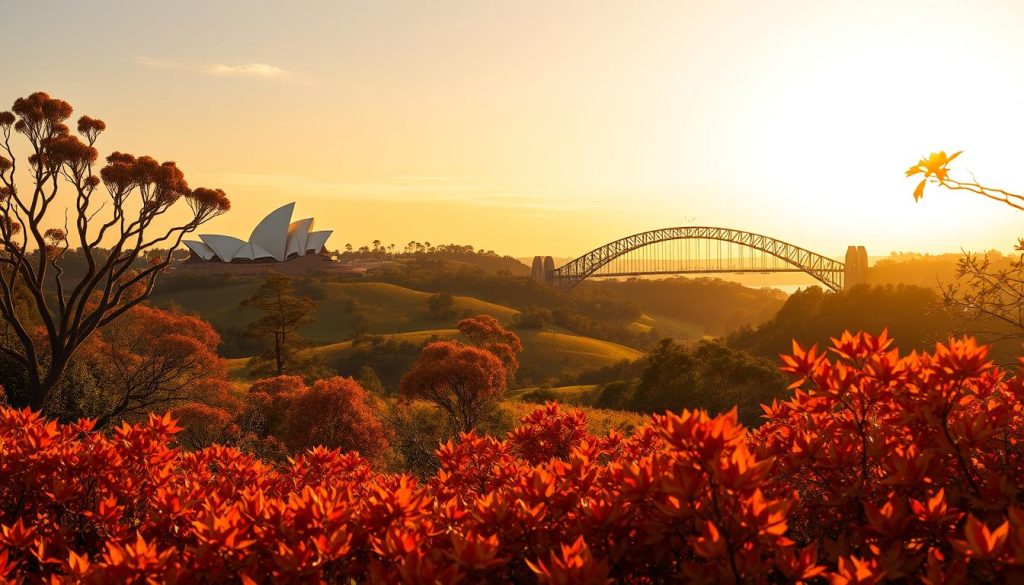
Autumn in Sydney is characterized by mild temperatures, ranging from 15°C to 23°C (59°F to 73°F). This makes it perfect for outdoor activities. The season brings a kaleidoscope of colors as the leaves change, enhancing the city’s natural beauty.
You can enjoy the picturesque views at various parks and gardens, such as the Royal Botanic Garden.
Autumn Events and Activities
Sydney’s autumn calendar is filled with exciting events and festivals. The Sydney Fringe Festival is a highlight, offering a diverse range of performances and art exhibitions. You can also participate in wine tastings and enjoy the local cuisine at various food festivals.
“Sydney’s autumn is a time of renewal and celebration, with a plethora of events that cater to all interests.”
Best Autumn Day Trips from Sydney
Autumn is an excellent time for day trips from Sydney. You can visit the Blue Mountains, known for its breathtaking scenery and hiking trails. Another popular destination is the Hunter Valley, famous for its wineries and gourmet delights.
Why Autumn Is a Favorite Among Locals
Locals love autumn in Sydney because of its pleasant weather and the numerous outdoor activities it offers. The season is ideal for hiking, cycling, and picnicking in the city’s many parks and reserves. The comfortable temperatures also make it a great time for al fresco dining and enjoying the city’s vibrant cultural scene.
Winter in Sydney: June to August
Planning a trip to Sydney in winter? You’ll find mild temperatures and exciting events. Sydney’s winter, from June to August, is cool but not freezing. It’s much milder than many places around the world.
Winter Weather and What to Pack
Sydney’s winter is mild, with temperatures between 8-18°C (46-64°F). Pack layers, including light jackets and warm clothes for cooler mornings and evenings. Even though it’s the coolest season, it rarely gets below 5°C (41°F). This makes it perfect for outdoor fun.
Winter Attractions and Events
Winter is a great time for Sydney’s cultural scene. The city hosts many events, like the Sydney Winter Festival. You can also check out famous spots like the Sydney Opera House and the Royal Botanic Garden.
Indoor Activities During Cooler Days
On chilly days, explore Sydney’s indoor spots. Visit the Australian National Maritime Museum, the Powerhouse Museum, or enjoy cafes and restaurants. These places offer a cozy break from the cold.
Benefits of Visiting During the Off-Season
Visiting Sydney off-peak has its perks. You’ll face fewer crowds at popular spots, making your visit more relaxed. Plus, you might find cheaper deals on hotels and flights.
| Activity | Winter (June to August) |
|---|---|
| Average Temperature | 8-18°C (46-64°F) |
| Major Events | Sydney Winter Festival |
| Indoor Attractions | Australian National Maritime Museum, Powerhouse Museum |
| Benefits | Fewer crowds, better deals on accommodations and flights |
Spring in Sydney: September to November
Spring in Sydney brings mild weather and blooming landscapes. The city’s pleasant weather and lively atmosphere make it great for exploring. You can enjoy Sydney’s attractions without the summer crowds.
Climate and Blooming Landscapes
Spring in Sydney has mild temperatures, from 18°C to 23°C. This is perfect for outdoor fun. The city’s gardens and parks burst with color, enhancing its beauty.

Spring Festivals and Outdoor Activities
Spring in Sydney is filled with festivals and outdoor events. The Sydney Festival, which sometimes runs into spring, offers music, dance, and theater. You can also hike, cycle, or stroll through parks and gardens.
Exploring Sydney’s Parks and Gardens
Sydney’s parks and gardens are a highlight in spring. The Royal Botanic Garden is a nature lover’s paradise, with over 30,000 plant species. Enjoy a walk, picnic, or just take in the views.
Why Spring Offers Great Value
Spring in Sydney is a great time to visit. The weather is mild, perfect for outdoor fun without the summer crowds. Plus, attractions and accommodations offer good deals, making it budget-friendly.
| Aspect | Details | Benefits |
|---|---|---|
| Weather | Mild temperatures (18°C to 23°C) | Ideal for outdoor activities |
| Landscapes | Blooming gardens and parks | Enhanced natural beauty |
| Events | Various festivals and outdoor events | Cultural experiences and entertainment |
| Value | Competitive pricing for attractions and accommodations | Budget-friendly |
Peak Tourist Season vs. Shoulder Season
Planning your trip to Sydney? Knowing the difference between peak and shoulder seasons can make your trip better. Sydney is a top spot for tourists all year, but your experience changes with the season.

Navigating the Crowds: When Sydney Is Busiest
Sydney’s busiest time is summer, from December to February. Expect big crowds at attractions and beaches, and expect to pay more for places to stay. To dodge the crowds, visit early mornings or evenings.
Major events and festivals in summer also bring in lots of people. It’s a lively but packed time to explore Sydney.
“The best time to visit Sydney is during the shoulder season when the weather is pleasant, and the crowds are smaller.” – Traveler’s Guide
Finding the Sweet Spot: Shoulder Season Benefits
The shoulder season in Sydney is spring (September to November) and autumn (March to May). It’s a great time for a relaxed visit. The weather is mild, perfect for outdoor fun and seeing the sights.
With fewer tourists, you get a real feel of the city. Plus, you’ll save money on places to stay and tourist services. It’s a smart choice for those on a budget.
| Season | Characteristics | Best For |
|---|---|---|
| Peak Season (Dec-Feb) | Crowded, higher prices | Beachgoers, those who enjoy festivals |
| Shoulder Season (Mar-May, Sep-Nov) | Mild weather, fewer crowds | Sightseers, outdoor enthusiasts, budget travelers |
Budget Considerations for Different Travel Periods
Planning your trip to Sydney? Knowing the budget impact of different travel times is key. Sydney’s stunning beaches and famous landmarks draw visitors all year. But, your trip costs can change a lot based on the season.
Accommodation and Flight Price Fluctuations
Prices for places to stay and flights in Sydney change with the seasons. The highest prices are in summer (December to February) and during major holidays. But, the shoulder season (April to May and September to November) has better rates for both.
Booking early can also get you a good deal.
Dining and Activity Costs Throughout the Year
Dining and activity costs stay pretty much the same all year. But, some spots might offer discounts or special deals in the off-season. You can enjoy Sydney’s great food and outdoor fun, like the Sydney Opera House or harbor cruises, without spending too much by looking for these deals.
Saving Money While Maximizing Experiences
To save and still have a great time in Sydney, visit during the shoulder season. You’ll get cheaper places to stay and flights, and you’ll avoid the crowds. Plus, free or low-cost activities like the Royal Botanic Garden or walking the Harbour Bridge can add to your experience without hurting your wallet.
Sydney’s Annual Events Calendar
Sydney’s events calendar is full of fun for everyone. Whether you’re here in summer, autumn, winter, or spring, there’s always something exciting to see.
Summer Events: December to February
Summer in Sydney is lively. Highlights include the Sydney New Year’s Eve fireworks and the Bluesfest music festival. Don’t miss the Sydney to Hobart Yacht Race, a thrilling start to summer.
Autumn Events: March to May
Autumn brings cultural and food festivals. Enjoy the Sydney Food Festival and the Manly International Jazz Festival. These events celebrate Sydney’s food and culture.
Winter Events: June to August
Winter is great for indoor events. The Sydney Winter Festival offers performances and exhibitions. Visit the Art Gallery of New South Wales too.
Spring Events: September to November
Spring in Sydney is stunning. Don’t miss the Floriade flower festival and the Sydney Royal Easter Show. They highlight Sydney’s gardens and farming traditions.

Planning Tips Based on Traveler Types
When planning your Sydney trip, knowing what you like is crucial for a great time. Sydney has something for everyone, from beach lovers to culture fans and families.
For Beach Lovers and Outdoor Enthusiasts
Beach lovers should visit Sydney in summer (December to February) for the best weather. Enjoy surfing, swimming, or just relaxing at Bondi and Manly Beaches. Also, try coastal walks and activities like kayaking or paddleboarding.

For Cultural and Festival Seekers
Cultural seekers will love Sydney’s events all year round. Don’t miss the Sydney Festival in January and Vivid Sydney in May. Visit during these times to dive into the city’s lively culture.
For Families with Children
Sydney is great for families with lots of kid-friendly spots. Must-sees include Taronga Zoo, SEA LIFE Sydney Aquarium, and the Australian Museum. Visit in April to May or September to November for fewer people and better weather.
For Budget-Conscious Travelers
To save money, visit Sydney in the off-peak season (June to August). Look for deals on places to stay and eat. Enjoy free spots like the Royal Botanic Garden and the city’s outdoor areas.
Conclusion: Making the Most of Your Sydney Visit
Now that you’ve looked into the best times to visit Sydney, it’s time to start planning. Whether you want a calm beach getaway or a thrilling adventure, Sydney has it all. Think about the season, events, and activities you like to make your trip special.
Summer brings sunny beaches, while spring shows off the city’s blooming landscapes. The shoulder season is great for avoiding crowds and saving money. With these tips, you’re set to make amazing memories in Sydney, one of Australia’s top cities.
When planning, think about what you really want to do. Do you love cultural events, outdoor fun, or trying local food? By focusing on what matters most to you, you’ll have a Sydney vacation to remember.