Your Guide to Getting Around Sydney by Public Transit
Are you planning a trip to Sydney and wondering how to navigate the city’s vast public transportation network? Sydney has a big system with trains, buses, light rails, and ferries. It’s easier than you think to get around.
Sydney’s public transport is made to be efficient and easy. It lets you travel across the city without hassle. Whether you’re going to work or seeing the sights, knowing your options is crucial for a smooth trip.
You can travel across Sydney using its comprehensive network of trains, buses, light rails, and ferries. This guide will help you understand the different modes of transport and how to use them effectively.
Understanding Sydney’s Public Transportation Network
Getting around Sydney’s public transport might seem hard at first. But, with the right info, it’s easy. Sydney’s transport system is connected, making it simple to switch between different ways to reach your destination.
Overview of Transit Options
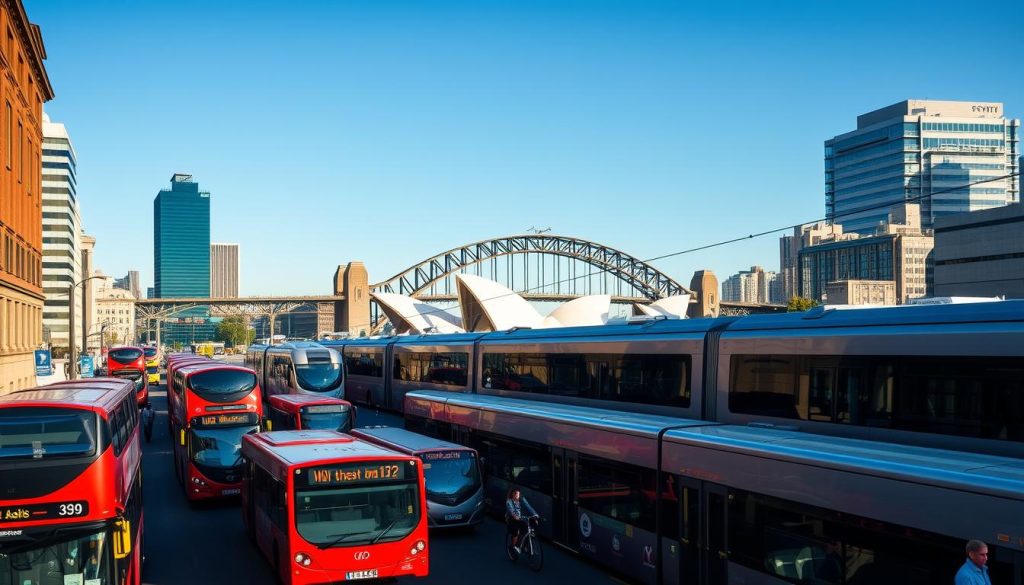
Sydney has many ways to travel, like trains, buses, ferries, and light rail. The train system covers a lot of suburbs and important places. Buses fill in the gaps where trains don’t go. Ferries are a beautiful way to cross Sydney Harbour and reach some suburbs. Light rail links the city to the inner suburbs.
The Integrated Transport System
Sydney’s transport modes work together well. You can switch between trains, buses, ferries, and light rail with one Opal card. This makes planning your trip easier and saves time. For example, you can take a train to a big station and then switch to a bus or ferry to get where you need to go.
| Mode | Coverage | Transfer Options |
|---|---|---|
| Trains | Extensive suburb coverage | Easy transfer to buses and ferries |
| Buses | Complements train network | Transfer to trains and ferries |
| Ferries | Sydney Harbour and outer suburbs | Transfer to trains and buses |
| Light Rail | City to inner suburbs | Transfer to trains, buses, and ferries |
How Do I Get Around Sydney Using Public Transportation?
Sydney’s public transport makes getting around easy. You can plan your trip using buses, trains, and ferries.
Planning Your Journey
To travel in Sydney, start by planning your trip. Use online tools or apps to find the best way. Google Maps and Apple Maps give you real-time directions. Just type in where you’re going, and you’ll get clear steps.
Transit Apps and Online Resources
There are many apps and websites for transit info. City Mapper is a top pick, showing bus, train, and ferry times. Also, check out the Transport for NSW site for more details on routes and schedules.

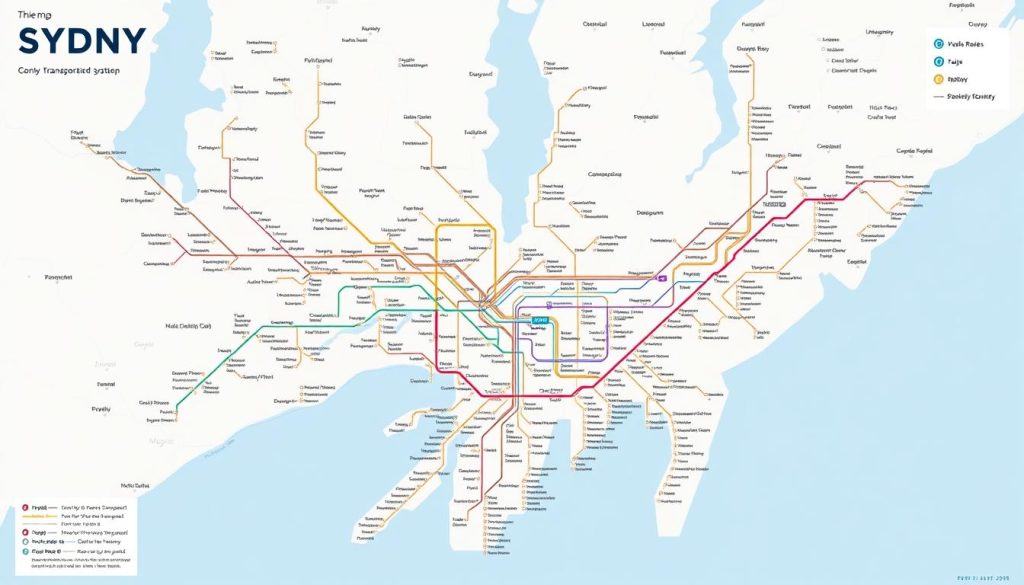
Reading Sydney Transit Maps
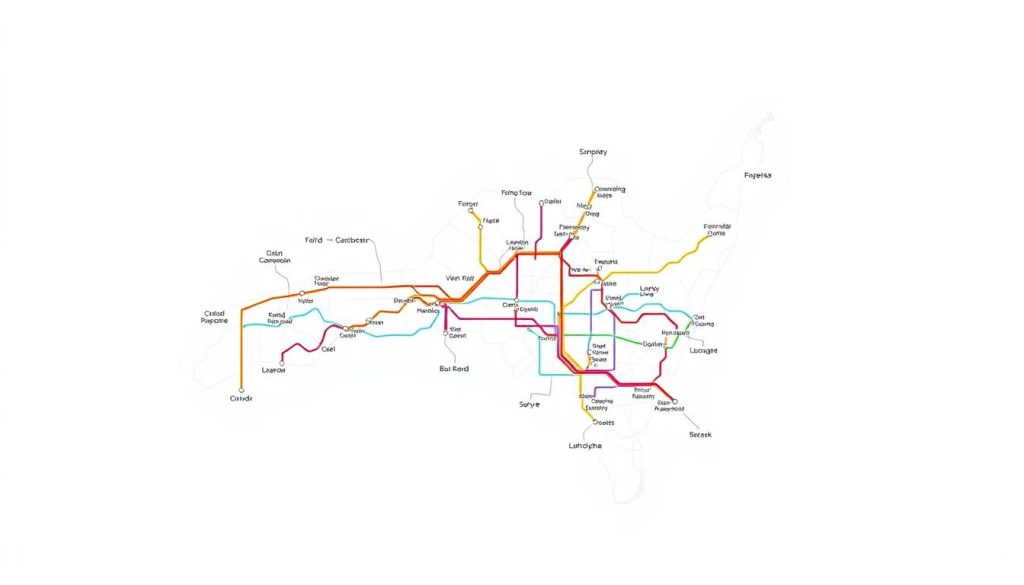
Knowing Sydney’s transit maps is key. You can find them online or at big transport spots. They show the network, helping you plan your route. Look for important places and where buses and trains meet.
With these tools, you can easily move around Sydney by public transport.
Sydney’s Train System
The train system is key to Sydney’s public transport. It covers a lot of ground and makes travel easy. Sydney’s trains are reliable for getting around the city and suburbs.

Sydney Trains Network Map
The Sydney Trains network map is essential. It shows the train lines, stations, and where to change trains. You can get these maps at stations or online at the Transport for NSW website.
Operating Hours and Frequency
Trains run often in Sydney, with a good schedule all day. Peak hours have more trains, while off-peak hours have fewer. Check the Transport for NSW website or your station for exact times.
Intercity Services
Sydney’s trains also go to other parts of New South Wales. NSW TrainLink services make it easy to travel longer distances. For intercity trips, visit the NSW TrainLink website.
Navigating Sydney by Bus
Sydney has over 600 bus routes and 25,000 bus stops. This makes it one of the biggest bus networks globally. It’s great for both locals and tourists, as it covers almost the entire city.
Bus Routes and Regions
The bus network in Sydney is split into regions. Each region has its own set of routes. This makes it easier to find your way around, with clear signs and maps at stops and online.
Express and Limited-Stop Services
For quicker trips, Sydney has express and limited-stop buses. These buses don’t stop at every stop, saving you time. They’re perfect for busy hours when you’re in a rush.
Night Buses and 24-Hour Routes
At night, Sydney has a special bus service. It runs on a smaller network but still gets you around. Some routes even run 24/7, ideal for those who travel late.
Here’s a quick guide to Sydney’s bus services:
| Service Type | Description | Benefits |
|---|---|---|
| Regional Buses | Covers specific regions with designated routes | Easier navigation within regions |
| Express Buses | Limited stops for faster travel | Reduced travel time |
| Night Buses | Operates during late hours on limited networks | Travel flexibility during late hours |
Sydney’s Iconic Ferry Services
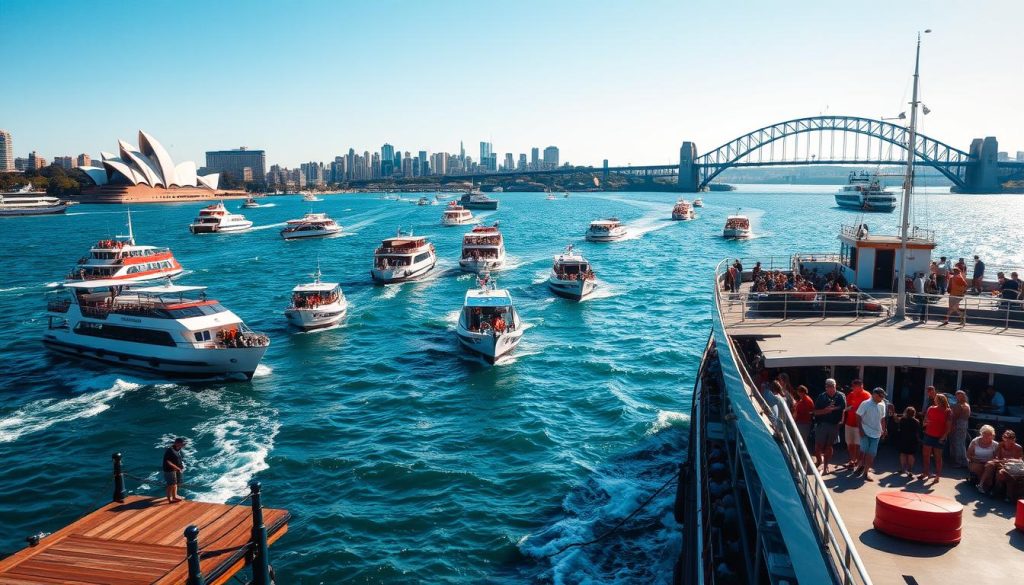
As you glide across Sydney Harbour, the city’s iconic skyline unfolds before your eyes. Sydney’s ferry services are not just a mode of transportation; they’re a way to experience the city’s beauty from a unique perspective. With an extensive network covering various suburbs and attractions, ferries play a vital role in Sydney’s public transit system.
Major Ferry Routes
Sydney’s ferry network encompasses numerous routes that connect the city center with its outer suburbs. The major ferry routes include services to Manly, Taronga Zoo, and the picturesque Parramatta River. These routes are not only practical for daily commutes but also offer scenic views that make your journey enjoyable.
Circular Quay Hub
Circular Quay is the central hub for Sydney’s ferry services, providing easy access to various routes across the harbour. This bustling transport hub is also surrounded by cafes, restaurants, and shops, making it a great place to start your day in Sydney. The Quay’s proximity to major attractions like the Sydney Opera House and The Rocks adds to its appeal.
Scenic Ferry Journeys
One of the highlights of using Sydney’s ferry services is the opportunity to enjoy scenic journeys. The Manly ferry route, for example, offers breathtaking views of the Sydney Heads and the ocean. A trip to Taronga Zoo provides stunning harbour views as you sail towards the zoo’s picturesque location.
| Ferry Route | Key Attractions | Travel Time |
|---|---|---|
| Manly | Manly Beach, Sydney Heads | 30 minutes |
| Taronga Zoo | Taronga Zoo, Harbour Views | 25 minutes |
| Parramatta River | Parramatta, Riverside Parks | 45 minutes |
By utilizing Sydney’s ferry services, you can enjoy a convenient and scenic way to explore the city and its surroundings. Whether you’re commuting to work or visiting tourist attractions, Sydney’s ferries offer a unique and enjoyable experience.
Light Rail and Metro Options
As you explore Sydney, you’ll find its light rail and metro systems are efficient and easy to use. These modern ways to travel make getting around the city smooth.
Light Rail Routes and Connections
Sydney’s light rail network links important areas, like the Central Business District (CBD) and tourist spots. The L2 Dulwich Hill Line and L3 Kingsway Line are key routes for easy travel. You can reach famous places like Darling Harbour and Pyrmont using the light rail.
| Light Rail Line | Major Stops | Key Destinations |
|---|---|---|
| L2 Dulwich Hill Line | Central, Surry Hills, Pyrmont | Darling Harbour, Chinatown |
| L3 Kingsway Line | Central, Surry Hills, Randwick | UNSW, Randwick Junction |
Sydney Metro Northwest
The Sydney Metro Northwest is a key part of Sydney’s modern transport. It offers fast and reliable service, connecting the North West to the city. Stations like Chatswood and North Sydney make it easy to reach the CBD. The metro runs often, making it great for daily trips.
“The Sydney Metro Northwest has transformed the way we travel, providing a fast, reliable, and efficient service that has made commuting easier for thousands of Sydneysiders.” –
Using Sydney’s light rail and metro, you can travel smoothly across the city. Whether for work or sightseeing, these systems make your journey better.
Opal Cards and Payment Methods
Sydney’s public transport is easy to use with the Opal card or contactless payments. The Opal card is reusable for trains, buses, and ferries. It’s a convenient way to pay for your travel.
Getting and Using an Opal Card
To use the Opal card, first buy one and then top it up. Here’s how:
Where to Purchase
You can buy an Opal card at train stations, retail outlets with the Opal logo, or online. There are adult, child, and senior cards available.
How to Top Up
Topping up your Opal card is easy. You can do it online, at ticket machines, or at retail outlets. Just follow the instructions or ask for help.
Fare Structure and Pricing
Knowing the fare structure helps manage your travel costs. The Opal fare system has daily and weekly caps. Here’s a breakdown:
| Mode of Transport | Peak Fare | Off-Peak Fare |
|---|---|---|
| Train | $4.00 | $2.50 |
| Bus | $4.00 | $2.50 |
| Ferry | $7.60 | $5.20 |
Alternative Payment Options for Tourists
While the Opal card is best, tourists have other options. You can use contactless payments like credit or debit cards. Just tap your card on an Opal reader to pay.
Transport for NSW says, “Contactless payment is a convenient way to pay for travel without an Opal card.”
“Using contactless payment on your credit or debit card is a convenient way to travel without the need to top up an Opal card.”

Transit Tips for Tourists and Visitors
Exploring Sydney by public transport can seem tough at first. But, with some tips, you’ll soon feel like a local. Sydney has trains, buses, and ferries, making it easy to get around without a car.
Best Value Tickets for Short Stays
For short visits, get a visitor Opal card or use contactless payment methods. These make traveling easy. You can also get a Sydney Attractions Pass for public transport and discounts at top spots.
Weekend and Off-Peak Travel
Traveling off-peak or on weekends is less crowded and can save money. Many tourists love weekend trips to scenic routes and beaches. Visit Bondi Beach or the Sydney Harbour Bridge when it’s less busy.

Navigating During Major Events
Major events can make public transport busy. Check the Transport for NSW website or use transit apps for updates. Use alternative routes or modes of transport to dodge the crowds.
Safety and Etiquette on Sydney Transit
Keep an eye on your belongings, as crowded areas can be risky. Follow basic rules like giving up your seat and not eating smelly foods. Learn about the safety features and emergency procedures on trains, buses, and ferries.
Follow these tips to navigate Sydney like a pro. Have a great trip!
Accessibility Features of Sydney Public Transit
Sydney has worked hard to make its public transport system open to all. The city is dedicated to making sure everyone can use its transport. This shows in its buildings and services.
Accessible Stations and Vehicles
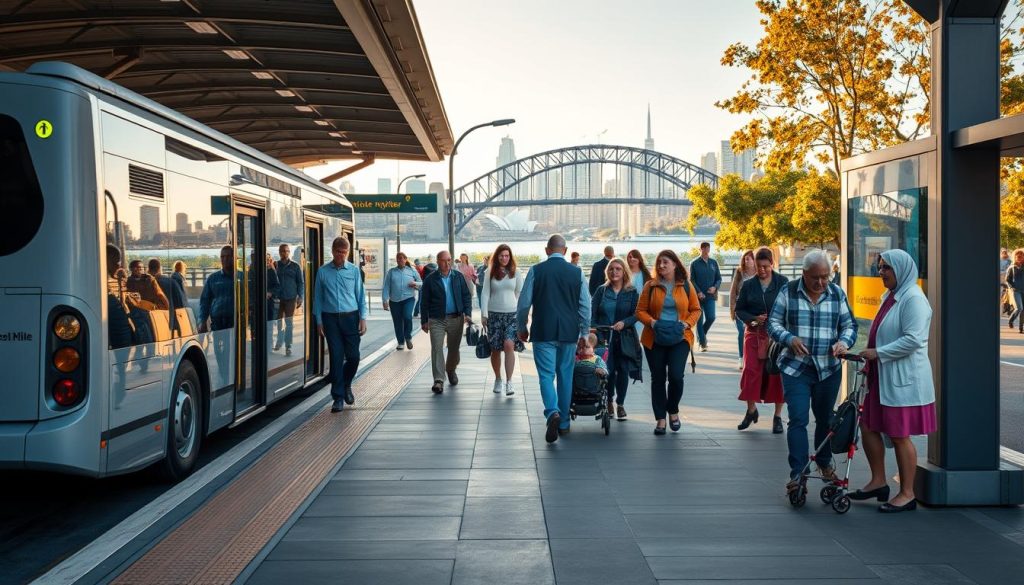
Many of Sydney’s train stations, buses, and ferries are easy to get to. Wheelchair-accessible ramps and elevators are found at most places. This helps people with mobility issues move around easily.
Also, audio announcements and visual displays on trains and at stations keep everyone updated. This includes information about stops and service changes.
Services for Passengers with Special Needs
Sydney’s transport system has many services for those with special needs. For example, the Transport Access Program makes stations and interchanges more accessible. There’s also priority assistance for those who need help, making trips smoother.
Transport for NSW says, “Sydney’s transport system is designed to be accessible. It has features like audio announcements, tactile markers, and accessible vehicles.” This effort makes traveling in Sydney better for everyone.
Common Routes for Popular Destinations
Visiting Sydney’s iconic spots is easy with its public transport. The city’s network connects you to beaches, attractions, and business areas. It’s designed for your convenience.
Getting to Sydney’s Beaches
Sydney’s beaches are famous, and getting there is simple. You can use train, bus, or ferry to reach them.
Bondi and Eastern Beaches
To get to Bondi Beach, take bus 380 or 389 from Bondi Junction. This station is on the Eastern Suburbs line. Coogee and Maroubra beaches are also reachable by bus from nearby stations.
Manly and Northern Beaches
Manly Beach is a 30-minute ferry ride from Circular Quay. You can also take bus 130 or 136 from Manly Wharf. The northern beaches have bus services from nearby train stations.
Reaching Major Tourist Attractions
Sydney’s top attractions are easy to get to with public transport. This makes exploring the city simple.
Opera House and Harbour Bridge
The Sydney Opera House and Harbour Bridge are near Circular Quay station. You can walk there from the station. Buses 422 or 423 also go to Circular Quay.
Taronga Zoo and Darling Harbour
Taronga Zoo is a ferry ride from Circular Quay. Darling Harbour is a short walk from Town Hall station or by bus.
Commuting to Business Districts
Sydney’s business areas are connected by public transport. This makes commuting simple.
The CBD is on various train lines, with stations like Central and Circular Quay. North Sydney is reachable by bus and train from North Sydney station.
| Destination | Transport Mode | Travel Time |
|---|---|---|
| Bondi Beach | Bus 380/389 from Bondi Junction | 15-30 minutes |
| Manly Beach | Ferry from Circular Quay | 30 minutes |
| Sydney Opera House | Train to Circular Quay | 5-10 minutes |
| Taronga Zoo | Ferry from Circular Quay | 15-20 minutes |
Conclusion: Mastering Sydney’s Public Transit System
With the right info, you can easily get around Sydney. You’ll know about trains, buses, ferries, and light rail. This makes traveling in Sydney simple.
A good Sydney public transportation guide helps you plan your trip. It’s useful for both tourists and locals. It shows you how to see Sydney’s attractions.
To travel in Sydney, pick your transport, plan your path, and get an Opal card. Sydney’s transport system lets you see the city easily. You’ll enjoy the views and all Sydney offers.
Follow this guide to learn Sydney’s public transit. You’ll enjoy your time in this lively city.