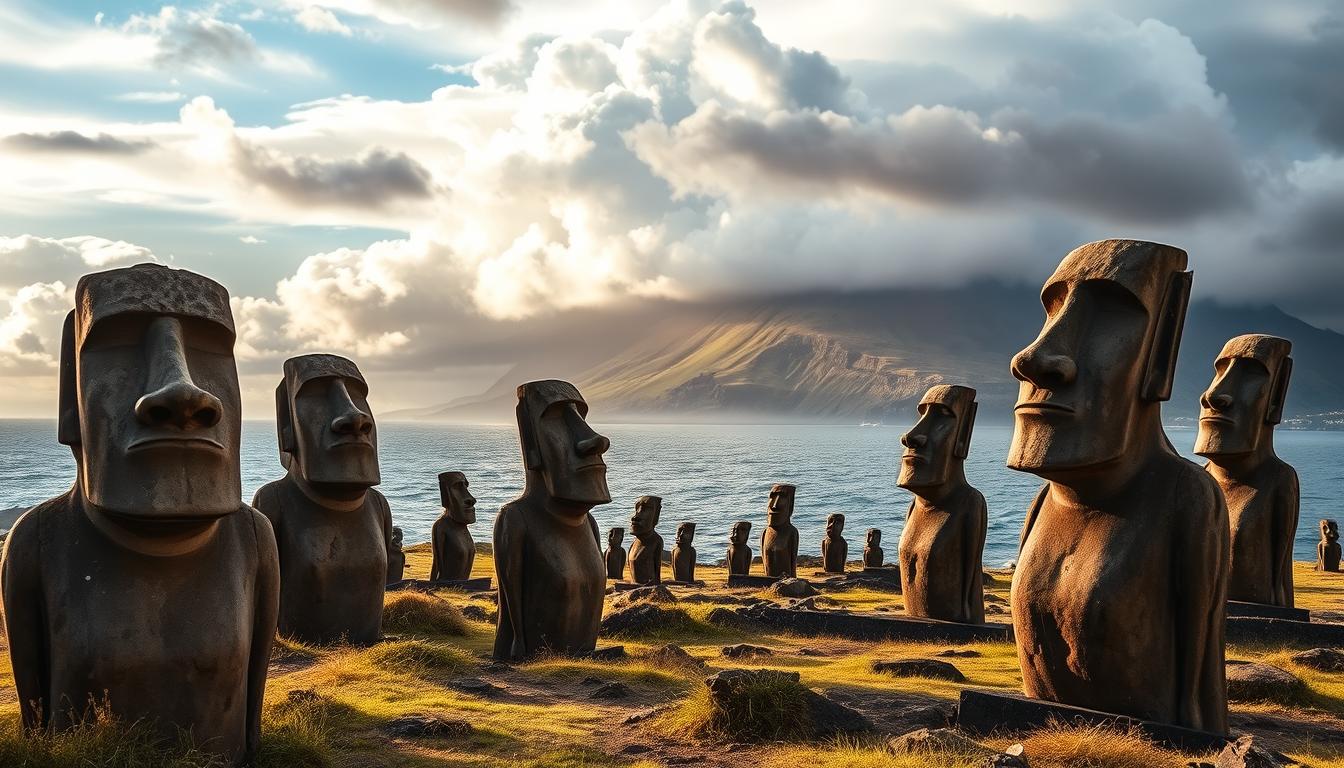
Your Guide to the Fascinating History of Easter Island’s Moai
What is the history of the moai on Easter Island? You’re about to uncover the secrets of these mysterious statues. The moai history is fascinating, with over 900 figures on Easter Island, each with its own story.
As you dive into moai history, you’ll see how these statues are significant. You’ll also learn about the culture that created them.
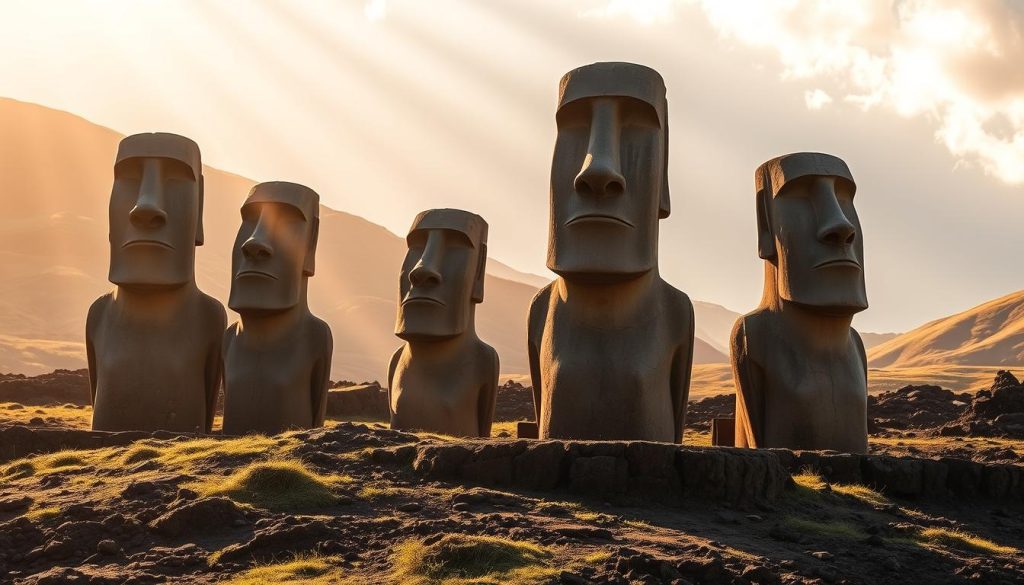
Knowing the history of the moai on Easter Island is key. The average moai is about 14 feet tall. They were part of a sacred area, connecting the earthly and supernatural realms.
Exploring moai history, you’ll discover more about these statues and their importance on Easter Island.
The Mysterious World of Easter Island’s Stone Sentinels
Exploring Easter Island’s moai statues reveals a rich history and culture. These stone sentinels, known as Rapa Nui moai, have captivated many. With over 900 statues found, it shows the Rapa Nui people’s dedication to their work.
The island is called Rapa Nui, meaning “Big Rapa,” showing its Polynesian roots. Dutch explorer Jacob Roggeveen first saw the moai in 1722. Since then, many discoveries have uncovered their importance and construction methods.
Some interesting facts about the moai include:
- The tallest moai, Paro, stands at almost 10 meters (33 feet) and weighs 82 tonnes (90 short tons).
- The heaviest moai, located at Ahu Tongariki, weighs 86 tonnes (95 short tons).
- The average height of the moai is about 4 meters (13 feet), with an average width at the base of around 1.6 meters (5.2 feet).
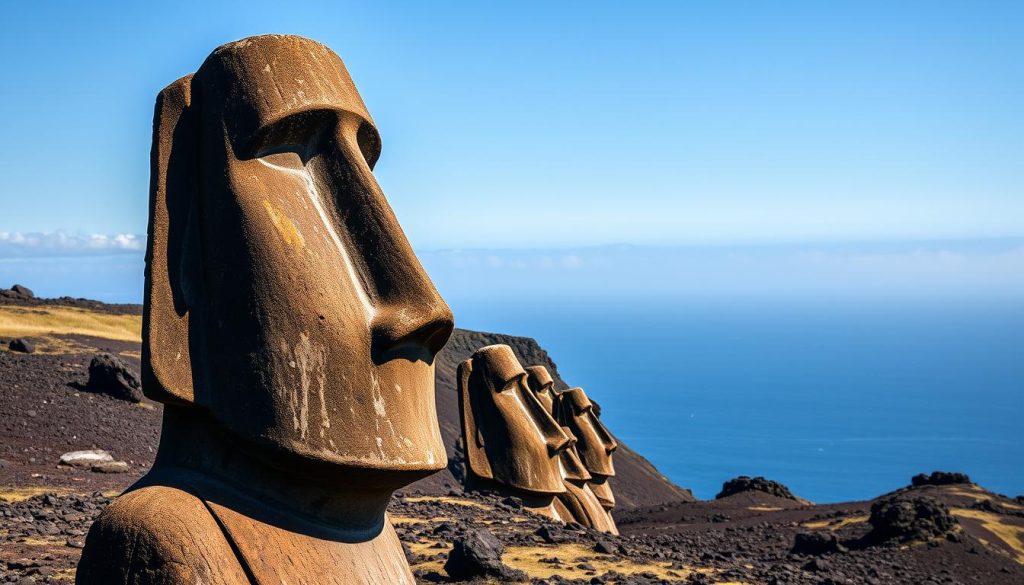
The moai’s construction is still a mystery, but it’s believed 50 to 150 people moved each one. The moai hold deep cultural significance for the Rapa Nui people. Their creation showcases the people’s ingenuity and skill.
What is the History of the Moai on Easter Island?
The moai history is a topic that many find fascinating. Easter Island, a remote island in the Pacific, is home to over 600 giant stone statues. These are known as Easter Island statues or Rapa Nui moai. They were made between 1100 and 1680 AD, as carbon dating shows.
These statues were carved from a soft volcanic stone called tuff. The tools used were made from obsidian. This shows the skill of the ancient people who made them.
The moai history is deeply connected to Rapa Nui, the island’s indigenous name. The Rapa Nui moai are a key part of the island’s culture. They are thought to represent ancestral figures.
Creating these statues was a complex task. It required simple tools and a large team of workers.
Some interesting facts about the moai history include:
- The average height of the moai statues is about 13 feet, and they weigh around 13 tons.
- The largest moai statue found is about 32 feet tall and weighs around 82 tons.
- There are around 800 to 1,000 moai created on Rapa Nui. 397 remain in the main stone quarry, Rano Raraku.
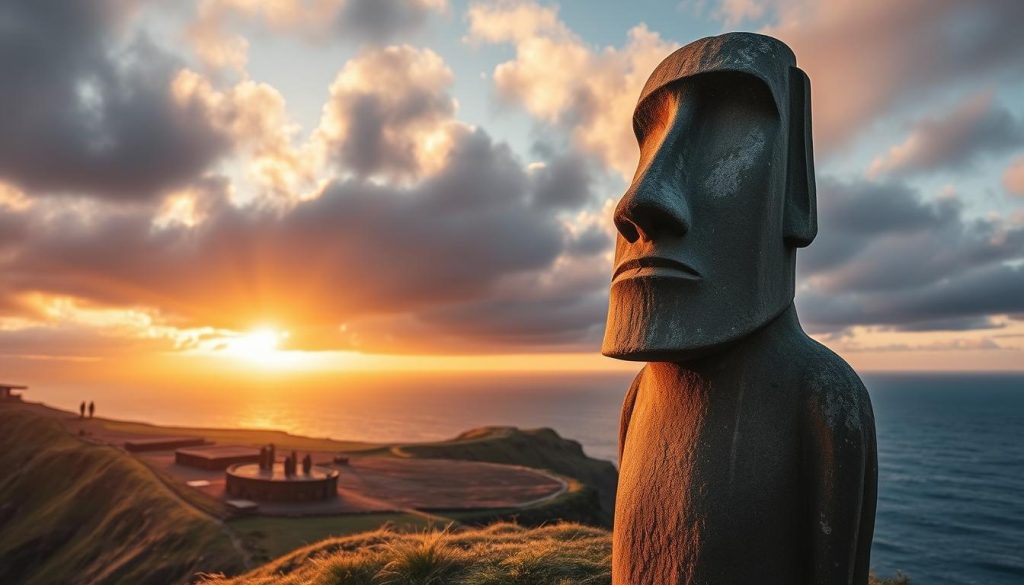
The moai history is a rich and complex topic that interests people worldwide. The Easter Island statues and Rapa Nui moai are a big part of the island’s culture. Their creation shows the ingenuity and skill of the island’s ancient people.
The Ancient Rapa Nui Civilization: Builders of Giants
The Rapa Nui people lived on Easter Island and had a complex society. They were great craftsmen and farmers. Their moai culture was a big part of their lives. Building the Moai statues showed their engineering and artistic skills.
Exploring the island, you’ll see the significance of moai is more than their size and details. These statues honored their ancestors. They were key in the Rapa Nui’s spiritual and cultural life. The Moai were thought to have spiritual powers, used in rituals to honor gods and ancestors.
Here are some interesting facts about the Moai statues:
- There are over 1,000 Moai statues scattered across the island.
- The average height of a Moai statue is 13 feet, and the average weight is 10 metric tons.
- The largest Moai statue, known as “El Gigante,” stands at an impressive 69 feet tall and weighs over 200 metric tons.
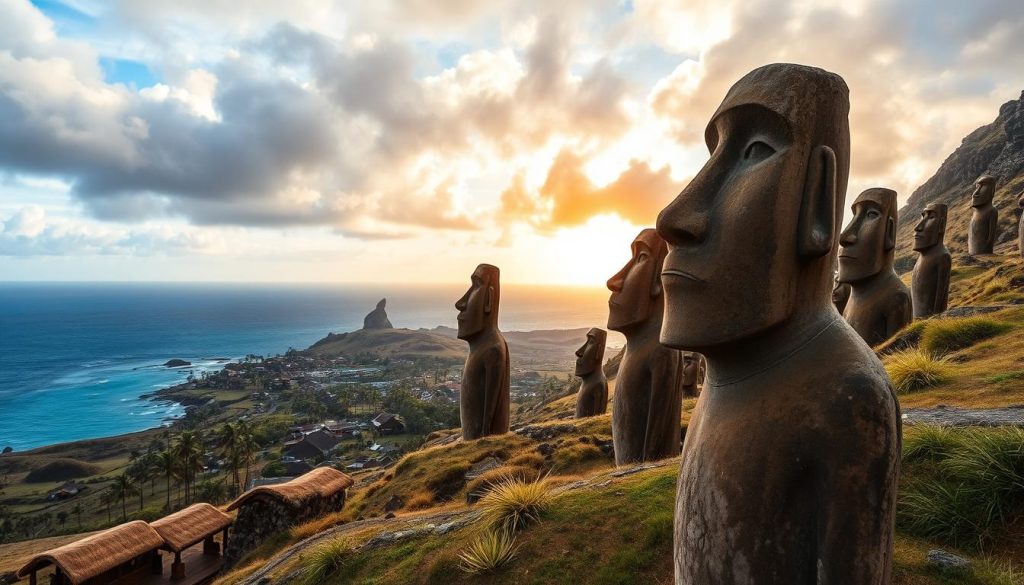
The Rapa Nui people’s moai culture and moai construction show their creativity and ingenuity. The significance of moai is celebrated today. As you learn more about Easter Island, you’ll see Moai statues are more than monuments. They are a peek into the island’s rich history.
The Remarkable Engineering of Moai Construction
Exploring Easter Island’s history reveals the importance of moai construction. These statues, carved from a single stone, showcase incredible engineering. Nearly 400 moai were found at the Rano Raraku quarry, with some weighing up to 75 tons and reaching 40 feet tall.
The ancient Rapa Nui people’s ingenuity is seen in moai construction. They used ramps and levers to move these massive statues. The topknots, or pukao, were made from red scoria, added later.
Moai’s size and construction are just part of their significance. They were believed to have spiritual power, representing ancestors and important figures. Today, they symbolize Easter Island’s rich culture, drawing visitors worldwide.
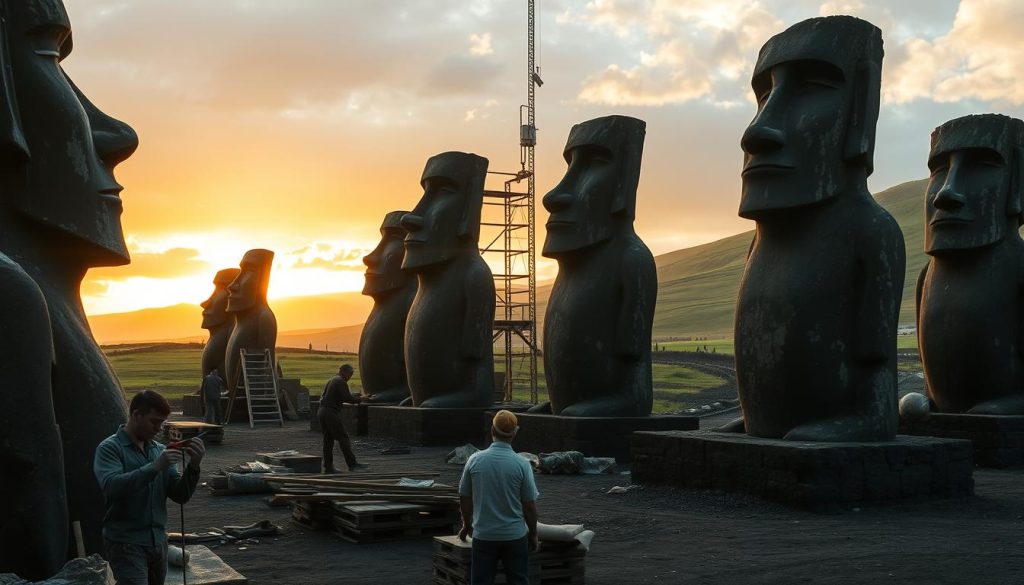
Researchers are still uncovering how the Rapa Nui people built the moai. Excavations at Rano Raraku show some moai were buried up to their shoulders. This indicates more complex designs than thought. The use of ramps and levers shows the ancient people’s ingenuity, still fascinating today.
Tools and Techniques Used in Moai Creation
The creation of moai statues is a fascinating part of Easter Island’s history. As you learn about moai, you’ll see how the Rapa Nui people used different tools and techniques. They started by quarrying volcanic rock, called tuff, from Rano Raraku, the main quarry site.
The moai were carved with tools made from basalt and obsidian. Moving these statues from the quarry to their final spots was a remarkable achievement. Over 500 moai were moved, some up to 11 miles, using ramps and levers.
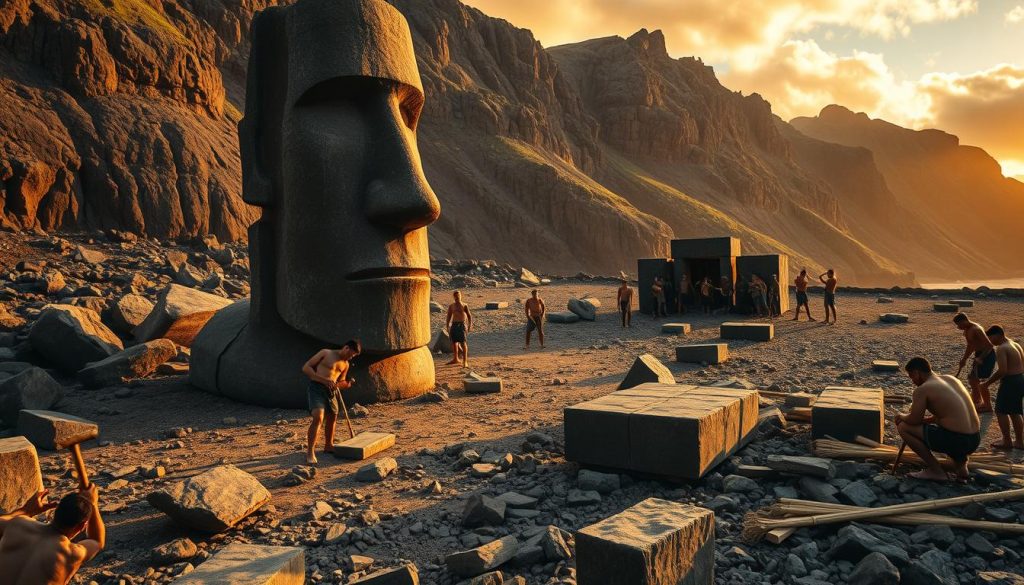
- Quarrying: The process of extracting the volcanic rock from the quarry site.
- Carving: The use of primitive tools to shape and carve the moai statues.
- Transportation: The movement of the moai statues from the quarry to their final locations using ramps and levers.
The moai’s size and the skill of the Rapa Nui people are truly remarkable. Learning about moai construction shows the craftsmanship and determination of the Rapa Nui people.
Symbolism and Purpose of the Moai Statues
The moai statues hold a special place in Rapa Nui culture. They were made to honor the ancestors, seen as having spiritual power. This shows the deep connection between the moai and the people’s beliefs.
The moai statues were built between 1400 – 1650 A.D. They showcase the Rapa Nui people’s skill and creativity. With over 1000 statues, each one has its own story and meaning.
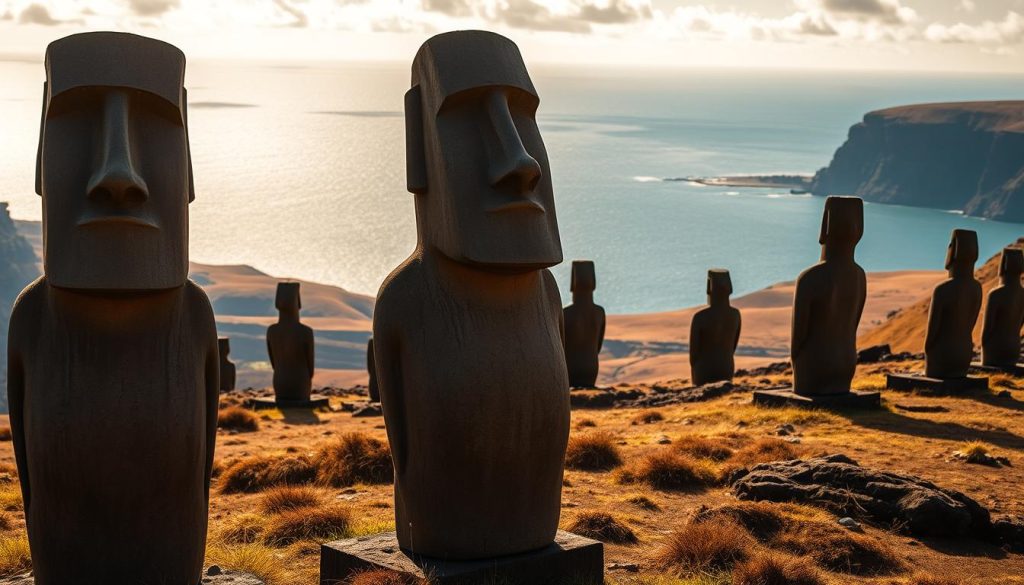
- 95% of the moai statues were carved from the volcano Rano Raraku.
- The moai statues were placed on rectangular stone platforms called ahu, which served as tombs.
- The cost of a larger statue was higher, often paid with large quantities of trade items such as sweet potatoes, chickens, bananas, mats, and obsidian tools.
The moai statues are more than just structures. They are deeply connected to the Rapa Nui culture. Learning about the significance of moai helps us understand their role in ancestral worship and spiritual power. Exploring Easter Island and its moai culture reveals their importance in history.
The Rise and Fall of Moai Construction
The moai history is truly captivating. The Easter Island statues, or Rapa Nui moai, were built over many centuries. Starting around 1200 AD, they continued until the 18th century. During this time, the Rapa Nui people made over 900 moai, with the biggest one weighing over 86 tons.
The creation of the moai is amazing, given the Rapa Nui people’s limited tools and resources. They carved the moai from volcanic rock. Then, they moved them to their final spots using ramps, pulleys, and levers. The Rapa Nui moai are not just big and impressive. They also hold deep cultural and historical significance.
Some important facts about the moai’s construction include:
- The moai were built to honor ancestral figures, each unique in design and features.
- Building the moai took a lot of manpower and resources. This might have led to the decline of the Rapa Nui civilization.
- Moai are not only found on Easter Island but also on nearby islands. This shows the Rapa Nui people had a broader reach and influence than thought.
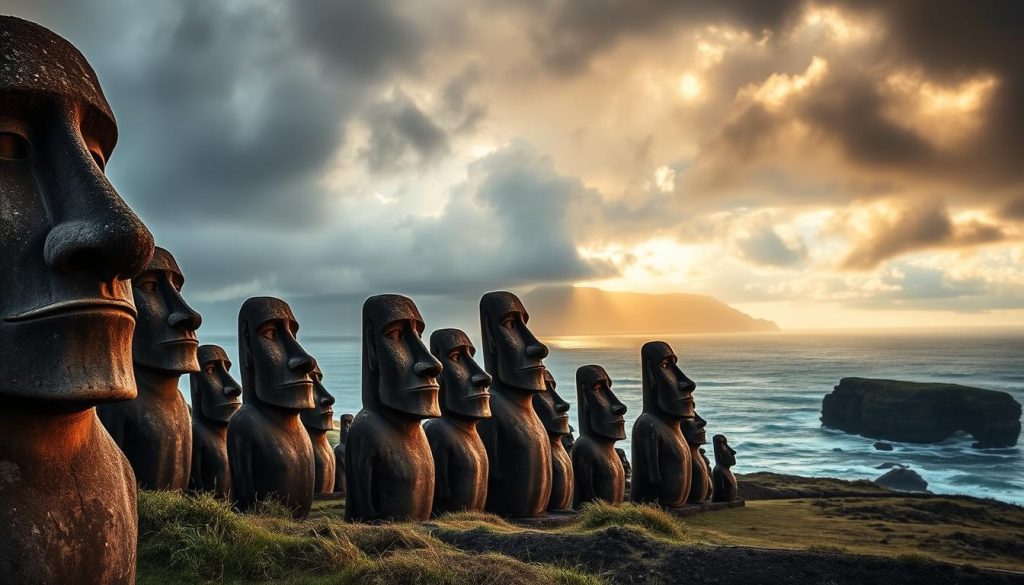
The moai history is complex and still not fully understood. Yet, by studying the Easter Island statues and Rapa Nui moai, we can better appreciate the culture and achievements of the Rapa Nui people.
Scientific Studies and Modern Discoveries
Exploring the moai history reveals new insights from scientific studies. The Easter Island statues have been studied using radiocarbon and thermoluminescence dating. These methods have helped scientists figure out when the statues were made. This knowledge gives us a better understanding of the moai history and the Rapa Nui people.
Recent research has also looked into how the Rapa Nui people affected Easter Island. When Europeans arrived in 1722, there were about 3,000 people on the island. The Rapa Nui used rock gardens to make the soil better for growing crops like sweet potatoes. Studies show these gardens could feed around 2,000 people just from sweet potatoes.
- The Rapa Nui people maintained a stable population of around 4,000 individuals at any given time.
- Less than 1% of the island was cultivated for crops, with rock gardens occupying only about 188 acres.
- The island’s carrying capacity could be raised to approximately 3,000 people when factoring in marine sources and other crops.
These findings have greatly improved our knowledge of the moai history and the Rapa Nui civilization. They show how crucial it is to keep researching and protecting the Easter Island statues and its cultural heritage.
Preservation Efforts and Current Challenges
The moai culture is facing many challenges, like climate change and tourism. It’s key to know about the efforts to save these iconic statues. The moai’s creation, starting nearly 1,000 years ago, shows the Rapa Nui people’s genius.
Some of the current challenges facing the moai include:
- Climate change, which is causing erosion and damage to the statues
- Tourism, which can lead to wear and tear on the island’s infrastructure and natural resources
- Conservation efforts, which are necessary to protect the moai and the island’s unique ecosystem
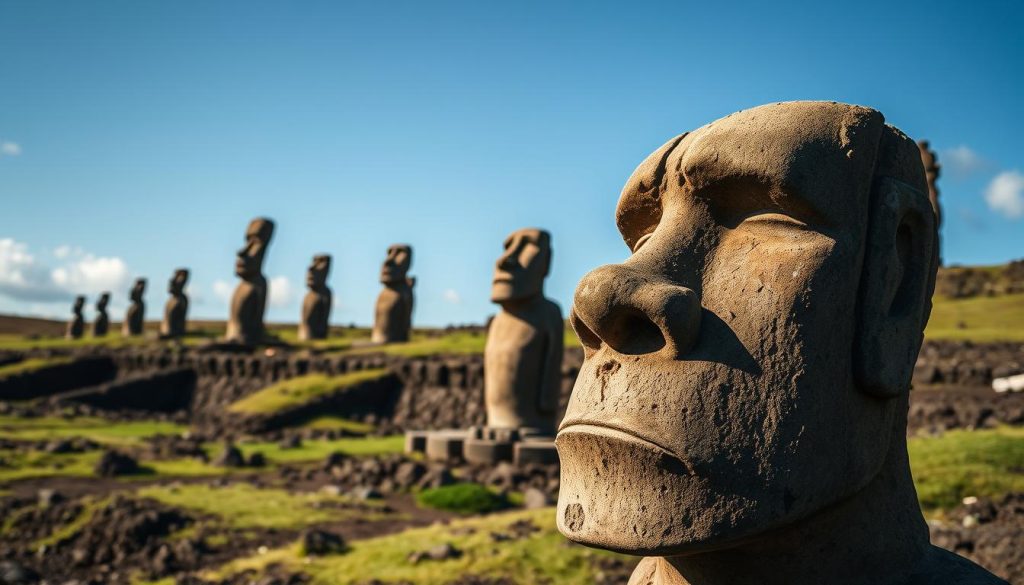
The Rapa Nui people are fighting to keep their moai culture alive. By learning about the moai’s creation and the island’s challenges, we see why saving them is crucial. This helps us understand the importance of supporting conservation efforts.
The Living Legacy of Easter Island’s Moai
The Moai statues of Easter Island, or Rapa Nui, have amazed people for centuries. They show the amazing moai culture and construction of the island’s ancient people. These giant statues, some as tall as 33 feet and weighing up to 176,000 pounds, are still very important to the Rapa Nui people. They also fascinate visitors from all over the world.
Now, the Moai are symbols of the island’s rich history and lasting legacy. The hard work to carve and move these huge statues is incredible. It took up to a year and 180 men to make one Moai. This shows the cleverness and hard work of the Rapa Nui people.
As the island’s population got smaller and Moai making stopped, these statues became a connection to the past. They inspire research, preservation, and a deep respect for the Rapa Nui’s amazing work.