Discover the Amazing Animals of Levera Beach
Planning a visit to Levera Beach? You might wonder what wildlife you’ll see. This stunning spot is a haven for wildlife lovers. It’s home to a wide variety of animals, thanks to its unique ecosystem.
One highlight is the endangered Leatherback turtle, which nests here. But what other amazing animals can you spot at Levera Beach? And why is it so special for wildlife viewing?
Exploring Levera Beach, you’ll see sea turtles, birds, and more. It’s part of Levera National Park, covering about 450 acres. This area is home to many different animals.
So, what wildlife can you see at Levera Beach? And how can you make the most of your visit? In this article, we’ll guide you through the amazing animals of Levera Beach. We’ll tell you what to see and the best times to visit.
Introduction to Levera Beach’s Unique Ecosystem
Levera Beach is in the northern parish of St. Patrick, Grenada. It’s a paradise for nature lovers and wildlife fans. The beach has mangrove swamps, coral reefs, and sea grass beds. These habitats are perfect for many animals, like sea turtles, birds, and fish.
Exploring here shows how vital it is to keep the ecosystem balanced. Animals like leatherback turtles need the beach for nesting and feeding. The area is also home to many bird species, including the stunning Scarlet Ibis.
Geographic Location and Habitat Types
Levera Beach’s location is perfect for wildlife watching. It’s surrounded by mangrove swamps, which are full of marine life. Coral reefs just off the coast are home to sea turtles and colorful fish.
Environmental Significance
Levera Beach is very important for the environment. It supports many animals and plants, making it key for conservation. The beach is also a vital nesting site for leatherback turtles, which have been coming here for millions of years.
Best Times for Wildlife Viewing
The best times to see wildlife at Levera Beach are early morning and late evening. Guided tours can help you spot sea turtles and birds. You’ll also learn about the importance of preserving the ecosystem.
Visiting Levera Beach and supporting conservation helps protect its unique ecosystem. Remember to respect the habitat and follow guidelines for wildlife viewing. This ensures the ecosystem’s long-term preservation.
Marine Life at Levera Beach
Exploring Levera Beach reveals a world teeming with marine life. It’s perfect for Levera Beach wildlife sightings. The beach’s ecosystem is home to colorful fish and majestic sea turtles. Snorkeling and diving here lets you see the marine life up close.
The waters around Levera Beach are full of marine species. You can see lobster, reef fish, and sea turtles in their natural setting. It’s a memorable experience. The beach is also close to coral reefs and sea grass beds, making it great for spotting Levera Beach wildlife, like dolphins and whales.

- Leatherback sea turtles, which can weigh up to 1,500 pounds
- Green turtles, which lay their eggs on Grenada’s beaches from March to June
- Hawksbill turtles, known for their distinctive shells
Levera Beach is a must-see for anyone interested inLevera Beach wildlifeandLevera Beach wildlife sightings. Its marine life and natural beauty are unmatched.
What Wildlife Can Be Seen at Levera Beach?
Exploring Levera Beach lets you see many animals native to the area. You might spot rare or endangered species like the leatherback turtle. It’s exciting to see these animals up close.
Common sights include herons, black-necked stilts, and common snipes. These birds are just a few of the many species found here. The beach, wetlands, and forests all play a role in supporting this diverse wildlife.
The time of year also affects what you can see at Levera Beach. Some birds migrate at certain times. Knowing this helps you appreciate the area’s wildlife more.
Levera Beach is a unique spot for wildlife lovers. You can see birds, turtles, and more. Learning about the species here makes your visit even more special.
Sea Turtle Nesting at Levera Beach
Exploring Levera Beach might let you see sea turtles nesting. This beach is a home for four marine turtle species: leatherback, hawksbill, loggerhead, and green turtles. Nesting season is from February to September, with the busiest months being April to June.
Female leatherback turtles can lay eggs 3 to 6 times. The whole nesting process can take up to 2 hours. It’s amazing to see these huge turtles come to the beach to lay their eggs. The Levera Beach nature reserve is a key place for these turtles, and it’s protected by conservation efforts.
Some interesting facts about sea turtle nesting at Levera Beach include:
- Leatherback turtles can travel up to 10,000 miles a year to lay their eggs.
- Only 1 in 1000 hatchlings survive to reach adulthood.
- The nesting season for leatherback turtles at Levera Beach runs from February to September.
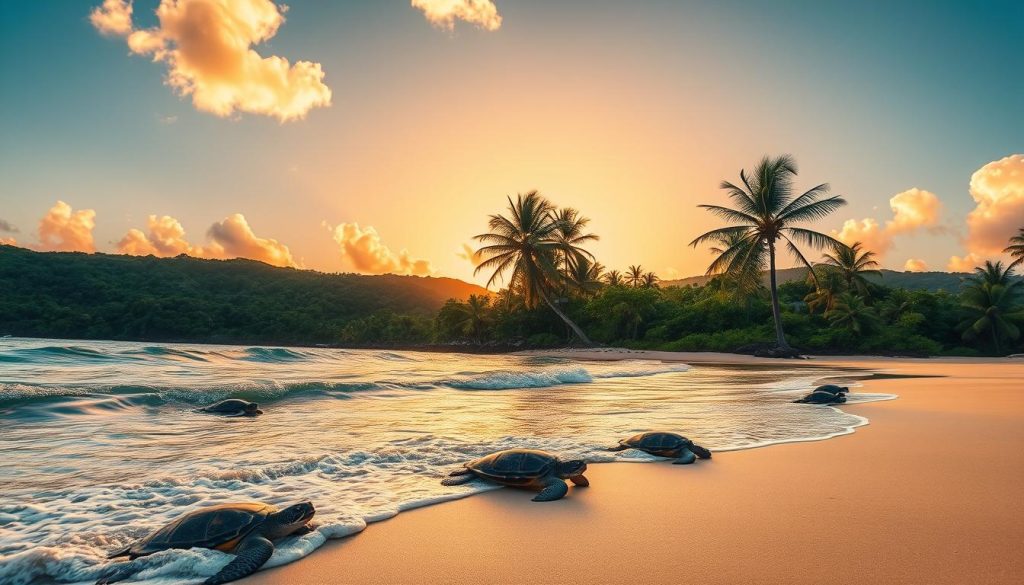
Protecting sea turtles and their homes is very important. Local experts and conservationists watch over the turtles and their eggs. They also fight against poachers. By supporting these efforts, you help these amazing creatures and keep Levera Beach beautiful.
Bird Species and Their Habitats
Exploring Levera Beach reveals a wide variety of bird species. Over 200 species have been recorded in Grenada, making it a top spot for birdwatching. The beach’s mangrove swamps, coral reefs, and sea grass beds draw birds like herons, egrets, and ospreys.
Keep an eye out for migratory birds at Levera Beach. They stop here during their spring and fall migrations. You might also see the endangered Grenada Dove, a key bird to spot here. Levera National Park is small, making it easy to explore and perfect for nature lovers and bird enthusiasts.
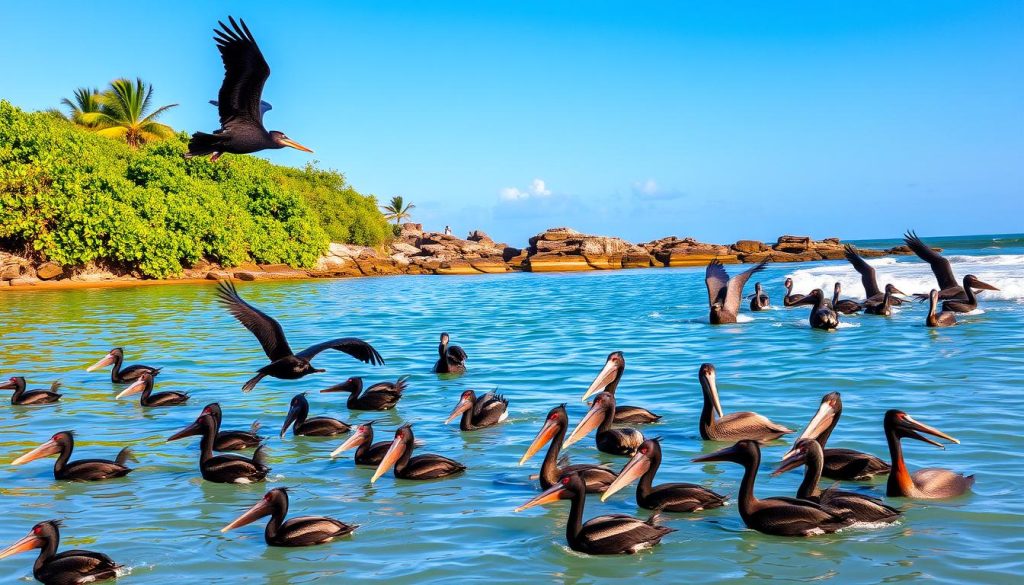
These birds can be seen in their natural habitats. This offers a unique chance forLevera Beach wildlife sightingsand observations ofLevera Beach animals. Whether you’re an experienced birdwatcher or new to birding, Levera Beach is a must-see.
Coastal Wildlife and Beach Inhabitants
Exploring Levera Beach reveals a wide variety of coastal wildlife and beach creatures. You’ll find crabs, lobsters, and conchs in the coral reefs and sea grass beds. These areas are key to the beach’s ecosystem.
The beach is a nesting site for sea turtles, rays, and sharks. It’s a national park in Grenada, crucial for endangered leatherback turtles and waterfowl. The government has a ‘Closed Beach Policy’ at night to protect these species during nesting season.
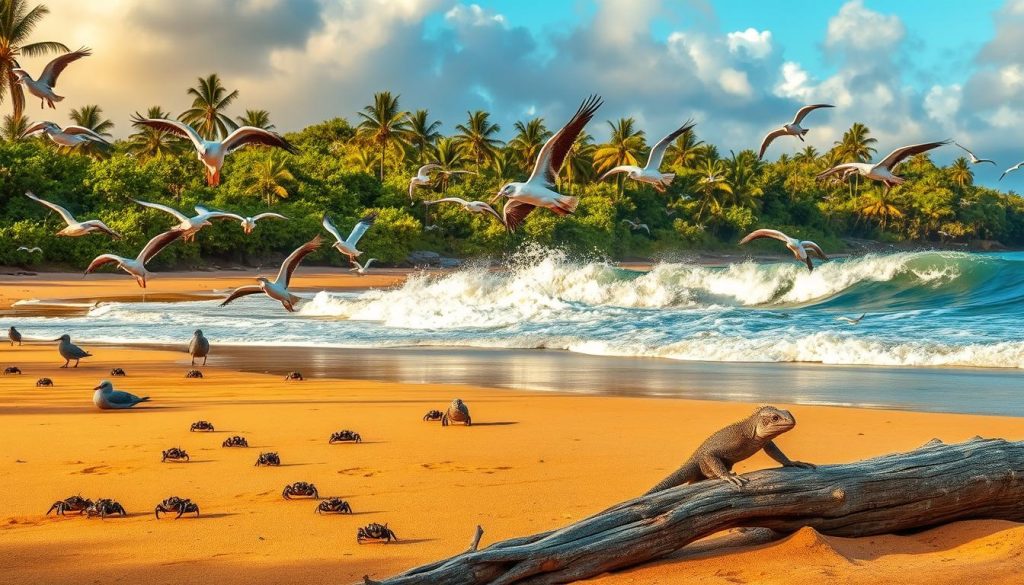
- Sea stars and sea urchins
- Beach crabs and sand dollars
- Seagulls and other shorebirds
These creatures are essential for the beach’s ecosystem. By learning about them, you’ll appreciate the need for conservation at Levera Beach wildlife reserve.
Best Spots for Wildlife Photography
Exploring Levera Beach reveals many chances to take amazing wildlife photos. It’s a place where sea turtles, birds, and fish live. The mangrove swamps, coral reefs, and sea grass beds are full of life.
The best times for wildlife photos at Levera Beach are early morning and late evening. The soft, golden light during these times is perfect for photos. You’ll see birds, turtles, and fish as they go about their day.
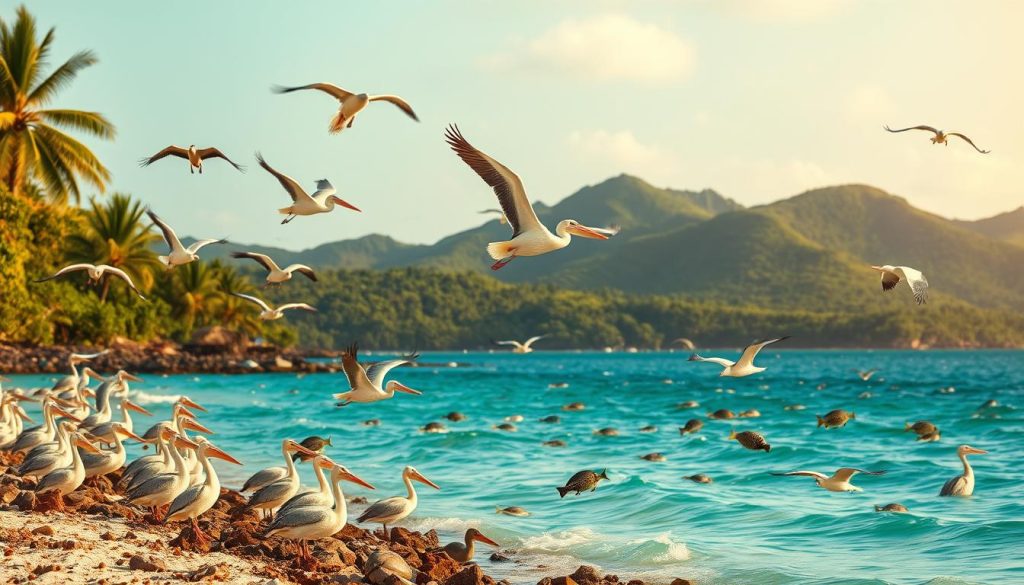
- Mangrove swamps, where you can spot birds and fish in their natural habitat
- Coral reefs, home to a vibrant array of marine life
- Sea grass beds, where sea turtles and other animals can be found
Visiting these spots in the early morning or late evening lets you capture stunning photos. You’ll see Levera Beach animals in their natural setting.
Wildlife Conservation Efforts at Levera Beach
Levera Beach is a haven for Levera Beach wildlife, with its diverse range of species and habitats. The beach is home to the endangered leatherback sea turtle, which nests on the beach from February to September. To protect these turtles and their habitats, conservation efforts are underway.
These efforts include the establishment of protected areas and measures to reduce pollution and habitat destruction.
The Levera Wetland, which encompasses over 500 hectares of diverse ecosystems, is Grenada’s only Ramsar site, designated as a Wetland of International Importance. This designation recognizes the importance of the wetland for Levera Beach nature and the need to protect it. The wetland is home to over 85 bird species, and the beach is the third largest nesting site for endangered leatherback sea turtles in the Caribbean.
Conservation efforts at Levera Beach include the monitoring of turtle activity and the implementation of measures to reduce the impact of human activity on the environment. The Ocean Spirits researchers monitor turtle activity and tag new visitors during the nesting season, and tours to observe turtle nesting are conducted by SPECTO. These efforts aim to protect the Levera Beach wildlife and preserve the natural beauty of the area.
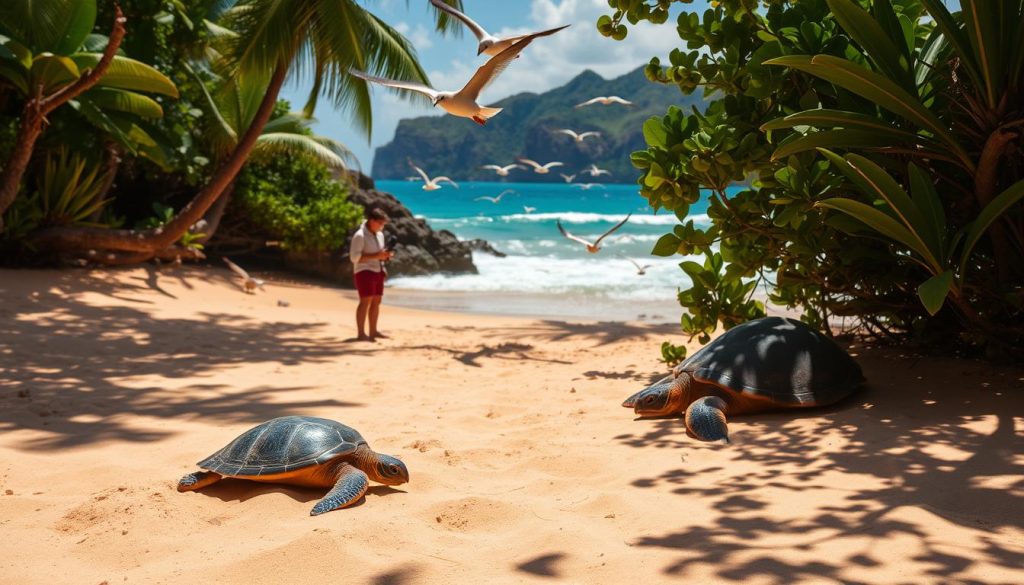
The table below summarizes some key statistics about Levera Beach and its conservation efforts:
| Category | Statistic |
|---|---|
| Levera Wetland size | Over 500 hectares |
| Bird species documented | Over 85 |
| Nesting site for leatherback sea turtles | Third largest in the Caribbean |
Tips for Responsible Wildlife Viewing
When you visit Levera Beach, remember you’re a guest in the home of many animals. To have a safe and fun time, follow these tips for watching wildlife. Always keep a safe distance to not scare the animals and keep their natural behavior.
For a better experience, bring binoculars, a field guide, and snacks and water. This way, you can enjoy Levera Beach’s unique ecosystem without harming it. By being careful and respectful, you help keep Levera Beach beautiful for others to see in the future.
Here are some important things to remember when watching wildlife at Levera Beach:
- Keep a safe distance from the animals to avoid disturbing them
- Don’t feed the wildlife, as it can mess with their natural behavior and diet
- Stay on the trails and avoid sensitive areas
- Don’t litter or pollute the environment
By following these simple rules, you can have a great time exploring Levera Beach. Always respect the wildlife and their home. With a little care, you can enjoy amazing wildlife sightings at Levera Beach.
Conclusion: Experiencing the Natural Wonders of Levera Beach
Exploring Levera Beach reveals its true beauty. You’ll see vibrant mangrove swamps, coral reefs, sea grass beds, and coastal habitats. It’s a place like no other.
By following viewing guidelines and supporting conservation, you help protect this gem. This way, you ensure its natural beauty and ecological importance for future generations.
Levera Beach is home to amazing creatures like leatherback turtles and colorful birds. It also has a wide variety of marine life. Visiting here gives you unforgettable memories and a deeper love for nature.
Seeing Levera Beach’s ecosystem up close teaches you about its delicate balance. It shows the importance of protecting our planet’s resources. You’ll leave with a newfound respect for our world.