Zika Risk in Turks and Caicos: Mosquito Update
Are you ready for the health risks in paradise? Zika virus is still a worry in the Turks and Caicos Islands. It puts travelers at risk of diseases spread by mosquitoes. Since there’s no vaccine for Zika, knowing about the virus and its carriers is key to staying safe.
Past outbreaks have shown how big a Zika risk is. This makes knowing about it very important. The Turks and Caicos Islands face big challenges with Zika, which is a big worry for pregnant women. With the right steps and knowledge, you can lower your risk and stay up-to-date.
Understanding the Zika Virus
The Zika virus is a major mosquito-borne disease. It spreads mainly through Aedes mosquitoes, like Aedes aegypti and Aedes albopictus. These mosquitoes are most active at dusk and dawn.
Symptoms of Zika include mild fever, rash, joint pain, and conjunctivitis. These symptoms are similar to those of dengue fever. This makes it hard to tell them apart.
Zika is a big worry for pregnant women. It can cause serious birth defects, like microcephaly. In 2016, the World Health Organization called it a global health emergency.
Many people with Zika don’t show symptoms or have mild ones. But, it’s important to know the risks, mainly for those planning to have a baby. Research is ongoing to find better ways to stop mosquito-borne diseases.
Are there Zika-carrying mosquitoes on the Turks and Caicos Islands?
Do Zika-carrying mosquitoes exist in the Turks and Caicos Islands? Yes, they do. Aedes mosquitoes, the main carriers of Zika, thrive in warm places, like after it rains. Standing water is perfect for them to breed, leading to more mosquitoes.
Islands like North and Middle Caicos have a lot of these mosquitoes. They grow in numbers after heavy rains, affecting almost everywhere. But, places like Grand Turk and Salt Cay have fewer mosquitoes. This is because they are small and windy conditions help keep mosquitoes away.
In Providenciales, the main tourist spot, mosquitoes are usually not a big problem. But, after heavy rains, they can become more active. The central and eastern parts of Providenciales are safer for visitors. Still, everyone should be careful because Zika-carrying mosquitoes are still around.
The government tries to control mosquitoes by fogging and spraying in crowded areas, mainly after rain. Changes in the environment, like warmer temperatures and hurricane seasons, make travelers worry about mosquito-borne diseases.
History of Zika Outbreaks in the Caribbean
The Zika virus first hit the Caribbean in 2015, starting in Brazil. It quickly spread across South and Central America. By mid-2016, it reached the Turks and Caicos Islands.
The Centers for Disease Control and Prevention (CDC) quickly issued travel advisories. They warned pregnant women the most as cases grew.
Healthcare workers saw different effects of the virus. By September 2016, eleven cases were confirmed in the Turks and Caicos. This led to a strong public health response.
The urgency to handle these cases showed the virus’s dangers. It also showed how crucial it is to know about travel advisories.
By January 2017, the last Zika case was reported. This allowed the Turks and Caicos to be removed from the Level 3 travel advisory. This was a big win in the fight against Zika.
Yet, the lessons from Zika outbreaks in the Caribbean still guide public health today.

Current Status of Zika in Turks and Caicos
The Zika situation in Turks and Caicos is calm, with no new cases since January 2017. Health officials say there’s no local Zika transmission, which is good news for visitors. The CDC has lowered the travel advisory to Level 1, meaning usual precautions are enough.
Zika is not a big worry in Turks and Caicos now. But, it’s still important to stay alert. Mosquito numbers can change with the seasons, affecting disease spread. Keeping up with local health news and being careful while traveling is smart.
Worldwide, Zika has been found in 89 countries. It’s spreading locally in all Americas, except Chile, Uruguay, and Canada. Even though Zika cases are low in 2023, other mosquito diseases are still a worry. This shows we need to keep watching and protecting ourselves.
| Year | Total Zika Cases | Dengue Cases | Chikungunya Cases |
|---|---|---|---|
| 2023 | 27,000 | 3,000,000 | 324,000 |
In short, while Zika is not a big issue in Turks and Caicos now, staying informed and safe is key. Always check the latest health news before you travel.
Health Precautions for Travelers
Planning a trip to the Turks and Caicos Islands? It’s key to take health precautions to stay safe. These steps help prevent Zika and other mosquito-borne diseases.

- Use insect repellent with DEET between 20-50% to avoid bites.
- Choose accommodations with air conditioning and screened windows to reduce mosquito exposure.
- Wear long sleeves and pants, mainly during peak mosquito hours.
Be extra careful if you’re at higher risk. Pregnant women should avoid non-essential travel to Zika areas. Small kids face a higher risk of severe malaria in tropical places. Also, those with blood clot history or pregnant should be cautious on long flights.
Good hygiene is essential. Keep hands clean and be careful with water quality to avoid traveler’s diarrhea.
Zika prevention means watching out for mosquitoes and ticks too. So, stay updated on health risks in this beautiful place.
Symptoms of Zika Virus Infection
The symptoms of Zika virus infection usually start within two to seven days after a mosquito bite. It’s important to know these symptoms to get timely care. Common signs include:
- Fever
- Rash
- Joint pain
- Red eyes
While many people have mild symptoms, some face serious risks. Pregnant women are at a higher risk of miscarriage and stillbirth. It’s key for them to recognize Zika early to stay safe during pregnancy.
Interestingly, only about 1 in 5 people infected with Zika virus show symptoms. Being careful is crucial. If you think you’ve been exposed, or are planning to get pregnant, see a doctor right away.

Importance of Mosquito Control Measures
Effective mosquito control is key for preventing Zika and keeping public health safe. In the Turks and Caicos Islands, the government uses many strategies to fight mosquitoes. They fog regularly and get rid of standing water to stop mosquitoes from breeding.
Standing water is where mosquitoes like to breed. It’s important to manage it well to stop mosquitoes from growing. Community education helps make these efforts better by teaching people and getting them involved.
When people know how to help, like keeping their area clean and reporting standing water, it makes a big difference. Studies show that using a mix of methods works better than just chemicals. Getting the community to help is crucial for success.
But, there are still big challenges in controlling mosquitoes. Not enough money, limited resources, and needing to work together are some of them. Overcoming these problems is key to keeping communities safe from mosquito-borne diseases.
| Control Strategy | Description | Effectiveness |
|---|---|---|
| Routine Fogging | Application of insecticides to reduce adult mosquito populations. | Short-term reduction, needs to be repeated. |
| Elimination of Standing Water | Removal of potential breeding sites, reducing mosquito larvae. | High effectiveness when consistently managed. |
| Community Education | Raising awareness about mosquito control and disease prevention. | Long-term benefits, fosters community participation. |
| Integrated Control Interventions | Combination of biological, environmental, and chemical strategies. | Most sustainable results, promotes resilience in local populations. |
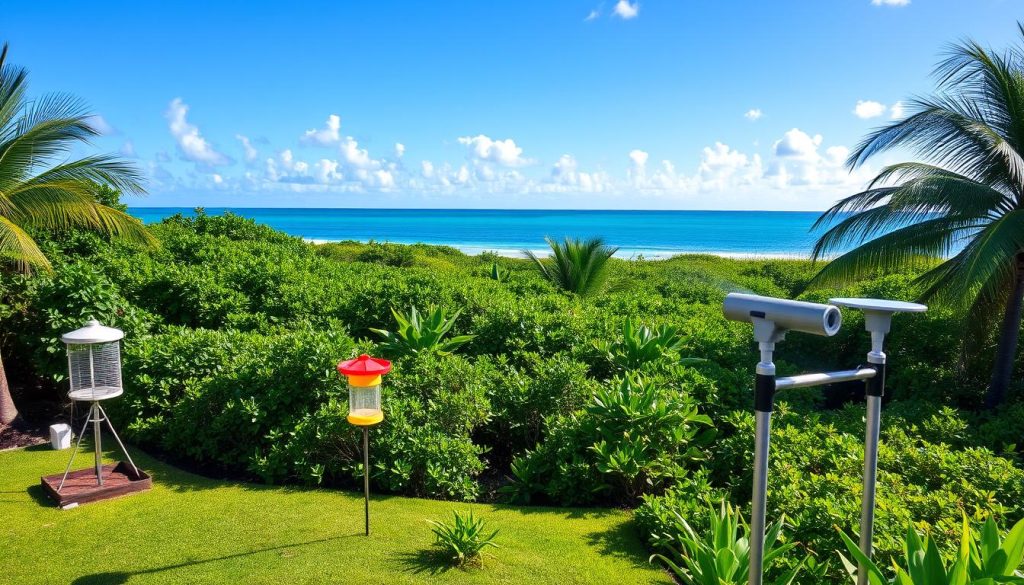
Protective Measures Against Mosquito Bites
Visiting the Turks and Caicos Islands is a treat, with its beautiful landscapes and lively marine life. But, it’s important to protect yourself from mosquito bites. Zika and other diseases spread by mosquitoes are a big concern for travelers.
To keep mosquitoes at bay, consider these tips for your trip:
- Wear long-sleeved shirts and long pants, mainly at dawn and dusk when mosquitoes are most active.
- Use insect repellent with at least 20% DEET on your skin to keep mosquitoes away.
- Stay in places with well-screened windows and doors to keep mosquitoes out.
- Apply permethrin to your outdoor gear and clothes for extra protection.
- Use bed nets in areas with lots of mosquitoes to keep them off while you sleep.
The warm weather in Turks and Caicos, with its 350 sunny days a year, helps mosquitoes thrive. Knowing how to control mosquitoes will make your trip better.

By following these steps, you can have a great time in the tropics. And you’ll stay safe from mosquito-borne diseases.
Role of the Caribbean Public Health Agency (CARPHA)
The Caribbean Public Health Agency (CARPHA) plays a key role in fighting Zika virus in the Caribbean. It was set up in 2011 to help countries work together against health threats. CARPHA focuses on tracking diseases, conducting research, and teaching communities about health risks.
Outbreaks like Chikungunya in 2014 and Zika in 2016 have made CARPHA’s work even more important. The agency helps health ministries in the Caribbean by improving mosquito tracking and control. They find that places like old tires and drums are breeding grounds for mosquitoes, leading to outbreaks.
With the risk of Dengue outbreaks in the future, CARPHA is working harder to prevent diseases. They focus on getting communities involved and using effective control methods. This way, they aim to lessen the impact of Zika and strengthen health systems in the Caribbean.