Navigating Public Transport in Cebu City: A Guide
Exploring Cebu’s vibrant city can be exciting, but navigating public transport might seem daunting. This guide will help you use Cebu’s public transport like a local. You’ll learn to move around the city with ease and confidence.
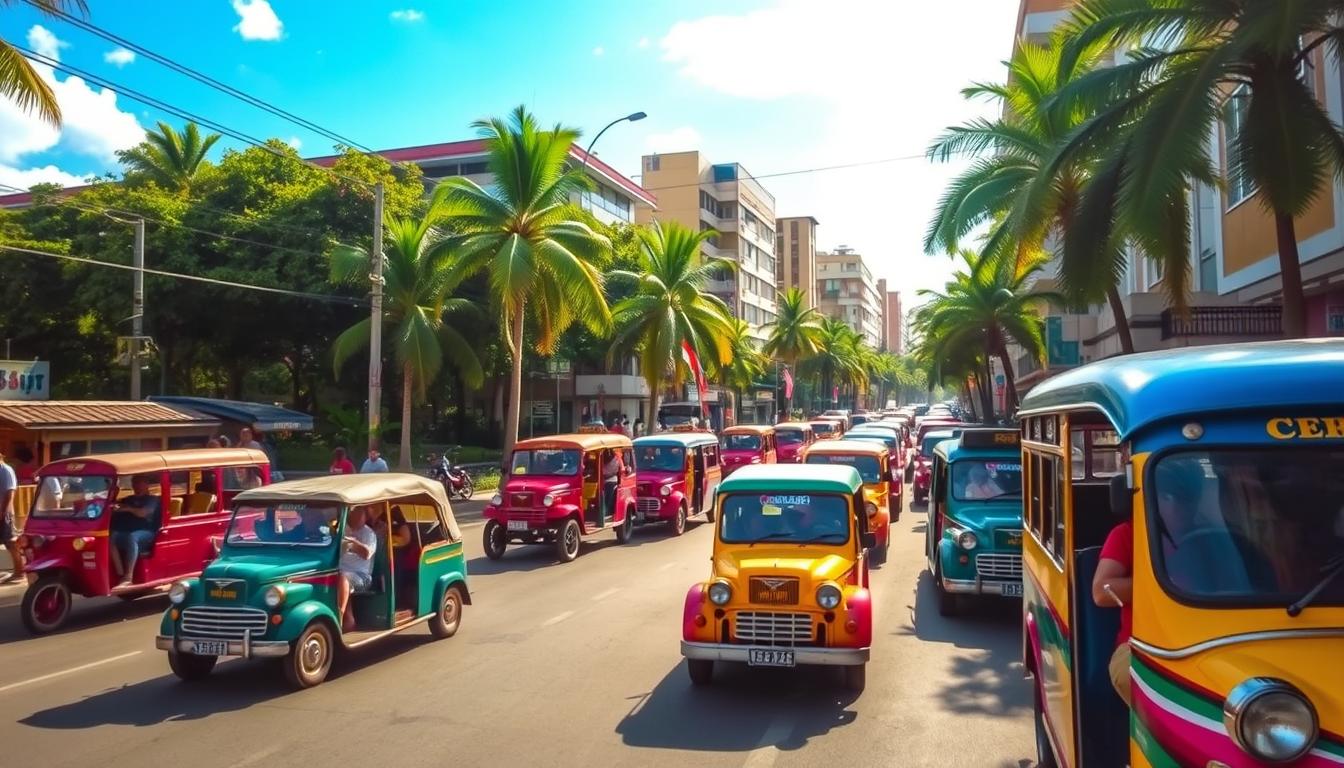
Cebu City offers various transportation options for visitors and residents alike. The iconic Jeepneys are colorful buses that serve as the city’s main mode of transport. Taxis provide a more private option for those who prefer direct routes.
For adventurous travelers, habal-habal (motorcycle taxis) offer a thrilling way to zip through traffic. These options make commuting Cebu an experience in itself. They also provide efficient ways to explore Cebu City.
Ready to master navigating public transportation in Cebu City? Let’s explore the city’s lively Cebu public utility vehicles. This guide will help you move around like a seasoned local in no time.
Introduction: Public Transportation in Cebu City
Cebu City offers many ways to get around. From iconic Jeepneys to modern buses, knowing the transport system helps travelers explore like locals. Let’s look at the options available for your visit to this dynamic city.
Overview of Cebu City’s Public Transport Options
Cebu City has various transport modes. Each has its own features and benefits. Here are the main options:
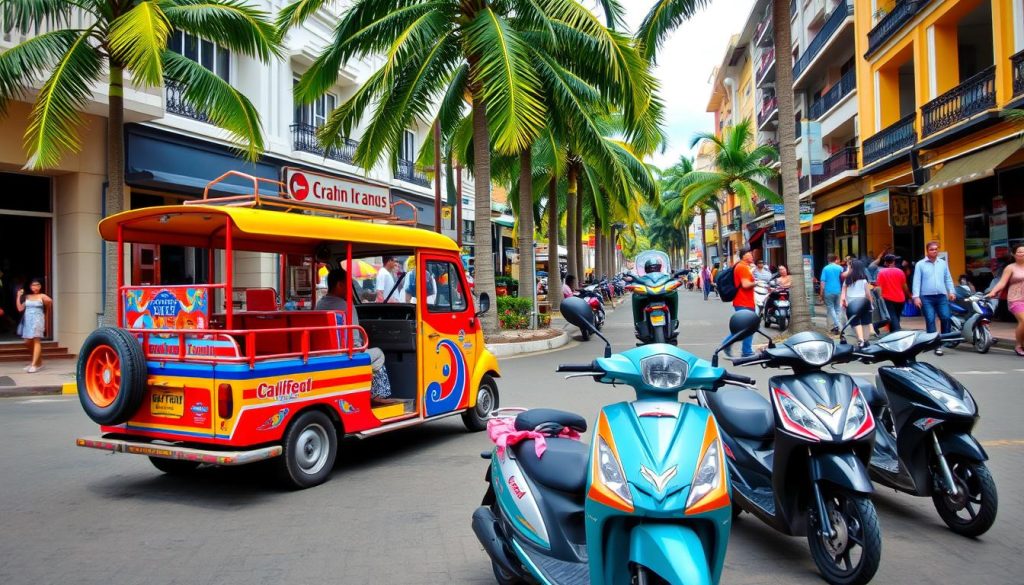
- Jeepneys – The distinctive Jeepneys, a legacy of the American military presence, are the most popular and affordable way to travel within the city.
- Taxis – Metered taxis provide a more private and convenient option for short to medium-distance trips.
- Habal-Habal – Motorcycle taxis, known as Habal-Habal, offer a quick and nimble mode of transportation, especially during rush hour.
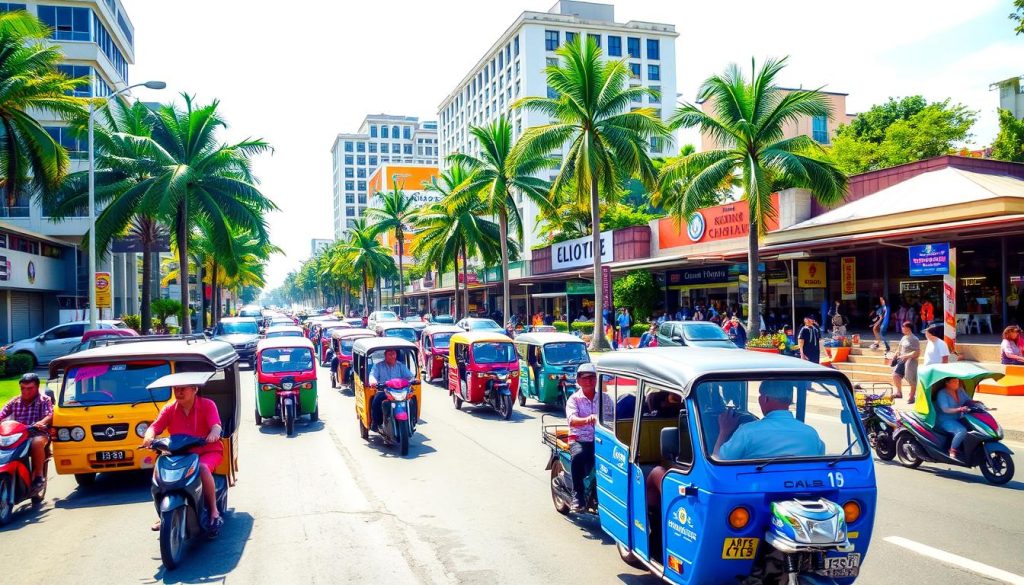
- Tricycles – Three-wheeled Tricycles are ideal for navigating narrow streets and exploring local neighborhoods.
- Buses – Modern buses, including the Beep and MyBus services, provide efficient and comfortable transportation for longer journeys.
- Car and Scooter Rentals – For maximum freedom and flexibility, visitors can opt for car or scooter rentals to explore Cebu City at their own pace.
Importance of Understanding Local Transportation for Travelers
Knowing Cebu City’s transport options is key for visitors. At first, the system may seem complex. But with some prep, you can easily blend into local commuting.
Learning about routes and fares helps you move around efficiently. This saves time and effort when traveling between places. You’ll have more time to enjoy Cebu’s vibrant culture and attractions.
“Understanding the local transportation system is crucial for travelers to navigate Cebu City efficiently and immerse themselves in the local culture.”
The Iconic Jeepney Experience
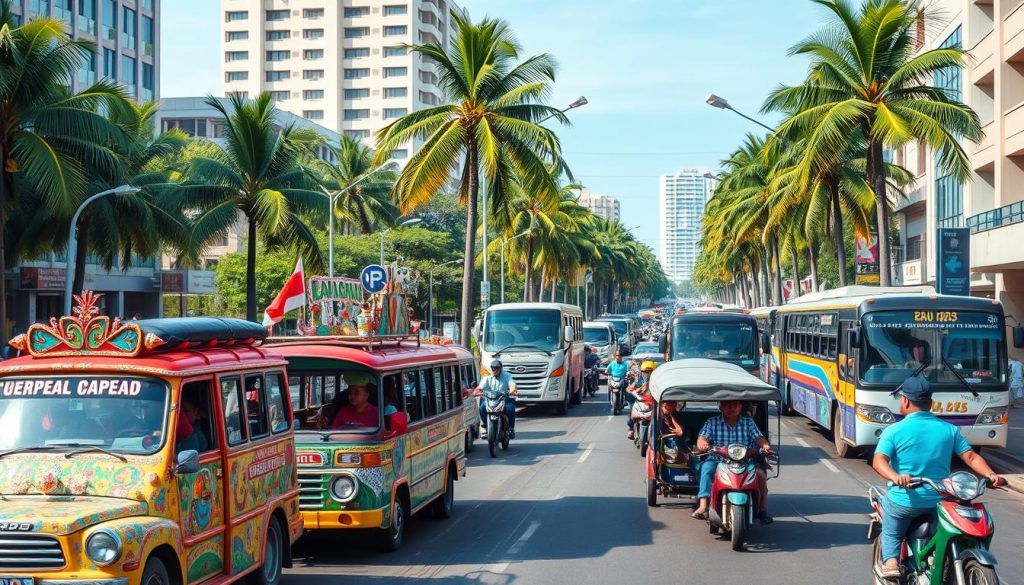
Cebu jeepneys are a vital part of public transport Cebu. These colorful vehicles, once World War II jeeps, now symbolize Filipino creativity. They offer a unique way to explore Cebu City’s lively streets.
Understanding Jeepney Routes and Fares
Jeepneys in Cebu have specific codes and routes for easy identification. Fares range from $0.15 to $1, making them budget-friendly for commuting Cebu. Learn the route system to reach your destination efficiently.
Tips for Riding Jeepneys Like a Local
- Signal the driver to stop by calling out your destination or using hand gestures.
- Pay the fare to the “barker” (assistant) or the driver directly.
- Know when to alight by keeping an eye out for your stop or asking the driver.
- Embrace the lively atmosphere and soak in the local culture as you ride.
Riding Cebu jeepneys lets you experience the city’s transport network firsthand. You’ll navigate like a pro and feel the pulse of Cebu City.
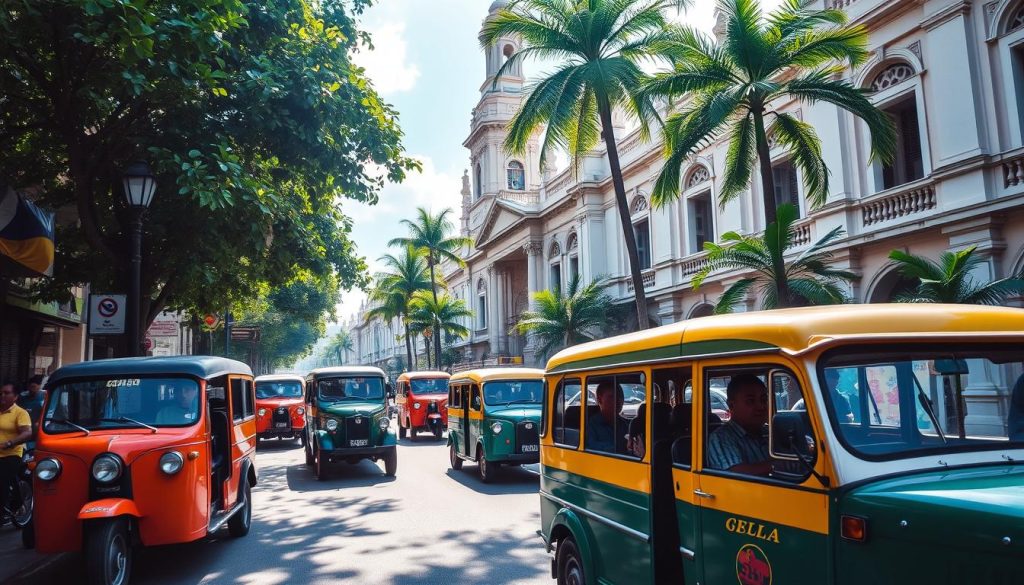
“The Cebu jeepney is more than just a mode of transportation – it’s a cultural icon that embodies the resilience and creativity of the Filipino people.”
Modern Jeepneys: Comfort and Convenience
Cebu City’s public transport now includes modern jeepneys alongside traditional ones. These newer vehicles offer a more comfortable and convenient commuting experience.
Modern jeepneys look like minibuses with air conditioning and security cameras. They also have cashless payment options. While pricier, they provide a more enjoyable ride.
The Public Utility Vehicle Modernization Program (PUVMP) started this change in 2017. It aims to make public transport more efficient, reliable, and eco-friendly.
Central Visayas, where Cebu City is, has made great progress. It has consolidated 91% of its jeepneys, both old and new.
The region now has 1,400 modern jeepneys and 800 traditional ones. It also has 784 UV Express vehicles under the PUVMP.
Choosing a modern jeepney lets you enjoy local charm with added comfort. You’ll have better amenities and safety for a more pleasant journey in Cebu City.
Is it easy to navigate public transportation in Cebu City?
Getting around Cebu City can be tricky for newcomers. The Jeepney routes and many transport options might seem confusing at first. But with some prep, you can easily explore the city using public transit.
Challenges and Solutions for First-Time Commuters
Understanding Jeepney routes is a big challenge for new commuters. Jeepneys are everywhere, but their paths can be puzzling. Learn the main routes and stops before your trip.
The many transport choices can also be overwhelming. From Jeepneys to taxis, there’s a lot to pick from. Research the costs and areas covered by each option.
Language barriers can make things tough too. Not everyone speaks English, which can cause problems. Learn some basic Filipino phrases or use a translation app on your phone.
Get to know the transport options and Jeepney routes. Don’t be shy about asking locals for help. This way, you’ll have a smooth and fun commuting experience.
| Transportation Option | Fare Range | Key Features |
|---|---|---|
| Jeepneys | $0.15 – $1 | Most common and affordable public transport, accommodate multiple passengers, run all hours |
| Taxis | $0.40 (flag-down) + $0.135/km + $0.02/2 minutes | Metered fares, more expensive than Jeepneys but offer privacy and convenience |
| Multicabs | Cheapest option, but not easily found by tourists | Small vans that accommodate multiple passengers, great for short trips |
| Tricycles | Negotiable fares, more expensive than Jeepneys | Motorcycle-based transport option for narrow roads and neighborhoods |
| Habal-Habal (Motorcycle Taxis) | No fixed fare, more expensive than tricycles | Faster and able to traverse uneven terrain, but less regulated |
Knowing the costs and features of each transport option helps you make smart choices. This knowledge will boost your confidence in using Cebu City’s public transit system.
Taxis: Private and Metered Rides
Cebu City offers convenient taxis for private, metered rides. You can hail them on the street or at taxi stands near malls and hotels. Tell the driver your destination and check if the meter is running.
Understanding Taxi Fares and Etiquette
Taxi fares in Cebu City start at $0.70. They charge $0.24 per kilometer and $0.036 every two minutes. Have small bills ready for payment.
Avoid haggling unless the fare seems too high. Taxis are great for short trips or when you have luggage. Knowing the fares and how to hail taxis will help you explore Cebu easily.
Cebu taxis and public transport Cebu offer convenient ways to get around the city. They’re comfortable and reliable options for your travels.
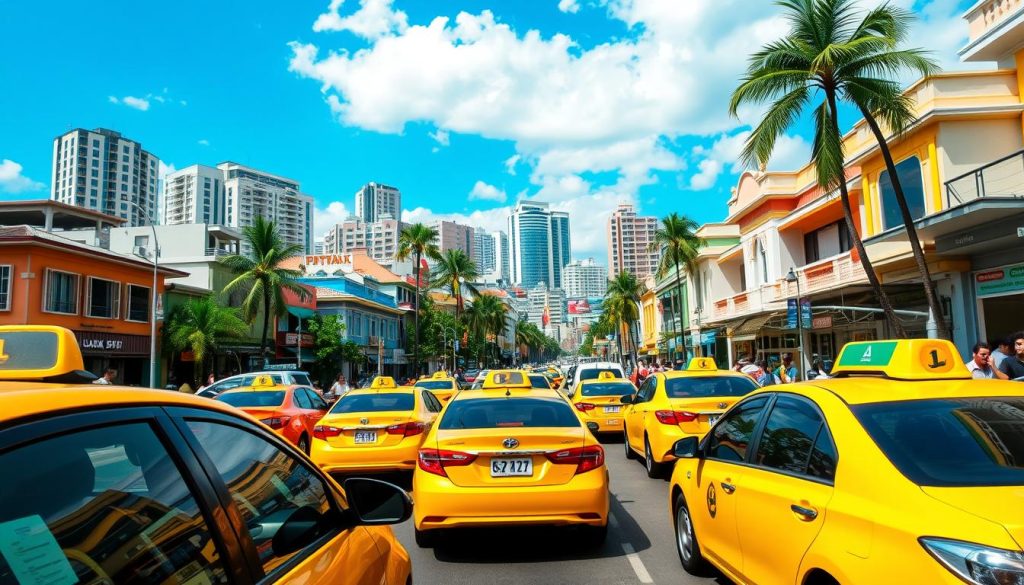
“Taxis in Cebu City provide a reliable and private mode of transportation, allowing you to reach your destination with comfort and convenience.”
Habal-Habal: Motorcycle Taxis for Quick Trips
Habal-habals offer a swift, budget-friendly way to navigate Cebu City. These agile motorcycles excel at weaving through congested streets. They’re especially handy during rush hour, easily bypassing traffic jams.
You can book habal-habal rides through apps like Angkas, which show fares upfront. These taxis are popular in both urban and rural areas. Always prioritize safety by ensuring the driver wears a helmet.
| Mode of Transportation | Minimum Fare |
|---|---|
| Jeepneys | PHP11 or USD 0.20 |
| MRT Line 3 | PHP13 or USD 0.23 |
| LRT 1 | PHP12 or USD 0.22 |
| Tricycles | Shared between 2-4 passengers, higher for private rides |
| Pedicabs | Typically carry 2 passengers, up to 3 in larger pedicabs |
The Cebu habal-habal industry has seen major changes recently. App-based services like Angkas, Joyride, and MoveIt have emerged. These platforms make booking reliable public transport Cebu options easier, especially for quick trips.
The regulatory landscape for Cebu habal-habal remains uncertain. Ongoing discussions aim to formalize the sector. It’s crucial for everyone to stay informed about public transport Cebu developments.
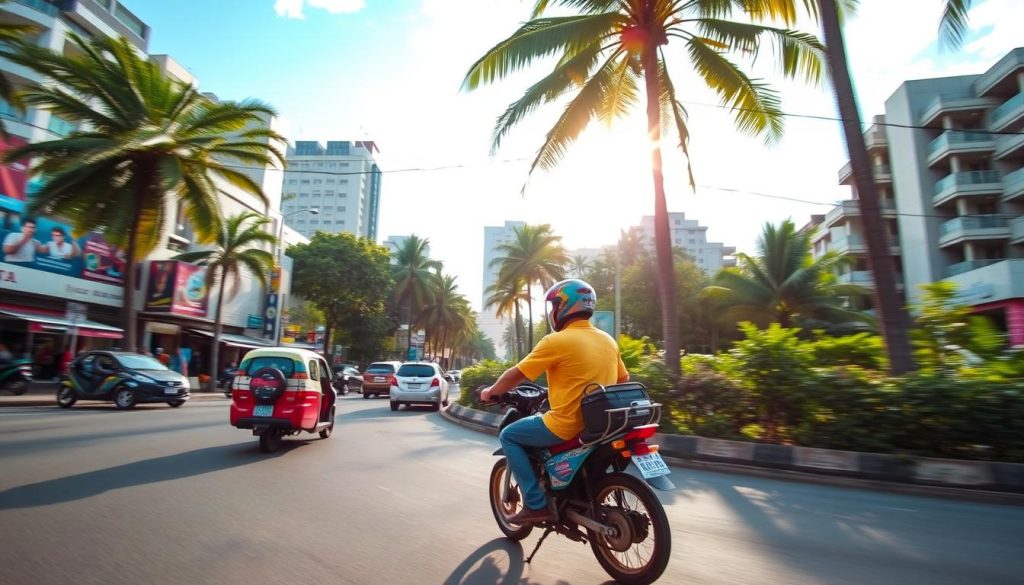
“The longer the regulatory uncertainty persists, the more difficulties arise both for stakeholders and commuters, pointing towards the urgency of resolution.”
Tricycles: Exploring Narrow Roads and Neighborhoods
Tricycles offer a unique way to explore Cebu City’s narrow roads and local neighborhoods. These three-wheeled vehicles come in pedal, sidecar, and electric variants. They provide convenient transportation for short trips around Cebu.
Tricycles are common in the city. They carry both residents and visitors. These vehicles can reach places inaccessible to larger transport modes.
Negotiating Fares and Boarding Tricycles
To use a tricycle in Cebu, negotiate the fare with the driver first. The minimum fare is typically Php13.00. Prices may vary based on distance and passenger count.
Tricycles can accommodate up to four passengers in the sidecar. A maximum of two can ride on the back. You may need to share the ride with others.
Tricycles navigate the city’s narrow streets and alleyways with ease. This allows you to explore Cebu’s neighborhoods thoroughly. They offer a more intimate experience than other forms of public transport Cebu.
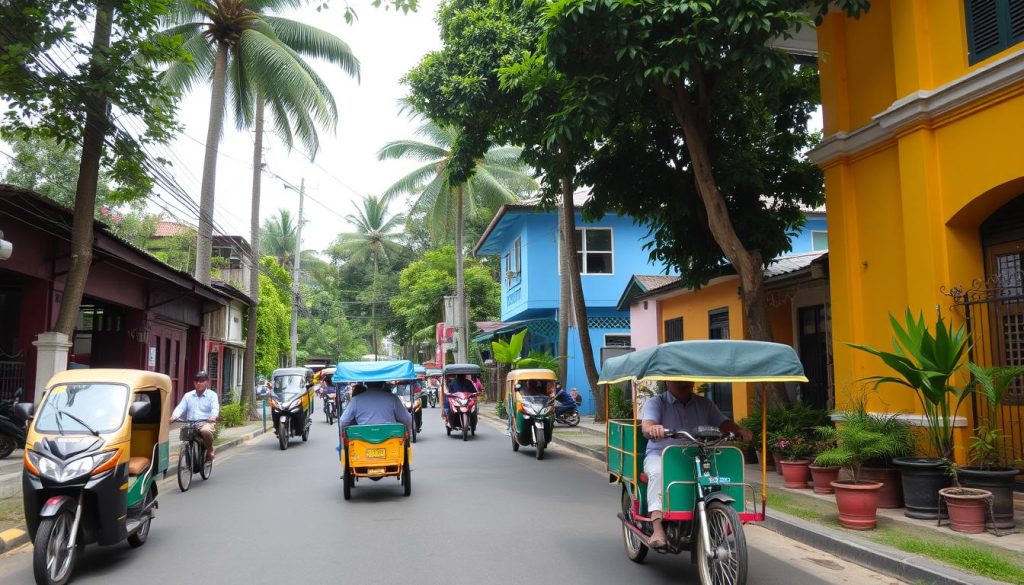
Tricycles provide a convenient way to discover Cebu’s vibrant streets. Understanding fare negotiation and boarding etiquette is important. This knowledge helps you integrate Cebu tricycles into your travel plans smoothly.
Bus Terminals: Gateways to Provincial Destinations
Cebu City is a major transportation hub in the Philippines. It has two prominent bus terminals serving as gateways to provincial destinations. The Cebu South Bus Terminal (CSBT) and Cebu North Bus Terminal (CNBT) offer easy access to various regions.
Cebu South Bus Terminal (CSBT)
The CSBT is the largest bus terminal in the region. It provides travel to southern provinces and other Visayas islands. This terminal operates 24/7, ensuring continuous connectivity for travelers.
Popular routes from CSBT include Bato, Barili, Oslob, Alcoy, and Samboan. Well-known bus operators like Ceres Liner service these destinations. The terminal offers air-conditioned waiting areas, entertainment, and ticket counters.
Future plans include a centralized ticketing system to improve the travel experience. Reaching CSBT is easy with taxis or jeepneys from nearby locations. These include SM City Cebu, North Bus Terminal, Cebu Pier, Ayala Cebu, or Guadalupe.
Cebu North Bus Terminal (CNBT)
The CNBT serves the northern parts of Cebu. It connects travelers to popular spots like Bantayan Island and Malapascua Island. The terminal’s strategic location offers seamless connections for exploring northern regions.
The Philippines has about 7,600 islands, making Cebu City’s bus terminals crucial travel gateways. Major bus operators contribute to the efficient public transportation system. These include the Yanson Group, Ceres Liner, Vallacar Transit, Bachelor Express, and Rural Transit of Mindanao.
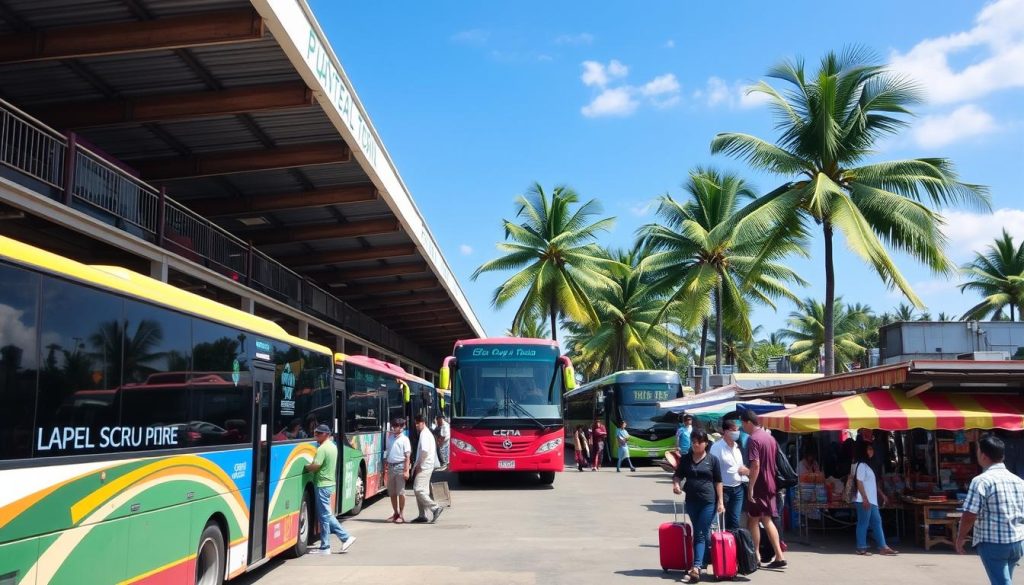
Cebu’s bus terminals offer comfortable ways to explore the province’s diverse destinations. Understanding public transport options helps you navigate these gateways effectively. This knowledge allows you to make the most of your journey through Cebu City and beyond.
Car and Scooter Rentals for Maximum Freedom
Renting a car or scooter in Cebu City offers easy exploration of the area. It gives you freedom to discover hidden gems at your own pace. You can avoid navigating the city’s public transportation system too.
Rental services are available at bus terminals, ports, and other key locations. You’ll need a valid driver’s license and a refundable deposit. The process is simple and straightforward.
Car rental rates in Cebu City range from $27 to $45 per day. This option provides comfort and space for your travels. Scooter rentals are more affordable at $6 to $9 per day.
Scooter models include the popular Honda Beat 110cc and Yamaha Nmax 155cc with ABS brakes. Longer-term rentals may offer discounted daily rates. This makes exploring getting around Cebu City and the Cebu transportation guide even more appealing.
“Renting a vehicle in Cebu City provides unparalleled freedom and flexibility to explore the city and its surrounding areas at your own pace.”
Renting a vehicle is a convenient way to get around Cebu City. It’s cost-effective and allows you to navigate the Cebu transportation guide easily. Experience the local culture and uncover the city’s hidden treasures.
Public Transport Terminals at Major Malls
Cebu City’s major malls house dedicated public transport terminals. These hubs serve surrounding areas and simplify city navigation. Ayala Center Cebu, SM City Cebu, and IT Park offer these convenient terminals.
Ayala Public Utility Vehicle Terminal
The Ayala terminal hosts Jeepneys and vans-for-hire (V-hire). It provides transport to Banilad, Talamban, and Mandaue City. This hub is key for getting around Cebu City and following the Cebu transportation guide.
SM City Cebu Transport Terminal
SM City Cebu’s terminal offers Jeepneys and V-hires to various city destinations. It includes buses to SM Seaside City Cebu, Talisay City, and Minglanilla. This hub serves both local and regional transport needs.
IT Park Transport Terminal
IT Park’s terminal features modernized Jeepneys (BEEPs) and buses. These cover Cebu City, Mandaue City, and Lapu-Lapu City. It’s a key point for getting around Cebu City and using the Cebu transportation guide.
Knowing these transport hubs can improve your Cebu City navigation. It helps you make the most of getting around Cebu City. You’ll also better understand the Cebu transportation guide.
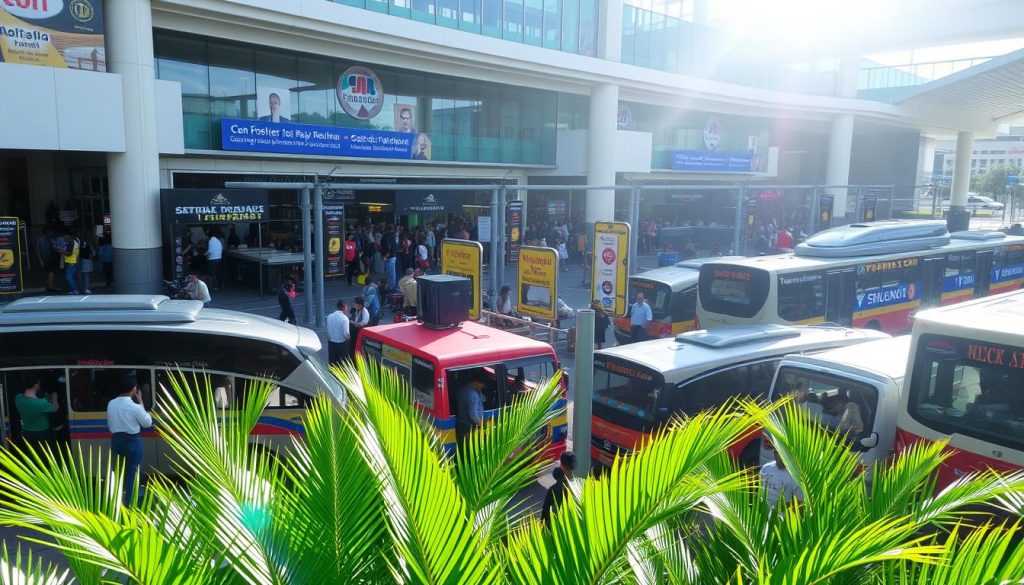
“Exploring Cebu City’s public transport terminals at major malls can unlock a new layer of understanding and appreciation for the city’s vibrant transportation ecosystem.”
Conclusion: Embracing the Local Transportation Experience
Exploring Cebu City’s public transportation can be a rich cultural experience. From iconic Jeepneys to modern BEEPs, there are many options for travelers. You can choose taxis, habal-habal, tricycles, or even rent cars and scooters.
By using local transport, you can explore Cebu like a seasoned resident. This allows you to immerse yourself in the vibrant culture. You’ll also discover hidden gems throughout the city.
This Cebu transportation guide helps you navigate the city’s public transport network. You can confidently travel using budget-friendly Jeepneys or convenient taxis. Renting vehicles offers freedom to explore at your own pace.
Each mode of transport provides a unique view of Cebu City. This allows you to truly get around Cebu City like a local. Embrace the local transportation to fully appreciate Cebu’s sights and sounds.
So, hop on and let the city’s energy guide your exploration. You’re sure to have an unforgettable experience in this remarkable destination.