Best Time of Year to Visit Dhaka Revealed
Planning a trip to Bangladesh? Wondering when is the best time to visit Dhaka? Knowing the best time is key for a great trip. Dhaka’s climate changes with the seasons, affecting your comfort and fun.
Dhaka has a tropical monsoon climate. The dry season is from November to March, with warm and sunny days. December is the best month, with temperatures around 25°C.
Visiting in the monsoon months means lots of rain. July can see over 1,000mm of rain. Temperatures can hit over 40°C from March to May. Knowing the best time to visit is crucial for a good trip.
Understanding Dhaka’s Climate Overview
Dhaka has a tropical monsoon climate with three main seasons: summer, monsoon, and winter. Each season has its own weather patterns that affect travel plans. To plan your visit well, check the Dhaka weather guide.
Summer lasts from March to May, with temperatures often over 40°C (104°F). The heat makes it hard to enjoy the outdoors. In May, highs reach about 92°F, and lows are around 78°F. Humidity also goes up during this time.
The monsoon season is from June to October, with lots of rain. July is the wettest month, with over 9.7 inches of rain. You can expect many rainy days, with a 37% chance of rain. This season lasts about 5.8 months, causing water and mud everywhere.
Winter, from November to February, is cooler. The average temperature is a comfortable 25°C (77°F). January is the coldest month, with lows of 57°F and highs of 76°F. This is the best time for outdoor fun and cultural experiences.
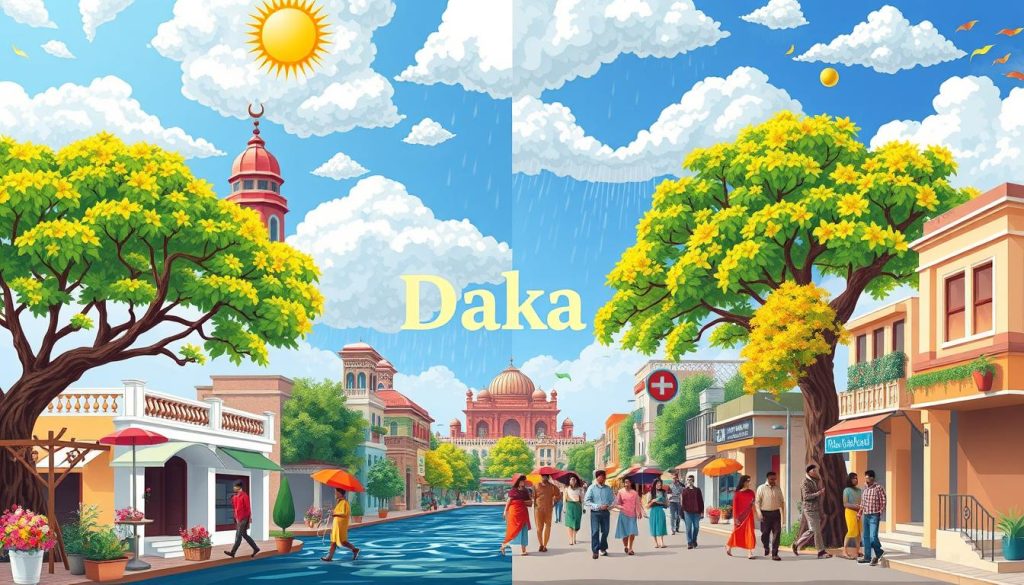
For clearer skies, visit between October and April. The clearest time starts around October 10 and lasts for about 7.3 months. February has the highest chance of clear skies, with 87% of days being clear or mostly clear.
Knowing Dhaka’s climate helps you enjoy your trip more. Understanding the seasons will make your visit to this busy city better.
What is the best time of year to visit Dhaka?
Planning a trip to Dhaka means knowing the weather patterns. The best times to visit are from October to March. These months have dry and cool weather, making your trip better.
Learning about winters and summers helps find the perfect time for a great vacation in Dhaka.
Winter Season Advantages
The winter months, from December to February, are the best. Visitors enjoy:
- Average temperatures between 19 to 30°C, making it comfy.
- Less rain, so outdoor fun is more fun.
- Many cultural events and festivals to see.
January has about nine hours of sunshine. You can explore places like Old Dhaka, Motijheel, and Gulshan easily. The heat and humidity won’t bother you.
Summer Challenges
Summer, in May and June, is tough for travelers. The heat can be over 33°C, and the humidity is high. Visitors may face:
- It’s hard to do outdoor stuff because it’s so hot.
- More rain starts in these months, making plans tricky.
- Weather can change suddenly, causing travel delays.
Knowing the best seasons in Dhaka helps plan a better trip. You’ll have a great time visiting.
Exploring the Dry Season in Dhaka
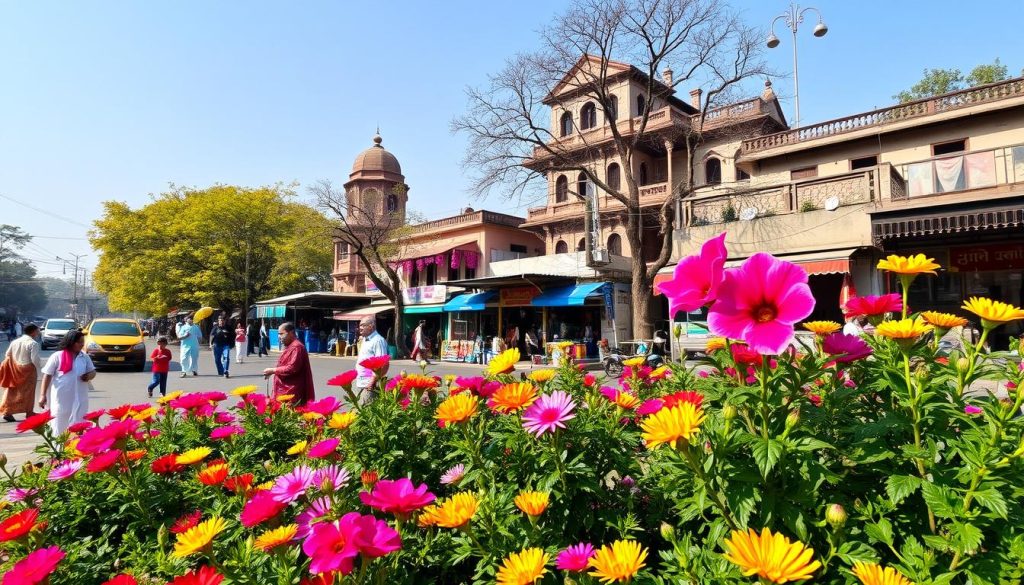
The dry season in Dhaka, from November to March, is the best time to visit. You’ll enjoy pleasant weather perfect for exploring outside. The days are sunny, and nights are cool, great for many activities.
Ideal Weather Conditions
Temperatures range from 18°C to 28°C (64°F to 82°F) during this season. This comfortable climate makes visiting landmarks and experiencing local culture better. The clear skies and low humidity make it a great time to travel.
Activities During the Dry Season
Many outdoor activities are great during the dry season. Here are some fun options:
- Visit Lalbagh Fort – Explore the historical architecture and beautiful gardens.
- Tour Ahsan Manzil – Discover the rich history of this former palace.
- Participate in Street Food Tours – Savor delicious local cuisine in a comfortable climate.
Monsoon Season Effects on Travel
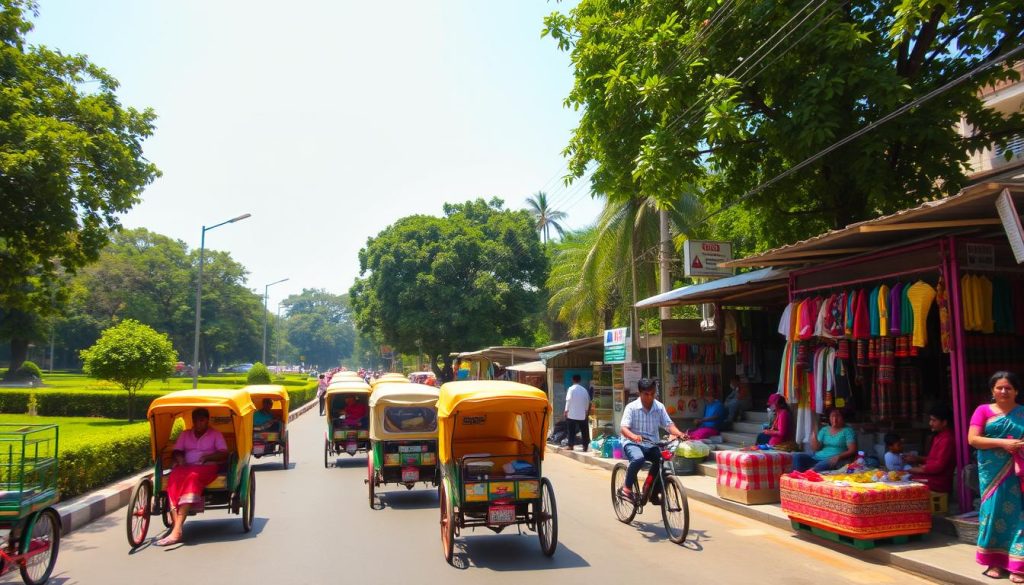
The monsoon season in Dhaka, from June to October, greatly affects travel. It brings a lot of rain and high humidity. Visitors need to know how this impacts their trip.
Navigating Heavy Rainfalls
Traveling in the monsoon season means dealing with heavy rain. Dhaka’s climate can lead to flooding, mainly in low-lying areas. Rainfall can reach up to 4,000 millimeters, making travel plans tough.
Pros and Cons of Monsoon Travel
Traveling in Dhaka during the monsoon has its ups and downs. You’ll see lush landscapes and fewer tourists, making your visit special. But, the rain can cause transportation delays, affecting your plans. It’s important to be ready for the monsoon’s effects.
| Pros of Monsoon Travel | Cons of Monsoon Travel |
|---|---|
| Lush greenery and vibrant landscapes | Frequent transportation delays |
| Fewer tourists for a more serene experience | High risk of flooding in certain areas |
| Opportunity to experience local culture during rain | High humidity may be uncomfortable for some |
Peak Travel Times in Dhaka Explained
Knowing when to visit Dhaka is key for a great trip. The dry season, from November to March, is the best time for tourists. The weather is warm and sunny, with temperatures around 25°C in December.
December is a top month to see Dhaka. It has sunny days and cool nights. This makes it busy, with more people wanting to see the city’s culture and life.
The monsoon season, from late May to October, has fewer visitors. It’s a chance for a closer look at Dhaka, but you might face rain and humidity. The city’s green landscapes are a bonus during this time.
Here is a detailed overview of Dhaka’s travel seasons:
| Season | Months | Temperatures (°C) | Travel Experience |
|---|---|---|---|
| Winter | November to March | 10 – 25 | Peak tourist season, minimal rainfall |
| Spring | March to May | 20 – 35 | Pre-monsoon showers, moderate tourists |
| Monsoon | May to October | 25 – 30 | Heavy rainfall, fewer tourists |
| Autumn | September to October | 25 – 30 | Reduction in rainfall, improving conditions |
Events and Festivals During Key Seasons
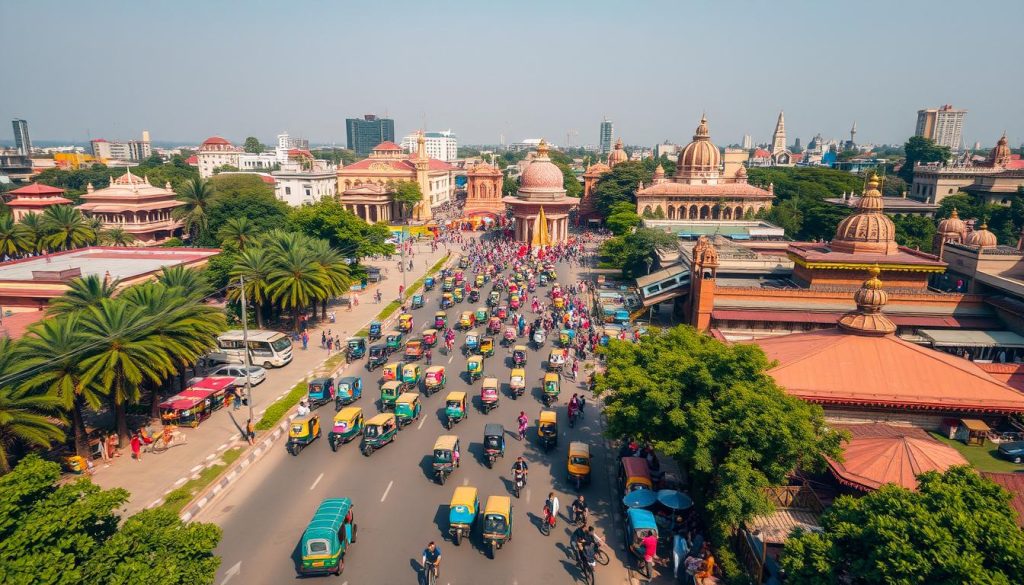
Dhaka’s culture shines through its many events and festivals. The city’s calendar is packed with celebrations that show its history, traditions, and art. Joining in these events and festivals in Dhaka lets you connect with locals and feel the Bengali culture.
Cultural Significance of Pohela Boishakh
Pohela Boishakh, in April, is a big deal in Dhaka. People wear bright clothes, join parades, and eat traditional foods. The festival is filled with music, art, and community spirit.
It’s a time to celebrate new beginnings. Both locals and visitors enjoy the vibrant atmosphere.
Language Martyr’s Day Celebrations
February 21st is Language Martyr’s Day. It remembers students who fought for the Bengali language in 1952. The city holds ceremonies, including ones at the Shaheed Minar, to honor their sacrifices.
Seeing these events and festivals in Dhaka helps you understand the city’s history and culture. It makes your trip more meaningful.
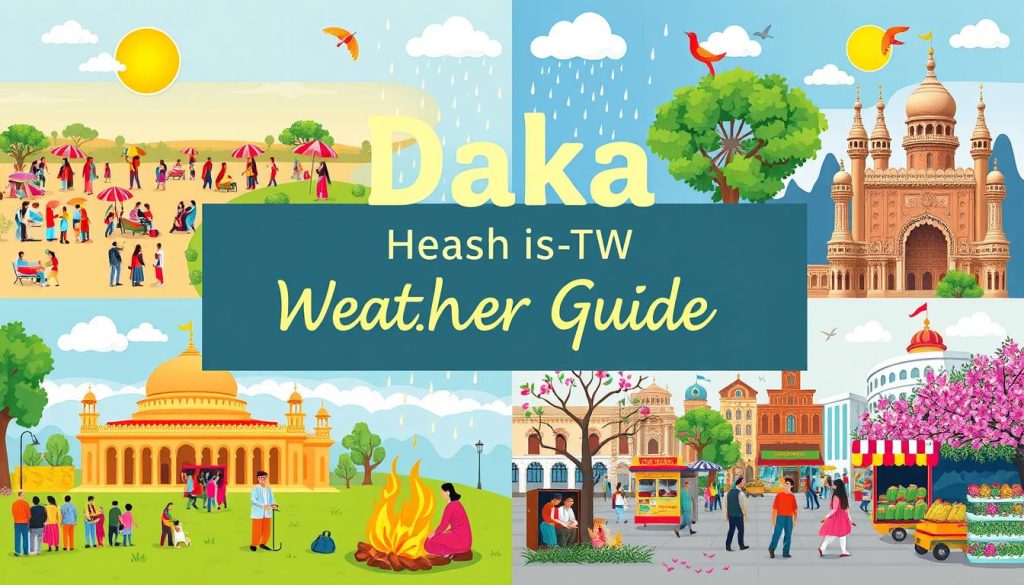
Dhaka Weather Guide for Travelers
Planning a trip to Dhaka? Knowing the city’s climate can make your trip better. The Dhaka weather guide gives you the lowdown on temperatures and rain all year. This info helps you pick the best time to visit, ensuring you enjoy the outdoors and explore comfortably.
Monthly Weather Chart Overview
| Month | Average Temperature (°C) | Average Precipitation (mm) | Average Humidity (%) |
|---|---|---|---|
| January | 19.6 | 7.5 | 69 |
| February | 22 | 14 | 65 |
| March | 26 | 29 | 55 |
| April | 30 | 65 | 60 |
| May | 31 | 280 | 73 |
| June | 29.7 | 375 | 79 |
| July | 29.5 | 350 | 78 |
| August | 29.6 | 300 | 80 |
| September | 28 | 200 | 75 |
| October | 27 | 90 | 70 |
| November | 25 | 20 | 50 |
| December | 25 | 5 | 60 |
Recommendations Based on Weather Patterns
Check the monthly weather chart for Dhaka before you travel. The best time to visit is from November to March. The weather is mild and less humid, great for outdoor fun. December is perfect for sightseeing with its comfortable weather.
If you love lush scenery, the monsoon months are for you. But, be ready for lots of rain. June to September see a lot of rain, with July being the wettest. It’s smart to pack wet weather gear if you plan to explore then.
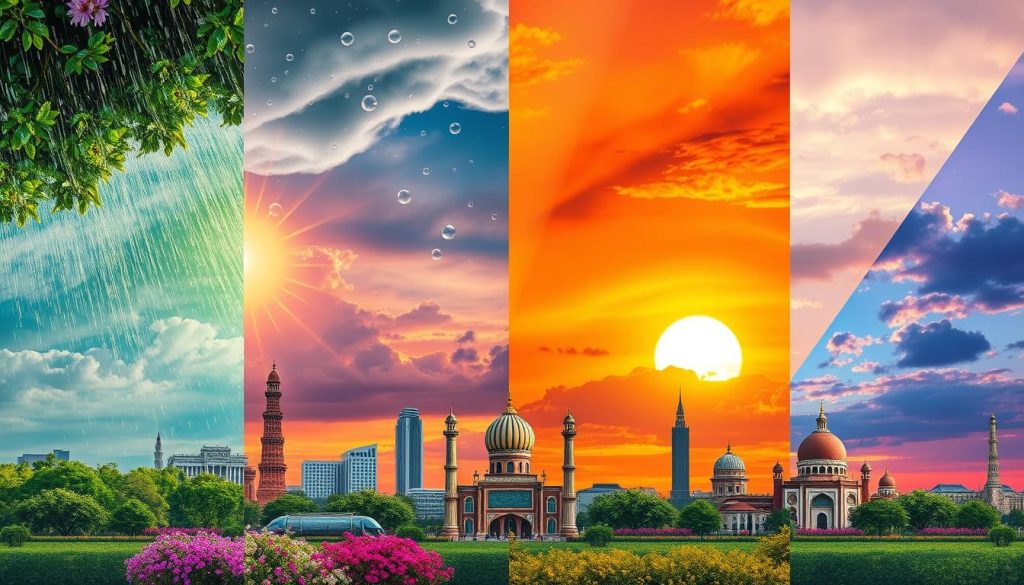
Ideal Time to Visit Dhaka for Outdoor Activities
Looking for adventure in Dhaka? Knowing when to visit is key. The winter months, from January to March, are best for wildlife watching. You can see unique species in the Sundarbans, a UNESCO site.
The weather is nice during this time. It makes exploring outdoors more fun.
Best Seasons for Wildlife Watching
The winter months are perfect for spotting wildlife. Here are some important facts:
| Month | Average Temperature (°C) | Ideal for Wildlife Watching |
|---|---|---|
| January | 12 – 25 | Yes |
| February | 13 – 28 | Yes |
| March | 16 – 33 | Yes |
River Cruises and Exploration
River cruises are also popular in winter. They offer a cool way to see Dhaka’s waterways. The weather is great, with clear skies and mild temperatures.
Don’t miss exploring tea gardens in Sylhet. They’re often overlooked but offer beautiful views in the mild climate.
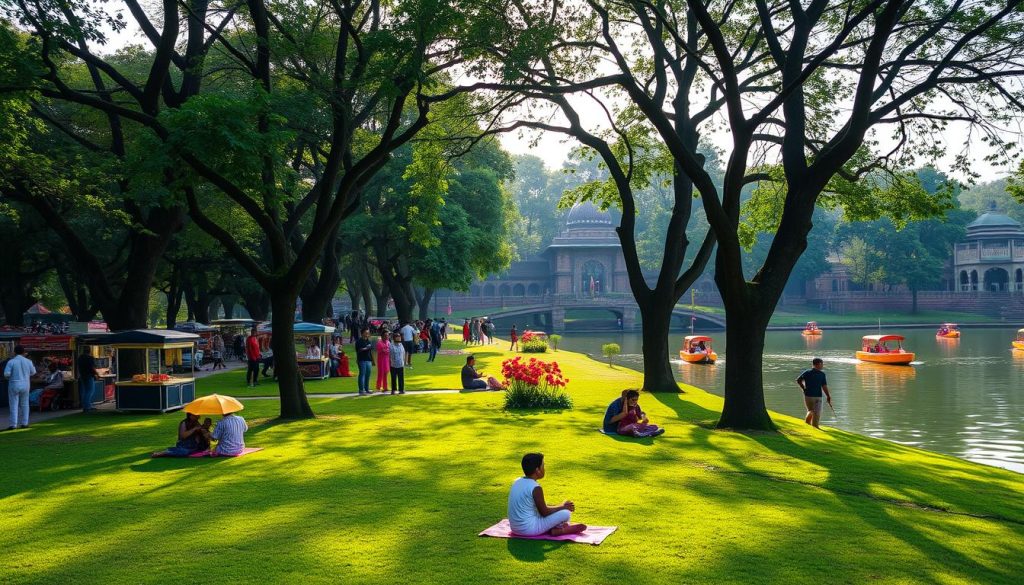
Popular Attractions During Different Seasons
Visiting Dhaka in the cooler months is a treat. You get to see the city’s rich history and culture. The winter weather is perfect for exploring famous landmarks and natural spots.
Mughal Architecture in Winter
Winter is the best time to see Dhaka’s Mughal architecture. Places like Lalbagh Fort and Ahsan Manzil show Bangladesh’s past. Walking here is nice because it’s cooler.
The calm of winter makes these sites even more beautiful. It’s a great time for photos and learning about history.
Beach Trips to Cox’s Bazar in Winter
Don’t miss Cox’s Bazar in winter. It has the world’s longest sandy beach. It’s a perfect place to relax or try water sports.
The cool air and ocean waves are refreshing. A winter visit to Cox’s Bazar is an experience you won’t forget.
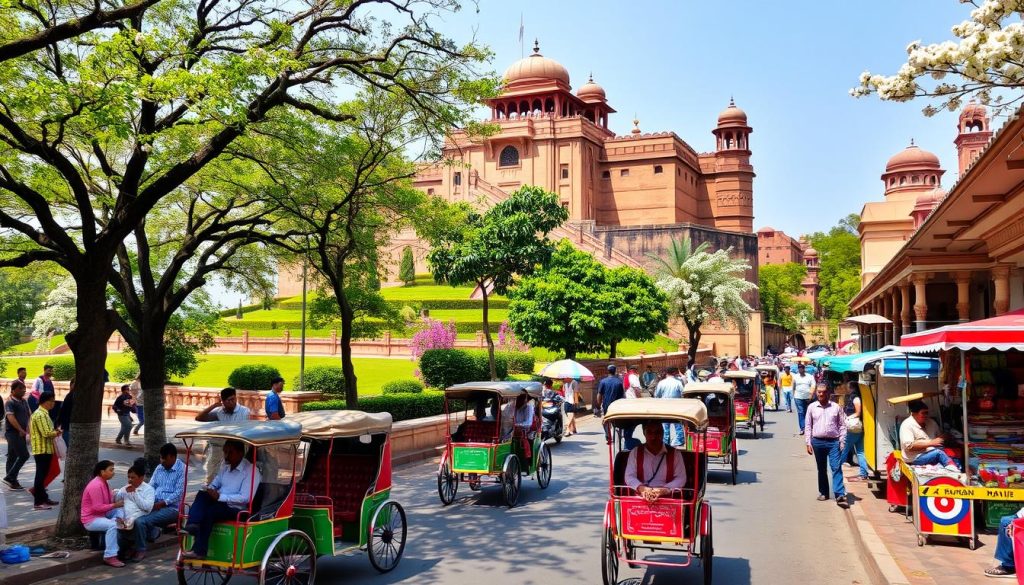
Planning Your Dhaka Vacation Timing
When planning your Dhaka vacation, think about what makes your trip better and greener. Stay in eco-friendly places and support local shops. This helps the environment and lets you see Dhaka like a local.
Learn about Dhaka’s culture and plan your visit around big events. This way, you’ll get to know the city’s lively spirit.
Considerations for Sustainable Travel
Traveling sustainably in Dhaka is key to keeping its culture and nature alive. Here are some tips:
- Stay in places that care about the planet, like those that reduce waste and use local stuff.
- Meet local artists and shop at markets to support traditional crafts and businesses.
- Use buses or bikes to get around. It’s good for the planet and lets you see the city up close.
- Join in on community events. It’s a great way to connect with people and help your travel spot.
Tips for First-Time Visitors
Here are some tips for first-timers in Dhaka:
- Learn about local customs and manners to be respectful.
- Watch out for traffic, as Dhaka gets really busy, even more so during rush hours.
- Make sure to include cultural events in your plans. It’s a great way to see Dhaka’s traditions.
- Explore local food. Street food in Dhaka is a must-try for a tasty adventure.

Conclusion
When thinking about the best time to visit Dhaka, consider what you like and the weather. The city has three seasons: hot and humid summer, rainy monsoon, and mild winter. The best time is from October to February, with nice weather and less humidity.
Spring and autumn offer unique experiences, like fewer people and cheaper places to stay. The monsoon season might seem less appealing because of the rain. But, it brings a beautiful, green landscape that some find very attractive.
The best time to visit Dhaka depends on what you want to do. Are you interested in festivals, wildlife, or exploring the city’s history? Planning well, being flexible, and packing right will help you enjoy your trip.