Discover Vientiane’s Exclusive Lao Cuisine Flavors
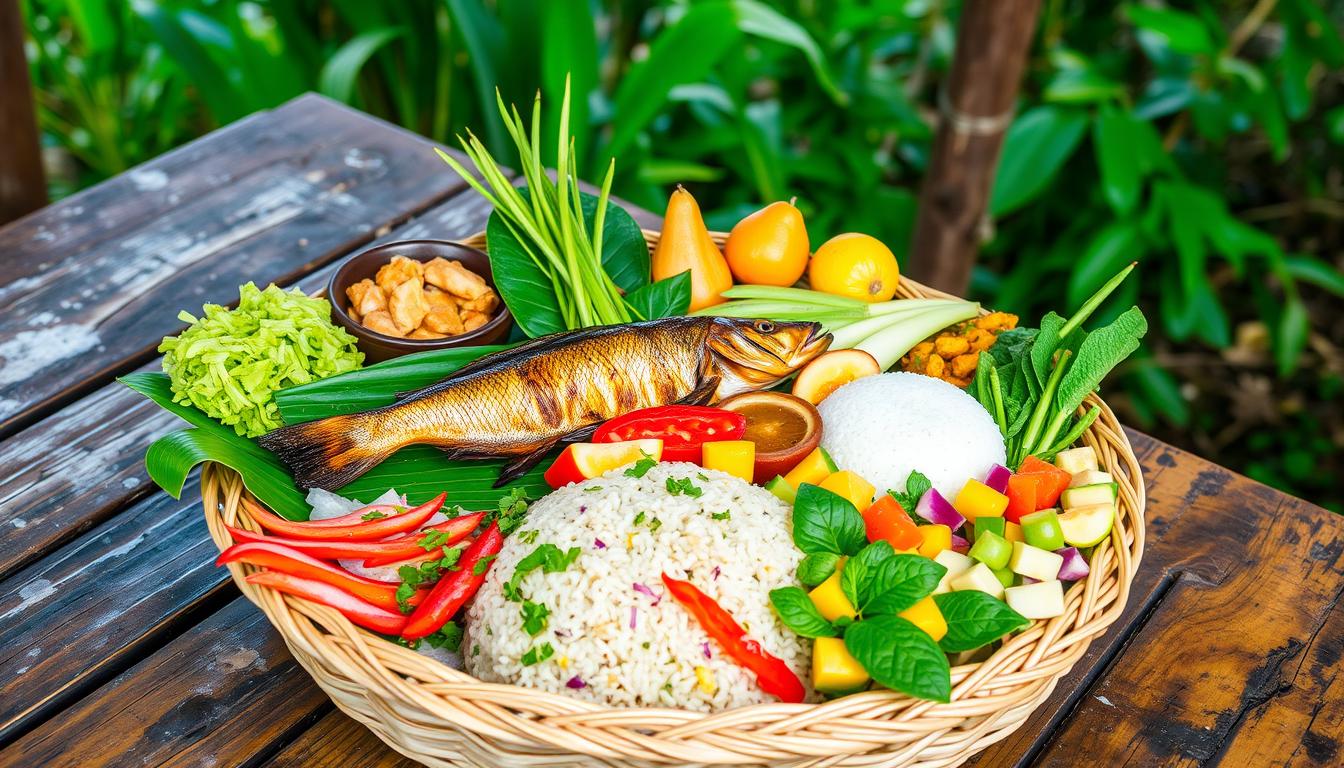
Ever wondered what makes a cuisine unique? In Vientiane, Laos’ capital, you’ll find a special culinary world. It mixes vibrant herbs and bold flavors, showing off the rich culture and traditions of Lao cuisine.
At the Khua Din Morning Market, open from 5 am, or the lively Ban Anou Night Market, you’ll find amazing Lao dishes. These dishes show Laos‘ love for fresh ingredients. Try Laab, sticky rice, or Mekong fish in coconut sauce, and each bite tells a story of Laos’ diverse culinary influences.
Exploring local eateries or street food will make you appreciate Lao cuisine more. Let’s dive into the heart of Lao cuisine. Every meal is a celebration of flavors that invite you to indulge and make unforgettable memories.
The Essence of Lao Cuisine and Its Influence
Lao cuisine is a mix of flavors and traditions. It shows how Laos’ unique identity is shaped by its food. Sticky rice is key, serving as more than just food; it connects people through meals.
Ingredients like galangal, lemongrass, and padaek are vital in Lao cooking. Fresh greens, vegetables, and herbs are often served plain. This contrasts with other Southeast Asian cuisines. Lao food focuses on bitter, herbal, and astringent tastes, making it unique.
French influence is seen in Lao food, with baguettes, pâté sandwiches, and coffee still enjoyed today. This blend of old and new makes Lao cuisine vibrant and diverse.
Laos’ rich biodiversity adds game, wild boar, and river fish to meals. Grilling, steaming, and stewing highlight the natural flavors. Lao cuisine celebrates the land, community, and traditions in every dish.
What Makes Lao Cuisine Unique in Vientiane?
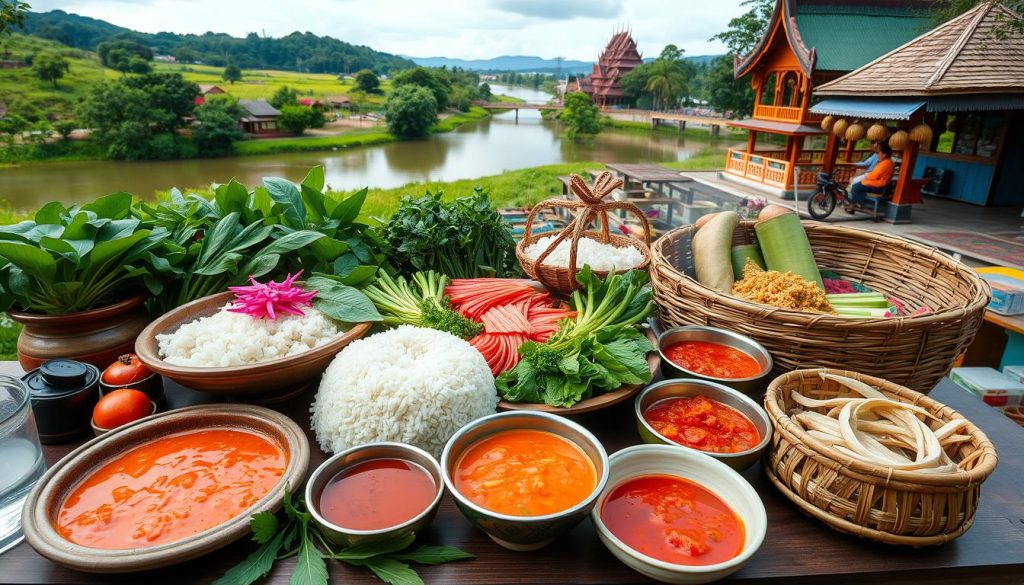
Vientiane is a treasure trove of Unique Lao cuisine. It highlights the use of fresh herbs and a variety of flavors. Each dish is a story of local culture and love for fresh ingredients.
Herbaceous and Flavorful Ingredients
Unique Lao cuisine shines with its focus on herbs. Lemongrass, galangal, and fresh herbs add depth to every dish. Grilling meats is common, seasoned with garlic, coriander root, and galangal.
Raw greens and fresh veggies add a refreshing crunch. This complements the bold flavors perfectly.
Regional Variations from Neighboring Countries
Regional flavors in Vientiane are influenced by nearby countries. This adds depth to the cuisine. While some dishes might remind you of Thai or Vietnamese food, Lao cuisine stands out.
It balances spicy and mild flavors well. Sticky rice is a staple, used as a base for many meals. Dishes like Larb show this balance with marinated meats and rich textures.
The variety of noodle dishes and sauces, like Jeow Bong and Pa Dek, highlight Vientiane’s culinary innovation. Yet, it always stays true to its roots.
Must-Try Dishes in Vientiane
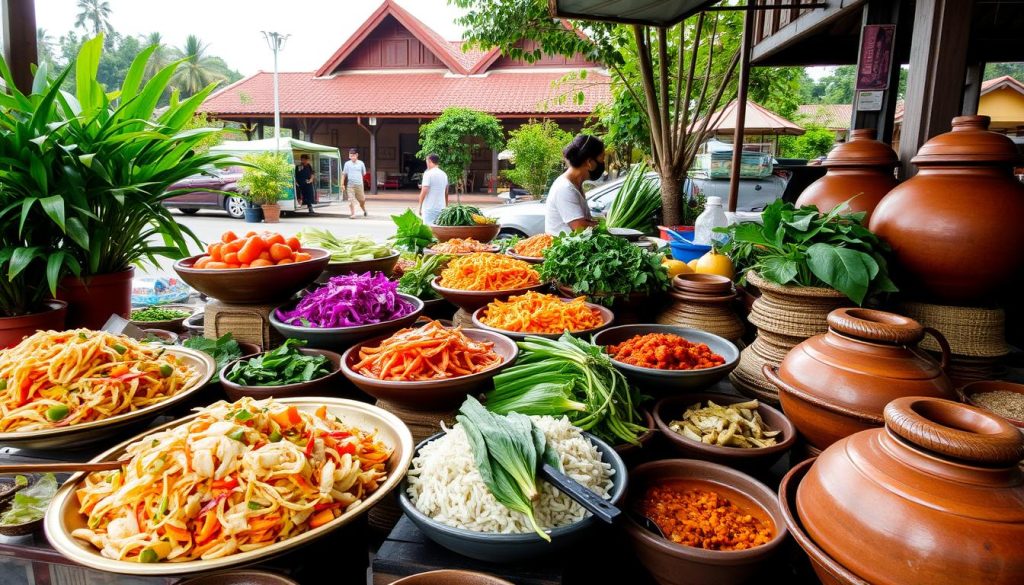
Exploring Vientiane’s food scene is a must. You’ll discover dishes that showcase the region’s rich flavors and unique ingredients. Fresh produce, herbs, and spices come together to create unforgettable meals.
Laab: The National Dish of Laos
Laab is Laos’s national dish. It’s a mix of minced meats like pork, chicken, or duck. Aromatic herbs and spices add to its flavor.
Each region has its own twist, but the core remains the same. This vibrant salad is dressed with lime juice and fish sauce. It’s served with sticky rice, a favorite at Laotian gatherings.
Sticky Rice: A Staple in Every Meal
Sticky rice is a key part of every meal in Vientiane. It’s preferred for its unique texture and taste. You’ll find variations like sticky brown rice and Khao Lam, cooked in a bamboo tube.
Sticky rice pairs well with grilled meats or fresh papaya salad. It’s a crucial part of the dining experience in Laos.
Mekong Fish in Coconut Sauce
Mekong fish in coconut sauce is a true taste of Laos. Fresh fish from the Mekong River is used. It’s cooked in rich coconut milk with local spices.
This dish is a must-try for anyone in Vientiane. The flavors are a testament to the river’s bounty.
Traditional Flavors in Vientiane
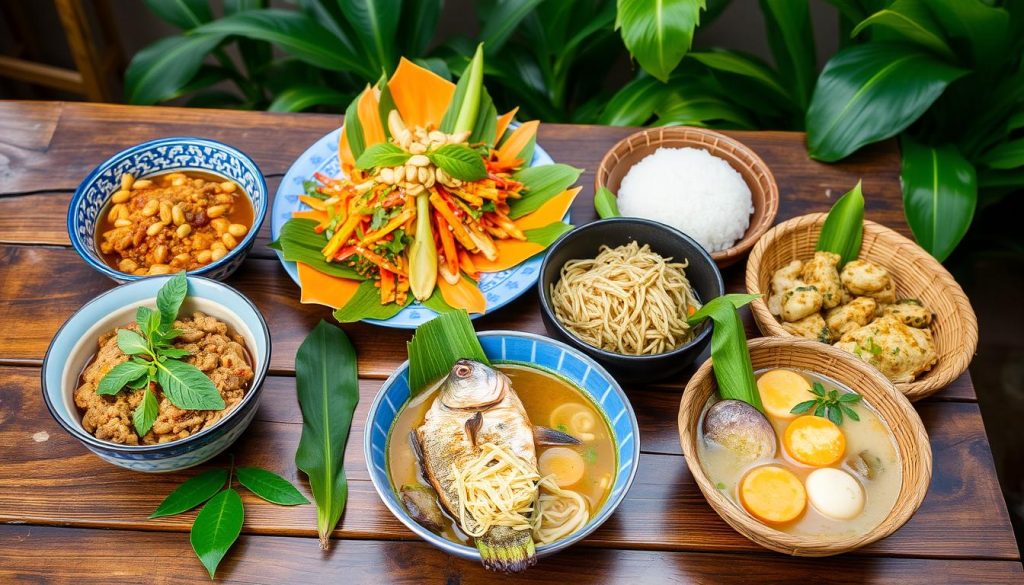
Exploring Vientiane’s traditional flavors introduces you to a world of bold spices and aromatic herbs. These dishes highlight the importance of fresh ingredients. They show how traditional Lao flavors can make your taste buds dance.
Visitors often love the mix of spicy herbs. They add a real touch to Lao cuisine.
Balancing Bold Spices and Aromatic Herbs
Lao cuisine is all about bold ingredients. Fresh bamboo shoots, ginger, and herbs come together in amazing dishes. The flavors often include:
- Galangal
- Lemongrass
- Garlic
- Cilantro
- Makrut lime leaf
This mix creates dishes that truly represent the region’s taste. The spicy parts are a hit with those who love strong flavors. Sauces like paa daek, made from fermented fish paste, add a rich taste.
Popular Street Food Experiences
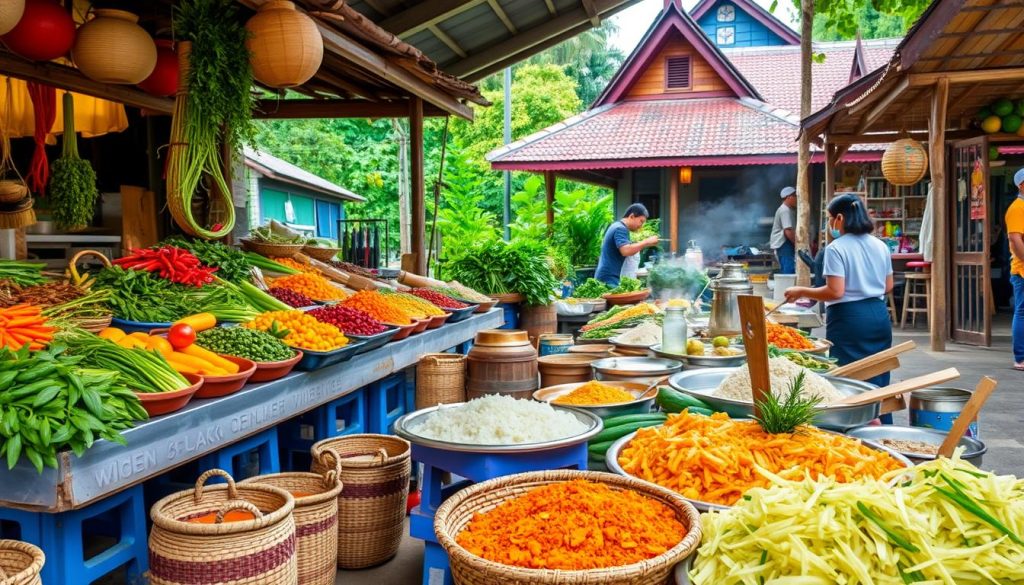
Street food in Vientiane is a big part of the city’s food scene. Markets like Khua Din and Ban Anou offer a wide range of food stalls. Here, you can try dishes that show off traditional Lao flavors. Some must-try items include:
- Bright-red curries
- Grilled river fish and freshwater prawns
- Lao sausage (Sai Oua)
- Rice noodles (Khao Piak Sen)
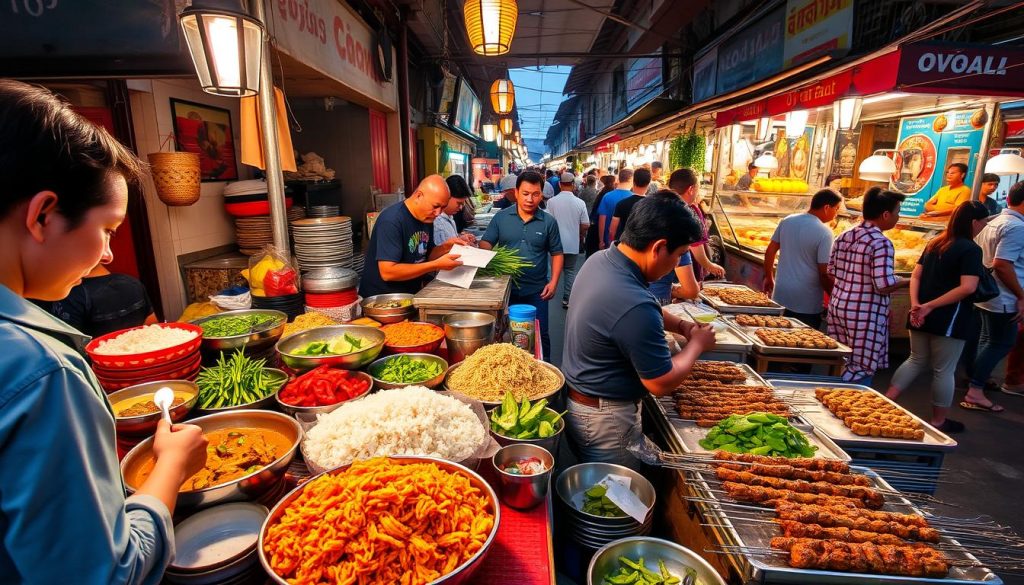
These dishes are part of a shared dining experience. They show the social side of Lao culture. As you try street food in Vientiane, you’ll enjoy flavors and smells that fill your senses. They connect you to the local way of life.
Exploring Vientiane’s Culinary Scene
The culinary scene in Vientiane is a mix of old and new flavors. It shows the wide range of Lao cuisine. Visitors can enjoy tasty dishes in Vientiane restaurants and lively local markets. Each dish tells a story of the capital’s rich culture.
Restaurants and Must-Visit Eateries
Vientiane has many places to eat, each serving iconic dishes. Try laap, made with pork, beef, or chicken, and see why it’s loved by all. For a special snack, try a Khao Jee sandwich, a Lao baguette with pâté and grilled meat, found at street vendors.
Local Markets and Food Stalls
Explore Vientiane’s food culture at local markets. The Khua Din Morning Market and Ban Anou Night Market are great places. Here, you can find Khao Niew sticky rice, Tam Mak Houng (papaya salad), and Khao Soy, a noodle dish unlike Vietnamese Pho. These markets have fresh ingredients and traditional meals, letting you enjoy the region’s rich flavors.
Authentic Lao Recipes You Can Try
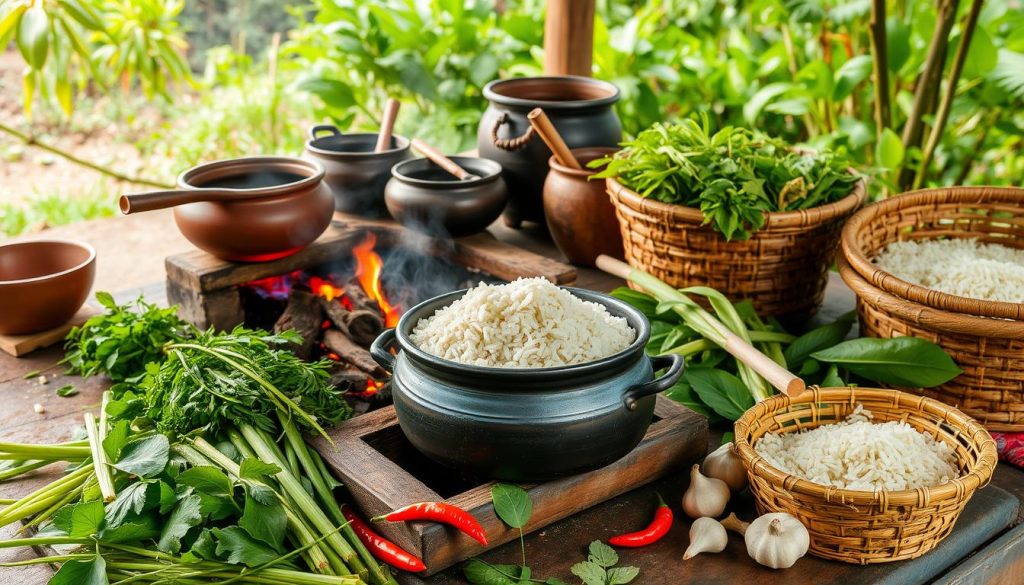
To bring a taste of Vientiane to your kitchen, try authentic Lao recipes. Start with Laab, Laos’ national dish. It’s a fresh salad with raw meat or fish, herbs, and roasted rice powder. It’s a burst of flavor and aroma.
Sticky rice is a must in Lao cooking. It’s perfect with many dishes and has a unique taste. Jaew, a spicy chili dip, adds excitement to your meals. It’s made with fresh ingredients like roasted tomatoes or herbs.
For more variety, try Thum mak hoong (papaya salad) and Gaeng nor mai (bamboo stew). Making these dishes at home lets you enjoy authentic flavors. You’ll also learn about Laos’ rich culinary traditions.
| Dish | Main Ingredients | Preparation Style |
|---|---|---|
| Laab | Raw meat or fish, lime juice, herbs, rice powder | Cured and mixed, served fresh |
| Sticky Rice | Glutinous rice | Steamed using a traditional Lao sticky rice cooker |
| Thum mak hoong | Green papaya, lime, chili, fish sauce | Shredded and mixed, served cold |
| Jaew | Roasted tomatoes, chili, herbs | Blended for dipping |
| Gaeng nor mai | Bamboo shoots, meat, herbs | Stewed for rich flavor |
The Role of Sticky Rice in Lao Food Culture
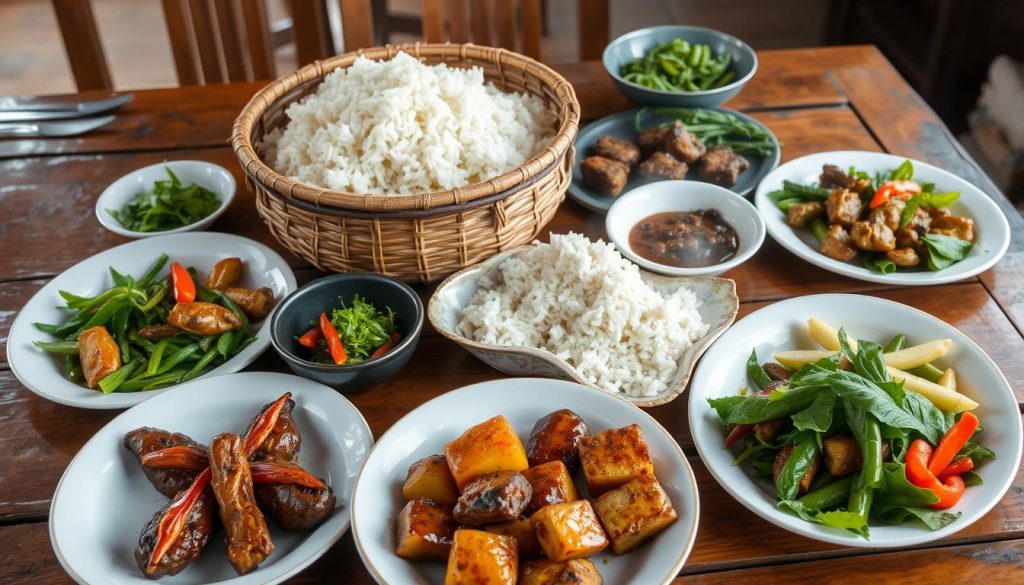
Sticky rice, or khao neow, is key in Lao food culture. It’s not just food; it’s a symbol of community and tradition. The way sticky rice is made shows the heart of Laotian meals.
How Sticky Rice is Traditionally Prepared
Sticky rice is very important in Lao culture. People in Laos eat a lot of it, over 345 pounds a year. It’s special because it doesn’t have amylose, which makes it sticky.
This stickiness is perfect for sharing food. It brings people together, making meals a time for bonding. Making sticky rice takes hours, using bamboo baskets called huad. It’s a slow, careful process.
Eating with Hands: The Lao Way
In Lao culture, eating with your hands is common, even more so with sticky rice. It makes meals more personal and encourages sharing. Sticky rice is not just food; it’s a way to connect with others.
It’s also important in religious events. Even with modern changes, sticky rice keeps its place in Lao traditions. It’s a symbol of community and connection during meals and celebrations.
| Characteristic | Details |
|---|---|
| Annual Consumption | 345 pounds per person in Laos |
| Preparation Method | Steamed in bamboo baskets (huad) |
| Texture | Congeals easily, forms fist-sized pieces |
| Cultural Importance | Essential in communal and religious gatherings |
| Urban Influence | Changing preferences among younger generations |
Discovering Lao Chili Dips: Jaew
Jaew is a key part of Lao cuisine, showing off the vibrant flavors of Laos. This chili dip is known for its bold taste and versatility. It’s great as a condiment or on its own, offering a taste of Laos’ rich food history.
Common Ingredients and Flavor Profiles
Lao chili dips use fresh, local ingredients for their unique taste. They often include:
- Chili peppers, commonly sourced from markets such as those in Luang Prabang
- Fish sauce, bringing an essential umami taste
- Palm sugar, introducing a subtle sweetness for balance
- Lime juice for a refreshing acidity
- Grilled eggplant, in jaew mak khua, which offers a smoky depth
Together, these ingredients create complex flavors in Lao cuisine. They mix spicy, sweet, and savory notes that make each dish better.
| Ingredient | Role in Flavor |
|---|---|
| Chili Peppers | Provides heat and spice |
| Fish Sauce | Adds umami and depth |
| Palm Sugar | Balances spiciness with sweetness |
| Lime Juice | Brightens and enhances flavors |
| Grilled Eggplant | Introduces smokiness |
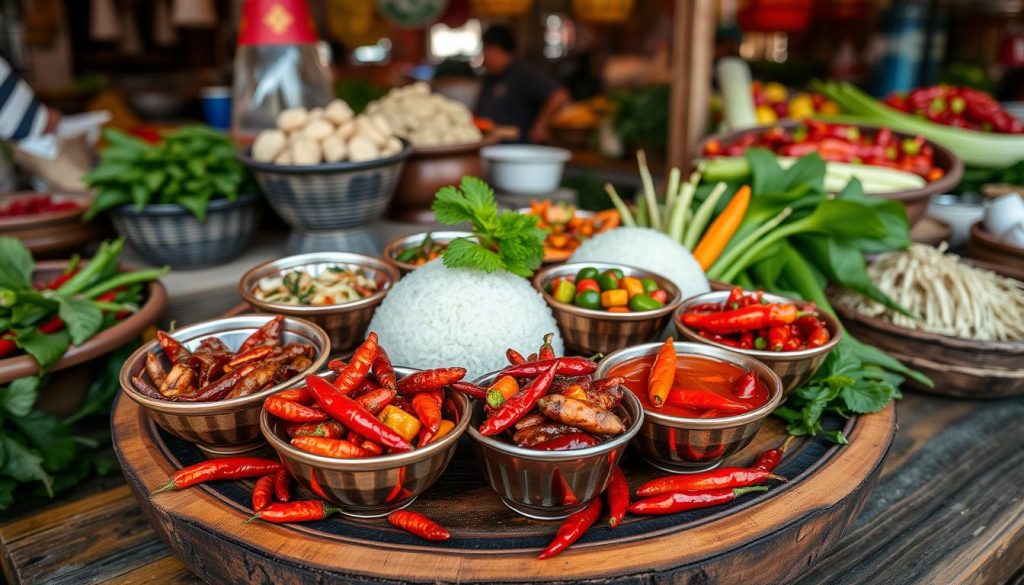
Jaew goes well with many dishes, like barbecued meats and fresh veggies. It shows the important cooking ways of Laos. With every bite, you get to enjoy the bold and balanced flavors of Lao cuisine.
Cultural Significance of Lao Cuisine
Lao cuisine is a big part of the nation’s culture. It’s not just food; it shows the traditions and history of Laos. Every dish tells a story about the Lao people’s values and way of life.
Food lets you see into the community’s practices and how people interact. It also shows the importance of using fresh, local ingredients.
Lao Food as a Window into Culture
Sharing meals brings people together, showing the close-knit nature of Lao society. Sticky rice is a staple, often eaten with dishes like paa daek (fermented fish paste) and lots of vegetables. Eating is a time to bond and show hospitality, highlighting the warmth of Lao culture.
What makes Lao food so special includes:
- Communal Dining: Meals are a time for family and friends to come together, creating a sense of togetherness.
- Elaborate Celebrations: Big events like weddings are celebrated with lots of food, showing the spirit of generosity.
- Ingredient Diversity: Local markets offer a wide range of fruits and vegetables, showing the creativity in Lao cooking.
Lao cuisine is a reflection of the country’s traditions and customs. It’s a way to express culture. By exploring these culinary traditions, you learn more about the Lao way of life and how communities are connected.
Vientiane: A Growing Destination for Food Lovers
Food lovers are finding unique flavors in Vientiane. The city’s street food and restaurants show off Lao cuisine’s rich history. This cuisine is shaped by Indian, Chinese, and French cooking styles.
Increasing Popularity of Lao Cuisine in the U.S.
New Lao restaurants are popping up in cities like Washington, D.C., and San Francisco. People are drawn to dishes like laab and tam mak houng. These dishes offer bold flavors and fresh ingredients.
Vientiane offers a wide range of dining experiences. You can find vegetarian and vegan options here. Try fermented foods like padaek and local drinks like Beerlao and Lao Lao for a true taste of Laos.
Visitors can take cooking classes or go on tuk-tuk food tours. These activities let you dive into Vientiane’s lively food scene. Enjoy grilled meats on the street or dine at top spots like Kualao Restaurant or 3 Merchants. Each experience makes Vientiane a top food destination.
Travel Tips for Food Lovers in Vientiane
For those who love food, exploring Vientiane’s culinary scene is a must. Knowing the best times and places to go can make your trip even better. Food travel tips often suggest visiting local markets during peak hours to find amazing food.
Best Times to Visit Local Markets
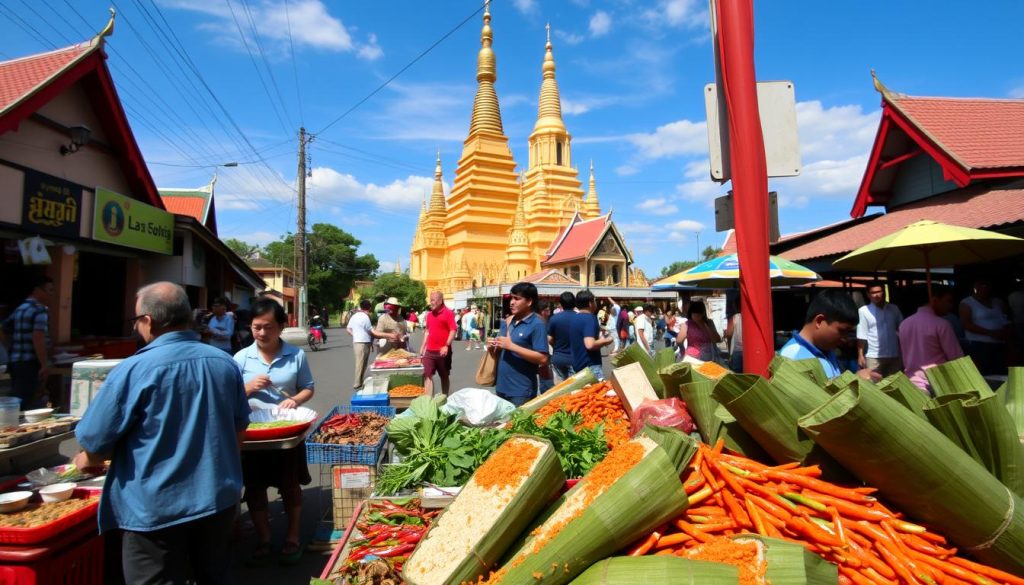
Start your day at Talat Sao Morning Market early for the freshest ingredients. The market is alive with local vendors, offering a chance to try traditional dishes. For a lively evening, head to Ban Anou Night Market for a variety of street food.
The cooler months from November to February are the best time to visit. The weather is perfect for walking around these bustling markets.
How to Navigate Street Food Safely
Choose busy stalls for fresher food when eating street food in Vientiane. Carry small amounts of Lao Kip (LAK) to buy food easily. Tuk-tuks and taxis are easy to find, helping you get to your favorite food spots.
With some local tips, you can enjoy Vientiane’s street food scene with confidence.
Conclusion
Exploring Vientiane’s food scene is a real treat. It lets you dive into the lively world of Laotian cuisine. You’ll find sticky rice, or “Khao Niao,” everywhere. It’s a key part of every meal and shows the culture’s heart.
The local markets and small eateries offer amazing dishes. Each one combines flavors in a way that shows off Laos’ special cooking style. You’ll taste the true essence of Laotian food.
Don’t miss out on trying Laab, Tam Mak Hoong, and Mok Pa. They show off the skill of Lao cooking. Places like Makphet and The Secret Kitchen are famous for their authentic dishes. Every meal you have in Vientiane is a story of Laotian traditions.
Trying Lao cuisine in Vientiane is a way to connect with its culture. Every bite you take creates memories that link you to this beautiful place. Whether it’s street food or a cozy restaurant, each meal adds to your adventure in Laos.