Best Time of Year to Visit Thimphu Unveiled
Ever thought about the best time to visit Thimphu? This beautiful capital of Bhutan has something special in every season. But, knowing when to go can make your trip even better. You’ll see vibrant festivals and stunning landscapes that create lasting memories.
Knowing the weather and cultural events is key to enjoying Thimphu. This article will show you the unique qualities of each season. It will help you find the perfect time to see nature and culture come together. Are you ready to discover the best time to visit Thimphu?
Understanding Thimphu’s Climate Throughout the Year
Thimphu’s climate changes with the seasons, making it great to visit any time. Its subtropical weather means you can enjoy the city in four different seasons. Knowing the Thimphu weather guide helps make your trip better.
In spring (March to May), days are mild at 17°C, and nights cool to 7°C. The area sees about 21 clear days each month. This makes spring perfect for outdoor fun and exploring culture. The wind is gentle at 13 km/h, and it rains about 57mm each month.
Summer brings warmer days, with temperatures around 23.5°C during the day and 14°C at night. Rainfall increases, reaching 120mm monthly. Yet, there are still about 20 clear days each month. These Thimphu climate tips are handy for summer trips.
Autumn (September to November) brings stable temperatures, with day averages of 23.5°C and nights at 14°C. It rains less than in summer, with about 42mm monthly. Autumn is great for seeing local festivals and enjoying the scenery.
Winter brings colder days, averaging 10°C and nights at 2°C. The city has about 26 clear days a month. Late December to mid-January is best for seeing Thimphu in snow. Winter is also good for photography, with just 21mm of rain monthly.

The Weather Patterns in Thimphu: A Monthly Breakdown
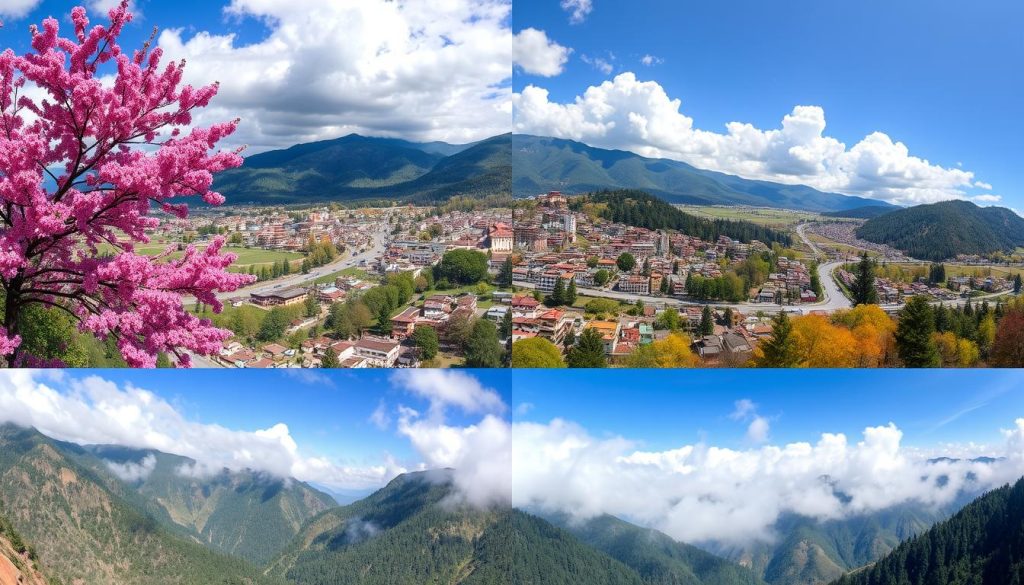
Understanding Thimphu’s weather can make your trip better. Each month, Thimphu offers different weather, affecting what you can do and see.
| Month | Temperature (°C) | Rainfall (mm) | Humidity (%) | Notes |
|---|---|---|---|---|
| January | -5 to 10 | 20 | 40 | Coldest month, ideal for cultural experiences |
| February | 0 to 12 | 15 | 35 | Clear skies, hosts Punakha Dromche festival |
| March | 5 to 14 | 25 | 45 | Rhododendrons bloom, Paro Tsechu festival |
| April | 10 to 18 | 35 | 50 | Pleasant temperatures, great for trekking |
| May | 15 to 22 | 40 | 60 | Warm weather, vibrant landscapes |
| June | 17 to 23 | 150 | 80 | Onset of monsoon season, high humidity |
| July | 16 to 21 | 200 | 90 | Peak of monsoon, heavy rains |
| August | 15 to 20 | 180 | 85 | Gradual decrease in rainfall |
| September | 14 to 19 | 80 | 70 | Clear skies, start of autumn |
| October | 10 to 18 | 30 | 60 | Excellent visibility, Thimphu Tsechu festival |
| November | 3 to 15 | 10 | 45 | Crisp air, great for trekking |
| December | -2 to 10 | 25 | 40 | Cold, clear skies, great views |
Each month in Thimphu has its own weather, so plan your trip wisely. Whether you love spring or autumn, choose the best time for you.
What is the best time of year to visit Thimphu?
Planning your trip to Thimphu? Knowing the best times to visit can make your trip better. Spring and autumn are the top seasons, with spring from March to May and autumn from September to November. Each season brings its own weather and cultural events, making them great for tourists.
Ideal Seasons for Tourism
Spring in Thimphu is lovely, with temperatures from 4°C to 23°C. You’ll see flowers blooming and enjoy the weather for outdoor fun. Rainfall is moderate, with sunny days and cool showers.
Autumn has temperatures from 4°C to 20°C and less rain. It’s a great time for the Thimphu Tshechu festival, adding to the city’s culture.
Considerations for Planning Your Trip
Keep in mind the busy times for tourists. Expect more people during festivals and holidays, mainly in spring and autumn. Book your stay early to get the best spots.
Each season has its charm, whether you prefer autumn’s cool mornings or spring’s greenery. Knowing the weather and events will help plan your trip.
| Season | Average Temperature (°C) | Rainfall (mm) | Key Events |
|---|---|---|---|
| Spring (March-May) | 4 to 23 | 38 – 90 | Thimphu Tshechu |
| Summer (June-August) | 15 to 28 | 188 (July) | — |
| Autumn (September-November) | 4 to 20 | 117 (September) | Thimphu Tshechu |
| Winter (December-February) | -1 to 15 | — | — |

Spring in Thimphu: March to May
Spring turns Thimphu into a colorful world with flowers blooming and clear skies. The weather is nice, ranging from 14.5°C to 26.2°C. This makes it perfect for exploring outside.
Thimphu’s high altitude and low humidity add to the comfort. It’s a great time for Thimphu sightseeing timing.
Weather Conditions
Spring in Thimphu means little rain, from 38-90mm. It’s a big change from the summer rains. With 2,500 hours of sunshine in May, it’s great for outdoor fun.
The temperatures are just right for hiking and cycling. You can enjoy the beautiful views around you.
Festivals and Events During Spring
Spring is also full of cultural events. The Talo Tshechu is a highlight, with colorful performances and local traditions. It’s a chance to see Bhutan’s rich culture up close.
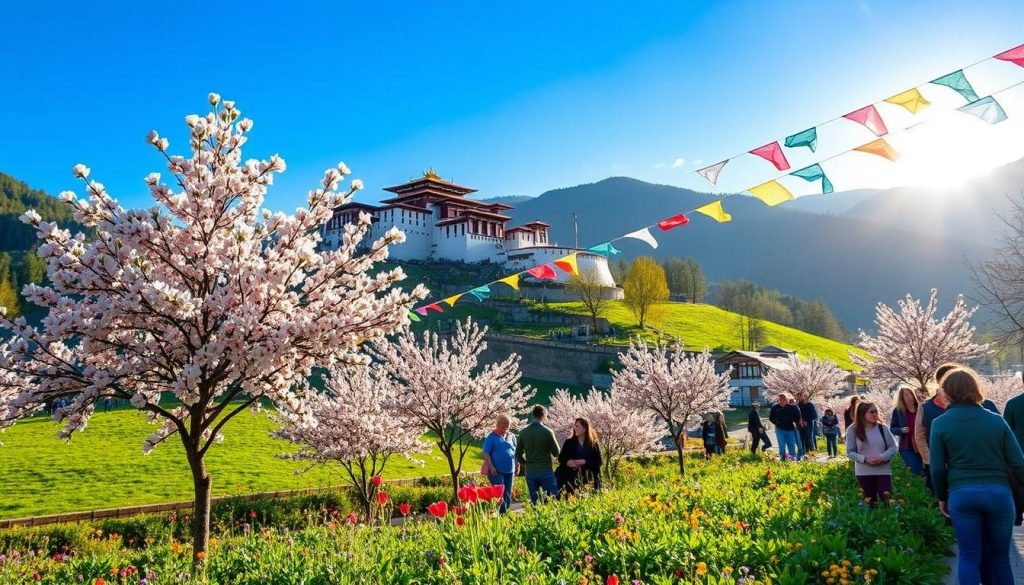
Spring is perfect for Thimphu sightseeing timing. The weather is nice, and there are many events to enjoy. It’s a season full of memorable moments.
| Month | Average Temperature (°C) | Rainfall (mm) | Sunshine Hours |
|---|---|---|---|
| March | 6-18 | 38 | 200 |
| April | 8-22 | 60 | 220 |
| May | 12-26 | 90 | 2500 |
Summer Season: June to August
Visiting Thimphu in summer can be both challenging and rewarding. From June to August, the monsoon season brings high humidity and heavy rain. Temperatures usually range from 14°C to 30°C.
This weather greatly affects travel plans and outdoor activities. It’s very important to check a Thimphu weather guide before you go.
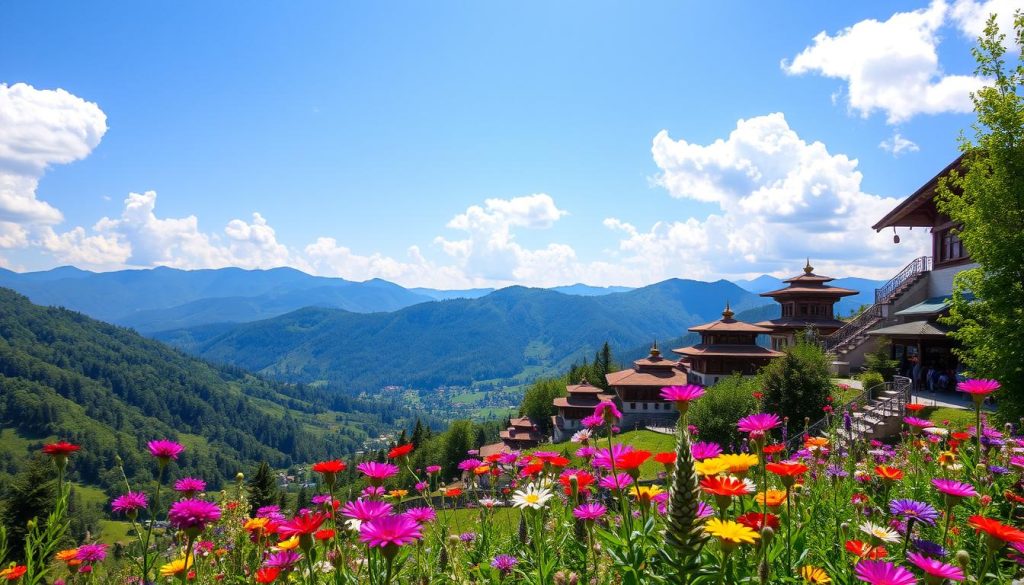
While rain might make trekking hard, summer in Thimphu is special. The Haa Summer Festival in June lets you dive into Bhutan’s nomadic traditions. You can try yak riding, watch folk dances, and enjoy local food.
When planning your trip in summer, keep these tips in mind:
- Pack rain gear to stay dry.
- Look for weather-proof places to stay.
- Plan indoor activities or events with cultural shows.
Summer in Thimphu has fewer tourists than spring and autumn. This means you can find cheaper places to stay and travel. If you’re okay with the rain and like fewer people around, summer can still be great.
Autumn in Thimphu: September to November
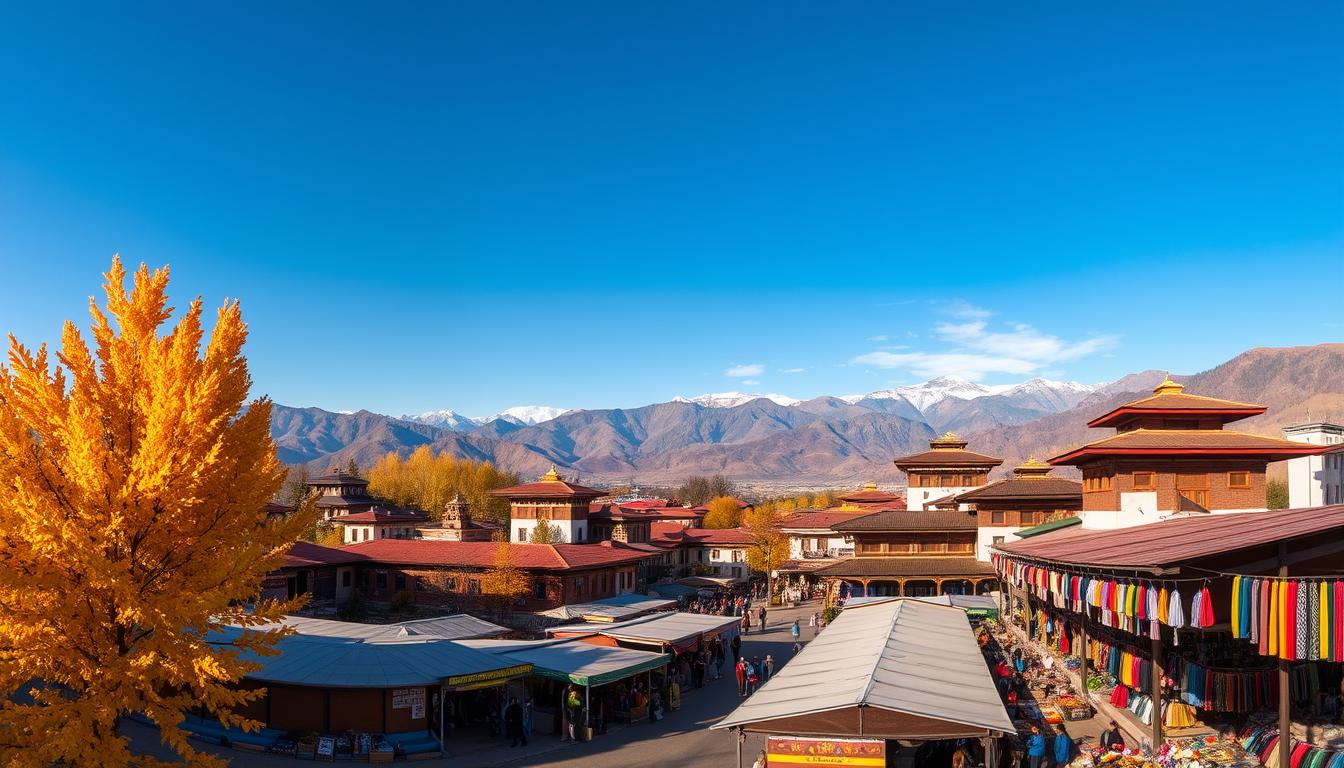
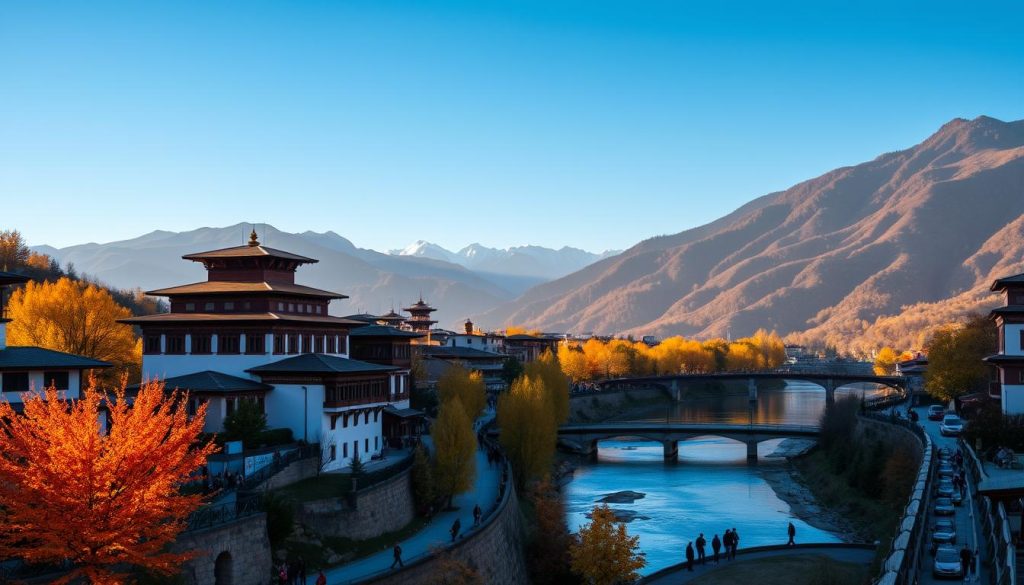
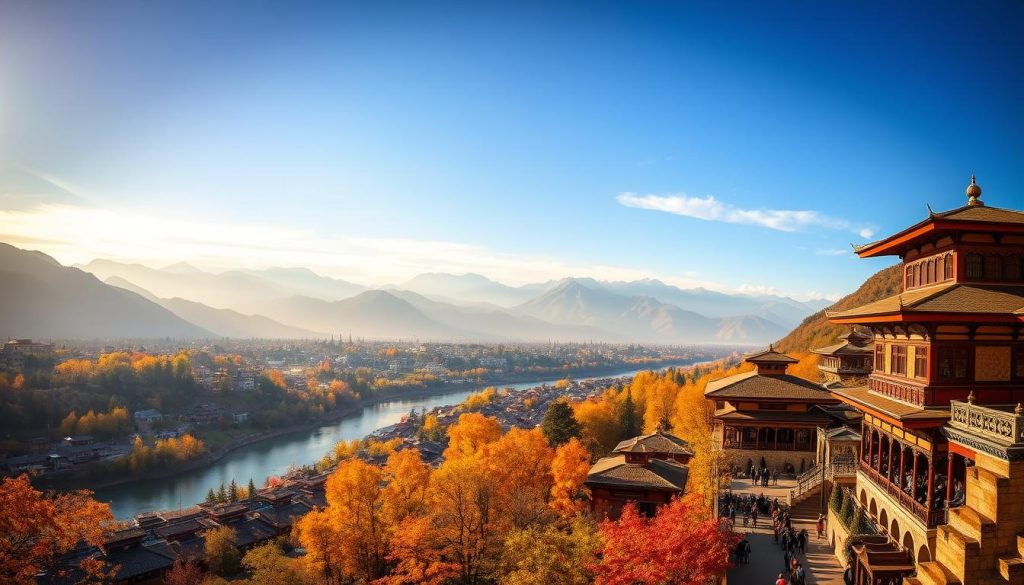
Autumn turns Thimphu into a beautiful place, drawing tourists worldwide. This season, from September to November, is the peak for Thimphu tourism. Visitors enjoy nice weather, lively festivals, and stunning views.
Peak Tourism Month: October
October is the best month for travelers. The sky is clear, and the days are mild, perfect for outdoor fun. Many go trekking and dive into Bhutan’s culture through festivals like the Thimphu Tshechu.
This festival shows off Bhutan’s vibrant culture with colorful dances and rituals. It draws tourists in with its energy and tradition.
Weather and Sightseeing Recommendations
The autumn weather is mostly good, with daytime highs around 20.0°C (68°F) in Thimphu. Nights can get chilly, dropping to about 7.1°C (45°F). It’s smart to wear layers to stay comfortable.
- Long skirts or pants
- Long sleeves and higher necklines
- Warm light clothing that can be layered
- A sweater or light jacket for cooler evenings
Remember to dress modestly, as it’s important in religious sites. Traveling now means you can trek and enjoy cultural festivals. Be ready for temperature changes, making your trip to Thimphu unforgettable.
| Region | Average Day Temperature (°C) | Average Night Temperature (°C) |
|---|---|---|
| Thimphu | 20.0 | 7.1 |
| Paro | 17.6 | 4.6 |
| Punakha | 24.4 | 11.9 |
| Wangdue | 26.2 | 12.9 |
| Trongsa | 20.1 | 6.6 |
| Bumthang | 18.7 | 3.9 |
| Mongar | 22.8 | 14.0 |
| Trashigang | 28.3 | 17.0 |
Winter Months: December to February
The winter in Thimphu, from December to February, is quite chilly. Temperatures range from -5°C to 10°C. The city is quiet, with fewer people around. This makes it a great time to explore.
The Himalayas offer breathtaking views during this time. They create a stunning backdrop for your winter adventures.
Don’t miss the Black-Necked Crane festival and the Punakha Tshechu. These events show off Bhutan’s rich culture. They make your trip unforgettable.
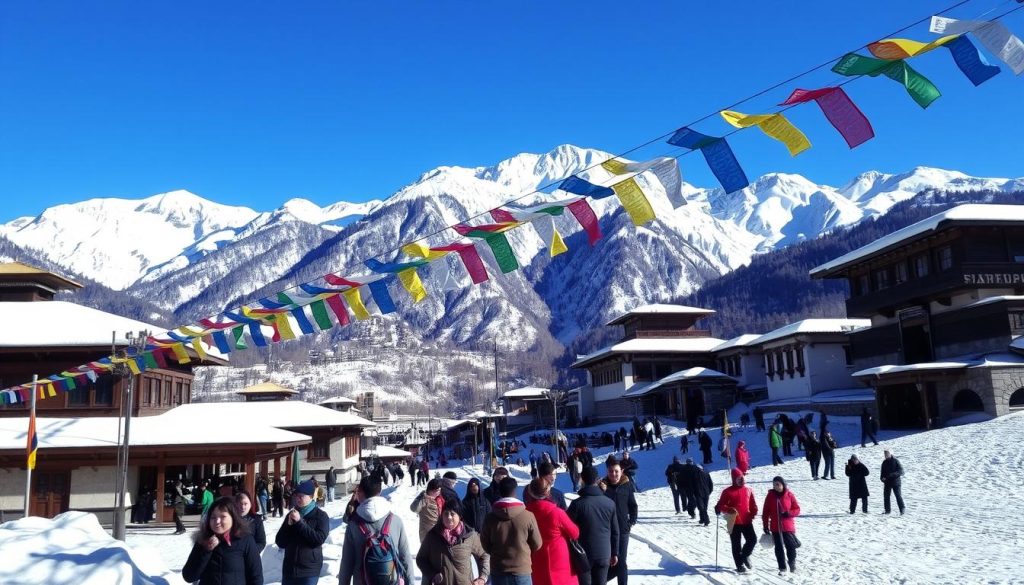
Though it’s cold, winter in Thimphu is beautiful. You can find cheaper places to stay, which is a plus.
For tips on the Thimphu climate, remember to dress warmly. The winter scenery is amazing but can be cold. Here’s a quick guide to the winter weather:
| Month | Average Temperature (°C) | What to Expect |
|---|---|---|
| December | -3 to 10 | Cold with potential snowfall |
| January | -6 to 8 | Coldest month, heavy snow in high areas |
| February | -5 to 10 | Gradual warming, clear skies |
Winter in Thimphu is peaceful and authentic. With fewer tourists and special events, it’s a hidden treasure for your trip.
Thimphu’s Peak Tourist Season
The peak tourist season in Thimphu is from September to November. It draws visitors who want to see the vibrant culture and beautiful landscapes. The weather is mild, with temperatures between 12 to 20 degrees Celsius.
Clear skies and stunning mountain views make it perfect for trekking and sightseeing. This is the best time to explore Thimphu.
This season also includes the Thimphu Tshechu celebrations. It’s a major event in the local culture. Many travelers come to see this festival, which features traditional dance and music.
About 60% of tourists visit Bhutan to see festivals. Planning your trip around these events can make your experience unforgettable.
There are other festivals throughout the year. For example:
- Paro Tshechu is held in spring at Paro Fortress and is very popular.
- The Punakha Festival – Drubchen is known for its colorful displays.
- April to May sees the Ura Yakchoe festival with captivating mask dances.
- In July, the Kurjey Tshechu takes place in the Bumthang district.
- The Haa Summer Festival offers a deep dive into the culture of nomadic herders.
When planning your trip, book your accommodations and transportation early. The high number of tourists can cause prices to rise and availability to be limited, even more so during festivals. Booking ahead ensures a smooth visit and lets you enjoy all that Thimphu has to offer.
Thimphu Travel Recommendations: Making the Most of Your Visit
When planning your trip to Thimphu, think about what season you’ll visit. Each season in Bhutan offers special chances to explore and learn about local culture. Here are some activities for each season, along with key Thimphu travel recommendations.
Activities to Consider by Season
- Spring (March to May):
- Go on scenic hikes to see the flowers and enjoy the weather.
- Join in cultural festivals like the Chorten Kora festival.
- Summer (June to August):
- Visit temples and enjoy indoor activities because it rains a lot.
- Look for deals on places to stay since prices are lower.
- Autumn (September to November):
- See vibrant festivals, like the famous Thimphu Tshechu.
- Go birdwatching as many species migrate, mostly in November.
- Winter (December to February):
- Explore the lower valleys of Thimphu, Paro, and Punakha where it snows less.
- Visit when the weather is clear for amazing views and fewer tourists.
Think about the season for your activities when planning your visit. Spring and fall are the best times for exploring because of the weather. Make sure to pack right, like warm clothes for winter. Booking early in peak months like October is a good idea to get your spot.
Conclusion
When thinking about the best time to visit Thimphu, each season has its own charm. Spring, from March to May, is great for bird watching in Bhutan’s forests. The weather is mild, making it perfect for enjoying nature.
Summer, from June to August, is less crowded, ideal for those who want to explore without the crowds. Though it rains a lot, the scenery is lush and cool. Autumn, from September to November, is busy with festivals like Thimphu Tshechu.
Winter, from December to February, brings out Bhutan’s snowy beauty. Temperatures are cool, making it great for seeing the snow. Knowing the seasons helps plan your trip to Thimphu, ensuring a memorable experience.