Discover Wildlife in Chitwan National Park
Ever wondered about seeing the world’s most hidden creatures in their home? Chitwan National Park, at the Himalayas’ feet, offers a unique chance to see wildlife up close. It covers 932 square kilometers, a perfect spot for wildlife lovers to see amazing animals.
Being a UNESCO World Heritage Site, Chitwan is not just beautiful but also a safe home for endangered animals. You’ll see incredible plants and animals in this lively area.
Introduction to Chitwan National Park
Chitwan National Park is Nepal’s first national park, created in 1973. It’s a stunning area filled with wildlife, part of the Tiger Conservation Unit. It’s about 160 kilometers from Kathmandu, with roads that show off the Himalayas.
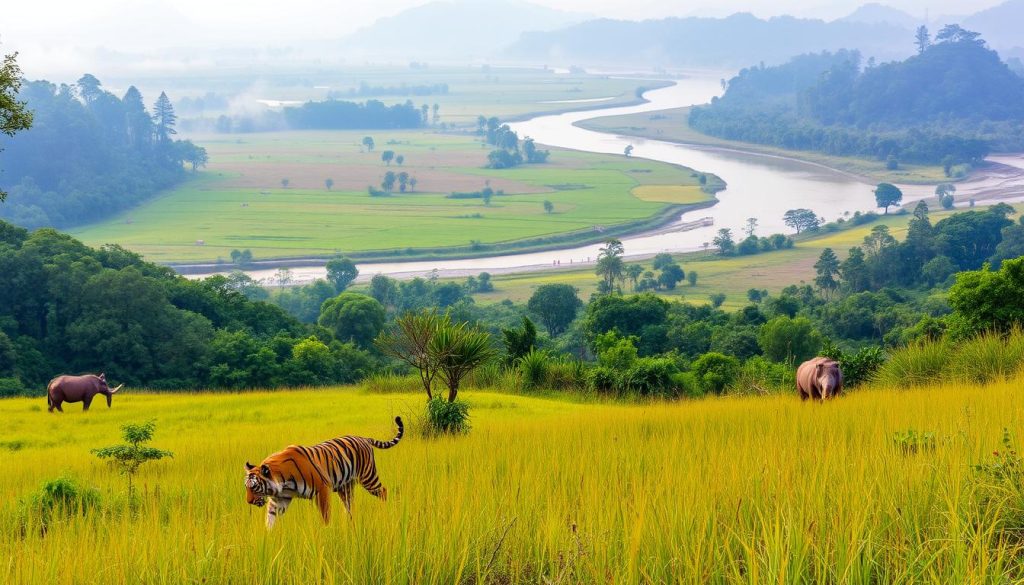
Chitwan National Park is a great place for wildlife lovers. You can do many things here, like jungle walks, birdwatching, game drives, or river safaris. Planning your trip well will make your experience better.
- Jungle walks for an up-close encounter with nature.
- Birdwatching to spot unique species.
- Game drives for exciting wildlife sightings.
- River safaris for a relaxing perspective on the ecosystem.
Visiting this magical place will give you memories you’ll always treasure. You’ll learn to love Nepal’s natural beauty even more.
| Aspect | Description |
|---|---|
| Location | Approximately 160 kilometers from Kathmandu |
| Established | 1973 |
| Activities | Jungle walks, birdwatching, game drives, river safaris |
| Conservation Status | Part of the Tiger Conservation Unit |
Chitwan National Park: A UNESCO World Heritage Site
Chitwan National Park is a UNESCO World Heritage Site. It’s known for its amazing biodiversity and ecological value. The Chitwan National Park UNESCO designation highlights its rich life, thanks to a subtropical monsoon climate.
This park is a mix of Himalayan foothills and fertile valleys. It’s home to over 68 mammal species and more than 500 bird species. The different habitats, like rivers and jungles, help keep this wildlife alive, adding to the park’s heritage.
The Chitwan National Park heritage significance goes beyond its beauty. It’s a key part of conservation, supporting ecotourism and protecting species and their homes. By teaching visitors about this UNESCO site, we help keep its ecosystems safe.
What wildlife can I see in Chitwan National Park?
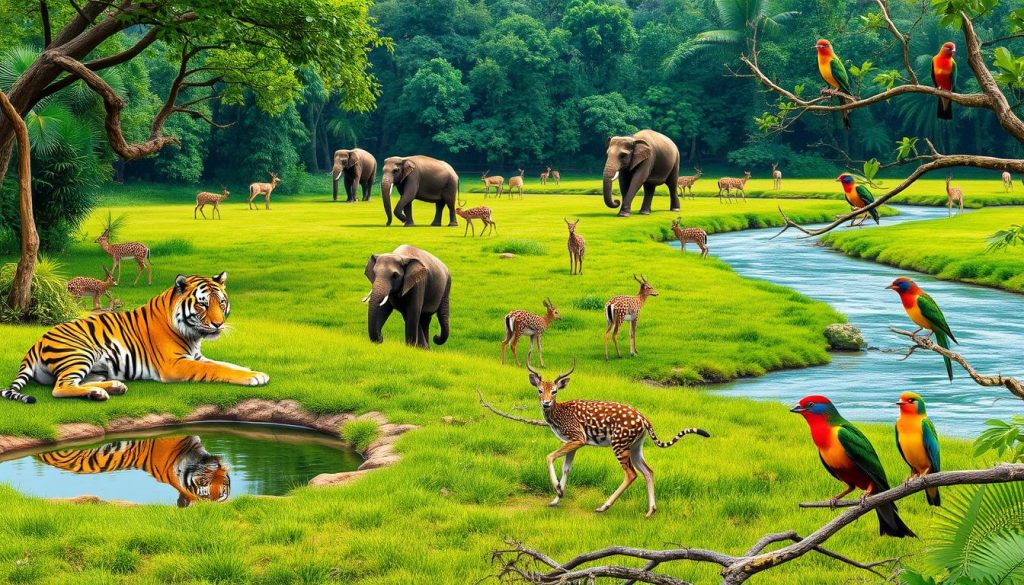
Chitwan National Park is a haven for many animals. It offers a chance to see nature’s beauty up close. The park’s mix of forests, grasslands, and wetlands supports a wide range of species. So, if you’re wondering what wildlife you can see, the answer is a colorful mix of creatures.
Overview of Chitwan’s Flora and Fauna
The park’s wildlife lives in different environments. You’ll find forests, riverine forests, and grasslands. Each place is home to unique animals. The plants in Chitwan help feed and hide many animals, keeping the ecosystem healthy.
Notable Mammals Found in Chitwan
The Indian rhinoceros is a rare sight but a highlight of the park. The Bengal tiger is another majestic creature you might see. The park also has many deer species, like the chital and sambar. These animals make Chitwan’s wildlife incredibly diverse.
Bird Species to Observe in Chitwan
Bird lovers will find over 480 species in the park. You can see colorful birds like the Indian roller and majestic eagles. These birds add to the park’s beauty and are a key part of its wildlife.
| Animal Type | Notable Species | Habitat |
|---|---|---|
| Mammals | Indian Rhinoceros | Grasslands and riverbanks |
| Mammals | Bengal Tiger | Forests and grasslands |
| Birds | Indian Roller | Woodlands and open areas |
| Reptiles | Gharial Crocodile | Rivers and lakes |
Endangered Species of Chitwan National Park
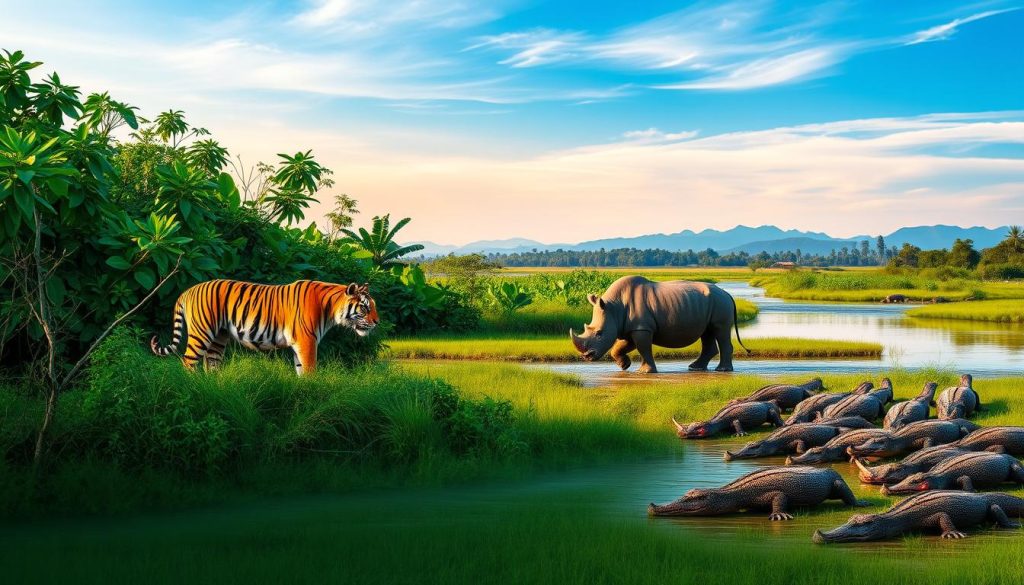
Chitwan National Park is rich in biodiversity but faces threats from poaching and habitat loss. It is home to many Chitwan National Park endangered species. Conservation efforts are key to saving these species. The Indian rhinoceros and the Bengal tiger are among the most important to protect.
Indian Rhinoceros Recovery Efforts
The Indian rhinoceros was once near extinction but has made a strong comeback. Thanks to Chitwan National Park conservation efforts and strict laws against poaching, their numbers have stabilized. Today, over 600 rhinos live in the park, showing the success of focused conservation.
Conservation of the Bengal Tiger
Protecting the Bengal tiger is also a major goal in Chitwan. Studies suggest about 80 breeding tigers live in the park. Efforts to preserve their habitat and fight poaching are crucial. Ongoing monitoring and community support are vital for a healthy ecosystem that supports the tiger and other wildlife.
| Species | Population Estimate | Conservation Status |
|---|---|---|
| Indian Rhinoceros | Over 600 | Vulnerable |
| Bengal Tiger | Approximately 80 | Endangered |
Chitwan National Park Safari Adventures
Going on a Chitwan National Park safari is a great way to see the park’s wildlife and landscapes. There are many safari options. This means everyone can find something they like.
Types of Safaris Available
There are different safaris to choose from in Chitwan National Park. Each one offers a special experience. This helps you learn more about the park’s ecosystem.
- Jeep Safaris: Great for seeing a lot of wildlife fast.
- Walking Safaris: Good for a slow pace and seeing small details.
- Canoeing Excursions: A calm way to see animals from the water.
Best Time to Go for Wildlife Sightings
The best time for wildlife tours is October to February. The weather is cooler and clearer. This makes it easier to see animals.
Early mornings are the best time. You might see a Bengal tiger or a one-horned rhinoceros.
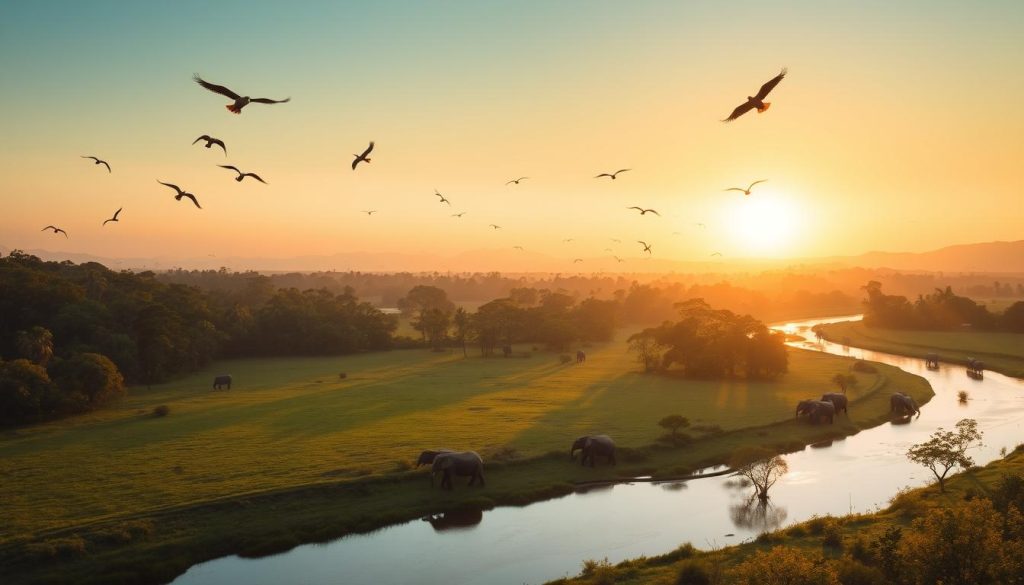
Whether you like jeep safaris or walking, Chitwan is unforgettable. You’ll see amazing wildlife in their home.
Biodiversity in Chitwan National Park
Chitwan National Park is home to diverse ecosystems. These ecosystems are key to preserving the park’s wildlife. They support many species, each playing a unique role in the ecosystem.
Understanding these ecosystems is crucial. It shows us how healthy and sustainable the park’s biodiversity is.
Significance of Tropical and Subtropical Ecosystems
Tropical and subtropical ecosystems in Chitwan National Park are vital. They support a wide range of plants and animals. These areas provide food, water, and shelter.
The relationships between species are complex. They form a network that supports both plants and animals. This network is why conservation is so important for the park’s biodiversity.
Role of Grasslands and Wetlands
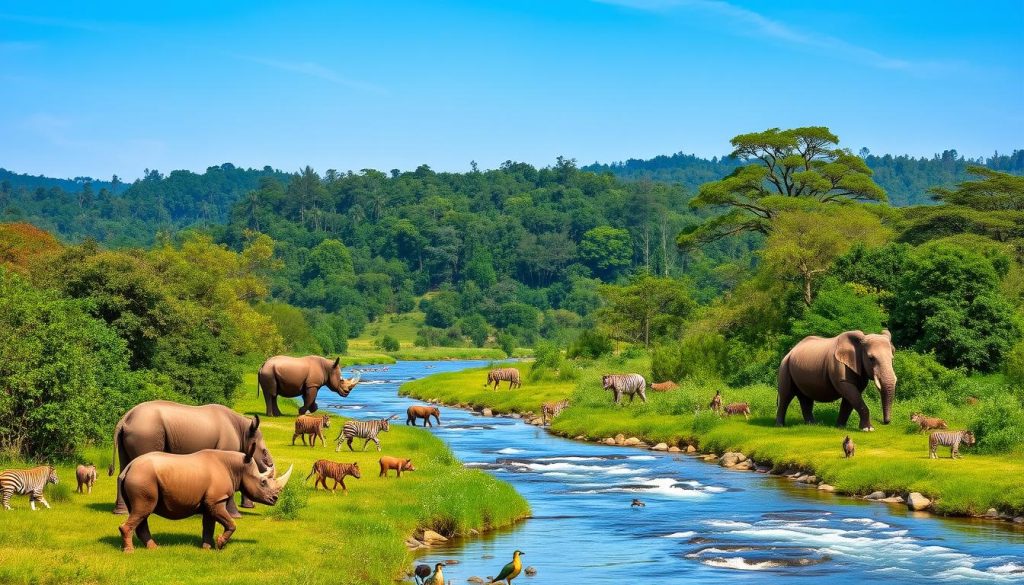
Grasslands and wetlands are essential in Chitwan National Park. Grasslands support herbivores, which feed carnivores. Wetlands are breeding grounds for aquatic species.
These habitats are crucial for many species. They also show the park’s ecological health.
| Habitat Type | Key Features | Associated Species |
|---|---|---|
| Tropical Forest | Diverse flora, dense canopy | Benga Tiger, Asian Elephant |
| Subtropical Forest | Varied vegetation, moisture-rich | Indian Rhinoceros, Sloth Bear |
| Grasslands | Wide-open spaces, fertile soil | Deer species, Wild Boar |
| Wetlands | Waterlogged areas, rich in aquatic plants | Herons, Crocodiles |
Chitwan National Park Wildlife Tours
Exploring Chitwan National Park through wildlife tours is a unique experience. It connects you to the area’s stunning ecology. You learn about the diverse flora and fauna in this UNESCO World Heritage site through guided nature walks and activities.
Guided Nature Walks and Activities
Guided nature walks in Chitwan let you dive into the vibrant ecosystem. Knowledgeable guides take you through different terrains. They share fascinating facts about the wildlife.
Activities like:
- Nature hiking
- Boat rides on the Rapti River
- Elephant bathing experiences
These make the Chitwan National Park wildlife tours both appealing and educational. They ensure a memorable adventure that deepens your appreciation for the region’s wildlife.
Importance of Eco-Tourism in Chitwan
The role of Chitwan National Park eco-tourism is vital. It promotes sustainable practices that help conservation and local communities. By choosing eco-friendly tours, visitors support local economies and jobs.
They also contribute to preserving this biodiverse environment. Key aspects of eco-tourism include:
- Funding of conservation initiatives
- Raising awareness about wildlife protection
- Encouraging responsible travel practices
By participating in these practices, you enrich your experience. You also help ensure Chitwan’s enchanting wilderness stays intact for future generations.
Birdwatching in Chitwan National Park
Chitwan National Park is a haven for birdwatchers. It’s home to a wide variety of bird species. The park’s lush landscapes and diverse ecosystems make it perfect for spotting both local and migratory birds.
Top Birdwatching Locations
Beeshazar and the surrounding lakes are top spots for birdwatching in Chitwan. These areas have different habitats that attract many bird species. As you explore, you’ll hear and see the beautiful colors and sounds of birds.
Whether you’re by the lakes or trekking through the forest, you’ll see amazing sights. The park offers endless opportunities to observe nature’s beauty.
Best Birdwatching Seasons
The best time for birdwatching in Chitwan is from March to June. During this season, you can see birds in their courtship and nesting behaviors. It’s a truly captivating experience.
This period is also great for spotting migratory birds. They add to the park’s already impressive bird variety. Plan your visit to see the vibrant bird activity in the park’s skies and landscapes.