Exploring the Rich History of Kansas City Jazz
Have you ever wondered about the deep links between Kansas City jazz and American music? As you explore Kansas City jazz’s history, you’ll see how it came from ragtime, blues, and more. This mix created a sound that changed American culture. The story of Kansas City jazz is more than music; it’s about the city’s lively spirit and the impact of its musicians.
Let’s dive into the deep history of Kansas City jazz and its lasting effect on music.
Origins of Kansas City Jazz
The early 1900s were a big change for Kansas City, thanks to the riverboat trade. This brought together different musical styles, creating a unique sound. African American communities were key, adding creativity and teamwork to the mix.
The Early 1900s: A Melting Pot of Musical Genres
Kansas City’s cultural mix led to a special kind of jazz. It was known for its improvisation and complex rhythms. Musicians mixed different music styles, creating a lively scene. The river trade also brought new musical influences, making Kansas City a jazz hotspot.
Influences of Ragtime and Blues on Kansas City Jazz
Ragtime and blues were big influences on Kansas City jazz. They helped create the improvisation that jazz is known for. Artists added ragtime’s rhythms and blues’ emotional depth to their music. This mix made Kansas City jazz what it is today.
Development of the Kansas City Jazz Style
In the 1920s and 1930s, Kansas City jazz took shape in a lively cultural scene. It was known for its complex rhythms and syncopation. African American musicians were key in creating this sound, adding their creativity and new techniques.
Kansas City’s artistic freedom let these musicians push musical limits. They made a sound that was both new and exciting.
Complex Rhythms and Syncopation
Complex rhythms were at the heart of Kansas City jazz. Syncopation, with its unexpected beats, became a key feature. This made the music lively and engaging.
Artists made sure each performance was unique. Their rhythm section added a playful touch, making the music thrilling for the audience.
The Role of African American Musicians in Shaping the Sound
African American musicians were crucial to Kansas City jazz. They brought their unique backgrounds into their music, making it stand out. Their contributions included subtle drumming and complex melodies.
These musicians were both artists and innovators. They influenced jazz for years to come, taking it beyond local scenes.
Influential Jazz Musicians in Kansas City
Kansas City is known for its amazing jazz talent. Many influential jazz musicians made their mark here. This section will look at key figures like Count Basie, Charlie Parker, and others who are still celebrated today.
Count Basie: A Legend in Kansas City Jazz
Count Basie’s impact on jazz is huge. He helped create a unique Kansas City sound with strong rhythms and improvisation. His orchestra made the swing era come alive, blending blues with big band jazz. Count Basie’s shows set a new standard, inspiring musicians worldwide.
Charlie Parker and the Birth of Bebop
Charlie Parker was a key figure in bebop’s rise. His complex melodies and fast tempos changed jazz music. Parker’s music was deeply rooted in Kansas City’s culture, making him a legend here.
Other Notable Figures: Lester Young and Jay McShann
Lester Young and Jay McShann were crucial to Kansas City’s jazz scene. Lester Young’s smooth saxophone and unique style inspired many. Jay McShann, a talented pianist and bandleader, brought out the rich blues tradition in his performances. Both helped make Kansas City a jazz hub.
| Musician | Contribution | Influence |
|---|---|---|
| Count Basie | Developed swing orchestras | Influenced big band jazz |
| Charlie Parker | Pioneered bebop | Revolutionized jazz improvisation |
| Lester Young | Unique tenor saxophone style | Set a standard for saxophonists |
| Jay McShann | Dynamic piano performances | Preserved blues tradition in jazz |
Jazz Clubs in Kansas City: Venues of Influence
The jazz scene in Kansas City was alive in many famous places. Each spot added to the city’s cultural mix. These places were key for legendary shows and brought artists and fans together.
The Blue Room: A Historic Hub for Jazz
The Blue Room is a key part of Kansas City’s jazz history. It’s known for great music acts. Here, new and famous musicians share their talents. The vibe lets fans dive deep into jazz’s rich past.
The Mutual Musicians Foundation: A Meeting Place for Artists
Started in the late 1930s, the Mutual Musicians Foundation was a big deal for jazz. It was where African American musicians met, worked together, and grew. This place is still vital in keeping jazz alive in the community.
The Reno Club and the Paseo Ballroom: Hotspots of Jazz Activity
The Reno Club and the Paseo Ballroom are big names in Kansas City jazz. They were where musicians could show off their skills. These spots are key to the story of Kansas City’s jazz clubs, with many unforgettable nights.
The Kansas City Jazz Scene of the 1920s and 1930s
The 1920s and 1930s were big years for Kansas City jazz. The Jazz District nightlife was buzzing with energy. Clubs were full of live music, drawing in both locals and tourists.
This lively scene let musicians be creative and try out new sounds. It added a lot to the area’s culture.
Nightlife Thriving in the Jazz District
The Jazz District at 18th and Vine was alive with music. Jazz clubs were where people came to socialize and enjoy great music. These clubs hosted both famous artists and new talents.
The nightlife was a mix of music, dancing, and friendship. It made nights in Kansas City memorable.
Pendergast Era and Its Impact on Jazz Culture
The Pendergast Era changed the Kansas City jazz scene a lot. This time was all about freedom for artists. With less rules, jazz musicians could really express themselves.
Clubs were always full of energy, creating a unique sound. But when the Pendergast machine ended in 1939, the jazz scene started to change.
| Year | Significant Events | Impact on Jazz |
|---|---|---|
| 1922 | Opening of iconic jazz clubs | Showcased local and national talents |
| 1927 | Popularity of jam sessions | Encouraged improvisation and collaboration |
| 1933 | Emergence of swing music | Introduced new rhythms and styles |
| 1939 | End of the Pendergast Era | Marked a decline in vibrant nightlife |
History of Kansas City Jazz
The history of Kansas City jazz is filled with key moments that shaped its identity. In its prime, the Jazz District was alive with a cultural renaissance. It celebrated African American artistry and musical innovation. Musicians, dancers, and artists came together, creating a scene that echoed across the nation.
A Cultural Renaissance in the Jazz District
This cultural movement was more than music; it built community and pride. The Jazz District became a place where creativity thrived. With every note, venues came alive, drawing people who loved the vibrant Kansas City jazz scene.
Decline and Urban Redevelopment in the Mid-20th Century
The mid-20th century saw the Jazz District decline. Urban changes pushed for modernization, often leaving historic areas behind. This led to the loss of many beloved venues and cultural spots. The jazz community felt the impact hard, realizing how fragile their heritage was in a changing city.
Kansas City Jazz Festivals: Celebrating the Legacy
Kansas City jazz festivals are key to honoring the city’s vibrant jazz culture and history. They highlight local talent, letting you see both famous and new jazz artists. This makes for a unique experience.
Annual Events That Showcase Local Talent
Every year, Kansas City jazz festivals gather diverse performers and fans. You’ll hear many musical styles that show off the community’s talent. Events often feature:
- Live shows by local jazz musicians
- Workshops and masterclasses with experts
- Food and art vendors supporting local shops
Reviving Interest in Kansas City Jazz Heritage
These festivals help bring back the love for jazz by engaging people of all ages. They mix old and new sounds, drawing in jazz fans and those new to the scene. This dedication keeps jazz alive in Kansas City’s culture.
Ongoing Revitalization of the 18th and Vine Area
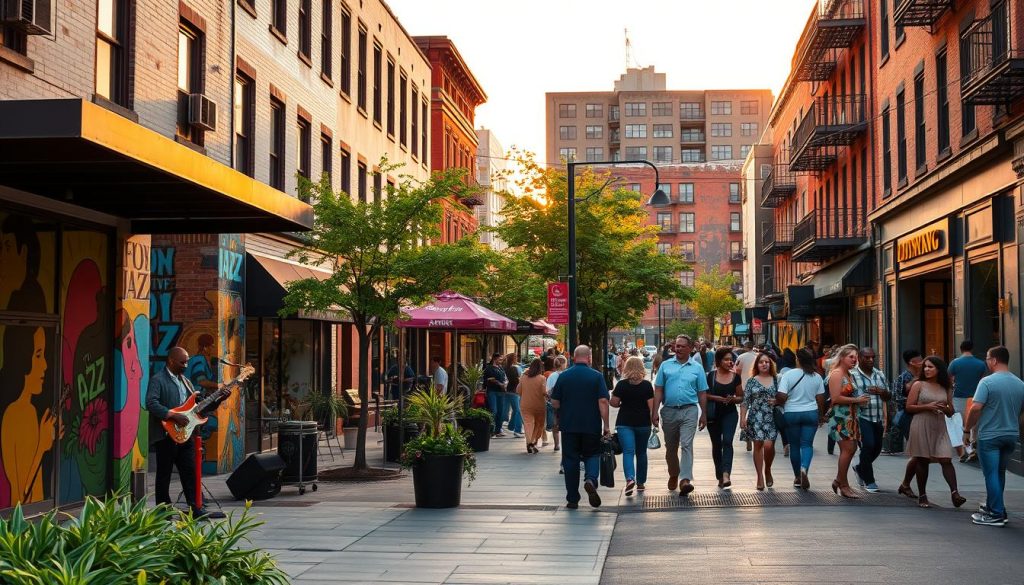
The 18th and Vine area is a key part of Kansas City’s jazz history. Efforts are underway to keep this historic spot vibrant. Community groups, partnerships, and programs work together to keep jazz alive in this lively area.
Efforts to Preserve Jazz Heritage Through Museums
Museums in the 18th and Vine area are vital for preserving jazz traditions. They share the stories of famous musicians and offer lessons on jazz history. These museums let people dive deep into Kansas City’s musical culture.
The Role of the American Jazz Museum
The American Jazz Museum is a big part of the area’s renewal. Located in the historic Gem Theater, it has exhibits, interactive displays, and live shows. It honors both past and current jazz stars, making it a key spot for jazz fans and newcomers.
Conclusion
Kansas City jazz has a deep history that shows the importance of American music. By looking into its beginnings and key figures, we see the big impact of Kansas City jazz. It has changed the local music scene and helped shape jazz in the U.S.
Learning about this history shows why it’s crucial to keep jazz alive for the next generations. Efforts to revitalize the 18th and Vine area and celebrate jazz through festivals and museums show a community that cares about its past. They also encourage new creativity and innovation.
When you dive into Kansas City jazz, you’ll see it’s still a key place for jazz lovers. Your support can help keep this art form going and its legacy alive for the future.